
Crime
NDLEA intercepts cocaine consignments at Lagos, Abuja, Port Harcourt airports, arrests 7 traffickers

NDLEA intercepts cocaine consignments at Lagos, Abuja, Port Harcourt airports, arrests 7 traffickers
By: Michael Mike
Operatives of the National Drug Law Enforcement Agency (NDLEA) have intercepted at the nation’s three major airports of Lagos, Abuja and Port Harcourt large consignments of cocaine which Brazil based drug cartels tried smuggling into the country.
According to the spokesman of the NDLEA, Femi Babafemi arrested were seven traffickers in the smashes.
A statement on Sunday by the spokesman said at the Port Harcourt International Airport, five suspects were arrested on Saturday 9th April. Three of them were arrested during the inward screening of passengers on board Qatar Airline flight QR1433 from Doha to Port Harcourt.
He said the three suspects departed Sao Paulo, Brazil on board same Qatar flight, en-route Doha to Abuja and Port Harcourt with a total of 24.96 kilogrammes of cocaine.
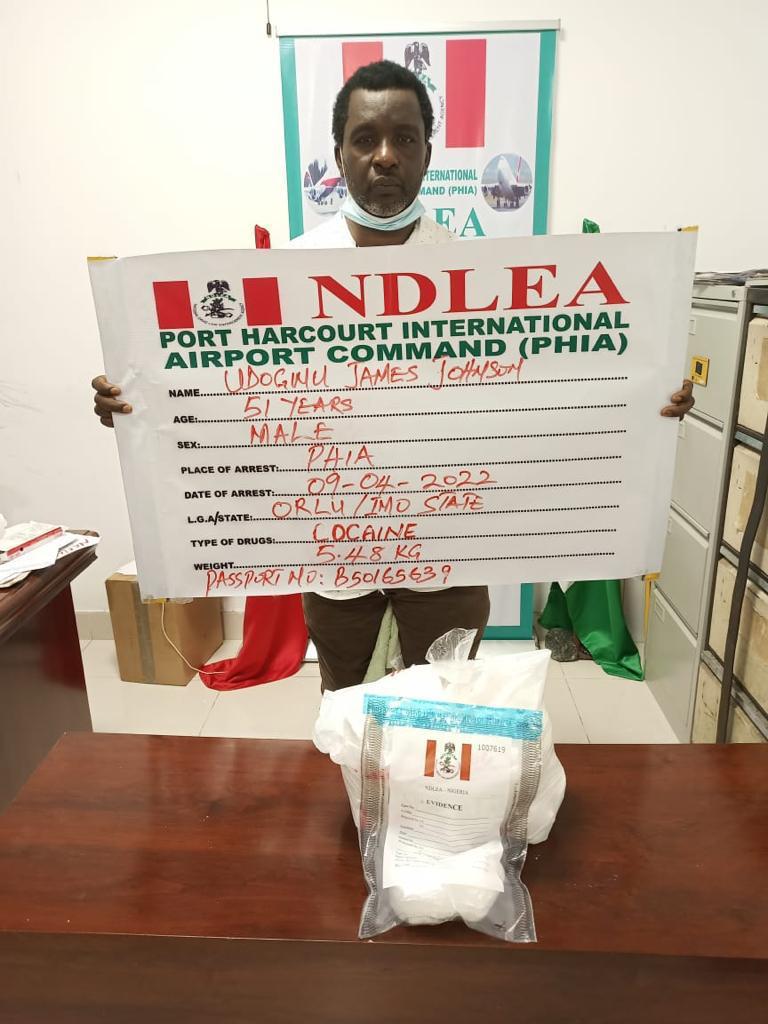
Babafemi sad the first is 51-year-old Udogwu Johnson who was arrested with 5.48 kilogrammes of cocaine concealed in lotion plastic bottles sealed with candle wax. He claimed he agreed to traffic the drug for a fee of N1 million.
He said also arrested is Ezekwueme Valentine, 32, who was caught with 10.82 kilogrammes cocaine packed in 84 sachets concealed in seven duvets, while the third trafficker, Chiezie Ikechukwu Arinze, 35, was arrested with 8.66 kilogrammes cocaine hidden in 115 golden and silver colour 30ml breakable bottles factory packaged with lotion on top.
The fourth suspect, Uchechukwu Onwugbufor, 42, according to him, was arrested at the airport car park while waiting to receive one of the traffickers, Udogwu James and his consignment. He claimed he was contacted by someone in Brazil to receive Udogwu and lead him to Lagos for a fee of N100,000. Uchechukwu Onwugbufor was at the Airport with his neigbour, Nwogu Ezimadu, who is equally being investigated to determine if he is complicit in the crime or not.
He said at the Nnamdi Azikiwe International Airport, Abuja, a Psychology graduate of Imo State University, Owerri, Sebastine Kelvin, 30, was arrested with 74 pellets of cocaine weighing 1.454 kilogrammes on arrival aboard Ethiopian Airline flight enroute Doula- Addis Ababa-Abuja last Wednesday.
He said the father of one who claims he is a motor spare parts dealer, said he lived in Cameroon for six years before going into the drug business to raise money to boost his trade. He added that he was introduced to the man who gave him the drugs at Addis Ababa by another person serving jail term for drug offence at the Doula Newbell Prison.
Also Read: Wamakko bags NDLEA Wider Ambassador Award
Babafemi said in Lagos, another Brazil based passenger, Uba Samuel was arrested at the Murtala Muhammed International Airport, by NDLEA operatives last Friday on arrival aboard Ethiopian Airline flight from Sao Paulo via Addis Ababa to Lagos with sachets of cocaine weighing 633 grammes concealed in his footwear and toothpaste tube.
The suspect who claims to be a shoemaker and barber, while accepting ownership of the drug, said he used his shoe making knowledge to conceal the drug in his pair of sandals. Uba who is a regular traveller confessed he bought the drug to sell at a market in Abia.
In other clampdown, more illicit substances were recovered in raid operations in other parts of the country. In Gadaka village of Fika local government area, Yobe state, operatives arrested one Hassan Usman with a total of 22,110 tablets of Tramadol, D5 and Exol 5, while one Ali Mohammed was nabbed in a commercial vehicle coming from Kano to Maiduguri with 40 blocks of cannabis weighing 33 kilogrammes. Also arrested on the Kano-Maiduguri route was a driver Ibrahim Khalil Idris with 60 packets of Tramadol, all on Tuesday 12th April.
In Kogi state, 750 blocks of cannabis weighing 750 kilogrammes were seized from two suspects: Hassan Adamu, 25, and Abdulmalik Abdullahi, 24, along Okene-Abuja highway. The drug exhibits were concealed inside fabricated panels of a Ford bus.
Meanwhile, the Chairman/Chief Executive of NDLEA, Brig. Gen. Buba Marwa (Retd) has commended the officers and men of the PHIA, NAIA, MMIA, Yobe, and Kogi Commands of the agency for disrupting desperate attempts by drug cartels to traffic dangerous drugs into Nigeria and across the country. He said the huge seizures at the airports will send a strong message to drug barons that Nigeria will no longer be their safe destination or transit route.
NDLEA intercepts cocaine consignments at Lagos, Abuja, Port Harcourt airports, arrests 7 traffickers



Troops Arrest Suspect Over Killing of More Than 50 Cattle in Edo
By: Zagazola Makama
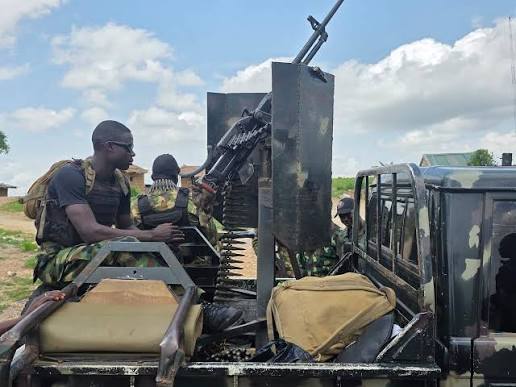
Troops of Operation MESA have arrested a suspected criminal linked to the killing of more than 50 cattle belonging to Fulani herders in Esan South-East Local Government Area of Edo State.
Security sources said that the suspect was arrested at about 4:30 a.m. on Thursday following credible intelligence on his whereabouts.
According to the sources, troops of 4 Brigade operating from the Forward Operating Base (FOB) in Uromi apprehended the suspect at his residence in Oloshi Main Town.
The suspect had reportedly been on the run since May 31, when he allegedly led an attack that resulted in the killing of over 50 cattle in the Oloshi general area.
The sources said the arrest was made after sustained efforts by security agencies to track down those involved in the incident.
Following his arrest, the suspect was handed over to the Nigeria Police Force for further investigation and possible prosecution.
Security agencies have assured residents that efforts are ongoing to apprehend other individuals connected to the attack.
Troops Arrest Suspect Over Killing of More Than 50 Cattle in Edo
Troops Arrest Suspected Kidnappers, Recover Two AK-47 Rifles in Magumeri Borno
By: Zagazola Makama
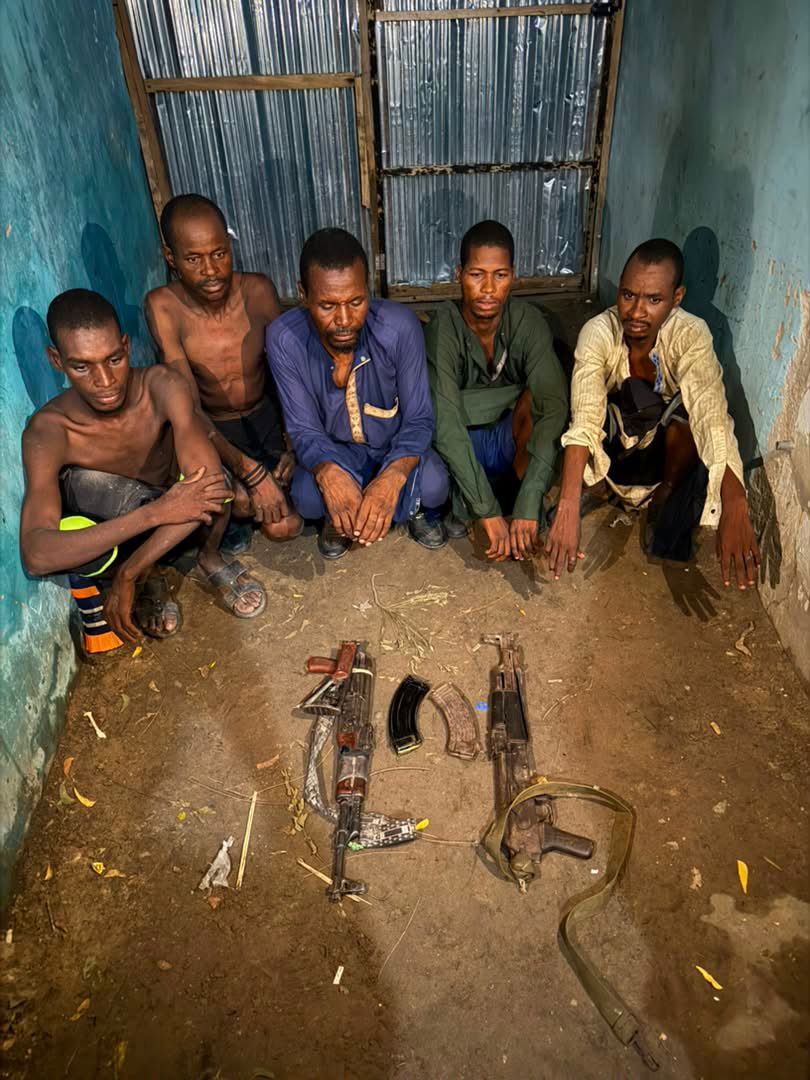
Troops of Operation HADIN KAI conducting an ongoing operation in Magumeri Local Government Area of Borno have arrested suspected kidnappers and recovered two AK-47 rifles from them.
Sources involved in the operation disclosed on Friday that the suspects were apprehended during a targeted security operation ahead of Magumeri town.
According to the sources, the operation led to the recovery of two AK-47 assault rifles believed to have been used by the suspects in criminal activities within the area.
The sources further revealed that preliminary interrogation of the suspects had yielded valuable intelligence that could assist security agencies in tracking and arresting other members of the kidnapping network.
“The suspects have provided useful information that can aid further operations and lead to the arrest of additional members of the criminal syndicate,” the source said.
The arrests are part of ongoing efforts by security forces to dismantle kidnapping and other criminal networks operating in parts of Borno State.
Security authorities have yet to issue an official statement on the operation, while investigations and follow-up actions are continuing.
Troops Arrest Suspected Kidnappers, Recover Two AK-47 Rifles in Magumeri Borno
Police Rescue Six Kidnap Victims, Recover Stolen Motorcycle in Zamfara
By Zagazola Makama
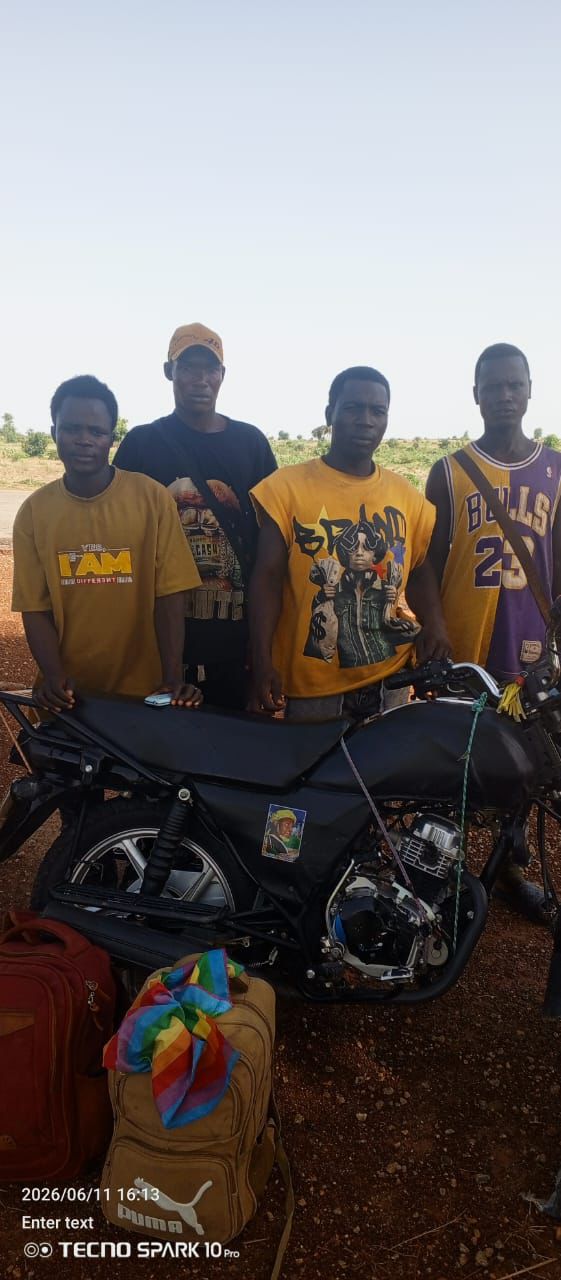
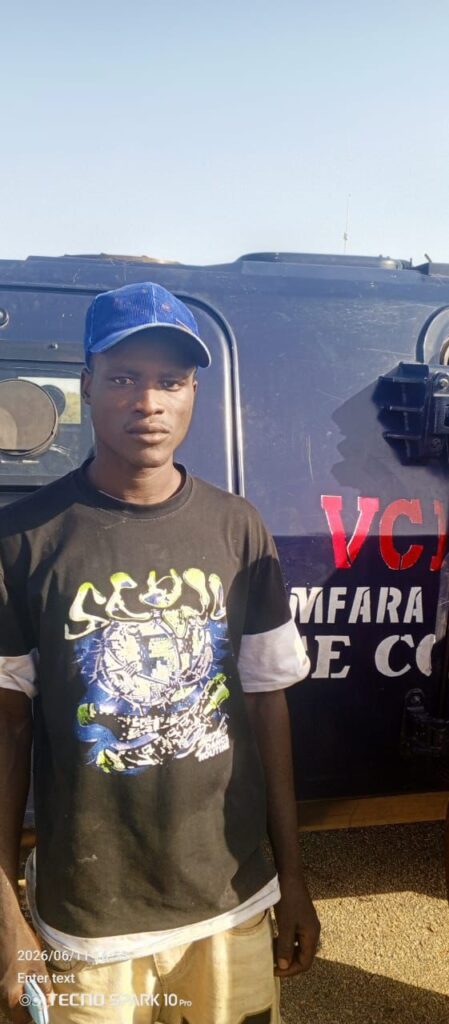
Operatives of the Zamfara State Police Command have rescued six kidnapped victims and recovered a stolen motorcycle following a gun battle with armed bandits along the Anka–Gurusu Road in Zamfara State.
The command said the operation was carried out at about 4:30 p.m. on Thursday by personnel of the Violence Crimes Response Unit (VCRU) during ongoing anti-banditry operations.

According to the police, the operatives received credible intelligence that heavily armed bandits had blocked the Anka–Gurusu Road and abducted six travellers along with their two motorcycles while they were travelling from Mayanchi village in Maru Local Government Area of Zamfara to Zuru Local Government Area of Kebbi State.
Acting on the information, the police team mobilised to the area and tracked the bandits to their hideout.
Upon contact, the suspects reportedly engaged the operatives in a gun duel.
The police said the operatives responded with superior firepower, forcing the bandits to flee into the surrounding forest with suspected gunshot injuries.
As a result of the operation, all six abducted victims were rescued unhurt, while one of the stolen motorcycles was recovered.
The second motorcycle was, however, taken away by the fleeing bandits.
The command said efforts were ongoing to track down and arrest the suspects as well as recover the remaining motorcycle.
The Zamfara State Police Command reiterated its commitment to tackling banditry and other violent crimes across the state and urged residents to continue providing timely and actionable information to security agencies.
Police Rescue Six Kidnap Victims, Recover Stolen Motorcycle in Zamfara

Zulum Delivers Relief, Cash Support to 434 Ngoshe Residents Rescued from Boko Haram

DEMOCRACY AND THE COURAGE TO BELIEVE

Army Distributes Fertiliser to Farmers in Jigawa Under Civil-Military Cooperation Programme

Roger Federer’s Shock as DNA Results Reveal Myla and Charlene Are Not His Biological Children

THE PLIGHT OF FARIDA

FAILED COUP IN BURKINA FASO: HOW TRAORÉ NARROWLY ESCAPED ASSASSINATION PLOT AMID FOREIGN INTERFERENCE CLAIMS
-
 News2 years ago
Roger Federer’s Shock as DNA Results Reveal Myla and Charlene Are Not His Biological Children
-
Opinions4 years ago
THE PLIGHT OF FARIDA
-
 News1 year ago
FAILED COUP IN BURKINA FASO: HOW TRAORÉ NARROWLY ESCAPED ASSASSINATION PLOT AMID FOREIGN INTERFERENCE CLAIMS
-

 News2 years ago
EYN: Rev. Billi, Distortion of History, and The Living Tamarind Tree
-
 Opinions4 years ago
POLICE CHARGE ROOMS, A MINTING PRESS
-

 ACADEMICS2 years ago
A History of Biu” (2015) and The Lingering Bura-Pabir Question (1)
-

 Columns2 years ago
Army University Biu: There is certain interest, but certainly not from Borno.
-

 Politics1 year ago
2027: Why Hon. Midala Balami Must Go, as Youths in Hawul and Asikira/Uba Federal Constituency Reject ₦500,000 as Sallah Gift
