
Crime
NDLEA Saves Nigeria off 7.5m tramadol pills, 95,400 codeine bottles during Christmas

NDLEA Saves Nigeria off 7.5m tramadol pills, 95,400 codeine bottles during Christmas
By: Michael Mike
Operatives of the National Drug Law Enforcement Agency (NDLEA) has thwarted desperate attempts by transnational criminal organisations to flood Nigerian communities with large quantities of assorted illicit drugs during the yuletide season with the interception of millions of tramadol 225mg pills, thousands of codeine syrup bottles and bags of Canadian Loud in consignments arriving the country ahead of the Christmas celebration.
A statement on Sunday by the spokesman of the anti-narcotics agency, Femi Babafemi read that at the Murtala Muhammed International Airport, Lagos, all tricks employed by the drug syndicates to smuggle into the country 7.5 million pills of tramadol 225mg through the NAHCO import shed of the airport were frustrated by NDLEA officers with the cooperation of men of the Nigeria Customs and other stakeholders.
Babafemi said the consignment which was taken into custody last Friday came onboard Turkish airline with no country of manufacture or origin, adding that apart from being the first time such shipment would be seized on the airline’s flight, it was equally the first of such coming from Hamburg, Germany.
He said the 7.5 million tramadol 225mg pills were also specially designed and packaged as tamol-x concealed in 100 big cartons weighing 7,150 kilogrammes, which arrived the country on 11th December and placed under surveillance until last Friday, stating that preliminary test of the tablets proved positive to tramadol hydrochloride.
Babafemi said operatives of the Lagos Command of the agency last Wednesday conducted a search operation on two shops marked Chex Mat Global Link Limited at Trade Fair complex in Ojo area of Lagos where 258 cartons of codeine-based cough syrup and eight cartons of codeine tablets were recovered. The cartons contain: 49,200 bottles of codeine syrup and 46,200 tablets of same opioid.
He said the following day Thursday, NDLEA operatives raided a house in Mushin area of Lagos where a 70-year-old grandma, Selifat Cole and her son, Babajide Cole were arrested with 117.9 kilogrammes of cannabis sativa, adding a consignment of spare parts that originated from Asaba, Delta state and going to Malviya Nagar, New Delhi, India was intercepted at the cargo terminal of the Lagos airport last Wednesday with the help of NDLEA sniffer dogs.
Babafemi said the dogs were able to identify the particular shipment containing illicit drug concealment, which a physical examination later confirmed to be cocaine measuring 200 grammes.
The spokesman said not less than 70 parcels of Canadian Loud, a strong strain of cannabis, with a gross weight of 35 kilogrammes were seized by operatives of the Tincan Command of NDLEA from a container, marked BEAU 4993525 coming from Toronto via Montreal, Canada. He noted that the container contained four used vehicles, including a Honda CRV 2006 model, where bags of the psychoactive substance were concealed.
He said in Abuja, NDLEA operatives last Monday intercepted a waybill consignment of 25,000 pills of tramadol, while their counterparts in Anambra arrested two suspects at Onitsha head bridge, Ejiro Emmanuel was driving a bus marked EFR 31 XB conveying 61,100 tramadol capsules; 1,025 bottles of codeine; 1,350 tablets of rohypnol and 46 grammes of designer drug, while Daniel Ogbiyoyo was caught in a bus marked SAP 540 YK conveying 55,950 tramadol capsules; 3,117 bottles of codeine; 1,530 tablets of swinol and 1,350 tablets of rohypnol.
Operatives in Delta state last Monday in a joint operation with the military raided the home of a drug kingpin, Chukwuma Eneriku at Okanaro street, Abbi town, where bags of cannabis weighing 353 kilogrammes were recovered. Same day, NDLEA operatives in Enugu recovered bags of cannabis sativa weighing 435.1 kilogrammes in a warehouse located at Trans Ekulu, Enugu East local government area.
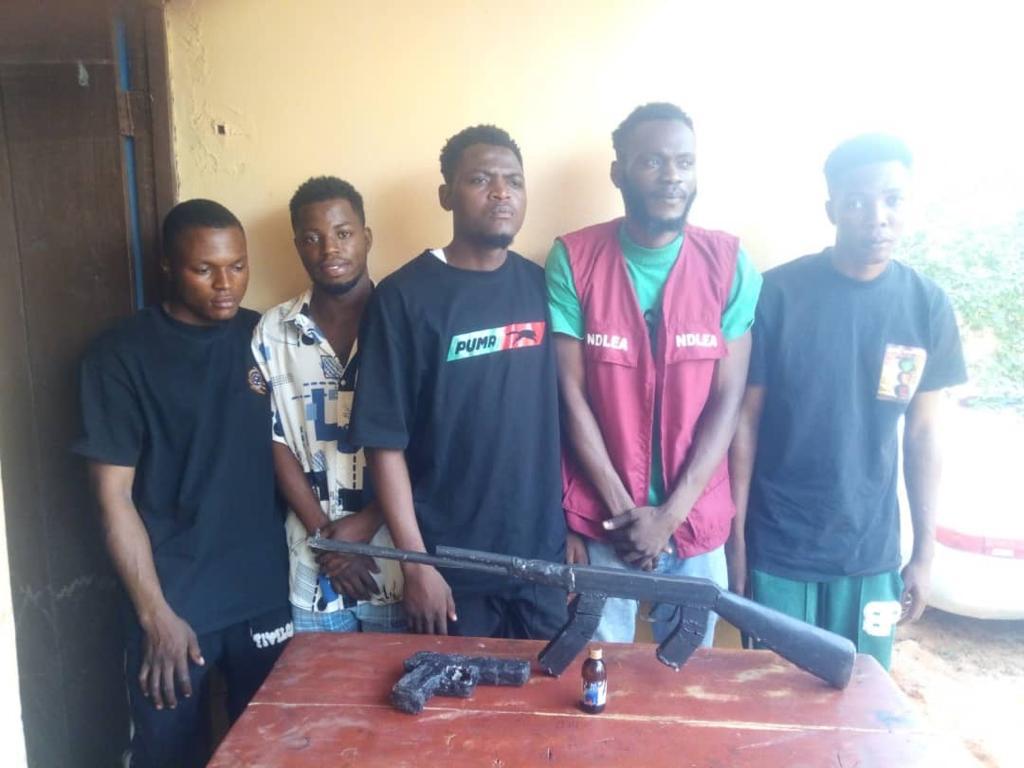
In Edo state, Babafemi said five persons dressed in NDLEA operational jackets were arrested with a fabricated gun and pistol carved from wood following intelligence that they were impersonating as officers of the agency and conducting illegal operations. The suspects include: Sebastine Asekiamhe, 22; Raymond Otaru, 28; Emmanuel Wisdom, 23; Solomon Edogamhe, 27; and Bonaventure Oghibui, 22. While some others in NDLEA jackets escaped, a bottle of codeine-based syrup was found with those arrested.
He said the ongoing War Against Drug Abuse (WADA) advocacy campaigns to schools, markets, worship centres and communities took place at Ikuduru local government area, Imo; with advocacy visits to Fuji music maestro, Alhaji Wasiu Ayinde Marshal, Kwara First Lady and Chairperson Nigeria Governors Wives Forum, Prof. Olufolake Abdulrazak, Oba of Lagos, Oba Rilwan Akiolu; and sensitisation lecture to members of Jama’atu Fitayanul Islam at Aliyu Mustafa College, Yola.
Meanwhile, the Chairman/Chief Executive Officer of NDLEA, Brig. Gen. Buba Marwa (Retd), while commending the efforts of the officers and men of MMIA, Lagos, Edo, Anambra, Enugu, Delta, FCT and Tincan Commands of the agency as well as the K-9 Unit for jobs well done in the past week, urged them and their compatriots across the country to remain vigilant and get ready for the next phase of operations in the new year.
NDLEA Saves Nigeria off 7.5m tramadol pills, 95,400 codeine bottles during Christmas


Suspected Berom Militia Shoot Eight Cattle in Attack on Herdsman in Plateau
By Zagazola Makama
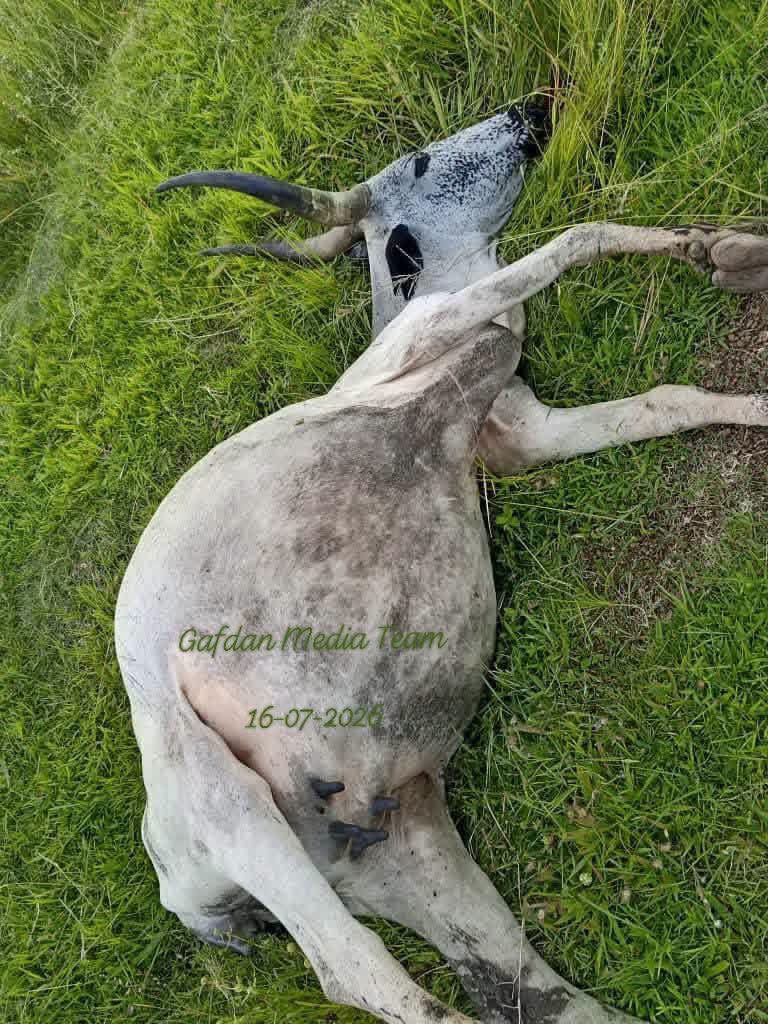
Suspected Berom Militia have attacked a herder and his livestock in Nyerwie Village, Barkin Ladi Local Government Area of Plateau State, leaving eight cattle with gunshot wounds.
Sources told Zagazola Makama that the incident occurred at about 6:25 p.m. on July 16, prompting troops of Sector 4, Operation SAFE HAVEN (OPSH), to swiftly mobilise to the scene following a distress report.
However, the assailants fled before the arrival of the troops, evading arrest.
Security sources said preliminary findings indicated that the attackers opened fire on the herd, inflicting gunshot wounds on eight cows. No human casualty was reported during the incident.
Troops have since intensified efforts to track down and apprehend the fleeing suspects, while security has been reinforced in the area to prevent further escalation.
The military urged residents to remain calm and cooperate with security agencies by providing credible information that could assist in the arrest of those responsible for the attack.
Suspected Berom Militia Shoot Eight Cattle in Attack on Herdsman in Plateau
Troops Arrest Three Suspected Cattle Rustlers in Gombe, Recover Weapons, Cash
By Zagazola Makama
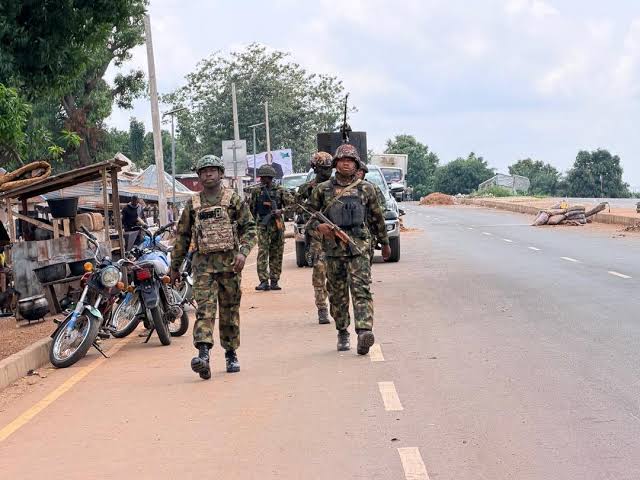
Troops of the 233 Tank Battalion have arrested three suspected cattle rustlers during a security operation in Mel Uku, Akko Local Government Area of Gombe State.
Sources told Zagazola Makama that the suspects were apprehended at about 5:00 p.m. on July 16 following intelligence-led operations targeting criminal elements involved in cattle rustling in the area.
During preliminary interrogation, the suspects allegedly confessed to having engaged in cattle rustling activities for more than two years.
Items recovered from the suspects include three mobile phones, three cutlasses, one bow with arrows, and the sum of ₦24,750 believed to be proceeds of their criminal activities.
The suspects are currently in military custody for further investigation, while efforts are ongoing to identify and apprehend other members of the cattle-rustling syndicate.
The arrest is part of ongoing operations by security forces to combat cattle rustling, banditry and other criminal activities across the North-East and adjoining states.
Troops Arrest Three Suspected Cattle Rustlers in Gombe, Recover Weapons, Cash
DSS, Security Operatives Rescue Two Abducted Children in Kwara, Kill Two Kidnappers
By Zagazola Makama
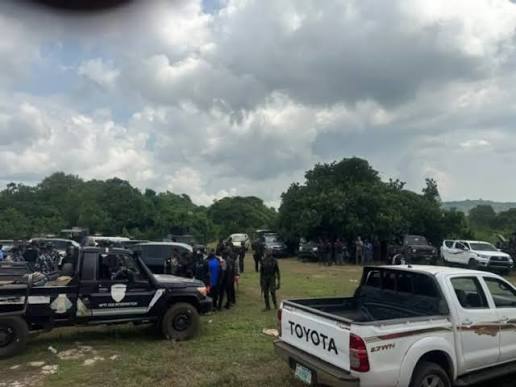
Two children who were abducted by kidnappers were rescued, following a coordinated operation by the Department of State Services (DSS) and other security agencies.
The operation also resulted in the killing of two suspected kidnappers, while several others sustained fatal injuries and fled with gunshot wounds during the encounter.
Zagazola learnt that security forces are continuing clearance operations to track down the remaining members of the kidnapping gang and ensure they are brought to justice.
Further details are expected as the operation progresses.
DSS, Security Operatives Rescue Two Abducted Children in Kwara, Kill Two Kidnappers

VP Shettima Departs Abuja For 69th ECOWAS Summit in Freetown

Buni approves N74 billion for projects in Yobe

FCT NUJ Chair Grace Ike Charges Graduands to Be Solution Providers, Choose Character Over Certificates

Roger Federer’s Shock as DNA Results Reveal Myla and Charlene Are Not His Biological Children

THE PLIGHT OF FARIDA

FAILED COUP IN BURKINA FASO: HOW TRAORÉ NARROWLY ESCAPED ASSASSINATION PLOT AMID FOREIGN INTERFERENCE CLAIMS
-
 News2 years ago
Roger Federer’s Shock as DNA Results Reveal Myla and Charlene Are Not His Biological Children
-
Opinions4 years ago
THE PLIGHT OF FARIDA
-
 News1 year ago
FAILED COUP IN BURKINA FASO: HOW TRAORÉ NARROWLY ESCAPED ASSASSINATION PLOT AMID FOREIGN INTERFERENCE CLAIMS
-

 News2 years ago
EYN: Rev. Billi, Distortion of History, and The Living Tamarind Tree
-
 Opinions5 years ago
POLICE CHARGE ROOMS, A MINTING PRESS
-

 ACADEMICS2 years ago
A History of Biu” (2015) and The Lingering Bura-Pabir Question (1)
-

 Columns2 years ago
Army University Biu: There is certain interest, but certainly not from Borno.
-

 Politics1 year ago
2027: Why Hon. Midala Balami Must Go, as Youths in Hawul and Asikira/Uba Federal Constituency Reject ₦500,000 as Sallah Gift
