
National News
NHRC BOSS TO BE CONFERRED WITH OFR

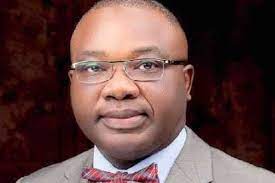
NHRC BOSS TO BE CONFERRED WITH OFR
By: Michael Mike
The Executive Secretary of the National Human Rights Commission, NHRC, Chief Tony Ojukwu, SAN has been designated to be conferred with the prestigious National Honours, in the category of Officer of the Order of the Federal Republic, OFR.
The Official ceremony culminating in the conferment of the Honours on the Executive Secretary and other deserving citizens will be performed by the President of the Federal Republic of Nigeria, His Excellency, Muhammadu Buhari, GCFR.
This is clearly not the first accolade the human rights defender will be receiving in his career as a technocrat par excellence.
It will be recalled that the Human Rights Expert was awarded the high-status rank of Senior Advocate of Nigeria by the Legal Practitioners Privileges Committee of the Supreme Court of Nigeria.
The well-deserved honour was bestowed on him sequel to his numerous publications in the field of law and human rights, which have contributed immensely to enrich our legal and human rights jurisprudence including the field of administration of criminal justice.
In all these, one thing stands out; his humility and proclivity for hard work, which seems to be the invisible hand behind these litanies of accolades and recognitions.
It would be recalled that he is the first Executive Secretary to be appointed from among the staff of the Commission. He has carved out a niche for himself following the numerous achievements recorded by the Commission during his tenure.
For instance, upon his appointment as the Executive Secretary and Chief Executive Officer of the Commission, and in what looked like a declaration of emergency on the state of human rights in Nigeria, he hit the ground running bearing in mind that there are many miles to cover.
One of his first assignments was the unbundling of the single existing Investigation department into four thematic departments for effective performance. Now under this able leadership are the departments of Civil and Political Rights, Economic, Social and Cultural Rights, Women and Children and Vulnerable Groups, all carved out of the overburdened hitherto investigation department.
The idea is to ensure that every complaint that is received by the Commission is resolved in a record time of between three and six months. Though this sounded like a tall order, the truth of the matter is that these four departments are living up to the expectations.
Determined to improve assesibility across the 36 states of the federation, the Executive Secretary ensured the establishment of state offices in additional 12 states that did not have the presence of the Commission. These offices are today very productive and sterling in human rights promotion, protection and enforcement.
Ojukwu has always exhibited his zero tolerance for injustice especially by agents of state. In 2018, the federal government directed the establishment of a panel to investigate the excesses of the personnel of the Nigerian Police. He chaired the then SARS Panel and made far reaching recommendations to the federal government leading to the disbandment of SARS.
Following the END SARS protest in 2020, and the federal government directives, the Commission under the present leadership of the Executive Secretary set up another SARS panel which was headed by Justice Suleiman Galadima, a retired Justice of the Supreme Court.
The federal government showed its unflinching support to the panel and has paid nearly half a billion naira to 100 Nigerians who were victims of Police brutality.
Earlier, the Human Rights Advocate also masterminded and chaired other Human Rights Violations Investigative Panels such as the Special Investigation Panel on Sexual and Gender Based Violence (SGBV), and the Shiite Panel which made independent inquiry into the clash between the Nigerian Army/Islamic Movement of Nigeria.
In the same manner, the working relationship between the Commission and Civil Society Organisations, the law enforcement agencies has become even more cordial.
This has impacted positively on the ease of releasing information and documents needed to investigate human rights violations.
The Executive Secretary has enhanced the image of the Commission in many ways, having set up a working template in line with international best practices for human rights protection.
Also Read: https://dailypost.ng/2022/09/26/military-neutralises-many-iswap-terrorists-in-yobe/
In the North East which has witnessed a series of gross human rights violations occasioned by the unfortunate insurgency, he has collaboratively worked and is still working with development partners like UNHCR, UNDP, EU etc to address the various human rights and humanitarian challenges bedevilling the area.
His choice of Transitional Justice System to handle the high scale human rights violations by the insurgency and counter insurgency operations in the North East is highly commendable. This strategy is less expensive, faster, more result oriented, workable and justice prone. It has evidently worked in other countries like Rwanda and South Africa where the Gacaca court system and Truth and Reconciliation Commission respectively were leveraged to address mass atrocities and human rights violations. The transitional Justice project which is still in its pilot stage is aimed at achieving a lasting peace in the North East.
Only recently, the legal icon was appointed the alternate Chair of National Committee Against Torture, which has its secretariat domiciled in the NHRC. This is a mark of honour and recognition of the contributions and commitment of the Commission to the cause of human rights.
Little wonder, the Commission has maintained its Grade “A” status as granted by the Global Alliance of National Human Rights Institutions.
As the next peer review at the UN beckons, it is expected that the Commission will proudly retain this important status.
It is worthy to note that Ojukwu is the first Executive Secretary to be conferred with two honors of SAN and OFR while in office. What a great feat indeed.
The Governing Council, management and staff of the Commission wish to use this opportunity to say a big congratulations to the Executive Secretary for his well-deserved elevation.
NHRC BOSS TO BE CONFERRED WITH OFR


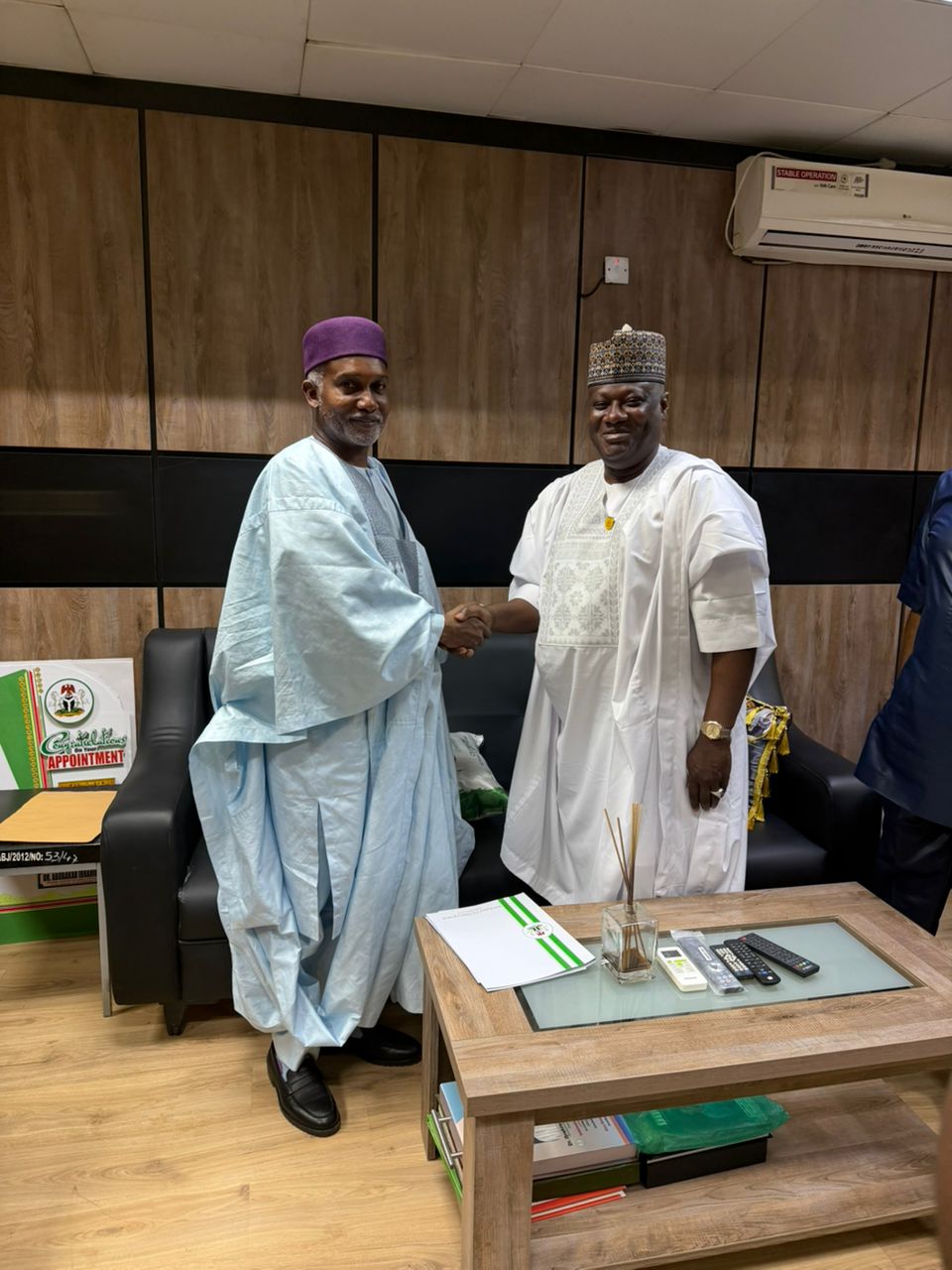
Tuggar Resigns from Tinubu’s Cabinet, Sets for Bauchi Governorship
By: Michael Mike
The rumoured interest of Minister of Foreign Affairs, Ambassador Yusuf Tuggar in becoming the governor of Bauchi State come 2027 may have been confirmed he resigned on Monday to prepared ground for actualization of his political ambition.
The resignation was ahead of the deadline set for political appointees seeking elective positions in the forthcoming general elections.
In a resignation letter submitted to the office of the Secretary to the Government of the Federation, Tuggar expressed profound gratitude to President Bola Ahmed Tinubu for the opportunity to serve the country and contribute to the implementation of the administration’s Four-D foreign policy strategy.
The former minister also appreciated the management and staff of the Ministry of Foreign Affairs and members of the diplomatic community for their cooperation and support throughout his tenure.
During his time in office, Tuggar was credited with advancing Nigeria’s foreign policy objectives through initiatives focused on people-centred diplomacy. These included humanitarian evacuations, facilitation of scholarships for Nigerians abroad, and sustained support for citizens in the diaspora.
His tenure also witnessed increased diaspora engagement, including efforts to develop a structured database of Nigerians living abroad aimed at strengthening their participation in national development.
In addition, Tuggar strengthened bilateral and multilateral relations through strategic engagements with traditional partners and regional alliances, particularly across the Global South. His leadership also promoted regional security cooperation and supported the formation of the Regional Partnership for Democracy initiative.
He also prioritised economic diplomacy, positioning Nigeria as an attractive destination for foreign investment, especially in the energy sector, while facilitating diplomatic interventions that secured the release of detained Nigerians in foreign countries and improved bilateral relations.
The resignation letter was received on behalf of the Secretary to the Government of the Federation by Dr. Abubakar Kana, Permanent Secretary, General Services Office, ahead of the March thirty-first deadline directed by President Tinubu in line with provisions of the Electoral Act.
Tuggar’s resignation was conveyed in a statement issued by his Special Assistant on Media and Communications Strategy, Alkasim Abdulkadir.
Tuggar Resigns from Tinubu’s Cabinet, Sets for Bauchi Governorship
National News
Fuel Crisis: ActionAid Urges FG to Deploy Emergency Measures as Global Conflict Deepens Hardship


Fuel Crisis: ActionAid Urges FG to Deploy Emergency Measures as Global Conflict Deepens Hardship
By: Michael Mike
ActionAid Nigeria has called on the Federal Government to urgently roll out emergency economic relief measures as the ongoing conflict involving Iran, Israel and the United States continues to disrupt global oil markets and worsen the economic hardship faced by Nigerians.
The organisation raised the alarm in a statement issued in Abuja on Sunday, warning that the crisis, which has persisted for more than a month, is already pushing millions of Nigerians deeper into poverty through rising fuel prices, transport fares and food costs.
According to the group, the absence of a clear and coordinated response from the Federal Government to cushion the effects of the global energy shock is deeply troubling.
While noting that global crude oil prices have surged from an average of about seventy-five to eighty dollars per barrel before the escalation of the conflict to roughly one hundred dollars per barrel due to supply disruptions in the Middle East, the organisation said Nigeria should be benefiting from the price increase.
It explained that with Nigeria’s daily crude oil production currently averaging between 1.3 million and 1.5 million barrels per day, the country is earning significantly more revenue from oil exports, yet these gains have not translated into relief for citizens struggling with soaring fuel costs.
The organisation said petrol prices are currently selling between N1,200 and N1,400 per litre across many parts of the country, while diesel prices remain persistently high.
It noted that the impact is being felt across all sectors of the economy, with transport fares surging, food prices rising and the cost of essential goods and services climbing beyond the reach of many households.
Speaking on the situation, the Country Director of ActionAid Nigeria, Andrew Mamedu, said the hardship faced by Nigerians reflects both the global crisis and long-standing domestic policy failures.
“It is unacceptable that Nigerians continue to suffer the consequences of global oil price increases while the country fails to translate its oil wealth into protection for its people,” he said.
Mamedu added that other countries facing similar shocks have implemented proactive measures to shield their citizens.
He cited examples of governments in Asia introducing price stabilisation policies, public transport support schemes and financial assistance to households in order to mitigate the effects of rising energy costs.
He noted that countries such as Thailand have deployed mechanisms such as the Oil Fuel Fund to cap fuel prices, while Indonesia has used subsidy compensation and public funds to reduce the impact of global price increases on citizens.
According to him, Nigeria must demonstrate similar urgency by implementing strong social protection measures.
The organisation said rapid community engagements conducted across several states indicate that many households are already adopting distress coping strategies, including skipping meals, withdrawing children from school due to transportation costs and borrowing money to survive.
It also warned that small and medium-sized enterprises are scaling down operations or shutting down completely due to rising diesel and logistics costs, while informal workers are experiencing declining incomes.
To address the situation, ActionAid Nigeria urged the Federal Government, in collaboration with state and local authorities, to deploy a coordinated emergency response that includes targeted cash transfers to vulnerable households and informal businesses.
The organisation also called for the temporary reintroduction of fuel subsidies for petrol and diesel, financial support for public transport systems to curb fare increases and the suspension or reduction of taxes and port charges contributing to high fuel prices.
Other recommendations include expanding the crude-for-naira framework to stabilise domestic fuel supply, protecting food distribution and health logistics from rising transportation costs and enforcing fuel consumption reduction measures across public institutions.
In addition, the group urged private sector employers to provide welfare support for workers, including transport assistance, flexible work arrangements and cost-of-living adjustments.
It also called on state and local governments to strengthen community-level safety nets, monitor market practices to prevent exploitation and ensure that relief measures reach vulnerable populations quickly.
“The global crisis may be beyond Nigeria’s control, but the government’s response is not,” the organisation said.
“One month into this crisis, continued inaction is unacceptable. Immediate and decisive steps must be taken to protect Nigerians from further hardship.”
Fuel Crisis: ActionAid Urges FG to Deploy Emergency Measures as Global Conflict Deepens Hardship
National News
Easter: Church Targets Spiritual Renewal, Community Impact with Power-Packed Programme
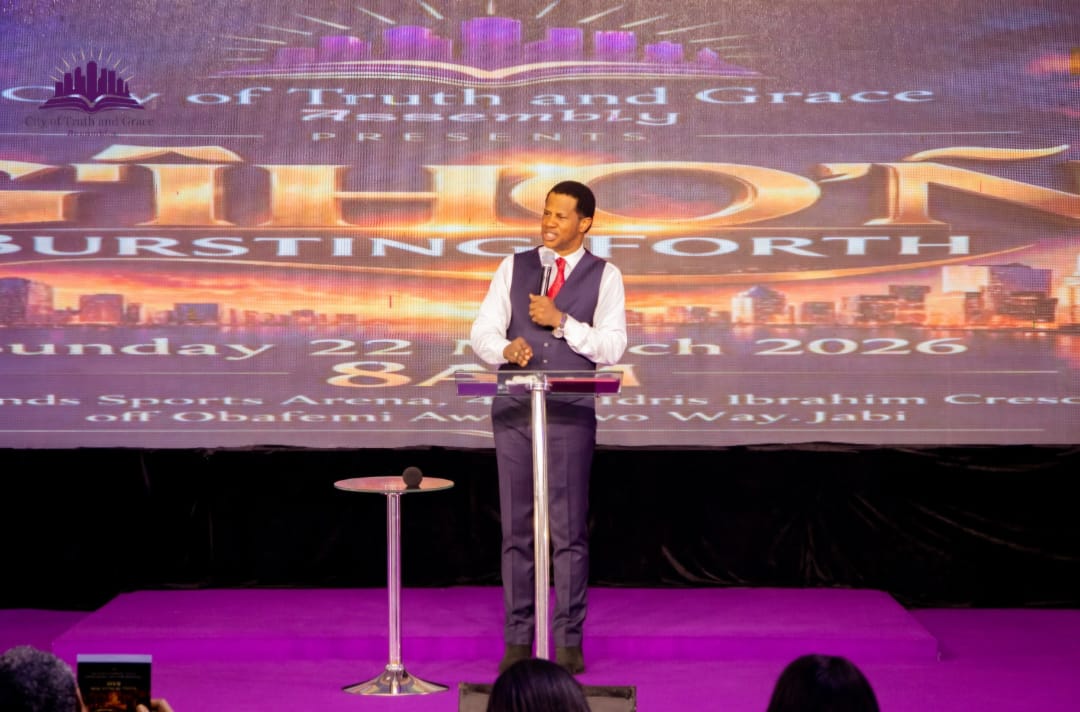
Easter: Church Targets Spiritual Renewal, Community Impact with Power-Packed Programme
By: Michael Mike
As Christians prepare for the Easter season, the City of Truth and Grace Assembly has positioned its 2026 celebration as more than a routine observance, unveiling a spiritually driven programme aimed at fostering personal transformation and strengthening community bonds.
Themed “The Power of Resurrection,” the church said the initiative is designed to rekindle faith, inspire hope, and provide a platform for collective spiritual engagement at a time when many people are seeking renewal amid prevailing social and economic pressures.
The programme, to be hosted by Dipo Fisho, will begin on Good Friday with a family-focused prayer session which organisers describe as a strategic gathering to address both personal and societal challenges through intercession.
According to the church, the prayer session will emphasise unity, healing, and divine direction for families and the wider community.
The Easter activities will culminate on Easter Sunday with a special worship service centred on the message of resurrection, renewal, and spiritual rebirth.
Organisers explained that the programme goes beyond worship services, incorporating moments of fellowship such as a love feast aimed at strengthening relationships among church members and welcoming first-time attendees while reinforcing the central Easter message of love, sacrifice, and redemption.
“This is not just a celebration; it is a call to experience transformation and new beginnings,” the church said, adding that the programme has been carefully curated to deliver both spiritual inspiration and emotional impact.
The event will take place at The Grounds Sport Arena, with activities scheduled for 5:00 p.m. on Good Friday and 8:00 a.m. on Easter Sunday.
With expectations of a large turnout, the church said the programme—also tagged “The Power of Resurrection”—is open to people of all backgrounds and is intended to inspire faith, unity, and a renewed sense of purpose.
Residents across the city have been encouraged to participate, as organisers project the gathering as a significant Easter convergence focused on renewal, hope, and shared spiritual experience.
Easter: Church Targets Spiritual Renewal, Community Impact with Power-Packed Programme

NDLEA, US-DEA Strengthen Partnership to Combat Narco-Terrorism

NAPTIP, ICMPD Sensitise Students on Trafficking, Safe Migration in Abuja

Inclusive Investment in Vulnerable Women Critical to Nigeria’s $1tn Economy Goal – Uzoka-Anite

Roger Federer’s Shock as DNA Results Reveal Myla and Charlene Are Not His Biological Children

THE PLIGHT OF FARIDA

FAILED COUP IN BURKINA FASO: HOW TRAORÉ NARROWLY ESCAPED ASSASSINATION PLOT AMID FOREIGN INTERFERENCE CLAIMS
-
 News2 years ago
Roger Federer’s Shock as DNA Results Reveal Myla and Charlene Are Not His Biological Children
-
Opinions4 years ago
THE PLIGHT OF FARIDA
-
 News12 months ago
FAILED COUP IN BURKINA FASO: HOW TRAORÉ NARROWLY ESCAPED ASSASSINATION PLOT AMID FOREIGN INTERFERENCE CLAIMS
-

 News2 years ago
EYN: Rev. Billi, Distortion of History, and The Living Tamarind Tree
-
 Opinions4 years ago
POLICE CHARGE ROOMS, A MINTING PRESS
-

 ACADEMICS2 years ago
A History of Biu” (2015) and The Lingering Bura-Pabir Question (1)
-

 Columns2 years ago
Army University Biu: There is certain interest, but certainly not from Borno.
-

 Opinions2 years ago
Tinubu,Shettima: The epidemic of economic, insecurity in Nigeria
