
News
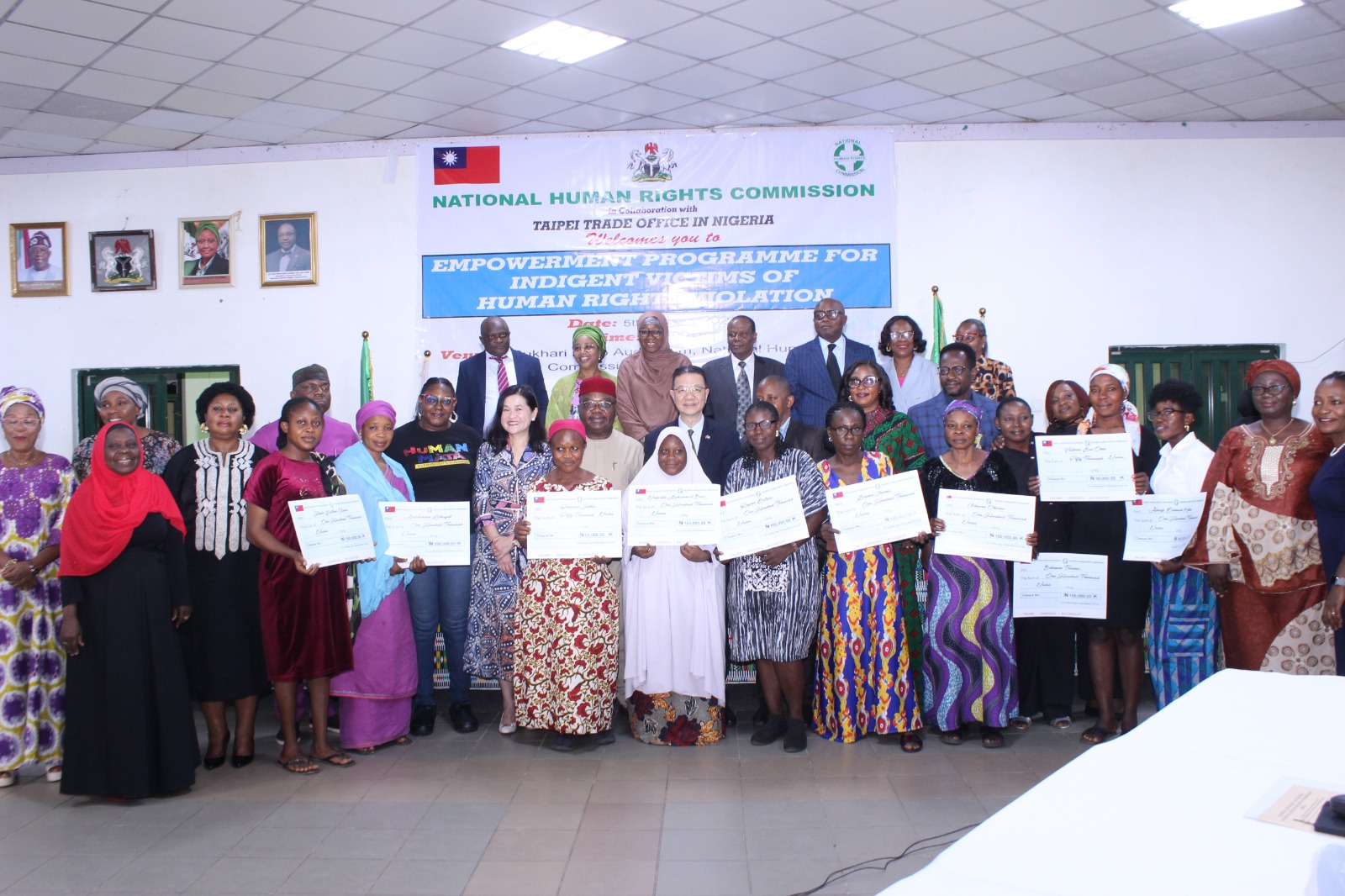
NHRC, Taiwan Empowers 11 Victims of Human Rights Violation

NHRC, Taiwan Empowers 11 Victims of Human Rights Violation
By: Michael Mike
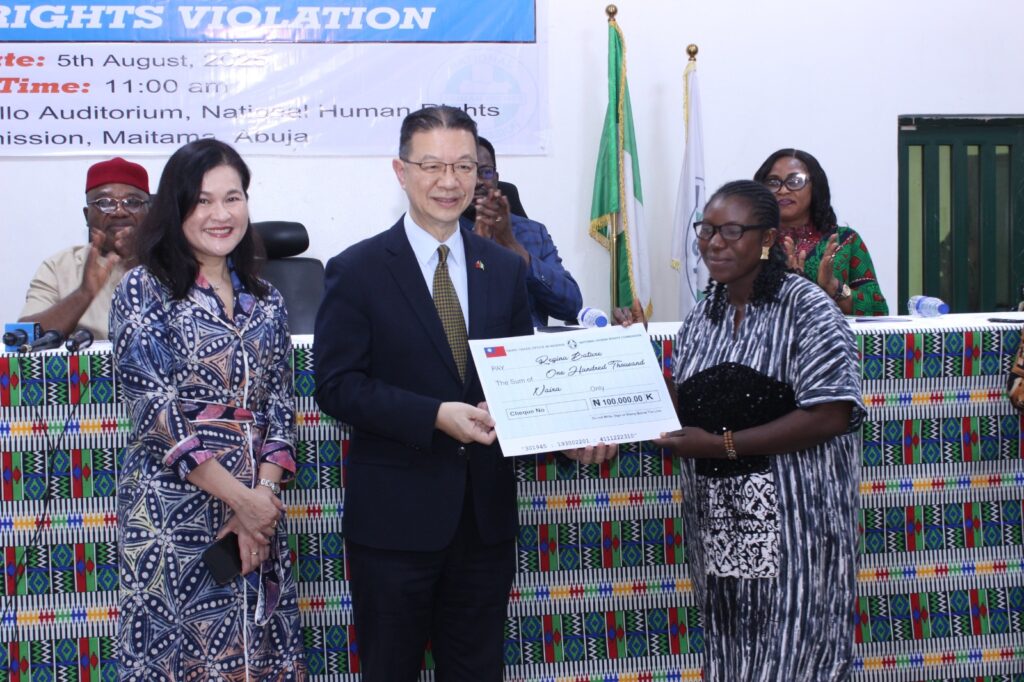
The National Human Rights Commission (NHRC) with the support of Taiwan Taipei Trade Office in Nigeria has empowered 11 indigent victims of human rights violation with a total amount of N1 million.
The empowerment programme is meant to boost the socio-economic well-being of the beneficiaries, who have been identified and verified by the Commission as those in dire need and are willing to improve their economic situation.
In his welcome address at the event, the Executive Secretary National Human Rights Commission (NHRC), Dr. Tony Ojukwu
said the occasion is “an opportunity to celebrate a remarkable milestone in our journey towards social justice, inclusion and empowerment.”
According to him, “the National Human Rights Commission in collaboration with Taipei Trade Office in Nigeria, proudly presents this empowerment programme, not only as a gesture of compassion but as a manifestation of our statutory mandate to restore the dignity of men and women”.
Ojukwu stated that a core part of the mandate of the Commission includes providing assistance to victims of human rights violation, including legal support, psycho-social services, and where possible, empowerment initiatives as this.
Commending the support of Taiwan Taipei Trade Office in Nigeria, Ojukwu noted that “our partnership with the Taipei Trade Office in Nigeria is a shining example of how international cooperation can yield real, impactful benefits for the vulnerable in our society.
He also urged the beneficiaries to see the programme as a stepping stone and not the destination adding that the Commission always shares the pain of survivors and is willing to offer more support.
In his remarks, Head of Mission Taipei Trade Office in Nigeria, Andy Yih-Ping- Liu said that his country’s cooperation extends to several areas including socio-economic interventions in Nigeria, saying that people should be supported to realize their dreams and contribute their quota to national and international development.
According to the him, his country is an Island of 23 million people which does not have the vast mineral resources that Nigeria has but relies heavily on the power of the brain to improve the standard of living of its citizens.
The Chief Representative of Taipei Trade Office in Nigeria pointed out that the East Asian country has suffered greatly from natural disasters and other challenges but has consistently focused attention on human capital development and improvement in technology.
He disclosed that less that two percent (2%) of Taiwanese citizens is illiterate, adding that education is key to society development and citizens well-being and that his country has always given priority to education and human capital development.
He described Taiwan as a global role model following its significant technology breakthroughs.
Liu who was accompanied by his wife, revealed that they have spend 30 years in Nigeria and that his country is determined to render humanitarian support to indigent victims of human rights violations in Nigeria.
Scores of invited Non Governmental Organisations and Civil Society Organisations were in attendance to witness the empowerment programme, which is a continuation of the NHRC’s interventions into cases of human rights violations.
It will be recalled that the Commission had provided support to victims of human rights violation through its various defunct investigation panels, where many Nigerians including women and indigent victims of human rights violation were paid compensations to ameliorate their plights.
The Commission in 2024 paid approximately N500m to victims SARS brutality in addition to making far-reaching recommendations to the federal government on human rights friendly policing in Nigeria.
Before then, the NHRC had in 2018 paid N135m compensation to family members of some motorcyclists and artisans, who were shot and killed in Abuja by some operatives of State Security Service (SSS) who claimed that the victims were terrorists.
Chief Executive Officer of Thelma Lion Foundation Dr. (Mrs) Ifeoma Uche Agu, donated the sum of N100,000 in support of the empowerment programme while Dorothy Njemanze Foundation promised capacity building training for the recipients to enable them utilize the funds efficiently.
In addition, Imabong Ladipo Samsi of Women Trafficking and Child Labour Eradication Foundation (WOTCLEF) said her organisation is ready to organize mental health training for the recipients.
NHRC, Taiwan Empowers 11 Victims of Human Rights Violation


JNIM terrorists clashes with rival factions in rare encounter in Nigeria’s Kebbi state
By: Zagazola Makama
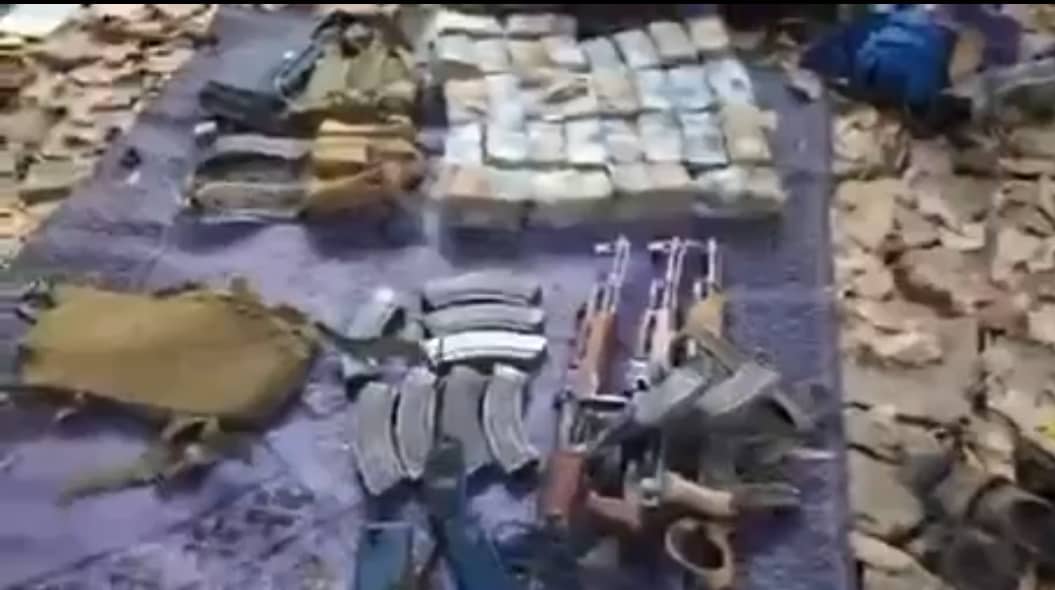
A suspected clash between rival terrorists factions has been reported in Kebbi State, raising fresh security concerns in the North-West region.
Sources said the incident occurred on April 4, when a group identified as Jama’at Nusrat al-Islam wal-Muslimin (JNIM) claimed it engaged a rival faction described as “Khawarij”.
The group alleged that one fighter was killed and another captured during the encounter, while three motorcycles and about N10 million were recovered.
However, the identity of the opposing group has yet to be independently verified.
Preliminary indications suggest the rival faction may be linked to Boko Haram or one of its splinter groups, though this remains subject to confirmation.
Security sources said the development could represent one of the first reported inter-jihadist clashes in the region.
JNIM terrorists clashes with rival factions in rare encounter in Nigeria’s Kebbi state
Troops foil mob attack, rescue suspected terrorist in Danmusa in Katsina
By: Zagazola Makama
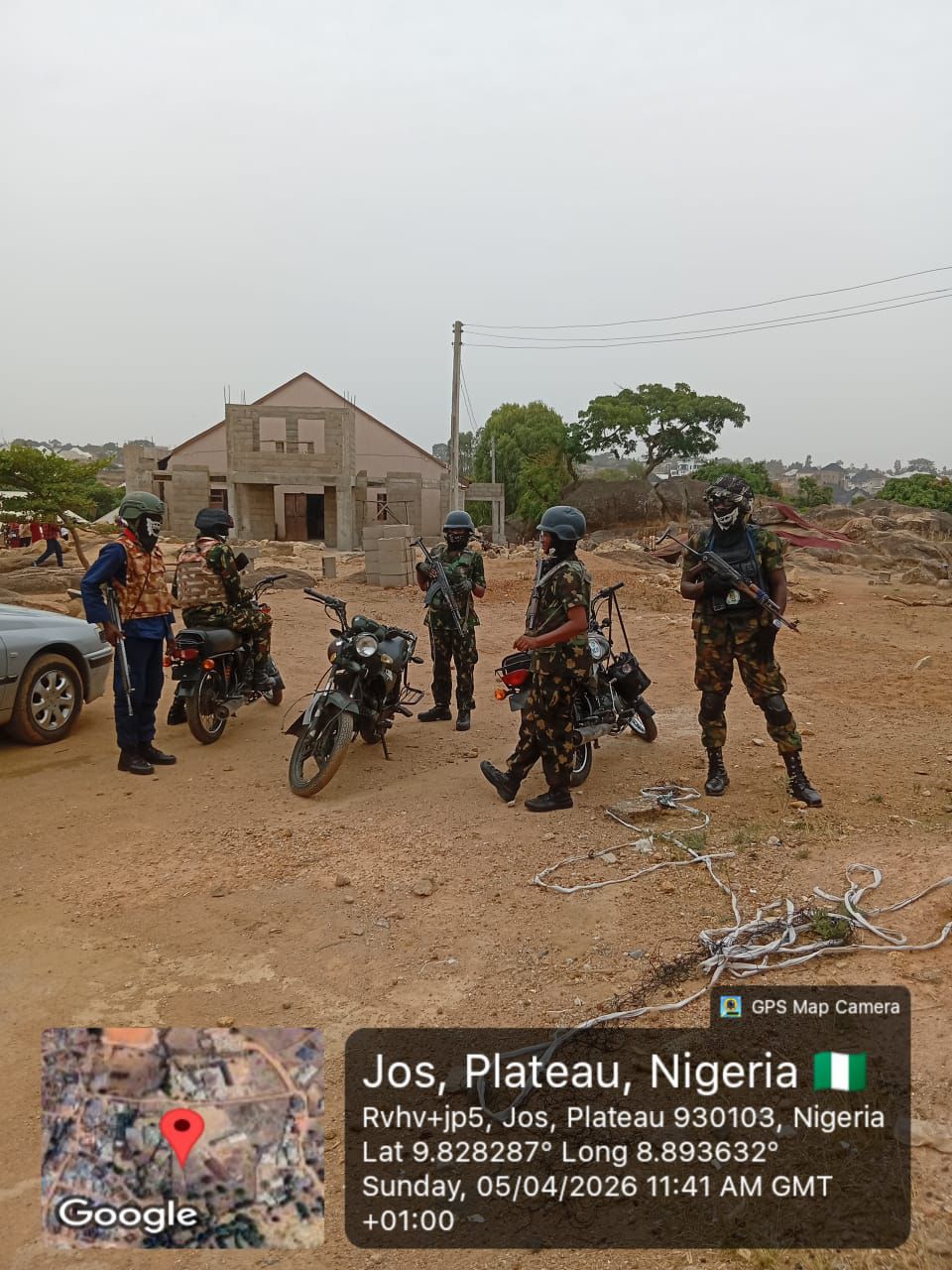
Troops of 17 Brigade have foiled an attempt by a mob to lynch a suspected terrorist and burn down a police station in Danmusa Local Government Area of Katsina State.
Security sources said the incident occurred at about 4:30 p.m. on April 5, 2026, when troops deployed at Combat Team 1 in Danali village responded to a distress call from a Nigerian Police outpost in the area.
The police had reported that a large crowd attempted to set the station ablaze and attack personnel after a suspected terrorist was brought into custody.
Troops were immediately mobilised to the scene and successfully prevented further escalation of the situation, restoring order in the area.
During the intervention, police personnel reportedly fired tear gas to disperse the irate crowd, which led to injuries sustained by one civilian.
The injured victim was evacuated to a medical facility for treatment.
Security sources said calm had since returned to the area, while troops continued to maintain presence to prevent a resurgence of violence and ensure stability.
Troops foil mob attack, rescue suspected terrorist in Danmusa in Katsina
Plateau: troops launch manhunt after armed robbery attack in Bassa LGA
By: Zagazola Makama
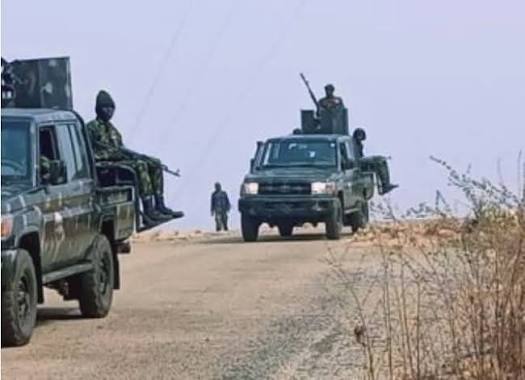
Troops of Operation Enduring Peace have launched a manhunt for suspected armed robbers who attacked three civilians along the Jebbu–Miango–Rewienko road in Bassa Local Government Area of Plateau State.
Security sources said the incident occurred at about 8:55 p.m. on April 5, 2026, when the victims were reportedly ambushed by armed men who dispossessed them of their motorcycles before fleeing the scene.
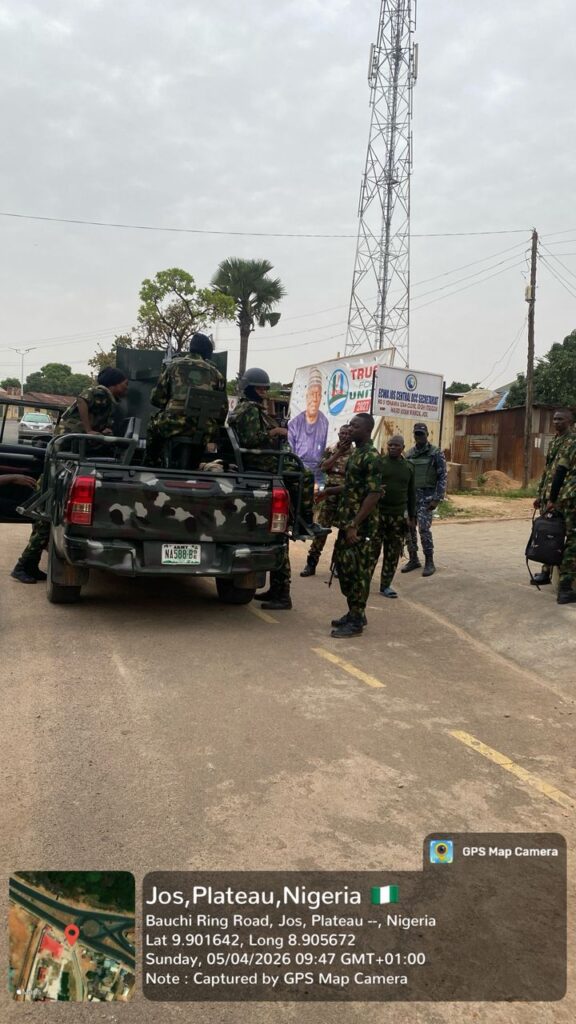
Troops of Sector 3 Operation Enduring Peace were immediately mobilised following the distress call but arrived after the attackers had escaped.
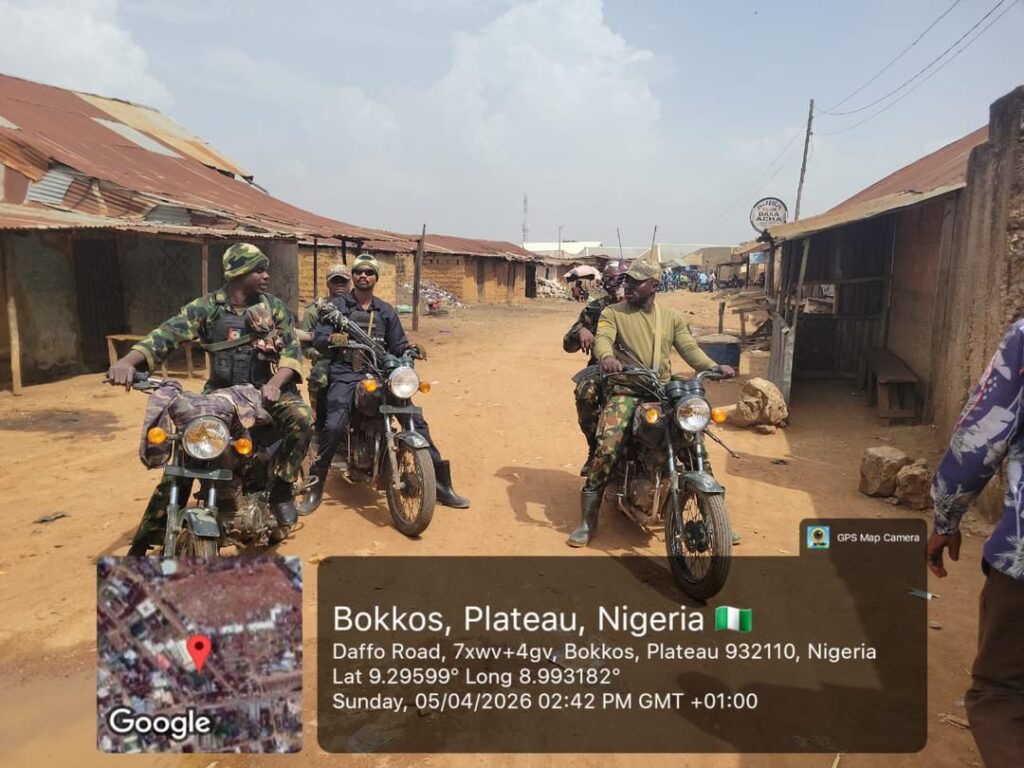
Efforts are ongoing to track and apprehend the fleeing suspects, while patrols have been intensified in the area to prevent further criminal activity.
Plateau: troops launch manhunt after armed robbery attack in Bassa LGA

JNIM terrorists clashes with rival factions in rare encounter in Nigeria’s Kebbi state

Troops foil mob attack, rescue suspected terrorist in Danmusa in Katsina

Plateau: troops launch manhunt after armed robbery attack in Bassa LGA

Roger Federer’s Shock as DNA Results Reveal Myla and Charlene Are Not His Biological Children

THE PLIGHT OF FARIDA

FAILED COUP IN BURKINA FASO: HOW TRAORÉ NARROWLY ESCAPED ASSASSINATION PLOT AMID FOREIGN INTERFERENCE CLAIMS
-
 News2 years ago
Roger Federer’s Shock as DNA Results Reveal Myla and Charlene Are Not His Biological Children
-
Opinions4 years ago
THE PLIGHT OF FARIDA
-
 News12 months ago
FAILED COUP IN BURKINA FASO: HOW TRAORÉ NARROWLY ESCAPED ASSASSINATION PLOT AMID FOREIGN INTERFERENCE CLAIMS
-

 News2 years ago
EYN: Rev. Billi, Distortion of History, and The Living Tamarind Tree
-
 Opinions4 years ago
POLICE CHARGE ROOMS, A MINTING PRESS
-

 ACADEMICS2 years ago
A History of Biu” (2015) and The Lingering Bura-Pabir Question (1)
-

 Columns2 years ago
Army University Biu: There is certain interest, but certainly not from Borno.
-

 Opinions2 years ago
Tinubu,Shettima: The epidemic of economic, insecurity in Nigeria
