
News
Nigeria advised to forge alliance with sahel states to stem jihadist expansion

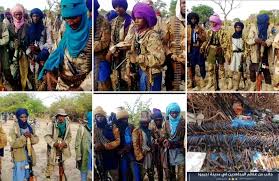
Nigeria advised to forge alliance with sahel states to stem jihadist expansion
By: Zagazola Makama
Security analyst and counterinsurgency expert, Zagazola Makama, has called on Nigeria to urgently forge a practical and trust-based alliance with the Alliance of Sahel States (AES) to halt the rapid expansion of jihadist networks from the Greater Sahel into littoral West Africa.
Makama, known for his authoritative insights on Lake Chad and Sahel security dynamics, made the call in an advisory released on Tuesday. He emphasised that the recent surge in jihadist activities particularly by Jama’at Nusrat al-Islam wal-Muslimin (JNIM) and Islamic State Sahel Province (ISSP) now poses a direct threat to Nigeria and its neighbours along the Atlantic coast.
According to him, this rising tide of extremism demands a unified response that transcends political divides, ideological alignments, and historical grievances.
Nigeria must lead the charge
Makama urged Nigeria to take the lead in initiating a regional counterterrorism alliance involving AES members Mali, Burkina Faso, and Niger as well as neighbouring states like Chad, Central African Republic (CAR), Sudan, and Libya.
He said Nigeria’s experience in fighting Boko Haram and ISWAP, its strong military assets, and its leadership role in ECOWAS position it as a natural leader in this proposed coalition.
“The threat is no longer confined to the Sahel. Jihadist groups are pushing southward with clear intent to destabilise littoral states such as Ghana, Togo, and Benin. Nigeria is the buffer, and if Nigeria is overwhelmed, the entire subregion could unravel,” Makama warned.
He advised President Bola Ahmed Tinubu, in his capacity as ECOWAS Chairman, to convene a summit with AES leaders Capt. Ibrahim Traoré of Burkina Faso, Col. Assimi Goïta of Mali, and Gen. Abdourahamane Tiani of Niger.
“Let Nigeria rise above politics and take the initiative. A united African front is the only way to roll back the tide of extremism in the region,” he added.
Security collaboration and intelligence sharing
Makama recommended the creation of a joint regional intelligence platform that would allow real-time sharing of information on jihadist movements, recruitment cells, and financing.
He called for a regional military alliance capable of launching cross border operations against terror enclaves in the Liptako-Gourma triangle and along the Nigeria-Niger border where ISSP is recruiting among Fulani youths under its “Lakurawa” network. Nigeria has the air power, AES has the ground knowledge. Coordinated, precision-led strikes are possible if trust is built and maintained,” he said.
Tackling the roots of terror
Beyond kinetic responses, Makama stressed the need for socio-economic interventions to address the root causes of radicalisation. He proposed joint investment in agriculture, road infrastructure, youth employment schemes, and cross-border trade corridors.
He also urged Nigeria to support AES countries with agricultural technology and capacity-building to reduce rural poverty and food insecurity conditions often exploited by jihadist groups. “An idle young man in Gao or Tillaberi is the perfect prey for terrorists. Development is as important as the gun in this war,” he said.
Border control and propaganda warfare
To contain the spread of jihadists and arms across porous frontiers, Makama advised the deployment of drones, surveillance systems, and joint patrols. He further proposed expanding Nigeria’s current border security framework in the Lake Chad Basin to cover AES border zones.
Makama also urged Nigeria to share the successes and methodologies of its deradicalisation programme, Operation Safe Corridor, with AES states.
“Jihadists use narratives to recruit and hold territory. We must counter them with stronger narratives ones rooted in culture, faith, and community resilience,” he noted.
Bringing in CAR, Sudan and Libya
Makama said the conflicts in Libya, Sudan, and CAR continue to fuel instability in the Sahel, as they serve as arms depots and transit points for fighters. He called for Nigeria and AES to extend their security coordination to these countries, using platforms such as the African Union and ECCAS.
He suggested engaging the Libyan National Army (LNA) in the east and western government factions separately, while also advocating for the inclusion of a Sahel-specific security agenda in AU-led peace talks on Sudan.
Neutrality and trust-building
Makama acknowledged the current mistrust between AES and ECOWAS, and the geopolitical divergence between Nigeria’s Western alliances and AES’s turn toward Russia. He proposed Togo and Senegal as neutral mediators in convening the proposed summit.
He commended Nigeria’s new visa-free policy for Africans as a step toward soft power diplomacy and urged for inter-community dialogue among Fulani, Tuareg, and Hausa groups to reduce ethnic tensions fueling extremism.
“Our cultures connect us. Our borders divide us. We must return to our shared African identity and fight together,” Makama said.
“We are running out of time. The jihadists are adapting, expanding, and exploiting every gap. If we don’t build a continental firewall today, we will be fighting fires on the Atlantic coast tomorrow.”
He called on Nigerian leadership to rise above regional politics and act decisively in shaping a continental security response capable of restoring peace, order, and development in the Sahel and beyond.
By bridging the Sahel and coastal states through collaboration, trust, and mutual interest, Nigeria and its neighbours can stem the tide of extremist violence threatening regional stability.
Zagazola Makama is a Counter Insurgency Expert and Security Analyst in the Lake Chad Region
Nigeria advised to forge alliance with sahel states to stem jihadist expansion


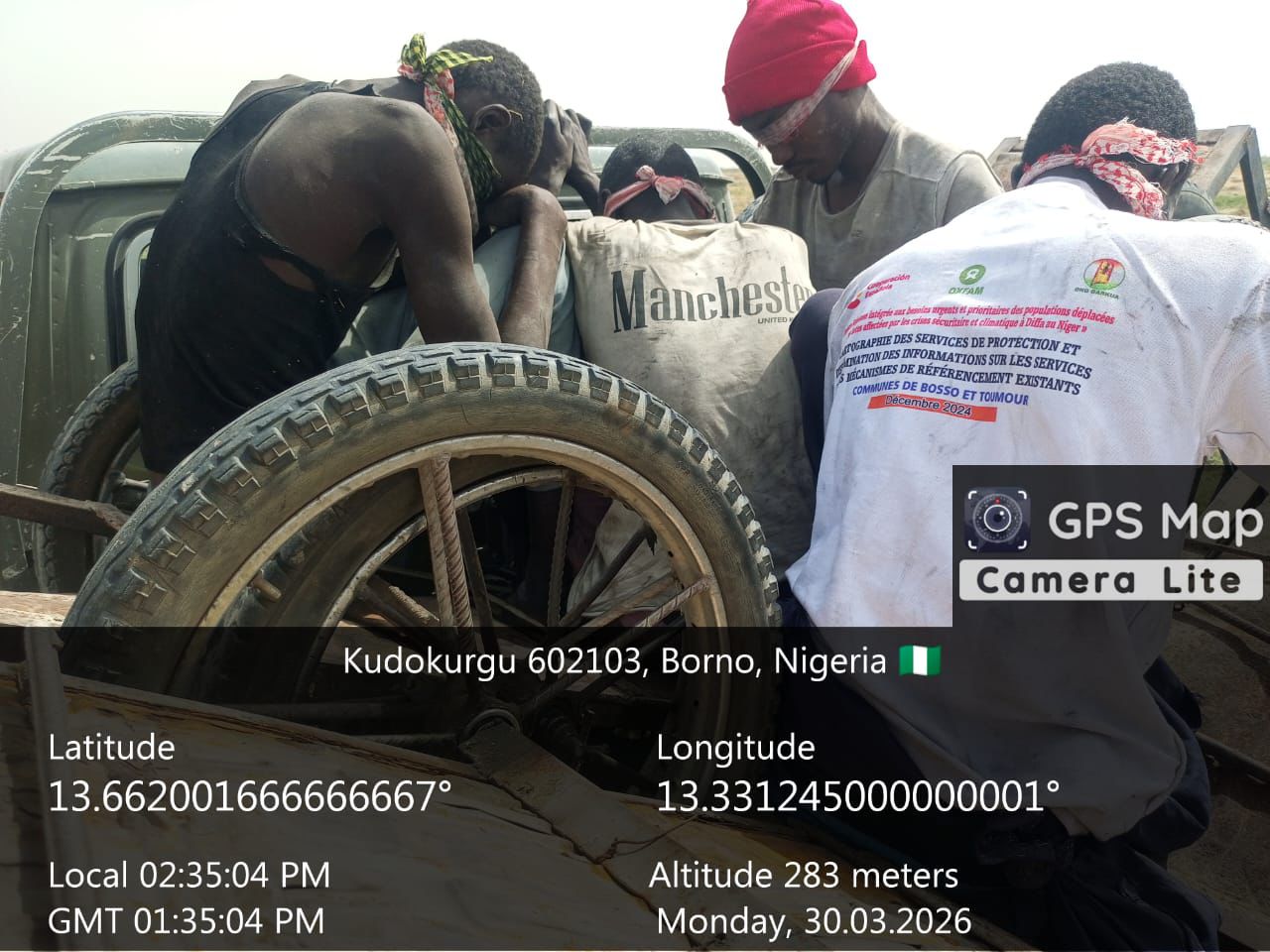
Troops intercept 11 youths with donkeys during patrol in Borno
By: Zagazola Makama
Troops of 68 Battalion have intercepted 11 youths during a routine patrol in Mallam Fatori area of Abadam Local Government Area of Borno State.
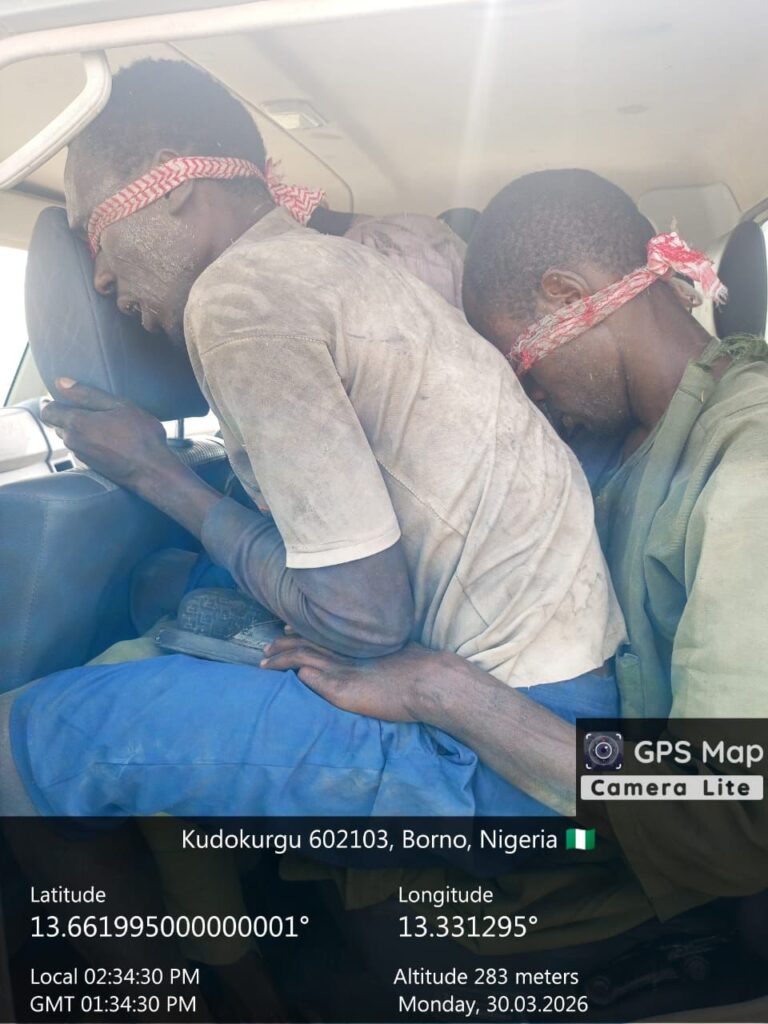
Security sources said the interception occurred along the Bulagana–Cheisa axis on April 2 during ongoing clearance operations in the area.
According to the sources, the individuals were found moving in the area with 12 donkeys when they were stopped and briefly interrogated by troops.
The sources added that the youths were later handed over, alongside the animals, to relevant authorities in a neighbouring country for further necessary action.
The military said the patrol was part of sustained efforts to maintain security dominance and prevent exploitation of border communities by criminal elements.
Troops intercept 11 youths with donkeys during patrol in Borno
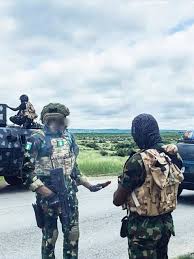
Troops recover ammunition, logistics items in Kwara patrol operation
By: Zagazola Makama
Troops of the Nigerian Army under the 22 Brigade have recovered ammunition and other logistics items during a fighting patrol in Ifelodun Local Government Area of Kwara State.
A security source disclosed that the operation was conducted at about 4:00 p.m. on April 2 at Daban Lema, where troops of the brigade, operating from the Patrol Base, encountered signs of suspected terrorist activities in a deserted location.
According to the source, the troops immediately carried out exploitation of the area, leading to the recovery of four rounds of 7.62mm special ammunition and one empty PKT ammunition belt link.
Other items recovered include four mobile phones, two head warmers, two small solar panels, and assorted repair tools believed to have been used by the suspected terrorists.
The source added that the recovery indicates the presence and movement of suspected criminal elements within the area, noting that troops have intensified surveillance and patrols to deny them freedom of action.
Troops recover ammunition, logistics items in Kwara patrol operation
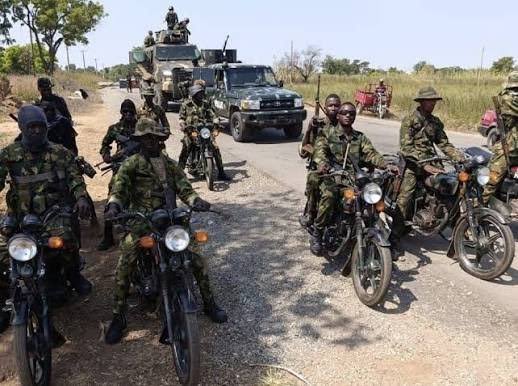
Troops foil attack by Criminal Youths, rescue victims, arrest suspects in plateau
By: Zagazola Makama
Troops of Sector 1, Operation Enduring Peace (OPEP), have foiled an attack on residents at Dutse Uku in Jos North Local Government Area of Plateau State.
A security source said the troops responded swiftly to a report of sporadic gunshots in the area at about 11:50 p.m. on April 2.
According to the source, upon arrival at the scene, the suspected criminals fled, abandoning their operation due to the prompt intervention of the troops.
He said the troops rescued two victims who sustained gunshot wounds during the incident and immediately evacuated them to a hospital for medical attention.
The source further disclosed that two suspects, dressed in black attire, were arrested at the scene.
Items recovered from the suspects include a cutlass and a knife.
He added that the suspects are currently in military custody and undergoing preliminary investigation, while efforts are ongoing to track down other fleeing members of the group.
Zagazola report that despite heightened security, there has been report of pocket of attacks in some communities.
The source reassured residents of the military’s commitment to protecting lives and property and urged the public to continue providing timely information to security agencies.
Troops foil attack by Criminal Youths, rescue victims, arrest suspects in plateau

Troops intercept suspected Boko Haram logistics convoy conveying 13 persons in Borno

Troops intercept 11 youths with donkeys during patrol in Borno

Troops, CJTF arrest three suspected Boko Haram logistics suppliers in Borno

Roger Federer’s Shock as DNA Results Reveal Myla and Charlene Are Not His Biological Children

THE PLIGHT OF FARIDA

FAILED COUP IN BURKINA FASO: HOW TRAORÉ NARROWLY ESCAPED ASSASSINATION PLOT AMID FOREIGN INTERFERENCE CLAIMS
-
 News2 years ago
Roger Federer’s Shock as DNA Results Reveal Myla and Charlene Are Not His Biological Children
-
Opinions4 years ago
THE PLIGHT OF FARIDA
-
 News12 months ago
FAILED COUP IN BURKINA FASO: HOW TRAORÉ NARROWLY ESCAPED ASSASSINATION PLOT AMID FOREIGN INTERFERENCE CLAIMS
-

 News2 years ago
EYN: Rev. Billi, Distortion of History, and The Living Tamarind Tree
-
 Opinions4 years ago
POLICE CHARGE ROOMS, A MINTING PRESS
-

 ACADEMICS2 years ago
A History of Biu” (2015) and The Lingering Bura-Pabir Question (1)
-

 Columns2 years ago
Army University Biu: There is certain interest, but certainly not from Borno.
-

 Opinions2 years ago
Tinubu,Shettima: The epidemic of economic, insecurity in Nigeria
