
News
Nigeria, IOM Seek Greater Collaboration Against Irregular Migration


Nigeria, IOM Seek Greater Collaboration Against Irregular Migration
By: Michael Mike
Minister of State for Foreign Affairs, Ambassador Bianca Odumegwu-Ojukwu, has said Nigeria is poised to forge better collaboration with the International Organisation for Migration (IOM) in tackling migration crisis,
This is as she attributed the spate of illegal migration of Nigerians to the country’s huge demography explaining that over 70 per cent of the nation’s population was under 40 and they needed employment.
The Minister expressed the willingness of the federal government when the Deputy Director-General (Operations) for the International Organisation for Migration, Ms. Ugochi Florence Daniels, paid her a courtesy visit in her office in Abuja.
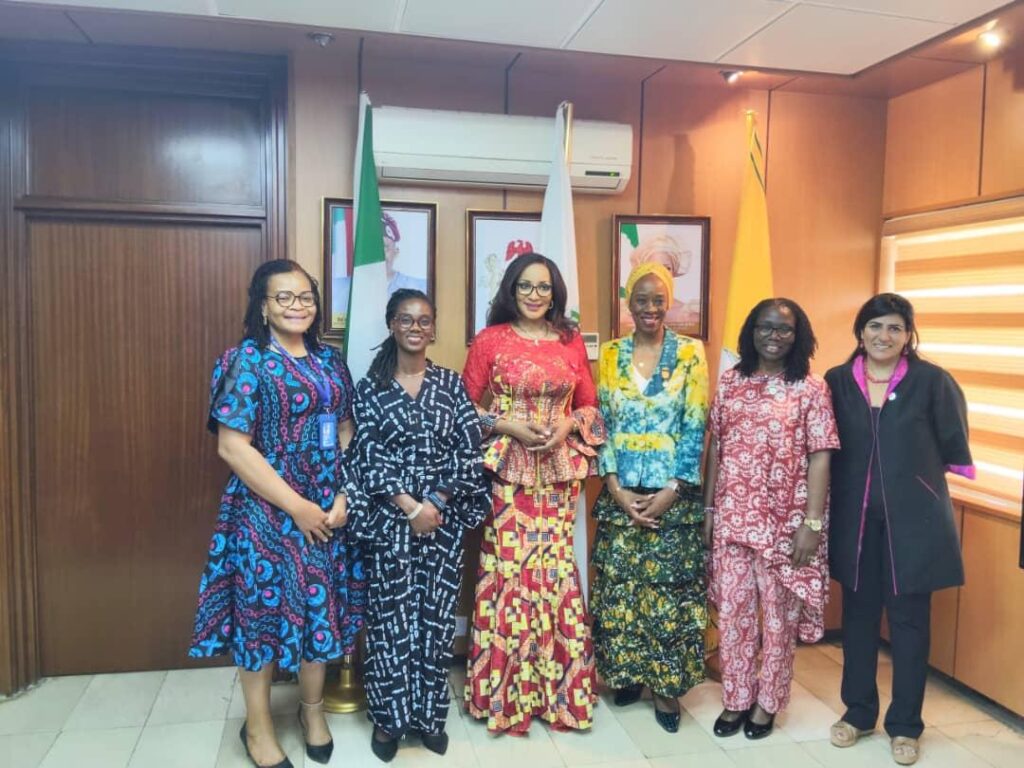
Odumegwu-Ojukwu explained that Diaspora is one of the major planks of the President Bola Tinubu’s foreign policy approach comprising Democracy, Demography, Diaspora and Development, otherwise christened 4-Ds.
She highlighted the government’s focus on citizen diplomacy following its concern about the welfare of the over 17 million Nigerians in the diaspora, noting that Nigeria’s very vibrant diaspora plays very important role in the nation’s economy by driving development.
The minister while highlighting the contributions of millions of Nigerian migrants in diaspora, equally emphasised the need for IOM to promote positive narratives on migration, stating that the country has sustained campaign to dispel the myth about greener pastures which according to her was the driver of irregular migration.
Odumegwu-Ojukwu, therefore, acknowledged the longstanding cooperation between Nigeria and IOM in addressing concerns relating to vulnerable migrants and Internally Displaced Persons (IDPs).
She applauded IOM’s strategic direction to save lives and protect people on the move, drive solutions to displacement and facilitate pathways for regular migration.
The minister further acknowledged the recent assistance by IOM in responding to the severe displacement due to flooding in some parts of the country especially Niger State where it deployed a rapid response team to support data collection, conduct initial damage assessment and provide emergency shelter kits and non-food items packages to support up 1000 most vulnerable families.
In view of the financial challenges currently facing the Organisation, the minister highlighted the need to initiate and execute programmes that address existential needs of persons of concern to IOM, in line with national priorities.
Disclosing that the government was taking necessary measures to fulfil its financial obligation to IOM, she urged the Organisation to ensure harmonisation of activities with Ministries, Departments and Agencies and other International Organisations. She, then, urged that the body leverages its global status to engender novel financial partnership from non-traditional donors.
Odumegwu-Ojukwu further said that as part of the UN80 Reform Initiative, Nigeria was willing to host International Organisations/UN Operations that are relocating from Geneva or New York.
Currently, IOM Nigeria is implementing a programme titled: “Promoting Better Management of Migration in Nigeria” (PBMM), funded by the European Union to assist Government in the areas of Managing Irregular Migration through Immigration and Border Management, Migration Data, Policy and Labour Migration and Diaspora Mobilisation.
Earlier, the Deputy Director General of IOM, Ugochi Florence Daniels reassured the Organisation’s commitment to the government and people of Nigeria.
She said that Nigeria was number one in returns as no fewer than 70,000 irregular migrants had been returned to the country by the IOM while about 27,000 were reintegrated in the society through its Assisted Voluntary Return and Reintegration Programme (AVRR).
Daniels said the Organisation was dedicated to promoting humane and orderly migration for all migrants and accelerating the transformative initiatives to reach the Sustainable Development Goals (SDGs), including the Africa Union’s Agenda 2063.
“We have a very comprehensive intervention in Nigeria. We count on your continued support for the work of IOM in Nigeria,” she said.
Nigeria, IOM Seek Greater Collaboration Against Irregular Migration


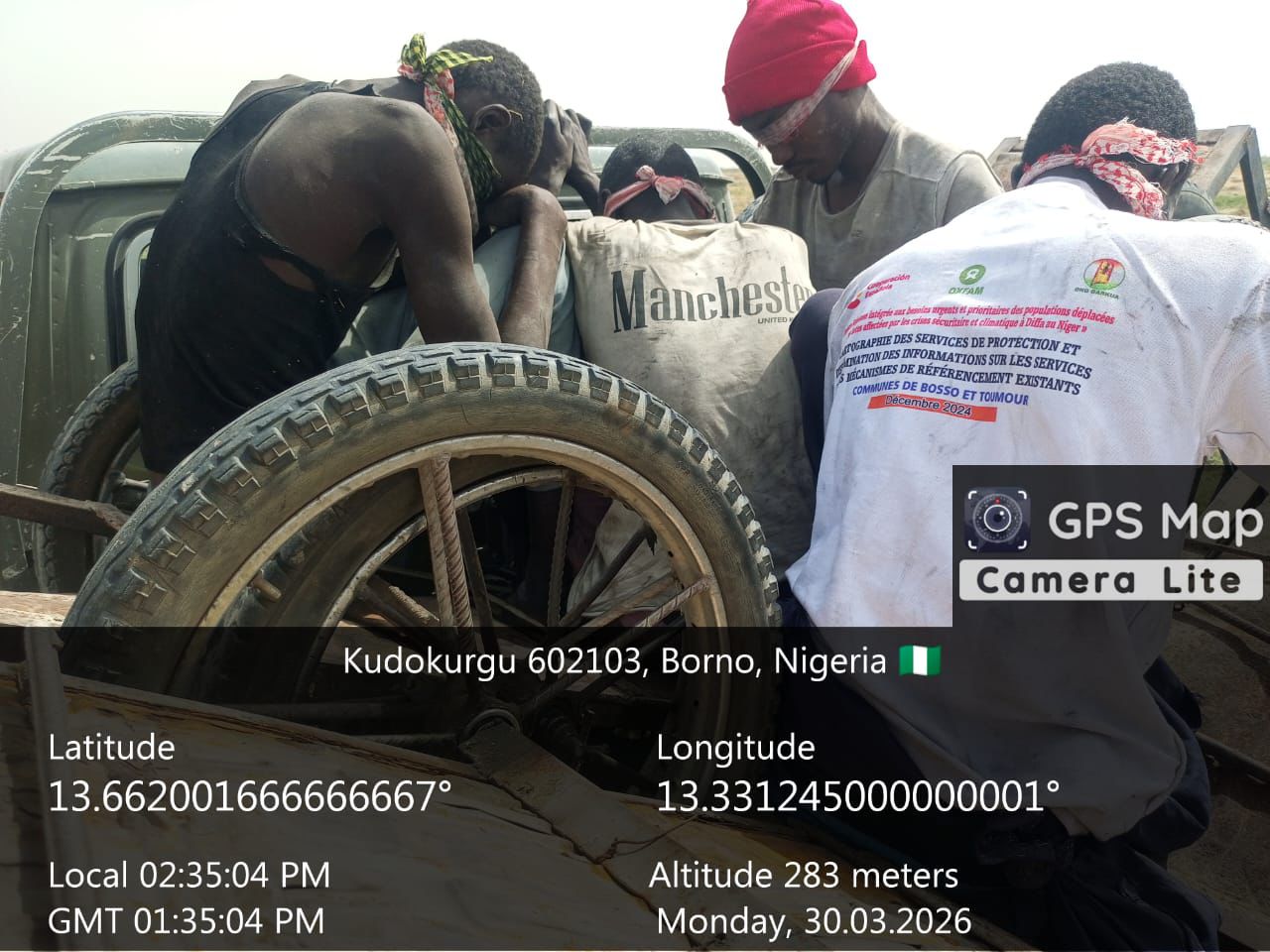
Troops intercept 11 youths with donkeys during patrol in Borno
By: Zagazola Makama
Troops of 68 Battalion have intercepted 11 youths during a routine patrol in Mallam Fatori area of Abadam Local Government Area of Borno State.
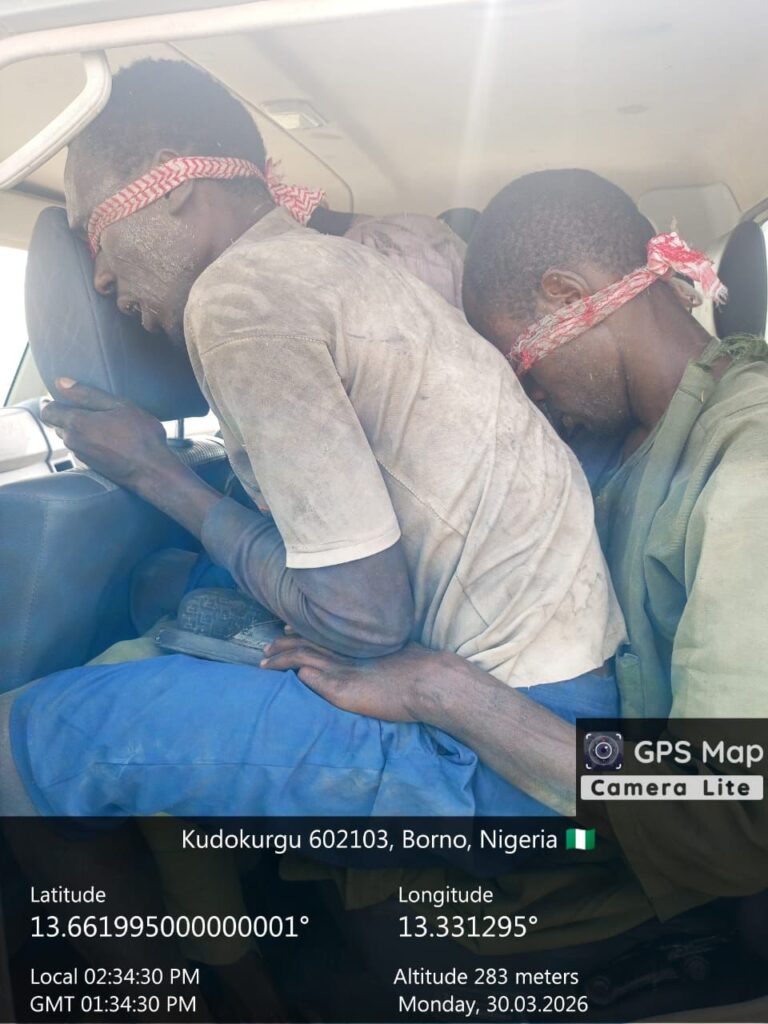
Security sources said the interception occurred along the Bulagana–Cheisa axis on April 2 during ongoing clearance operations in the area.
According to the sources, the individuals were found moving in the area with 12 donkeys when they were stopped and briefly interrogated by troops.
The sources added that the youths were later handed over, alongside the animals, to relevant authorities in a neighbouring country for further necessary action.
The military said the patrol was part of sustained efforts to maintain security dominance and prevent exploitation of border communities by criminal elements.
Troops intercept 11 youths with donkeys during patrol in Borno
Troops recover ammunition, logistics items in Kwara patrol operation
By: Zagazola Makama
Troops of the Nigerian Army under the 22 Brigade have recovered ammunition and other logistics items during a fighting patrol in Ifelodun Local Government Area of Kwara State.
A security source disclosed that the operation was conducted at about 4:00 p.m. on April 2 at Daban Lema, where troops of the brigade, operating from the Patrol Base, encountered signs of suspected terrorist activities in a deserted location.
According to the source, the troops immediately carried out exploitation of the area, leading to the recovery of four rounds of 7.62mm special ammunition and one empty PKT ammunition belt link.
Other items recovered include four mobile phones, two head warmers, two small solar panels, and assorted repair tools believed to have been used by the suspected terrorists.
The source added that the recovery indicates the presence and movement of suspected criminal elements within the area, noting that troops have intensified surveillance and patrols to deny them freedom of action.
Troops recover ammunition, logistics items in Kwara patrol operation
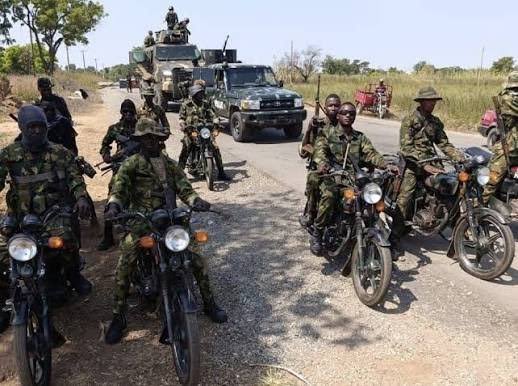
Troops foil attack by Criminal Youths, rescue victims, arrest suspects in plateau
By: Zagazola Makama
Troops of Sector 1, Operation Enduring Peace (OPEP), have foiled an attack on residents at Dutse Uku in Jos North Local Government Area of Plateau State.
A security source said the troops responded swiftly to a report of sporadic gunshots in the area at about 11:50 p.m. on April 2.
According to the source, upon arrival at the scene, the suspected criminals fled, abandoning their operation due to the prompt intervention of the troops.
He said the troops rescued two victims who sustained gunshot wounds during the incident and immediately evacuated them to a hospital for medical attention.
The source further disclosed that two suspects, dressed in black attire, were arrested at the scene.
Items recovered from the suspects include a cutlass and a knife.
He added that the suspects are currently in military custody and undergoing preliminary investigation, while efforts are ongoing to track down other fleeing members of the group.
Zagazola report that despite heightened security, there has been report of pocket of attacks in some communities.
The source reassured residents of the military’s commitment to protecting lives and property and urged the public to continue providing timely information to security agencies.
Troops foil attack by Criminal Youths, rescue victims, arrest suspects in plateau

Troops intercept suspected Boko Haram logistics convoy conveying 13 persons in Borno

Troops intercept 11 youths with donkeys during patrol in Borno

Troops, CJTF arrest three suspected Boko Haram logistics suppliers in Borno

Roger Federer’s Shock as DNA Results Reveal Myla and Charlene Are Not His Biological Children

THE PLIGHT OF FARIDA

FAILED COUP IN BURKINA FASO: HOW TRAORÉ NARROWLY ESCAPED ASSASSINATION PLOT AMID FOREIGN INTERFERENCE CLAIMS
-
 News2 years ago
Roger Federer’s Shock as DNA Results Reveal Myla and Charlene Are Not His Biological Children
-
Opinions4 years ago
THE PLIGHT OF FARIDA
-
 News12 months ago
FAILED COUP IN BURKINA FASO: HOW TRAORÉ NARROWLY ESCAPED ASSASSINATION PLOT AMID FOREIGN INTERFERENCE CLAIMS
-

 News2 years ago
EYN: Rev. Billi, Distortion of History, and The Living Tamarind Tree
-
 Opinions4 years ago
POLICE CHARGE ROOMS, A MINTING PRESS
-

 ACADEMICS2 years ago
A History of Biu” (2015) and The Lingering Bura-Pabir Question (1)
-

 Columns2 years ago
Army University Biu: There is certain interest, but certainly not from Borno.
-

 Opinions2 years ago
Tinubu,Shettima: The epidemic of economic, insecurity in Nigeria
