
News
Paris-bound businessman excretes 111 wraps of cocaine at Abuja airport

Paris-bound businessman excretes 111 wraps of cocaine at Abuja airport
. As NDLEA busts drug trafficking syndicate at Lagos airport
By: Michael Mike
Operatives of the National Drug Law Enforcement Agency (NDLEA) have arrested a 48-year-old Paris-bound businessman, Emmanuel Okechuku Orjinze for ingesting 111 wraps of cocaine.
This he excreted after days of observation in the agency’s custody following his arrest at the Nnamdi Azikiwe International Airport, Abuja.
A statement on Sunday by the spokesman of the anti-narcotics agency, Femi Babafemi said Okechukwu who also claimed to be a professional footballer in Europe was arrested last Tuesday during the outward clearance of Air France flight AF 878 from Abuja to Paris.
He said after a body scan confirmed he ingested illicit drugs, he was taken into custody where he excreted a total of 111 pellets of cocaine that weighed 1.603 kilogrammes over a period of three days.
Babafemi said the suspect claimed he does business in the maritime sector while still scouting for any European football club to engage him.
NDLEA officers operating at the Murtala Muhammed International Airport, Lagos in another clampdown have dismantled another drug trafficking syndicate at the airport.
According to Babafemi, this followed the arrest of four members of the network and the seizure of a total of 8 kilogrammes of methamphetamine and 7.6 kilogrammes of Loud, a synthetic strain of cannabis imported from South Africa.
He revealed that the lid was blown off the syndicate when an official within the airport system was intercepted with a backpack and a bag at the departure hall of Terminal 1 of the airport by NDLEA officers with the support of Aviation Security officers last Tuesday, with a search of the bags leading to the discovery of the illicit substances.
He said a swift follow-up operation at Ajao Estate area of Lagos led to the arrest of two other members of the syndicate: Chris Nwadozie and Chinedu Nwaosu.
Babafemi noted that further investigation led to the arrest of another member of the cartel working within the airport system last Saturday.
In a related development, NDLEA operatives at the NAHCO export shed of the Lagos airport have arrested a freight agent, Sonubi Abiodun over her attempt to cargo eight parcels of cocaine weighing 2 kilogrammes concealed in three out of six paint buckets containing shea butter packaged for export to the United Kingdom last Wednesday.
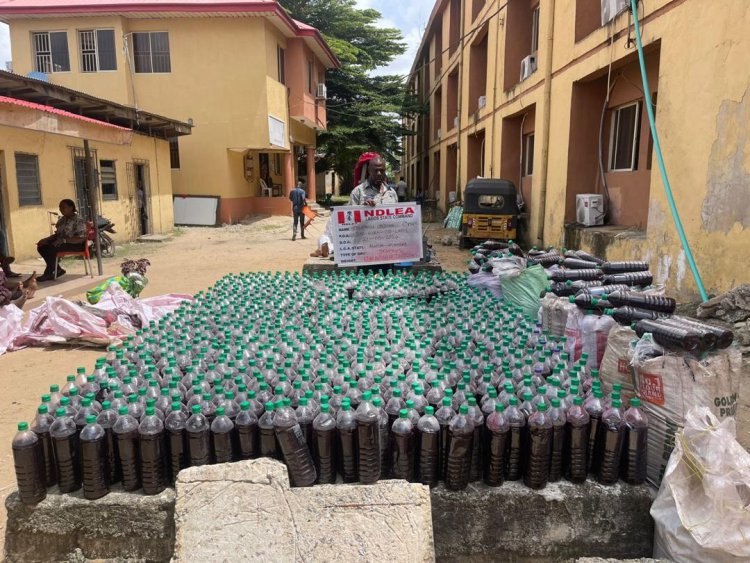
In Igbo Elerin in Ojo local government area of Lagos State, NDLEA officers on Tuesday 21st May arrested a suspect, Odumegwu Obijofor producing and distributing skuchies, a mixture of black currant and illicit drugs, Babafemi added that no fewer than 2,480 litres of the New Psychoactive Substance, NPS, were recovered from his clandestine factory when he was arrested.
In Cross River state, while Ogar Emmanuel, was arrested with 2.5 kilogrammes of cannabis at Ukpada Utugwan village, 29 sacks of the same substance weighing 290 kilogrammes were recovered from the warehouse of another suspect, Usani Ikpi, who is currently at large. Three suspects: Sa’adu Sule, 23; Mukhtar Nura, 23; and Hamza Nura, 18, were nabbed at Jabiri Funtua, Katsina state last Friday with 129 blocks of cannabis weighing 70 kilogrammes coming from Ogere, Ogun state.
The spokesman added that no fewer than five suspects including: Ezekiel Munda, 30; and Sule Mustapha, 21, were arrested by NDLEA operatives on Thursday 23rd May during raids at Karu Abattoir, Jikwoyi and Tora Bora hill area of FCT, Abuja, where 95.01 kilogrammes of cannabis and different quantities of opioids were recovered from them.
In Edo state, operatives arrested a physically challenged alleged notorious drug dealer, Zekere Sufianu, 45, at Auchi town on Wednesday 22nd May. At the time of his arrest, he was found with 751 grammes of Loud, 178 grammes of tramadol and pills of swinol.
He revealed that the various commands of the agency across the country
continued with the War Against Drug Abuse (WADA) advocacy campaign in the past week.
Meanwhile, while commending the officers and men of the NAIA, MMIA, FCT, Lagos, Cross River, Katsina, and Edo commands of the agency for their outstanding feats in the past week, Chairman/Chief Executive Officer of NDLEA, Brig. Gen. Buba Marwa (Retd) equally applauded their counterparts in all the commands across the country for intensifying their WADA advocacy lectures.
Paris-bound businessman excretes 111 wraps of cocaine at Abuja airport


Troops arrest suspected kidnapper in Damboa LGA of Borno
By: Zagazola Makama
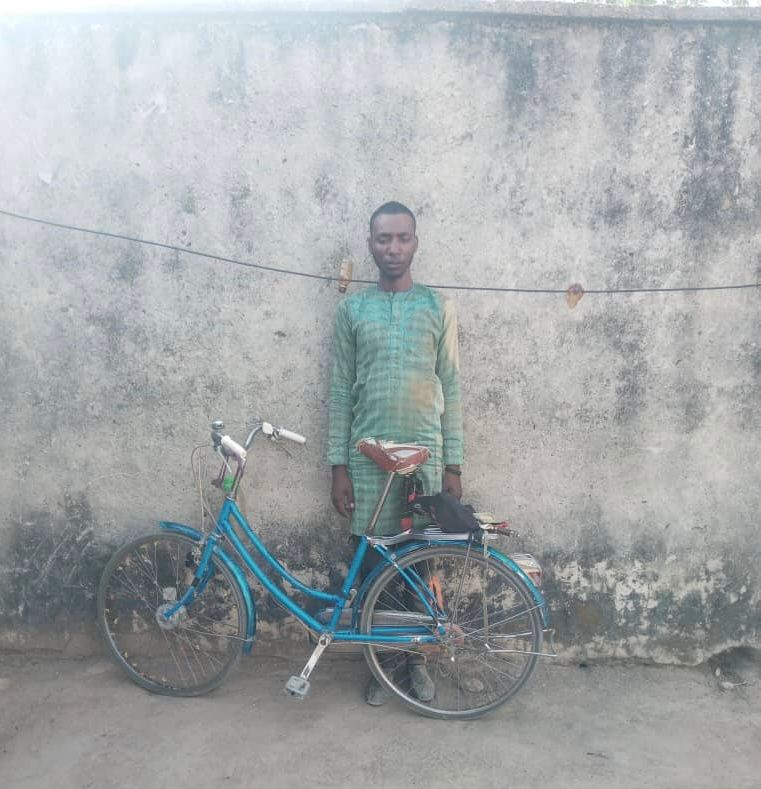
Troops of Operation Hadin Kai have arrested a suspected kidnapper in Azir community, Damboa Local Government Area of Borno State.
Sources told Zagazola Malama that the suspect was apprehended at about 5:00 p.m. on March 28 by troops of 25 Brigade and 19 Battalion (Mechanised) deployed at a Forward Operating Base in Azir.
The source disclosed that the suspect was alleged to have been involved in kidnapping activities within the Damboa and Azir general areas.
“During preliminary investigation, the suspect claimed to be a cattle courier operating within Damboa and its environs,” the source said.
He added that one bicycle was recovered from the suspect at the point of arrest.
The suspect and the recovered item are currently in troops’ custody for further investigation and necessary action.
Troops arrest suspected kidnapper in Damboa LGA of Borno
Troops arrest 58 illegal miners in Edo state
By: Zagazola Makama
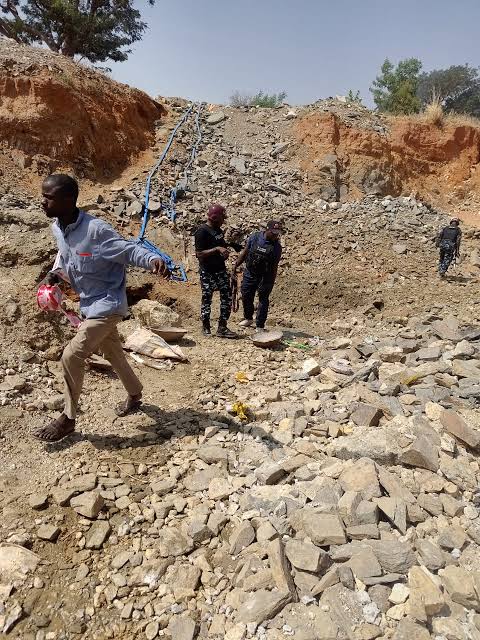
Troops of Operation MESA have arrested 58 suspected illegal miners at an illegal gold mining site in Ososo general area, Akoko-Edo Local Government Area of Edo State.
A security source disclosed that the suspects were apprehended at about 1:00 p.m. on March 28 during a fighting patrol conducted by troops of 195 Battalion (Rear).
According to the source, the troops stormed the mining site and arrested the suspects without resistance.
“The suspects are currently in troops’ custody for further action,” the source said.
He noted that the operation forms part of ongoing efforts to curb illegal mining activities and other criminal enterprises within Edo State and its environs.
Troops arrest 58 illegal miners in Edo state
Army troops arrest two suspected Boko Haram logistics suppliers in borno
By: Zagazola Makama
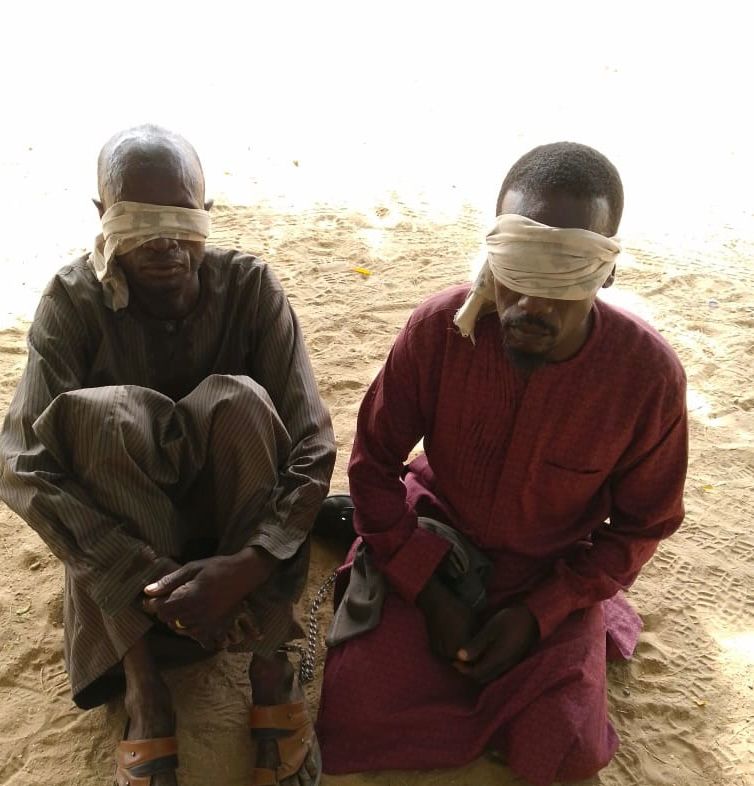
Troops of Operation Hadin Kai, in collaboration with operatives of the Joint Intelligence Fusion Centre (JIFC), have arrested two suspected logistics suppliers to Boko Haram terrorists in Gubio town, Borno State.
A military source disclosed that the suspects, identified as Mal Bunu Gojemi and Zanna Alhaji Mallam, were apprehended at about 11:30 a.m. on Saturday during a joint logistics strangulation operation conducted by troops in the area.
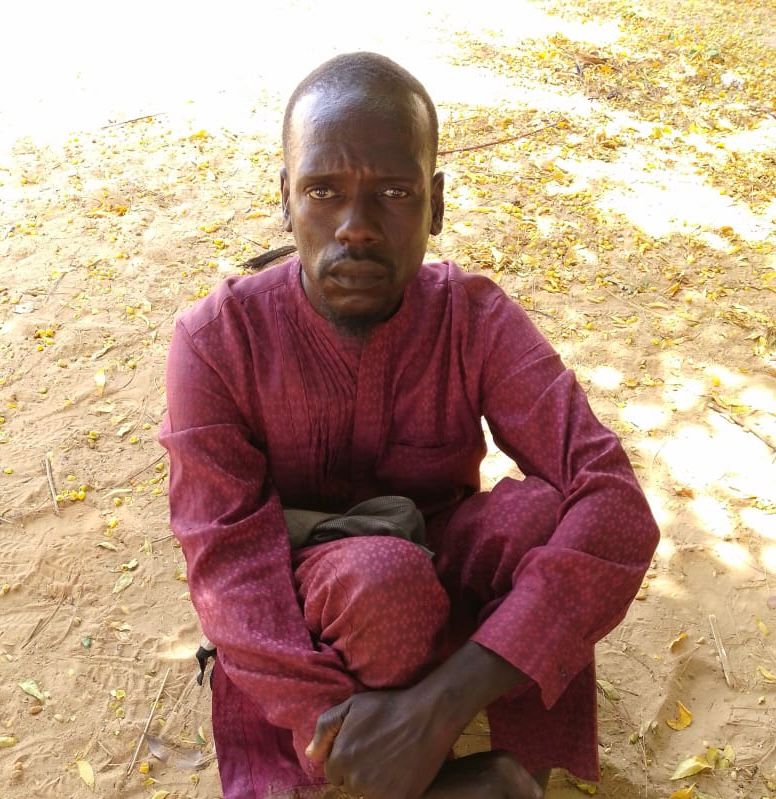
According to the source, the suspects confessed during preliminary interrogation to being long-time suppliers of logistics to the Boko Haram.
Items recovered from them include three mobile phones, a traditional cap, and the sum of N40,000.
“The suspects have since been handed over to operatives of the Joint Intelligence Fusion Centre for further investigation,” the source said.
He added that the operation was carried out without any incident.

The Nigerian Army and other security agencies have continued to intensify operations aimed at cutting off logistics supply chains to insurgents as part of ongoing counter-terrorism efforts in the North-East.
Army troops arrest two suspected Boko Haram logistics suppliers in borno

Troops arrest suspected kidnapper in Damboa LGA of Borno

Troops arrest 58 illegal miners in Edo state

Army troops arrest two suspected Boko Haram logistics suppliers in borno

Roger Federer’s Shock as DNA Results Reveal Myla and Charlene Are Not His Biological Children

THE PLIGHT OF FARIDA

FAILED COUP IN BURKINA FASO: HOW TRAORÉ NARROWLY ESCAPED ASSASSINATION PLOT AMID FOREIGN INTERFERENCE CLAIMS
-
 News2 years ago
Roger Federer’s Shock as DNA Results Reveal Myla and Charlene Are Not His Biological Children
-
Opinions4 years ago
THE PLIGHT OF FARIDA
-
 News11 months ago
FAILED COUP IN BURKINA FASO: HOW TRAORÉ NARROWLY ESCAPED ASSASSINATION PLOT AMID FOREIGN INTERFERENCE CLAIMS
-

 News2 years ago
EYN: Rev. Billi, Distortion of History, and The Living Tamarind Tree
-
 Opinions4 years ago
POLICE CHARGE ROOMS, A MINTING PRESS
-

 ACADEMICS2 years ago
A History of Biu” (2015) and The Lingering Bura-Pabir Question (1)
-

 Columns2 years ago
Army University Biu: There is certain interest, but certainly not from Borno.
-

 Opinions2 years ago
Tinubu,Shettima: The epidemic of economic, insecurity in Nigeria
