
News
PIA Inadequate in Addressing Challenges of Niger Delta Region, Says Group

PIA Inadequate in Addressing Challenges of Niger Delta Region, Says Group
By: Michael Mike
The Petroleum Industry Act (2021) has been observed as inadequate in providing solutions to the ecological and environmental challenges of the Niger Delta region.
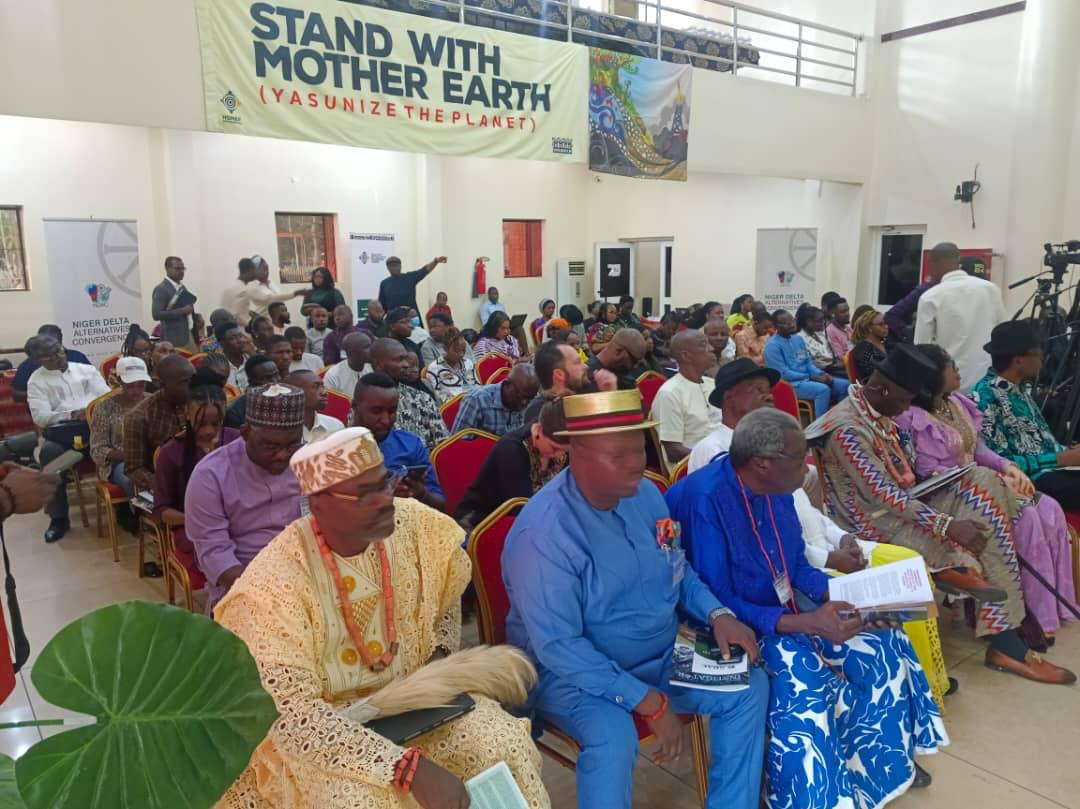
This was observed by stakeholders at the Third Niger Delta Socio-Ecological Alternatives Convergence (NDAC), organised by the Health of Mother Earth Foundation (HOMEF) in Abuja on Wednesday.
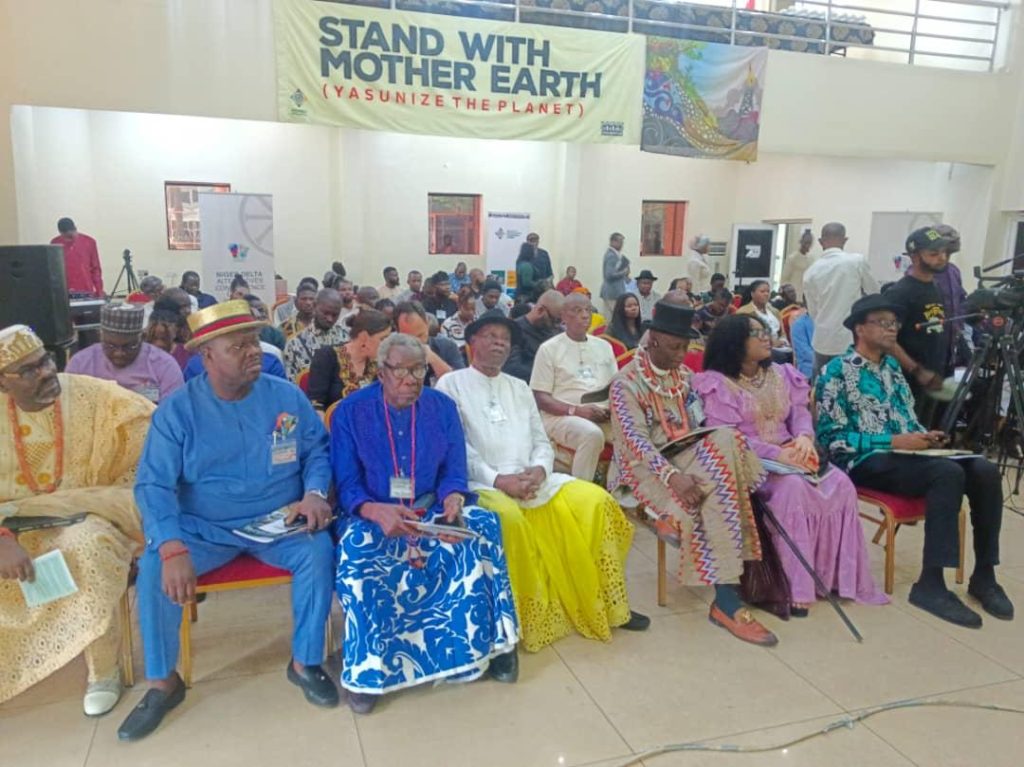
Highlighting the recent approved Niger Delta alternative manifesto for socio ecological justice, Mr. Ken Henshaw noted that while oil has been extracted from the region for over 64 years, the people in the area have been subjected to poverty, less developed and remained more unsecured.
He said the communities in the area that have borne the brunt of oil extraction and Nigeria’s oil economy for over six decades deserve urgent and immediate attention.
He however regretted that they are made to pay for offences not committed just to deny them the right of benefit from the 3 percent as provided by PIA.
Henshaw, who is the Executive Director, We The People, said: “We noted that the PIA is inadequate in addressing the challenges of our region. In parywe not the provisions on community responsibility for protecting oil infrastructures which effectively criminalises our people, provisions on gas flaring which effectively permits the practice, provisions on establishing the host communities funds which gives primacy to oil companies and fails to capture the interest and concerns of our communities”.
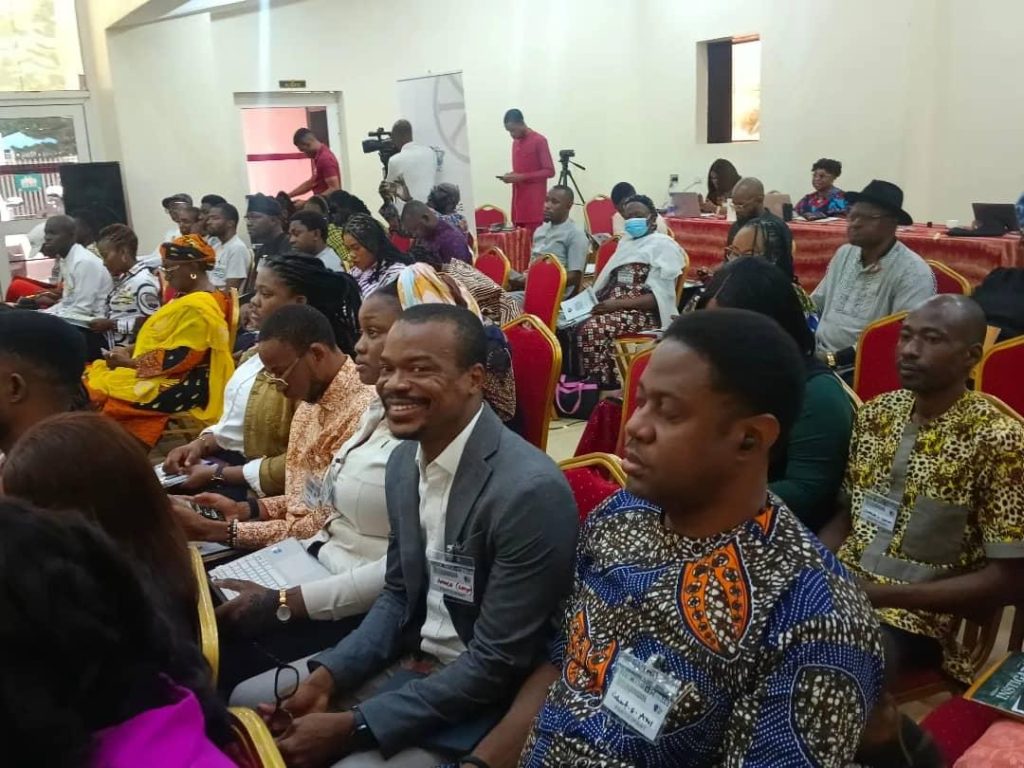
Earlier in his welcome address, the Executive Director of HOMEF, Dr. Nnimmo Bassey, noted that the Niger Delta is an undeniable sacrificial zone whose degraded situation must be realigned for the wellbeing of the people and the environment.
He decried that the region has been placed on a bloody slab and visited with unrelenting abuse by the forces of extractivism, internal colonialism and dispossession, stressing that “It has been recklessly exploited right from the time of slavery to the time of colonial monopolies and current realities where it is raped for the sake of keeping a waning petroleum civilization on life support”.
Bassey explained that the programme does not only highlight the huge socio-ecological challenges of the region but also proposes very clear pathways out of the quagmire.
He said “the convergence notes the extreme negative impacts of oil and gas exploitation in the region as well as the massive deforestation and diverse erosion of both the land and the coastlines.
“We note that while the region is made up of a complex ecosystem of streams, rivers, creeks and the sea, potable water is a rarity due to incessant oil spills and the dumping of hazardous industrial wastes into both surface and ground water”.
Speaking further, the HOMEF Executive Director stated that the manifesto foregrounded the struggle against the reckless pattern of crooked divestment schemed and allegedly promoted by the international oil companies (IOCs).
He said: “The plans by the international oil companies to sell off their onshore fields to domestic oil companies and either leave Nigeria or move into deep offshore locations has been roundly condemned as a ploy to escape responsibility and accountability for close to 70 years of unbelievably horrendous pollution of the territory through oil spills, hazardous produced water, toxic wastes and gas flaring”.
He however, urged the National Assembly to act on the matter of existential consequences for the people and the territory, saying that the communities cannot afford to be left stranded in the toxic brew bequeathed to them by the oil companies.
The stakeholders also called for the remediation and restoration of all impacted territories and for payment of reparations for the damage suffered in past years.
According to Bassey, “We should point out here that even the first oil wells drilled, exploited from the 1950s and abandoned in the 1970s, are still polluting the environment because there has not been a proper abandonment and decommissioning process”.
Chairman of the convergence, King Bubaraye Dakolo, noted the need for collective voices for changes in the region. He said “We must have our environment restored. The country has benefited hugely from the resources gotten from the Niger Delta but the region have not felt the positive of the benefits of the natural resources.”
He described the PIA as an anti-people law brought against the Niger Deltans. “A law that criminalises the host producing communities, we are going to ensure the right thing is done, they should clean and restore the environment before divesting”, Dakolo added.
PIA Inadequate in Addressing Challenges of Niger Delta Region, Says Group



Suspected cultists kill 12 in attack on Jos community, Plateau govt imposes curfew
By: Zagazola Makama
Suspected cultists on Sunday night attacked Angwan Rukuba community in Jos North Local Government Area of Plateau State, leaving 12 persons dead, in a fresh outbreak of violence that has prompted authorities to impose a 48-hour curfew in the area.
Security sources said the incident occurred at about 8:00 p.m. when residents of the community came under sporadic gunfire from unidentified armed men, suspected to be cultists, who stormed the area and shot indiscriminately.
Troops of Sector 1, Operation Enduring Peace (OPEP), were immediately mobilised to the scene following a distress call and moved to restore order and prevent further escalation.

A security report indicated that 12 persons were confirmed dead, while several others sustained varying degrees of injuries. The injured victims were said to have been evacuated to nearby medical facilities for treatment.
The troops subsequently cordoned off major access routes to the community and ordered residents to remain indoors while a coordinated search operation was launched to track down the attackers.
Military sources added that clearance operations were ongoing to apprehend the perpetrators and prevent further breakdown of law and order in the area.
In response to the attack, the Plateau State Government, in collaboration with security agencies, announced the imposition of a 48-hour curfew on Jos North Local Government Area with immediate effect.
The curfew, which took effect from midnight of March 29 to April 1, 2026, was aimed at restoring calm and enabling security agencies to carry out intensified operations.
In a statement issued by the Commissioner for Information and Communication, Rt. Hon. Joyce Lohya Ramnap, the government condemned the attack, describing it as “barbaric and unprovoked.”
The statement assured residents that security agencies had been directed to ensure the arrest and prosecution of those responsible, while urging the public to remain calm and cooperate with ongoing investigations.
Security patrols were still ongoing across affected communities as authorities moved to forestall possible reprisal attacks and restore normalcy.
Suspected cultists kill 12 in attack on Jos community, Plateau govt imposes curfew

Troops arrest suspected kidnapper in Damboa LGA of Borno
By: Zagazola Makama
Troops of Operation Hadin Kai have arrested a suspected kidnapper in Azir community, Damboa Local Government Area of Borno State.
Sources told Zagazola Malama that the suspect was apprehended at about 5:00 p.m. on March 28 by troops of 25 Brigade and 19 Battalion (Mechanised) deployed at a Forward Operating Base in Azir.
The source disclosed that the suspect was alleged to have been involved in kidnapping activities within the Damboa and Azir general areas.
“During preliminary investigation, the suspect claimed to be a cattle courier operating within Damboa and its environs,” the source said.
He added that one bicycle was recovered from the suspect at the point of arrest.
The suspect and the recovered item are currently in troops’ custody for further investigation and necessary action.
Troops arrest suspected kidnapper in Damboa LGA of Borno
Troops arrest 58 illegal miners in Edo state
By: Zagazola Makama
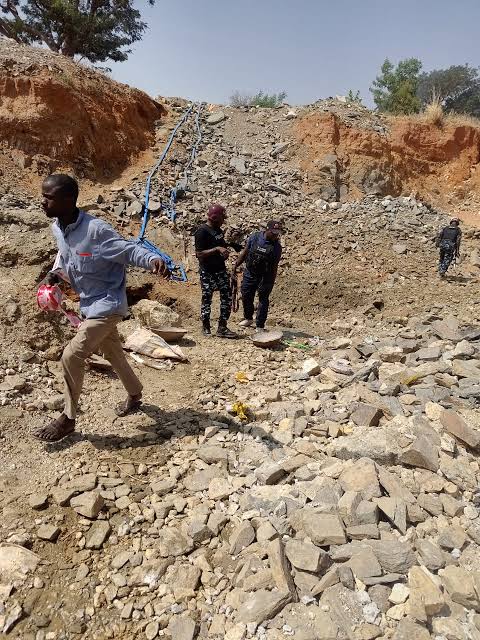
Troops of Operation MESA have arrested 58 suspected illegal miners at an illegal gold mining site in Ososo general area, Akoko-Edo Local Government Area of Edo State.
A security source disclosed that the suspects were apprehended at about 1:00 p.m. on March 28 during a fighting patrol conducted by troops of 195 Battalion (Rear).
According to the source, the troops stormed the mining site and arrested the suspects without resistance.
“The suspects are currently in troops’ custody for further action,” the source said.
He noted that the operation forms part of ongoing efforts to curb illegal mining activities and other criminal enterprises within Edo State and its environs.
Troops arrest 58 illegal miners in Edo state

Suspected cultists kill 12 in attack on Jos community, Plateau govt imposes curfew

Troops arrest suspected kidnapper in Damboa LGA of Borno

Troops arrest 58 illegal miners in Edo state

Roger Federer’s Shock as DNA Results Reveal Myla and Charlene Are Not His Biological Children

THE PLIGHT OF FARIDA

FAILED COUP IN BURKINA FASO: HOW TRAORÉ NARROWLY ESCAPED ASSASSINATION PLOT AMID FOREIGN INTERFERENCE CLAIMS
-
 News2 years ago
Roger Federer’s Shock as DNA Results Reveal Myla and Charlene Are Not His Biological Children
-
Opinions4 years ago
THE PLIGHT OF FARIDA
-
 News11 months ago
FAILED COUP IN BURKINA FASO: HOW TRAORÉ NARROWLY ESCAPED ASSASSINATION PLOT AMID FOREIGN INTERFERENCE CLAIMS
-

 News2 years ago
EYN: Rev. Billi, Distortion of History, and The Living Tamarind Tree
-
 Opinions4 years ago
POLICE CHARGE ROOMS, A MINTING PRESS
-

 ACADEMICS2 years ago
A History of Biu” (2015) and The Lingering Bura-Pabir Question (1)
-

 Columns2 years ago
Army University Biu: There is certain interest, but certainly not from Borno.
-

 Opinions2 years ago
Tinubu,Shettima: The epidemic of economic, insecurity in Nigeria
