
Crime
Police Arrest Suspected Kidnapper, Recover Ammunition in Plateau

Police Arrest Suspected Kidnapper, Recover Ammunition in Plateau
By Zagazola Makama
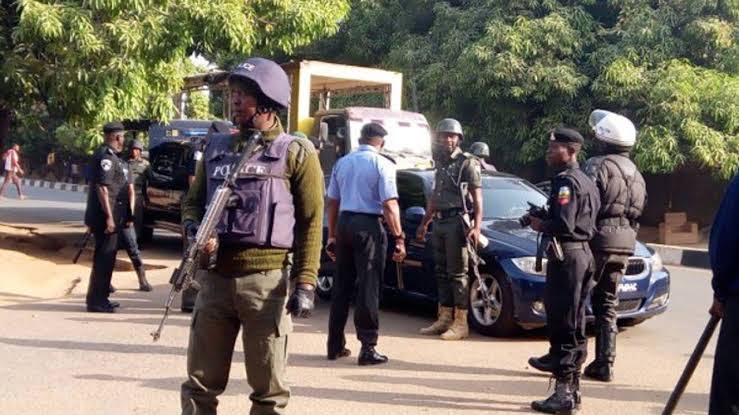
The Plateau State Police Command has arrested a suspected kidnapper and recovered a cache of ammunition in Kabwir Community, Kanke Local Government Area.
According to a police sources, the arrest was made following credible intelligence that the suspect was lodging in a hotel. Acting on the information, a team of police officers led by the Divisional Police Officer (DPO) of Kanke raided the hotel and apprehended 25-year-old Auwal Haruna, an indigene of Kaduna State.
A search of the suspect’s belongings led to the recovery of:51 rounds of 7.62x51mm ammunition,14 rounds of 7.62x39mm ammunition, One AA ammunition, One AK-47 empty magazine and Assorted charms
Police Arrest Suspected Kidnapper, Recover Ammunition in Plateau




Troops Arrest Suspect Over Killing of More Than 50 Cattle in Edo
By: Zagazola Makama
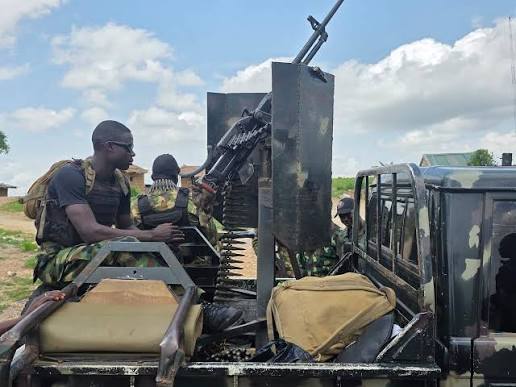
Troops of Operation MESA have arrested a suspected criminal linked to the killing of more than 50 cattle belonging to Fulani herders in Esan South-East Local Government Area of Edo State.
Security sources said that the suspect was arrested at about 4:30 a.m. on Thursday following credible intelligence on his whereabouts.
According to the sources, troops of 4 Brigade operating from the Forward Operating Base (FOB) in Uromi apprehended the suspect at his residence in Oloshi Main Town.
The suspect had reportedly been on the run since May 31, when he allegedly led an attack that resulted in the killing of over 50 cattle in the Oloshi general area.
The sources said the arrest was made after sustained efforts by security agencies to track down those involved in the incident.
Following his arrest, the suspect was handed over to the Nigeria Police Force for further investigation and possible prosecution.
Security agencies have assured residents that efforts are ongoing to apprehend other individuals connected to the attack.
Troops Arrest Suspect Over Killing of More Than 50 Cattle in Edo
Troops Arrest Suspected Kidnappers, Recover Two AK-47 Rifles in Magumeri Borno
By: Zagazola Makama
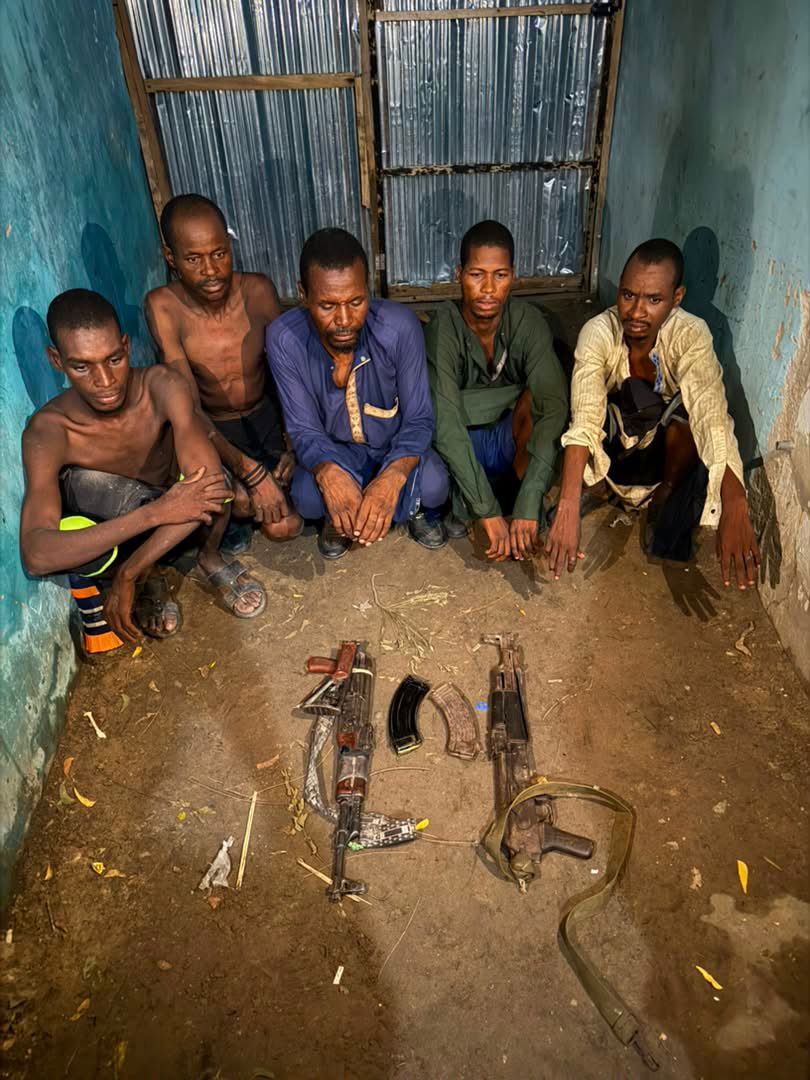
Troops of Operation HADIN KAI conducting an ongoing operation in Magumeri Local Government Area of Borno have arrested suspected kidnappers and recovered two AK-47 rifles from them.
Sources involved in the operation disclosed on Friday that the suspects were apprehended during a targeted security operation ahead of Magumeri town.
According to the sources, the operation led to the recovery of two AK-47 assault rifles believed to have been used by the suspects in criminal activities within the area.
The sources further revealed that preliminary interrogation of the suspects had yielded valuable intelligence that could assist security agencies in tracking and arresting other members of the kidnapping network.
“The suspects have provided useful information that can aid further operations and lead to the arrest of additional members of the criminal syndicate,” the source said.
The arrests are part of ongoing efforts by security forces to dismantle kidnapping and other criminal networks operating in parts of Borno State.
Security authorities have yet to issue an official statement on the operation, while investigations and follow-up actions are continuing.
Troops Arrest Suspected Kidnappers, Recover Two AK-47 Rifles in Magumeri Borno

Police Rescue Six Kidnap Victims, Recover Stolen Motorcycle in Zamfara
By Zagazola Makama
Operatives of the Zamfara State Police Command have rescued six kidnapped victims and recovered a stolen motorcycle following a gun battle with armed bandits along the Anka–Gurusu Road in Zamfara State.
The command said the operation was carried out at about 4:30 p.m. on Thursday by personnel of the Violence Crimes Response Unit (VCRU) during ongoing anti-banditry operations.

According to the police, the operatives received credible intelligence that heavily armed bandits had blocked the Anka–Gurusu Road and abducted six travellers along with their two motorcycles while they were travelling from Mayanchi village in Maru Local Government Area of Zamfara to Zuru Local Government Area of Kebbi State.
Acting on the information, the police team mobilised to the area and tracked the bandits to their hideout.
Upon contact, the suspects reportedly engaged the operatives in a gun duel.
The police said the operatives responded with superior firepower, forcing the bandits to flee into the surrounding forest with suspected gunshot injuries.
As a result of the operation, all six abducted victims were rescued unhurt, while one of the stolen motorcycles was recovered.
The second motorcycle was, however, taken away by the fleeing bandits.

The command said efforts were ongoing to track down and arrest the suspects as well as recover the remaining motorcycle.
The Zamfara State Police Command reiterated its commitment to tackling banditry and other violent crimes across the state and urged residents to continue providing timely and actionable information to security agencies.
Police Rescue Six Kidnap Victims, Recover Stolen Motorcycle in Zamfara

Zulum Delivers Relief, Cash Support to 434 Ngoshe Residents Rescued from Boko Haram

DEMOCRACY AND THE COURAGE TO BELIEVE

Army Distributes Fertiliser to Farmers in Jigawa Under Civil-Military Cooperation Programme

Roger Federer’s Shock as DNA Results Reveal Myla and Charlene Are Not His Biological Children

THE PLIGHT OF FARIDA

FAILED COUP IN BURKINA FASO: HOW TRAORÉ NARROWLY ESCAPED ASSASSINATION PLOT AMID FOREIGN INTERFERENCE CLAIMS
-
 News2 years ago
Roger Federer’s Shock as DNA Results Reveal Myla and Charlene Are Not His Biological Children
-
Opinions4 years ago
THE PLIGHT OF FARIDA
-
 News1 year ago
FAILED COUP IN BURKINA FASO: HOW TRAORÉ NARROWLY ESCAPED ASSASSINATION PLOT AMID FOREIGN INTERFERENCE CLAIMS
-

 News2 years ago
EYN: Rev. Billi, Distortion of History, and The Living Tamarind Tree
-
 Opinions4 years ago
POLICE CHARGE ROOMS, A MINTING PRESS
-

 ACADEMICS2 years ago
A History of Biu” (2015) and The Lingering Bura-Pabir Question (1)
-

 Columns2 years ago
Army University Biu: There is certain interest, but certainly not from Borno.
-

 Politics1 year ago
2027: Why Hon. Midala Balami Must Go, as Youths in Hawul and Asikira/Uba Federal Constituency Reject ₦500,000 as Sallah Gift
