
News
President Tinubu Firmly Committed To Youth Empowerment – VP Shettima

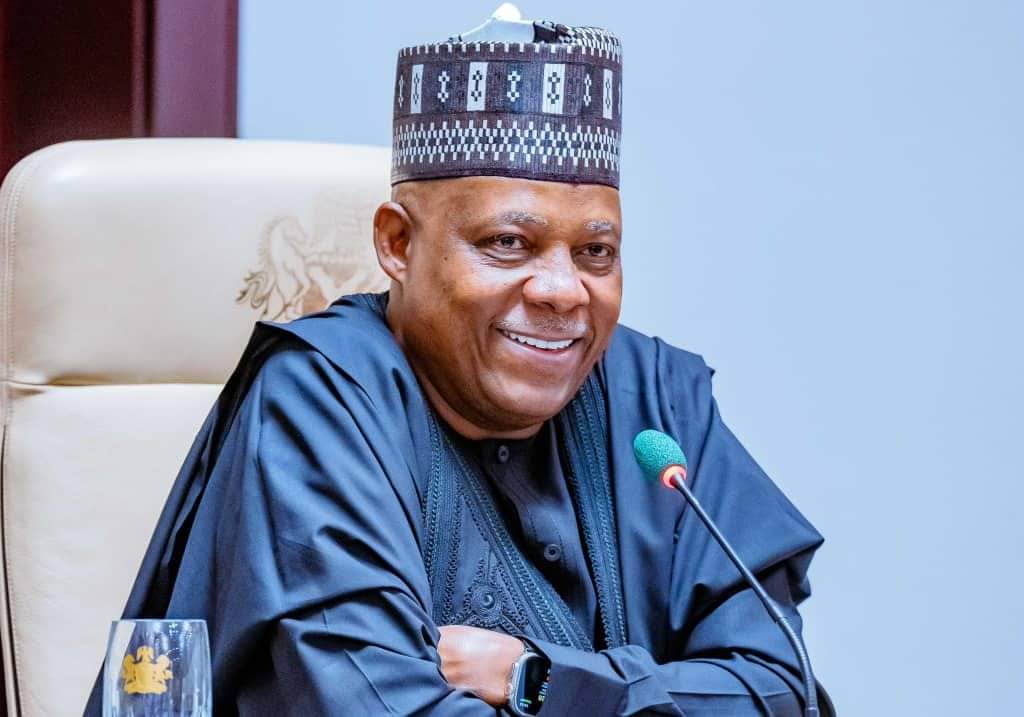
President Tinubu Firmly Committed To Youth Empowerment – VP Shettima
*** As NYCN invites VP to unveil 60th anniversary
By: Our Reporter
The Vice President, Senator Kashim Shettima, has restated the commitment of the Bola Ahmed Tinubu’s administration to supporting Nigerian youths to reach their potentials and contribute to the growth and development of the country.
VP Shettima stated this in his remarks when he received on a courtesy visit to the Presidential Villa, the National Executive Council of the National Youth Council of Nigeria (NYCN), led by its President, Comrade Sukubo Sara-Igbe Sukubo.
This is just as the NYCN is set to celebrate its 60th anniversary in November 2024.
Commending the Council for its support of the programmes and activities of the Tinubu administration, VP Shettima said, “We cannot thank you enough for keeping the hope alive for the Nigerian youth. We identify with you; we empathize with you because the future of this nation belongs to you.
“We are one of the youngest nations on the planet and the youths constitute nearly 75% of our population. Once we engage the youths, once we give them hope for a better tomorrow, all the madness pervading this land will dissipate.
“60 years for an organization to remain vibrant and still standing on its feet deserves commendation. I want to thank you for believing in the Nigeria Project. A lot of members of your generation have left the country but you resolved to stay on, and together we are going to salvage the ship of this state,” he added.
On plans of the Tinubu administration for young Nigerians, the Vice President noted that President Tinubu created a ministry for the youth under the current dispensation and appointed two young people to head the ministry, while he (VP) has complemented this by appointing a lot of young persons into key positions in his office.
Assuring the NYCN delegation that the administration is aligned with their aspirations, Senator Shettima said, “We hold you in the highest esteem. We have a series of opportunities lined up for you such as the iDICE project that will create digital jobs, including the ones in the creative industry. So, let’s hope for the best, let’s believe in Nigeria because this is our country.”
Earlier, the National President of NYCN, Comrade Sukubo Sara-Igbe Sukubo, expressed the Council’s readiness to collaborate with the federal government in addressing the issue of illegal oil bunkering.
“We have decided to see how we can help this country in areas of oil theft that have been ravaging this nation,” Sukubo stated, adding that “the NYCN has decided that it’s a collective effort, and we are ready to partner with the government to address this illegality.”
Sukubo announced that the NYCN which was established on August 28, 1964, in Lagos is gearing up to commemorate its 60th anniversary this year.
On behalf of the Council, he extended an invitation to the Vice President to officially unveil the anniversary events, which are expected to draw participants from across the country.
“This year, we are celebrating our 60th anniversary, and we want you to officially unveil the anniversary events. The event will have nothing less than 100,000 participants across the country, and that is the day we want to give insight into the activities of this government,” Sukubo said.
Acknowledging the administration’s efforts in appointing a significant number of young people to government positions, the NYCN delegation also appealed to the federal government to construct a Youth House.
Also speaking, Comrade Rikki Nwajiofor, the National Deputy Secretary General of the NYCN, highlighted the council’s role as the apex youth body representing all youth organizations in Nigeria as stipulated in the National Youth Policy.
“NYCN is made up of 104 affiliate member youth organizations, a 27-member national executive council, 36 state chapters, and an FCT chapter, as well as 774 coordinators in all local government and area councils in Nigeria. That is why the NYCN is the vehicle through which the government passes its policies to the grassroots,” Nwajiofor explained.
President Tinubu Firmly Committed To Youth Empowerment – VP Shettima



Suspected cultists kill 12 in attack on Jos community, Plateau govt imposes curfew
By: Zagazola Makama
Suspected cultists on Sunday night attacked Angwan Rukuba community in Jos North Local Government Area of Plateau State, leaving 12 persons dead, in a fresh outbreak of violence that has prompted authorities to impose a 48-hour curfew in the area.
Security sources said the incident occurred at about 8:00 p.m. when residents of the community came under sporadic gunfire from unidentified armed men, suspected to be cultists, who stormed the area and shot indiscriminately.
Troops of Sector 1, Operation Enduring Peace (OPEP), were immediately mobilised to the scene following a distress call and moved to restore order and prevent further escalation.

A security report indicated that 12 persons were confirmed dead, while several others sustained varying degrees of injuries. The injured victims were said to have been evacuated to nearby medical facilities for treatment.
The troops subsequently cordoned off major access routes to the community and ordered residents to remain indoors while a coordinated search operation was launched to track down the attackers.
Military sources added that clearance operations were ongoing to apprehend the perpetrators and prevent further breakdown of law and order in the area.
In response to the attack, the Plateau State Government, in collaboration with security agencies, announced the imposition of a 48-hour curfew on Jos North Local Government Area with immediate effect.
The curfew, which took effect from midnight of March 29 to April 1, 2026, was aimed at restoring calm and enabling security agencies to carry out intensified operations.
In a statement issued by the Commissioner for Information and Communication, Rt. Hon. Joyce Lohya Ramnap, the government condemned the attack, describing it as “barbaric and unprovoked.”
The statement assured residents that security agencies had been directed to ensure the arrest and prosecution of those responsible, while urging the public to remain calm and cooperate with ongoing investigations.
Security patrols were still ongoing across affected communities as authorities moved to forestall possible reprisal attacks and restore normalcy.
Suspected cultists kill 12 in attack on Jos community, Plateau govt imposes curfew

Troops arrest suspected kidnapper in Damboa LGA of Borno
By: Zagazola Makama
Troops of Operation Hadin Kai have arrested a suspected kidnapper in Azir community, Damboa Local Government Area of Borno State.
Sources told Zagazola Malama that the suspect was apprehended at about 5:00 p.m. on March 28 by troops of 25 Brigade and 19 Battalion (Mechanised) deployed at a Forward Operating Base in Azir.
The source disclosed that the suspect was alleged to have been involved in kidnapping activities within the Damboa and Azir general areas.
“During preliminary investigation, the suspect claimed to be a cattle courier operating within Damboa and its environs,” the source said.
He added that one bicycle was recovered from the suspect at the point of arrest.
The suspect and the recovered item are currently in troops’ custody for further investigation and necessary action.
Troops arrest suspected kidnapper in Damboa LGA of Borno
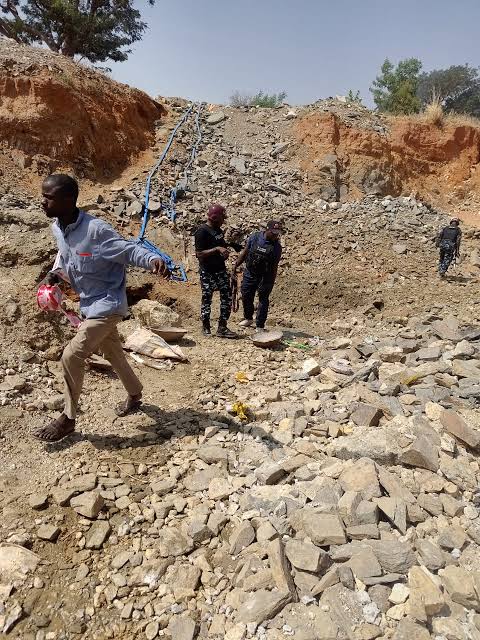
Troops arrest 58 illegal miners in Edo state
By: Zagazola Makama
Troops of Operation MESA have arrested 58 suspected illegal miners at an illegal gold mining site in Ososo general area, Akoko-Edo Local Government Area of Edo State.
A security source disclosed that the suspects were apprehended at about 1:00 p.m. on March 28 during a fighting patrol conducted by troops of 195 Battalion (Rear).
According to the source, the troops stormed the mining site and arrested the suspects without resistance.
“The suspects are currently in troops’ custody for further action,” the source said.
He noted that the operation forms part of ongoing efforts to curb illegal mining activities and other criminal enterprises within Edo State and its environs.
Troops arrest 58 illegal miners in Edo state

Suspected cultists kill 12 in attack on Jos community, Plateau govt imposes curfew

Troops arrest suspected kidnapper in Damboa LGA of Borno

Troops arrest 58 illegal miners in Edo state

Roger Federer’s Shock as DNA Results Reveal Myla and Charlene Are Not His Biological Children

THE PLIGHT OF FARIDA

FAILED COUP IN BURKINA FASO: HOW TRAORÉ NARROWLY ESCAPED ASSASSINATION PLOT AMID FOREIGN INTERFERENCE CLAIMS
-
 News2 years ago
Roger Federer’s Shock as DNA Results Reveal Myla and Charlene Are Not His Biological Children
-
Opinions4 years ago
THE PLIGHT OF FARIDA
-
 News11 months ago
FAILED COUP IN BURKINA FASO: HOW TRAORÉ NARROWLY ESCAPED ASSASSINATION PLOT AMID FOREIGN INTERFERENCE CLAIMS
-

 News2 years ago
EYN: Rev. Billi, Distortion of History, and The Living Tamarind Tree
-
 Opinions4 years ago
POLICE CHARGE ROOMS, A MINTING PRESS
-

 ACADEMICS2 years ago
A History of Biu” (2015) and The Lingering Bura-Pabir Question (1)
-

 Columns2 years ago
Army University Biu: There is certain interest, but certainly not from Borno.
-

 Opinions2 years ago
Tinubu,Shettima: The epidemic of economic, insecurity in Nigeria
