
News
President Tinubu: We’re Mobilising All Military Assets To Protect Nigerians, Crush Security Threats

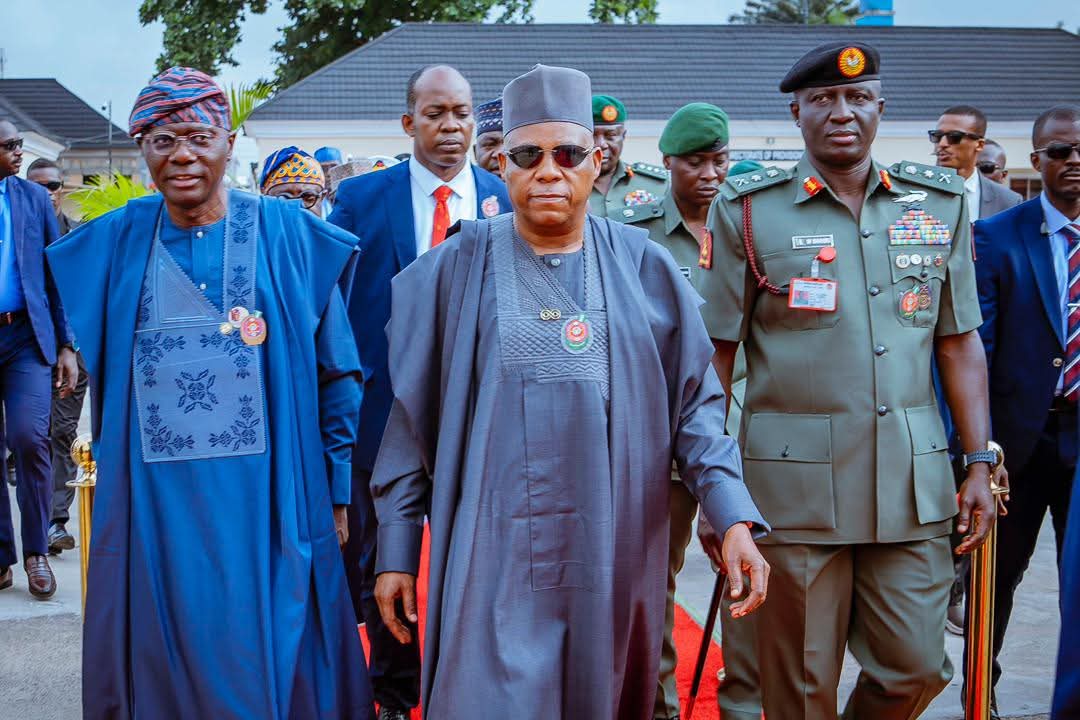
President Tinubu: We’re Mobilising All Military Assets To Protect Nigerians, Crush Security Threats
** Procures mine-resistant vehicles, new armoured fleet for armed forces modernisation
** Charges troops on discipline, professionalism, adherence to constitutional order
By: Our Reporter
President Bola Ahmed Tinubu has restated his administration’s firm resolve to mobilise all military and law enforcement assets to crush security threats and protect the lives all citizens of Nigeria.
Accordingly, he announced the procurement of mine-resistant ambush-protected vehicles and a new armoured fleet for the military, as well as the refurbishment of over 100 Armoured Fighting Vehicles for return to active service.
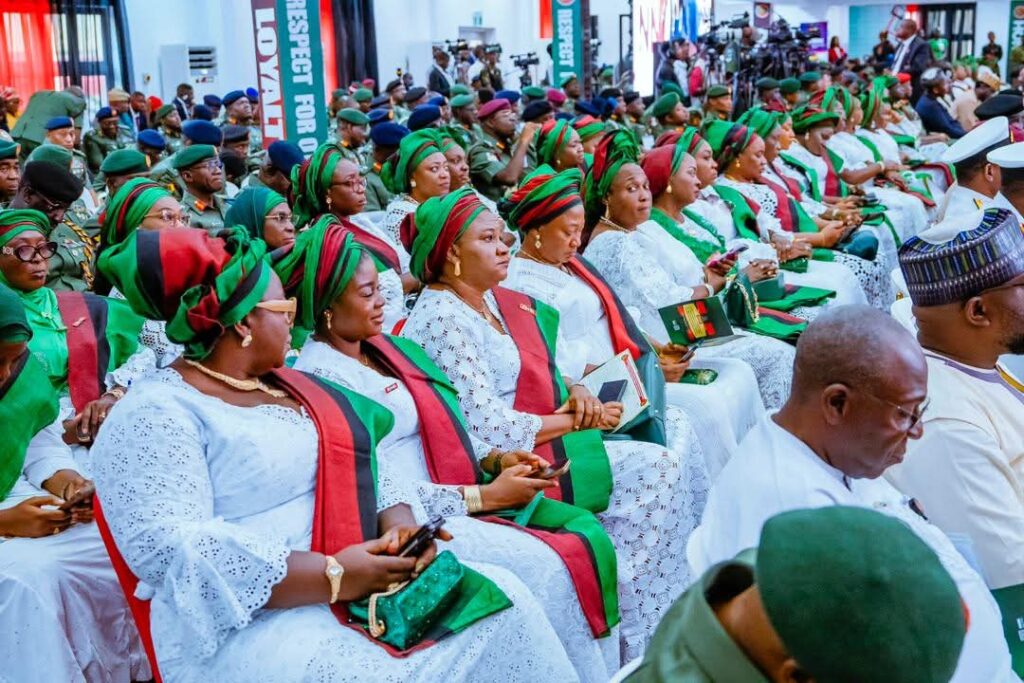
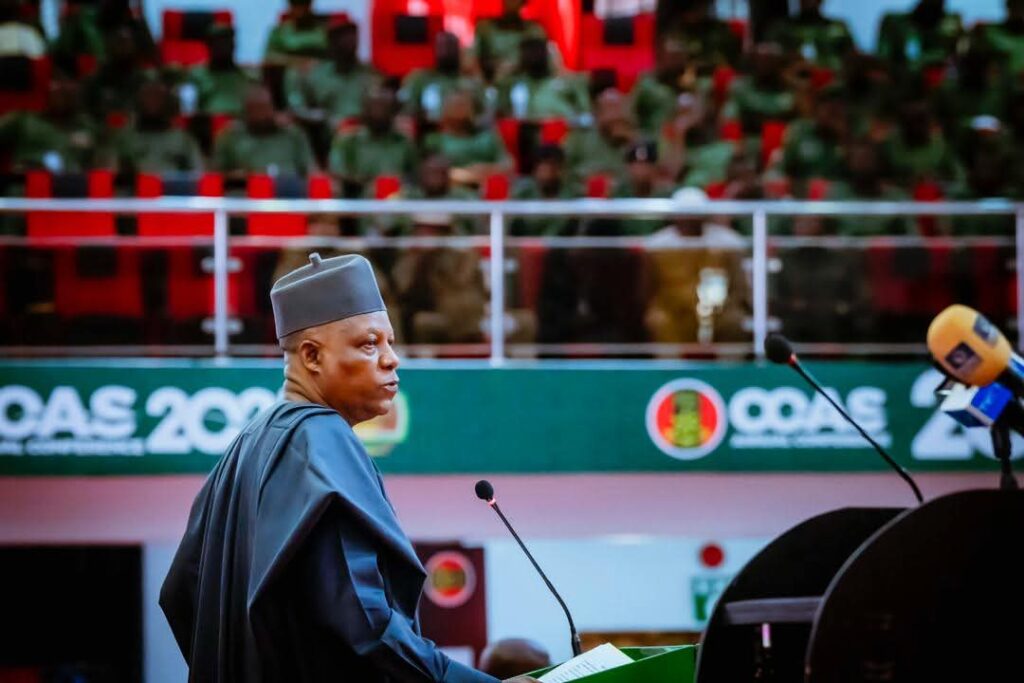
President Tinubu disclosed this in Ojuelegba, Lagos State, on Monday when he declared open the Chief of Army Staff Annual Conference 2025.
Speaking at Nebo Hall, Abalti Barracks, venue of the conference, the President who was represented by his deputy, Vice President Kashim Shettima, reaffirmed that security remains a central pillar of his administration’s Renewed Hope Agenda.
“There is no nation that can achieve greatness without security. This government remains resolute in mobilising all military and law enforcement assets to eliminate security threats and protect the lives and property of all Nigerians,” he said.
The Nigerian leader noted that his administration is firmly committed to the modernisation of the Armed Forces through improved training, modern equipment and enhanced operational capacity.
He said beyond the recent induction of helicopters into Nigerian Army Aviation and the training of pilots, the government has advanced the procurement of additional Mine Resistant Ambush Protected Vehicles, Armoured Vehicles and Patrol Vehicles to boost troop protection and battlefield effectiveness.
His words: “Following the induction of helicopters into Nigerian Army Aviation and the training of pilots, we have advanced the procurement of additional Mine Resistant Ambush Protected Vehicles, Armoured Vehicles, and Patrol Vehicles.
“We have also refurbished over one hundred Armoured Fighting Vehicles, now returned to active service. These efforts reflect our clear commitment to strengthening the Nigerian Army’s operational readiness.”
He added that the Federal Government is deepening partnerships with friendly nations to promote research, innovation and indigenous defence production, with the long-term goal of achieving self-reliance in defence and security.
Commending the Nigerian Army for what he described as impressive gains in the fight against terrorism and other security challenges, President Tinubu said reports from various theatres of operation point to improved outcomes driven by professionalism, courage and effective joint operations with sister services and security agencies.
“The positive reports emerging from the various theatres of operation are encouraging and stand as testimony to your resilience and professionalism,” he said.
The President assured the military of the government’s unwavering support in fulfilling its constitutional mandate of safeguarding Nigeria’s territorial integrity, noting that security is one of the eight priority areas of his administration.
He also stressed the importance of discipline, professionalism and adherence to constitutional order, describing the apolitical posture of the Armed Forces as critical to sustaining public trust.
President Tinubu further praised the Nigerian Army’s civil-military cooperation initiatives across the country, noting that security efforts must also focus on winning hearts, restoring dignity and supporting development at the grassroots.
Paying tribute to fallen soldiers, the President said their sacrifices remain permanently etched in Nigeria’s national memory, assuring that the government will continue to support their families and improve the welfare of serving personnel in recognition of their service to the nation.
Earlier, Lagos State Governor, Babajide Sanwo-Olu, commended the Nigerian Army for its efforts in strengthening civil–military relations in the state.
He reaffirmed the commitment of the Lagos State Government to supporting the Army in the discharge of its constitutional responsibilities within the state and beyond.
In his remarks, the Minister of Defence, General Christopher Musa (rtd), confirmed the commitment of the Tinubu administration, through the Ministry of Defence, to providing continuous policy direction for the Nigerian Army.
He called on officers and commanders to remain loyal and united, stressing the need for collective support to enable the Army effectively address the country’s security challenges.
The Defence Minister also praised the officers and men currently deployed in various operations, even as he thanked Nigerians for their confidence in the Armed Forces, assuring that government would act with renewed vigour and decisiveness in tackling prevailing security threats.
In his welcome address, the Chief of Army Staff, Lieutenant General Waidi Shaibu, unveiled a range of welfare packages designed to enhance the wellbeing of officers and men of the Nigerian Army.
He explained that the welfare packages are part of deliberate efforts to boost morale and improve operational effectiveness across the Army.
The Chief of Army Staff also disclosed that President Tinubu has consistently provided the operational needs of the Nigerian Army since assuming office.
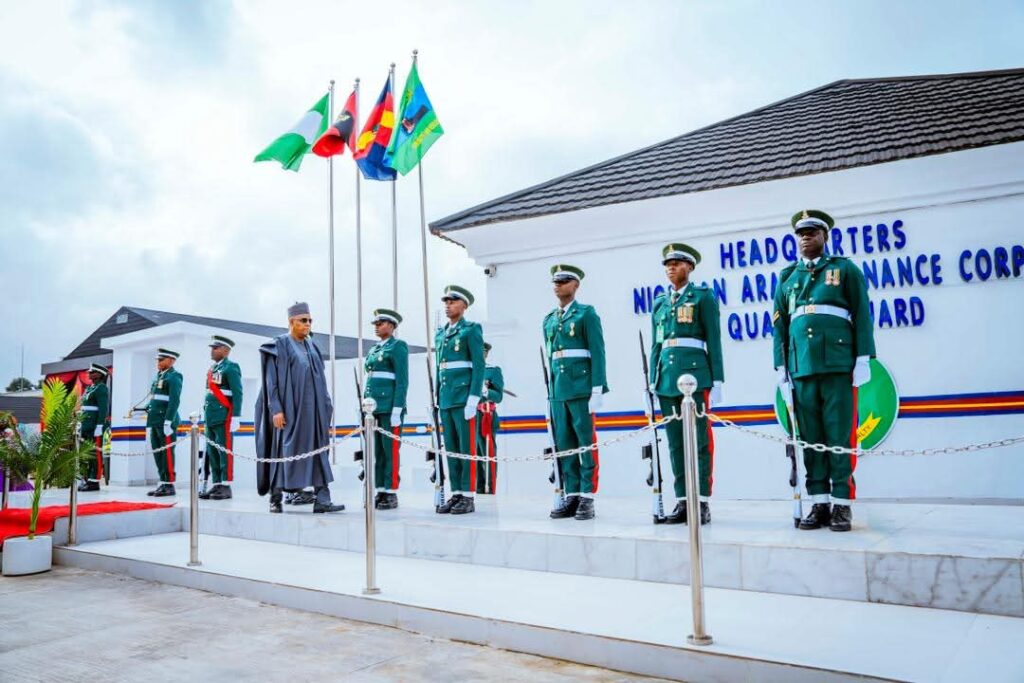
He commended the Federal Government for meeting the operational demands of the Army, urging officers, particularly commanders and personnel on special operations, to justify the confidence reposed in them.
Reviewing the Army’s achievements over the past year, General Shaibu reaffirmed the readiness of the Nigerian Army to match government’s support with decisive action against terrorism and other security threats confronting the nation.
High point of the event was unveiling of a biography of the late former Chief of Army Staff, Lieutenant General Taoreed Lagbaja, by Vice President Shettima, alongside senior military officers and other dignitaries.
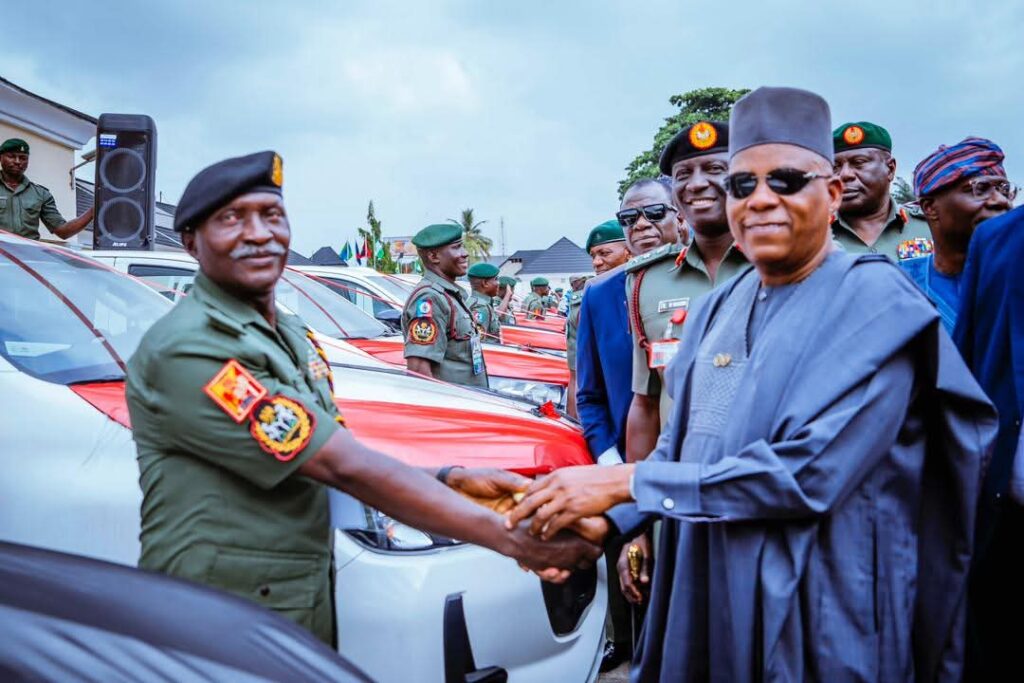
The Vice President presented 15 Toyota Hilux vehicles to deserving warrant officers as part of efforts to motivate personnel and encourage excellence in service.
He also witnessed the presentation of cheques under the Nigerian Army Personnel Insurance Scheme to the families of five fallen soldiers.
The event was attended by representatives of the President of the Senate, former Defence and Army Chiefs, and traditional rulers, among others.
President Tinubu: We’re Mobilising All Military Assets To Protect Nigerians, Crush Security Threats


News
Troops launch manhunt after assassination Alhaji Bilyaminu Julde, Fulani community leader in Plateau state
Troops launch manhunt after assassination Alhaji Bilyaminu Julde, Fulani community leader in Plateau state
By: Zagazola Makama
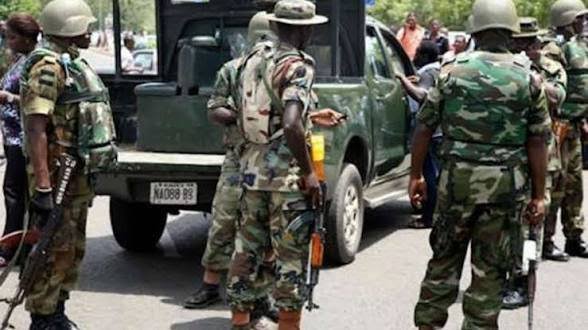
Troops of Operation Enduring Peace have launched a manhunt for unknown assailants who shot dead Alhaji Bilyaminu Julde, the Ardo of Gindir in Gashish area of Barkin Ladi Local Government Area of Plateau State.
A security source said the incident occurred at about 11:45 p.m. on March 28, when troops responded to reports of sporadic gunshots.
According to the source, on arrival, troops discovered that Alhaji Bilyaminu Julde, the Ardo of Gindiri, had been shot dead in his residence by unidentified gunmen who fled the scene before security operatives arrived.
The source added that troops recovered two rounds of 7.62mm special ammunition and 29 spent shells from the scene.
He said the remains of the deceased were released to the family for burial in accordance with local customs.
The source noted that investigations have commenced, while troops have intensified patrols and launched a manhunt to track down the perpetrators.
Troops launch manhunt after assassination Alhaji Bilyaminu Julde, Fulani community leader in Plateau state
Zulum Dissolves Borno State Executive Council
By: Our Reporter
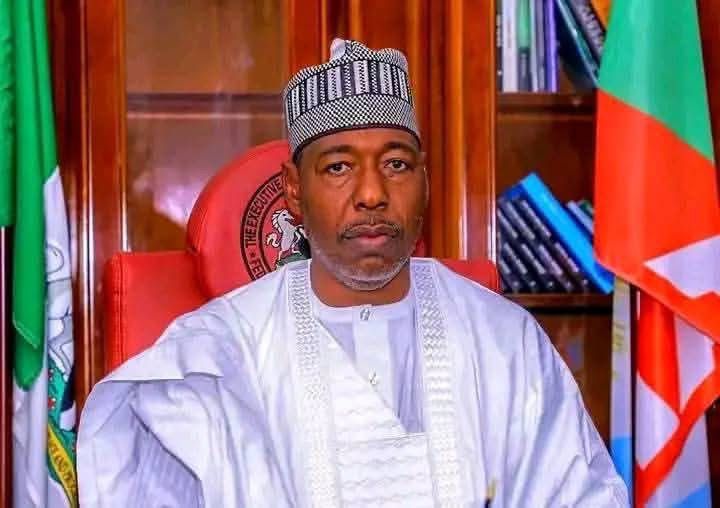
Borno State Governor, Professor Babagana Umara Zulum, has approved the immediate dissolution of the State Executive Council.
The decision is to provide an enabling environment for any member of the council who may wish to contest elective positions in the forthcoming general elections.
The Governor has therefore directed all Commissioners to hand over the affairs of their respective ministries to the Permanent Secretaries on or before Friday, April 3, 2026.
Governor Zulum expressed his profound appreciation to the outgoing Commissioners for their dedication, commitment, and invaluable contributions to the development and service of the people of Borno State.
Zulum Dissolves Borno State Executive Council

How corp member Samuel Orji bowed to humanity at the recent Monday market tragedy
By: Bodunrin Kayode
Corp member Samuel Orji is not new to Monday market because he was raised in a restaurant right in front of the place as a kid because his mother used to be a food vendor to the traders within the vicinity.
Till the day of his death, he had friends and associates along the popular Ahmadu Bello way right down to Ali Kotoko Street where traders used to patronize his mother’s buka food.
But his mother have since left the town for Abuja leaving him and his brother Steve because he was still a student attending Ramat Polytechnic where he studied Electrical engineering when she left.
Having grown up in Maiduguri, he already knew that Improvised explosive devices IED could explode at any time during the day but never knew a semblance of the worse days could return to the city of yerwa.
For people who grew up in Maiduguri, the worse days are really over when everyone goes home before six pm so he was obviously rounding off his hustling that night when the explosion went off on Ahmadu Bello way which hit his legs and brought him down.

Though we all share a common humanity, living in the north east war theatre of hadin kai, we all go out each day for our daily bread not knowing what the end of the day will be like but taking each day as it comes.
Likewise, when corp member Samuel Orji left the house of his next of kin in Maduganari that fateful black Monday, he never planned not to return home, but as fate would have it, he was one of the victims that got hit by the suicide bomb explosion in front of the Monday market.
After being called up to the National Youth Service Corp (NYSC) with number NYSC/RPM/25/185709, the young Orji was still serving at the engineering department of the Nigerian television authority (NTA) Potiskum in Yobe state when he lost his life.
Orji with YB/25B/1003 now serving in Damaturu found himself in Maiduguri the weekend before that black Monday because he had taken a pass to spend the public holiday with his brother and next of kin Stephen Orji who lives in Maduganari a suburban area of Maiduguri.
Speaking with this reporter after the tragedy, Borno State coordinator of the NYSC Bashir Nasir said the entire tragedy was a shock to him after a long spell of calmness in the city.
As soon as the incident happened, he was contacted by his headquarters (HQ) in Abuja to conduct a census of his Corp members to ensure all was well and report back to them.
It was in the process that he realized that his team was fine and that the fellow that died was indeed a Corp member but was serving the nation from Damaturu and that he had died as a result of the Monday blast on Ahmadu Bello way at the entrance of the market place.
“I quickly went into action by visiting all the places I know my corp members are based. And I was sure the fellow was not serving here in Borno after the roll call.
” Later a call came from his next of kin Steve to one of our staff in Yobe who indeed linked up with us here and that was when it was ascertained that Samuel Orji was a corp member serving in Yobe.
” I then went to the home of his next of kin Stephen Orji at Maduganari and that was how we took charge by handling all the preliminary expenses to ensure he is taken home for burial.
” The Yobe axis arranged for an ambulance and staff to convey his corpse to Enugu on Monday last week for burial.
” As a result of that triple blast I had to halt routine activities of corp members in the state except the medical officers among them who were released to assist in the hospitals on the condition that management will release ambulances from them to go and return safely to their bases. ” Said the state coordinator.
Challenges of the Corp in Borno state
The main challenge is obviously tied to their security which is why they are using the Arabic Teachers secondary school as a temporary location for now.
The original location has been tendered not usable after idps used it from 2012 to 3021
However, the governor in his magnanimity has given them a new camp of one km by one Km at Auno in the outskirts of the city.
Meanwhile the coordinator who would be one year next month since he assumed duty hinted that 506 Corp members of the batch A stream one of 2005 will pass out this week on the 31st of March.
Another bold set of Corp members of the batch A stream one of 2026 will however be sworn in on the 22nd April.
How corp member Samuel Orji bowed to humanity at the recent Monday market tragedy

Troops arrest suspected gunrunner, intercept 200 rounds of ammunition in kaduna

Troops intercept vehicle conveying suspected terrorist logistics in Borno

Troops arrest another suspected terrorist logistics supplier in maiduguri

Roger Federer’s Shock as DNA Results Reveal Myla and Charlene Are Not His Biological Children

THE PLIGHT OF FARIDA

FAILED COUP IN BURKINA FASO: HOW TRAORÉ NARROWLY ESCAPED ASSASSINATION PLOT AMID FOREIGN INTERFERENCE CLAIMS
-
 News2 years ago
Roger Federer’s Shock as DNA Results Reveal Myla and Charlene Are Not His Biological Children
-
Opinions4 years ago
THE PLIGHT OF FARIDA
-
 News11 months ago
FAILED COUP IN BURKINA FASO: HOW TRAORÉ NARROWLY ESCAPED ASSASSINATION PLOT AMID FOREIGN INTERFERENCE CLAIMS
-

 News2 years ago
EYN: Rev. Billi, Distortion of History, and The Living Tamarind Tree
-
 Opinions4 years ago
POLICE CHARGE ROOMS, A MINTING PRESS
-

 ACADEMICS2 years ago
A History of Biu” (2015) and The Lingering Bura-Pabir Question (1)
-

 Columns2 years ago
Army University Biu: There is certain interest, but certainly not from Borno.
-

 Opinions2 years ago
Tinubu,Shettima: The epidemic of economic, insecurity in Nigeria
