
News
Procurement fraud accounts for 70% of total corruption in public sector


Procurement fraud accounts for 70% of total corruption in public sector
-PRADIN Report
A report by a member of the Procurement Observation and Advocacy Initiative (PRADIN) has alleged that 70% of procurement fraud accounts for70 percent of total corruption in the public sector.
This is even as PRADIN called on the federal government to appoint and inaugurate the National Council for Public Procurement as enshrined in Part 1, Section of the PPA 2007.
PRADIN identified challenges confronting the administration of effective and efficient procurement process in Nigeria noting that the challenges are largely responsible for the high level of corruption. and the unproductive nature of the BPP
Mohammed Bougei Attah, National Coordinator of PRADIN during an interactive session between Civil Society Organisations and the Media in Abuja recalled that study by a member of NGO Network in September 2010 shows that procurement Corruption (PC-as its now a Phenomenon) alone accounts for over 70% of total corruption in the public sector.
“Despite the huge investments and resources in the fight against corruption – human and materials- over the years, the wastage continues and corruption, particularly in high places is on the increase. ”
“As a fact, procurement Corruption is not only fighting back, it appears to be winning the way. It is believed that over $16bn of our Commonwealth has gone into wastages. And this is occasioned by corruption through abandoned projects” he said
According to Attah the media and CSO Parley is organized as an annual event to support the government’s efforts in the fight against corruption by way of providing insights into the challenges and way forward as it relates to procurement management and administration in Nigeria.
Attah recalled a statement credited to the Chairman of the Economic and Financial Crimes Commission, EFCC, Ola Olukayode during a recent visit to the Commission by immediate past Bureau of Public Procurement, BPP,. Mamman Ahmadu that “The Public Procurement Act is not helping the Commission in the fight against corruption”.
Attah summarized challenges facing the BPP into: lack of capacity and the disobedience to the rule of law, saying they include “Failure on the part of the Federal Government to constitute and inaugurate the National Council for Public Procurement as enshrined in Part 1, Section of the PPA 2007, Lack of capacity by the erstwhile appointees that headed procurement and supply chain entities in Nigeria for the last 13 years, and The failure and inability of the BPP to conduct Procurement Audit and submit the Report to the National Assembly bi-annually as required by law in Section 5(p) of the PPA 2007
He recalled that “The extant provisions in the PPA 2007, provides for the establishment of National Council for Public Procurement NCPP was passed in 2007 by the National Assembly, 13 years ago, but the previous Presidents, pursuant to Sections 5(1), 148(1) 4(2) and 4(3) as well as S.171 of the 1999 Constitution failed to inaugurate the Council till date.”
He also noted that “By virtue of the provisions of section 5(1) and 148(1) of the 1999 Constitution as well as the Finance (Management Control) Act of 1958, only a National Council on Public Procurement with the Minister of Finance as Chairman can consider, approve and amend the Monetary and Prior Review thresholds for the application of the provisions of Public Procurement Act 2007 by procuring entitles. So, by implications, the threshold presently in use without Council’s approval is illegal and not correct”
He maintained that the director general of BPP recognized by law is expected to emerge after the Council is put in place to serve as the Secretary of the Council and not before.
Procurement fraud accounts for 70% of total corruption in public sector


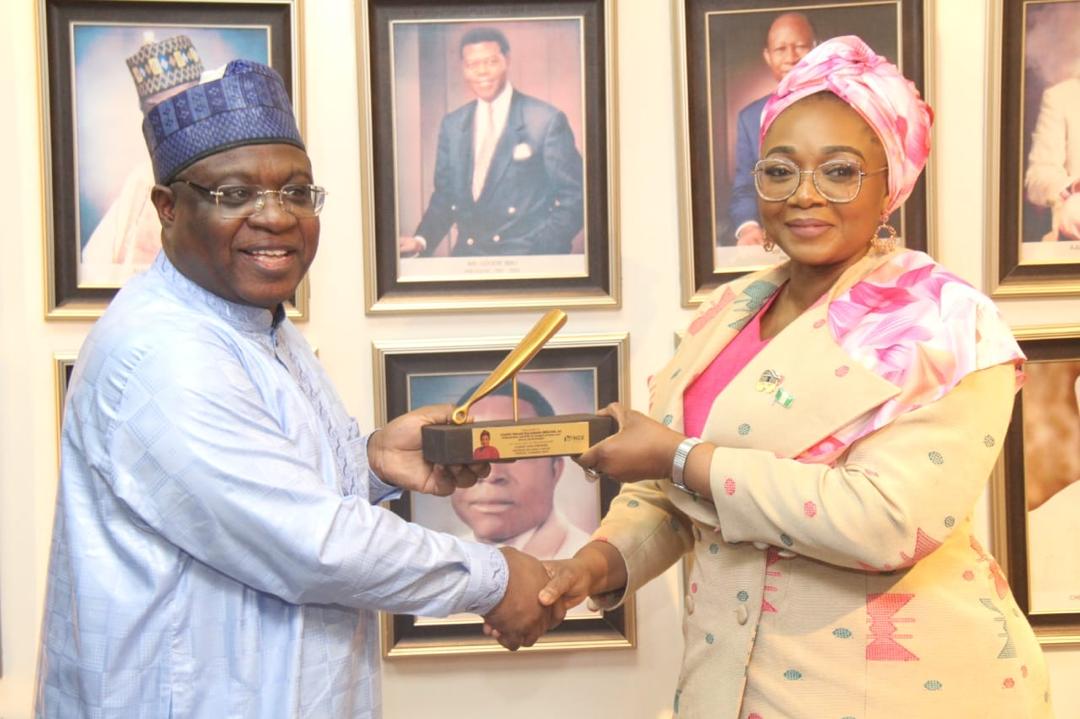
NGX boss restates commitment to gender equality
The Group Chairman Nigerian Exchange Group, Dr. Umaru Kwairanga has restated the NGX’s commitment to gender equality and diversity at all levels of the organisation.
Kwairanga stated this in Lagos on Tuesday while delivering his welcome address on the occasion of the closing ceremony in honour of the Honourable Minister of Women Affairs and Social Development, Hajiya Imaan Sulaiman-Ibrahim, who visited the floor of the Nigerian Exchange.
He stated that the Nigerian Exchange Group as an organisation remained committed to inclusiveness that drive growth and development at all levels of the NGX’s dealings.
He stated that through such inclusive representation, the NGX has achieved near parity at the board levels of the organisation and was working to improve the representation of female employees down the line.
“As an institution committed to sustainable growth and practices, we recognise the important qualities and values that women bring to the workplace and know that they perform just as well, if not better than men.
“It is a tradition in finance and investment that can be traced to the origins of the banking, finance and investment professions when most of the trade guilds that evolved into those professions were largely composed of men.
“The tradition has persisted for hundreds of years but despite that nomenclature, let me assure you that the investment and securities sector is very welcoming to and open to city gentlemen who are female.
“Women are very well represented at all levels of our industry and I can confide in you that the next President of the Chartered Institute of Stockbrokers is going to be a woman,” he said.
Kwairanga stated that the NGX would partner with the Ministry to accelerate progress for women’s rights and improve the lot of female gender across the country.
He commended Sulaiman-Ibrahim for her several bold and innovative initiatives that would have positive impact on women and the country as a whole.
NGX boss restates commitment to gender equality
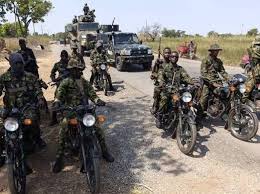
Benue troops neutralize one terrorist, arrest four suspects in Gwer West LGA
By: Zagazola Makama
Troops of Sector 1 Operation Wirld Stroke deployed at FOB Bilawa-Jor conducted a fighting patrol within Mbapa and Mbabuande general areas on March 23, 2026.
During the operation, troops made contact with terrorists, neutralizing one suspect while others fled.
Following a pursuit, four additional suspects were apprehended and are currently in the custody of security forces for further investigation and prosecution.
In a similar development the troops
recovered a vehicle carrying two cows abandoned by suspected cattle rustlers in Uhemba.
The incident occurred at about 0348hrs on March 24, 2026, when the troops responded to intelligence reports of rustling activities in the area.
Upon the arrival of troops, the suspects fled, leaving behind the vehicle and livestock.
The recovered vehicle and cows are now in the custody of the troops for further investigation and legal action.
Military continue to urge the public to provide timely information on criminal activities to support ongoing security efforts.
Benue troops neutralize one terrorist, arrest four suspects in Gwer West LGA
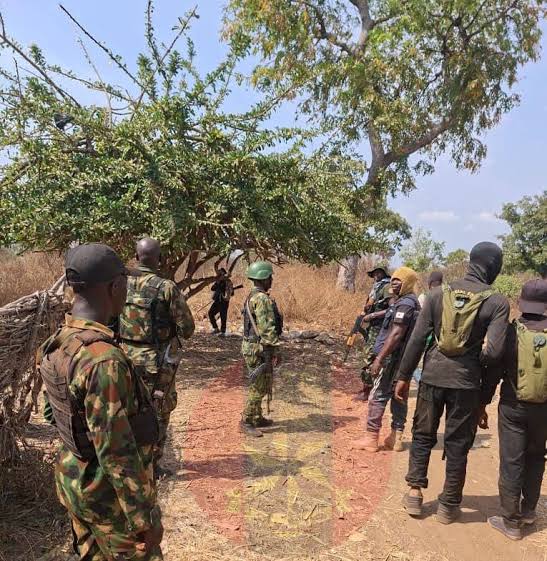
Kogi troops neutralize suspected terrorist in Kabba/Bunu LGA
By: Zagazola Makama
Troops of 12 Brigade have neutralized a suspected terrorist during a fighting patrol at Odoape–Adankolo Forest in Kabba/Bunu LGA.
The encounter occurred at about 1400hrs on March 23, 2026, when the patrol team made contact with the fleeing suspect.
Preliminary investigation identified the neutralized individual as a notorious terrorist involved in providing intelligence and targets for kidnappings, as well as participating in cattle rustling and supplying logs to terrorist groups.
The military has reaffirmed its commitment to sustaining aggressive patrols and intelligence-led operations to curb criminal activities and protect residents in the area.
Kogi troops neutralize suspected terrorist in Kabba/Bunu LGA

NGX boss restates commitment to gender equality

General Chris Musa, Hi-tech Fencing of Nigerian Porous Borders and the Foolish Pride of Sowore

Benue troops neutralize one terrorist, arrest four suspects in Gwer West LGA

Roger Federer’s Shock as DNA Results Reveal Myla and Charlene Are Not His Biological Children

THE PLIGHT OF FARIDA

FAILED COUP IN BURKINA FASO: HOW TRAORÉ NARROWLY ESCAPED ASSASSINATION PLOT AMID FOREIGN INTERFERENCE CLAIMS
-
 News2 years ago
Roger Federer’s Shock as DNA Results Reveal Myla and Charlene Are Not His Biological Children
-
Opinions4 years ago
THE PLIGHT OF FARIDA
-
 News11 months ago
FAILED COUP IN BURKINA FASO: HOW TRAORÉ NARROWLY ESCAPED ASSASSINATION PLOT AMID FOREIGN INTERFERENCE CLAIMS
-

 News2 years ago
EYN: Rev. Billi, Distortion of History, and The Living Tamarind Tree
-
 Opinions4 years ago
POLICE CHARGE ROOMS, A MINTING PRESS
-

 ACADEMICS2 years ago
A History of Biu” (2015) and The Lingering Bura-Pabir Question (1)
-

 Columns2 years ago
Army University Biu: There is certain interest, but certainly not from Borno.
-

 Opinions2 years ago
Tinubu,Shettima: The epidemic of economic, insecurity in Nigeria
