Connect with us

News

RCCG inaugurates Gombe Province 2

Published

on

RCCG inaugurates Gombe Province 2

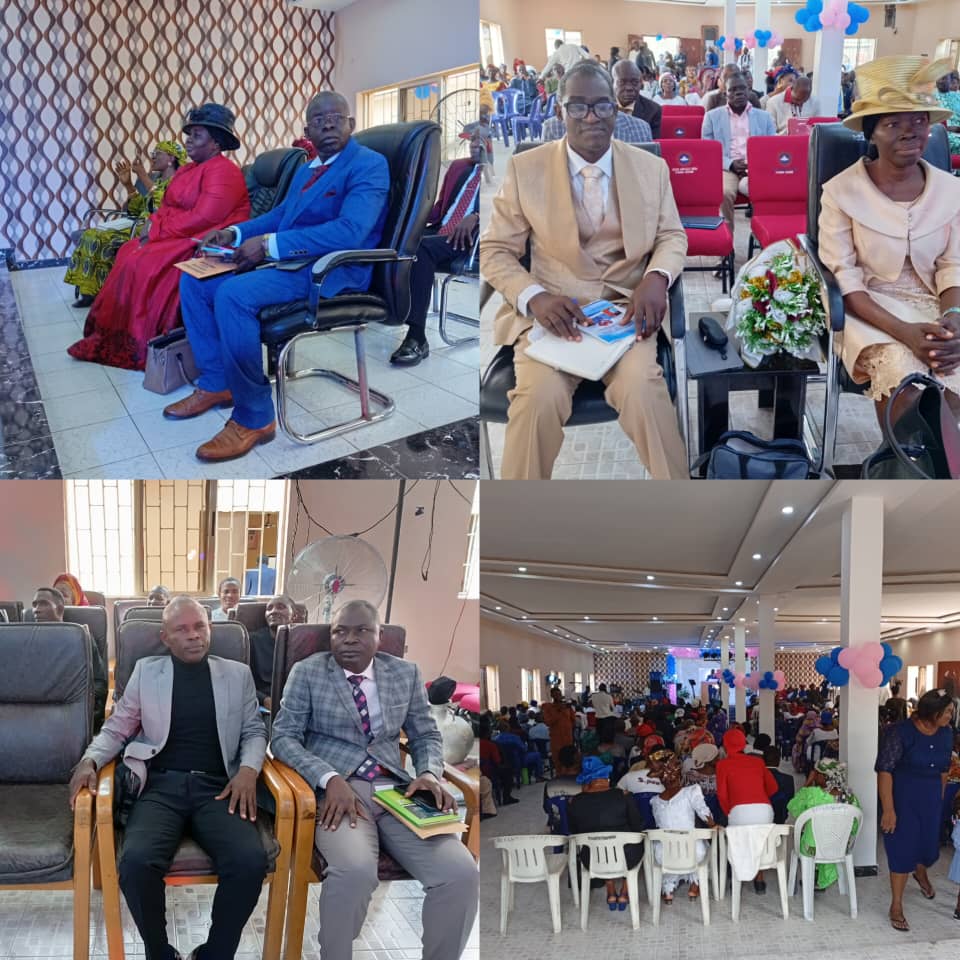
The Redeemed Christian Church of God (RCCG) has inaugurated a new provincial headquarters in Gombe State, named: “Gombe Province 2” following its approval at the just concluded RCCG Convention held at the Redemption City located along the Lagos-Ibadan Expressway.

The new province located in Nasarawo Community in Gombe Local Government Area of Gombe State held its inaugural service on Sunday to welcome the newly posted Pastor-in-Charge as members and workers of RCCG from the state graced the occasion.

In his welcome speech, Pastor-in-charge of Province 1, Pst Johnson Akinsehinwa expressed gratitude to God for the establishment of the new Province, viewing it as a divine mandate for evangelism, discipleship, and community impact.

He described the inauguration of the new province as historic and a proof that God’s covenant of increase is alive amongst the RCCG family in the state.

He expressed special thanks to Pastor E.A. Adeboye, the General Overseer, and Pastor Julius Olalekan, the Regional Pastor, along with their wives, for their vision and support to the establishment of the new province.

“This Province is a divine mandate, an opportunity for greater evangelism, discipleship and community impact. As Isaiah 54:2-3 declares, the Lord is calling us to enlarge, to expand, and to break forth.

“We trust Him(God) that, in years to come, we shall witness more Provinces birthed in this land, if Christ tarries,” he said.

The PIC, Gombe Province 1 called on RCCG members in the state to remain united and steadfast in Christ while recommitting to soul winning and service.

He prayed that the new province would flourish and its leadership blessed with wisdom to pilot the activities of the church towards making its light shine like a city on a hill.

In his speech, Pst Joshua David, PIC, Gombe Province 2, thanked the RCCG family for their warm reception, noting that the love shown to him had made him feel at home.

David while recounting his experiences in Imo, Bayelsa and Delta States, said: “it pays to serve God”, encouraging members to rededicate their lives to the service of God.

According to him, his coming to Gombe Province 2 is not to lord over anyone or exercise authority but to advance the kingdom of God.

He commended Pst E. A Adeboye and Pst Olalekan for their support and vision in approving the establishment of the new province which he said would become a place for God’s children to be favoured.

Our Correspondent reports that there are 117 RCCG parishes in the state, which have now been split amongst the two Provinces in the state with Gombe Province 1 having 60 parishes while Province 2 has 57.

RCCG inaugurates Gombe Province 2

Continue Reading
Click to comment

Leave a Reply

Your email address will not be published. Required fields are marked *

News

Lake Chad Basin Commission appoints Amb. Ibrahim Babani as Executive Secretary

Published

on

Lake Chad Basin Commission appoints Amb. Ibrahim Babani as Executive Secretary

By: Zagazola Makama

The designation of Amb. Ibrahim Babani as the new Executive Secretary of the Lake Chad Basin Commission (LCBC) has sparked fresh expectations for stronger regional cooperation, environmental recovery and security stabilisation across the Lake Chad region.

Babani’s appointment was announced at the 71st Ordinary Session of the Council of Ministers of the LCBC, held on March 6, 2026, in N’Djamena, Chad, where ministers and commissioners from member states deliberated on strategies to address the region’s pressing challenges.

The meeting, chaired by Mr Passale Kanabe Marcelin, Chad’s Minister of Water and Energy Resources and current Chairman of the LCBC Council of Ministers, brought together representatives of the commission’s member states, including Nigeria, Niger, Cameroon, Chad and the Central African Republic.

Nigeria was represented by Prof. Joseph Terlumun Utsev, Minister of Water Resources and Sanitation and First Commissioner of Nigeria to the LCBC, alongside Mrs Bianca Ojukwu, Minister of State for Foreign Affairs and Second Commissioner.

The Lake Chad Basin Commission remains one of Africa’s most important regional bodies, responsible for coordinating water resource management, environmental restoration and socio-economic development among countries sharing the Lake Chad Basin.

The basin supports more than 40 million people across the five member states, whose livelihoods depend largely on fishing, farming and pastoral activities linked to the shrinking lake.

Over the past decades, however, the region has faced severe environmental degradation, climate change impacts and the devastating effects of the ISWAP/Boko Haram insurgency, which has displaced millions and disrupted economic activities. These complex challenges have made the role of the LCBC increasingly strategic in driving recovery, stabilisation and resilience across the basin.

Stakeholders believe Babani’s emergence as Executive Secretary comes at a critical time when the commission is intensifying efforts to implement several large-scale regional programmes.

These include the Regional Strategy for Stabilisation, Recovery and Resilience (RS-SRR) for areas affected by Boko Haram violence, as well as projects aimed at ecological restoration and socio-economic reintegration of vulnerable populations.

During the meeting, commissioners reviewed progress in implementing the strategy and emphasised the need to accelerate key initiatives, including the development of a regional transitional justice policy and improved coordination of stabilisation interventions.

They also recommended the organisation of the sixth edition of the Governors’ Forum in Niger, alongside meetings of traditional rulers and civil society organisations to strengthen community-based recovery efforts.

Prior to his appointment, the incoming Executive Secretary of the LCBC, Amb. Ibrahim Babani, served as Director of External Affairs (DEA) at the Office of the National Security Adviser (ONSA) and also doubles as Head of Mission (HoM) of the Multinational Joint Task Force (MNJTF), bringing extensive security and diplomatic experience to his new role.

Babani’s leadership will therefore be critical in coordinating these initiatives and ensuring that they translate into tangible benefits for affected communities. Another priority expected to dominate Babani’s tenure is the restoration of the Lake Chad ecosystem, which has shrunk drastically over the past half century due to climate change, drought and unsustainable water use.

At the session, commissioners reviewed progress on the Inter-Basin Water Transfer Project, a major initiative designed to replenish the lake by transferring water from other basins.

The Council of Ministers commended the LCBC Executive Secretariat for successfully mobilising funding from the African Development Bank for the project and urged faster implementation of technical support programmes aimed at restoring the lake’s ecological and economic functions. Environmental experts believe that restoring the lake is crucial for reducing poverty, preventing conflicts over natural resources and addressing some of the root causes of insecurity in the region.

The Ministers also reviewed progress on the Lake Chad Region Recovery and Development Project (PROLAC) and encouraged continued engagement with the World Bank to secure financing for a second phase of the initiative.

Similarly, they called for further advocacy with the African Development Bank to support the second phase of the Project to Support the Socio-Economic Reintegration of Vulnerable Groups in the Lake Chad Basin (PARSEBALT).

Both initiatives focus on rebuilding infrastructure, supporting livelihoods and reintegrating vulnerable groups affected by years of insurgency and displacement. These programmes complement military efforts against extremist groups by addressing the social and economic conditions that fuel instability.

Despite its strategic importance, the LCBC continues to face financial constraints that could hamper implementation of its programmes.

During the session, commissioners raised concerns about the accumulation of unpaid contributions by member states and urged governments to settle their arrears and ensure regular payment of statutory dues.

They also mandated the chairman of the Council of Ministers to escalate the issue to the highest political authorities within member states to guarantee sustainable funding for the commission’s activities.

The council approved the commission’s 2026 Annual Work Plan and Budget, estimated at 15.13 billion CFA francs, with over 12.63 billion CFA francs allocated to development programmes and 2.50 billion CFA francs for operational costs.

The meeting also adopted key annexes to the Lake Chad Basin Water Charter, including frameworks governing the management of water infrastructure and procedures for notification of planned measures affecting shared water resources.

Commissioners further endorsed a Five-Year Investment Plan and directed the Executive Secretariat to organise a donors’ roundtable to mobilise international support.

Babani’s leadership comes at a time when the Lake Chad region is at a crossroads. While military operations have significantly weakened insurgent groups in recent years, millions of people still face humanitarian challenges, environmental degradation and fragile livelihoods.

The effectiveness of the LCBC in coordinating development, environmental restoration and stabilisation initiatives could determine whether the region moves toward lasting peace and prosperity.

The Council of Ministers concluded the meeting by expressing appreciation to development partners for their continued support and announcing that the next budgetary session will be held in Bangui, Central African Republic.

For many stakeholders in the Lake Chad Basin, the appointment of Babani represents not only a change in leadership but also a renewed opportunity to accelerate recovery, strengthen regional cooperation and secure the future of one of Africa’s most vital ecosystems.

Zagazola is a Counter Insurgency Expert and Security Analyst in the Lake Chad regional

Lake Chad Basin Commission appoints Amb. Ibrahim Babani as Executive Secretary

Continue Reading

News

ECOWAS Court Raises Alarm Over Gender Violence, Low Compliance With Judgments

Published

on

ECOWAS Court Raises Alarm Over Gender Violence, Low Compliance With Judgments

By: Michael Mike

The President of the ECOWAS Court of Justice, Claudio Monteiro Gonçalves, has called for stronger regional action to combat gender-based violence and ensure justice for women and girls across West Africa, warning that many victims still suffer in silence.

Gonçalves, who was represented by the Acting Deputy Registrar of the ECOWAS Court of Justice, Mrs. Marie Sanie, made the call in Abuja during the court’s celebration of International Women’s Day, organised by the CCJ Women Forum under the theme “Rights, Justice, Action for All Women and Girls,” with a sub-theme urging stakeholders to “Break the Silence: End Gender-Based Violence Now.”

He said the protection of women’s rights remains central to the court’s mandate of advancing the rule of law and safeguarding fundamental human rights across the Economic Community of West African States.

According to him, the court has, through its judgments, played a significant role in challenging discrimination, addressing sexual and gender-based violence and providing remedies for victims across the region.

“These groundbreaking decisions have not only delivered justice to individuals but have also set important legal precedents that reinforce the dignity and protection of women and girls throughout the region,” he said.

Among the landmark rulings highlighted by the court president was the 2008 case of Hadijatou Mani Koraou v Republic of Niger, which addressed slavery practices in Niger, and the 2017 case of Dorothy Chioma Njemanze & 3 Ors v Federal Republic of Nigeria that condemned discrimination and degrading treatment against women.

Other notable cases cited include WARDC & IHRDA (Mary Sunday) v Federal Republic of Nigeria on domestic violence, WAVES & 1 Or v Republic of Sierra Leone on discrimination based on pregnancy, Adama Vandi v Republic of Sierra Leone on rape and the failure to provide effective remedy for victims, and Forum Against Harmful Practices (FAHP) & 2 Ors v Republic of Sierra Leone concerning female genital mutilation.

Gonçalves stressed that gender-based violence remains a major obstacle to equality, justice and sustainable development across the region.

“Too often, survivors suffer in silence due to stigma, fear or lack of support to seek justice. Today we affirm that silence must end and justice must be translated into action,” he said.

The court president also expressed concern over the low level of compliance with the court’s rulings by member states, revealing that only about 20 per cent of its judgments have been fully implemented.

He warned that the low enforcement rate could undermine the authority and credibility of the regional court if not addressed urgently.

To tackle the challenge, he said the court recently carried out bilateral engagement missions to several member states, including Sierra Leone, Nigeria and Guinea-Conakry, as part of activities marking the 50th anniversary of the Economic Community of West African States.

The missions, he explained, were aimed at encouraging governments to implement the court’s decisions and fulfil their treaty obligations.

Gonçalves also noted that the court regularly conducts awareness and outreach missions across member states to educate citizens on how to access the court and seek redress for human rights violations.

He emphasised that justice would only be fully realised when citizens are aware of their rights and governments ensure that court judgments are respected and implemented.

While celebrating the achievements of women working within the ECOWAS Court, he acknowledged that challenges remain, particularly in ensuring greater representation of women in leadership positions and creating supportive work environments that promote work-life balance.

Despite the challenges, he reaffirmed the court’s commitment to strengthening legal protections for women and girls in the region.

“As we celebrate the achievements of women today, we reaffirm our commitment to delivering justice, advancing the rule of law and building a region where every woman and girl can live in safety and dignity,” he said.

Meanwhile, the Patron of the ECJ Women Forum, Justice Dupe Atoki, has called for stronger commitment to protecting the rights of women and girls, stressing that legal protections must go beyond promises to ensure real justice and equality.

Atoki made the call during the celebration of International Women’s Day at the ECOWAS Court of Justice in Abuja, where officials, diplomats and legal practitioners gathered to discuss the role of justice systems in safeguarding women’s rights across West Africa.

Speaking on the global theme for this year’s commemoration, the judge said the theme serves as both a reminder and a call to responsibility for governments, institutions and society at large.

She emphasised that the rights of women and girls should never be treated as privileges granted at convenience but as fundamental human rights that must be respected, protected and fulfilled.

According to her, although progress has been made globally in advancing gender equality, many women and girls still face barriers that limit their opportunities, silence their voices and restrict their participation in social, political and economic life.

“The emphasis on rights reminds us that the rights of women and girls are not privileges to be granted at convenience, but fundamental human rights that must be respected, protected and fulfilled,” she said.

Atoki noted that justice systems have a critical responsibility in addressing discrimination, violence and exclusion against women, adding that courts and legal institutions must remain accessible, impartial and responsive to the realities women face.

She said effective justice mechanisms are essential in ensuring that laws protecting women are properly enforced and that perpetrators of abuse are held accountable.

“The call for justice highlights the vital role of laws, institutions and courts in safeguarding equality and dignity. Justice must be accessible, impartial and responsive to the realities faced by women and girls,” she stated.

Atoki also stressed that achieving gender equality requires more than commitments and declarations, noting that deliberate action is necessary to dismantle structural barriers that hinder the progress of women and girls.

According to her, governments and institutions must translate policy commitments into practical measures that create safe and supportive environments for women to thrive.

“The call for action reminds us that commitments alone are not enough. Real progress requires deliberate steps through policies, institutions and collective effort to dismantle structural barriers and create environments where women and girls can thrive,” she said.

She urged stakeholders across the region to renew their commitment to advancing women’s rights, strengthening access to justice and ensuring that gender equality becomes a lived reality rather than a distant aspiration.

Atoki concluded by calling on governments, civil society organisations and legal institutions to work together to ensure that the promise of rights, justice and action is realised for all women and girls across the West African region.

ECOWAS Court Raises Alarm Over Gender Violence, Low Compliance With Judgments

Continue Reading

News

NHRC Takes Rights Campaign to Grassroots, Holds Women’s Day Town Hall in Abuja Community

Published

on

NHRC Takes Rights Campaign to Grassroots, Holds Women’s Day Town Hall in Abuja Community

By: Michael Mike

The National Human Rights Commission (NHRC) has intensified advocacy for the protection of women and girls by organising a community town hall meeting in Bwari as part of activities marking the 2026 International Women’s Day.

The sensitisation programme brought together traditional rulers, youth leaders, women groups and other community stakeholders to discuss the need for stronger action against discrimination and violence affecting women.

Executive Secretary of the Commission, Tony Ojukwu, said the annual commemoration of International Women’s Day provides an important opportunity to celebrate the achievements of women while drawing attention to the obstacles that still limit their full participation in society.

Ojukwu, who was represented at the event by the Director of the Commission’s Women and Children Department, Ngozi Okorie stressed that the theme of the 2026 celebration, “Rights. Justice. Action. For All Women and Girls,” calls for practical and sustained efforts to remove barriers confronting women in many communities.

He noted that despite growing awareness of gender equality, women and girls continue to face gender-based violence, discrimination, limited access to justice and socio-economic inequalities.

According to him, addressing these challenges requires the collective commitment of government institutions, community leaders and citizens.

“The rights of women and girls are fundamental human rights. Protecting them demands deliberate and sustained action from all stakeholders,” he said.

The NHRC boss reaffirmed the Commission’s determination to promote and safeguard the rights of all Nigerians, particularly vulnerable groups such as women and children.

He explained that the Bwari town hall meeting was designed to deepen public awareness of human rights and provide a platform for dialogue on practical measures that could strengthen the protection of women and girls at the grassroots.

Traditional rulers who attended the forum commended the Commission for bringing the conversation on human rights closer to local communities.

The Esu of Bwari, represented by Mai Anguwa of FCDA Quarters, Zakwoi Ibrahim, described the initiative as timely, noting that such engagements would help educate residents about their rights and responsibilities.

Also speaking, Youth President of Bwari Area Council, Comrade Dr Awoyi Bwari, praised the NHRC for organising the programme, saying it would boost awareness on human rights issues among both men and women in the community.

Representatives of women’s organisations, including faith-based groups and market associations, also participated in the meeting and pledged their support for efforts aimed at promoting and protecting the rights and welfare of women and girls.

NHRC Takes Rights Campaign to Grassroots, Holds Women’s Day Town Hall in Abuja Community

Continue Reading

Trending

Verified by MonsterInsights