
National News
Reuters’ Unannounced Appearance at SIIP-NE Questionable As Marie Stopes Denies Involvement In Abortions Of Pregnancies


Reuters’ Unannounced Appearance at SIIP-NE Questionable As Marie Stopes Denies Involvement In Abortions Of Pregnancies
By: Babagana Wakil
A lawyer from Reuters, Clifford Kalu, walked into the hearing session of the Special Independent Investigative Panel on Human Rights Violations in Counter Insurgency Operations in the North East on Friday, despite the international media organization’s refusal to appear before the panel.
Earlier, the panel’s Secretary, Mr. Hilary Ogbonna, had invited Reuters to appear before the panel to substantiate its allegations of abortion of 10,000 pregnancies, massacre of children, and other forms of Sexual and Gender-Based Violence against the Nigerian military in its counter-insurgency operations in the North East.
The National Human Rights Commission expressed concern about the curious manner in which the lawyer came to the panel, having earlier declined to appear. The Commission is therefore of the view that Reuters’ behavior suggests foul play because when a member of the secretariat of the panel asked him to wait in the waiting room, as the panel cannot have both Reuters and the Army in the hall while the cross-examination of the top military official is going on, Mr. Clifford left, again unannounced, and never came back.
Before Clifford’s unexpected visit to the panel, his client, Reuters, had written to the Commission explaining its inability to honor the summons. This is unfortunate because Reuters seem not to cooperate with the Commission and this is unexpected for such a news agency.
On March 21, 2023, Reuters, through the services of Olumide Babalola chambers, wrote a letter to the Commission titled, “Notice of objection to summons to witnesses dated the 16th day of March 2023 issued on Paul Carsten, Reade Levinson, David Lewis, Libby George, and Christophe Van Der Perre brought pursuant to Section 6 (2)(b) (e) of the National Human Rights Commission Act 2010. In the letter, Reuters claimed that the witnesses do not have any physical or business presence in Nigeria and, by extension, are outside the territorial jurisdiction of the panel.
Meanwhile, the panel heard the testimony of Mr. Emmanuel Ajah, country director of Marie Stopes, an international organization that provides family planning services. Marie Stopes was alleged to have been involved in the abortion saga. In his testimony, Mr. Ajah said that his organization does not conduct illegal abortions but provides post-abortion care and that the Reuters allegation is a pure misrepresentation of facts.
Mr. Ajah, who said his organization collaborated with public offices in the country in the course of their services, the country director, and Dr. Kingsley Odogwu, a specialist gynecologist with Marie Stopes in their oral evidence before the panel said that they only had cases where women who are at risk of their lives are given medical assistance to save their lives during complicated medical conditions.
Reuters’ Unannounced Appearance at SIIP-NE Questionable As Marie Stopes Denies Involvement In Abortions Of Pregnancies


Egbe Pledges Accountability, Visible Progress in Power Sector Reform
By: Michael Mike
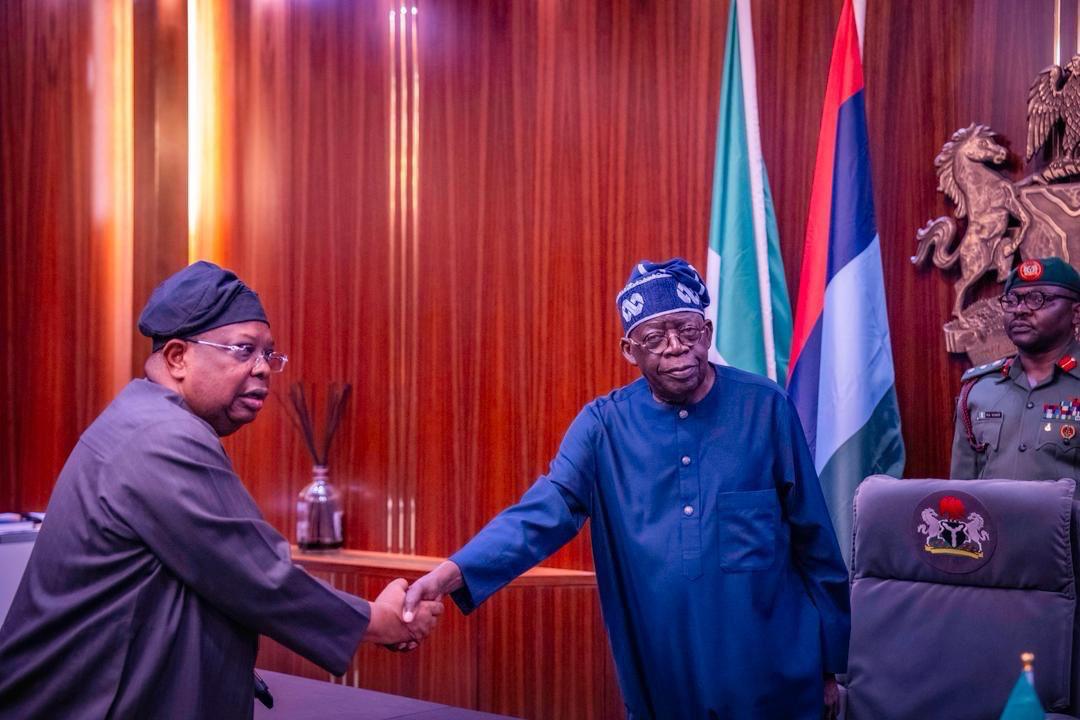
Nigeria’s Minister of Power, Joseph Olasunkanmi Tegbe, has assured Nigerians of his commitment to implementing far-reaching reforms aimed at improving electricity supply, strengthening sector accountability, and restoring public confidence in the nation’s power industry.
Speaking after settling into office following his confirmation by the Senate, the minister said his administration had already developed a structured reform agenda focused on discipline, measurable targets, and transparent communication with the public.
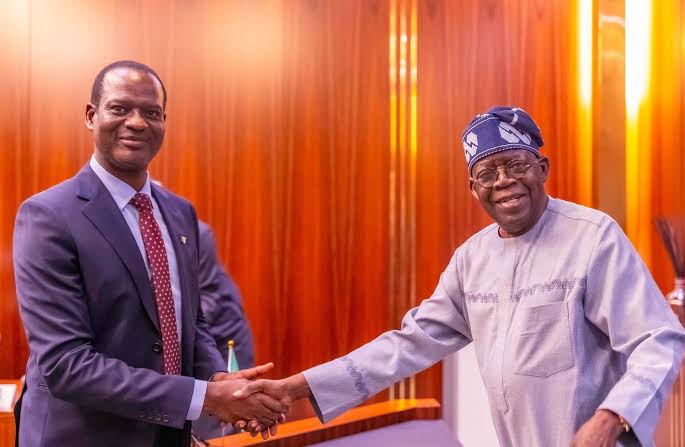
Tegbe expressed gratitude to President Bola Tinubu for the confidence reposed in him and disclosed that extensive consultations had been held with key institutions across the electricity value chain.
These engagements, he said, involved the Federal Ministry of Power, the Transmission Company of Nigeria (TCN), the Niger Delta Power Holding Company (NDPHC), the Nigerian Electricity Regulatory Commission (NERC), the Rural Electrification Agency (REA), and other major stakeholders.
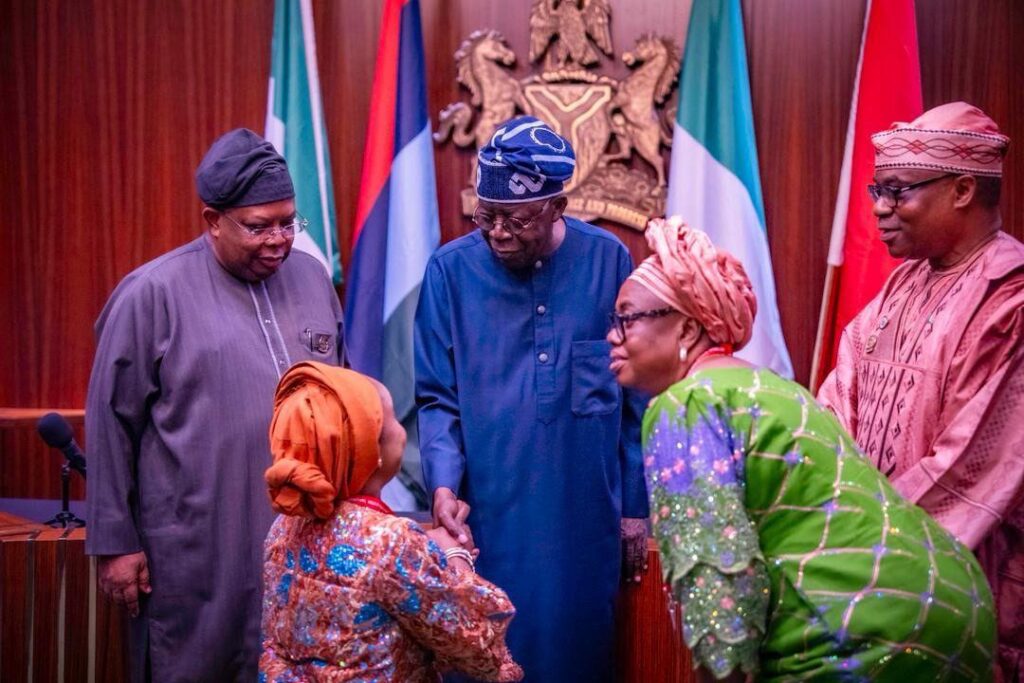
According to the minister, the consultations have produced a common understanding among sector players on the need to accelerate reforms and improve service delivery to Nigerians.
He also revealed that discussions with international development agencies and financial partners had yielded encouraging outcomes, with several organizations indicating readiness to provide financial support to help address liquidity challenges that have long constrained the sector.
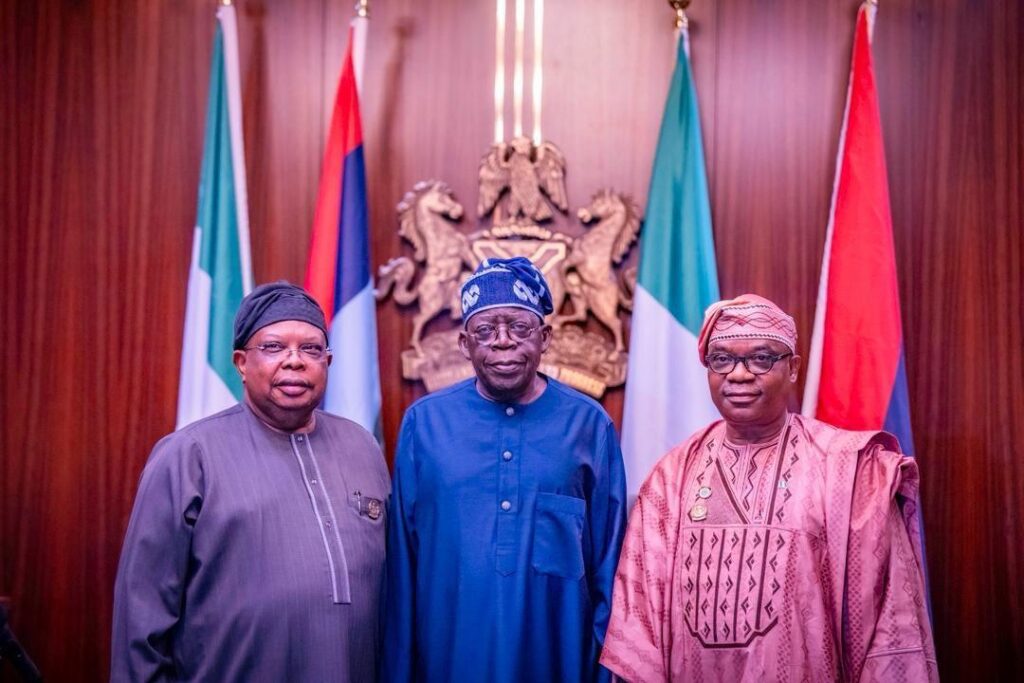
Highlighting early gains, Tegbe announced the revival of the 450-megawatt Alaoji Open Cycle Power Plant in Abia State, which had remained inactive for about three years. The facility, rehabilitated by the NDPHC, now has the capacity to contribute up to 375 megawatts to the national grid.
The minister further pointed to recent improvements in transmission infrastructure, noting that TCN had successfully energized new assets at Katampe in Abuja as well as substations in Ayede and Abeokuta, developments expected to enhance power delivery across several regions.
On consumer protection, Tegbe welcomed recent regulatory actions requiring electricity distribution companies to compensate Band A customers affected by supply shortfalls. He described the directive as evidence of a growing commitment to holding operators accountable while safeguarding the interests of consumers.
He also cited the swift restoration of electricity in parts of Abuja following the unexpected failure of a 100MVA transformer, praising the coordinated efforts of TCN and Abuja Electricity Distribution Company (AEDC) teams that resolved the outage within 24 hours.
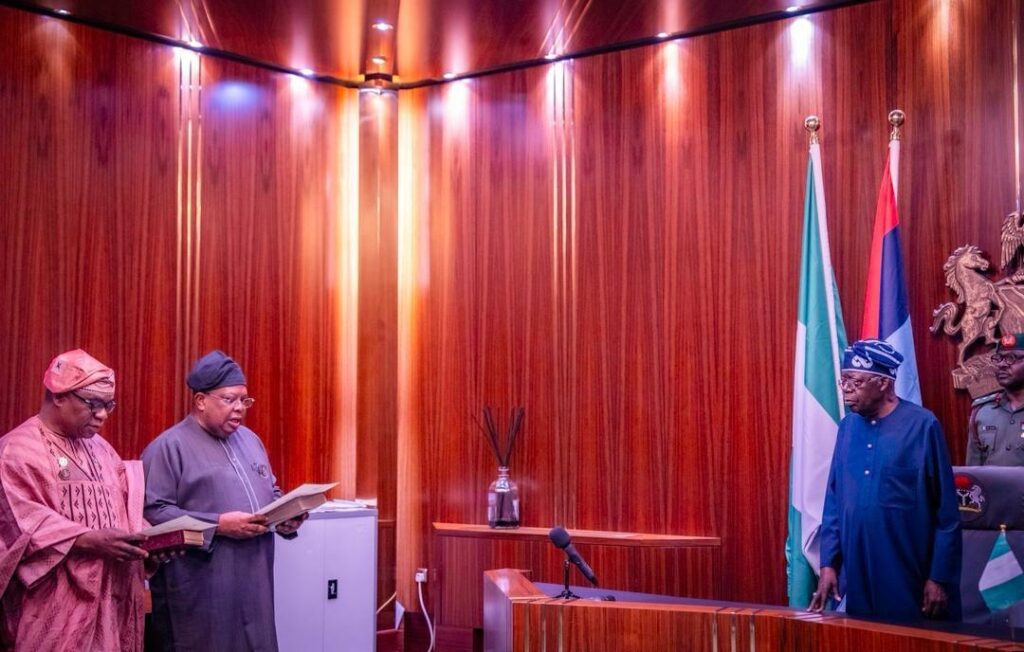
The minister commended workers across the Ministry of Power and its agencies for their dedication and professionalism, while also acknowledging the support of private sector investors and partners. He assured stakeholders that efficiency, innovation and performance would be rewarded under his leadership.
While acknowledging the magnitude of challenges facing the electricity industry, Tegbe appealed to Nigerians for patience, stressing that decades of infrastructure deficits and systemic problems could not be resolved overnight.
He reiterated his commitment to realistic expectations and transparent governance, promising that while he would not make unrealistic pledges, citizens would witness steady improvements and receive regular updates on progress in the sector.
The minister said the reform process was already underway and expressed confidence that sustained collaboration among government institutions, private investors and development partners would ultimately deliver a more reliable and efficient power system for the country.
egbe Pledges Accountability, Visible Progress in Power Sector Reform
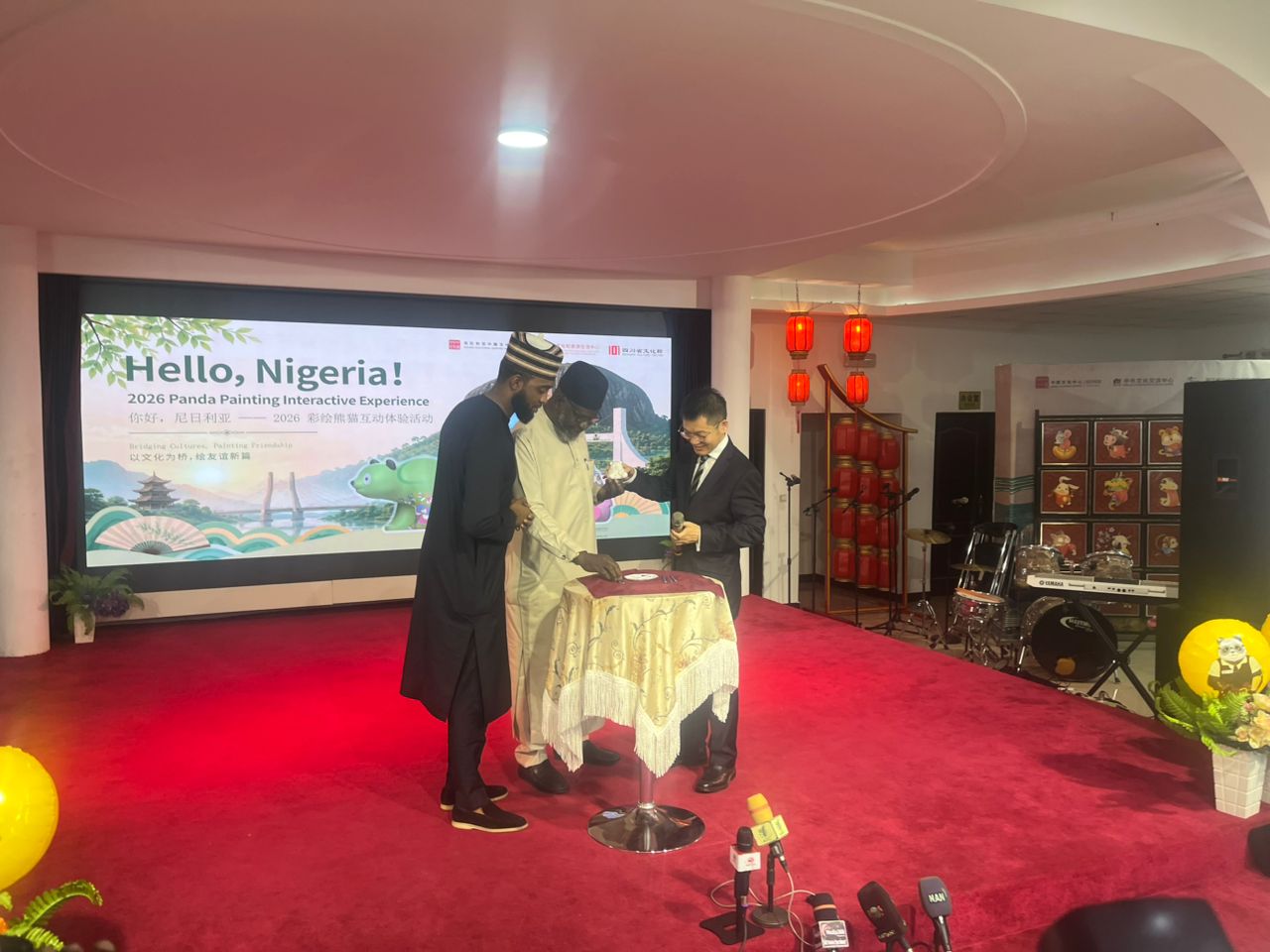
China, Nigeria Strengthen Cultural Diplomacy Through Panda Art Initiative in Abuja
By: Michael Mike
Nigeria and China have reaffirmed their commitment to deepening cultural cooperation and people-to-people relations through the launch of the “Hello Nigeria—2026 Panda Painting Interactive Experience,” an initiative aimed at promoting friendship, creativity and mutual understanding between the peoples of both countries.
The event, held at the China Cultural Centre in Abuja, brought together diplomats, government officials, artists, cultural practitioners, students and members of the diplomatic community to celebrate the power of art as a tool for international dialogue and cultural exchange.
Speaking at the opening ceremony, Minister of the Chinese Embassy in Nigeria, Zhou Hongyou, described the giant panda as a symbol of peace, harmony and inclusiveness, noting that the exhibition was designed to build bridges between Chinese and African cultures through artistic expression.
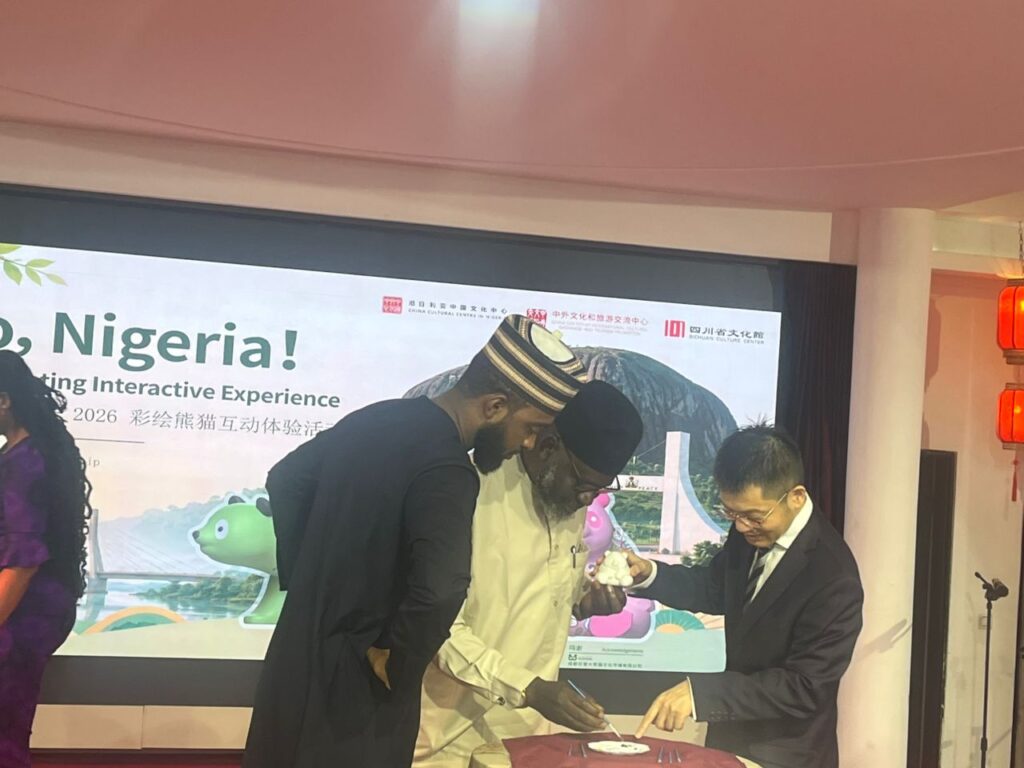
According to him, the interactive programme combines the cultural heritage of China’s Sichuan Province—the natural home of the giant panda—with Africa’s vibrant artistic traditions, creating a platform for meaningful engagement among young people and cultural enthusiasts.
“The panda transcends language and borders. Through art, creativity and cultural exchange, we hope to foster deeper understanding and friendship between our peoples,” Zhou said.
The Chinese diplomat noted that the event comes at a significant moment in bilateral relations, as 2026 marks the 55th anniversary of diplomatic ties between Nigeria and China and has been designated as the China-Africa Year of People-to-People and Cultural Exchanges.
He stressed that while economic cooperation remains important, sustainable relations between nations are ultimately built on trust, mutual respect and appreciation of each other’s cultures.
Zhou disclosed that the Chinese Embassy and the China Cultural Centre would continue to expand cultural programmes, youth exchanges, language learning opportunities and artistic collaborations to further strengthen ties between both countries.
Also speaking, Permanent Secretary of the Federal Ministry of Art, Culture and the Creative Economy, Abdulkarim Ozi Ibrahim, said cultural initiatives such as the Panda Painting Interactive Experience demonstrate the ability of art to unite people across linguistic, geographical and social boundaries.
He described the programme as a practical example of cultural diplomacy in action, emphasizing that creative engagement promotes shared values, mutual respect and peaceful coexistence among nations.
“The creative sector serves as a powerful platform for fostering peace, inclusion and sustainable development. Through culture, we are able to build bridges, strengthen relationships and celebrate our shared humanity,” Ibrahim said.
The Permanent Secretary reaffirmed the Federal Government’s commitment to supporting programmes that encourage intercultural dialogue, artistic innovation, cultural tourism and international partnerships.
He noted that cultural exchanges play an important complementary role to diplomatic and economic relations by creating stronger connections among citizens, particularly young people who will shape the future of both countries.
In his goodwill message, Director-General of the National Gallery of Art, Ahmed Bashir Sodangi, highlighted the transformative role of the arts in promoting understanding and friendship among diverse peoples and cultures.
He described the giant panda as an internationally recognized symbol of friendship and environmental consciousness whose message resonates across continents.
According to Sodangi, the event offers participants an opportunity not only to explore artistic creativity but also to reflect on values such as unity, cultural diversity and environmental stewardship.
He commended the Chinese Embassy for its sustained investment in cultural diplomacy and people-to-people engagement, noting that such initiatives contribute significantly to strengthening the longstanding relationship between Nigeria and China.
“The arts remain one of humanity’s most effective instruments for fostering understanding and building bridges across cultures. Programmes like this create opportunities for learning, collaboration and lasting friendship,” he said.
Throughout the event, speakers emphasized the importance of youth participation in cultural exchange programmes, describing young people as the custodians of future relations between both nations.
Students from various international schools participated in painting activities inspired by the panda, while cultural displays showcased the shared values of peace, creativity and cooperation that underpin Nigeria-China relations.
The event also highlighted growing collaboration between cultural institutions in both countries and reinforced the role of the creative economy as a vehicle for diplomacy, tourism, education and international engagement.
As Nigeria and China celebrate 55 years of diplomatic relations, officials from both countries expressed optimism that cultural initiatives such as the Panda Painting Interactive Experience would deepen mutual understanding, inspire new artistic collaborations and strengthen the bonds of friendship between their peoples for generations to come.
China, Nigeria Strengthen Cultural Diplomacy Through Panda Art Initiative in Abuja

NANS Urges Caution Over Strike Calls as Oyo School Abduction Crisis Deepens
By: Michael Mike
The National Association of Nigerian Students (NANS) has cautioned against calls for statewide strikes and mass protests over the recent abduction of teachers and pupils in Oyo State, arguing that such actions could inadvertently serve the objectives of terrorists and kidnappers.
In a statement signed by its National President, Comrade Akinteye Babatunde Afeez, the student body expressed deep concern over the plight of the abducted children and teachers, describing the situation as heartbreaking and unacceptable.
The statement was issued in response to a call by the Campaign for Democratic and Workers’ Rights (CDWR) urging the Nigeria Union of Teachers (NUT), the Nigeria Labour Congress (NLC) and the Trade Union Congress (TUC) to embark on statewide industrial action and mass protests over the security situation.
While acknowledging the constitutional rights of individuals and groups to freedom of expression and association, NANS stressed that such rights must be exercised responsibly, particularly during a sensitive national security crisis.
According to the association, shutting down economic and social activities through strikes could play into the hands of terrorists whose aim is to create fear, instability and national disruption.
“It breaks the heart to see children sent to school by their parents and guardians end up as bargaining chips in the hands of kidnappers,” the statement said, adding that no responsible government would stand by and allow innocent schoolchildren to remain in captivity.
NANS argued that rather than mobilising for strikes and protests, Nigerians should unite in support of efforts aimed at securing the safe return of the abducted victims and defeating terrorism.
Drawing parallels with international experiences, the student body cited Israel’s response to the 2023 Hamas attacks, noting that citizens rallied behind efforts to rescue hostages while maintaining national unity despite deep political differences.
The association also recalled Nigeria’s resilience during difficult periods in its history, including the civil war and predictions of national disintegration ahead of the 2015 elections, saying the country had repeatedly demonstrated its ability to overcome major challenges through unity.
“Nigeria has faced and overcome difficult moments before. If we were able to unite and defeat predictions of national collapse, we can also unite to confront terrorism and insecurity,” the statement noted.
NANS further urged Nigerians to view the fight against terrorism as a collective responsibility rather than solely the burden of government, insisting that citizens, communities and institutions must work together to address the security challenge.
The association maintained that while governments may come and go, the nation and its people remain, making it imperative for all stakeholders to place national interest above partisan or sectional considerations.
The statement comes amid growing public concern over the recent wave of school-related abductions, with security agencies continuing efforts to secure the release of the affected teachers and pupils. NANS expressed hope that the victims would regain their freedom soon and called on Nigerians to remain united in the face of the security challenge.
NANS Urges Caution Over Strike Calls as Oyo School Abduction Crisis Deepens

The ‘Hyenas’ and The Fear of Radical Changes

Parliamentarians in Sierra Leone mourn colleague Lucinda Kelly

Troops Neutralise Suspected Kidnapper While Attempting Escape in Plateau

Roger Federer’s Shock as DNA Results Reveal Myla and Charlene Are Not His Biological Children

THE PLIGHT OF FARIDA

FAILED COUP IN BURKINA FASO: HOW TRAORÉ NARROWLY ESCAPED ASSASSINATION PLOT AMID FOREIGN INTERFERENCE CLAIMS
-
 News2 years ago
Roger Federer’s Shock as DNA Results Reveal Myla and Charlene Are Not His Biological Children
-
Opinions4 years ago
THE PLIGHT OF FARIDA
-
 News1 year ago
FAILED COUP IN BURKINA FASO: HOW TRAORÉ NARROWLY ESCAPED ASSASSINATION PLOT AMID FOREIGN INTERFERENCE CLAIMS
-

 News2 years ago
EYN: Rev. Billi, Distortion of History, and The Living Tamarind Tree
-
 Opinions4 years ago
POLICE CHARGE ROOMS, A MINTING PRESS
-

 ACADEMICS2 years ago
A History of Biu” (2015) and The Lingering Bura-Pabir Question (1)
-

 Columns2 years ago
Army University Biu: There is certain interest, but certainly not from Borno.
-

 Politics1 year ago
2027: Why Hon. Midala Balami Must Go, as Youths in Hawul and Asikira/Uba Federal Constituency Reject ₦500,000 as Sallah Gift
