
News
Sani: Military Alone Can’t Defeat Violent Extremism, Terrorism

Sani: Military Alone Can’t Defeat Violent Extremism, Terrorism
•Says poverty, governance failures must be fixed
•NCTC-ONSA, PAVE Network call for regional, inclusive approach
By: Michael Mike
Kaduna State Governor, Senator Uba Sani, has warned that military and law enforcement strategies alone are not enough to defeat violent extremism in Nigeria’s North-West.
Speaking in Kaduna on Tuesday at the opening of a two-day summit on Preventing and Countering Violent Extremism, banditry and terrorism in the North-West Zone, the governor said tackling insecurity requires addressing the deeper structural causes fueling it.
Organised by the PCVE Knowledge, Innovation and Resource Hub (KIRH) and the PAVE Network, in collaboration with the National Counter Terrorism Centre under the Office of the National Security Adviser (NCTC-ONSA), the Summit is supported by NEYIF and funded by the Global Community Engagement and Resilience Fund (GCERF).
Sani, who was represented by the Commissioner for Internal Security and Home Affairs, Dr. Sule Shuaibu, described violent extremism as “one of the gravest threats to human security and national development in our time.”
According to him, its manifestations—terrorism, banditry, kidnappings, and extremist ideologies—have devastated communities, displaced families, disrupted education, eroded livelihoods, and weakened public trust in institutions.
“If left unchecked, it has the potential to destabilise not only our region but the broader fabric of our nation,” he warned.
While acknowledging the military’s critical role, the governor cautioned against relying on force alone.
“We must adopt a holistic and coordinated response. While necessary, a purely military or law enforcement approach is not sufficient. We must address the root causes of violent extremism—poverty, inequality, exclusion, poor governance, and lack of opportunities, particularly for our young people,” Sani said.
He emphasised that trust, inclusivity, justice, and respect for human rights must be central to any sustainable solution.
He noted that the summit, “Articulating a Regional Approach and Response to Violent Extremism in North-West Nigeria, ” was designed to diagnose problems and generate practical, context-specific, and actionable strategies.
“I hope our deliberations will lead to concrete, sustainable measures that can be implemented across the North-West,” he added.
Sani highlighted his administration’s efforts in human capital development, community-based conflict resolution, youth and women empowerment, and close collaboration with traditional and religious leaders. He reaffirmed Kaduna’s commitment to working with the federal government, other regional states, and development partners to consolidate peace and security.
He urged participants to engage constructively so that the summit’s recommendations can serve as a blueprint for collective action.
In his remarks, Maj.-Gen. Adamu Laka, the National Coordinator of the National Counter Terrorism Centre (NCTC), stressed that preventing violent extremism requires an inclusive, community-led, and intelligence-driven regional strategy.
Represented by Commodore Ahmed Madawaki, Laka said the summit aligned with the NCTC’s mandate of fostering “whole-of-government and whole-of-society engagement.”
He explained that through collaborations with networks such as the Partnership Against Violent Extremism (PAVE), the centre is implementing initiatives that promote social cohesion and sustainable livelihoods, thereby reducing susceptibility to extremist recruitment.
Laka further identified porous borders with the Niger Republic, weak governance structures, climate-induced resource conflicts, and cross-border infiltration by extremist groups as factors worsening insecurity in the North-West.
He called for stronger cross-border cooperation, better enforcement, and participatory governance models to counter these threats.
Also, the Chairman of the Steering Committee of PAVE, Jaiye Gaskiya, insisted that Nigeria cannot defeat violent extremism without empowering local governments and rebuilding grassroots governance systems.
He stressed that subnational governments must take ownership of security challenges within their jurisdictions.
“We want to prioritise the role of subnational governments because these are fundamental governance challenges,” he said.
According to Gaskiya, weak and dependent local governments undermine the fight against extremism.
“Without effective, functional, and autonomous local governments, we will never be able to address these challenges. Local governments are closest to the people and the most accountable if they are truly functioning,” he argued.
He therefore called for constitutional reforms to restore full autonomy to local councils as a foundation for sustainable peace and security.
Sani: Military Alone Can’t Defeat Violent Extremism, Terrorism



Troops intercept 11 youths with donkeys during patrol in Borno
By: Zagazola Makama
Troops of 68 Battalion have intercepted 11 youths during a routine patrol in Mallam Fatori area of Abadam Local Government Area of Borno State.
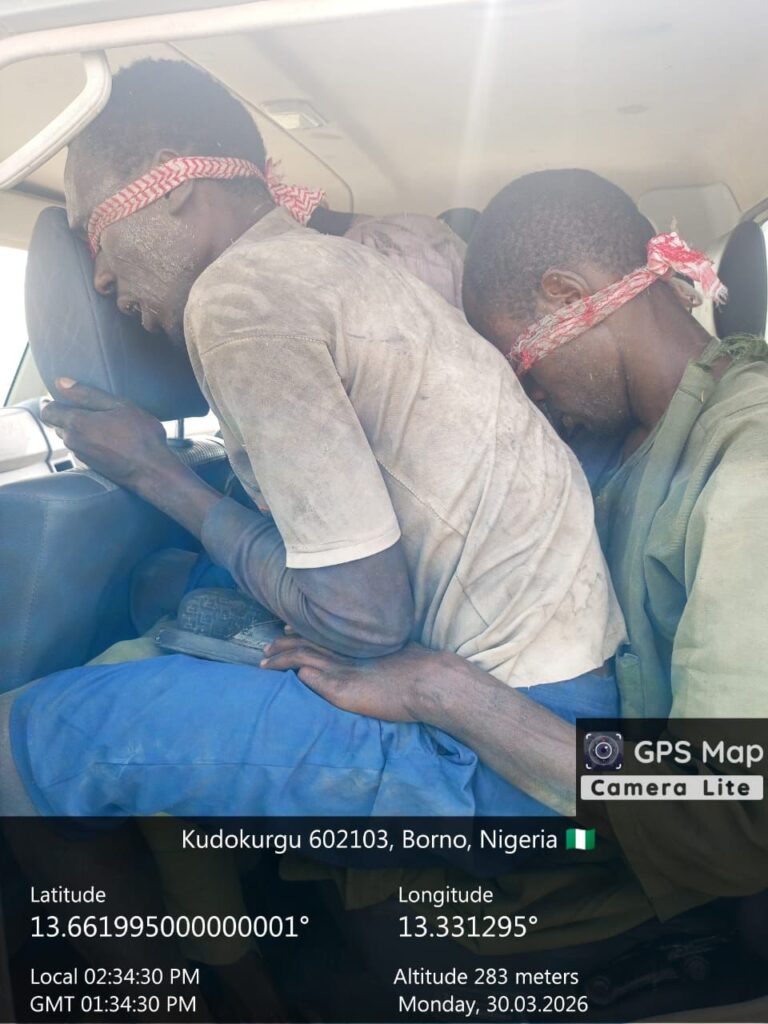
Security sources said the interception occurred along the Bulagana–Cheisa axis on April 2 during ongoing clearance operations in the area.
According to the sources, the individuals were found moving in the area with 12 donkeys when they were stopped and briefly interrogated by troops.
The sources added that the youths were later handed over, alongside the animals, to relevant authorities in a neighbouring country for further necessary action.
The military said the patrol was part of sustained efforts to maintain security dominance and prevent exploitation of border communities by criminal elements.
Troops intercept 11 youths with donkeys during patrol in Borno
Troops recover ammunition, logistics items in Kwara patrol operation
By: Zagazola Makama
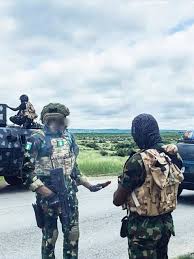
Troops of the Nigerian Army under the 22 Brigade have recovered ammunition and other logistics items during a fighting patrol in Ifelodun Local Government Area of Kwara State.
A security source disclosed that the operation was conducted at about 4:00 p.m. on April 2 at Daban Lema, where troops of the brigade, operating from the Patrol Base, encountered signs of suspected terrorist activities in a deserted location.
According to the source, the troops immediately carried out exploitation of the area, leading to the recovery of four rounds of 7.62mm special ammunition and one empty PKT ammunition belt link.
Other items recovered include four mobile phones, two head warmers, two small solar panels, and assorted repair tools believed to have been used by the suspected terrorists.
The source added that the recovery indicates the presence and movement of suspected criminal elements within the area, noting that troops have intensified surveillance and patrols to deny them freedom of action.
Troops recover ammunition, logistics items in Kwara patrol operation
Troops foil attack by Criminal Youths, rescue victims, arrest suspects in plateau
By: Zagazola Makama
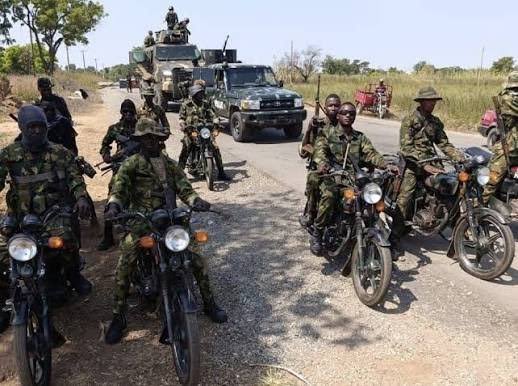
Troops of Sector 1, Operation Enduring Peace (OPEP), have foiled an attack on residents at Dutse Uku in Jos North Local Government Area of Plateau State.
A security source said the troops responded swiftly to a report of sporadic gunshots in the area at about 11:50 p.m. on April 2.
According to the source, upon arrival at the scene, the suspected criminals fled, abandoning their operation due to the prompt intervention of the troops.
He said the troops rescued two victims who sustained gunshot wounds during the incident and immediately evacuated them to a hospital for medical attention.
The source further disclosed that two suspects, dressed in black attire, were arrested at the scene.
Items recovered from the suspects include a cutlass and a knife.
He added that the suspects are currently in military custody and undergoing preliminary investigation, while efforts are ongoing to track down other fleeing members of the group.
Zagazola report that despite heightened security, there has been report of pocket of attacks in some communities.
The source reassured residents of the military’s commitment to protecting lives and property and urged the public to continue providing timely information to security agencies.
Troops foil attack by Criminal Youths, rescue victims, arrest suspects in plateau

Troops intercept suspected Boko Haram logistics convoy conveying 13 persons in Borno

Troops intercept 11 youths with donkeys during patrol in Borno

Troops, CJTF arrest three suspected Boko Haram logistics suppliers in Borno

Roger Federer’s Shock as DNA Results Reveal Myla and Charlene Are Not His Biological Children

THE PLIGHT OF FARIDA

FAILED COUP IN BURKINA FASO: HOW TRAORÉ NARROWLY ESCAPED ASSASSINATION PLOT AMID FOREIGN INTERFERENCE CLAIMS
-
 News2 years ago
Roger Federer’s Shock as DNA Results Reveal Myla and Charlene Are Not His Biological Children
-
Opinions4 years ago
THE PLIGHT OF FARIDA
-
 News12 months ago
FAILED COUP IN BURKINA FASO: HOW TRAORÉ NARROWLY ESCAPED ASSASSINATION PLOT AMID FOREIGN INTERFERENCE CLAIMS
-

 News2 years ago
EYN: Rev. Billi, Distortion of History, and The Living Tamarind Tree
-
 Opinions4 years ago
POLICE CHARGE ROOMS, A MINTING PRESS
-

 ACADEMICS2 years ago
A History of Biu” (2015) and The Lingering Bura-Pabir Question (1)
-

 Columns2 years ago
Army University Biu: There is certain interest, but certainly not from Borno.
-

 Opinions2 years ago
Tinubu,Shettima: The epidemic of economic, insecurity in Nigeria
