Connect with us

News

Scores of Boko Haram terrorists killed in Borno ambush

Published

on

Scores of Boko Haram terrorists killed in Borno ambush
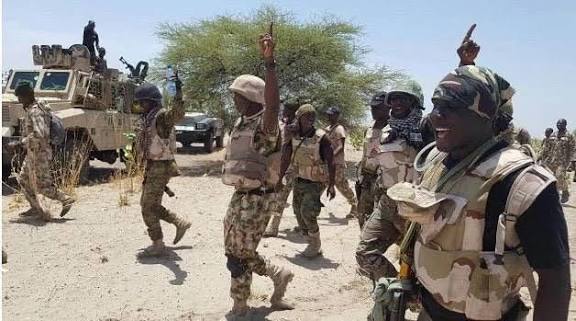
…… As security forces also sustained casualties

By: Ndahi Marama

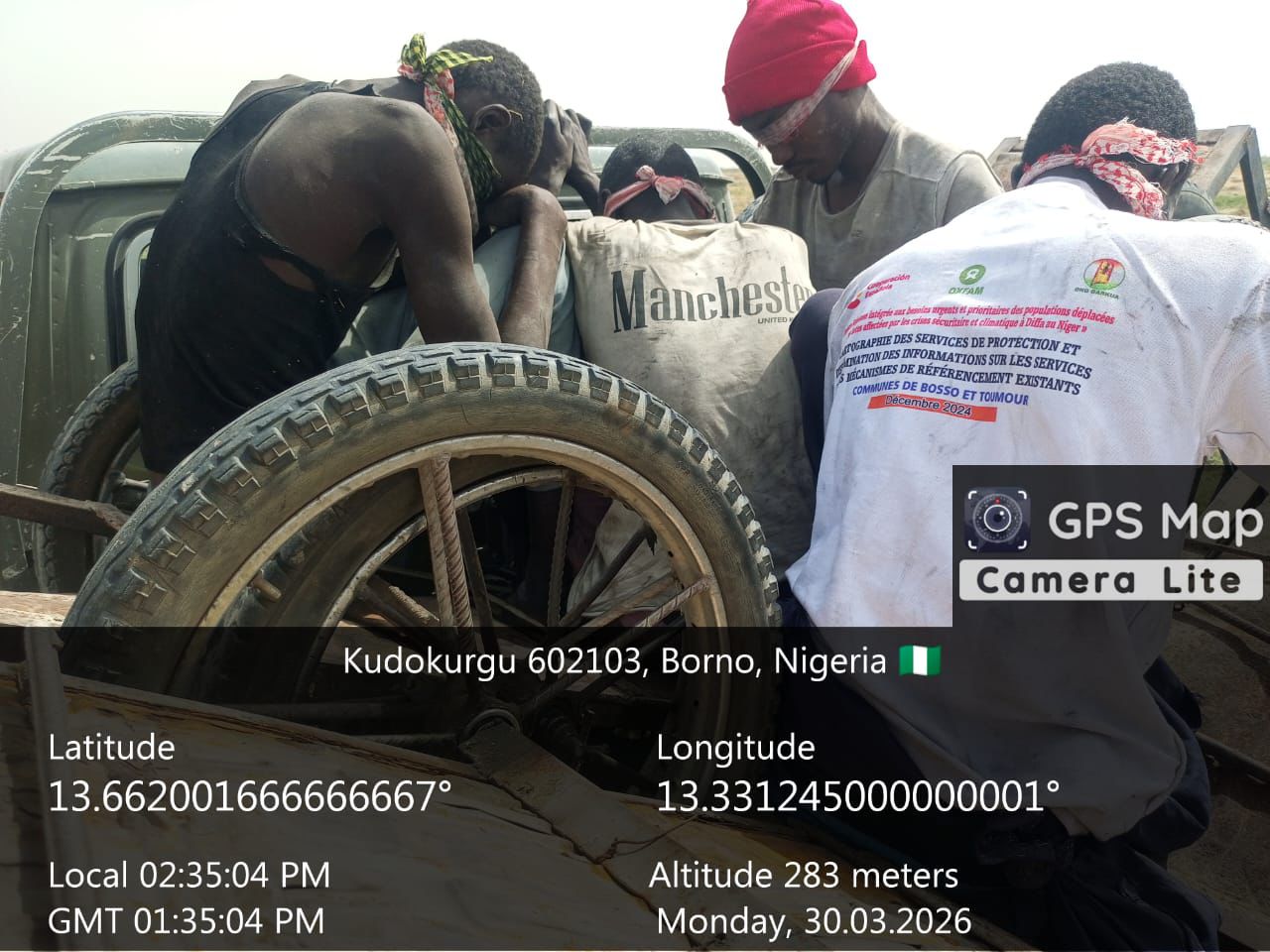
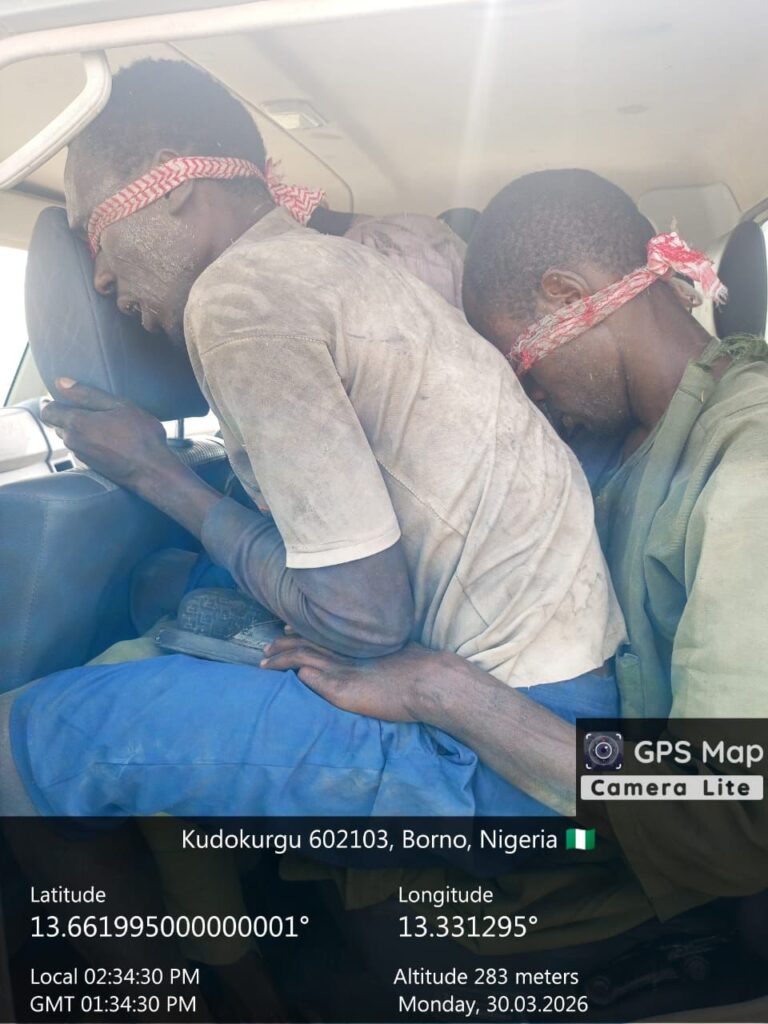
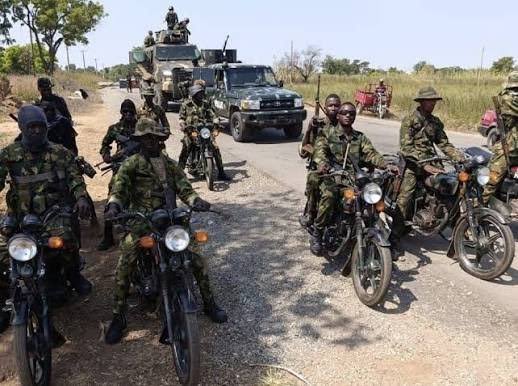
Dozens of Terrorists suspected to be members of Boko Haram/ISWAP have been killed in an ambush on troops of 21 Armoured Brigade along Bama-Kashimri village in Bama Local Government Area of Borno State.

The troops according to Credible Military Source revealed that they were on clearance operations around the Kashimri general area when the incident took place last Friday (Yesterday).

The Source said, troops of the Joint Task Force North East ‘ Operation Hadin Kai’ responded swiftly with firepower, as over 30 terrorists were neutralized, while others fled with gunshot wounds.

He said, unfortunately, the Officer who led the clearance operation (Names withheld), with some soldiers, two members of Civilian Joint Task Force and two Vigilantes paid the supreme price during the encounter.

“Yes, out troops came under Boko Haram ambush along Bama- Kashimri village last Friday while on clearance operations.

“Troops responded swiftly and nuetralized dozens of the terrorists, as scores fled with gunshot wounds.

” Unfortunately, the Officer who led the clearance operation (Names withheld), with some soldiers, two members of Civilian Joint Task Force and two Vigilantes paid the supreme price during the encounter”. The Military Source revealed.

He however said, the troops have sustained high spirit, as further operations are ongoing in all fronts to maintain pressure on the terrorists and deny them freedom of movement.

Scores of Boko Haram terrorists killed in Borno ambush

Continue Reading
Click to comment

Leave a Reply

Your email address will not be published. Required fields are marked *

News

Two killed in land dispute violence in Niger

Published

on

Two killed in land dispute violence in Niger

By: Zagazola Makama

Two men have been killed in a clash linked to a long-standing land dispute between Poto and Ketso communities in Mokwa Local Government Area of Niger.

Sources told Zagazola that the incident was reported to the Mokwa Divisional Police Office at about 6:45 p.m. on Jan. 29 by Hon. Mohammed Danjuma of Poto village.

The source said that earlier the same day, some youths from Ketso community allegedly attacked Mohammed Kudu, 45, of Poto village while he was on his farm.

“He was assaulted and later died from the injuries,” the source said.

The source added that around the same time, another farmer from Poto village, Alfa Manko, 35, who went to find out what was happening after hearing noise from the area, was also attacked by the same group and killed.

According to the police, the two communities have been embroiled in a protracted land dispute, which is currently before the Etsu Nupe, Alhaji Dr. Yahaya Abubakar (CFR), for resolution.

The Divisional Police Officer in Mokwa immediately mobilised a team of officers to both communities, the source said, adding that the situation had been brought under control and monitoring had been sustained.

The police said investigation was ongoing and warned against taking the law into one’s hands, urging residents to allow due process to address disputes.

Two killed in land dispute violence in Niger

Continue Reading

News

Troops, CJTF kill 3 terrorists in ambush in Borno

Published

on

Troops, CJTF kill 3 terrorists in ambush in Borno

By: Zagazola Makama

Troops of Operation Hadin Kai, in collaboration with the Civilian Joint Task Force (CJTF), have killed three terrorists during an ambush operation between Ngazalgana and Lamusheri communities in Borno.

Sources told Zagazola Makama that the operation followed credible intelligence on the movement of insurgents in the area.

“The troops laid an ambush along the identified route and engaged the terrorists with heavy gunfire. Three of the insurgents were neutralised, while others escaped with gunshot injuries,” the source said.

He added that two AK-47 rifles were recovered from the scene of the encounter.

The source said the operation was part of sustained efforts to deny terrorists freedom of movement and degrade their operational capabilities across the North-East.

He reaffirmed the commitment of Operation Hadin Kai, working with local security volunteers, to continue intelligence-led operations to protect communities and restore lasting peace in the region.

Troops, CJTF kill 3 terrorists in ambush in Borno

Continue Reading

News

National Security Reflections on Maitatsine, Bullum-Kuttu and Boko Haram Uprisings

Published

on

National Security Reflections on Maitatsine, Bullum-Kuttu and Boko Haram Uprisings

By Samuel Aruwan

The purpose of this reflection is to review the chronic inaction and absence of decisive approaches that have undermined national security, resulting in bloodshed and immense human and material loss. This review interrogates three violent uprisings which history reveals were avoidable from their infancy through their gestation and bloody birth in Northern Nigeria. A further aim is to examine the common assumption held by many Nigerians, particularly commentators, that the nation’s security predicament is primarily due to a failure in intelligence gathering. After interrogating and confirming or refuting this hypothesis, this reflection offers remedial insights based on its findings.

The Maitatsine uprising of December 1980, popularly known as the Kano Disturbances, was a turbulent and intractable conflict between the Maitatsine sect and security forces. It claimed thousands of lives and destroyed vast property before it was contained by the military under the command of then-Colonel Yohanna Yerima Kure, later a Major General. The second subject for analysis is the uprising on the outskirts of Maiduguri in Borno State, known as the Religious Disturbances in the Bullum-Kuttu area in October 1982. The third and most devastating carnage is the Boko Haram insurgency, which first germinated in the mid-1990s and by 2002, before exploding in July 2009—an insurgency Nigeria and its neighbours Niger, Chad, and Cameroon are still grappling with today. From the Boko Haram insurgency, two or more groups have since emerged, including the Islamic State West Africa Province (ISWAP) and Ansaru, among other terrorist affiliates.

According to Nasir B. Zahradeen in his 1988 book “The Maitatsine Saga”, Muhammadu Marwa, alias Maitatsine, who claimed to be from Jabbi Village in the former Gongola State because he spoke fluent and unadulterated Fulfulde, was in fact a Cameroonian national of the Mufu ethnic group from Jappai village in Northern Cameroon, close to the Nigerian border. Zahradeen adds that Maitatsine converted to Islam around 1940 at the age of 16 after leaving his village for Marwa in Cameroon. There, he was first employed by the man who converted him, Mohammed Arab, starting as a houseboy and later becoming a cook. Exceptionally brilliant, Maitatsine learned the Holy Quran with remarkable speed, a prowess that compelled him to leave Marwa for Kano around 1955. He settled in Gwammaja quarters, preaching at Kofar Mazugal and Kwanar Gabari, and later purchased a house at No. 271 Kofar Wambai, Yan Awaki, in the early 1960s from one Alhaji Bako Maikyalli for 500 pounds.

Following a civil disturbance in Kano, Maitatsine was arrested in 1962. He was prosecuted, sentenced to three years’ imprisonment, and subsequently repatriated to his native town of Marwa in Cameroon on the recommendation of the court. This occurred during the reign of the Emir of Kano, Alhaji Muhammadu Sanusi I.

Upon his arrival in Marwa, he continued to preach his doctrines but was again rejected and expelled by the traditional ruler, Lamido Yaya Hammadi. He was then sent to Mubi, where he resumed preaching for a time in 1963.

With the deposition of Emir Sanusi I in 1963, Maitatsine was sneaked back into Kano and resettled in Yan Awaki. Not only did he return, but the fifth columnists that facilitated his return also organised his marriage to his first wife, Aishatu Garba, who in 1967 gave birth to a son named Tijjani, popularly known as Kan’an. That same year, he was arrested for preaching without a permit and for illegal entry into Kano, remanded in custody from 10th December 1966 to 10th January 1967, when he was released on bail. In July 1973, Maitatsine and five followers were detained in Makurdi Prison for preaching in a manner capable of inciting violence in Kano State. He was released after the change of government in 1975, following a general amnesty granted by the administration, and he quickly returned to his old practices. Like a fox with a distinctive, musty scent, he had another brush with the authorities after an open preaching session where he referred to the faithful as infidels and pagans, among other inciting comments. He was prosecuted, convicted, and sentenced to one year of imprisonment with hard labour on 20th April 1978. After serving his term, he went underground to prepare for what later became the violent climax of Maitatsine terrorism in 1980.

While intelligence operatives monitored Maitatsine’s evolution and growth, no concrete action was taken to diminish his tenacity and recruitment. He further consolidated his position by marrying two more wives, Dije Danladi Marwa and the youngest, Malama Zainab Marwa, and had more children. His foot soldiers grew from about a thousand in 1972 to more than 10,000 by 1980. He financed the sect through alms collected by his followers and gained notoriety for charms and sorcery, performing “miracles” that attracted many seekers, augmenting his power. He established an organisational structure, delegating authority to three lieutenants: Malam Umaru, Aliyu Isa Lokoja, and Ayuba Gaya. He split Kano, his area of control, into three zones for administrative convenience. The town witnessed reports of missing persons, especially children, many of whom were found in his enclaves. His dangerous sermons were preached openly in parks, recruiting gullible minds. Foreigners from neighbouring Niger, Mali, Chad, and Cameroon also flocked to join, as the sect grew powerful without regulation. His followers were largely illiterate and had little to lose, becoming raw material for terror missions. Furthermore, he maintained a strong intelligence network among his followers. For instance, when police planned to arrest him based on a tip from a taxi driver about his usual routes, Maitatsine’s network uncovered the plan and its source, forcing the taxi driver to flee Kano for his life. He also encroached on land and expanded structures without recourse to development control, another factor that set the stage for the impending confrontation.

As the Maitatsine phenomenon grew emboldened by citizen complacency and serial, unacted-upon intelligence reports, Alhaji Muhammadu Baba-Yaro, a member representing Gwale Constituency in the Kano State House of Assembly, moved a motion in 1979 to regulate public preaching. The motion failed to pass, as most lawmakers believed preachers and their followers constituted a significant voter bloc and were reluctant to offend their sensitivities. Consequently, the motion was thrown out, allowing Maitatsine to further consolidate by encroaching on people’s lands and stalls. Yan Awaki was further captured as a base, along with Wambai Market and a primary school, from which traders, pupils, and teachers were chased out and replaced by his followers ahead of the coming doom.

The long-simmering conflict between the Maitatsine group and the authorities, which culminated in the deadly December 1980 crisis, began years earlier. The first major warning sign came on 4th August 1972, when police officer Mohammed Maikifa and his men encountered hundreds of Maitatsine’s followers at the Sabon-Gari Friday Mosque. The crowd seemed peaceful initially but attacked the police as they withdrew, injuring two officers. The clash led to 64 arrests and convinced Maikifa that a far worse confrontation was inevitable. His concern was validated after his transfer to the Kwalli Police Station in February 1979, where he received clear intelligence that Maitatsine was planning a war against the police and the government. In response, he increased patrols and arrests.

The year 1980 was marked by escalating violence that demonstrated the sect’s growing power and the police’s inability to contain it. The year’s troubles began on 2nd April 1980, with a clash that left two followers dead and three policemen wounded. More violence followed in May. Then, a critical turning point arrived on 3rd October 1980. On that day, Maitatsine’s followers assaulted civilians and then brutally overpowered the police officers who intervened. They seized the officers’ weapons, and Constable Sani Yusuf later died from his wounds. A team of about fifty policemen could not control them. By mid-October 1980, the group began forcibly ejecting people from their homes in the Yan Awaki area and occupying them, openly challenging governmental authority.

Two final events in late 1980 pushed the simmering conflict into a full-scale disaster. First, a few days before 18th December, Maitatsine’s son, Kan’an, was badly beaten and later found dead. Known for his violent and reckless behaviour, Kan’an’s death enraged his father and ignited a desire for vengeance. Second, on 26th November 1980, the state government sent Maitatsine a final warning letter titled “Disturbance of Peace and Erection of Illegal Structures”, demanding he cease his activities. Copied to President Shehu Shagari, the Inspector General of Police, and the Commissioner of Police, the letter’s demand that they vacate Yan Awaki reportedly incensed Maitatsine and his followers. They unanimously agreed to reject the order and fight. Maitatsine then sent word to his followers within and outside Nigeria to converge on Kano for action.

This tension exploded on Thursday, 18th December 1980, at the Shahuci playground. A large police presence triggered a furious attack from Maitatsine’s followers, sparking a massive battle that killed at least one hundred people on the first day alone. The police were completely overwhelmed. Officer Maikifa narrowly escaped a mob that tried to tear him apart, and Mobile Police officer Desmond Okolo was beheaded, his body left in his burning vehicle. As narrated by Zahradeen, the Tatsine (as Maitatsine’s fighters were called), dressed in their usual battle gear of bows, arrows, daggers, spears, and sharp knives, marched from their Yan Awaki enclave to the Shahuci preaching ground, a stone’s throw from the Central Mosque. They moved in an arrowhead formation reminiscent of modern warfare, chanting slogans: “Shahada! Shahada!!” (meaning “we need martyrdom”) and “Yau zamu sha jini” (meaning “today we are going to suck blood”).

It was confirmed beyond reasonable doubt that all followers underwent rigorous military training supervised by the ebullient ‘Mai Jar Damara,’ a Chadian trained in one of the guerrilla forces in Chad. This Military Chief of Staff was known to have prepared himself with effective anti-rifle and anti-sharp-edge charms from within and outside Chad. Eyewitnesses reported incredible stories of his extraordinary ability to resist bullet penetration, claiming arrows aimed at him were intercepted and returned with military precision. He was an indisputably fine marksman whose arrows never missed. Apart from Mai Jar Damara, Maitatsine hired retired Nigerian Army Sergeant Salihu Inuwa, who trained followers in tactics and weapons drills—stripping, cleaning, and assembling arms. It was further said that Maitatsine’s Chief of Operations was one Saidu Rabiu. When they converged on Shahuci, it was believed they intended to disrupt the Friday prayers the following day.

The police had been informed of Maitatsine’s plans, which aimed not only to disrupt the weekly Friday prayers but also to arrest some traditional and governmental leaders. Threatening letters were reportedly sent to the targeted individuals. The followers converged in large numbers on Thursday afternoon to finalise arrangements for the next day’s onslaught. On their way to Shahuci, they attacked numerous people, brandishing their knives, bows, arrows, daggers, and swords in open defiance of constituted authority. This outbreak of extreme violence, born from years of tension and these final triggers, demonstrated the total breakdown of police control, necessitating military intervention to end the crisis.

By the time troops under the overall command of Colonel Kure, through Major Haliru Akilu, fully joined the fray, they tactically and operationally overpowered the insurrection. Maitatsine fled but was shot in the leg around Janguza, where he bled profusely and died. He was buried in a shallow grave by his followers on 28th December 1980, while other fighters escaped to other parts of Northern Nigeria. His corpse was later said to have been cremated to prevent it from becoming an object of worship. Although the political friction between the Federal and Kano State Governments following the crisis is not the focus of this study, the insurrection’s end saw nearly 6,000 lives lost, in addition to security force casualties, and property worth billions of Naira destroyed. The Federal Government’s report on the disturbances discovered the involvement of 162 foreign nationals: 16 from Chad, 4 from Cameroon, 2 from Mali, and 1 from Upper Volta (now Burkina Faso), though their home governments were not implicated.

The Justice Anthony Aniagolu Tribunal made far-reaching recommendations, including the need to regulate religious preaching, ensure effective border control, and register aliens, notwithstanding ECOWAS protocols. While the Kano State Government issued a counter-response rejecting parts of the report—a matter beyond this study’s scope—the incident underscores how politics can be an albatross in security management, as evidenced by the State Assembly’s inaction on the motion to regulate preaching. A significant federal action was the proscription of the Maitatsine Movement as an unlawful society in 1982 by President Shagari.

As many Maitatsine followers escaped to other parts of Northern Nigeria, intelligence agencies continued monitoring their activities but reported them without commensurate speed or action. This indicated that, as a country, very little was learned from the Kano episode—a point this study further substantiates—until these escapees struck again in the Bullum-Kuttu area of Maiduguri, Borno State, on 26th October 1982. Contrary to varying fatality figures, the Borno State White Paper on the Commission of Inquiry into the Religious Disturbances, chaired by Alhaji Hassan El-Badaway, suggests upwards of 500 citizens were killed, far exceeding the official figure of 175.

The location of Bullum-Kuttu was a key factor. Urbanisation transformed this once tiny, unnoticeable village into a satellite shanty town on the outskirts of Yerwa (Maiduguri), housing the city’s spill-over population. Such settlements, with typical Sabon Gari characteristics, often provided comfortable bases for religious deviants like the ‘Yan Tatsine. It was confirmed that long before the 1980 Kano saga, some of Maitatsine’s foot soldiers had clashed with police in Maiduguri in 1979, after which they moved to Bullum-Kuttu. There, they enjoyed local patronage; for instance, Bukar Tela acquired the land they settled on, and Haruna Mai Nama Gwange built a house and mosque for the community.

Soon after settling, the group intensified its abusive preaching, causing serious public concern. Several complaints were made to the Police and the Metropolitan Council, which pressed for action, but no decisive steps were taken until after the major Kano riots of December 1980. Almost immediately after those riots, in January 1981, neighbours noticed a new influx of Tatsine followers into Bullum-Kuttu and reported it to the Police, yet again no serious action was taken. In July 1982, the State Intelligence and Security Committee formally alerted the Police Command to the growing presence of the Tatsine in Maiduguri and other towns like Biu, Gujba, and Gashua. Still, the Police failed to act to forestall the danger.

After the President’s state pardon of the Kano rioters in October 1982, about fifty released detainees went straight from Kano to Bullum-Kuttu and joined their colleagues—a development also reported to the Police by Bullum-Kuttu residents. Rather than abating, the situation worsened with a massive build-up of Tatsine adherents by mid-October 1982. The most immediate cause of the violent disturbances was the Police attempt to make arrests at the forecourt of the Shehu’s Palace on the night of Monday, 25th October 1982, where the Tatsine were preaching. The Police decided to act because they had received reliable information that the group had made full preparations to attack and capture the Shehu’s Palace, the Central Mosque, and the Police Headquarters on Friday, 29th October 1982. The Police continued arrests the following day, triggering the violent outbreak.

Having reviewed the immediate trigger, it is also vital to examine the direct causes. The Police, clearly ill-prepared for further arrests on the afternoon of 26th October 1982, fell victim to the ferocious Tatsine followers, who fought like a suicide squad, believing death meant instant deliverance to ‘Al-janna’ (Paradise). In this encounter, they killed DSP Akuya, his driver, and several other policemen. After this clash, all remaining policemen fled Bullum-Kuttu, leaving the entire village at the mercy of roughly 800 armed followers. That evening, a Mobile Police unit made a half-hearted, abortive attack, losing the Officer-in-Charge and some of his men. After removing the bodies of DSP Akuya and their colleagues on 27th October, no policeman returned to Bullum-Kuttu until 29th October.

Instead of attacking the Tatsine enclave, the Borno State Police Command mounted roadblocks far on the metropolis’s outskirts. They proceeded to engage in what most informants saw as the molestation of innocent, fleeing civilians, systematically robbing them of personal property. Meanwhile, the Tatsine followers went berserk, molesting and killing Bullum-Kuttu residents. As stated in the El-Badaway Commission report, residents were trapped: inside the village, they faced the ravaging Tatsine; if they ventured to escape, they were mowed down by bullets.

Investigations revealed that several individuals and groups had actively participated. Haruna Mai Nama of Gwange Ward was identified by almost all witnesses as the principal benefactor and sect leader in Borno. He organised and dispatched eight busloads of volunteers to the Kano uprising in 1980, built the Bullum-Kuttu enclave, and continuously assisted the rebels with food. His deviant practices were reported to the Police early in 1981, but the D.P.O. of Gwange assured the public Haruna had renounced his new faith. He was reputed to sell the best ‘Suya’ in the Custom area and was heavily patronised. Bukar Tela of Lamisula Ward was second to Haruna as a Maitatsine helper. He purchased the land on which the enclave was built and organised the illegal opening of Jumu’at prayers in their mosque. When the Maiduguri Metropolitan Council interrogated him about facing north or west for the Qibla instead of Mecca, he replied that his was an organisation with a different religion. Alhaji Ibrahim Potiskum of Zajiri Village housed Tatsine followers since the Kano riot, actively aiding the rioters by sending followers to fight, and did the same during the Bullum-Kuttu incident before disappearing. Finally, Muhammadu Dan Hausari and Alhaji Hassan Hausari were implicated. Dan Hausari of Gwange was fully involved, even in the 1979 clashes that resulted in a Police Inspector’s death. Hassan Hausari was identified as a very early advocate of the Kala-Kato cult, as far back as 1970.

Like the Kano scenario, the Commission’s investigations indisputably showed the active participation of foreigners from Niger, Chad, and Cameroon, with some fighters confirmed as Niger Republic nationals. The only Tatsine follower the Commission interviewed corroborated this. Painfully, as in Kano, all these individuals had been reported to the authorities, but no serious action was taken until they struck.

The Federal Government’s position on the Bullum-Kuttu incident echoed its views on the Kano report, emphasising the need to regulate preaching, register and monitor foreigners, ensure effective border patrols, and take prompt action upon receiving intelligence. However, the requisite leadership and political will have been the greatest impediment. A further study would reveal whether all tabled recommendations were taken seriously or ignored—a summary perhaps best illustrated by the Boko Haram insurgency, extensively documented by scholars.

Following Bullum-Kuttu, violence linked to the Maitatsine movement continued. In 1984, Maitatsine’s associate, Musa Ali Suleiman alias ‘Musa Makaniki’, led major riots in Kaduna and Yola, resulting in nearly 1,000 deaths and displacing over 60,000 people. After causing more havoc in his hometown of Gombe, he eventually escaped to Cameroon. Between 1981 and 2002, a wave of intra- and inter-religious-ethnic violence swept across Kaduna, Kafanchan, Jos, Bauchi, Kano, and Zangon Kataf. This trajectory culminated in 2002-2003 with the emergence of the ‘Nigerian Taliban’ in Kanama, Yobe State, linked to Mohammed Ali. Their attacks on police facilities in Kanama and Geidam in late 2003 and early 2004—involving weapon theft and arson—served as a stark warning of a new militant threat.

Even before this, intelligence reports from the late 1990s had identified a young preacher named Mohammed Yusuf in Maiduguri, whose radical sermons were attracting a following. Notably, by February 2001, Yusuf became a member of the Borno State Sharia Law Implementation Committee under Governor Mala Kachalla. His early access to this official platform illustrates how the ideology that later fueled an uprising began to find space within the system before violently turning against it.

The final confrontation between Mohammed Yusuf’s followers and security forces that gained national and world attention occurred in late July 2009, when Ali Modu Sheriff was the Governor of Borno State. The crisis escalated after an incident on 11th June 2009, when “Operation Flush” security forces shot 17 sect members who had reportedly tried to seize a soldier’s weapon at a Maiduguri checkpoint during a funeral procession. After the wounded were taken to the University of Maiduguri Teaching Hospital, the influx of aggressive visitors led hospital authorities to request police protection—a move that further angered the sect. The following day, Mohammed Yusuf delivered a threatening public sermon, and security reports confirmed the group was stockpiling arms.

Violence erupted fully on 23rd July 2009. Authorities arrested nine sect members in Biu town with bomb-making materials. That same day, the group launched coordinated attacks, targeting a Deputy Police Commandant’s residence and the Maiduguri Police Headquarters, killing officers and their families. This sparked a brutal five-day uprising from 26th to 31st July 2009, during which the sect unleashed terror across Maiduguri and neighbouring states, killing an estimated 1,000 people, burning five police stations, and looting weapons.

With the police overwhelmed, the Borno State government alerted then-President Umaru Yar’Adua, who ordered a military intervention, publicly vowing to deal decisively with the “Talibans.” The operation, led by Major General Saleh Maina, dislodged the sect after five days of fierce fighting. Mohammed Yusuf was captured by the military, handed to the police, and was later extrajudicially killed on 30th July 2009. Alhaji Buji Foi, the former Commissioner for Religious Affairs and a key follower, was also captured and killed. Another top fighter and Yusuf’s second in-command, Abubakar Shekau, was initially reported killed.

With Yusuf’s killing, the group scattered and went quiet underground. While many believed the sect had ended, it was secretly planning a major return. Suddenly, in June 2010, Abubakar Shekau appeared in a video announcing himself as the new leader. This was followed by an attack on 7th September 2010 on a Bauchi prison, freeing over 700 prisoners, including at least 100 sect members. This attack heralded a new wave of violence, resulting in widespread killings, displacement, and kidnappings, most notably the Chibok schoolgirls. The battle has continued since, with the organisation later losing Shekau and splintering into factions like ISWAP and Ansaru. Nigeria and its neighboring countries continue to battle this trend, which now involves other dangerous dynamics across the Sahel and the wider West African sub-region.

General Lucky Irabor, former Chief of Defence Staff, explains in his book “Scars: Nigeria’s Journey and the Boko Haram Conundrum” that available data shows no fewer than 2,700 officers and soldiers paid the supreme price between 2009 and 2020. Furthermore, a United Nations Development Programme (UNDP) report stated that as of 2020, the conflict may have resulted in nearly 350,000 deaths, with about 314,000 from indirect causes.

The detailed accounts of the Maitatsine disturbances and the genesis of Boko Haram reveal far more than a sequence of tragic events. They expose a persistent, catastrophic pattern of institutional failure. The historical record is unambiguous: the core deficit was not in intelligence gathering but in political will, strategic foresight, and institutional learning.

This unbroken cycle of violence was neither random nor unavoidable. It was the direct result of four fundamental failures that repeated themselves for decades.

First, authorities received ample warnings but never acted with decisive aggression. Police and intelligence agencies routinely monitored unfolding trends and conducted critical analyses. Subordinates filed detailed reports on Maitatsine’s growing faction in the 1970s and on Mohammed Yusuf’s radical sermons in the 1990s. While arrests were made and warning letters sent, the state consistently stopped short of taking the sustained, decisive action required to dismantle these threats permanently. This pattern taught radical leaders they could operate with impunity. The system had cultivated a culture of watching and reporting on problems, rather than solving them before they exploded.

Second, political cowardice prevented leaders from making tough choices. The clearest example is from 1979, when lawmakers in Kano rejected a motion to regulate dangerous public preaching. They voted it down fearing the electoral backlash from preachers and their large followings. This demonstrated that preserving political power was prioritized over public safety. Consequently, enablers of violence like Haruna Mai Nama were left unchecked, allowing their influence—and the potential for violence—to grow.

Third, the government consistently treated the symptoms while ignoring the root causes. Each crisis—in 1980, 1982, and 2009—provoked the same response: deploying police and army units to crush the fighting after it erupted. The state failed to address the socio-economic drivers that led so many young men to join these movements. These recruits were typically poor, uneducated, and felt utterly abandoned by the state. As detailed in the 2012 Human Rights Watch report “Spiraling Violence”, widespread poverty, endemic corruption, and chronic impunity created a “fertile environment” for militancy. The groups offered purpose, income, and community. By relying solely on brute force and presenting no constructive alternative, the government only deepened public resentment, which in turn fueled recruitment for the next round of conflict.

Finally, and perhaps most damningly, was the systemic failure to learn from the past. The Maitatsine violence of the 1980s was a clear precursor to the Boko Haram insurgency. In both cases, warnings were ignored, action was delayed for political expediency, and military intervention came only after significant bloodshed. Even the sound recommendations from official inquiries following the Maitatsine crisis were shelved and forgotten. This reactive posture was tragically replicated decades later. As documented in the same Human Rights Watch report, the police’s extrajudicial execution of Boko Haram’s leader, Mohammed Yusuf, in July 2009 became a powerful recruitment tool, demonstrating how state brutality fuels radicalisation. It was as if the nation kept colliding with the same wall. Each new administration approached the threat as a novel crisis, rather than the latest iteration of a recurring cycle of failure.

In conclusion, the journey from Maitatsine and Bullum-Kuttu to Boko Haram is not a tale of three isolated events, but a single, unbroken narrative of systemic failure. It demonstrates that when a state neglects its core duties of proactive governance, protection, and justice, it actively cultivates the conditions for its own most severe security crises. The explosions of violence in Kano in December 1980, in Bullum-Kuttu in October 1982, and in Maiduguri in July 2009 were not unpredictable. They were the direct, logical consequences of specific choices—and, more importantly, of a deep-rooted institutional pattern of inaction by the Nigerian state over decades. This cycle must be broken to confront future threats.

Breaking it requires more than enhanced intelligence or militarized strength. It demands a fundamental shift from a reactive to a proactive posture—one built on accountable governance, strategic engagement with socio-economic grievances, and an unwavering commitment to learning from the clear and painful lessons of the past. This shift is not merely strategic; it is a moral imperative. The ultimate lesson is non-negotiable: every threat must be taken seriously from its inception. This is the solemn duty owed to a nation bearing the profound scars—the lives lost, the communities displaced, the collective trauma endured—documented in this reflection. Until these failures are confronted with honesty and courage, the tragic cost of inaction will remain a debt that Nigeria continues to pay with the blood of its people.

Aruwan is a postgraduate student at Ahmadu Bello University, Zaria.

aruwansamuel@aol.com

National Security Reflections on Maitatsine, Bullum-Kuttu and Boko Haram Uprisings

Continue Reading

Trending

Verified by MonsterInsights