
News
SEAMLESS ENGAGEMENT WITH CIVIL POPULACE BEFORE, DURING AND AFTER OPERATIONS CRITICAL…GOC 6 DIVISION

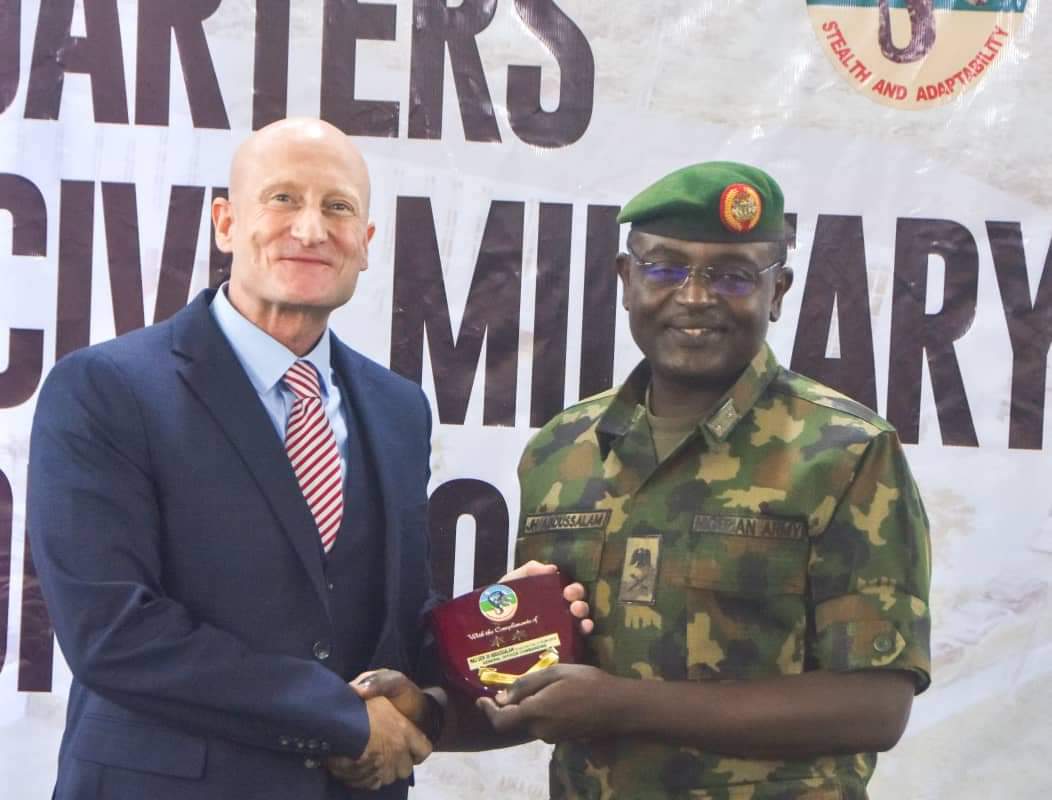
SEAMLESS ENGAGEMENT WITH CIVIL POPULACE BEFORE, DURING AND AFTER OPERATIONS CRITICAL…GOC 6 DIVISION
By: Danjuma Jonah
The importance of seamless engagement with the civil populace before, during and after military operations cannot be overemphasized. The General Officer Commanding (GOC), 6 Division, Nigerian Army, Major General Jamal Abdussalam made this known today, 30 October 2024, while declaring open a one-day Workshop on Human Security and Civil-Military Cooperation (CIMIC) at Lieutenant General Faruk Yahaya Badminton Court, Port Harcourt Barracks.
The GOC, who is also the Land Component Commander, Joint Task Force, South South, Operation DELTA SAFE stressed that the workshop could not have come at a better time than now, owing to the evolving dynamics in the ever complex, violent, uncertain and ambiguous operating environment.
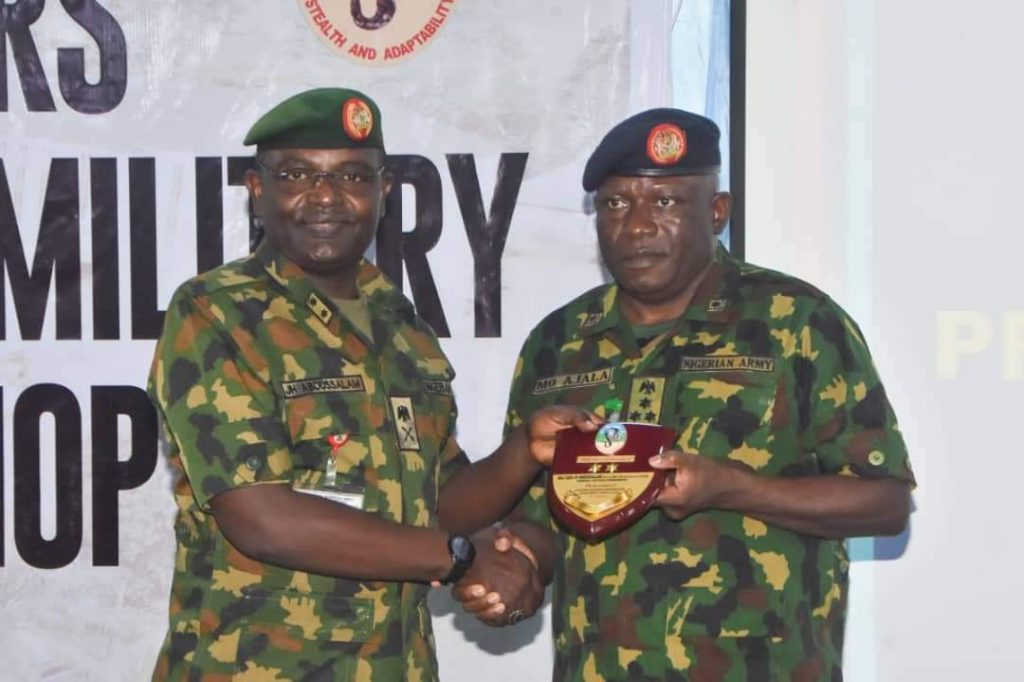
He reiterated that globally, the quest for human security and indeed, effective CIMIC has continued to gain traction. Thus, the need to prioritize training on human security in the context of CIMIC to facilitate seamless engagements with the civil population is pertinent. He added that it is to enable troops attain the full benefits both as capability and a function.
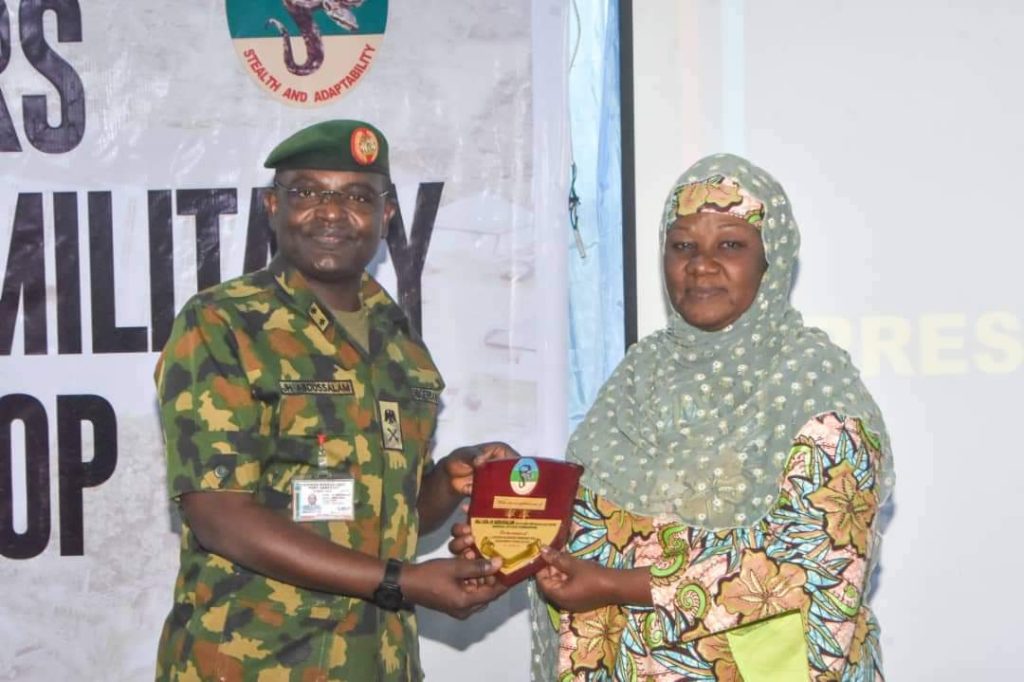
Major General Abdussalam also affirmed that with the workshop, troops will receive added training in addition to being more equipped to perform CIMIC tasks given the pedigree and array of the resource persons, lots of experiences would be brought to bare in the course of the Workshop. Additionally, having the opportunity of learning from other climes, how the complex issues of human security and CIMIC are handled, particularly in a joint operating environment. This, he said aptly aligns with the COAS Command Philosophy.
He thanked the Chief of Defence Staff, General Christopher Musa for availing the Division the opportunity to host the workshop and for providing the resources that brought it to fruition. He stressed that it will indeed significantly improve the capacity of the officers and men in functioning effectively in the ever-complex operating environment of the Niger Delta Region, in which relation with the civil populace has been integral to the attainment of the Division’s mandate since inception in 2016.
The GOC commended the British High Commission (BHC) for making the workshop a reality, noting that their expertise and contributions are invaluable to the Division’s shared goals. He encouraged participants to engage actively in the discussions by sharing their experiences and learning from one another. “Together with our partners, we shall work together to enhance our human security capacity to promote effective CIMIC in the Niger Delta Region” he said.
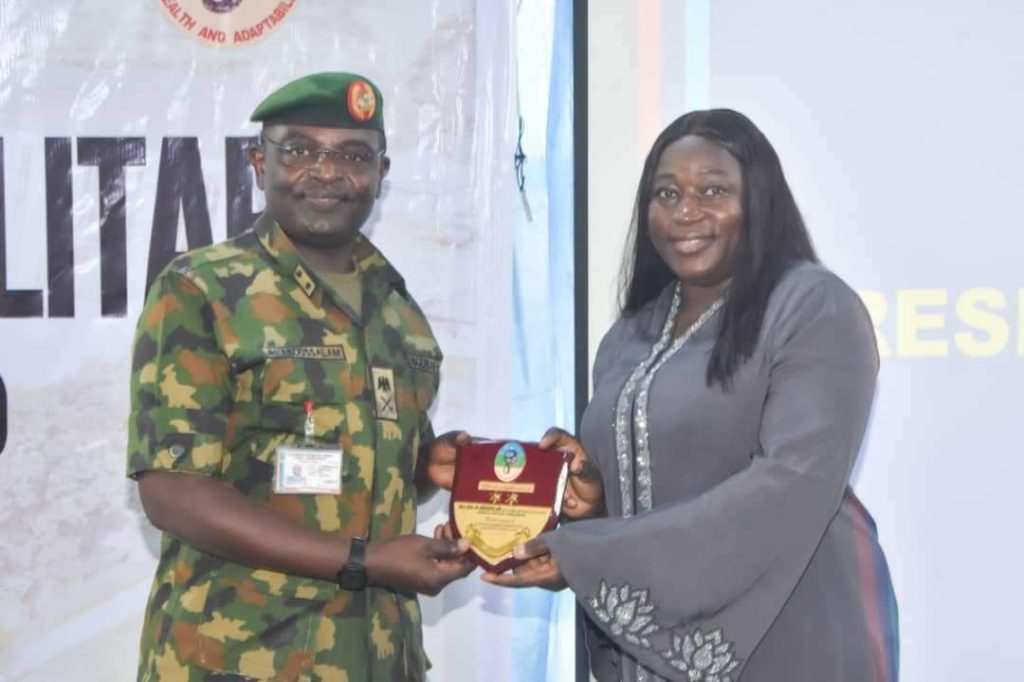
Speaking relatedly, the Director, Civil-Military Affairs at the Defence Headquarters, Air Vice Marshall Anthony Ekpe emphasized the importance of the CIMIC in a joint environment. He added that Armed Forces of Nigeria participated in various operations, therefore it is expedient to create awareness for the troops that there some non-state actors who are willing to surrender during military operations, there is therefore the need to protect their lives. He added that military operations are not based on fighting alone, but based on building mutual cooperation with the host communities for effective service delivery. He thanked the GOC for the warm reception accorded the team.
The workshop had carefully selected topics, such as Human Security – the Context for CIMIC Activity, The UK Approach to CIMIC, Practical Application of CIMIC on COIN Operations, CIMIC and Protection of Civilians, Warrior and Protector as well as Guided by Law were diligently presented by both British and Nigerian resource persons in the persons of the Human Security Adviser, BHC, Abuja, Mr John Sanderson, Brigadier John Deverell, the Founder and Executive Director, Allamin Foundation for Peace and Development, Hamsatu Allamin amongst others.
SEAMLESS ENGAGEMENT WITH CIVIL POPULACE BEFORE, DURING AND AFTER OPERATIONS CRITICAL…GOC 6 DIVISION



Troops intercept 11 youths with donkeys during patrol in Borno
By: Zagazola Makama
Troops of 68 Battalion have intercepted 11 youths during a routine patrol in Mallam Fatori area of Abadam Local Government Area of Borno State.
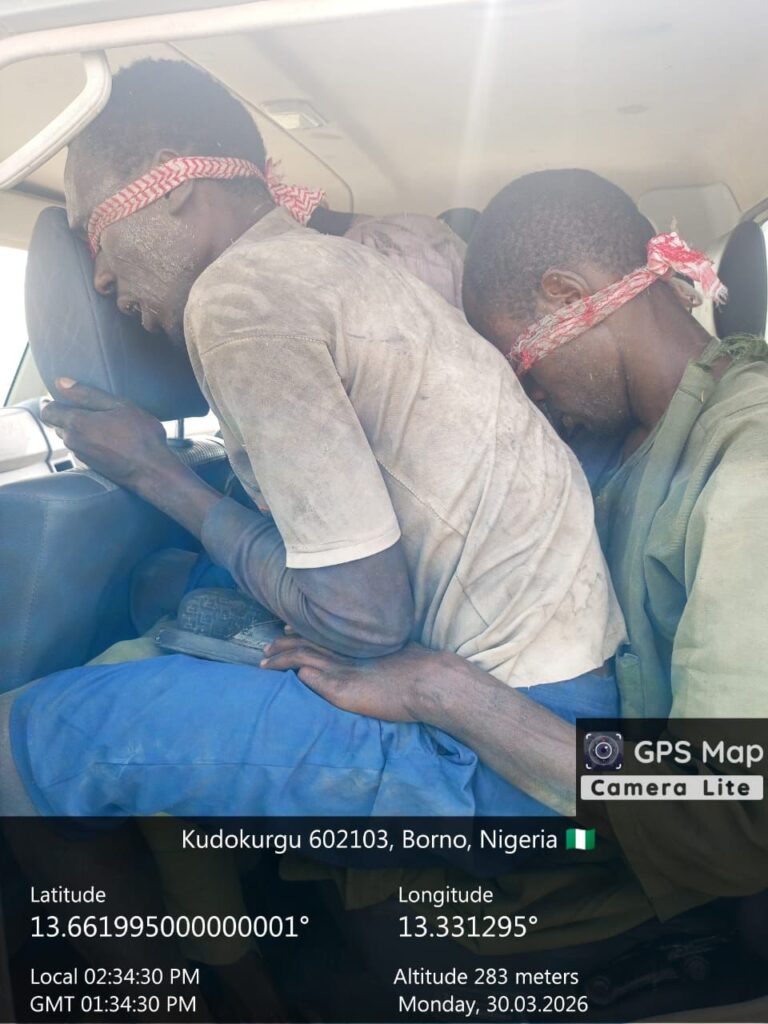
Security sources said the interception occurred along the Bulagana–Cheisa axis on April 2 during ongoing clearance operations in the area.
According to the sources, the individuals were found moving in the area with 12 donkeys when they were stopped and briefly interrogated by troops.
The sources added that the youths were later handed over, alongside the animals, to relevant authorities in a neighbouring country for further necessary action.
The military said the patrol was part of sustained efforts to maintain security dominance and prevent exploitation of border communities by criminal elements.
Troops intercept 11 youths with donkeys during patrol in Borno
Troops recover ammunition, logistics items in Kwara patrol operation
By: Zagazola Makama
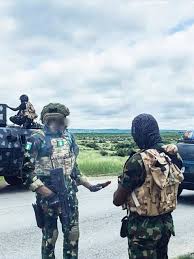
Troops of the Nigerian Army under the 22 Brigade have recovered ammunition and other logistics items during a fighting patrol in Ifelodun Local Government Area of Kwara State.
A security source disclosed that the operation was conducted at about 4:00 p.m. on April 2 at Daban Lema, where troops of the brigade, operating from the Patrol Base, encountered signs of suspected terrorist activities in a deserted location.
According to the source, the troops immediately carried out exploitation of the area, leading to the recovery of four rounds of 7.62mm special ammunition and one empty PKT ammunition belt link.
Other items recovered include four mobile phones, two head warmers, two small solar panels, and assorted repair tools believed to have been used by the suspected terrorists.
The source added that the recovery indicates the presence and movement of suspected criminal elements within the area, noting that troops have intensified surveillance and patrols to deny them freedom of action.
Troops recover ammunition, logistics items in Kwara patrol operation
Troops foil attack by Criminal Youths, rescue victims, arrest suspects in plateau
By: Zagazola Makama
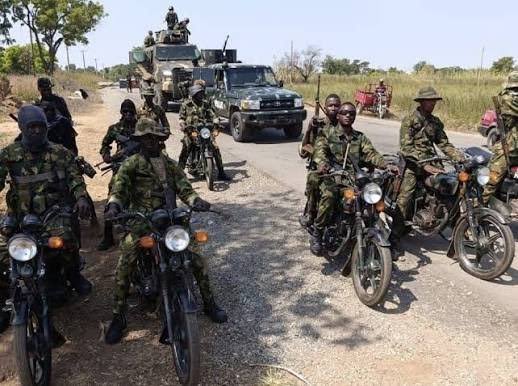
Troops of Sector 1, Operation Enduring Peace (OPEP), have foiled an attack on residents at Dutse Uku in Jos North Local Government Area of Plateau State.
A security source said the troops responded swiftly to a report of sporadic gunshots in the area at about 11:50 p.m. on April 2.
According to the source, upon arrival at the scene, the suspected criminals fled, abandoning their operation due to the prompt intervention of the troops.
He said the troops rescued two victims who sustained gunshot wounds during the incident and immediately evacuated them to a hospital for medical attention.
The source further disclosed that two suspects, dressed in black attire, were arrested at the scene.
Items recovered from the suspects include a cutlass and a knife.
He added that the suspects are currently in military custody and undergoing preliminary investigation, while efforts are ongoing to track down other fleeing members of the group.
Zagazola report that despite heightened security, there has been report of pocket of attacks in some communities.
The source reassured residents of the military’s commitment to protecting lives and property and urged the public to continue providing timely information to security agencies.
Troops foil attack by Criminal Youths, rescue victims, arrest suspects in plateau

Troops intercept suspected Boko Haram logistics convoy conveying 13 persons in Borno

Troops intercept 11 youths with donkeys during patrol in Borno

Troops, CJTF arrest three suspected Boko Haram logistics suppliers in Borno

Roger Federer’s Shock as DNA Results Reveal Myla and Charlene Are Not His Biological Children

THE PLIGHT OF FARIDA

FAILED COUP IN BURKINA FASO: HOW TRAORÉ NARROWLY ESCAPED ASSASSINATION PLOT AMID FOREIGN INTERFERENCE CLAIMS
-
 News2 years ago
Roger Federer’s Shock as DNA Results Reveal Myla and Charlene Are Not His Biological Children
-
Opinions4 years ago
THE PLIGHT OF FARIDA
-
 News12 months ago
FAILED COUP IN BURKINA FASO: HOW TRAORÉ NARROWLY ESCAPED ASSASSINATION PLOT AMID FOREIGN INTERFERENCE CLAIMS
-

 News2 years ago
EYN: Rev. Billi, Distortion of History, and The Living Tamarind Tree
-
 Opinions4 years ago
POLICE CHARGE ROOMS, A MINTING PRESS
-

 ACADEMICS2 years ago
A History of Biu” (2015) and The Lingering Bura-Pabir Question (1)
-

 Columns2 years ago
Army University Biu: There is certain interest, but certainly not from Borno.
-

 Opinions2 years ago
Tinubu,Shettima: The epidemic of economic, insecurity in Nigeria
