
News
Senator Lawan commissions new ICU at Specialist Hospital in Gashua

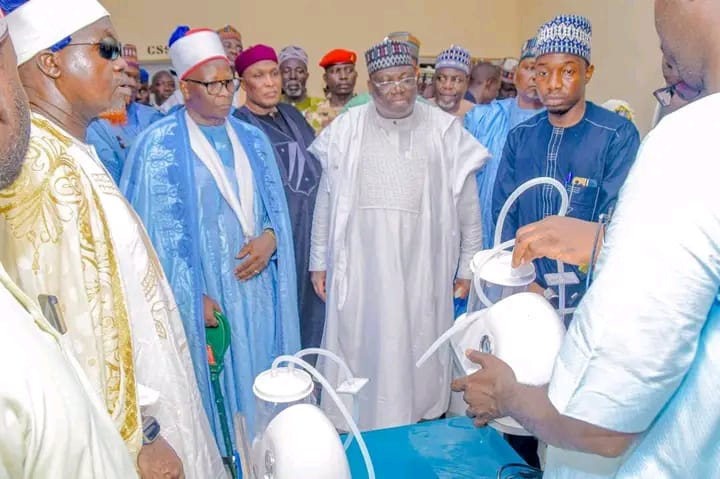
Senator Lawan commissions new ICU at Specialist Hospital in Gashua
By: Yahaya Wakili
President of the 9th Senate, Senator Ahmed Ibrahim Lawan, Ph.D., GCON, Sardaunan Bade, has commissioned a new state-of-the-art Intensive Care Unit (ICU) at the Specialist Hospital Gashua, in Bade local government area of Yobe state. He also donated a brand new ambulance to the hospital to enable it to cope with emergencies.
According to him, the Intensive Care Unit at the Specialist Hospital in Gashua is one of the only two in Nigeria, with the other located in Ekiti State.
“This facility, which I am honored to have played a role in establishing, is a testament to my commitment to improving healthcare outcomes, he said.
“As a representative of the people of Yobe North Senatorial District, I have witnessed firsthand the pressing need for enhanced healthcare services in our communities.
The lawmaker further revealed that the absence of adequate critical care facilities has resulted in countless preventable deaths and immeasurable suffering. The realization of this ICU today is a significant step towards addressing this challenge.
This ICU is equipped with the latest medical technology and staffed by highly skilled health care professionals. It features advanced ventilation systems, patient monitors, and life-saving equipment that will enable us to provide the highest level of care to critically ill patients.
“From victims of road accidents to those suffering from severe infections, ailments, or respiratory distress, this ICU will serve as a source of hope for our people.
He commends His Excellency, the Governor of Yobe State, Rt. Hon. Mai Mala Buni, CON, for giving health a place in priority areas. He has placed health on the list of top priority areas of concern, and he has constructed so many medical facilities across the state.
“What we have done here is actually to complement what the state governor is doing. After all, this establishment is a state government establishment. So, this infrastructure to support what is already here.” he said.
“I am grateful to His Excellency, Governor Buni, for giving us the opportunity to complement the efforts by state government.” Senator Lawan added.
The president of the Ninth Senate maintained that the Intensive Care Unit of the hospital is not to serve Yobe North Senatorial District (Zone C) alone but other parts of the state.
Senator Lawan commissions new ICU at Specialist Hospital in Gashua


Army, DSS arrest notorious cultist, gunrunner in Cross River, recover weapons
By: Zagazola Makama
Troops of 13 Brigade, in collaboration with the Department of State Services (DSS), have arrested a suspected cultist and gunrunner during a raid operation in Ikom Local Government Area of Cross River State.
Security sources said the operation was carried out at about 1:10 a.m. on April 3 along Effangha Spring Road in Ikom.
The sources disclosed that the suspect, who hails from Khana Local Government Area of Rivers State, was apprehended during the coordinated raid.
According to the sources, troops recovered one revolver pistol, one sword, two laptops, four mobile phones, one digital camera, one wristwatch, three identity cards, and a sack of garri allegedly used to conceal the weapon.
The suspect and recovered items have since been handed over to the DSS for further investigation and possible prosecution.
Security authorities said the operation is part of ongoing efforts to curb cult-related violence and illegal arms circulation in the South-South region.
Army, DSS arrest notorious cultist, gunrunner in Cross River, recover weapons
Gunmen kill village head, wife in Adamawa, son hospitalised
By: Zagazola Makama
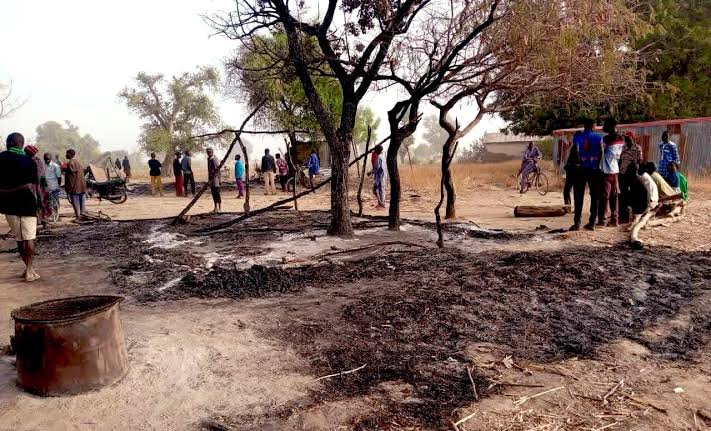
Unknown gunmen have killed a village head and his wife in Tunga Waja community, Lamurde Local Government Area of Adamawa State.
Security sources said the incident occurred at about 8:50 p.m. on April 2, when the assailants attacked the residence of the village head and opened fire on him, his wife and their son.
The sources disclosed that the village head died on the spot, while his wife and son sustained gunshot wounds and were evacuated to a medical facility in Tingno for treatment.
According to the sources, the wife later died at the hospital, while the son is currently receiving treatment.
The motive behind the attack remains unclear, while efforts are ongoing to identify and apprehend the perpetrators.
The incident has heightened concerns among residents, as security agencies intensify efforts to restore calm and prevent further attacks in the area.
Gunmen kill village head, wife in Adamawa, son hospitalised
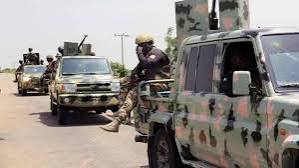
Three soldiers injured in road accident during pursuit of bandits in Kaduna
By: Zagazola Makama
Three soldiers have sustained injuries following a road traffic accident during an encounter with suspected armed bandits in Birnin Gwari Local Government Area of Kaduna State.
Security sources said the incident occurred at about 3:00 p.m. on April 2, when troops of 2 Battalion deployed at Forward Operating Base Dogon Dawa were returning from an administrative patrol.
The sources explained that the troops reportedly sighted a group of armed bandits attempting to block the road at Ngede Allah and engaged them, forcing the criminals to flee.
During the pursuit, however, three soldiers fell off a military gun truck and sustained varying degrees of injuries, including fractures to the hand and leg.
The injured personnel were immediately evacuated to the 44 Nigerian Army Reference Hospital in Kaduna, where they are currently receiving treatment and responding positively.
Security operations in the area have continued as troops maintain pressure on criminal elements within the axis.
Three soldiers injured in road accident during pursuit of bandits in Kaduna

Man O’ War personnel reports abduction of female colleague in Bayelsa

Army, DSS arrest notorious cultist, gunrunner in Cross River, recover weapons

Gunmen kill village head, wife in Adamawa, son hospitalised

Roger Federer’s Shock as DNA Results Reveal Myla and Charlene Are Not His Biological Children

THE PLIGHT OF FARIDA

FAILED COUP IN BURKINA FASO: HOW TRAORÉ NARROWLY ESCAPED ASSASSINATION PLOT AMID FOREIGN INTERFERENCE CLAIMS
-
 News2 years ago
Roger Federer’s Shock as DNA Results Reveal Myla and Charlene Are Not His Biological Children
-
Opinions4 years ago
THE PLIGHT OF FARIDA
-
 News12 months ago
FAILED COUP IN BURKINA FASO: HOW TRAORÉ NARROWLY ESCAPED ASSASSINATION PLOT AMID FOREIGN INTERFERENCE CLAIMS
-

 News2 years ago
EYN: Rev. Billi, Distortion of History, and The Living Tamarind Tree
-
 Opinions4 years ago
POLICE CHARGE ROOMS, A MINTING PRESS
-

 ACADEMICS2 years ago
A History of Biu” (2015) and The Lingering Bura-Pabir Question (1)
-

 Columns2 years ago
Army University Biu: There is certain interest, but certainly not from Borno.
-

 Opinions2 years ago
Tinubu,Shettima: The epidemic of economic, insecurity in Nigeria
