
News
TERMINAL PROMOTION IS RESERVED FOR EXCEPTIONAL OFFICERS – CAS

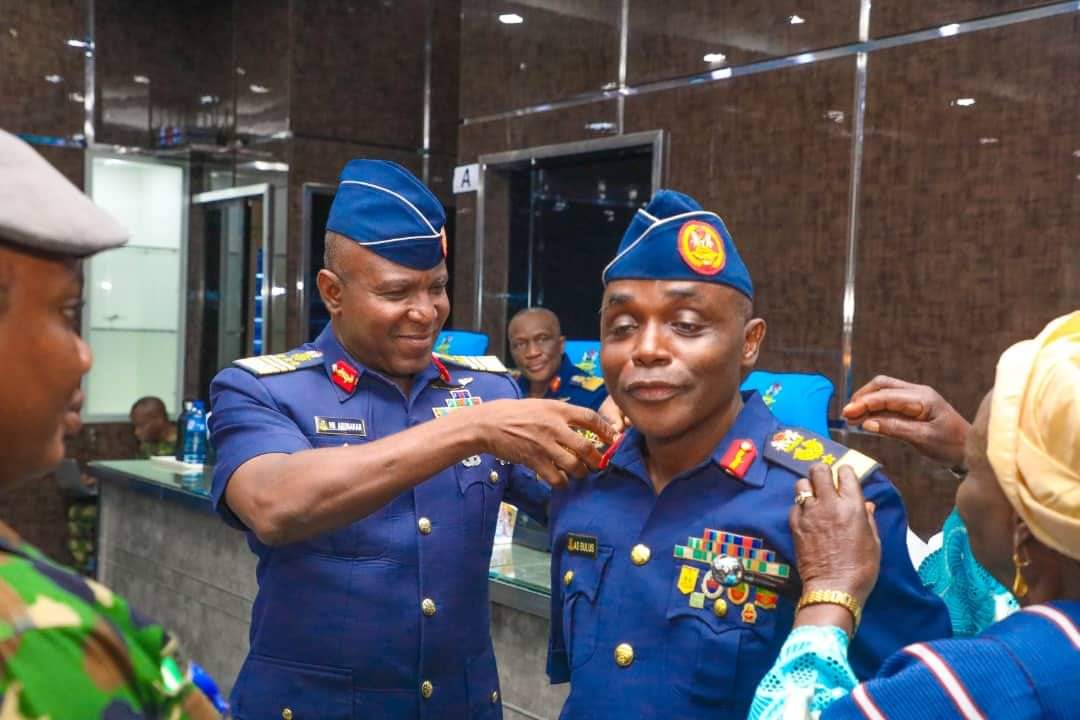
TERMINAL PROMOTION IS RESERVED FOR EXCEPTIONAL OFFICERS – CAS
By: Our Reporter
The Chief of the Air Staff (CAS), Air Marshal Hasan Abubakar, has stated that terminal promotions in the military are reserved for those whose contributions to the growth and development of the Services are truly exceptional. He stated this recently while decorating Air Vice Marshal Amos Bulus with his new rank.
According to the CAS, decorating the senior officer goes beyond adding another stripe to his shoulder, as it also serves to recognize a career that has been marked by excellence and a commitment to progress. He then noted that, “this promotion is about acknowledging the countless hours of work, the challenges faced, and the unwavering dedication to the betterment of our Air Force.”
Air Marshal Abubakar then eulogized the senior officer by stating that he has demonstrated, through his pioneering initiatives, that he is more than deserving of this honour as his efforts have had a lasting impact on NAF operations and will continue to influence the way NAF conducts its affairs for years to come.
Speaking further, the CAS noted that Air Vice Marshal Bulus has distinguished himself as a pioneer in various aspects. Consequently, as the Pioneer Director of Information Technology within the Nigerian Air Force, he broke new ground by implementing the first-ever NAF-operated and managed online recruitment and enlistment platform. This initiative, the CAS continued, revolutionized NAF recruitment processes, ensuring a more efficient, transparent, and accessible system that has become a model within the Armed Forces and beyond.
The CAS further commended the senior officer for his continued commitment to push the boundaries of innovation by becoming the pioneer NAF Director of Information Technology responsible for designing the architecture of the NAF electronic document management and paperless system.
Earlier in his welcome address, the Chief of Administration (COA), Air Vice Marshal Idi Sani noted that the record and performance of AVM Bulus were reviewed in relation to his contributions to the overall NAF Mission objectives and on the basis of this recommendation, the Air Force Council on 24 June 2024 approved his terminal promotion to the rank of Air Vice Marshal with effect from 2 August 2024.
The COA further disclosed that the special promotion was well-deserved and a clear indication of the NAF’s readiness, under the able leadership of Air Marshal Abubakar, to recognize and honour the commitment and achievements of its personnel.
The decoration ceremony was in line with the commitment of the CAS to encourage and motivate personnel who exhibit unequaled dedication and loyalty to the Service. The senior officer, who will also commence his retirement from the NAF immediately, was decorated with his new rank by the CAS in the presence of his family, friends and colleagues. The promotion of the senior officer, conducted outside the typical promotion timeline, showcased his profound contributions to both the NAF and the nation.
TERMINAL PROMOTION IS RESERVED FOR EXCEPTIONAL OFFICERS – CAS


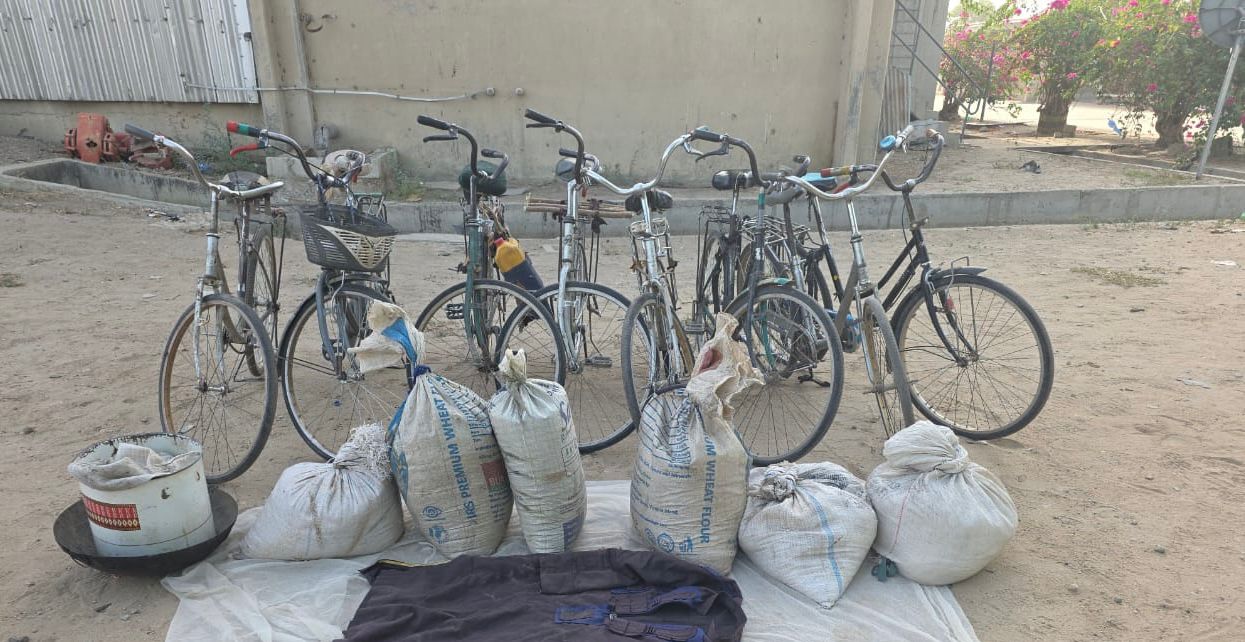
Troops ambush terrorists along Marte–Dikwa road, recover logistics in Borno
By: Zagazola Makama
Troops of Operation Hadin Kai have successfully ambushed Boko Haram/ISWAP terrorists along the Marte–Dikwa axis of Borno, forcing them to flee and abandoning logistics items.
A military source said the operation was conducted in the early hours of Thursday by a combined team of 50 Task Force Battalion/24 Task Force Brigade and 134 Special Forces Battalion, supported by volunteer forces.
The source disclosed that the troops, who had laid in wait at Momoh village along the Marte–Dikwa road, made contact with the insurgents moving on bicycles at about 12:45 a.m.
“On sighting the terrorists, the troops engaged them decisively, compelling them to retreat in disarray,” the source said.
He added that troops immediately carried out exploitation of the general area, leading to the recovery of eight bicycles believed to have been used by the insurgents for mobility, as well as some beverages suspected to be part of their logistics supply.
The Marte–Dikwa axis has remained a critical corridor in counter-insurgency operations, with sustained military pressure limiting the activities of insurgents in the area.
The source reaffirmed the commitment of troops to sustain aggressive operations to deny terrorists freedom of action and ensure the safety of communities across Borno.
Troops ambush terrorists along Marte–Dikwa road, recover logistics in Borno
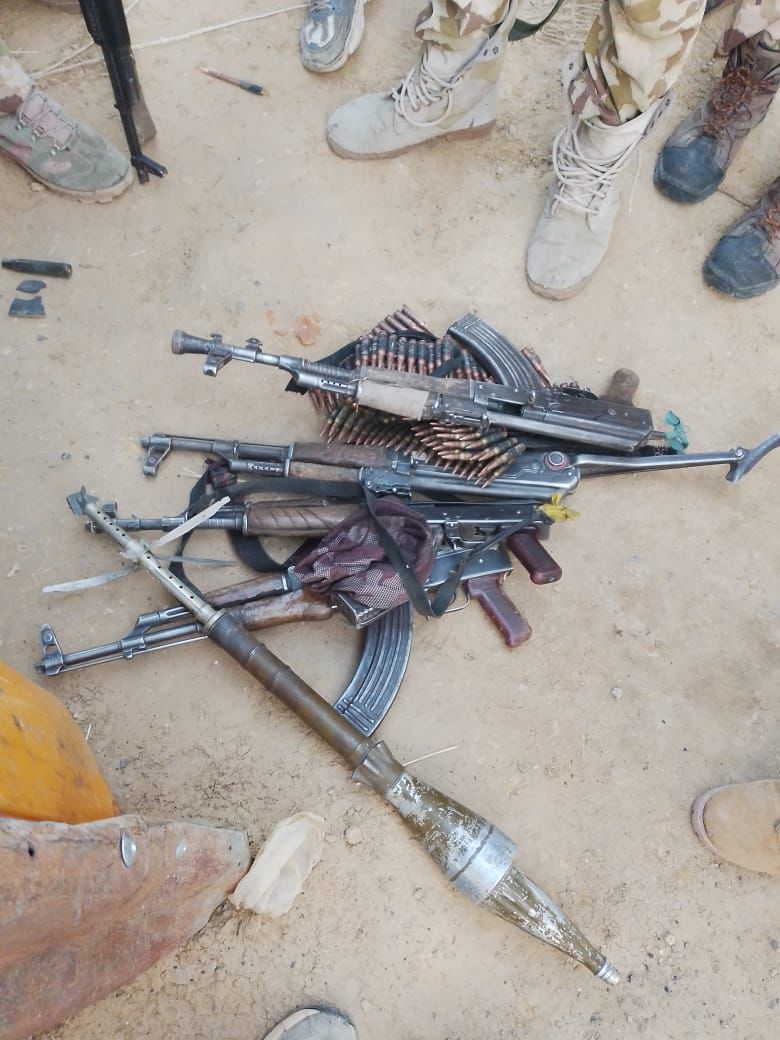
Army troops neutralized 8 Boko Haram in Borno failed attack, recover arms
By: Zagazola Makama
Troops of Operation Hadin Kai have successfully repelled a coordinated attack by Boko Haram/ISWAP terrorists on a Forward Operating Base in Mandaragirau, Borno, killing several insurgents and recovering arms and ammunition.
A military source told Zagazola Makama that the attack occurred in the early hours of Saturday when terrorists advanced from multiple directions toward the base.
According to the source, troops who had taken ambush positions engaged the insurgents with superior firepower, forcing them to retreat in disarray.
“The troops demonstrated resilience and tactical superiority, effectively repelling the assault and immediately launching a counter-exploitation along the terrorists’ withdrawal route, inflicting further casualties on the fleeing insurgents,” the source said.
He confirmed that no personnel of the Nigerian military was killed during the encounter, although one Mine-Resistant Ambush Protected (MRAP) vehicle was hit by a rocket-propelled grenade.
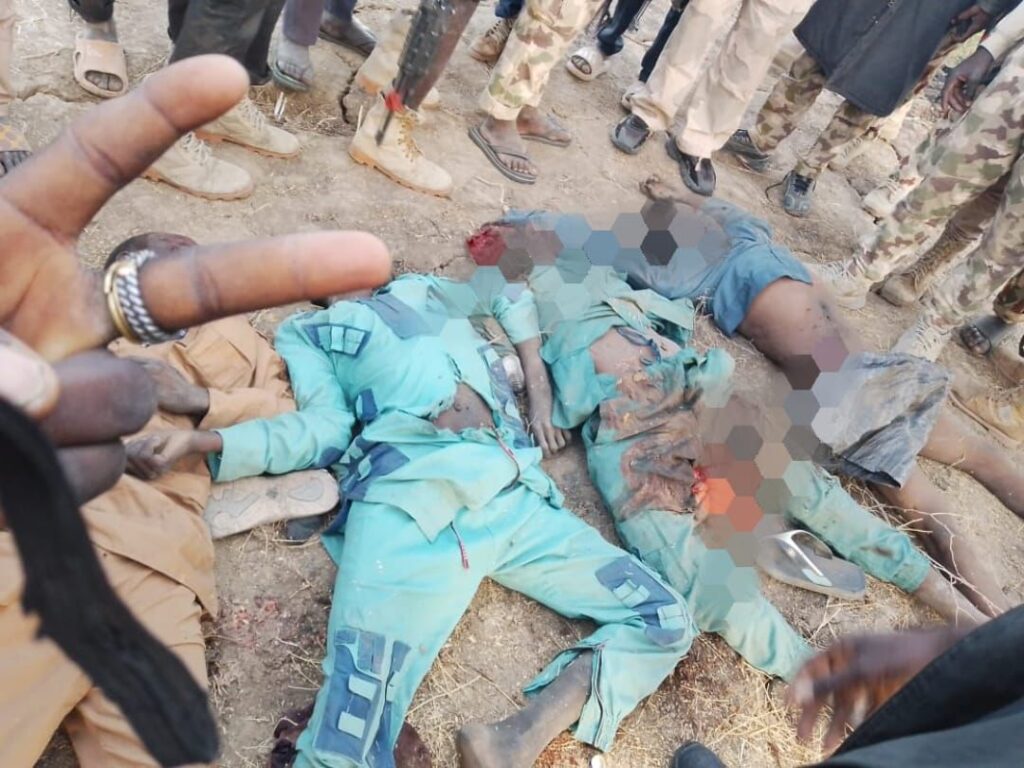
The source added that at least eight terrorists were neutralised during the operation, while troops recovered seven AK-47 rifles, eight magazines, four RPG bombs, and a cache of ammunition.
“Blood trails were observed along the withdrawal routes, indicating that several other insurgents escaped with gunshot wounds,” he said.
He further disclosed that injured personnel from the encounter were currently receiving treatment at a military medical facility in Biu.
Zagazola gathered that additional bodies of fleeing terrorists were sighted along their escape corridors toward the Timbuktu Triangle, a known insurgent enclave. We saw four more bodies,” said sources.
The military sources also revealed that abandoned weapons and casualties were observed in Garin Mallum and Garin Gajere, suggesting heavy losses suffered by the insurgents during the failed attack.
The military leadership urged to sustain the operational tempo, retain the initiative, and consolidate on the gains recorded against the insurgents.
Army troops neutralized 8 Boko Haram in Borno failed attack, recover arms
Nigeria Positions Itself for Global Space Leadership at Satellite Week 2026
By: Michael Mike
Nigeria is set to sharpen its policy direction in the global space ecosystem as Nigerian Communications Satellite Limited prepares to host the 2026 Nigerian Satellite Week in Abuja.
The Managing Director of Nigerian Communications Satellite Limited, Jane Egerton-Idehen, disclosed this in a statement issued by the agency’s Head of Corporate Communications, Stephen Kwande, noting that the event will convene top government officials, regulators, and international stakeholders to shape the future of satellite governance and digital infrastructure.
Egerton-Idehen said the forum is coming at a critical time when countries around the world are strengthening their space capabilities as part of broader national development strategies.
According to her, satellite technology is increasingly linked to economic growth, national security, and digital connectivity, making strategic investments in space infrastructure a priority for many nations.
She explained that the conference is expected to attract high-level participation, including cabinet members, defence authorities, development finance institutions, and technology innovators from across Africa.
The NIGCOMSAT boss also highlighted Nigeria’s growing influence in global space policy, pointing to her emergence as Vice Chair of the Global Satellite Operators Association as a sign of the country’s expanding role in international satellite governance.
She further cited ongoing collaboration between Nigeria and the Kenya Space Agency as part of broader efforts to strengthen partnerships within Africa’s evolving space ecosystem.
Egerton-Idehen described the upcoming satellite week as both a reflection of Nigeria’s 20-year journey in satellite development and a strategic platform to define the country’s next phase in an increasingly competitive global space economy.
Nigeria Positions Itself for Global Space Leadership at Satellite Week 2026

Troops ambush terrorists along Marte–Dikwa road, recover logistics in Borno

Army troops neutralized 8 Boko Haram in Borno failed attack, recover arms

Nigeria Positions Itself for Global Space Leadership at Satellite Week 2026

Roger Federer’s Shock as DNA Results Reveal Myla and Charlene Are Not His Biological Children

THE PLIGHT OF FARIDA

FAILED COUP IN BURKINA FASO: HOW TRAORÉ NARROWLY ESCAPED ASSASSINATION PLOT AMID FOREIGN INTERFERENCE CLAIMS
-
 News2 years ago
Roger Federer’s Shock as DNA Results Reveal Myla and Charlene Are Not His Biological Children
-
Opinions4 years ago
THE PLIGHT OF FARIDA
-
 News11 months ago
FAILED COUP IN BURKINA FASO: HOW TRAORÉ NARROWLY ESCAPED ASSASSINATION PLOT AMID FOREIGN INTERFERENCE CLAIMS
-

 News2 years ago
EYN: Rev. Billi, Distortion of History, and The Living Tamarind Tree
-
 Opinions4 years ago
POLICE CHARGE ROOMS, A MINTING PRESS
-

 ACADEMICS2 years ago
A History of Biu” (2015) and The Lingering Bura-Pabir Question (1)
-

 Columns2 years ago
Army University Biu: There is certain interest, but certainly not from Borno.
-

 Opinions2 years ago
Tinubu,Shettima: The epidemic of economic, insecurity in Nigeria
