
News
UN Secretary-General Calls On All to Stand Up for Human Rights, Speak Up Against Hate

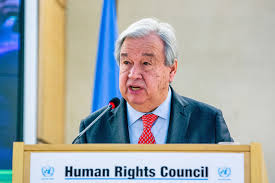
UN Secretary-General Calls On All to Stand Up for Human Rights, Speak Up Against Hate
By: Michael Mike
The United Nations Secretary-General, António Guterres has called on all citizens of the world to speak-up against hate and stand-up for human rights.
Guterres in his speech to commemorate this year’s International Day of Commemoration in memory of the victims of the Holocaust, said this year marks the eightieth anniversary of the Holocaust’s end.
He said: “We mourn the six million Jews murdered by the Nazis and their collaborators, as they sought to destroy an entire people.
“We grieve the Roma and Sinti, the people with disabilities, and all others enslaved, persecuted, tortured, and killed.
“We stand alongside victims, survivors and their families.
“And we renew our resolve never to forget.
“To allow the Holocaust to fade from memory would dishonour the past and betray the future.
“Remembrance is a moral act. And a call to action.
“To know the history of the Holocaust is to know the depths to which humanity can sink…
“To understand how the Nazis were able to commit their heinous crimes, with the complicity of others…
“And to comprehend that each of us has a solemn duty – to speak-up against hate, and to stand-up for the human rights of all.
He added that: “Following the hell of the Holocaust, countries came together. And they enshrined the dignity of every person in the Universal Declaration of Human Rights.
In dark times, that document remains a shining light.
“Eighty years since the Holocaust’s end, antisemitism is still with us – fuelled by the same lies and loathing that made the Nazi genocide possible.
“And it is rising. Discrimination is rife… Hate is being whipped-up the world over…
Indisputable historical facts are being distorted, diminished, and denied… And efforts are being made to recast and rehabilitate Nazis and their collaborators.
We must stand up to these outrages.
“In these days of division – and more than a year since the appalling 7th October terror attacks by Hamas – we must hold fast to our common humanity. We must condemn antisemitism – just as we must condemn all forms of racism, prejudice and religious bigotry. And we must renew our resolve to defend the dignity and human rights of all.
“Those causes go to the very core of the United Nations. We will never forget – and we will never waver in that fight.”
Speaking at the commemoration of the day at the United Nations House in Abuja, the Israeli Deputy High Commissioner to Nigeria, Ms. Inbar Lipman Garden said: “On this solemn day, we remember the six million Jewish men, women, and children who were murdered in the Holocaust- alongside millions of others who suffered under the Nazi regime. We honour their memory not only to mourn their loss but to reaffirm our commitment to ensuring that such atrocities never happen again. The Holocaust is not just a chapter of Jewish history; it is a universal reminder of the devastating consequences of hatred, discrimination, and indifference. It compels us to reflect on our shared responsibility to fight antisemitism, racism, and all forms of intolerance wherever they may arise.
“Today, we must acknowledge the troubling rise of antisemitism around the world, including in Europe, Australia, Canada, the US and elsewhere. Jewish communities face increasing hostility and violence.
“Synagogues have been firebombed, schools have been shot at. Jewish community centers have been vandalized – images that remind us of the dark days of the past. And today, just 80 years after the liberation of Auschwitz there are those who deny that the Holocaust happened. Dangerous narratives of Holocaust denial propagated by regimes and groups such as lran, Hizballah, and Hamas. These entities not only distort history but also openly call for the annihilation of the Jewish state and Jews entirely.”
On his part, the Officer in Charge of UNESCO Abuja Office, Albert Mendy said: “This commemoration serves as a solemn reminder of the devastating consequences of hatred, discrimination, and intolerance, and reinforces our collective responsibility to foster a culture of peace, mutual respect, and human dignity.”
Mendy, who was represented by the Organisation’s Education Programme Officer, Anthony Ogunniyi said: “UNESCO, as the lead agency for education within the United Nations system, believes that education is the most powerful tool for building a just and peaceful world.
“Education for peace is not just about imparting knowledge; it is about shaping attitudes, values, and behaviors that promote dialogue, understanding, and cooperation among individuals and societies.”
He added that: “The Holocaust serves as a powerful reminder that hatred, even within your classrooms, no matter how small it may seem at first, can grow into unimaginable consequences if left unchecked. It often starts with seemingly minor acts of intolerance—hurtful words, exclusion, and discrimination—but can quickly escalate into widespread harm and devastation. What you do about it matters.
“Choosing to remain silent in the face of injustice—whether it is bullying, discrimination, or any form of intolerance—allows such negative behaviors to persist and grow. This is why tolerance, respect, and empathy are not just ideals but essential values that must guide our daily interactions. Let us learn from history and understand that taking a stand against hatred in all its forms is the first step toward preventing future atrocities and building a world where dignity and human rights are upheld for all.”
UN Secretary-General Calls On All to Stand Up for Human Rights, Speak Up Against Hate



Troops intercept 11 youths with donkeys during patrol in Borno
By: Zagazola Makama
Troops of 68 Battalion have intercepted 11 youths during a routine patrol in Mallam Fatori area of Abadam Local Government Area of Borno State.
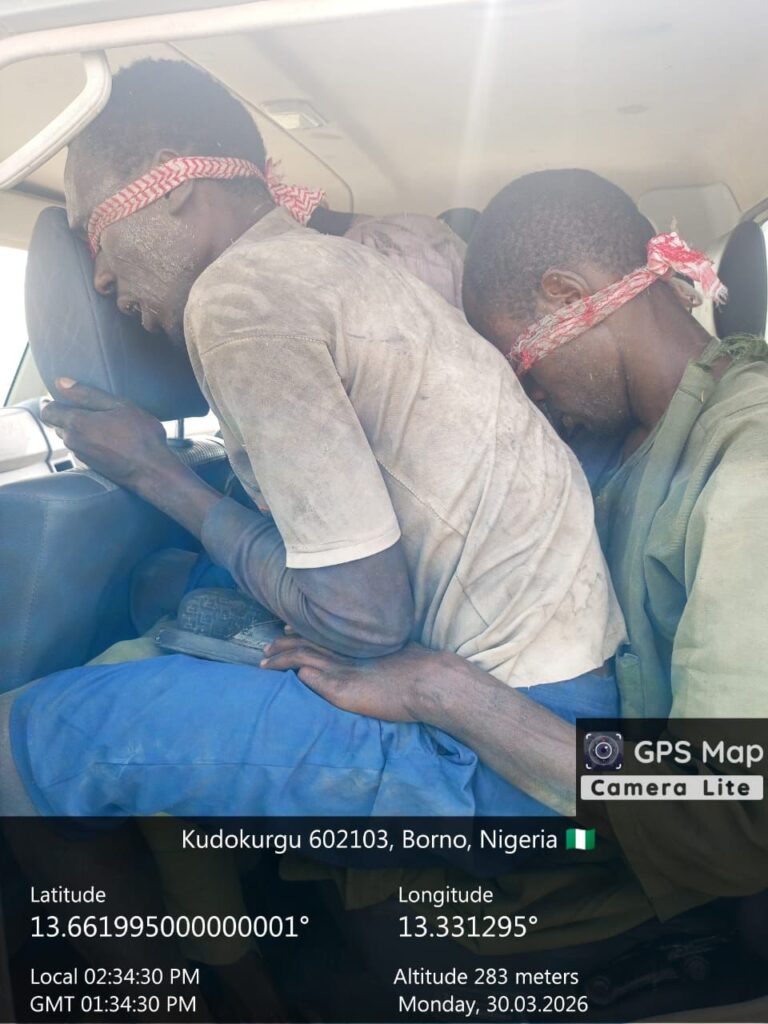
Security sources said the interception occurred along the Bulagana–Cheisa axis on April 2 during ongoing clearance operations in the area.
According to the sources, the individuals were found moving in the area with 12 donkeys when they were stopped and briefly interrogated by troops.
The sources added that the youths were later handed over, alongside the animals, to relevant authorities in a neighbouring country for further necessary action.
The military said the patrol was part of sustained efforts to maintain security dominance and prevent exploitation of border communities by criminal elements.
Troops intercept 11 youths with donkeys during patrol in Borno
Troops recover ammunition, logistics items in Kwara patrol operation
By: Zagazola Makama
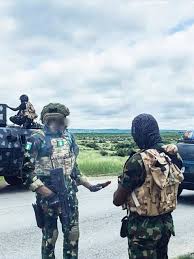
Troops of the Nigerian Army under the 22 Brigade have recovered ammunition and other logistics items during a fighting patrol in Ifelodun Local Government Area of Kwara State.
A security source disclosed that the operation was conducted at about 4:00 p.m. on April 2 at Daban Lema, where troops of the brigade, operating from the Patrol Base, encountered signs of suspected terrorist activities in a deserted location.
According to the source, the troops immediately carried out exploitation of the area, leading to the recovery of four rounds of 7.62mm special ammunition and one empty PKT ammunition belt link.
Other items recovered include four mobile phones, two head warmers, two small solar panels, and assorted repair tools believed to have been used by the suspected terrorists.
The source added that the recovery indicates the presence and movement of suspected criminal elements within the area, noting that troops have intensified surveillance and patrols to deny them freedom of action.
Troops recover ammunition, logistics items in Kwara patrol operation
Troops foil attack by Criminal Youths, rescue victims, arrest suspects in plateau
By: Zagazola Makama
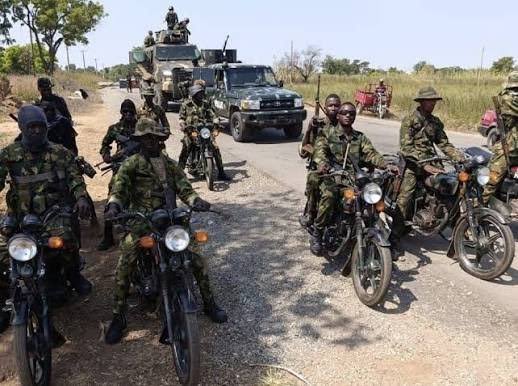
Troops of Sector 1, Operation Enduring Peace (OPEP), have foiled an attack on residents at Dutse Uku in Jos North Local Government Area of Plateau State.
A security source said the troops responded swiftly to a report of sporadic gunshots in the area at about 11:50 p.m. on April 2.
According to the source, upon arrival at the scene, the suspected criminals fled, abandoning their operation due to the prompt intervention of the troops.
He said the troops rescued two victims who sustained gunshot wounds during the incident and immediately evacuated them to a hospital for medical attention.
The source further disclosed that two suspects, dressed in black attire, were arrested at the scene.
Items recovered from the suspects include a cutlass and a knife.
He added that the suspects are currently in military custody and undergoing preliminary investigation, while efforts are ongoing to track down other fleeing members of the group.
Zagazola report that despite heightened security, there has been report of pocket of attacks in some communities.
The source reassured residents of the military’s commitment to protecting lives and property and urged the public to continue providing timely information to security agencies.
Troops foil attack by Criminal Youths, rescue victims, arrest suspects in plateau

Troops intercept suspected Boko Haram logistics convoy conveying 13 persons in Borno

Troops intercept 11 youths with donkeys during patrol in Borno

Troops, CJTF arrest three suspected Boko Haram logistics suppliers in Borno

Roger Federer’s Shock as DNA Results Reveal Myla and Charlene Are Not His Biological Children

THE PLIGHT OF FARIDA

FAILED COUP IN BURKINA FASO: HOW TRAORÉ NARROWLY ESCAPED ASSASSINATION PLOT AMID FOREIGN INTERFERENCE CLAIMS
-
 News2 years ago
Roger Federer’s Shock as DNA Results Reveal Myla and Charlene Are Not His Biological Children
-
Opinions4 years ago
THE PLIGHT OF FARIDA
-
 News12 months ago
FAILED COUP IN BURKINA FASO: HOW TRAORÉ NARROWLY ESCAPED ASSASSINATION PLOT AMID FOREIGN INTERFERENCE CLAIMS
-

 News2 years ago
EYN: Rev. Billi, Distortion of History, and The Living Tamarind Tree
-
 Opinions4 years ago
POLICE CHARGE ROOMS, A MINTING PRESS
-

 ACADEMICS2 years ago
A History of Biu” (2015) and The Lingering Bura-Pabir Question (1)
-

 Columns2 years ago
Army University Biu: There is certain interest, but certainly not from Borno.
-

 Opinions2 years ago
Tinubu,Shettima: The epidemic of economic, insecurity in Nigeria
