
News
US Embassy Holds Valedictory Event for Three Key Staff

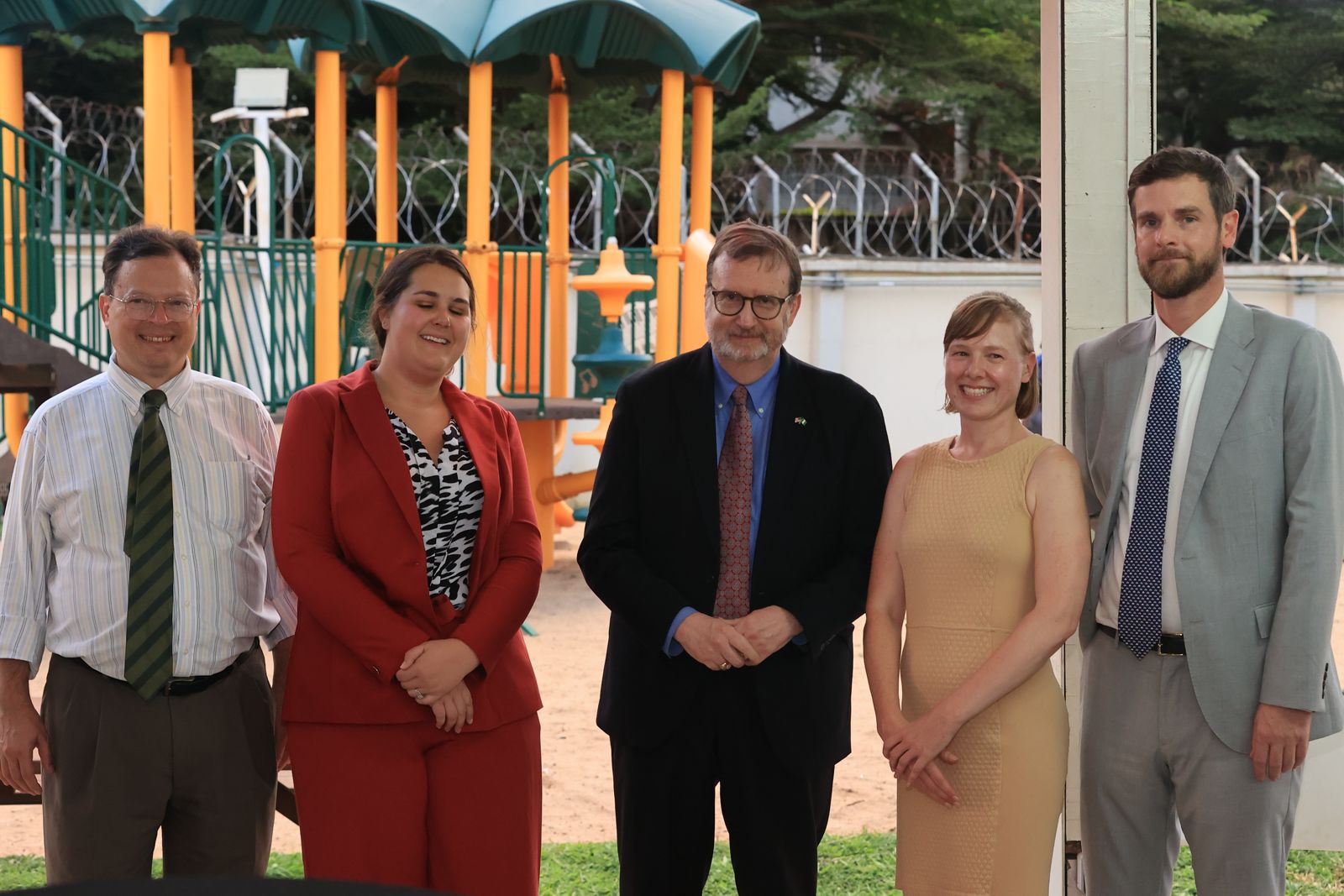
US Embassy Holds Valedictory Event for Three Key Staff
By: Michael Mike
The United States Embassy in Nigeria has held a valedictory event for three key members of its Public Diplomacy section, underscoring their contributions to strengthening US-Nigeria relations through cultural and educational outreach.
The US Ambassador to Nigeria, Richard Mills Jr., speaking at the ceremony held on Wednesday evening in Abuja used the occasion which had in attendance media representatives, and friends of the embassy to commend the departing officers; Gilbert Morton, Katarina Ramos, and Victoria Cook, and also reflect on the mission’s broader commitment to public engagement in Nigeria.
He said: “The Nigerian press is among the most well-informed, most caring, most committed press, I think, on this continent.
“It is very important that the US engages with the press about our policies, issues, and our goals for both Nigeria and US.”
The envoy acknowledged the role of outgoing Public Diplomacy Information Officer Gilbert Morton in building media relationships and championing education outreach.
“Gil got me into the arena with so many of the folks here,” he said.
Reflecting on his early days in Nigeria, the Ambassador shared a personal memory from one of his first trips outside Abuja, a visit to Ahmadu Bello University with departing officer Victoria to open an AmeriCorps centre.
“It really was one of the highlights of my time here.
“To see the difference that centre would make, and the excitement it brought to students, was unforgettable. That outreach, beyond Abuja and Lagos, showed the power of what the US mission can do,” the amb. stated.
He also highlighted the work of Katrina and her team on EducationUSA, a programme that continues to inspire and support Nigerian students seeking to study in the US.
“Everywhere I went, I was asked about studying in the US.
“That kind of impact is only possible through the kind of diligent public engagement Katrina and her team carried out,” Mills said.
The ambassador concluded his remarks by praising the entire Public Diplomacy team for their tireless efforts in promoting shared values between the two nations.
“We are a team committed to making sure the values Nigerians and Americans share prevail in the world and shape our children’s futures.
“And the biggest part of that is our public outreach, discussing those values, making them understood, and ensuring they endure,” he added.
The Press Attaché Gilbert Morton shared his gratitude for the support he received during his transition to Nigeria, calling it a rewarding professional experience.
Morton acknowledged the robust Nigerian press and the embassy’s educational outreach, particularly in places like Minna, Niger State, which he described as highlights of his time in the country.
“Coming out here, it was a new adventure, and I really could not have asked for a better team to support me in that transition,” he added.
The Pubic Diplomacy Officer Victoria Cook, who coordinated numerous cultural engagements and American Spaces programmes, expressed appreciation for the opportunity to work across northern Nigeria and with alumni of various US government initiatives.
She reflected on her transition from the private sector in Asia to public diplomacy in Nigeria, calling her experience both transformative and deeply rewarding.
Cook said, “It’s been a real privilege for me. I really knew that I was here to empower you, to just make sure that your good ideas, your creative dreams could continue to flourish.”
Another Public Diplomacy Officer, Katarina Ramos, who managed the youth portfolio within the PD section, spoke about the immense potential she witnessed among young Nigerians.
She shared her enthusiasm for Nigerian culture and the warm hospitality she received throughout her posting. Her remarks underscored the learning and mutual exchange that marked her tenure.
She noted, “You have amazingly talented, industrious individuals here in Nigeria, and it has been a privilege to touch just a few of your lives.”
US Embassy Holds Valedictory Event for Three Key Staff


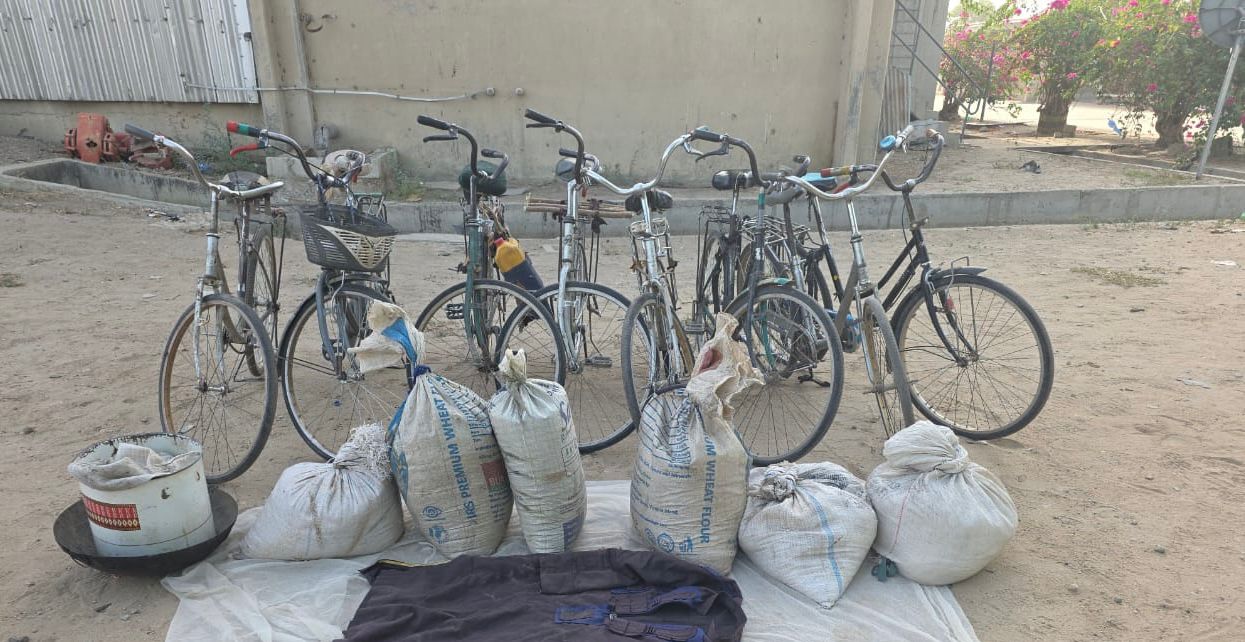
Troops ambush terrorists along Marte–Dikwa road, recover logistics in Borno
By: Zagazola Makama
Troops of Operation Hadin Kai have successfully ambushed Boko Haram/ISWAP terrorists along the Marte–Dikwa axis of Borno, forcing them to flee and abandoning logistics items.
A military source said the operation was conducted in the early hours of Thursday by a combined team of 50 Task Force Battalion/24 Task Force Brigade and 134 Special Forces Battalion, supported by volunteer forces.
The source disclosed that the troops, who had laid in wait at Momoh village along the Marte–Dikwa road, made contact with the insurgents moving on bicycles at about 12:45 a.m.
“On sighting the terrorists, the troops engaged them decisively, compelling them to retreat in disarray,” the source said.
He added that troops immediately carried out exploitation of the general area, leading to the recovery of eight bicycles believed to have been used by the insurgents for mobility, as well as some beverages suspected to be part of their logistics supply.
The Marte–Dikwa axis has remained a critical corridor in counter-insurgency operations, with sustained military pressure limiting the activities of insurgents in the area.
The source reaffirmed the commitment of troops to sustain aggressive operations to deny terrorists freedom of action and ensure the safety of communities across Borno.
Troops ambush terrorists along Marte–Dikwa road, recover logistics in Borno
Army troops neutralized 8 Boko Haram in Borno failed attack, recover arms
By: Zagazola Makama
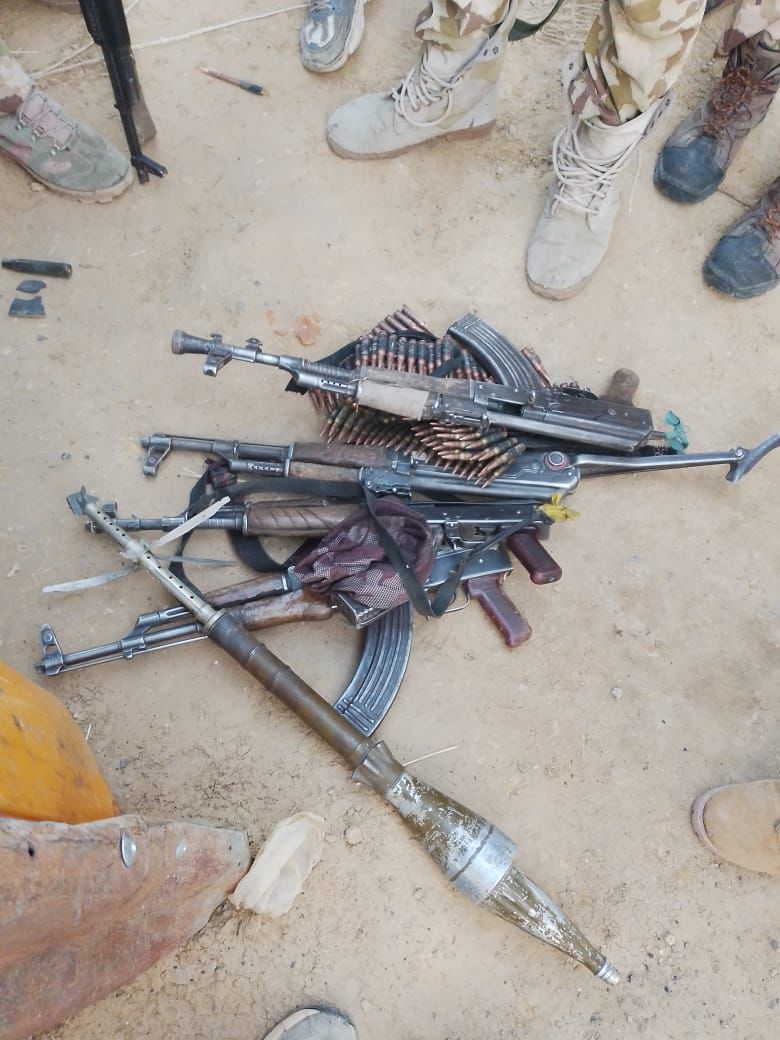
Troops of Operation Hadin Kai have successfully repelled a coordinated attack by Boko Haram/ISWAP terrorists on a Forward Operating Base in Mandaragirau, Borno, killing several insurgents and recovering arms and ammunition.
A military source told Zagazola Makama that the attack occurred in the early hours of Saturday when terrorists advanced from multiple directions toward the base.
According to the source, troops who had taken ambush positions engaged the insurgents with superior firepower, forcing them to retreat in disarray.
“The troops demonstrated resilience and tactical superiority, effectively repelling the assault and immediately launching a counter-exploitation along the terrorists’ withdrawal route, inflicting further casualties on the fleeing insurgents,” the source said.
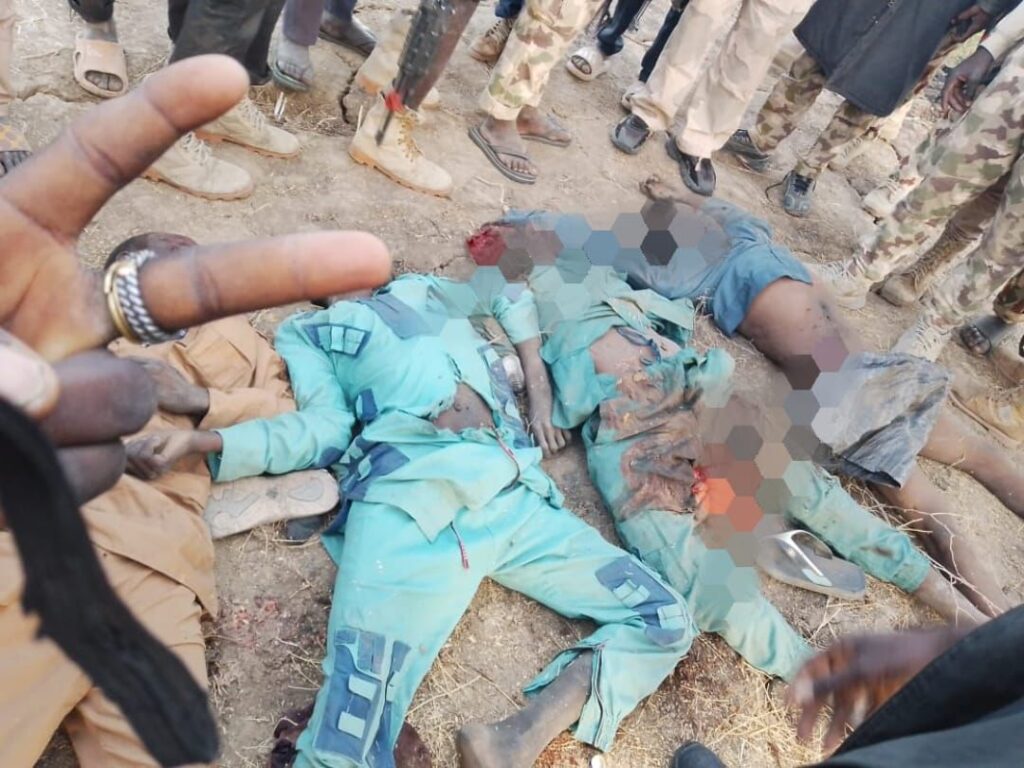
He confirmed that no personnel of the Nigerian military was killed during the encounter, although one Mine-Resistant Ambush Protected (MRAP) vehicle was hit by a rocket-propelled grenade.
The source added that at least eight terrorists were neutralised during the operation, while troops recovered seven AK-47 rifles, eight magazines, four RPG bombs, and a cache of ammunition.
“Blood trails were observed along the withdrawal routes, indicating that several other insurgents escaped with gunshot wounds,” he said.
He further disclosed that injured personnel from the encounter were currently receiving treatment at a military medical facility in Biu.
Zagazola gathered that additional bodies of fleeing terrorists were sighted along their escape corridors toward the Timbuktu Triangle, a known insurgent enclave. We saw four more bodies,” said sources.
The military sources also revealed that abandoned weapons and casualties were observed in Garin Mallum and Garin Gajere, suggesting heavy losses suffered by the insurgents during the failed attack.
The military leadership urged to sustain the operational tempo, retain the initiative, and consolidate on the gains recorded against the insurgents.
Army troops neutralized 8 Boko Haram in Borno failed attack, recover arms
Nigeria Positions Itself for Global Space Leadership at Satellite Week 2026
By: Michael Mike
Nigeria is set to sharpen its policy direction in the global space ecosystem as Nigerian Communications Satellite Limited prepares to host the 2026 Nigerian Satellite Week in Abuja.
The Managing Director of Nigerian Communications Satellite Limited, Jane Egerton-Idehen, disclosed this in a statement issued by the agency’s Head of Corporate Communications, Stephen Kwande, noting that the event will convene top government officials, regulators, and international stakeholders to shape the future of satellite governance and digital infrastructure.
Egerton-Idehen said the forum is coming at a critical time when countries around the world are strengthening their space capabilities as part of broader national development strategies.
According to her, satellite technology is increasingly linked to economic growth, national security, and digital connectivity, making strategic investments in space infrastructure a priority for many nations.
She explained that the conference is expected to attract high-level participation, including cabinet members, defence authorities, development finance institutions, and technology innovators from across Africa.
The NIGCOMSAT boss also highlighted Nigeria’s growing influence in global space policy, pointing to her emergence as Vice Chair of the Global Satellite Operators Association as a sign of the country’s expanding role in international satellite governance.
She further cited ongoing collaboration between Nigeria and the Kenya Space Agency as part of broader efforts to strengthen partnerships within Africa’s evolving space ecosystem.
Egerton-Idehen described the upcoming satellite week as both a reflection of Nigeria’s 20-year journey in satellite development and a strategic platform to define the country’s next phase in an increasingly competitive global space economy.
Nigeria Positions Itself for Global Space Leadership at Satellite Week 2026

Troops ambush terrorists along Marte–Dikwa road, recover logistics in Borno

Army troops neutralized 8 Boko Haram in Borno failed attack, recover arms

Nigeria Positions Itself for Global Space Leadership at Satellite Week 2026

Roger Federer’s Shock as DNA Results Reveal Myla and Charlene Are Not His Biological Children

THE PLIGHT OF FARIDA

FAILED COUP IN BURKINA FASO: HOW TRAORÉ NARROWLY ESCAPED ASSASSINATION PLOT AMID FOREIGN INTERFERENCE CLAIMS
-
 News2 years ago
Roger Federer’s Shock as DNA Results Reveal Myla and Charlene Are Not His Biological Children
-
Opinions4 years ago
THE PLIGHT OF FARIDA
-
 News11 months ago
FAILED COUP IN BURKINA FASO: HOW TRAORÉ NARROWLY ESCAPED ASSASSINATION PLOT AMID FOREIGN INTERFERENCE CLAIMS
-

 News2 years ago
EYN: Rev. Billi, Distortion of History, and The Living Tamarind Tree
-
 Opinions4 years ago
POLICE CHARGE ROOMS, A MINTING PRESS
-

 ACADEMICS2 years ago
A History of Biu” (2015) and The Lingering Bura-Pabir Question (1)
-

 Columns2 years ago
Army University Biu: There is certain interest, but certainly not from Borno.
-

 Opinions2 years ago
Tinubu,Shettima: The epidemic of economic, insecurity in Nigeria
