
News
VP SHETTIMA AT EXECUTIVE COURSE 47 GRADUATION: President Tinubu Poised To Remodel NIPSS Into Digitally Driven, Global Centre Of Excellence

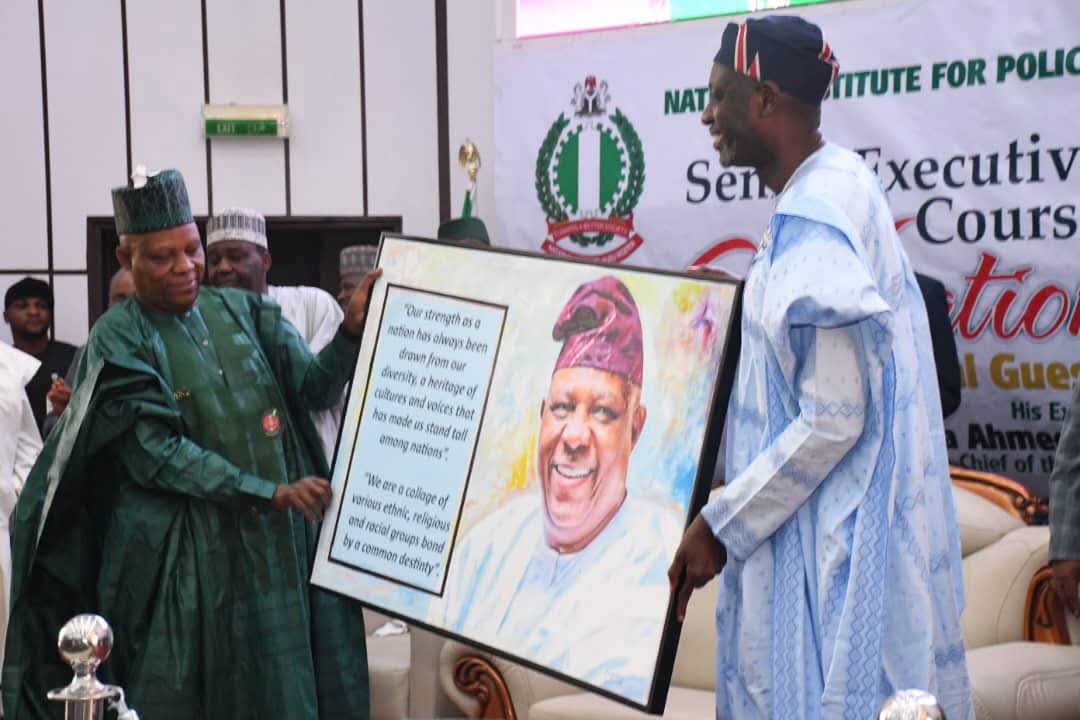
VP SHETTIMA AT EXECUTIVE COURSE 47 GRADUATION: President Tinubu Poised To Remodel NIPSS Into Digitally Driven, Global Centre Of Excellence
- Says institute’s research outputs will be fully integrated into national decision making, execution frameworks
By: Our Reporter
The Vice President, Senator Kashim Shettima, has reaffirmed the resolve of the administration of President Bola Ahmed Tinubu to remodel the National Institute for Policy and Strategic Studies (NIPSS) into a globally recognised centre of excellence that is digitally driven and financially stable by 2030.
According to him, apart from serving as the most strategic platform for developing thinkers, reformers, and innovators in Nigeria, the institute’s Senior Executive Course represents a deliberate investment in the nation’s future leadership as well as a meeting point for ideas that define policy, guide reform, and influence the course of national development.
Senator Shettima stated this on Saturday when he represented President Tinubu at the Graduation Ceremony of Senior Executive Course 47 of NIPSS in Kuru, Plateau State.
“His Excellency, President Bola Ahmed Tinubu, has been unequivocal in his commitment to supporting NIPSS in its transformation agenda, particularly its ambition to become a digitally driven, financially stable, and globally recognised centre of excellence by 2030.
“We recognise the Institute’s critical role in shaping national policy and in building the leadership capacity required to navigate an increasingly complex world,” he declared.
The Vice President noted that the support the Tinubu administration is giving to transform the institute exceeds funding, infrastructure and conducive research environment.
He said, “Our support must therefore go beyond funding, infrastructure, and a conducive research environment. It must ensure that NIPSS produces implementation ready policy papers and that its outputs are fully integrated into national decision making and execution frameworks.”
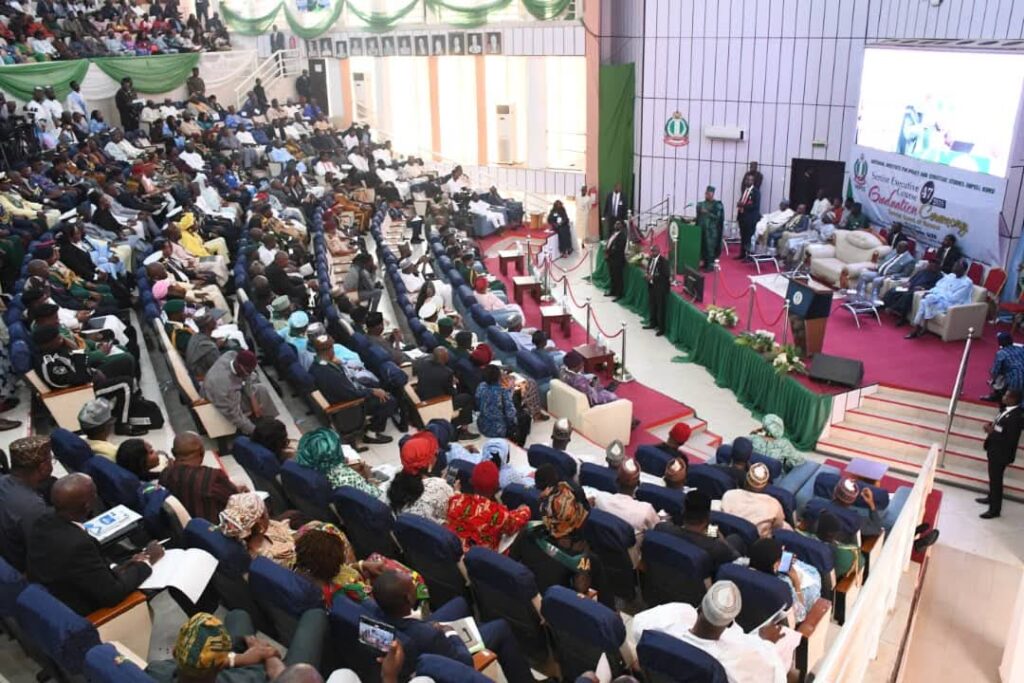
VP Shettima applauded the theme of the Senior Executive Course 47, “Blue Economy and Sustainable Development in Nigeria,” saying it is a reflection of the urgency with remarkable clarity, and “captures the reality that development, security, environmental stewardship, and social inclusion are inseparable.”
He however observed that the strength of the academic work does not depend only on its academic depth, “but in its insistence that policy must be practical, implementable, and firmly grounded in Nigeria’s realities.”
Commending the graduands, the VP said “We are grateful for your sustained and rigorous enquiries into the affairs of the maritime domain, enquiries that continue to provide the nation with insights it depends upon.
“Your latest research makes it clear that securing Nigeria’s waterways, coastlines, and inland communities goes far beyond safety alone. It speaks to livelihoods, food security, environmental protection, and national cohesion. When young people have productive work, when communities trust the state, and when institutions coordinate effectively, insecurity loses its oxygen.”
Assuring that the Tinubu administration takes evidence based policymaking very seriously, the Vice President said he had already directed relevant ministries, departments, and agencies to give the report and recommendations of the graduands the close attention they deserve, both for immediate application and for long term strategic planning.”
He thanked the Director General, Prof. Ayo Omotayo, the management and staff of NIPSS, for what he described as their dedication, professionalism, and unflicnhing commitment, which he said has continued “to uphold NIPSS as the nation’s foremost centre for strategic thought and leadership development.”
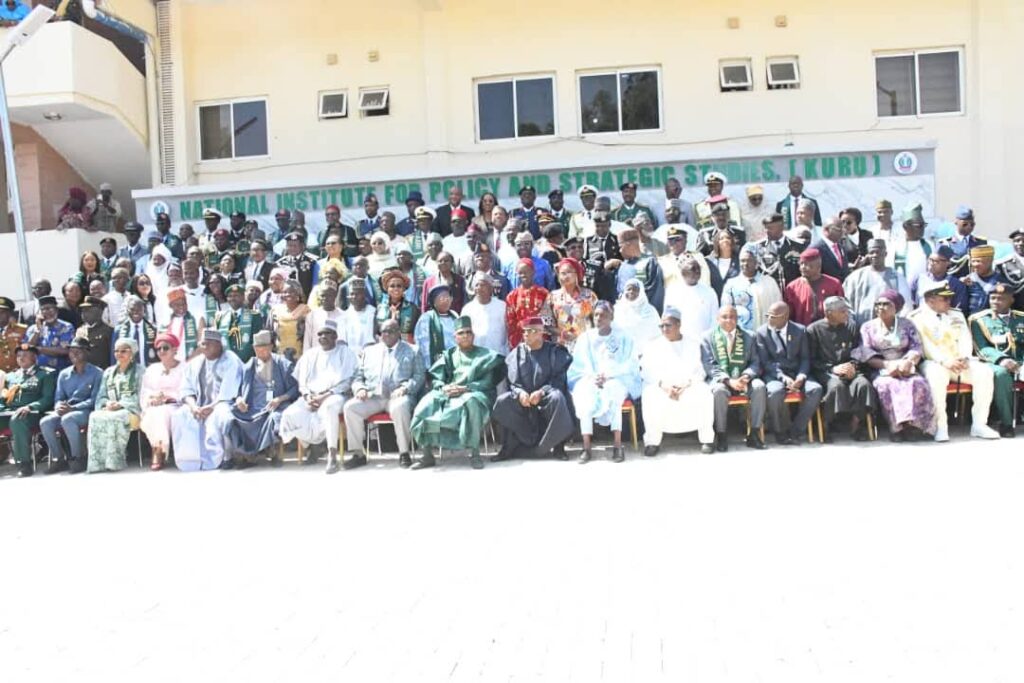
The VP also hailed Plateau State Governor Caleb Mutfwang and people of the state for continuing to support NIPSS by sustaining the peaceful environment that has enabled the “Institute to function as a true national asset.”
Earlier, Governor Mutfwang applauded the Federal Government’s support to the institute, particularly in facilitating the hitch-free completion of its academic programmes as well as the execution of its other strategic projects and mandate.
Underscoring the importance of academic programmes at the institution, Governor Mutfwang noted that Nigeria stands to benefit immensely from the research output of the institution, particularly in broadening governance perspective and making valuable recommendations in addressing security across the country.
On his part, Chairman of the NIPSS Board, Senator Ken Nnamani, said the pathways to addressing some of the nation’s challenges can be found in the research reports of research institutions across the country, urging authorities at the national and subnational levels to adopt products of the institute.
While charging members of the SEC 47 to be worthy ambassadors of the institution, Senator Nnamani expressed confidence in the commitment of the Tinubu administration to continue to support research endeavours at NIPSS, and implement key research findings of academic institutions across the country, including NIPSS.
In his welcome address, the Director General of NIPSS, Prof. Omotayo, said the Vice President’s presence at the SEC 47 graduation ceremony underscores the Federal Government’s recognition of the institute as the premier research institute for the advancement of Nigeria’s policy and governance framework.
Reeling out some of the institute’s achievements anchored on its 5-year strategic plan, Prof. Omotayo said NIPSS has completed key institutional research endeavours in collaboration with international partners in key areas, including crisis anticipation and adaptive governance.
The DG said with the achievements, NIPSS has established itself as the premier institute for policy research aimed at rebuilding public trust and addressing emerging societal challenges.
In a goodwill message, the President of the NIPSS Alumni (AANI), Amb. Emmanuel Okafor, thanked the Vice President for his relentless support to the institute and acknowledged all of the transformative projects executed under the present management of the institute.
On his part, the Monitor-General of the Course 47, Col. Muhktar Sani Daroda, said the rigour and intensity of the programme has shaped and prepared the course participants for tasks across different sectors, even as he pledged their rededicated commitment and service to the nation.
Highpoint of the occasion was the formal presentation of certificates to the graduands by the Vice President and their induction into the Alumni Association of the National Institute (AANI).
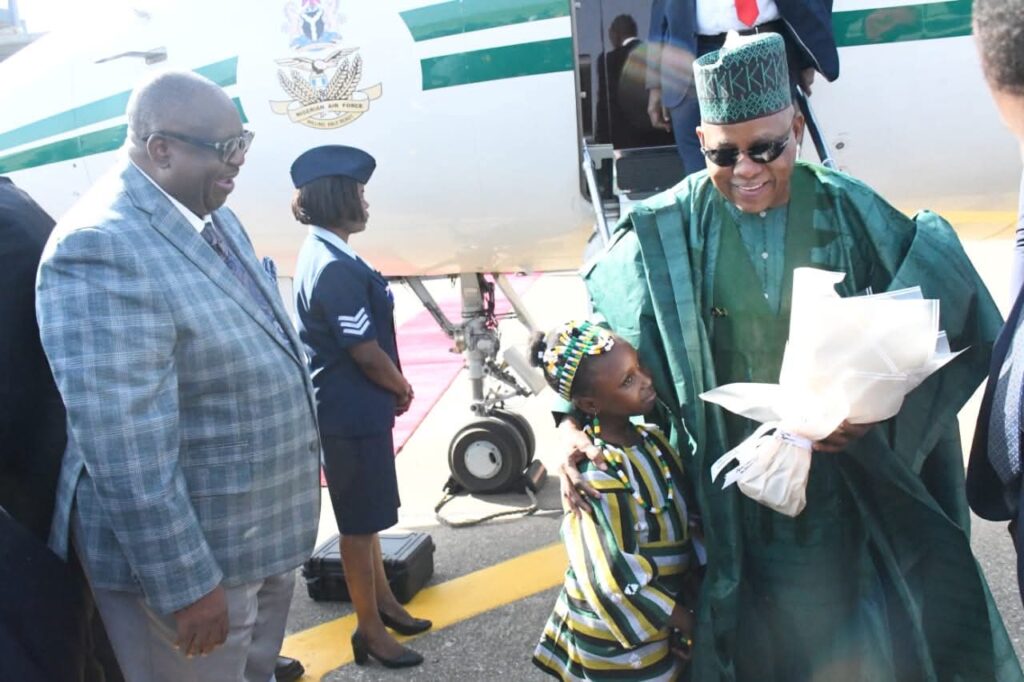
Earlier on arrival at the institute, the Vice President inaugurated 4 units of 2-bedroom apartment built and donated to the institute by the SEC 47 participants.
Meanwhile, Senator Shettima has held an interaction with strawberry farmers in Plateau State, in furtherance to efforts by the Federal Government to support the production of fruits in the state.
He said the administration of President Bola Ahmed Tinubu remains committed to transforming all segments of Nigeria’s agricultural value chain.
VP SHETTIMA AT EXECUTIVE COURSE 47 GRADUATION: President Tinubu Poised To Remodel NIPSS Into Digitally Driven, Global Centre Of Excellence


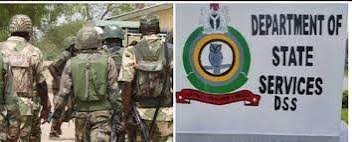
Army, DSS arrest notorious cultist, gunrunner in Cross River, recover weapons
By: Zagazola Makama
Troops of 13 Brigade, in collaboration with the Department of State Services (DSS), have arrested a suspected cultist and gunrunner during a raid operation in Ikom Local Government Area of Cross River State.
Security sources said the operation was carried out at about 1:10 a.m. on April 3 along Effangha Spring Road in Ikom.
The sources disclosed that the suspect, who hails from Khana Local Government Area of Rivers State, was apprehended during the coordinated raid.
According to the sources, troops recovered one revolver pistol, one sword, two laptops, four mobile phones, one digital camera, one wristwatch, three identity cards, and a sack of garri allegedly used to conceal the weapon.
The suspect and recovered items have since been handed over to the DSS for further investigation and possible prosecution.
Security authorities said the operation is part of ongoing efforts to curb cult-related violence and illegal arms circulation in the South-South region.
Army, DSS arrest notorious cultist, gunrunner in Cross River, recover weapons
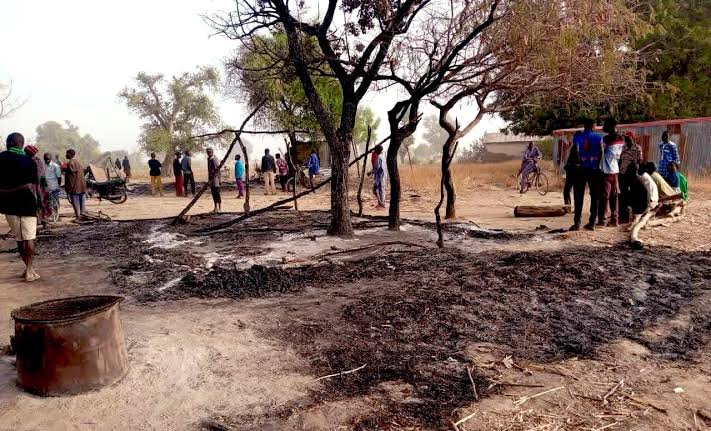
Gunmen kill village head, wife in Adamawa, son hospitalised
By: Zagazola Makama
Unknown gunmen have killed a village head and his wife in Tunga Waja community, Lamurde Local Government Area of Adamawa State.
Security sources said the incident occurred at about 8:50 p.m. on April 2, when the assailants attacked the residence of the village head and opened fire on him, his wife and their son.
The sources disclosed that the village head died on the spot, while his wife and son sustained gunshot wounds and were evacuated to a medical facility in Tingno for treatment.
According to the sources, the wife later died at the hospital, while the son is currently receiving treatment.
The motive behind the attack remains unclear, while efforts are ongoing to identify and apprehend the perpetrators.
The incident has heightened concerns among residents, as security agencies intensify efforts to restore calm and prevent further attacks in the area.
Gunmen kill village head, wife in Adamawa, son hospitalised
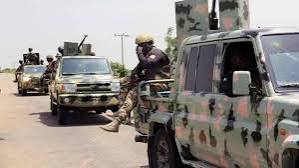
Three soldiers injured in road accident during pursuit of bandits in Kaduna
By: Zagazola Makama
Three soldiers have sustained injuries following a road traffic accident during an encounter with suspected armed bandits in Birnin Gwari Local Government Area of Kaduna State.
Security sources said the incident occurred at about 3:00 p.m. on April 2, when troops of 2 Battalion deployed at Forward Operating Base Dogon Dawa were returning from an administrative patrol.
The sources explained that the troops reportedly sighted a group of armed bandits attempting to block the road at Ngede Allah and engaged them, forcing the criminals to flee.
During the pursuit, however, three soldiers fell off a military gun truck and sustained varying degrees of injuries, including fractures to the hand and leg.
The injured personnel were immediately evacuated to the 44 Nigerian Army Reference Hospital in Kaduna, where they are currently receiving treatment and responding positively.
Security operations in the area have continued as troops maintain pressure on criminal elements within the axis.
Three soldiers injured in road accident during pursuit of bandits in Kaduna

Man O’ War personnel reports abduction of female colleague in Bayelsa

Army, DSS arrest notorious cultist, gunrunner in Cross River, recover weapons

Gunmen kill village head, wife in Adamawa, son hospitalised

Roger Federer’s Shock as DNA Results Reveal Myla and Charlene Are Not His Biological Children

THE PLIGHT OF FARIDA

FAILED COUP IN BURKINA FASO: HOW TRAORÉ NARROWLY ESCAPED ASSASSINATION PLOT AMID FOREIGN INTERFERENCE CLAIMS
-
 News2 years ago
Roger Federer’s Shock as DNA Results Reveal Myla and Charlene Are Not His Biological Children
-
Opinions4 years ago
THE PLIGHT OF FARIDA
-
 News12 months ago
FAILED COUP IN BURKINA FASO: HOW TRAORÉ NARROWLY ESCAPED ASSASSINATION PLOT AMID FOREIGN INTERFERENCE CLAIMS
-

 News2 years ago
EYN: Rev. Billi, Distortion of History, and The Living Tamarind Tree
-
 Opinions4 years ago
POLICE CHARGE ROOMS, A MINTING PRESS
-

 ACADEMICS2 years ago
A History of Biu” (2015) and The Lingering Bura-Pabir Question (1)
-

 Columns2 years ago
Army University Biu: There is certain interest, but certainly not from Borno.
-

 Opinions2 years ago
Tinubu,Shettima: The epidemic of economic, insecurity in Nigeria
