
News
VP Shettima: Imo State, A New Growth Frontier In Nigeria’s Economic Diversification Drive

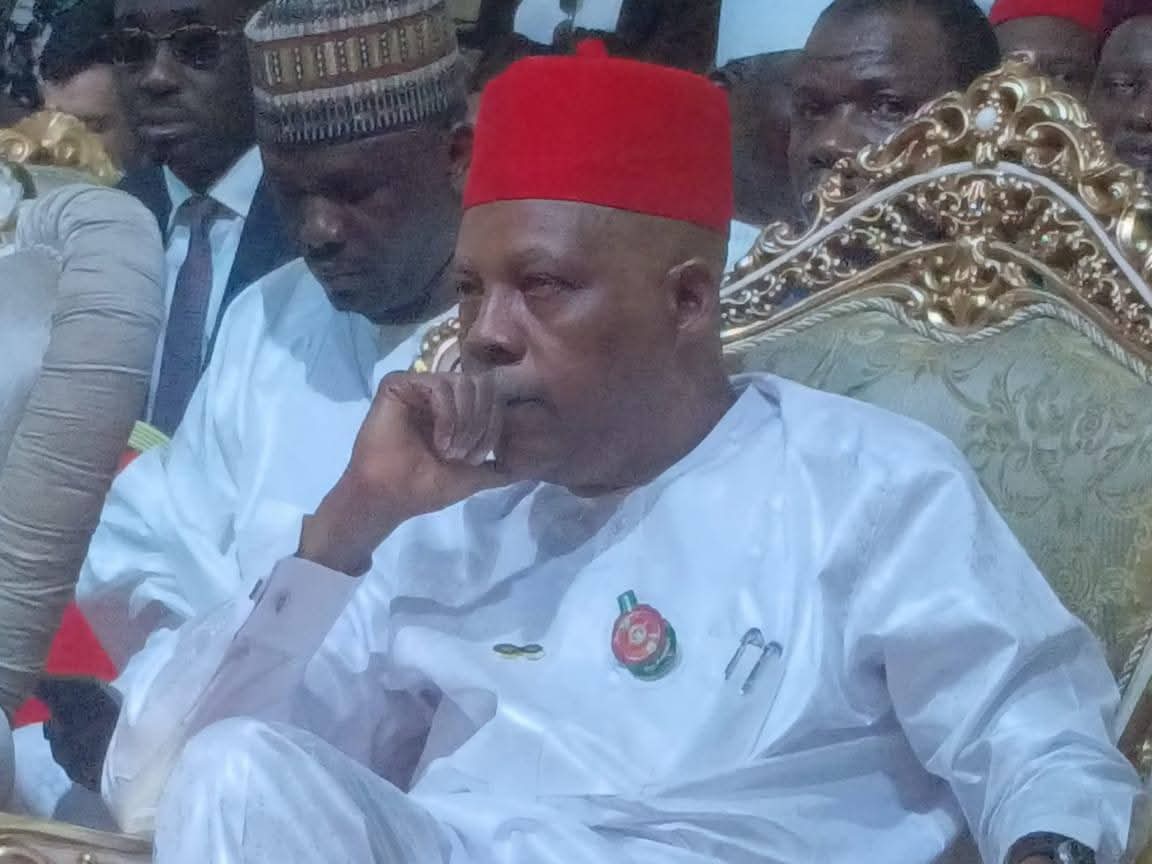
VP Shettima: Imo State, A New Growth Frontier In Nigeria’s Economic Diversification Drive
** Says South East state is primed for technology, gas, agro-industrial and SME-led growth
** Reaffirms goverment’s readiness to de-risk private investments, policy stability under President Tinubu
By: Our Reporter
Vice President Kashim Shettima has identified Imo State as a major pillar in Nigeria’s economic diversification agenda primed for rapid growth in technology, gas utilisation, agro-industrial processing and small and medium-scale enterprises (SMEs).
He said the government is committed to providing access to financing through the Bank of Industry and the Development Bank of Nigeria, alongside structured Public-Private Partnerships in housing, transport, and renewable energy sectors for the state.
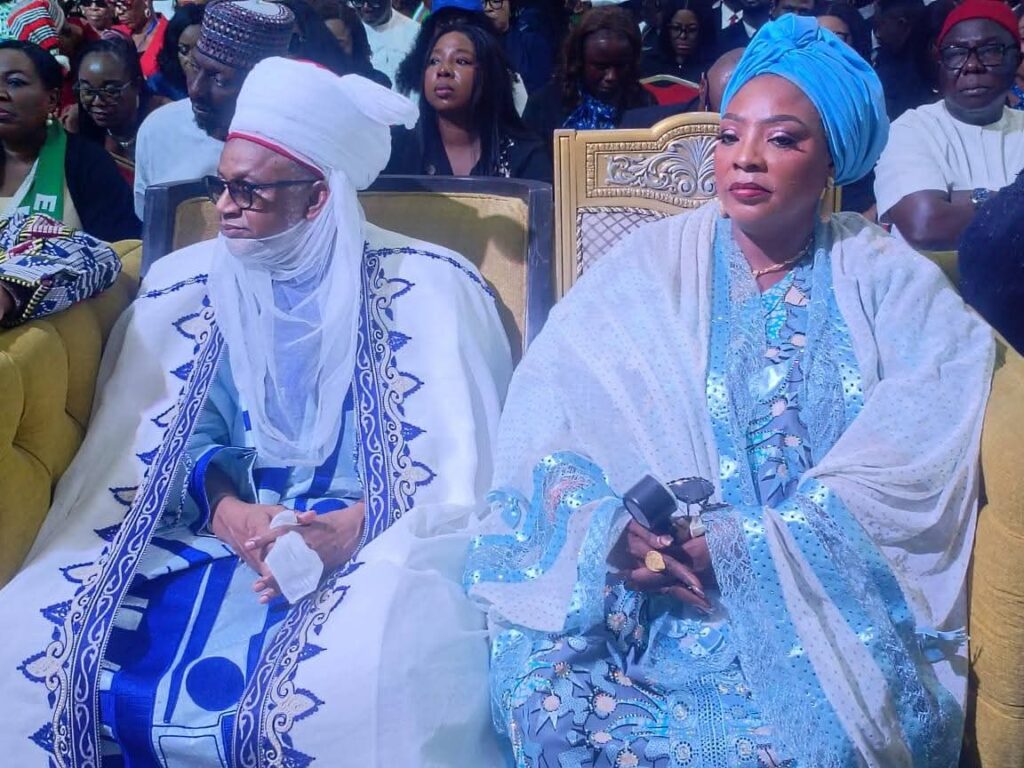
Speaking on Thursday at the Imo State Economic Summit 2025 in Owerri, VP Shettima said national prosperity could only be sustained when every state takes ownership of its development and deliberately harnesses its comparative advantages.
“Nations do not rise because one corner of the map ascends while others remain dormant. Nations rise when every part discovers its promise and takes responsibility for its own economic direction,” he said.
The Vice President described Imo’s economic prospects as unmistakable, stressing that the state occupies a strategic position in President Bola Ahmed Tinubu’s reforms aimed at stabilising the business environment and unlocking long-term growth.
According to him, the summit’s theme, ‘Unlocking Imo’s Economic Potential: Partnership, Investment, and Innovation’, aligns with the Federal Government’s reform agenda to build a resilient, competitive and inclusive economy.

“All these possibilities converge to remind us that Imo is not just ready for investment. Imo is primed for transformation,” VP Shettima said.
The Vice President highlighted high-growth sectors capable of driving Imo’s economic resurgence, including the deployment of Free Trade Zones and Special Agro-Industrial Processing Zones, expanded gas utilisation for households and industry, and the development of robust digital infrastructure to attract ICT firms and fuel a modern, information-driven economy.
Reaffirming the Federal Government’s commitment to investor protection and confidence-building, VP Shettima assured that the Tinubu administration would continue to de-risk private investments and provide consistent policy direction.
“The Federal Government stands ready to walk with Imo State to unlock opportunities, de-risk promising ventures and ensure that the benefits of development are felt across communities. To investors here today, the message is unmistakable: Imo is open for business. Nigeria is open for business,” he said.
The Vice President said global competitiveness today is shaped by innovation, talent and technology rather than the exploitation of natural resources alone, urging Imo to position innovation at the core of its growth strategy.
He disclosed that the Federal Government is already implementing programmes to empower young innovators, expand digital skills training, strengthen tech clusters, promote STEM education and deepen research partnerships with universities.
“The young people of Imo are creative, ambitious and connected to the global knowledge economy. Our duty is to give them the tools, the platforms and the confidence to build the future that awaits them,” VP Shettima said.
The Vice President added that Imo State could emerge as a technology hub, a major contributor to national GDP, a magnet for the creative economy and a leading centre for SMEs and industrialisation, if partnerships and investments are effectively mobilised.
He challenged stakeholders to shift from dialogue to execution. “Let this Summit not end with good ideas alone. Let it lead to signed partnerships, funded projects and measurable outcomes that uplift lives and create jobs,” he urged.
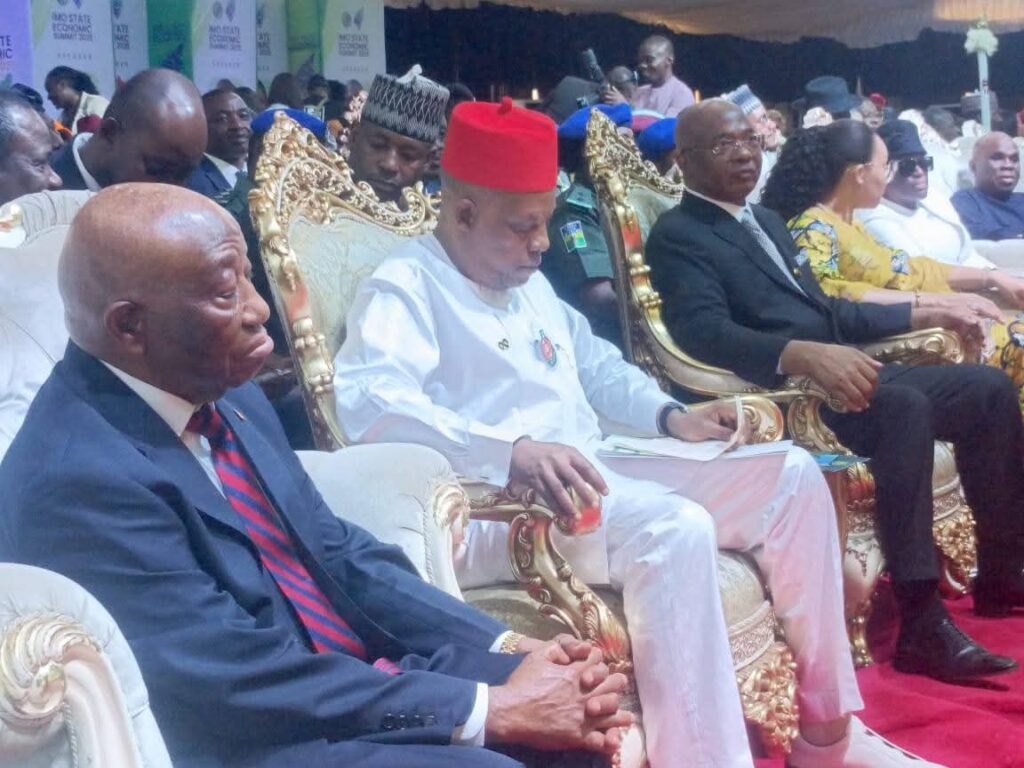
In his welcome address, Imo State Governor, Hope Uzodinma commended President Tinubu’s intentional reform policies, which he said have reset Nigeria’s investment space.
He noted that Imo State had since keyed into the reforms of the President, with the aim of taking the lead in regional development.
Governor Uzodinma said the state, under his leadership, had since utilized its unique landmass and abundant natural resources in providing the ideal environment for investors and businesses to thrive.
“We are blessed with the largest game reserve estimated at 200 trillion cubic feet. So, for those looking for business in gas exploration and utilization, Imo State is the destination.
“We also have other resources like lead, zinc, crude oil, cotton, etc. The incentives are ready and agriculture is our mainstay as the heartland of Eastern Nigeria. We also boast of the 3rd highest human capital development index in the country,” the Governor stated.
He also coined a meaning for the name of the state, describing it as a place where Investment Meets Opportunities (IMO) and business follows.
On her part, the first female elected President of Mauritius, Ameenah Gurib-Fakim, urged Africa to take its place in the global market, pointing out that Nigeria is a power house that should lead the way in that regard.
The former President said there is hope for Africa because Nigeria is rising and giving opportunities to the youth, even as she pledged to bring in investors in renewable energy to invest in Imo.
Also, the Minister of Finance and Coordinating Minister of the Economy, Chief Wale Edun, in his goodwill message, said the private sector is key to investment at all levels.
He commended the Governor of Imo State for taking the right steps towards repositioning the state’s economy.
Chief Edun noted that the impact of the Nigerian economy is measurable, saying the economy, under President Tinubu, is growing faster than it was over a decade ago, and that more progress will soon be recorded.
For his part, the 8th Secretary General of the United Nations (UN), Mr. Ban Ki Moon, in his keynote address, described the summit as a gathering of great significance.
He said addressing global uncertainties is vital, and initiatives like the Imo Investment Summit will help create a more peaceful society.
Mr Moon noted that Africa holds the key to unlocking most of the challenges the world is currently facing, including the Sustainable Development Goals (SDGs).
“Without addressing the challenges Africa is facing, we would not say we have a sustainable world.,” he said, just as he requested for a special technology fund support for the continent.
The former UN scribe stated that implementing the resolutions of the summit will help enhance Imo State’s socio-economic development and help elevate prosperity as well as transform the state into an investment hub.
In his goodwill message, President/Chief Executive of Dangote Industries Limited, Aliko Dangote, hailed the good policies of the Tinubu administration, which he said provided the right atmosphere for business.
The richest man in Africa urged Nigerian businessmen to continue to invest at home, assuring the Governor Uzodimma that the Dangote Industries “will be one of your biggest investors in Imo.”
Immediate past Executive Vice President of AFREXIM Bank, Mr Benedict Oramah, said Afrexim bank is currently building a multi million dollar facility in Imo State to help support the production and export of quality compliance products for export to the global market.
He commended Governor Uzodinma for opening up the state for business through the Orashi River dredging and special economic zone project.
VP Shettima: Imo State, A New Growth Frontier In Nigeria’s Economic Diversification Drive


News
Zamfara bandits plan reprisals after heavy losses in military, DSS operations that killed Ado Aliero’s son, 65 others
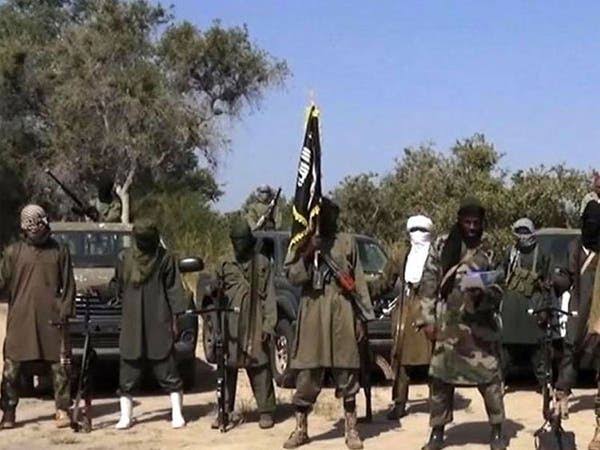
Zamfara bandits plan reprisals after heavy losses in military, DSS operations that killed Ado Aliero’s son, 65 others
By: Zagazola Makama
Armed bandits are reportedly planning coordinated retaliatory attacks across parts of Zamfara State following recent large-scale security operations that resulted in significant losses among their ranks, including the killing of a notorious kingpin’s son and several commanders.
The planned reprisals are believed to be linked to sustained offensives conducted by Nigerian military forces in collaboration with the Department of State Services (DSS) and hybrid security units under Operation FANSAN YANMA, which targeted bandit enclaves in Tsafe Local Government Area and surrounding forest corridors.
The operations reportedly led to the neutralisation of about 65 armed bandits, including high-profile commanders operating under the network of Ado Aliero, a notorious figure linked to years of violent attacks, kidnappings and cattle rustling across Zamfara and neighbouring states.
Among those killed was Kachalla Iliya Sarki, identified as the son of Ado Aliero, alongside other field commanders who were said to play key roles in coordinating armed operations in the region.
Other commanders reportedly eliminated during the offensive included Dogo Sule and Iliya Mai Rasha, as well as additional field leaders who coordinated attacks across Tsafe, Maru and surrounding communities.
The losses are understood to have significantly disrupted the operational structure of the criminal network, even as indications suggest attempts by surviving elements to regroup and launch retaliatory attacks against security formations and nearby communities.
The planned reprisals are also said to involve large-scale movement of armed fighters across forest routes, with motorcycles used for rapid mobilisation and coordination across multiple axes.
The sources said the movement involved suspected bandits operating on over 200 motorcycles, assembling around Unguwar Tsamiya forest axis, with indications that a well-known bandit leader, Bello Turji, had been linked to the planned mobilisation.
Security sources said the sustained operations also dismantled several bandit enclaves in Munhaye and adjoining forest belts, disrupting logistics networks and freeing victims previously held in captivity.
One of the slain commanders, Kachalla Biyabiki, was said to have been holding several abducted victims at the time of the operation, while another leader, Kachalla Dogon Bete, was also neutralised during the engagement.
The development, according to intelligence officials, has significantly weakened the operational structure of Ado Aliero’s network but may also trigger retaliatory violence from surviving fighters seeking revenge.
Security authorities said the latest intelligence pointing to the likelihood of reprisal attacks, particularly against soft targets and isolated rural communities.
They added that surveillance and troop deployments had been intensified across vulnerable locations, with emphasis on forest fringes and highway corridors in Tsafe, Maru, and neighbouring areas.
Authorities also urged residents to remain vigilant and report suspicious movements, while assuring that ongoing operations would be sustained to prevent any breakdown of security.
Operation FANSAN YANMA forces, alongside DSS operatives and hybrid units, are continuing clearance operations aimed at dismantling remaining bandit camps and preventing regrouping across the North-West theatre.
Zamfara bandits plan reprisals after heavy losses in military, DSS operations that killed Ado Aliero’s son, 65 others
Troops repel bandits’ attack in Agatu
Benue
By Zagazola Makama
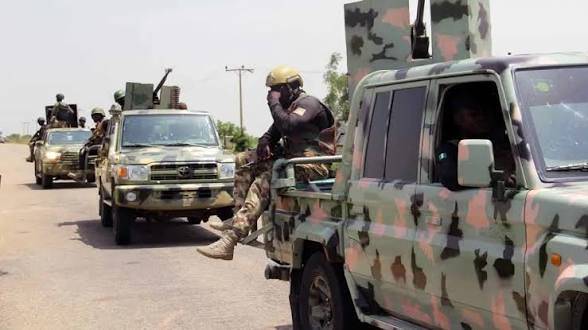
Troops of the Nigerian Army, in collaboration with the police, repelled an attack by suspected armed bandits on a joint patrol team in Agatu Local Government Area of Benue State.
Security sources said the incident occurred at about 9:00 a.m. on April 4, when the troops on routine patrol encountered the armed bandits.
According to the sources, the bandits opened fire on sighting the troops, leading to a gun duel.
“The troops responded decisively, forcing the bandits to retreat after a brief exchange of fire,” the source said.
The attackers reportedly fled through a nearby river, taking advantage of the difficult terrain.
The sources confirmed that no casualty was recorded among the troops during the encounter.
Following the incident, troops have intensified patrols and commenced combing operations in surrounding bushes to track down the fleeing suspects.
The operation is part of ongoing efforts by the military to curb banditry and sustain peace in the area.
Troops repel bandits’ attack in Agatu
Benue
Six more top bandit leaders eliminated alongside Ado Allero’s son in Zamfara offensive
By Zagazola Makama
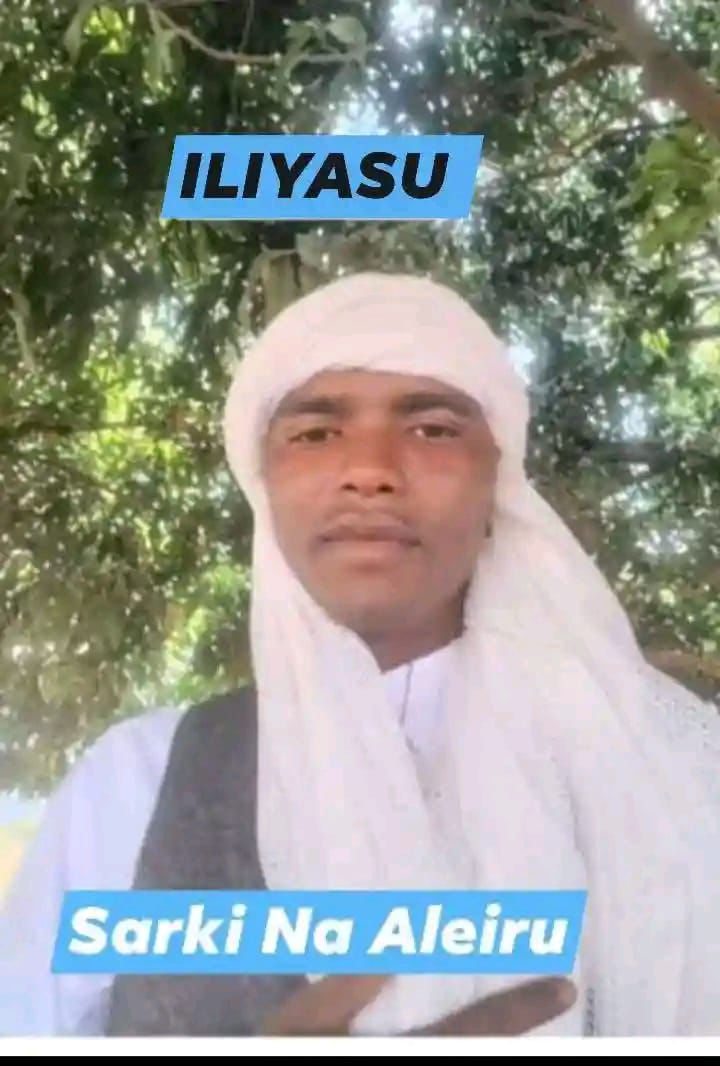
Additional details have emerged on the identities of notorious bandit leaders eliminated during the recent military offensive in Tsafe Local Government Area of Zamfara State, where the son of feared kingpin Ado Allero and scores of fighters were neutralised.
At the heart of the operation was the elimination of Kachalla Iliya Sarki, the son of Ado Allero, alongside more than 65 fighters and several high-ranking commanders who had long orchestrated attacks, kidnappings, and cattle rustling across Zamfara and neighbouring states.

For years, the forests of Tsafe, Shinkafi, and Zurmi have served as operational bases for heavily armed groups, with Allero’s network emerging as one of the most feared. The death of his son, widely regarded as a rising figure within the hierarchy, is not just a tactical success, it is a symbolic strike at the core of the group’s command structure.
Security sources confirmed that the offensive, which targeted multiple camps in Munhaye and surrounding forest enclaves, led to the elimination of several key commanders.

Among them was Kachalla Biyabiki, a notorious kidnapping kingpin linked to numerous abductions in the western Tsafe axis. Intelligence indicated he had at least 10 victims in captivity at the time of his death, with ransom negotiations ongoing.
Also killed was Kachalla Dogon Bete, a feared field commander known for leading violent raids on rural communities and coordinating cattle rustling operations.
Other commanders neutralised include Kachalla Dan Bakolo, believed to be responsible for arms supply and logistics; Kachalla Na’Isa, a sub-commander involved in enforcement operations; Kachalla Yellow, linked to reprisal attacks; and Kachalla Mudi, associated with kidnapping activities along rural transit routes.

Together, these figures formed a critical part of the operational backbone of banditry in the Tsafe–Shinkafi corridor.
“These individuals were key actors within the network. Their neutralisation has disrupted command and control structures in the area,” a security source said.
The offensive, which targeted multiple camps in Munhaye and surrounding forest enclaves, also resulted in the destruction of hideouts and recovery of weapons and other logistics.
However, security experts warn that the killing of such high-profile figures—particularly the son of Ado Allero—may provoke retaliatory attacks by fleeing elements seeking revenge.
Troops have consequently intensified clearance operations, aerial surveillance, and aggressive patrols across Tsafe, Shinkafi, and adjoining areas to prevent regrouping and forestall possible reprisals.
Efforts are ongoing to track down remaining loyalists and dismantle residual cells operating within the wider Zamfara-Katsina forest corridor.
In Zamfara’s forests, where power shifts quickly and alliances are fluid, today’s victory can only be secured by tomorrow’s vigilance.
Six more top bandit leaders eliminated alongside Ado Allero’s son in Zamfara offensive

Zamfara bandits plan reprisals after heavy losses in military, DSS operations that killed Ado Aliero’s son, 65 others

Troops repel bandits’ attack in AgatuBenue

Troops recover another bodies of four herders, targeted and killed by Kaduna

Roger Federer’s Shock as DNA Results Reveal Myla and Charlene Are Not His Biological Children

THE PLIGHT OF FARIDA

FAILED COUP IN BURKINA FASO: HOW TRAORÉ NARROWLY ESCAPED ASSASSINATION PLOT AMID FOREIGN INTERFERENCE CLAIMS
-
 News2 years ago
Roger Federer’s Shock as DNA Results Reveal Myla and Charlene Are Not His Biological Children
-
Opinions4 years ago
THE PLIGHT OF FARIDA
-
 News12 months ago
FAILED COUP IN BURKINA FASO: HOW TRAORÉ NARROWLY ESCAPED ASSASSINATION PLOT AMID FOREIGN INTERFERENCE CLAIMS
-

 News2 years ago
EYN: Rev. Billi, Distortion of History, and The Living Tamarind Tree
-
 Opinions4 years ago
POLICE CHARGE ROOMS, A MINTING PRESS
-

 ACADEMICS2 years ago
A History of Biu” (2015) and The Lingering Bura-Pabir Question (1)
-

 Columns2 years ago
Army University Biu: There is certain interest, but certainly not from Borno.
-

 Opinions2 years ago
Tinubu,Shettima: The epidemic of economic, insecurity in Nigeria
