
National News
VP Shettima Urges Recommitment To Gender Equity In Nigeria


VP Shettima Urges Recommitment To Gender Equity In Nigeria
*** Says federal government focused on women empowerment policies
By: Our Reporter
Vice President Kashim Shettima has reaffirmed the Federal Government’s dedication to advancing gender equity through transformative policies.
The Vice President emphasised the indispensable role of women in building a balanced and equitable society.
VP Shettima stated this on Monday during the H.I.D. Awolowo Foundation Webinar in commemoration of the 109th posthumous birthday of Chief Hannah Idowu Dideolu Awolowo, wife of the late Chief Obafemi Awolowo.
VP Shettima called for renewed national efforts to create an inclusive society where women are empowered to lead and thrive, saying, “Every nation’s treatment of women serves as the ultimate marker of its civilization.
“We cannot claim to have evolved as a nation unless we recommit ourselves to creating a society that offers women unconditional dignity and opportunity,” the Vice President added.
VP Shettima paid glowing tribute to the late Chief Hannah Idowu Dideolu Awolowo, describing her as a “matriarch like no other and a jewel of inestimable value.”
He lauded her contributions to modern Nigeria, noting her unwavering support for her husband, Chief Obafemi Awolowo, and her advocacy for women’s rights.
“Mrs. Awolowo’s courage and influence were instrumental in shaping policies like free education in the Western Region. This is what an empowered woman can achieve,” he said.
On the historical struggles for women’s rights, the VP referenced the activism of global pioneers like Susan B. Anthony and Nigerian icons such as Mrs. Funmilayo Ransome-Kuti and Hajiya Gambo Sawaba.
“These trailblazers compelled us to confront the structural inequalities holding women back. Thanks to their efforts, the conversation has expanded beyond suffrage to include workplace equality, reproductive rights, and the fight against domestic violence,” he remarked.
VP Shettima also pointed to the transformative impact of technology, noting how digital platforms have amplified women’s voices and driven legislative victories like the Violence Against Persons (Prohibition) Act of 2015.
“This landmark legislation is a testament to the power of women-led advocacy and their determination to create a safer, fairer society,” he said.
Shettima further reiterated the importance of representation and leadership opportunities for women, even as he praised President Tinubu for his inclusive governance, shaped by the legacy of his mother, Alhaja Abibatu Mogaji, a formidable women’s rights advocate.
“Her legal battle for personal liberty set a precedent in our constitutional history, reminding us that women’s rights are human rights and must never be negotiable,” he noted.

The Vice President called for urgent action to address societal inequalities, particularly in education and leadership. “The nation we must build is one where no girl is denied the chance to learn, no woman is denied the opportunity to lead, and no mother is denied the dignity of safety and respect,” Shettima said.
He urged Nigerians to honour the legacy of women like H.I.D. Awolowo and embrace a collective responsibility to empower women.
“We are working to create an environment where women are not just supported but celebrated; where their aspirations redefine societal expectations and help build a viable, equitable, and thriving nation,” the Vice President said.
In her keynote address, Deputy Secretary-General of the United Nations, Amina Mohammed, said November 25th marks the International Day for the Elimination of Violence Against Women and the start of 16 Days of Activism Against Gender-Based Violence.
She explained that HID Awolowo was a fighter for social justice and human rights and took every opportunity to show the power of women in economic development.
“Every chapter of her story tells us that no bird can fly on one wing. We need the leadership and representation of women. We need partnerships for change—everyone must work for systemic change that will be sustainable.
“We need to end the scourge of gender-based violence as an absolute priority, essential for growth. Societies cannot achieve the equal and just society envisioned by HID Awolowo if we leave 50 percent of the world’s population behind,” she said.
Earlier, the Chairperson of the HID Awolowo Foundation Advisory Council, Senator Daisy Danjuma, noted that in building a more viable Nigeria, the role of women should not be overlooked.
“Together, let us chart a society where the role of women is recognized, celebrated, and utilized,” she said.
Welcoming guests to the webinar earlier, the Executive Director and Co-Founder of the Obafemi Awolowo Foundation, Dr. Olatokunbo Awolowo Dosumu, described HID Awolowo and her late husband as giants of intellect, integrity, service, and sacrifice, saying their lives were a testament to the power of purposeful living.
“They left us a blueprint for leadership and a legacy of hope. It is, therefore, with immense pride (and I hasten to add humility) that I speak before you today, reflecting on the legacy of these two extraordinary individuals. To be their offspring is not just a privilege; it is a profound responsibility.
“Their legacy is not meant to be confined to history books or family stories. It is a legacy that demands to be shared, understood, and applied in Nigeria and beyond. Our role, therefore, is to identify actionable plans and strategies and amplify the voices and capacities of women,” Dr. Dosumu stated.
Ends


National News
Breaking: NSCDC launches probe as 30 suspected illegal miners die in Commands custody in Niger
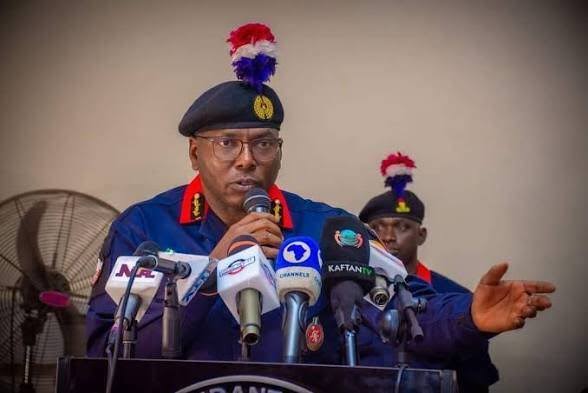
Breaking: NSCDC launches probe as 30 suspected illegal miners die in Commands custody in Niger
By Zagazola Makama
The Nigeria Security and Civil Defence Corps (NSCDC) has ordered an investigation into the deaths of several suspected illegal miners arrested during an enforcement operation in Niger State.
The suspects were apprehended on Sept. 15 and 16, 2026, during a joint operation targeting illegal mining activities around the M.I. Wushishi/Lukoto axis of the state.
The NSCDC Niger State Command initially reported that scores of detainees were found dead in the early hours of Sept. 17 following what was described as a suspected disease outbreak.
The remains have since been evacuated to the General Hospital, Minna, where medical examinations are expected to determine the actual cause of death.
The development has generated concern among relatives of some of the detainees, with family members alleging that more than 30 people died while in custody.
However, the NSCDC has cautioned against attributing the deaths to any particular disease before medical and laboratory examinations are concluded.
In a statement issued by the Corps’ National Public Relations Officer, Assistant Commandant of Corps Babawale Afolabi, the Commandant General, Prof. Ahmed Abubakar Audi, directed the immediate constitution of a high-powered investigative team.
The team, headed by the Deputy Commandant General responsible for Intelligence and Investigation, is expected to establish what happened before and after the suspects were taken into custody.
Investigators are to examine the physical condition of the detainees at the point of arrest, the duration of their detention, conditions inside the facility, medical care provided to them and other circumstances that could have contributed to the deaths.
The Corps said it was also working with health authorities and other security agencies to implement appropriate medical and public-health measures.
It further directed that the health and welfare of suspects still in custody be given immediate priority, while personnel who may have come into contact with the affected detainees are also protected.
The NSCDC said the incident would be addressed strictly on the basis of verified medical and investigative findings.
The Corps also reiterated that its campaign against illegal mining would continue, stressing that the enforcement of the law must be carried out alongside respect for the dignity and fundamental rights of persons in custody.
The Commandant General expressed condolences to the families of those who died and assured them that the circumstances surrounding the incident would be thoroughly investigated.
The Corps appealed to the public to remain calm while the medical and investigative processes are concluded, promising to release further information as verified facts become available.
The incident has meanwhile raised questions about the health status and detention conditions of the arrested miners, with the pending medical examination expected to provide critical answers on what caused the deaths.
Breaking: NSCDC launches probe as 30 suspected illegal miners die in Commands custody in Niger

VP SHETTIMA CLARIFIES REMARKS ON NORTHERN GOVERNORS’ SUPPORT FOR PRESIDENT TINUBU
By: Our Reporter
The Office of the Vice President wishes to clarify remarks by Vice President Kashim Shettima concerning the support President Bola Ahmed Tinubu received from northern governors in the build-up to his emergence as the presidential candidate of the All Progressives Congress (APC).
The Vice President’s reference to six northern governors who believed in and supported President Tinubu was specifically about political consultations and alignments preceding the APC presidential primary in June 2022.
It was not a comment on the position of northern APC governors following President Tinubu’s emergence as the party’s candidate, nor was it intended to question their support during the 2023 presidential election.
Following the presidential primary, APC governors in the North rallied around the party’s candidate and played important roles in the campaign and electoral efforts that culminated in President Tinubu’s victory in the 2023 general election. Indeed, it is worthy of note that it was after the declaration of President Tinubu as winner of the 2023 presidential primaries that all other governors across the country rallied round and followed suit. That declaration by the northern governors hence became the aligning moment across all political divides in the quest for power shift.
VP Shettima holds the northern governors and other leaders of the APC in high regard and recognises their individual and collective contributions to the success of the party and the emergence of President Tinubu.
The Vice President regrets any interpretation of his remarks that may have suggested otherwise and hopes this clarification places the comments in their proper context.
VP Shettima also appreciates the Nigerian media for its longstanding professionalism and constructive engagement with his office and urges continued accuracy and context in the reporting of public remarks as the country approaches another political season.
VP SHETTIMA CLARIFIES REMARKS ON NORTHERN GOVERNORS’ SUPPORT FOR PRESIDENT TINUBU
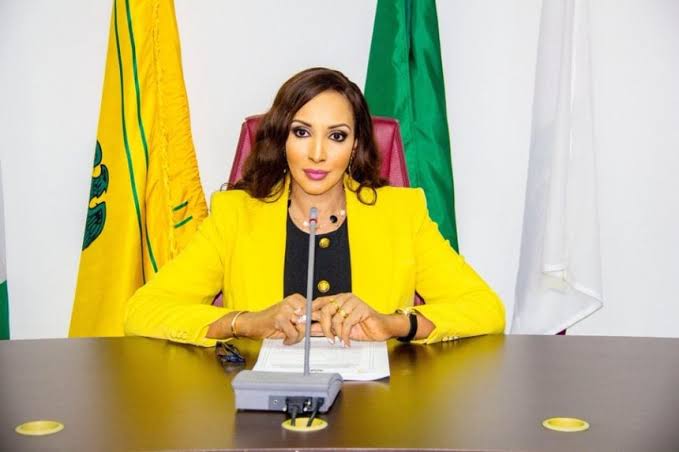
Foreign Minister Warns Diplomats: Route All Official Business Through My Ministry
By: Michael Mike
Minister of Foreign Affairs, Ambassador Bianca Odumegwu-Ojukwu, on Wednesday warned foreign missions to stop bypassing her ministry to deal directly with the Presidency and other arms of government, declaring that the Ministry of Foreign Affairs remains the only official channel to the Nigerian government.
Odumegwu-Ojukwu issued the warning on Thursday at her first formal briefing with the Diplomatic Corps since assuming office as substantive Foreign Minister.
“This Ministry is your diplomatic home. My doors remain open,” she told ambassadors, high commissioners and international organisations, but added that official requests must be routed through the ministry to ensure coordination and institutional memory.
“Bypassing established channels risks conflicting information, duplication and avoidable misunderstandings. We are not an obstacle. We are your bridge to the Nigerian Government,” she said.
The Minister said Nigeria will pursue strategic autonomy under President Bola Ahmed Tinubu — choosing its friends and positions strictly on national interest, mutual respect and reciprocity.
“Strategic autonomy does not mean isolation. It means preserving Nigeria’s sovereign right to determine relationships that best serve our people,” she declared.
She said Tinubu’s foreign policy is anchored on Four Ds — Demography, Development, Democracy and Diaspora — and described Nigeria’s posture as Nigeria-centered, Africa-conscious and globally engaged.
Odumegwu-Ojukwu announced a push to revive dormant Joint Commissions and Bi-National Commissions, insisting that diplomatic warmth must produce tangible results in trade, investment, security, education and technology.
She thanked foreign capitals for prompt Agrément for Nigeria’s ambassadorial nominees and pledged faster presentation of Letters of Credence for envoys in Abuja.
On consular frictions, she hit at prolonged visa delays for Nigerians.
“We respect every country’s sovereign right to determine its visa policy, but excessively long waiting periods create considerable difficulties for legitimate travellers, students, businesspersons and families,” she said, urging efficiency and transparency.
She reaffirmed Nigeria’s commitment under the Vienna Conventions to protect diplomatic personnel and premises and urged missions to report security concerns promptly.
Odumegwu-Ojukwu said Nigeria remains open for trade, investment and technology partnership but insisted on sovereign equality and reciprocity, warning that no country can tackle terrorism, climate change, cyber insecurity and irregular migration alone.
She said Nigeria will stay active in ECOWAS, AU, UN and Commonwealth and continue to demand a stronger African voice in global decisions.
Foreign Minister Warns Diplomats: Route All Official Business Through My Ministry

Independent journalist Safwan U. Ahmed alerts security agencies over alleged threat to his life in Mangu

JNIM claims killing of 150 Malian soldiers, capture of 93 others in Dioura attack

Chad authorities display weapons seized in eastern provinces

Roger Federer’s Shock as DNA Results Reveal Myla and Charlene Are Not His Biological Children

THE PLIGHT OF FARIDA

FAILED COUP IN BURKINA FASO: HOW TRAORÉ NARROWLY ESCAPED ASSASSINATION PLOT AMID FOREIGN INTERFERENCE CLAIMS
-
 News3 years ago
Roger Federer’s Shock as DNA Results Reveal Myla and Charlene Are Not His Biological Children
-
Opinions5 years ago
THE PLIGHT OF FARIDA
-
 News1 year ago
FAILED COUP IN BURKINA FASO: HOW TRAORÉ NARROWLY ESCAPED ASSASSINATION PLOT AMID FOREIGN INTERFERENCE CLAIMS
-

 News3 years ago
EYN: Rev. Billi, Distortion of History, and The Living Tamarind Tree
-
 Opinions5 years ago
POLICE CHARGE ROOMS, A MINTING PRESS
-

 ACADEMICS3 years ago
A History of Biu” (2015) and The Lingering Bura-Pabir Question (1)
-

 Columns3 years ago
Army University Biu: There is certain interest, but certainly not from Borno.
-

 Politics1 year ago
2027: Why Hon. Midala Balami Must Go, as Youths in Hawul and Asikira/Uba Federal Constituency Reject ₦500,000 as Sallah Gift
