
News
What Niamey’s Airport attack means for Niger, West Africa and Sahel

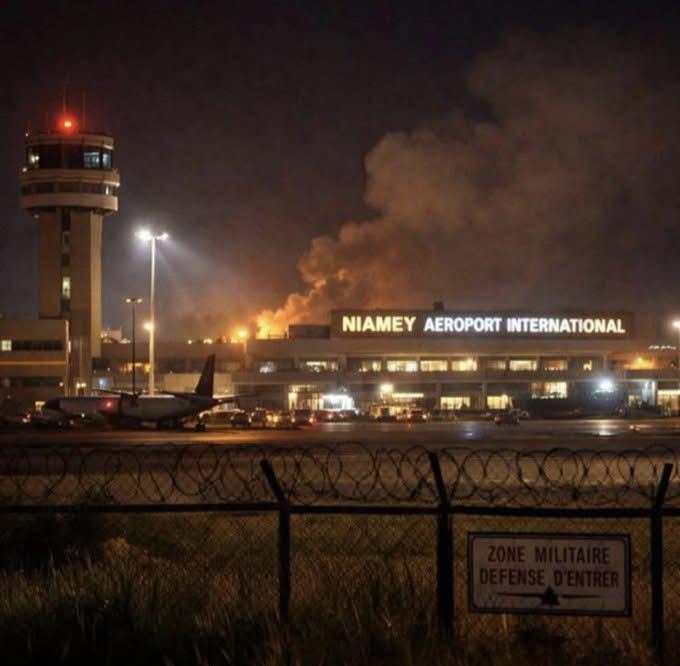
What Niamey’s Airport attack means for Niger, West Africa and Sahel
By: Zagazola Makama
Niamey woke up in the morning of Thursday to disturbing reports of heavy gunfire and explosions around the airport zone an area that hosts Niger’s air force base, the headquarters of the joint Sahel force with Mali and Burkina Faso, and a strategic stockpile of uranium.
For nearly two hours, residents heard detonations, saw flashes in the sky resembling anti-aircraft fire, and reported buildings and vehicles in flames. Calm has since returned, but clarity has not.
At the time of writing, no official statement has fully explained what happened. No group has claimed responsibility. And while authorities insist the situation is under control, the silence leaves space for speculation in a region already on edge.
The location alone makes the event highly sensitive. The Niamey airport zone is not an ordinary district. It is the nerve centre of Niger’s air power and regional military coordination. It also hosts uranium stocks, a strategic resource with both national and international implications.
Any shooting in this area automatically raises three big questions: Was this an external attack, an internal security incident, or a mutiny? Some sources suggest the firing may have come from inside the base, which points to the possibility of an internal breach or unrest. If true, this would indicate deep cracks within Niger’s security architecture.
Was a strategic asset targeted? Even if the uranium was not hit, the fact that fighting occurred near such a site elevates the risk level for Niger and its partners. What does this say about control under the current junta? Since Gen. Abdourahamane Tiani took power, Niger has continued to lose it grip on issues of national security. An incident of this scale in the capital challenges that narrative.
For Nigeria, the situation in Niger is not remote. The two countries share a long, porous border, strong trade ties, and deep security interdependence. If Niger’s capital can experience hours of unexplained gunfire around its most sensitive installations, then cross-border insecurity risks increase. Any weakening of control in Niamey could embolden armed groups across the Sahel, including those operating near Nigeria’s northern frontier.
The Sahel’s security architecture looks more fragile. Niger, Mali and Burkina Faso have positioned themselves as a new security bloc after breaking with ECOWAS. Incidents like this brings to the fore about how cohesive and effective that bloc really is. Strategic resources become geopolitical flashpoints. Uranium is not just a Nigerien issue; it has global implications. Any instability around such assets invites international concern and possible pressure.
There is no confirmed evidence yet of a foreign attack, a coup attempt, or a direct operation against uranium. So panic would be premature.
But silence is just as dangerous. In security matters, the absence of clear communication feeds rumours, conspiracy theories and political manipulation. In the Sahel’s volatile environment, that can quickly become destabilising.
What Niamey’s Airport attack means for Niger, West Africa and Sahel


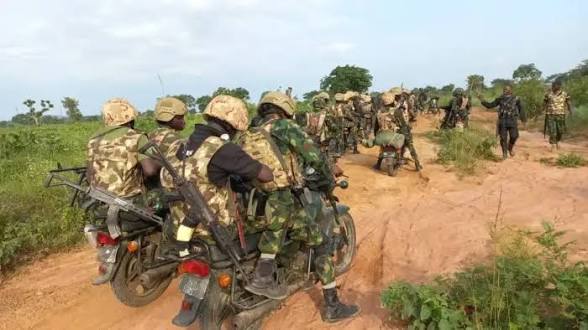
Troops rescue three abducted victims, recover ammunition in Borno
By: Zagazola Makama
Troops of Operation Hadin Kai have rescued three abducted civilians and recovered ammunition during an operation in Bama Local Government Area of Borno State.
Security sources said the operation was carried out at about 10:00 a.m. on March 30 by troops of 202 Battalion in collaboration with volunteer forces at BOCOBS.
According to the sources, the troops responded to credible intelligence indicating that suspected members of the Islamic State West Africa Province and Boko Haram had abducted three locals in the area.
The sources said the troops made contact with the insurgents and successfully rescued all three victims during the operation.
Items recovered from the scene include one AK-47 rifle magazine loaded with 30 rounds of 7.62mm special ammunition.
The sources added that the rescued victims are safe, while troops have continued to dominate the general area to prevent further incidents.
They said the operation is part of sustained efforts to protect civilians and dismantle terrorist activities across the North-East theatre.
Troops rescue three abducted victims, recover ammunition in Borno
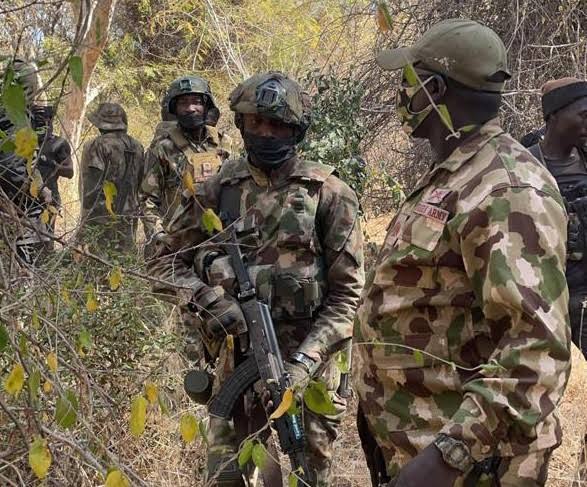
Troops repel terrorist attack in Yobe
By: Zagazola Makama
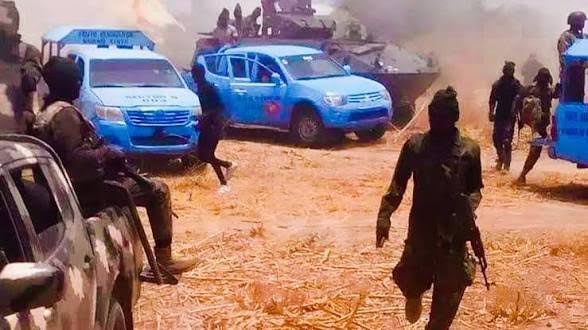
Troops of Operation Hadin Kai have repelled an attack by suspected members of the Islamic State West Africa Province and Boko Haram on a Forward Operating Base in Yunusari Local Government Area of Yobe State.
Security sources said the incident occurred at about 10:05 p.m. on March 30 at Forward Operating Base Bukarti.
According to the sources, the terrorists launched an attack on the troops’ position, prompting a fierce engagement during which the troops successfully repelled the assailants.
During the encounter, one soldier sustained injuries and has since been stabilised and is responding to treatment.
The sources added that the attackers carted away a gun truck mounted with a QJC gun, a Civilian Joint Task Force vehicle, two motorcycles, a PKT machine gun and a Baofeng radio.
They said troops have continued to maintain operational presence in the area, while efforts are ongoing to recover the stolen equipment and further degrade the capabilities of the insurgents.
Troops repel terrorist attack in Yobe
CJTF member accidentally shot by colleague in Borno
By: Zagazola Makama
A member of the Civilian Joint Task Force (CJTF) has been injured in an accidental shooting incident in Biu Local Government Area of Borno State.
Security sources said the incident occurred at about 3:50 a.m. on March 31 at the location of 162 Amphibious Battalion in Mandara-Girau.
According to the sources, the CJTF member was on duty when he was mistakenly shot in the left leg by a colleague.
The victim was immediately evacuated to the battalion’s medical facility, where he is currently receiving treatment.
Sources said the injured personnel are responding to treatment, while further details surrounding the incident are being awaited.
CJTF member accidentally shot by colleague in Borno

Troops arrest two suspected terrorist collaborators in Pulka

Troops rescue three abducted victims, recover ammunition in Borno

Troops repel terrorist attack in Yobe

Roger Federer’s Shock as DNA Results Reveal Myla and Charlene Are Not His Biological Children

THE PLIGHT OF FARIDA

FAILED COUP IN BURKINA FASO: HOW TRAORÉ NARROWLY ESCAPED ASSASSINATION PLOT AMID FOREIGN INTERFERENCE CLAIMS
-
 News2 years ago
Roger Federer’s Shock as DNA Results Reveal Myla and Charlene Are Not His Biological Children
-
Opinions4 years ago
THE PLIGHT OF FARIDA
-
 News12 months ago
FAILED COUP IN BURKINA FASO: HOW TRAORÉ NARROWLY ESCAPED ASSASSINATION PLOT AMID FOREIGN INTERFERENCE CLAIMS
-

 News2 years ago
EYN: Rev. Billi, Distortion of History, and The Living Tamarind Tree
-
 Opinions4 years ago
POLICE CHARGE ROOMS, A MINTING PRESS
-

 ACADEMICS2 years ago
A History of Biu” (2015) and The Lingering Bura-Pabir Question (1)
-

 Columns2 years ago
Army University Biu: There is certain interest, but certainly not from Borno.
-

 Opinions2 years ago
Tinubu,Shettima: The epidemic of economic, insecurity in Nigeria
