
Uncategorized
“When nations come together, we can overcome the hardest challenges”- UN Resident Coordinator Insists

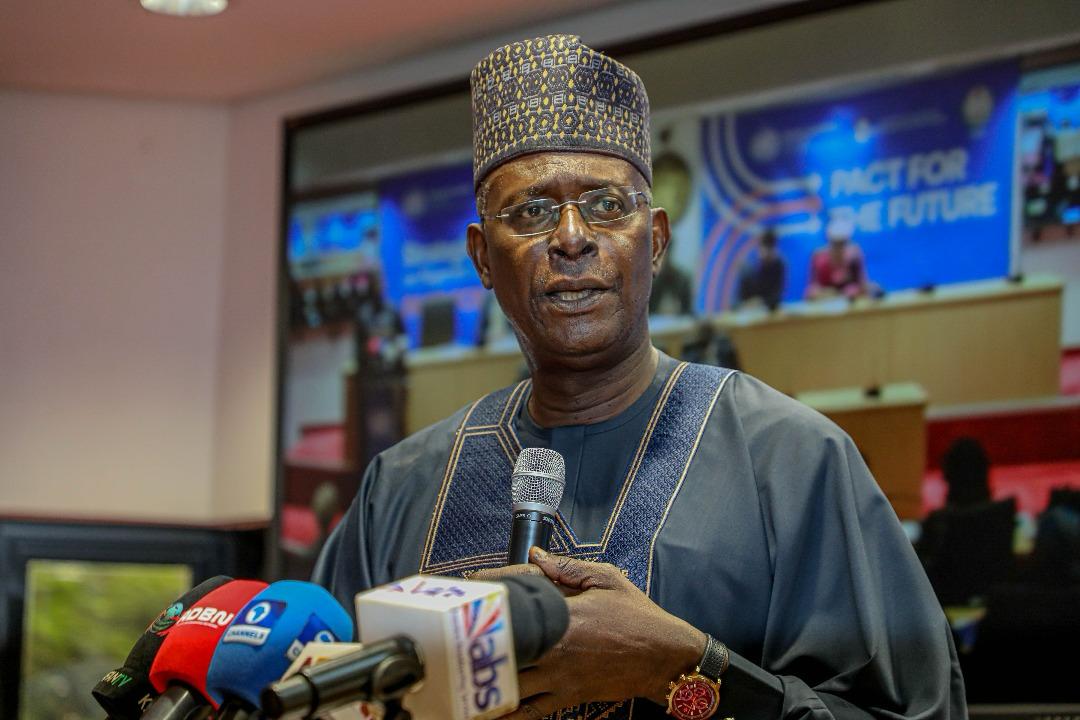
“When nations come together, we can overcome the hardest challenges”- UN Resident Coordinator Insists
By: Michael Mike
In advancing its advocacy and sensitisation of critical stakeholders on the ‘Pact for the future’, the United Nations in Nigeria in collaboration with partners, has convened a strategic dialogue on the United Nations at 80 and the Pact.
At the dialogue, convened in collaboration with the Institute for Peace and Conflict Resolution (IPCR), and the Office of Strategic Preparedness and Resilience (OSPRE), and held at the UN House in Abuja, the UN Resident and Humanitarian Coordinator in Nigeria, Mohamed Fall, reiterated the importance of international cooperation in solving the world’s most challenging issues.
He said: “Peace is fragile. Inequalities grow. Climate change accelerates. Technology advances faster than governance. Yet one truth remains constant: when nations come together, when people come together, we can overcome even the hardest challenges,” adding: “That is why the Pact for the Future matters.”
Fall further said that the Pact rested on five pillars: Sustainable development, Peace and security, Science and technology, Youth and future generations, and transforming global governance.
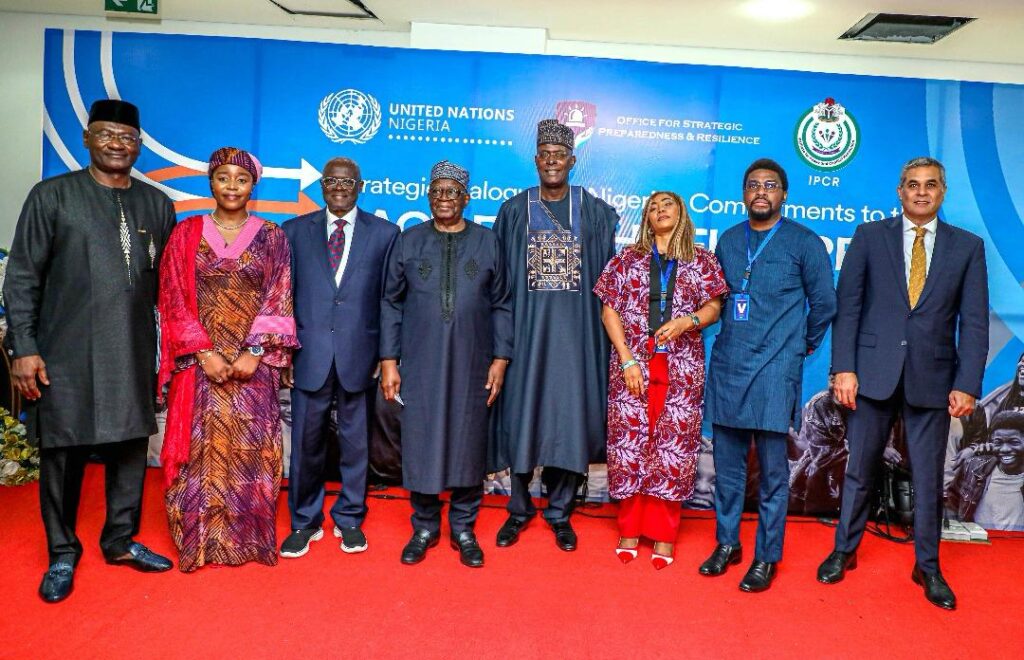
He noted that the pillars were not abstract ideas, as they represent the foundation of the world we want. A world of peace, dignity, equality, and sustainability.
“That is why the United Nations is working hand in hand with Nigeria on the Pact for the Future. We are aligning our cooperation with the five pillars of the pact and the 2030 Agenda for Sustainable Development, as we know that the SDGs are lagging. We are leaving no one behind.” The UN Resident Coordinator added.
Former Head of State and Chairman National Peace Committee, General Abdulsalam Abubakar (Rtd) said in his video message: “Dialogue must now lead to tangible results. Our commitment must be credible, time-bound and deliverable. Anything less can lead to distrust and weaken our democracy.”
To the participants he charged, “Your responsibility is to commit to concrete steps that will align every peacebuilding effort towards real progress. Nigeria’s future will be secured only by our unity of purpose and the sincerity of follow-through.”
The Chargé d’Affaires, a.i. of Nigeria’s Permanent Mission to the United Nations in New York, Ambassador Syndoph Endoni, expressed the Permanent Mission’s appreciation of the dialogue, stating that it was not merely an exchange of views, but a collective effort to advance the effective realization of the Pact for the Future and reinforce Nigeria’s peace building framework.
He disclosed that Nigeria was reviewing existing peacebuilding frameworks and initiatives by identifying key achievements, gaps, and opportunities for reform; prioritising critical areas of focus, including security sector reform, women’s participation in peace and security and youth engagement; and addressing cross-border terrorism, organized crime, and proliferation of small arms and light weapons, as well as climate-related security risks.
Speaking at the event, Director of the United Nations’s Team for Pact Implementation, Themba Kalua, underlined Nigeria’s leadership role in this new era of multilateralism. According to him, Nigeria was an active voice in negotiating the Pact, pushing for progress on poverty eradication, digital cooperation, Security Council reform and climate justice.
The Pact for the Future, he said, “strongly resonates with Africa’s Agenda 2063. Both envision a just, peaceful and prosperous continent, powered by inclusive development and regional solidarity. Aligning the Pact with African priorities and national strategies will be essential to translate words into real change. Nigeria’s experience and leadership at regional and global levels make it a vital partner in this endeavour.”
The Chairman of Savannah Centre and Nigeria’s former Minister of Foreign Affairs Professor Ibrahim Gambari, referenced the New Agenda for Peace, a United Nations policy brief, launched in July 2023 by Secretary-General António Guterres, that outlines a vision for strengthening international cooperation to prevent conflict and build sustainable peace.
Gambari, who was also a former Permanent Representative of Nigeria to the United Nations, emphasised that the Agenda remained a living guide to everyone in promoting trust, solidarity, and universality through concrete actions like investing in prevention and peacebuilding, empowering women and youth, reducing strategic risks from new technologies and climate change, and adapting to new forms of violence.
“When nations come together, we can overcome the hardest challenges”- UN Resident Coordinator Insists


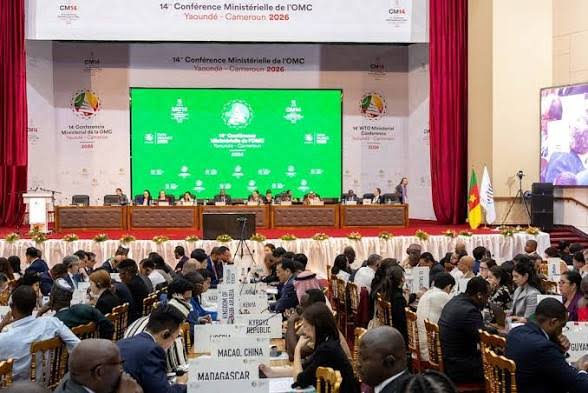
WTO Ministerial Talks Collapse as E-Commerce Tariff Deal Fails
By: Michael Mike
The 14th Ministerial Conference of the World Trade Organisation (WTO) ended in deadlock in Yaoundé, Cameroon, after member countries failed to reach consensus on extending a long-standing moratorium that prevents governments from imposing tariffs on digital transmissions.
The impasse occurred after Brazil and Turkey blocked a proposed agreement supported by most of the WTO’s 164 members to extend the moratorium on customs duties on electronic transmissions until December 31, 2030.
The breakdown halted progress on broader reform proposals championed by the United States and exposed deep divisions among member states over the future of global digital trade governance.
Reacting to the outcome, United States Trade Representative Jamieson Greer expressed frustration over what he described as a lack of seriousness among some members, noting that months of negotiations had failed to produce a compromise.
Greer said the inability to reach consensus on a digital trade issue after nearly three decades of the moratorium was a troubling signal for the future relevance of the global trade body.
“It is particularly frustrating that the WTO could not achieve consensus to make the e-commerce moratorium permanent or even extend it beyond a short period,” he said.
The moratorium, first adopted in 1998, has been periodically renewed to prevent tariffs on electronic transmissions such as software, digital media, and online services, which form a critical component of the modern digital economy.
According to Greer, despite the failure within the WTO framework, the United States has secured commitments from several major trading partners not to impose tariffs on American digital transmissions.
He added that Washington would pursue alternative arrangements outside the WTO if consensus remains impossible within the organisation.
“If the WTO cannot achieve this commonsense objective, the United States will work with willing partners to establish a plurilateral agreement on e-commerce tariffs,” he said.
Also commenting on the outcome, Deputy United States Trade Representative and U.S. Ambassador to the WTO Joseph Barloon said Washington remains committed to pushing reforms within the global trade institution despite the stalemate.
Barloon noted that although many member countries engaged constructively during the negotiations, the refusal by a few members to support the moratorium extension prevented a broader agreement that could have strengthened digital trade rules globally.
The ministerial conference, the highest decision-making forum of the WTO, brought together trade ministers and senior officials from member states to negotiate global trade policies and reforms.
During the week-long talks in Yaoundé, Greer held meetings with several counterparts including Cameroon’s trade minister Luc Magloire Mbarga Atangana, who chaired the conference, as well as representatives of least-developed countries coordinated by The Gambia.
The United States delegation also presented reform proposals aimed at modernising WTO operations and improving its capacity to address emerging trade challenges, particularly those linked to digital commerce.
However, the collapse of the talks highlighted growing tensions among WTO members over how global trade rules should adapt to the rapidly evolving digital economy.
Analysts say the failure to extend the e-commerce moratorium could introduce uncertainty for global digital trade, as countries may now consider imposing tariffs on cross-border electronic transmissions once the current arrangement expires.
WTO Ministerial Talks Collapse as E-Commerce Tariff Deal Fails
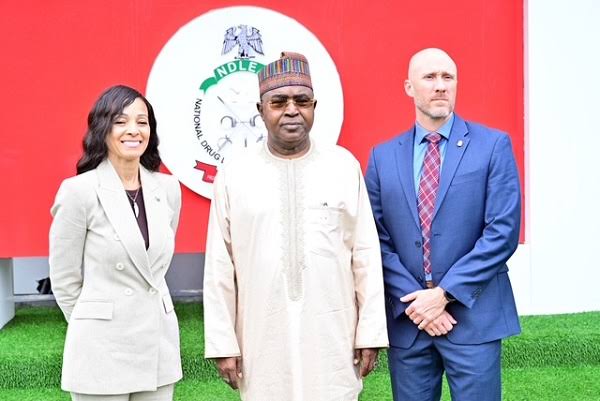
NDLEA, US-DEA Strengthen Partnership to Combat Narco-Terrorism
By: Michael Mike
The National Drug Law Enforcement Agency and the United States Drug Enforcement Administration have renewed their commitment to deepen operational collaboration aimed at dismantling international drug cartels and cutting off funding sources for terrorism and other organised crimes.
The renewed partnership was reaffirmed during a bilateral strategic counter-narcotics workshop held at the NDLEA headquarters in Abuja on Tuesday.
Speaking at the opening session, Chairman and Chief Executive Officer of NDLEA, Mohamed Buba Marwa, described the workshop as both strategic and timely, noting that it brings together law enforcement leadership from Nigeria and the United States to address evolving global drug threats.
According to him, the meeting is expected to produce a joint declaration of priorities and a coordinated action plan for the next twelve months aimed at tackling illicit drug trafficking and related crimes.
“Our shared objective is to engage in frank, solution-driven discussions that will culminate in a joint declaration of shared priorities and a coordinated action plan for the next twelve months,” Marwa said.
He warned that the global drug trade has grown increasingly complex and now has strong links with terrorism and violent extremism, a phenomenon widely referred to as narco-terrorism.
Marwa explained that proceeds from illicit drug trafficking are often used by criminal groups to fund terrorist activities and procure weapons that destabilise communities.
“The proceeds from the poison sold on our streets are the same funds used to purchase the weapons that destabilise our regions. By attacking the drug trade, we are simultaneously starving the engines of terrorism,” he stated.
The NDLEA boss also noted that Nigeria’s strategic geographic location has made it a key target for international drug trafficking organisations.
He said recent enforcement pressure on drug cartels in Latin America has forced many of the criminal networks to shift their operations toward Africa, with Nigeria increasingly being used as a transit hub for drugs destined for Europe, North America and Asia.
According to him, the development underscores the transnational nature of the threat and highlights the urgent need for stronger international cooperation.
Marwa said the workshop offers an opportunity to deepen collaboration, strengthen intelligence-driven operations and build a unified front against drug trafficking networks and their associated criminal enterprises.
He also expressed appreciation to the United States government for its continued support to Nigeria in the fight against drug trafficking.
“The key output of this workshop will be a clearly defined framework for cooperation in which Nigeria will take leadership in executing agreed action points within its jurisdiction while the United States reinforces coordinated action against our common threats,” he added.
In her remarks, the Country Attaché of the DEA in Nigeria, Daphne Morrison, commended the NDLEA for the progress recorded under Marwa’s leadership.
She said the agency’s record-breaking seizures, arrests and convictions in recent years demonstrate its commitment to tackling drug trafficking and abuse.
“I would like to acknowledge the tremendous strides NDLEA has made under the leadership of Chairman Marwa. The record-breaking seizures, arrests and convictions over the past few years are a testament to his dedication,” Morrison said.
She described the partnership between both agencies as critical in confronting transnational criminal organisations attempting to turn Nigeria into a major drug trafficking hub.
According to her, the workshop aims to strengthen intelligence sharing, enhance joint operations and provide training to equip NDLEA operatives with the capacity to address modern drug trafficking challenges.
“Our goal is to ensure that collaboration between the DEA and NDLEA remains proactive, seamless and results-driven in disrupting drug financial networks and targeting high-level traffickers,” she said.
Morrison added that the strength of the partnership lies in shared responsibility and collective action, urging participants to develop innovative strategies that would help protect communities and enhance security in both countries.
Officials from both sides expressed optimism that outcomes from the workshop would translate into stronger operational cooperation, improved intelligence exchange and more effective actions against international drug trafficking networks.
NDLEA, US-DEA Strengthen Partnership to Combat Narco-Terrorism
Uncategorized
NIGCOMSAT to Host Nigerian Satellite Week 2026 as Nigeria Marks 20 Years in Space Economy

NIGCOMSAT to Host Nigerian Satellite Week 2026 as Nigeria Marks 20 Years in Space Economy
By: Michael Mike
Nigeria’s national satellite operator, Nigerian Communications Satellite Limited, will host the second edition of Nigerian Satellite Week (NSATWK 2026) in Abuja on March 30 and 31, bringing together top policymakers, defence leaders, investors, and technology entrepreneurs to discuss the future of the country’s space and satellite industry.
The event, organised by Nigerian Communications Satellite Limited, will also coincide with the organisation’s 20th anniversary, highlighting two decades of Nigeria’s entry into the global space economy and the growing role of satellite infrastructure in national development.
According to the organisers, NSATWK 2026 is expected to attract one of the largest gatherings of stakeholders in Nigeria’s satellite and digital infrastructure ecosystem, including cabinet ministers, development finance institutions, satellite operators, and African deep-technology startups.
Speaking ahead of the event, the Managing Director and Chief Executive Officer of Nigerian Communications Satellite Limited, Jane Egerton-Idehen, said the gathering represents a defining moment for Nigeria’s space sector.
“Twenty years ago, Nigeria made a sovereign decision to own its place in space. What we are marking this week is not simply longevity; it is the compounding return on that decision. This is where we bring that work into full view and define what the next twenty years will demand of us,” she said.
She noted that the global satellite industry is entering what many analysts describe as its most consequential decade, stressing that countries seeking economic competitiveness must increasingly rely on sovereign space capabilities.
Over the past two years, Nigerian Communications Satellite Limited has expanded its footprint from operating a single satellite platform to becoming a multi-service provider delivering connectivity, broadcasting and broadband services across Nigeria and other parts of Africa.
The company’s recent milestones include a major Low Earth Orbit connectivity partnership with Eutelsat, strategic cooperation with the Kenya Space Agency, and the appointment of Egerton-Idehen as Vice Chair of the Global Satellite Operators Association, a position that places Nigeria among key players shaping global satellite policy and spectrum governance.
The two-day event will feature several key components designed to strengthen Nigeria’s satellite ecosystem. A Startup Demo Day will showcase African deep-technology ventures working on satellite applications across sectors such as agriculture, logistics, healthcare and connectivity, while a Stakeholders Forum will bring together government officials and industry leaders to discuss regulatory reforms, infrastructure development and investment opportunities.
The event will also feature the launch of Accelerator Cohort 3.0, a programme aimed at nurturing early-stage companies developing satellite-based solutions. Through the initiative, Nigerian Communications Satellite Limited hopes to strengthen Nigeria’s space-technology innovation pipeline and position the country competitively within the evolving global space economy.

Organisers said the programme will conclude with a gala night to recognise institutions, policymakers and individuals who have contributed to Nigeria’s journey in the satellite and space sector over the past two decades.
High-level Technology’s expected at the event include Nigeria’s Minister of Communications, Innovation and Digital Economy, the Chief of Defence Staff, the Director-General of the National Information Technology Development Agency, and the Managing Director of the Small and Medium Enterprises Development Agency of Nigeria.
Incorporated in 2006 and wholly owned by the Federal Government, Nigerian Communications Satellite Limited provides satellite-based telecommunications, broadcasting, broadband and navigational services to government institutions, enterprises and telecom operators across Nigeria, Africa and other regions.
NSATWK 2026, organisers say, will highlight how Nigeria’s space economy has evolved from a strategic aspiration into an active driver of digital connectivity, innovation and economic transformation.
NIGCOMSAT to Host Nigerian Satellite Week 2026 as Nigeria Marks 20 Years in Space Economy

Troops arrest two suspected terrorist collaborators in Pulka

Troops rescue three abducted victims, recover ammunition in Borno

Troops repel terrorist attack in Yobe

Roger Federer’s Shock as DNA Results Reveal Myla and Charlene Are Not His Biological Children

THE PLIGHT OF FARIDA

FAILED COUP IN BURKINA FASO: HOW TRAORÉ NARROWLY ESCAPED ASSASSINATION PLOT AMID FOREIGN INTERFERENCE CLAIMS
-
 News2 years ago
Roger Federer’s Shock as DNA Results Reveal Myla and Charlene Are Not His Biological Children
-
Opinions4 years ago
THE PLIGHT OF FARIDA
-
 News12 months ago
FAILED COUP IN BURKINA FASO: HOW TRAORÉ NARROWLY ESCAPED ASSASSINATION PLOT AMID FOREIGN INTERFERENCE CLAIMS
-

 News2 years ago
EYN: Rev. Billi, Distortion of History, and The Living Tamarind Tree
-
 Opinions4 years ago
POLICE CHARGE ROOMS, A MINTING PRESS
-

 ACADEMICS2 years ago
A History of Biu” (2015) and The Lingering Bura-Pabir Question (1)
-

 Columns2 years ago
Army University Biu: There is certain interest, but certainly not from Borno.
-

 Opinions2 years ago
Tinubu,Shettima: The epidemic of economic, insecurity in Nigeria
