News
Women CEOs form Coalition to Advance Women’s Economic Empowerment in Nigeria
By: Michael Mike
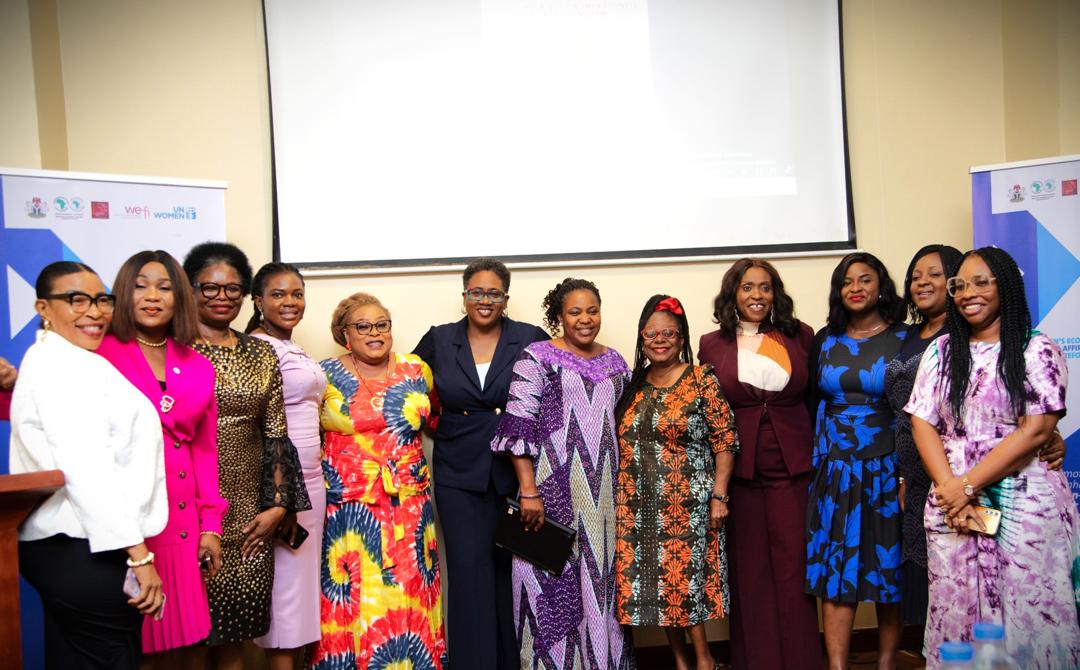
Women CEOs and relevant stakeholders have met in Lagos to form a coalition to address the gender disparity in access to economic opportunities in Nigeria and to advance women’s economic empowerment.
The coalition, according to a statement by United Nations Women on Tuesday, has one goal, make life better for women and girls by pushing for improved implementation of economic policies that will enhance women’s access to public and private procurement as well as income generating opportunities.
Nigeria has one of the highest numbers of female entrepreneurs in the world, yet women-owned businesses do not secure procurement contracts, suggesting systematic gender disparities in the procurement systems of both government and private sector organisations.
The statement added that the consensus on the positive correlation between gender equality and the socio-economic environment of a country calls for incentives to ensure equal opportunities for women entrepreneurs and their male counterparts, for instance in the form of preferential treatment for marginalized groups when it comes to procurement of goods and services.
According to the statement, the UN Women is doing this under auspices of the project: Women’s Economic Empowerment through Affirmative Procurement Reform in West and Central Africa, with funding from African Development Bank and Women’s Entrepreneurs Finance Initiative (WeFi), aimed at improving women’s economic empowerment through enhanced opportunities of women-led businesses to access public procurement and corporate supply chains.
The statement explained that the project was designed as a catalyst to support enabling environment for women to work and be financially independent as well as enhance capacities of government officials to formulate and implement gender responsive policies, noting that gender-responsive policies are crucial to achieving sustainable development, as they enable women and girls to participate fully in and benefit equally from socioeconomic opportunities, address the underlying causes of vulnerability including gender inequality.
The statement said in line with UN Women’s coordination mandate, and as part of project exit strategy, the coalition will work with existing state institutions to push for approval of the state policies, monitor government interventions and promote the economic rights of women entrepreneurs in the state. Also the coalition would be expected to push for the domestication of available legal frameworks that support women’s economic empowerment in the state. The coalition will in turn serve as key connectors to government and businesses and help to create a strong enabling environment for civil society organizations, democracy, and the rights of citizen action and participation.
UN Women Country Representative to Nigeria and ECOWAS, Ms Beatrice Eyong,, who was represented by Women’s Economic Empowerment Specialist for UN Women,
Chukwuemeka Onyimadu,, stated that, “According to the National Policy on Women’s Economic Empowerment, 30% of all public procurement opportunities should be reserved for women-owned and women-led businesses”. However, this has not been realized due to socio-economic challenges.
Leading women CEOs and representatives of women associations including WISCAR, WIMBIZ, ANWBN, AWE, AWP, WACCIMA, JONAPED and others participated in the strategic meeting, including the Director General of Lagos State Public Procurement Agency, Fatai Onafowote.
Mr. Onafowote reiterated that Lagos State is committed to improving women’s access to pubic procurement.
Women CEOs form Coalition to Advance Women’s Economic Empowerment in Nigeria
News
ActionAid: 45% women in Nigeria experience cyberstalking
By: Michael Mike
ActionAid Nigeria has decried that 45 percent of women in Nigeria have experienced cyberstalking.
It further lamented that also 10.6 percent is said to have faced doxing, which is revealing a person’s private information online to expose them to harm.
UN Women, alongside members of the Development Partners Group on Gender (DPGG) including ActionAid Nigeria, Plan International Nigeria, GIZ, TETRATECH SPRING, and CARE International in collaboration with the Federal Ministry of Women Affairs, convened a landmark National Multi-Stakeholder Dialogue on Technology-Facilitated Gender-Based Violence (TF-GBV) in Abuja.
Held as a flagship event of the 2025 16 Days of Activism against Gender-Based Violence, the dialogue brought together a broad coalition of government institutions, development partners, technology companies, law enforcement agencies, civil society organisations, digital rights groups, and survivor advocates to address the rapidly growing threat of violence against women and girls in online and digital spaces.
Technology-facilitated GBV ranging from cyber-harassment, non-consensual image sharing, online stalking, digital blackmail, hate speech, and exploitation—continues to escalate in Nigeria, yet reporting pathways remain unclear, institutional mandates overlapping, and coordination across sectors insufficient to match the complexity of digital harms.
The Civil Society Organisation, ActionAid Nigeria also revealed that women and girls especially activists, journalists, politicians, and influencers are major victims of high levels of technology-facilitated gender based violence.
Niri Goyit, Women activist and Programme Manager for Women’s Rights, ActionAid Nigeria, reeled out the data on Friday in Abuja at a National Multi-Stakeholders Dialogue on Technology-Facilitated Gender Based Violence, which was part of the #16daysofactivism 2025.
Goyit in her technical presentation: an overview of TF-GBV trends in Nigeria, listed patriarchal norms, low digital literacy, weak enforcement of online harassment laws, platform moderation gaps, and rapid spread of smartphones/apps as some of the drivers of T-FGBV in the country.
She noted that: “In Nigeria, 45% of women have experienced cyberstalking, especially women in public roles, and 10.6% have faced doxing.”
She stated further that: “Nigeria’s internet adoption has grown faster than the safeguards needed to protect users. Survivors as young as fourteen now seek help. Women in public life face coordinated attacks and gendered misinformation.”
She noted that local data shows that many women have experienced cyberstalking or doxing while thousands of sextortion linked accounts were removed by platforms.
She added that: “In Nigeria, digital spaces mirror offline gender power structures Women and girls—especially activists, journalists, politicians, and influencers—face high levels of threats, coordinated harassment, image-based abuse, and doxing.”
She also stated that: “Women and girls across all ages are affected, but some groups face heightened vulnerability: dolescent girls (12–17) and young women (18–35) due to early, frequent social media use and limited control over privacy.
Other vulnerable groups are Women in public roles — journalists, activists, politicians, influencers.
The aim, according to the activist is to silence or discredit them.
On the impact of TF-GBV on victims, Goyit said it includes withdraw or self-censor, reducing women’s civic participation and economic opportunities.
“TFGBV affects survivors in several ways. Emotionally it causes fear, anxiety and trauma. Socially many withdraw from relationships or communities due to shame. Economically some lose jobs or avoid opportunities. Online threats also escalate into physical danger especially when private information is exposed,” she explained further.
She blamed systemic challenges for low implementation of the laws against TF-GBV, saying “Several challenges stand in the way. Laws have not kept pace with digital realities. Many officers do not have the skills to handle digital evidence. Society often dismisses online abuse as jokes. Platforms act slowly and case management systems are weak. These issues combined create major obstacles for survivors.”
Noting the challenges, the ActionAid officer urged for collaboration among all stakeholders.
She stressed that “No single institution can handle TFGBV alone. Government agencies must provide clear pathways for reporting and investigation. Law enforcement needs support from digital experts. SARCs must connect with cybercrime units. Civil society offers survivor centred approaches while technology companies must improve takedowns and cooperation. When all actors work together survivors are protected more effectively.”
She however said: “Nigeria does not need entirely new laws that will take years to pass. The country can update the laws it already has to match today’s digital realities. Real progress will come from collaboration, clarity and survivor centred systems. When institutions adapt and work together Nigeria can build a safer digital environment for all.”
In his goodwill Message, the Country Director, ActionAid Nigeria, Mr. Andrew Mamedu reiterated the commitment of AAN to ending all forms of GBV including TF-GBV.
He also called on all the stakeholders to join in preventing the menace.
Mamedu who was represented by Goyit said: “At ActionAid Nigeria, our commitment to ending all forms of GBV including TF-GBV—remains firm.
“We work in communities to challenge harmful norms, support survivors, strengthen access to justice, engage men and boys, and build the capacity of women-led organisations.
“We recognise both the opportunities and risks of digital platforms, and we remain committed to ensuring that technology empowers rather than harms women and girls.”
He therefore urged all partners—government, civil society, private sector, media, development partners, and community leaders—to renew their shared commitment to preventing and responding to all forms of GBV.
Special Adviser to the President on Women’s Health, Dr. Adanna Steinaker, representing the Minister of Women Affairs, Mrs. Imaan Sulaiman-Ibrahim noted that:
“As technology evolves, so must our responses. Technology should be a tool for empowerment, not a weapon of abuse. As a nation, we are committed to building systems that protect women and girls in every space—including the digital world. This dialogue moves us closer to a Nigeria where online safety, accountability, and justice are guaranteed for all.”
”Technology-facilitated violence is one of the fastest-growing threats to gender equality. On behalf of UN Women, I reaffirm our commitment to working with the Government of Nigeria and all partners to ensure that women and girls can participate in digital spaces without fear. This dialogue is a critical step toward a coordinated national response that protects rights, amplifies accountability, and builds a safer future for all.” UN Women Acting Deputy Country Representative – Ms. Patience Ekeoba who spoke on behalf of the Country Representative to Nigeria and ECOWAS.
ActionAid: 45% women in Nigeria experience cyberstalking
News
Residents urged to take up employment in the Lassa General Hospital
By: Bodunrin Kayode
Residents of Lassa town have been urged to take up instant employment in the General Hospital Lassa in the southern senatorial zone of the state.
Borno State Governor, Babagana Zulum said this while on a visit to the facility which is in Lassa town recently.
The Governor decried the deliberate shying away from working in the General hospital by residents with ancestry from the town or the council area.
Zulum regretted that most of the residents with qualified medical background come home only for important holidays and run back but refuse to work for the growth of their town.
The Governor who was on a sympathy tour of the Lassa General hospital recently vowed to change the fortune of the hospital if only trained Borno doctors will be bold to pick the instant employment waiting for them in lassa.
He assured that he was going to recruit as much as five doctors to assist the hospital which has not had a doctor since 2020 when Dr Danladi the last Principal medical doctor died.
The Governor assured that he will do all he can to ensure that the promised employment is effected as soon as the doctors or nurses show up to start work.
Lassa General hospital built by missionaries in 1928 before independence became a recognized secondary facility with the full complements of medical doctors and nurses.
However, as at today the they not only lack doctors but also nurses, medical and health record workers and all manner of health workers that should run a renown facility like this General hospital.
Residents urged to take up employment in the Lassa General Hospital
News
VP Shettima: Traditional institutions Remain Irreplaceable, Will Be Preserved Under President Tinubu
By: Our Reporter
Vice President Senator Kashim Shettima has reiterated the commitment of the administration of President Bola Ahmed Tinubu to the preservation and protection of traditional institutions in Nigeria.
According to him, traditional rulers are the closest to the grassroots are the leaders and fathers of the society, and their institutions outlive every administration.

Senator Shettima gave the assurance on Friday during the the 45th Anniversary of the Emir of Gumel, HRH, Alhaji Ahmed Mohammed Sani II, and the Commissioning of Gumel Central Mosque in Gumel local government area of Jigawa State.
The Vice President stated that the tenure of every elective political office holder ends after eight years but the traditional institutions remains.
“Therefore, we must respect them, we must take care of them, and we must preserve as well as protect the institution,” he added.
The Vice President, who congratulated the Emir of Gumel for celebrating his 45th anniversary in good health, prayed Almighty God to spare the life of the traditional ruler to witness his Golden Jubilee and centenary celebrations.

“I am quite glad to be back home. Gumel is home. Founded in 1750 by Danjuma, this Emirate has a rich history. When Danjuma died in 1754, he was succeeded by his son, and our royal father who is celebrating his 45th anniversary as the Emir of Gumel is the 13th Emir of Gumel. He is a graduate of Political Science.
“He was a Commissioner in the cabinet of the late former governor of old Kano State, Alhaji Abubakar Rimi, before he was elevated to the throne of his ancestors. May Allah continue to bless him with good health and may his reign be long.”
VP Shettima also paid glowing tribute to His Eminence, the Sultan of Sokoto, Alhaji Muhammed Sa’ad Abubakar III, saying the Sultan “is truly a leader worthy of emulation by us all.

“He (Sultan) is a symbol of our unity. Last week, he was in Kaduna. Hardly a week passes without the Sultan criss-crossing the length and breath of this country building bridges. Your Eminence, we are very grateful to you. May Allah bless you with sound health and long life,” the Vice President said.
Senator Shettima also applauded the Governor of Jigawa state, Mallam Umar Namadi, for cultivating 10,000 hectares of wheat, which, according to him, is more than what the entire 18 northern states cultivated.
“Your Excellency, we thank you; we are mightily proud of you. May the Almighty Allah continue to strengthen our unity and understanding, ” VP Shettima said.
Earlier, Governor Namadi thanked the Vice President Shettima for honouring the invitation by the Jigawa State Government and Gumel Emirate to grace the 45th Anniversary of the reigning Emir of Gumel and the commissioning of Gumel Central Mosque.

“Your Excellency, we are deeply grateful to you for honouring us with your presence at this historic ceremony. On behalf of the Government and good people of Jigawa State, especially the people of Gumel Emirate, we thank you most sincerely for your unwavering commitment to the progress and development of our dear state, ” Governor Namadi said.
Also, the Sultan of Sokoto and President General of the Nigeria Supreme Council for Islamic Affairs (NSCIA), Abubakar III, preached unity, tolerance, and mutual respect among all Nigerians irrespective of their religious and cultural diversity.
The Sultan, who congratulated the Emir of Gumel for marking his 45th anniversary celebration, commended the Vice President for his dedication and commitment to the preservation of traditional institution, peace, unity and development of the country.
Other dignitaries who graced the celebration are the Deputy Chief of Staff to the President (Office of the Vice President), Senator Ibrahim Hassan Hadeija; Minister of Agriculture and Food Security, Senator Abubakar Kyari; former member of the House of Representatives, Hon. Farouk Adamu Aliyu; Deputy Governor of Jigawa State, Alhaji Aminu Usman, and the Speaker of Jigawa State House of Assembly, Hon. Haruna Dangaji.
Others include the Emir of Machina, HRH, Alhaji Bashir Albishir Bukar Machinama; Emir of Dutse, HRH, Muhammad Hameem Nuhu Sanusi, Emir of Hadejia, HRH, Alhaji Adamu Abubakar Maje; members of the Jigawa State Executive Council, and some members of the National Assembly, among others.
VP Shettima: Traditional institutions Remain Irreplaceable, Will Be Preserved Under President Tinubu
-
News2 years agoRoger Federer’s Shock as DNA Results Reveal Myla and Charlene Are Not His Biological Children

-
Opinions4 years agoTHE PLIGHT OF FARIDA
-
Opinions4 years agoPOLICE CHARGE ROOMS, A MINTING PRESS
-
News2 years agoEYN: Rev. Billi, Distortion of History, and The Living Tamarind Tree
-
News8 months agoFAILED COUP IN BURKINA FASO: HOW TRAORÉ NARROWLY ESCAPED ASSASSINATION PLOT AMID FOREIGN INTERFERENCE CLAIMS
-

ACADEMICS2 years agoA History of Biu” (2015) and The Lingering Bura-Pabir Question (1)
-

Columns2 years agoArmy University Biu: There is certain interest, but certainly not from Borno.
-

Opinions2 years agoTinubu,Shettima: The epidemic of economic, insecurity in Nigeria