
News
Yobe Govt hails VP’s Office, NEDC for organizing 1st Batch In-Person training of 100 Teachers under ASSEP


Yobe Govt hails VP’s Office, NEDC for organizing 1st Batch In-Person training of 100 Teachers under ASSEP
By: Inusa Salihu
The Yobe State Government under the leadership of Governor Mai Mala Buni has hailed Office of the Vice -President, Senator Kashim Shettima and the North East Development Commission (NEDC) for launching the first batch In-Person two-day training of 100 Secondary School Teachers under the Accelerated School Support Education Program (ASSEP).
Besides, all the benefitting teachers are from Science, Technology, Engineering, Mathematics and Agriculture (STEMA) subjects.

Addressing the participants, the Yobe State Focal Person, Hon. Mulima Idi Mato, said, the gesture would compliment efforts of the present administration which is committed to transform or enhance good quality of education across the state, even as he urge them to pay attention throughout the training exercise.
He added that, governor Buni since inception declared state of emergency in the education sector, pointing out that, even in the 2025 Appropriation Bill which was recently presented to the State House of Assembly, a substantial amount of over N108 billion was allocated to the sector.
“Let me use this opportunity to commend the initiators of this laudable program aim to provide quality of education in our dear land.
“As we started the first batch training with 100 Teachers across various schools in the state, more teachers are to benefit from the next batches, as they are all expected to cascade the knowledge gained down for better teaching and learning.

“I urge all participants to pay serious attention throughout the exercise for the betterment of our teachers, students and parents/guardians in Yobe state”. Mato stated.
Declaring the programme open in Damaturu, the state capital, Personal Assistant Domestic & North-East Affairs, office of the Vice-President, Comrade Mahmud Muhammad said, the gesture which are to be in batches, is intended to cover teachers in public and private schools across the North East states of Borno, Yobe, Bauchi, Taraba, Adamawa and Gombe.
Muhammad also said, the exercise is inline with the education revitalization commitment under the supervision of the Senior Special Assistant on Regional
Development to the President, office of the Vice President, Dr. Mariam Masha with support from NEDC and Project Implementation Team (PIT).
“I am honored to recognize Vice President Kashim Shettima’s Visionary Leadership in Launching the Accelerated School Support Education Program (ASSEP), which aim to transform education quality in the northeast region in line with President Bola Ahmed Tinubu’s Renewed Hope Agenda and education revitalization commitment under the supervision of the Senior Special Assistant on Regional Development to the President, office of the Vice President, Dr. Mariam Masha with support from the NEDC and PIT.
“May I on behalf of the Project Implementation Team (PIT) use this medium to commend the continuous efforts of the Yobe State Government under the dynamic leadership of Hon. Mai Mala Buni, in uplifting the standard of education in the state.
” To our hardworking teachers, your participation in the 1 -Million Teachers’ Black Belt virtual training reflects an exceptional commitment to excellence.
“This in-person training marks a significant step in skill enhancement, aligning our teaching practices with global standards to elevate educational quality and inspire students’ achievement.
“His Excellency, Governor Mai Mala Buni, underscored the importance of education in Yobe by declaring a state of emergency on Basic and Secondary education in his first inaugural speech in 2019. His vision aligns with the timeless belief that ‘Education is the most powerful weapon which you can use to change the world’. (Nelson Mandela).
“This declaration has led to substantial reforms, investments in infrastructure, and an increased focus on training for quality education, ensuring that our youth are equipped for success.
“As we evaluate the impact of this training through student assessments and performance metrics, we are hopeful that Yobe will be part of the leading state.
“We extend our sincere gratitude to all partners for their steadfast support, with special appreciation to the NEDC and the MD/CEO Alhaji Mohammed Alkali for their essential sponsorship, which has played a critical role in bringing this program to life, which would help to shape a brighter, more prosperous future for the Northeast region”. Muhammad said.
Also in his remarks, the Team Lead, Mr. Gbenga Ojo said, the training will provide needed skills and knowledge for the teachers to enable them deliver lectures and reposition the education sector for a better, so that, students would be able to write reports, memos, design websites, speak good english and cope with modern realities.
Yobe Govt hails VP’s Office, NEDC for organizing 1st Batch In-Person training of 100 Teachers under ASSEP


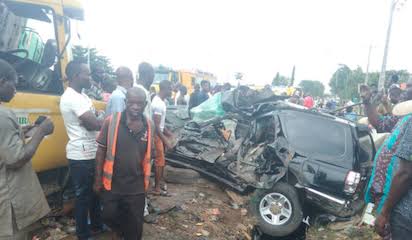
Six die, 12 injured in Kwara road crash
By: Zagazola Makama
Six persons have been confirmed dead and 12 others injured in a fatal road traffic accident along the Okolowo–Jebba expressway in Kwara State.
Police sources said the accident occurred at about 6:00 a.m. on April 2 near Danjuma Bakery area, involving a Toyota Hummer bus and a stationary truck.
According to the sources, the bus with registration number BTR-161-XA was conveying 18 passengers from Lagos State to Katsina State when it rammed into a parked truck with registration number BUU-495-ZD.
The truck was reportedly driven by Kamarudeen Abdullahi, said to be from Jos North Local Government Area of Plateau State.
The impact of the collision resulted in the death of six passengers on the spot, while 12 others sustained varying degrees of injuries.
The injured victims were rushed to the University of Ilorin Teaching Hospital, Oke-Oyi, for medical attention, while the remains of the deceased were deposited in the hospital morgue for autopsy.
Police said investigation had commenced to determine the circumstances surrounding the crash.
Six die, 12 injured in Kwara road crash
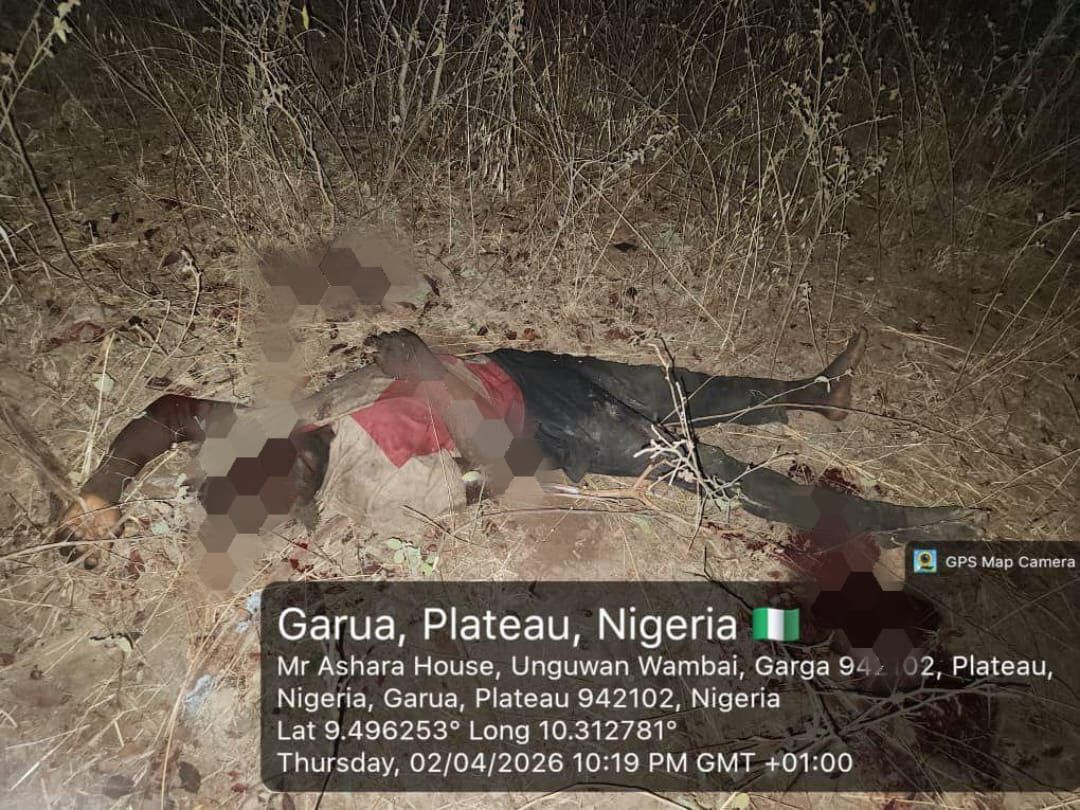
Troops neutralise three suspected terrorists in Plateau
By: Zagazola Makama
Troops of Sector 2 Operation Enduring Peace have neutralised three suspected terrorists during an ambush operation at Karem village in Wase Local Government Area of Plateau State.
Security sources said the operation was carried out at about 9:00 p.m. on April 2 following credible intelligence on the movement of armed men on three motorcycles heading towards the community.
The sources disclosed that troops swiftly mobilised and laid an ambush along the route leading into the village.
“Contact was made with the terrorists, and troops engaged them with superior firepower, resulting in the neutralisation of three of the assailants,” the source said.
He added that a follow-up exploitation of the scene led to the recovery of the bodies of the neutralised suspects.
However, no weapons or motorcycles were recovered, as fleeing members of the group were believed to have evacuated them during the encounter.
The source said efforts were ongoing to track and intercept the fleeing suspects, with troops maintaining high morale and operational readiness.
Troops neutralise three suspected terrorists in Plateau

Gunmen attack Zamfara governor’s chief of staff, occupants escape unhurt
By: Zagazola Makama
Gunmen suspected to be bandits on Thursday evening opened fire on the convoy of the Chief of Staff to the Zamfara State Governor, Alhaji Mouktar Lugga, along the Funtua–Gusau highway.

The incident occurred at about 6:16 p.m. near Kucheri village while Lugga was returning to Gusau from an official engagement.
Sources said the assailants emerged from both sides of the road and opened fire on the vehicle conveying the chief of staff, his driver and two other occupants.

A bullet reportedly pierced the vehicle’s windshield and narrowly missed the driver, while another attacker attempted to fire at close range but the weapon failed to discharge.
Despite the attack, the driver managed to steer the vehicle out of the ambush, and all occupants escaped unhurt.
Gunmen attack Zamfara governor’s chief of staff, occupants escape unhurt

Police arrest newly recruited suspected ISWAP member in Kwara

Six die, 12 injured in Kwara road crash

Troops neutralise three suspected terrorists in Plateau

Roger Federer’s Shock as DNA Results Reveal Myla and Charlene Are Not His Biological Children

THE PLIGHT OF FARIDA

FAILED COUP IN BURKINA FASO: HOW TRAORÉ NARROWLY ESCAPED ASSASSINATION PLOT AMID FOREIGN INTERFERENCE CLAIMS
-
 News2 years ago
Roger Federer’s Shock as DNA Results Reveal Myla and Charlene Are Not His Biological Children
-
Opinions4 years ago
THE PLIGHT OF FARIDA
-
 News12 months ago
FAILED COUP IN BURKINA FASO: HOW TRAORÉ NARROWLY ESCAPED ASSASSINATION PLOT AMID FOREIGN INTERFERENCE CLAIMS
-

 News2 years ago
EYN: Rev. Billi, Distortion of History, and The Living Tamarind Tree
-
 Opinions4 years ago
POLICE CHARGE ROOMS, A MINTING PRESS
-

 ACADEMICS2 years ago
A History of Biu” (2015) and The Lingering Bura-Pabir Question (1)
-

 Columns2 years ago
Army University Biu: There is certain interest, but certainly not from Borno.
-

 Opinions2 years ago
Tinubu,Shettima: The epidemic of economic, insecurity in Nigeria
