
News
Yobe State’s Education Sector Gets a Boost with ASSEP

Yobe State’s Education Sector Gets a Boost with ASSEP
By: Our Reporter
Stakeholders in Yobe State’s education sector have praised the Accelerated Senior Secondary Education Programme (ASSEP) for its transformative impact on the state’s education system.
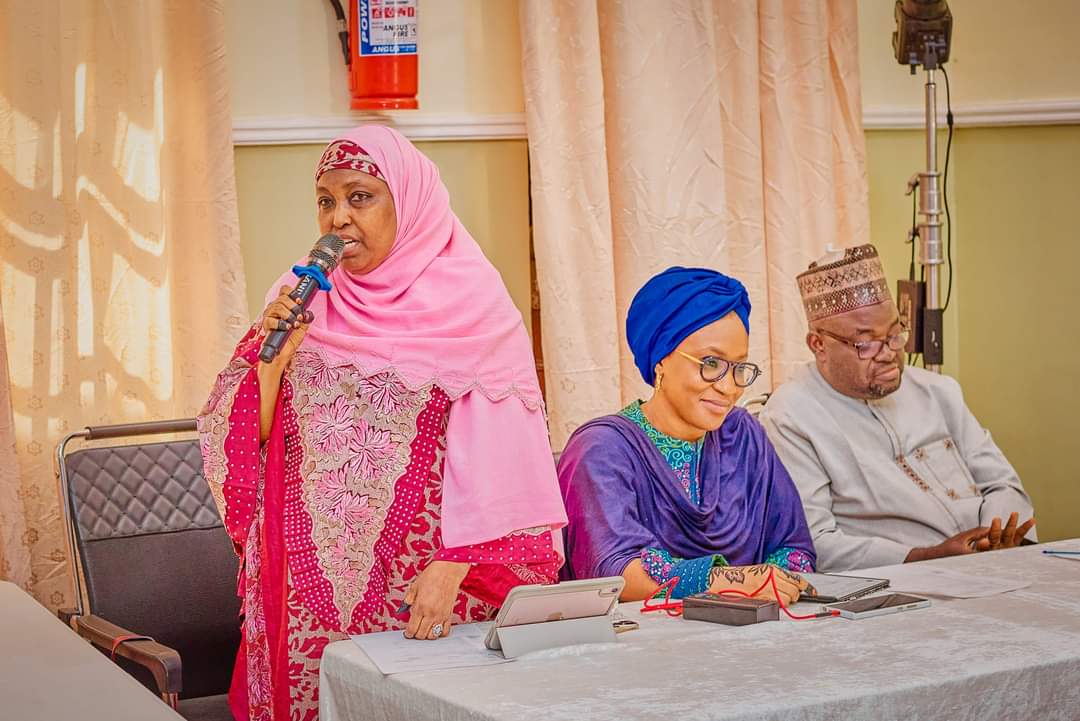
The commendation came during a recent engagement session between the Project Implementation Team and stakeholders at the Sand Dunes Hotel in Damaturu.
Yobe State teachers have shown promising results in the ASSEP teacher training program, with encouragement to further participation.
Teachers Benard Antso and Ladi Disa praised ASSEP for revolutionizing education, enhancing productivity, and understanding.
Antso described ASSEP as a “good initiative by the Federal Government” that will transform schools, teachers, and students.
Commissioner for Basic and Secondary Education, Professor Abba Idris Adam, praised the Federal Government for initiating ASSEP, assuring that Yobe State will maximize ASSEP’s potential to improve education outcomes.
Professor Adam said ASSEP components align with the Yobe state vision of educational transformation and charges the teachers to seize the opportunity to personally develop themselves and shore up their experience and career growth.
Hajiya Sa’adatu Ahmed Shehu, Chairperson of the Project Implementation Team, commended the Yobe State Government’s commitment to education, saying the state government’s payment of WAEC, NECO, and NABTEB examination fees demonstrates its support for ASSEP’s goals.
In a remark, Dr. Mariam Masha, Senior Special Assistant to the President on Regional Developments Programmes, highlighted ASSEP’s focus on Science, Technology, Engineering, Mathematics, and Agriculture (STEMA).
“This will drive future development and human empowerment in Nigeria’s North East,” she said.
Masha explained that the North East Development Commission (NEDC) supports ASSEP’s success and sustainability.
The engagement session brought together key stakeholders, including the Commissioner for Basic and Secondary Education, Professor Abba Idris Adam, Permanent Secretary, Bukar Aji Bukar.
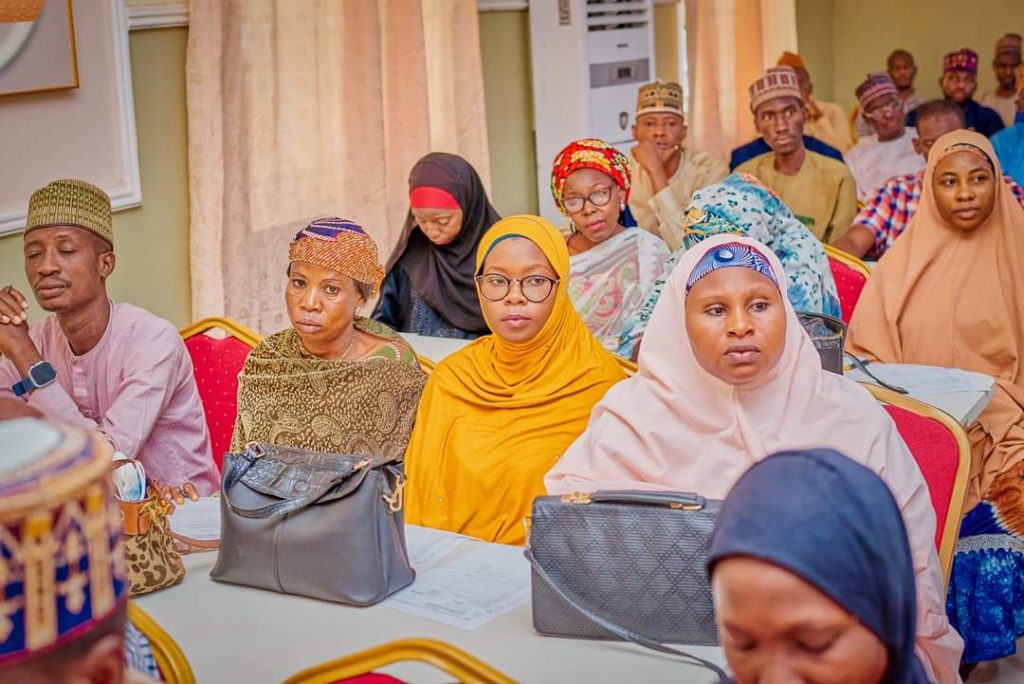
Others are representatives of All Nigeria Conference of Principals of Public Schools (ANCOPPS), Nigerian Union of Teachers, representative of Emir of Damaturu, delegation from the Nigerian Turkish International Colleges (NTIC) who ASSEP partners and other education sector stakeholders.
Meanwhile the Project Implementation Team conducted site visits to Government Girls Unity College, Government Secondary School, Business and Engineering Skills Training Centre, Yobe State Information Technology Development Agency (housing the Centre for Artificial Intelligence and Robotics) among others.
The Accelerated Senior Secondary Education Programme (ASSEP) is poised to transform Yobe State’s education sector.
With government support, stakeholder engagement, and a focus on market-relevant knowledge, ASSEP is set to improve education outcomes and empower future generations.
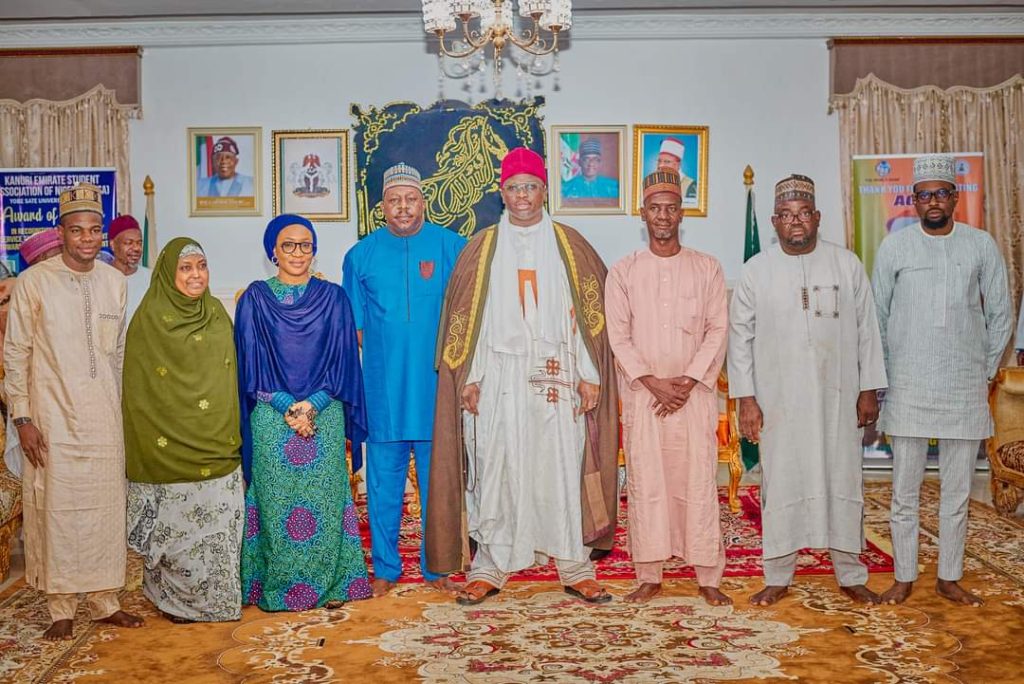
The PIT team also paid courtesy calls on the Secretary to the State Government, Baba Mallam Wali and the Emir of Damaturu, His Royal Highness, Alhaji Shehu Hashimi II Ibn Umar Al-Amin El-Kanemi.
Yobe State’s Education Sector Gets a Boost with ASSEP


JNIM terrorists clashes with rival factions in rare encounter in Nigeria’s Kebbi state
By: Zagazola Makama
A suspected clash between rival terrorists factions has been reported in Kebbi State, raising fresh security concerns in the North-West region.
Sources said the incident occurred on April 4, when a group identified as Jama’at Nusrat al-Islam wal-Muslimin (JNIM) claimed it engaged a rival faction described as “Khawarij”.
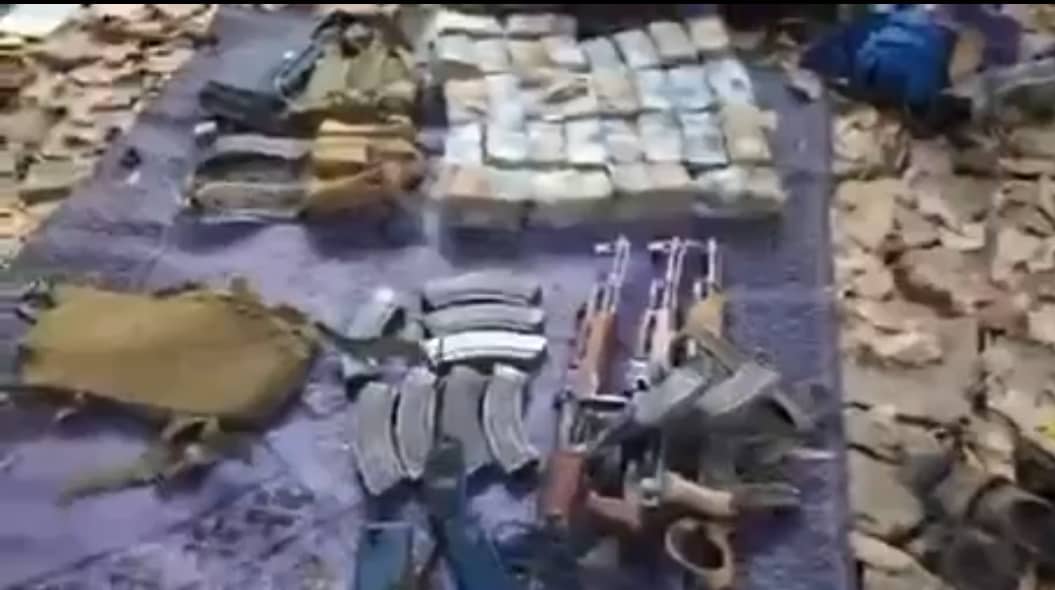
The group alleged that one fighter was killed and another captured during the encounter, while three motorcycles and about N10 million were recovered.
However, the identity of the opposing group has yet to be independently verified.
Preliminary indications suggest the rival faction may be linked to Boko Haram or one of its splinter groups, though this remains subject to confirmation.
Security sources said the development could represent one of the first reported inter-jihadist clashes in the region.
JNIM terrorists clashes with rival factions in rare encounter in Nigeria’s Kebbi state
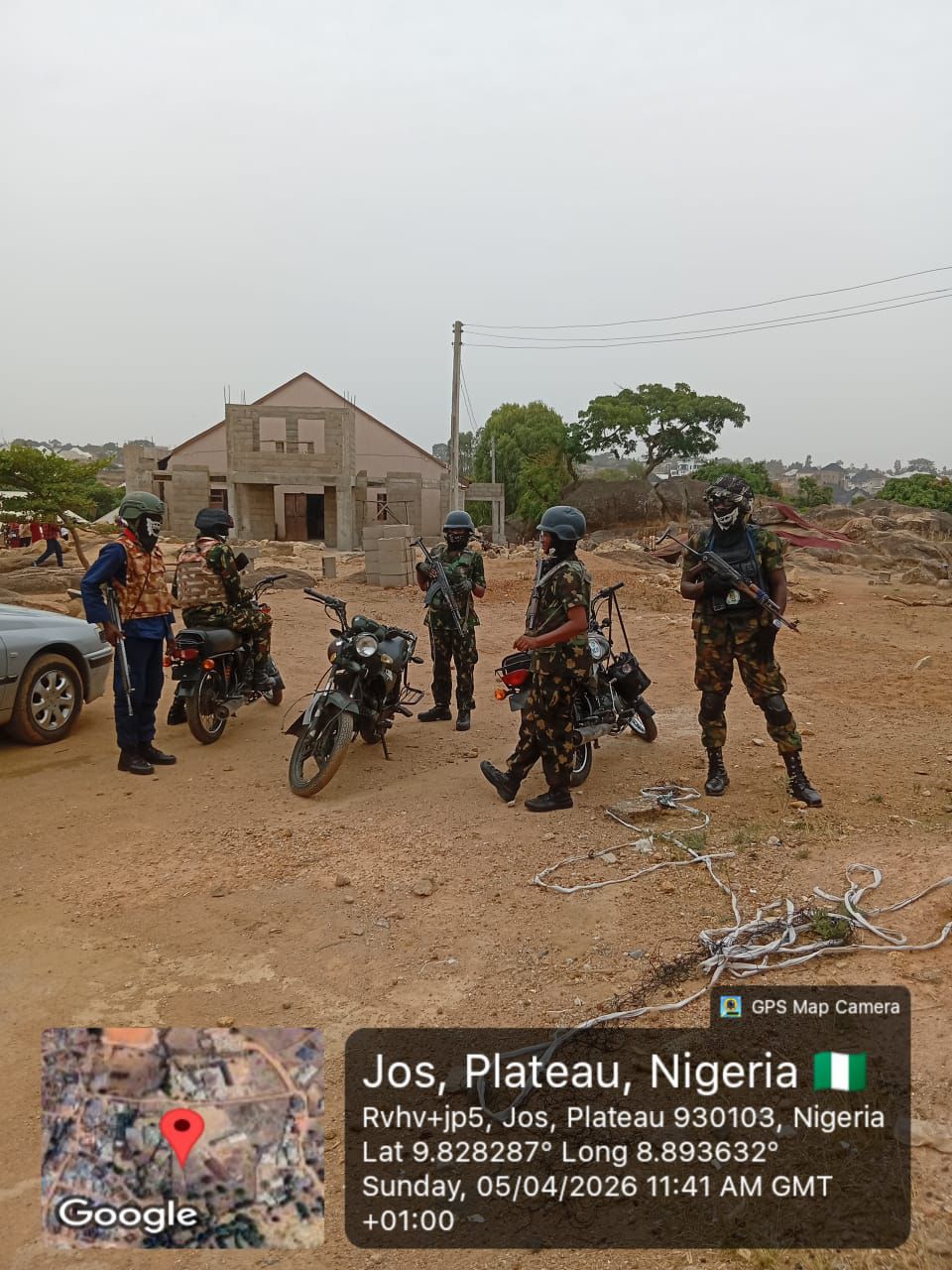
Troops foil mob attack, rescue suspected terrorist in Danmusa in Katsina
By: Zagazola Makama
Troops of 17 Brigade have foiled an attempt by a mob to lynch a suspected terrorist and burn down a police station in Danmusa Local Government Area of Katsina State.
Security sources said the incident occurred at about 4:30 p.m. on April 5, 2026, when troops deployed at Combat Team 1 in Danali village responded to a distress call from a Nigerian Police outpost in the area.
The police had reported that a large crowd attempted to set the station ablaze and attack personnel after a suspected terrorist was brought into custody.
Troops were immediately mobilised to the scene and successfully prevented further escalation of the situation, restoring order in the area.
During the intervention, police personnel reportedly fired tear gas to disperse the irate crowd, which led to injuries sustained by one civilian.
The injured victim was evacuated to a medical facility for treatment.
Security sources said calm had since returned to the area, while troops continued to maintain presence to prevent a resurgence of violence and ensure stability.
Troops foil mob attack, rescue suspected terrorist in Danmusa in Katsina
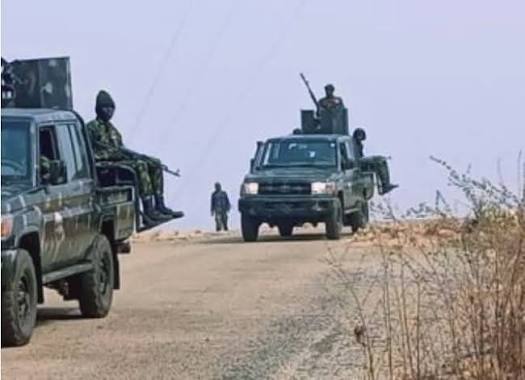
Plateau: troops launch manhunt after armed robbery attack in Bassa LGA
By: Zagazola Makama
Troops of Operation Enduring Peace have launched a manhunt for suspected armed robbers who attacked three civilians along the Jebbu–Miango–Rewienko road in Bassa Local Government Area of Plateau State.
Security sources said the incident occurred at about 8:55 p.m. on April 5, 2026, when the victims were reportedly ambushed by armed men who dispossessed them of their motorcycles before fleeing the scene.
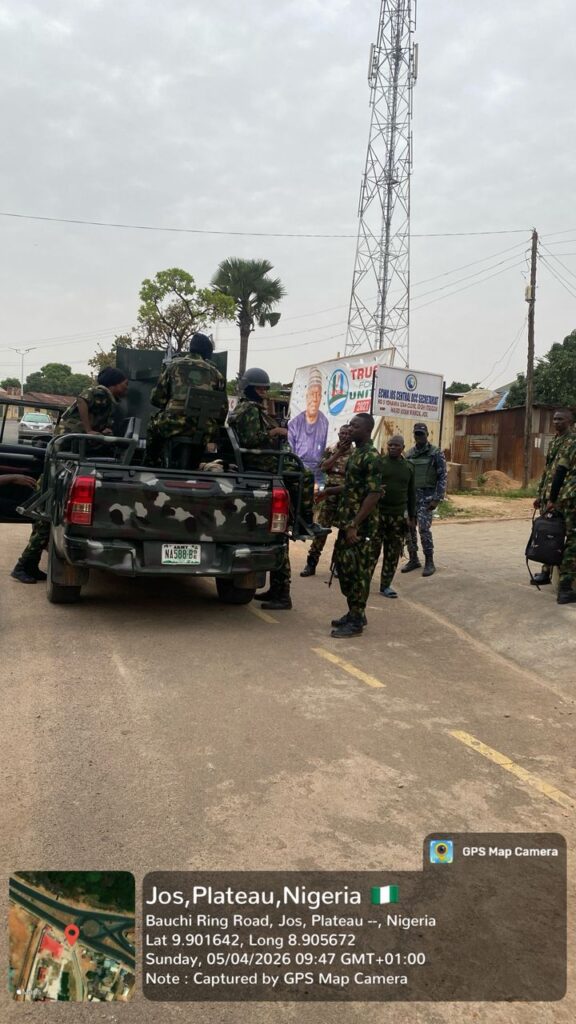
Troops of Sector 3 Operation Enduring Peace were immediately mobilised following the distress call but arrived after the attackers had escaped.
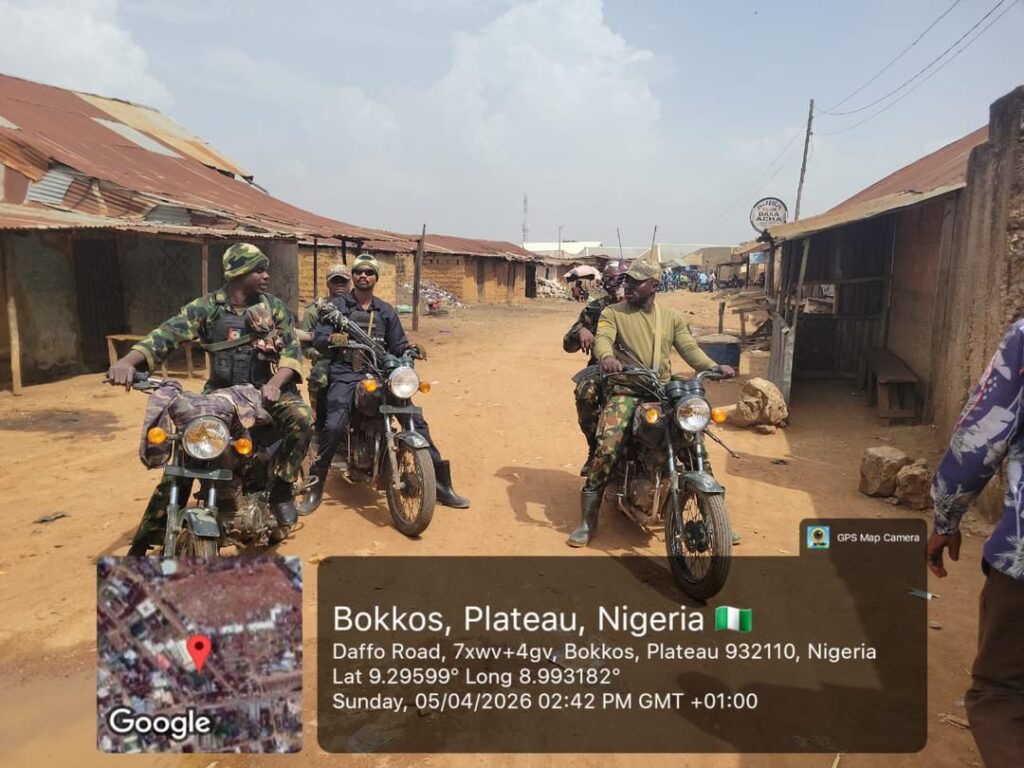
Efforts are ongoing to track and apprehend the fleeing suspects, while patrols have been intensified in the area to prevent further criminal activity.
Plateau: troops launch manhunt after armed robbery attack in Bassa LGA

JNIM terrorists clashes with rival factions in rare encounter in Nigeria’s Kebbi state

Troops foil mob attack, rescue suspected terrorist in Danmusa in Katsina

Plateau: troops launch manhunt after armed robbery attack in Bassa LGA

Roger Federer’s Shock as DNA Results Reveal Myla and Charlene Are Not His Biological Children

THE PLIGHT OF FARIDA

FAILED COUP IN BURKINA FASO: HOW TRAORÉ NARROWLY ESCAPED ASSASSINATION PLOT AMID FOREIGN INTERFERENCE CLAIMS
-
 News2 years ago
Roger Federer’s Shock as DNA Results Reveal Myla and Charlene Are Not His Biological Children
-
Opinions4 years ago
THE PLIGHT OF FARIDA
-
 News12 months ago
FAILED COUP IN BURKINA FASO: HOW TRAORÉ NARROWLY ESCAPED ASSASSINATION PLOT AMID FOREIGN INTERFERENCE CLAIMS
-

 News2 years ago
EYN: Rev. Billi, Distortion of History, and The Living Tamarind Tree
-
 Opinions4 years ago
POLICE CHARGE ROOMS, A MINTING PRESS
-

 ACADEMICS2 years ago
A History of Biu” (2015) and The Lingering Bura-Pabir Question (1)
-

 Columns2 years ago
Army University Biu: There is certain interest, but certainly not from Borno.
-

 Opinions2 years ago
Tinubu,Shettima: The epidemic of economic, insecurity in Nigeria
