
Uncategorized
Zulum Pledges Reforms for 2025 Hajj Operations


Zulum Pledges Reforms for 2025 Hajj Operations
By: Our Reporter
Borno State Governor, Professor Babagana Umara Zulum, has reaffirmed his commitment to enhancing the annual Hajj pilgrimage to the Holy Land for better performance.
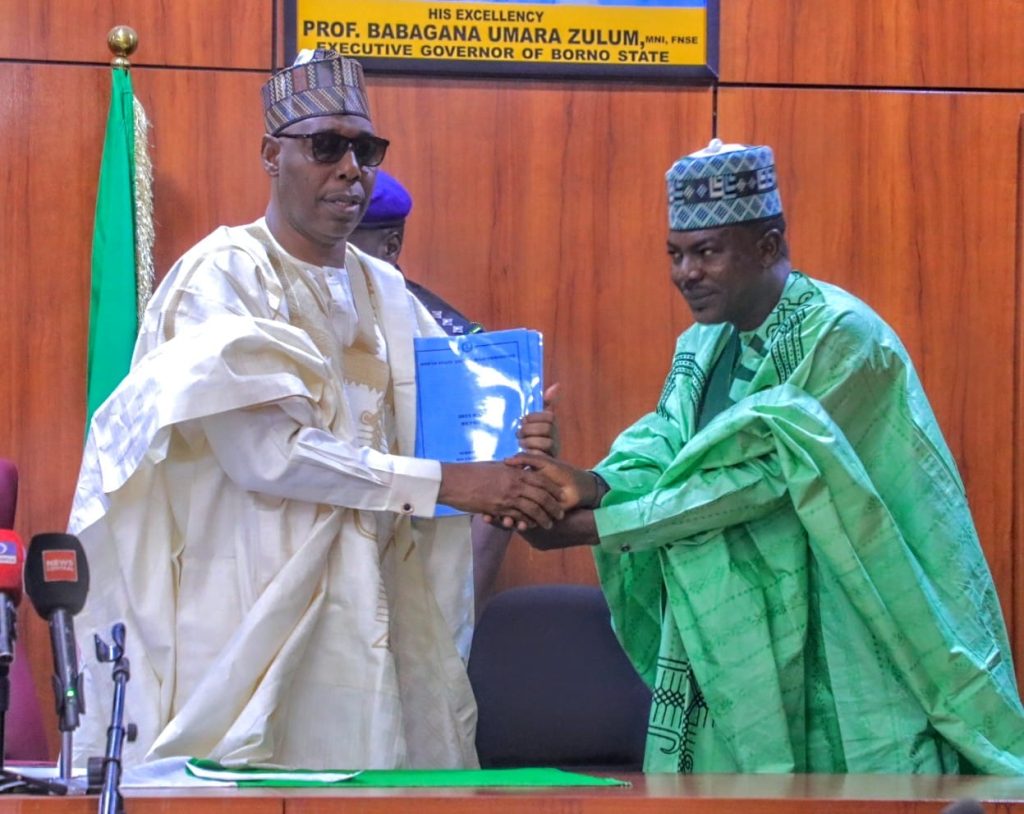
The Governor made the pledge during the presentation of the 2024 Hajj report by the Amirul Hajj team, led by the Chairman of the Committee and Senator representing Borno Central, Senator Kaka Shehu Lawan, at the Government House on Monday.
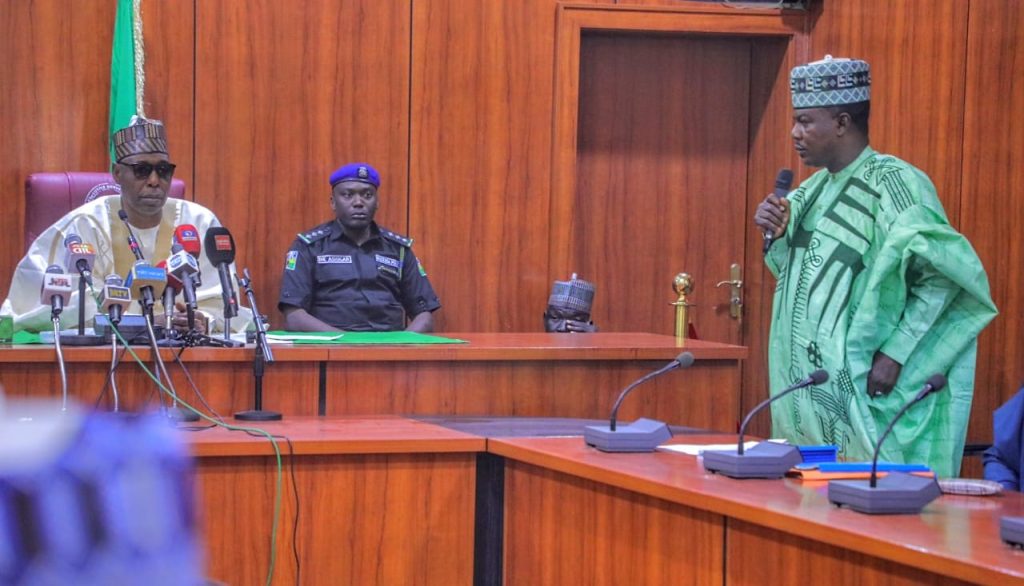
Zulum described the 2024 Hajj as one of the most successful in recent years. “I want to assure you that during my tenure, “we have not seen such a degree of success in recent years. I was impressed by the way and manner our pilgrims were airlifted from Maiduguri to Madina and Jidda to Maiduguri,” Zulum stated.
He expressed particular satisfaction with the smooth airlift operations, the quality of services provided, the dedication of the Amirul Hajj team, and the conduct of the pilgrims.”
“I will continue to sanitise the system for greater productivity,” Zulum stated.
The governor also assured the public that he would review the report thoroughly and work towards implementing the recommendations. “Within the next few hours, I will go through the report clause by clause to ensure we implement the valuable suggestions made,” he promised.
Commending the committee for introducing innovative solutions, Governor Zulum highlighted the use of online media to inform pilgrims about their flight schedules and the publication of pilgrim names to ensure smooth operations. “The previous practice of calling names throughout the night, which was inefficient, has been eliminated,” he noted.
The Governor declared that, moving forward, the Borno State government will no longer cover the cost of excess luggage for defaulting pilgrims. “We have done it this year, but we will not do it next year. If anyone reports to the airport with excess luggage, they will bear the cost themselves,” Zulum stated.
He directed the Executive Secretary of the Pilgrims Board to inform all intending pilgrims for 2025 of this new policy.
Additionally, Governor Zulum called for the deployment of technology and the engagement of local government Hajj fare collectors to identify and eliminate individuals posing as pilgrims in the Holy Land.
Chairman 2024 Amirul Hajj team, Senator Kaka Shehu Lawan, announced that 1,803 pilgrims performed the 2024 Hajj, five pilgrims hospitalised in the Holy Land with no death recorded.
According to him, Governor Zulum has rendered enormous support to the pilgrims in areas of securing befitting accommodation in Mecca, covering the differential for Basic Travel Allowances (BTA) to the tune of 260 million naira, and payment of sacrificial animals amounting to 290 million naira.
Others include payment of 65 million Naira to the National Hajj Commission (NAHCON) as medical support and 25 million for excess luggage.
“His Excellency has extended hands of fellowship to the entire 1,815 pilgrims, the Amirul Hajj team, and the National Hajj Commission by extension. Some of the support rendered by Governor Zulum to the pilgrims while in the Holy Land includes the release of 380 million naira to secure a befitting accommodation in Mecca, covering BTA differentials, and payment of Hadya for all the pilgrims, among other things,” Lawan said.
Senator Kaka Shehu identified excess luggage as one of the challenges faced during the 2024 Hajj operations and emphasised that the success of this year’s pilgrimage was largely due to the unwavering support provided by Governor Babagana Zulum.
Zulum Pledges Reforms for 2025 Hajj Operations



Troops foil motorcycle snatching attempt, rescue victims in Kaduna
By: Zagazola Makama
Troops of 4 Demonstration Battalion have foiled an attempted motorcycle snatching and rescued two civilians along the Zaria–Kaduna highway in Igabi Local Government Area of Kaduna State.
Security sources said the incident occurred at about 5:45 a.m. on April 10 near Old Berger Camp.
The sources disclosed that troops deployed at the Forward Operating Base (FOB) Birnin Yero responded swiftly to a distress call about an attack on two civilians riding a motorcycle towards Zaria.
“On arrival, the troops discovered that the victims had been forced to stop by a vehicle conveying suspected criminals, who were in the process of loading the motorcycle into their car trunk.
“However, the criminals abandoned the motorcycle and fled the scene upon sighting the troops,” the source said.
The injured victims were evacuated for medical attention, while the recovered motorcycle is in the custody of the troops.
Efforts are ongoing to track down the fleeing suspects and bring them to justice.
Troops foil motorcycle snatching attempt, rescue victims in Kaduna
Uncategorized
NHRC Raises Alarm Over Rising Human Rights Violations, Records 659,617 Complaints in Q1 2026
NHRC Raises Alarm Over Rising Human Rights Violations, Records 659,617 Complaints in Q1 2026
By: Michael Mike
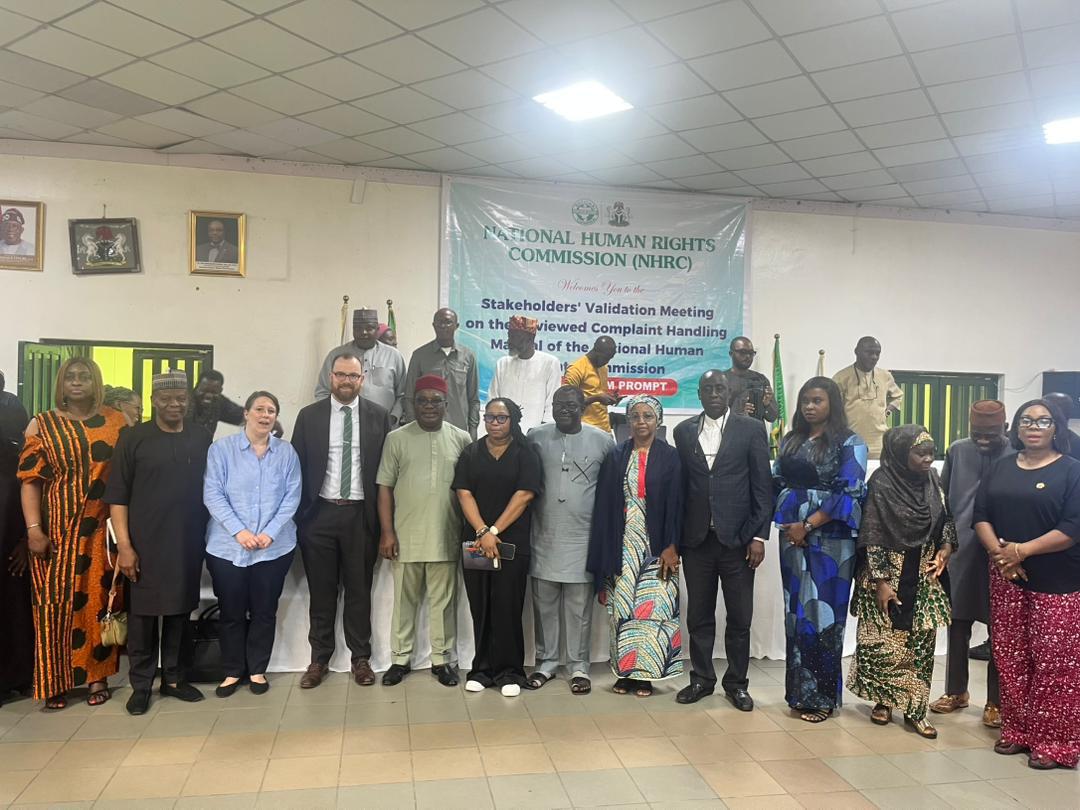
The National Human Rights Commission (NHRC) has raised fresh concerns over a worsening human rights and security situation in Nigeria, disclosing that it received 659,617 complaints and recorded 992 killings in the first quarter of 2026, amid rising cases of discrimination, insecurity, and abuse across the country.
Presenting the January–March 2026 Human Rights Situation Dashboard in Abuja, the Senior Adviser to the Commission, Hilary Ogbona, said the data reflected both an escalation in violations and improved public reporting, warning that the trends point to deepening national challenges in governance, security, and social protection.
Ogbona explained that complaints increased consistently across the quarter, with 180,341 cases in January, 223,144 in February, and 256,132 in March, adding that the dominant category of complaints remained freedom from discrimination, followed closely by cases linked to law enforcement misconduct and violations of human dignity.
“For the months of January to March 2026, we recorded 659,617 human rights complaints in the Commission.”
He said the Commission’s Human Rights Observatory also captured incidents beyond formal petitions, revealing widespread insecurity-related abuses, including killings, abductions, communal violence, and sexual and gender-based violence across multiple states.
According to him, mass killings peaked in February 2026, making it the deadliest month of the quarter, driven largely by insurgent attacks, banditry operations, communal clashes, and mob violence in several regions.
“Mass killings across Nigeria reached an all-time high, especially in the month of February.”
The report showed that the North-Central zone recorded the highest number of complaints, followed by the North-West and North-East, with Abuja (FCT), Benue, Niger, Plateau, and Kaduna among the most affected states. Ogbona noted that reporting structures in the FCT also contributed to its high ranking due to combined data from multiple NHRC offices.
The adviser further highlighted growing concerns over gender-based violence and violations against children, including sexual assault, abandonment, trafficking risks, and denial of access to care. He described the situation as a “serious protection crisis,” especially for vulnerable populations.
“We have seen an upsurge in gender-based violence and discrimination.”
He also disclosed that child rights violations remained widespread, with child abandonment emerging as the most frequent category, alongside rising incidents of exploitation and domestic abuse. In addition, mob justice and “home action killings” were identified as increasing contributors to overall fatalities.
The NHRC report further indicated that out of the 992 killings recorded, a significant proportion were attributed to bandit groups, Boko Haram insurgents, and unknown gunmen, while others stemmed from communal clashes, cult-related violence, and mob actions. Road and boat accidents were separately recorded at 197 deaths and not included in the main security tally.
Justice sector institutions and partners at the event commended the NHRC for strengthening transparency through its dashboard system.
A representative of the Police Service Commission, Barista Dada, described the dashboard as a critical accountability mechanism for monitoring police conduct and enforcing discipline within the Nigeria Police Force.
“The dashboard has become an official platform upon which human rights compliance in Nigeria can be assessed monthly, quarterly.”
He added that findings from the NHRC reports are increasingly being used to validate allegations of misconduct and guide disciplinary action against officers.
Similarly, Barista Bamidele, speaking on behalf of the Director-General of the Legal Aid Council of Nigeria, said the dashboard exposed systemic weaknesses in Nigeria’s justice system, particularly delays in investigations and trials.
“The incessant abuse of human rights and systemic delays in handling of investigations, criminal trials, ineffective administration creates justice gaps.”
He stressed that the Legal Aid Council views the initiative as essential for improving access to justice and supporting victims of human rights violations across the country.
The Executive Secretary of the NHRC, Dr. Tony Ojukwu, said the dashboard has continued to receive international recognition, including presentations at the United Nations in Geneva, where it was highlighted as an innovative model for human rights monitoring.
“I was recently honoured to speak on the Dashboard at the United Nations in Geneva, reflecting global recognition of our efforts.”
He added that the Commission is working to sustain the dashboard beyond donor support, describing it as a permanent tool for accountability, transparency, and policy guidance.
The NHRC warned that the first quarter 2026 figures underscore urgent national challenges requiring coordinated action across all levels of government. It called for stronger institutional accountability, improved security responses, and deeper collaboration with civil society, development partners, and the media to curb rising human rights violations and restore public confidence in governance and justice systems.
NHRC Raises Alarm Over Rising Human Rights Violations, Records 659,617 Complaints in Q1 2026
Police rescue four kidnapped victims in Sabuwa Katsina after foiling bandits attack
By: Zagazola Makama
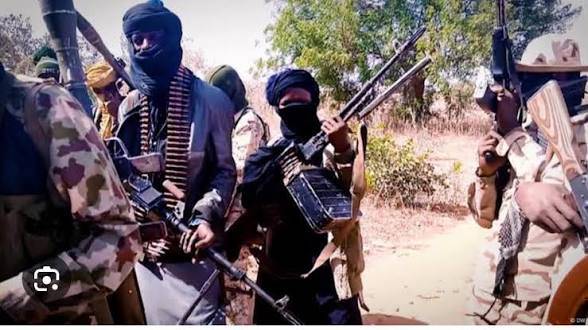
Police operatives in Katsina State have foiled a bandit attack along the Sabuwa–Kaya road and rescued four kidnapped victims unhurt.
Security sources told Zagazola that the incident occurred at about 8:17 p.m. on April 9 near Unguwar Liman village in Sabuwa Local Government Area.
According to the sources, a large number of armed bandits blocked the highway and abducted four persons before the Divisional Police Officer (DPO) mobilised tactical teams to the scene.
The sources said the police engaged the bandits in a gun duel, forcing them to retreat into the forest with possible gunshot injuries.
The victims were rescued during the operation and were confirmed to be in good condition.
They were identified as Alhaji Sani Kadanya, 50, of Tashar Kadanya village, Birnin Gwari LGA; Basiru Aminu, 27, of Kutaimashi village, Birnin Gwari LGA; Aliyu Musa, 30, of Unguwar Gajere village, Birnin Gwari LGA; Ummi Bello, 20, of Sabuwa LGA; and Abubakar Abdullahi, 35, also of Unguwar Gajere village.
Security sources said the area had been cordoned off for clearance operations aimed at tracking down the fleeing suspects.
Police rescue four kidnapped victims in Sabuwa Katsina after foiling bandits attack

Zulum Donates ₦50m to Family of Fallen Officer, Reaffirms Support for Military Heroes

MSF Ramps Up Emergency Response as Lassa Fever Outbreak Deepens in Benue

Troops foil motorcycle snatching attempt, rescue victims in Kaduna

Roger Federer’s Shock as DNA Results Reveal Myla and Charlene Are Not His Biological Children

THE PLIGHT OF FARIDA

FAILED COUP IN BURKINA FASO: HOW TRAORÉ NARROWLY ESCAPED ASSASSINATION PLOT AMID FOREIGN INTERFERENCE CLAIMS
-
 News2 years ago
Roger Federer’s Shock as DNA Results Reveal Myla and Charlene Are Not His Biological Children
-
Opinions4 years ago
THE PLIGHT OF FARIDA
-
 News12 months ago
FAILED COUP IN BURKINA FASO: HOW TRAORÉ NARROWLY ESCAPED ASSASSINATION PLOT AMID FOREIGN INTERFERENCE CLAIMS
-

 News2 years ago
EYN: Rev. Billi, Distortion of History, and The Living Tamarind Tree
-
 Opinions4 years ago
POLICE CHARGE ROOMS, A MINTING PRESS
-

 ACADEMICS2 years ago
A History of Biu” (2015) and The Lingering Bura-Pabir Question (1)
-

 Columns2 years ago
Army University Biu: There is certain interest, but certainly not from Borno.
-

 Opinions2 years ago
Tinubu,Shettima: The epidemic of economic, insecurity in Nigeria
