
News
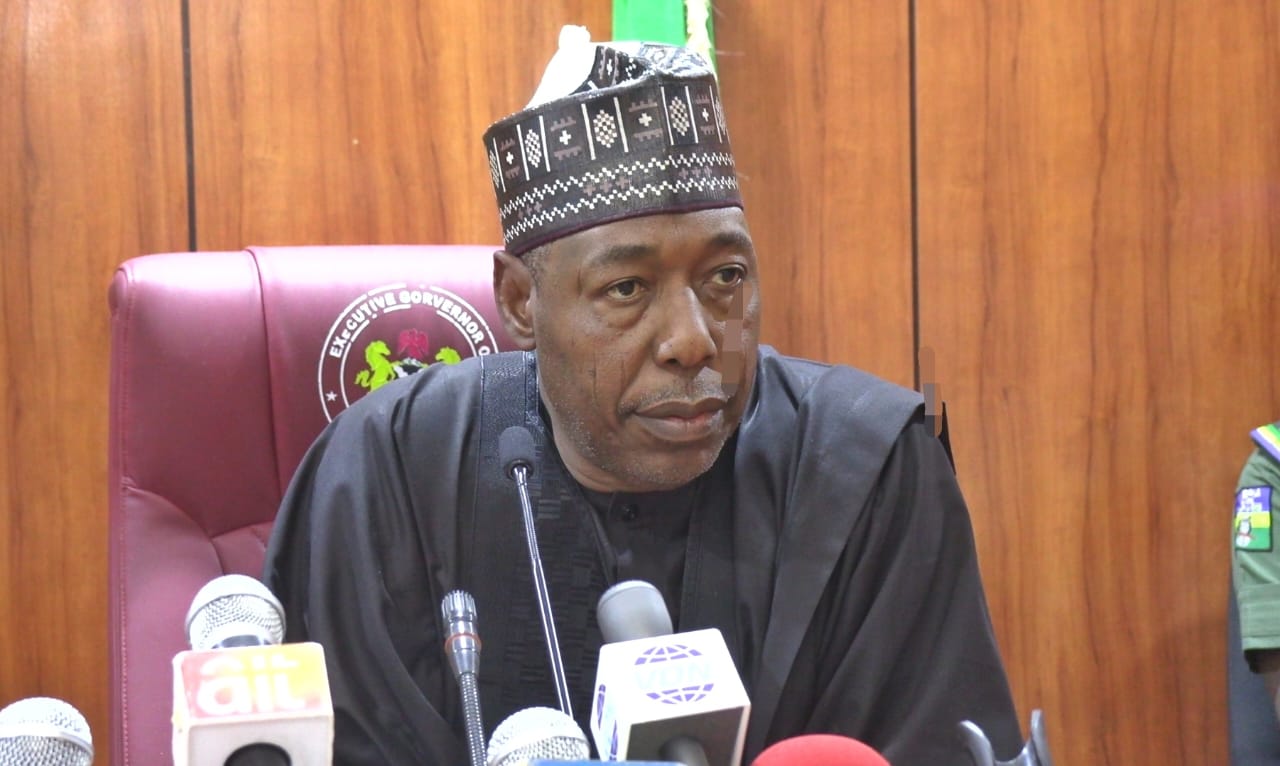
Zulum pledges support for Leather and Hides Industry to boost Borno economy

Zulum pledges support for Leather and Hides Industry to boost Borno economy
By: Our Reporter
Borno State Governor, Professor Babagana Umara Zulum, has reiterated his administration’s commitment to revitalizing the leather and hides industry in the state to drive economic growth.
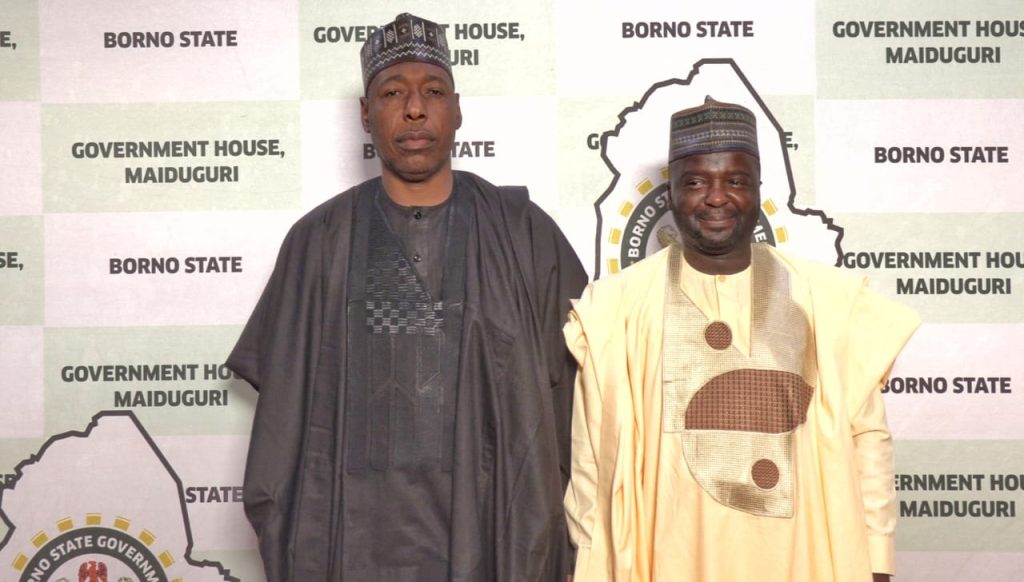
Zulum made the commitment on Thursday during a courtesy visit by the Director General of the Nigerian Institute of Leather Science and Technology (NILEST), Dr. Auwal Mustapha Imam, at the Government House, Maiduguri.
Governor Zulum emphasized the sector’s critical role in not only advancing Borno State’s economy but also contributing to the nation’s economic development.
He highlighted the state’s efforts to revive the Neitel Shoes Company which had been dormant for over two decades, noting that with continued political will, significant transformation in the leather industry is achievable.
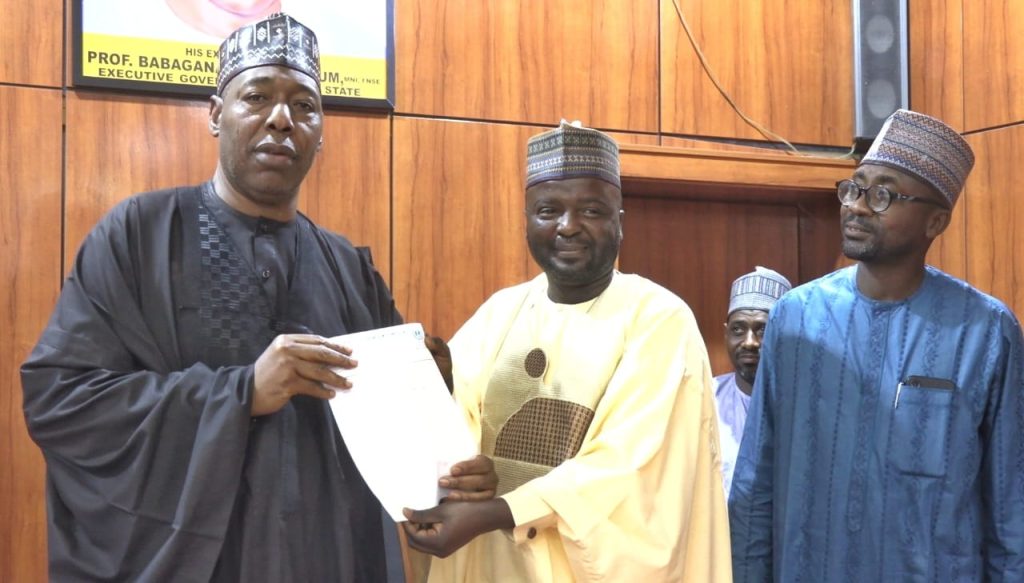
He hailed the upgrade of the Maiduguri Extension Centre of NILEST to a Regional Centre, a move that will enhance coordination of leather-related activities across six states in the region.
He expressed strong support for the sector stating, “We will give you the desired support to promote the sector. With the degree of seriousness, we can achieve success. However, where there is corruption, progress will be difficult. Let me assure you that the government of Borno State will work with you and your team for the growth and development of the leather industry.”
Governor Zulum further directed the Commissioner for Commerce and Industry, Mr. Tarpaya Asarya, to collaborate with NILEST to create job opportunities for unemployed youths, promote capacity building, and facilitate other benefits linked to the sector’s growth.
The governor also ordered the immediate dispatch of 60 Borno State indigenes to NILEST in Zaria for training in leather technology, footwear design, and innovation.
“As the Chairman of the Presidential Committee on Leather Policy, we aim to thoroughly study the policy document to explore more opportunities for growth and partnerships,” Governor Zulum added.
In response to recent flood damage, the governor also instructed the reconstruction of the Centre’s damaged perimeter fence and the allocation of two housing units for staff members of the institute.
Director General and CEO of NILEST, Dr. Auwal Mustapha Imam, announced that the Maiduguri Extension Centre has officially been upgraded to the Northeast Regional Centre, with Borno State indigene, Dr. Usman Ali Busuguma, appointed as the new Northeast Regional Manager.
He expressed his appreciation to the governor for his keen interest in ensuring productivity in leather and leather products.
Zulum pledges support for Leather and Hides Industry to boost Borno economy


Military airstrikes eliminate scores of ISWAP terrorists in Borno operations
By: Zagazola Makama
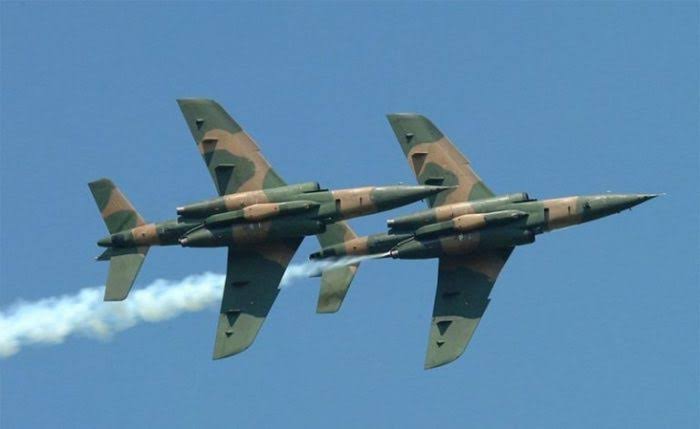
Precision air interdiction missions conducted by the Nigerian Air Force component of Operation HADIN KAI have eliminated scores of ISWAP terrorists in separate coordinated strikes at Kangarwa and Ali Jilamari areas of the Northern Tumbuns in Borno State.
Military sources told Zagazola Makama that the operations were executed on April 1, following credible intelligence and confirmatory Intelligence, Surveillance and Reconnaissance (ISR) missions.
The source said the first strike was carried out at about 12:05 p.m. on ISWAP enclaves in Kangarwa, a known terrorist stronghold, after ISR conducted on March 27 confirmed mass movement of fighters within the location.
According to him, airborne surveillance identified multiple terrorists operating around and inside structures within the enclave before precision munitions were delivered in successive attack passes.
He said the targeted structures were completely destroyed, with scores terrorists neutralised in the strike, while others scampered for safety in different direction.
In a separate operation at about 4:45 p.m. the same day, the air component conducted another interdiction mission at Ali Jilamari, described as a newly established terrorist hideout in the Northern Tumbuns.
The source said the mission followed credible human intelligence and ISR confirmation, which revealed active terrorist logistics hubs and structures within the area.
He added that the air platforms engaged the targets with precision strikes, destroying identified structures and logistics hubs while eliminating additional terrorists.
The source described the operations as part of sustained air offensives aimed at degrading terrorist capabilities and denying them freedom of movement in the Lake Chad Basin.
Military airstrikes eliminate scores of ISWAP terrorists in Borno operations

VeryBlackDarkMan denies inciting violence in plateau, gives detailed defence of viral comments
By: Zagazola Makama
Popular social media personality, Martins Vincent Otse, also known as VeryBlackDarkMan, has issued a detailed response to allegations that he incited violence during the recent unrest in Plateau, insisting that his remarks were taken out of context and misrepresented.
The controversy followed a viral video in which Otse, reacting to the March 29 attack in Angwan Rukuba, made statements that critics interpreted as a call to violence.
Otse urged residents not to rely on government intervention, saying: “If you keep quiet and wait for the government… it won’t be the first time, it won’t be the second time… when does this stop? You promise us security, but nobody is secure!”
The content creator also appeared to call for a shift from passive reactions to active confrontation, stating: “No be only Boko Haram sabi kill, no be only bandit sabi kill. All of us fit kill… all of us na Killers, until you ready. No ever to say you no get the mind. You fit kill person. You can kill people. And for these people oh my God.
He added: “Please protect yourselves and don’t wait for the government.”
He further called on the “To the people of Rukuba Enough is Enough, Enough is Enough. Anybody wey you see wey cross your part, KILL AM
However, few hour’s after his emotional outbursts violence quickly began to spread in the Northern part of Plateau. The same night, some youths of Rukuba went on rampage and began targeted killings especially in the Muslim communities.
The remarks triggered widespread backlash, with some commentators accusing him of encouraging reprisals and fuelling religious tension.
However, in a follow-up video, Otse strongly refuted the allegations, maintaining that he never called for violence against any religious group. “Where did I ever say Christians should kill Muslims? When? Show me where I said that,” he said, visibly angered by the accusations.
Providing context to his earlier comments, Otse explained that his reaction was shaped by the traumatic experience of witnessing the aftermath of the killings in Jos.
“I was standing in the middle of dead bodies. Pregnant women, fathers, mothers, children… over 20 people lying there. This is not the first time I have seen something like that. What do you expect me to say in that moment?” he said.
According to him, his statements were an emotional outburst driven by frustration over repeated violence and what he described as inadequate response by authorities.
“The government is not doing anything. People are being killed again and again. So what do you want me to say?” he asked.
Otse clarified that his intention was to urge communities to be vigilant and protect themselves, not to attack others.
“I only said people should protect themselves. I said if you see suspicious movement, defend yourself. That is not the same as telling people to kill others,” he said.
He argued that his words were deliberately twisted to create a false narrative portraying him as promoting religious violence.
“This narrative that VeryDarkMan told Christians to kill Muslims is false. Completely false. People are taking my words out of context and trying to push an agenda,” he said.
The influencer also rejected attempts to frame him as biased against Muslims, noting that he has consistently spoken about violence affecting all Nigerians regardless of religion.
“You can’t say it is only Christians that are dying. Muslims are dying too. People are dying everywhere in this country,” he said.
He cited past incidents in the North-East, including attacks in Borno, to support his argument that insecurity cuts across religious and regional lines.
“Where were these people when bombs exploded in Borno? Monday Market, Post Office junction… people died. Did they speak then?” he queried.
Otse said he had personally visited affected areas, including Borno, to raise awareness and support victims, adding that his advocacy has never been selective.
“I have gone to Borno. I have gone to places where disasters happened, even floods. I have used my platform to raise awareness and help people. This is not about religion for me,” he said.
He further criticised what he described as selective outrage by some social media users and commentators.
“Some people are now acting like they care more about Muslims or Christians, but where were they when others were suffering? Show me what you have done,” he said.
Addressing the broader issue, Otse warned against the growing trend of framing security challenges along religious lines, stressing that such narratives are dangerous.
“Say no to religious war. This is not about Christianity or Islam. This is about Nigerians being killed,” he said.
He emphasised that he does not align himself with any religious divide, insisting that his position has always been neutral.
“I am not speaking for Christians or Muslims. I am speaking for people. I don’t care about religion when it comes to human lives,” he added.
Otse also highlighted what he described as a lack of awareness about the scale of violence in northern Nigeria, attributing it partly to limited social media visibility.
“A lot of people don’t even know what is happening in the North. They don’t see it, so they think it is one-sided. But the reality is different,” he said.
He urged Nigerians to avoid generalisations and stereotyping, warning that such tendencies contribute to division and misunderstanding.
The influencer reiterated his call for unity and collective action against insecurity, rather than blame and division.
“We need peace in Jos. We need peace everywhere. People should stop pushing narratives that will divide us further,” he said.
The incident illustrated the powerful role of social media in shaping public discourse during crises, as well as the risks associated with emotionally charged messaging.
While Otse’s initial comments reflected widespread frustration, the backlash point to the need for caution and clarity in public communication, especially in fragile security environments.
VeryBlackDarkMan denies inciting violence in plateau, gives detailed defence of viral comments
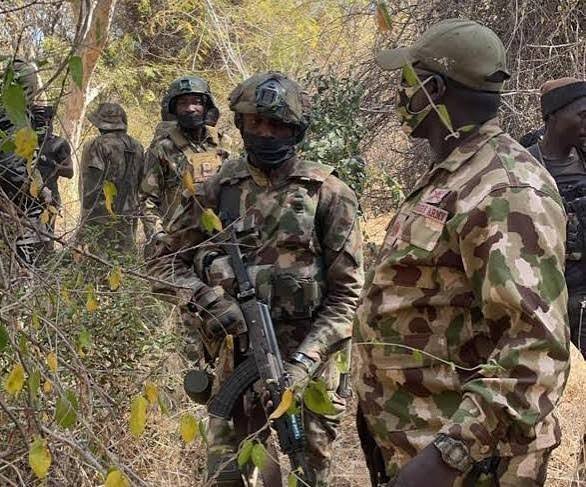
Troops neutralise eight terrorists in failed ambush operation in Borno
By: Zagazola Makama
Troops of 21 Special Armoured Brigade (21 SAB), in collaboration with Civilian Joint Task Force (CJTF) and hybrid forces, have neutralised eight suspected terrorists during an ambush operation in Bama Local Government Area of Borno.
A military source told Zagazola Makama that the operation was carried out at about 2:06 a.m. on April 1 around the Gadangari axis, behind Government Girls Secondary School (GGSS), Bama.
The source said the troops conducted a planned ambush targeting suspected Boko Haram terrorists and their logistics collaborators operating around the area.
“While lying in wait, the troops intercepted terrorists’ collaborators and logistics suppliers moving towards Yale axis,” the source said.
He added that the troops engaged the targets in a brief exchange of fire, resulting in the neutralisation of eight terrorists, while others escaped with possible gunshot wounds.
The source further noted that follow-up operations were ongoing to track fleeing elements and dismantle their logistics networks in the area.
He assured that the situation remained under control, with troops maintaining aggressive posture in the general area.
Troops neutralise eight terrorists in failed ambush operation in Borno

Military airstrikes eliminate scores of ISWAP terrorists in Borno operations

Troops neutralise two suspected terrorists in ambush along Aulari–Kawuri axis in Borno

VeryBlackDarkMan denies inciting violence in plateau, gives detailed defence of viral comments

Roger Federer’s Shock as DNA Results Reveal Myla and Charlene Are Not His Biological Children

THE PLIGHT OF FARIDA

FAILED COUP IN BURKINA FASO: HOW TRAORÉ NARROWLY ESCAPED ASSASSINATION PLOT AMID FOREIGN INTERFERENCE CLAIMS
-
 News2 years ago
Roger Federer’s Shock as DNA Results Reveal Myla and Charlene Are Not His Biological Children
-
Opinions4 years ago
THE PLIGHT OF FARIDA
-
 News12 months ago
FAILED COUP IN BURKINA FASO: HOW TRAORÉ NARROWLY ESCAPED ASSASSINATION PLOT AMID FOREIGN INTERFERENCE CLAIMS
-

 News2 years ago
EYN: Rev. Billi, Distortion of History, and The Living Tamarind Tree
-
 Opinions4 years ago
POLICE CHARGE ROOMS, A MINTING PRESS
-

 ACADEMICS2 years ago
A History of Biu” (2015) and The Lingering Bura-Pabir Question (1)
-

 Columns2 years ago
Army University Biu: There is certain interest, but certainly not from Borno.
-

 Opinions2 years ago
Tinubu,Shettima: The epidemic of economic, insecurity in Nigeria
