
News
Zulum Sends 103 Students to China for Studies; Reiterate Commitments to Education During Farewell

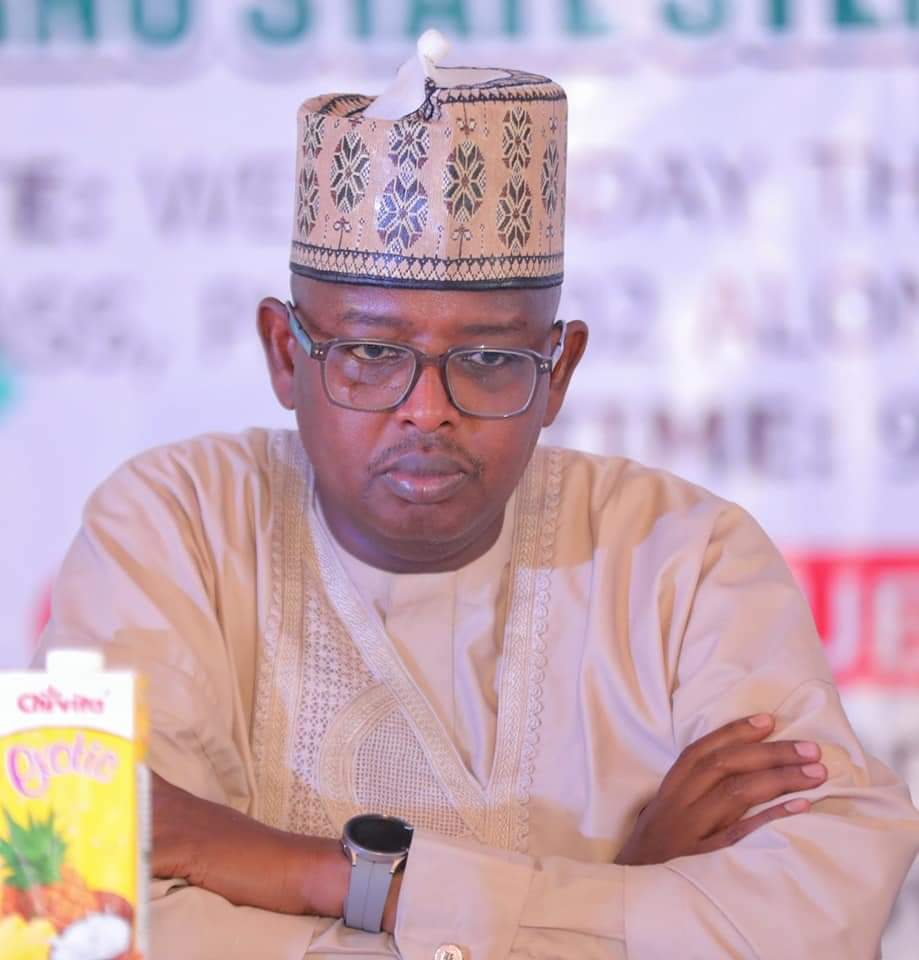
Zulum Sends 103 Students to China for Studies; Reiterate Commitments to Education During Farewell
By: Michael Mike
Borno State Governor Babagana Umara Zulum reaffirmed the state’s dedication to fostering an inclusive society through quality education and robust healthcare services.
Zulum made the pronouncements when the state hosted a farewell ceremony for 103 indigenes who were awarded scholarships to pursue medicine and engineering at six universities in China.
The event was held at A Class Event Centre in Abuja on Wednesday, the 30th of October 2024, with the students set to start their departure tomorrow, Thursday, the 31st of October 2024.
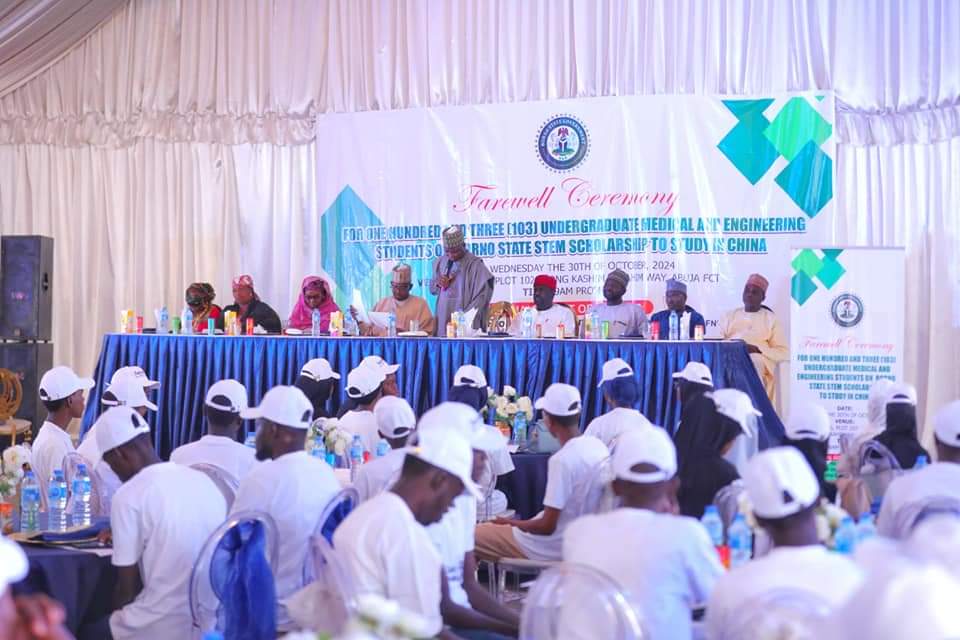
Governor Zulum, represented by Hon. Ahmadu Jaha Damboa/Gwoza/Chibok Federal Constituency, outlined the state’s 25-year development plan, emphasising the strategic importance of education and healthcare.
He congratulated the scholarship recipients, noting that nearly 1.5 billion Naira had been allocated annually for their tuition and living expenses.
Hon. Jaha stressed the recipients’ ten-year bond of service to the state, ensuring that their education benefits the community.
Engr. Lawan Abba Wakilbe, the Commissioner for Education, Science, Technology, and Innovation, highlighted the government’s significant financial commitment, stating that over 11 billion Naira had been allocated for scholarships since 2019, with 1.28 billion Naira specifically for this initiative.
He also mentioned the allocation of $45,638.00 for medical insurance, residency permits, and physical check-ups.
Engineer . Wakilbe urged the students to prioritise their studies, maintain good health, and uphold discipline. He announced the distribution of students across the following universities:
- Jinzhou Medical University: 10 students
- Anhui Medical University: 30 students
- Nanjing University of Aeronautics and Astronautics: 12 students
Liaoning University of Technology: 20 students - Hefei University of Technology: 18 students
- Xuzhou Medical University: 13 students
Permanent Secretary Aishatu Musa Sheikh emphasised the importance of good character and advised the students against drug use and other vices.
Dr. Bala Isa, Executive Secretary of the Borno State Scholarship Board, congratulated the recipients and highlighted the rigorous programs offered by the selected universities.
Prof. Gutti, Vice Chancellor of Borno State University, urged the students to adhere to Chinese rules and regulations and emphasised their role in shaping Borno State’s future.
Hon. Gambomi Marte, Chairman of the House Committee on Education, supported by the member of the committee, Engineer Ali Lawan Yaumi, reinforced the importance of education and its potential for Borno State’s youth.
A scholarship recipient expressed gratitude for the opportunity and the aspiration to contribute to the community’s future.
The farewell ceremony celebrated the students’ achievements and acknowledged their responsibility as future leaders. The scholarship initiative represents a substantial investment in Borno State’s youth, aiming to empower them to positively impact their communities.
Zulum Sends 103 Students to China for Studies; Reiterate Commitments to Education During Farewell



Troops intercept 11 youths with donkeys during patrol in Borno
By: Zagazola Makama
Troops of 68 Battalion have intercepted 11 youths during a routine patrol in Mallam Fatori area of Abadam Local Government Area of Borno State.
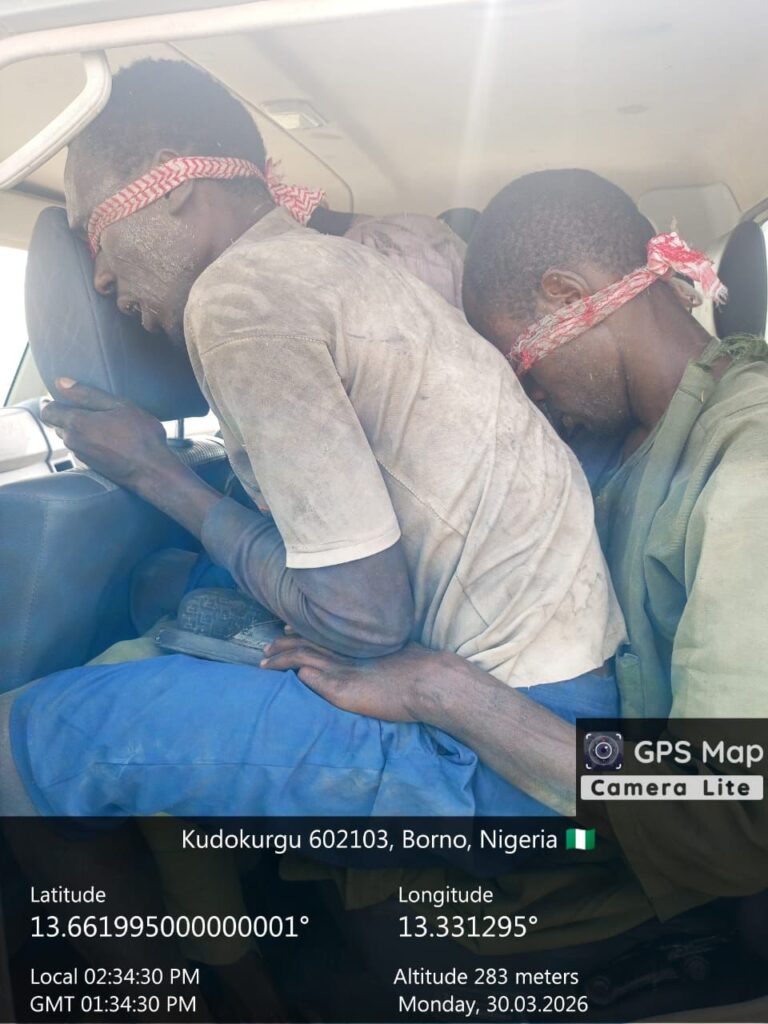
Security sources said the interception occurred along the Bulagana–Cheisa axis on April 2 during ongoing clearance operations in the area.
According to the sources, the individuals were found moving in the area with 12 donkeys when they were stopped and briefly interrogated by troops.
The sources added that the youths were later handed over, alongside the animals, to relevant authorities in a neighbouring country for further necessary action.
The military said the patrol was part of sustained efforts to maintain security dominance and prevent exploitation of border communities by criminal elements.
Troops intercept 11 youths with donkeys during patrol in Borno
Troops recover ammunition, logistics items in Kwara patrol operation
By: Zagazola Makama
Troops of the Nigerian Army under the 22 Brigade have recovered ammunition and other logistics items during a fighting patrol in Ifelodun Local Government Area of Kwara State.
A security source disclosed that the operation was conducted at about 4:00 p.m. on April 2 at Daban Lema, where troops of the brigade, operating from the Patrol Base, encountered signs of suspected terrorist activities in a deserted location.
According to the source, the troops immediately carried out exploitation of the area, leading to the recovery of four rounds of 7.62mm special ammunition and one empty PKT ammunition belt link.
Other items recovered include four mobile phones, two head warmers, two small solar panels, and assorted repair tools believed to have been used by the suspected terrorists.
The source added that the recovery indicates the presence and movement of suspected criminal elements within the area, noting that troops have intensified surveillance and patrols to deny them freedom of action.
Troops recover ammunition, logistics items in Kwara patrol operation
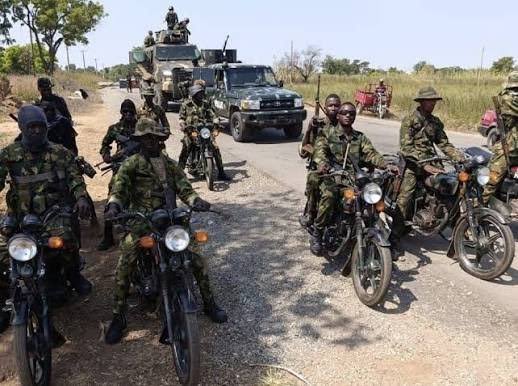
Troops foil attack by Criminal Youths, rescue victims, arrest suspects in plateau
By: Zagazola Makama
Troops of Sector 1, Operation Enduring Peace (OPEP), have foiled an attack on residents at Dutse Uku in Jos North Local Government Area of Plateau State.
A security source said the troops responded swiftly to a report of sporadic gunshots in the area at about 11:50 p.m. on April 2.
According to the source, upon arrival at the scene, the suspected criminals fled, abandoning their operation due to the prompt intervention of the troops.
He said the troops rescued two victims who sustained gunshot wounds during the incident and immediately evacuated them to a hospital for medical attention.
The source further disclosed that two suspects, dressed in black attire, were arrested at the scene.
Items recovered from the suspects include a cutlass and a knife.
He added that the suspects are currently in military custody and undergoing preliminary investigation, while efforts are ongoing to track down other fleeing members of the group.
Zagazola report that despite heightened security, there has been report of pocket of attacks in some communities.
The source reassured residents of the military’s commitment to protecting lives and property and urged the public to continue providing timely information to security agencies.
Troops foil attack by Criminal Youths, rescue victims, arrest suspects in plateau

Troops intercept suspected Boko Haram logistics convoy conveying 13 persons in Borno

Troops intercept 11 youths with donkeys during patrol in Borno

Troops, CJTF arrest three suspected Boko Haram logistics suppliers in Borno

Roger Federer’s Shock as DNA Results Reveal Myla and Charlene Are Not His Biological Children

THE PLIGHT OF FARIDA

FAILED COUP IN BURKINA FASO: HOW TRAORÉ NARROWLY ESCAPED ASSASSINATION PLOT AMID FOREIGN INTERFERENCE CLAIMS
-
 News2 years ago
Roger Federer’s Shock as DNA Results Reveal Myla and Charlene Are Not His Biological Children
-
Opinions4 years ago
THE PLIGHT OF FARIDA
-
 News12 months ago
FAILED COUP IN BURKINA FASO: HOW TRAORÉ NARROWLY ESCAPED ASSASSINATION PLOT AMID FOREIGN INTERFERENCE CLAIMS
-

 News2 years ago
EYN: Rev. Billi, Distortion of History, and The Living Tamarind Tree
-
 Opinions4 years ago
POLICE CHARGE ROOMS, A MINTING PRESS
-

 ACADEMICS2 years ago
A History of Biu” (2015) and The Lingering Bura-Pabir Question (1)
-

 Columns2 years ago
Army University Biu: There is certain interest, but certainly not from Borno.
-

 Opinions2 years ago
Tinubu,Shettima: The epidemic of economic, insecurity in Nigeria
