
Uncategorized
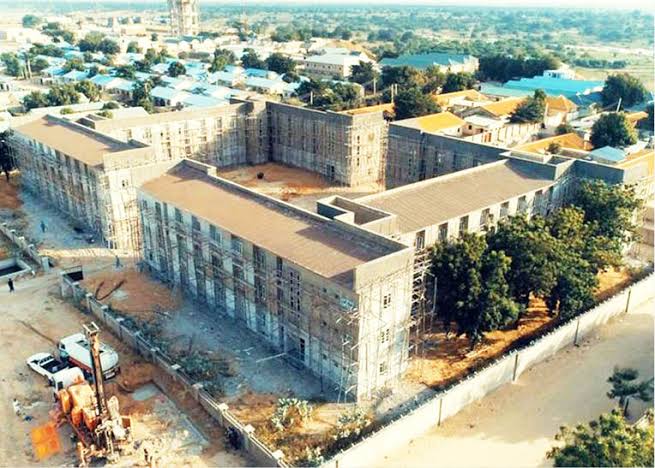
100 Schools Built in the Last Five Years in Borno

100 Schools Built in the Last Five Years in Borno
By: Michael Mike
Borno State government has said over 100 schools were built in the last five years by the present administration of Governor Babagana Zulum.
The Borno State Commissioner for Education, Science, Technology and Innovation, Engineer Lawan Wakilbe said this during the inauguration of six newly built schools by the state governor.
He said: “The state government has since 2019 under the Zulum led administration built over one hundred schools to provide access to quality education for Borno children.
Wakilbe assued of continued unwavering commitment towards the revamping of the education sector in Borno State.
Zulum during the commissioning said it was part of measures to boost access to quality education and reduce the number of out of school children in the state.
The governor who also launch the distribution of back to school materials such as Books , Uniforms , Schools bags and others items to ease learning for 100,000 students who will be enrolled in public schools across the state for the 2024/2025 academic session, noted that the six newly commissioned schools spread acrros the densely populated areas of Maiduguri Metropolitan Council (MMC) and environs,
According to the governor, this new schools was part of the the 52 school built in many parts of the state through a loan facility secured by the Borno State Government from the World Bank and being implemented by the Adolescent Girls Initiative For Learning and Entrepreneurship ( AGILE ) project .
He said the loan facility is expected to be paid back within a period of 25 years and a 5 year moratorium.
Zulum, who spoke at the elaborate occasion at the Government Day Secondary School- a school that had been operating at a temporary site since establishment in 1980, said his administration is leaving no stone unturned in its genuine quest to revamp the education sector.
The governor stated that deliberate steps are being taken to provide access to quality education for Borno children and also invest massively in training and retraining of teachers in the state .
Zulum said his administration is also considering the construction of befitting accommodation for teachers in remote areas close to locations of the new schools .
He said. “When we took over the mantle of leadership as Government of Borno state,, we decided to provide access to ensure children’s enrollment in schools. Boko Haram insurgency has created a severe gap in that direction. So, AGILE was meant to breach the education gap, especially in girl-child education.
“I believe after I complete my tenure, the next Governor , if he wants to work, I think he will divert most of his attention to service delivery because I would have done so much in the construction of schools in Borno State.”
The governor explained that out of the 52 schoos being built under the AGILE project, only five schools are yet to be constructed, revealing that the “state government will soon commence the construction to the five schools- they are High Islamic Schools and would sited in five local government areas of Chibok, Marte , Gwoza, Bama and in Benishiek in Kaga local government area.
Zulum said: “What we’re looking for is to see how we shall intensify intensive literacy, intensive numeracy , digital literacy and above all technical and vocational education in these schools.”
The National Project Coodinator of AGILE. Hajia Amina Haruna commended the state government for its giants strides at revamping the education sector saying that the state is one of the best out of the 18 AGILE implementating states .
She stated that the AGILE project is aimed at ensuring enrolment, retention, and completion of secondary schools by adolescent girls through renovation of existing schools infrastructure and also build new class rooms.
Amina added ” We are constructing separate functional WASH facilities – Water , Sanitation And Hygiene – Toilet for girls is all our secondary schools in the implementing states to make girls comfortable .
” AGILE in recognition of the nexus between poverty and education, especially in the rural communities, have designed a financial incentives called the conditional cash transfer for the poorest household to help our adolescent girls enroll , retain and complete secondary school education in all our 18 implementing states .” AGILE National Project Coordinator said .
100 Schools Built in the Last Five Years in Borno


Uncategorized
ECOWAS, Africa Agenda Network Deepen Partnership to Showcase Regional Bloc’s 50-Year Legacy
ECOWAS, Africa Agenda Network Deepen Partnership to Showcase Regional Bloc’s 50-Year Legacy
By: Michael Mike
The Economic Community of West African States (ECOWAS) has reaffirmed its commitment to strengthening collaboration with the Africa Agenda Network (AAN) as part of efforts to document, promote and deepen public understanding of the regional bloc’s five decades of achievements and contributions to West African integration.
The renewed commitment was made on Tuesday when the President of the ECOWAS Commission, Dr. Omar Alieu Touray, received the Chief Executive Officer of the Africa Agenda Network, Ms. Muna Jallow, during a working visit to the Commission’s headquarters in Abuja.
The meeting focused on the progress of the Africa Agenda Network–ECOWAS Strategic Partnership Initiative, a three-phase programme designed to commemorate ECOWAS’ 50th anniversary while strengthening citizens’ appreciation of the organisation’s role in advancing regional cooperation.
Briefing the Commission President, Jallow said the initiative’s first phase had been successfully implemented through the ECOWAS@50 Trade, Investment and Exhibition Forum held in Lagos, Nigeria.
She disclosed that attention has now shifted to the second phase—the production of a commemorative publication documenting the history of ECOWAS over the past 50 years, highlighting its major milestones, achievements and contributions to regional integration.
According to her, the final phase of the initiative will see the production of a high-quality documentary series that will tell the ECOWAS story through the voices and experiences of citizens from across the organisation’s member states.
Responding, Touray welcomed the initiative and reaffirmed the ECOWAS Commission’s commitment to sustaining and expanding its partnership with the Africa Agenda Network.
He said the collaboration would play a vital role in increasing public awareness of ECOWAS, preserving its institutional history and projecting the organisation’s achievements and impact across West Africa and the international community.
The partnership comes as ECOWAS marks 50 years since its establishment in 1975, a period during which the regional body has played leading roles in promoting economic integration, facilitating free movement across member states, supporting democratic governance and peacekeeping efforts, and advancing regional development initiatives despite persistent political and security challenges.
The commemorative publication and documentary are expected to serve as enduring records of the bloc’s evolution while helping a new generation of West Africans better understand the relevance of regional integration to the future of the sub-region.
ECOWAS, Africa Agenda Network Deepen Partnership to Showcase Regional Bloc’s 50-Year Legacy
Netherlands Donates Equipment to Boost Nigeria Immigration’s Hostmanship Programme
By: Michael Mike
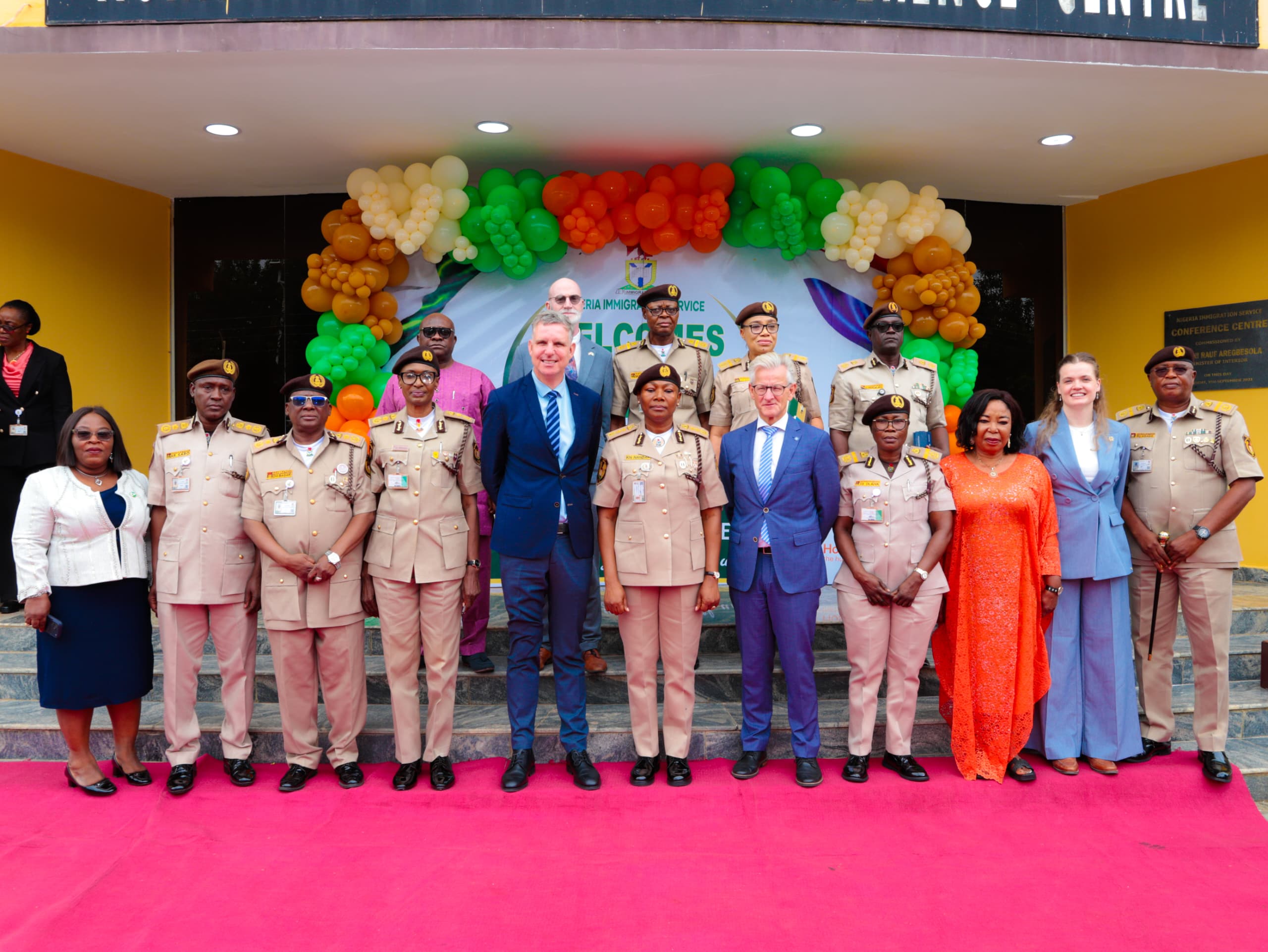
The Kingdom of the Netherlands has donated specialised equipment to the Nigeria Immigration Service (NIS) to strengthen its Hostmanship Unit, deepening more than two decades of bilateral cooperation aimed at improving migration management and customer service delivery.
The equipment was presented by the Repatriation and Departure Service (R&DS) of the Dutch Ministry of Justice and Security during a ceremony at the NIS Headquarters in Abuja on Monday.

Receiving the donation, the Comptroller-General of Immigration, Kemi Nandap, described the gesture as a significant milestone in the long-standing partnership between the Nigeria Immigration Service and the Netherlands, noting that it would bolster institutional professionalism and improve service delivery.
Nandap said the equipment represents a strategic investment in institutional excellence and would enhance the Hostmanship Unit’s training capacity and operational efficiency.
She explained that the initiative is designed to entrench the philosophy of hostmanship across the Service, encouraging immigration officers to ensure that members of the public are treated with courtesy, empathy and professionalism at every point of contact.
“The equipment will further strengthen our capacity to institutionalise the Hostmanship philosophy, where every officer is inspired to make people feel welcomed, respected and valued,” she said.
The Chargé d’Affaires of the Embassy of the Kingdom of the Netherlands in Abuja, Mr. Ronald Sonnemans, described the collaboration with the Nigeria Immigration Service as a model of sustained international partnership.
He reaffirmed the Dutch government’s commitment to supporting initiatives that enhance migration management, institutional capacity and public service delivery in Nigeria.
The Nigeria Immigration Service disclosed that the partnership has already produced tangible results, including the training of hundreds of immigration officers, the establishment of a dedicated Hostmanship Unit and sustained capacity-building programmes under the European Union-funded Capacity Building and Relationship Management (CBR) Project.
According to the Service, the latest donation underscores the commitment of both countries to strengthening migration governance through innovation, knowledge sharing and institutional reforms that enhance public confidence in immigration services.
The Service expressed appreciation to the Government of the Kingdom of the Netherlands and the Repatriation and Departure Service for their continued support, pledging to ensure the donated equipment is effectively utilised in advancing ongoing reforms.
The Nigeria Immigration Service has in recent years intensified reforms aimed at modernising border management, improving service delivery and enhancing the professionalism of its personnel. A key component of these reforms is the Hostmanship programme, a customer service philosophy developed in Sweden that focuses on creating positive service experiences by treating every individual with respect, courtesy and empathy.
The Netherlands has remained one of Nigeria’s key international partners in migration governance, supporting capacity-building initiatives through bilateral cooperation and European Union-funded programmes. The collaboration has focused on improving migration management, combating irregular migration, strengthening institutional capacity and promoting international best practices in public service delivery.
The latest donation is expected to further consolidate these reforms as the Nigeria Immigration Service seeks to build a more citizen-focused and globally competitive immigration system.
Netherlands Donates Equipment to Boost Nigeria Immigration’s Hostmanship Programme
Uncategorized
Troops neutralised key bandit leaders, restored confidence along Gusau- Funtua highway
Troops neutralised key bandit leaders, restored confidence along Gusau- Funtua highway
By Zagazola Makama
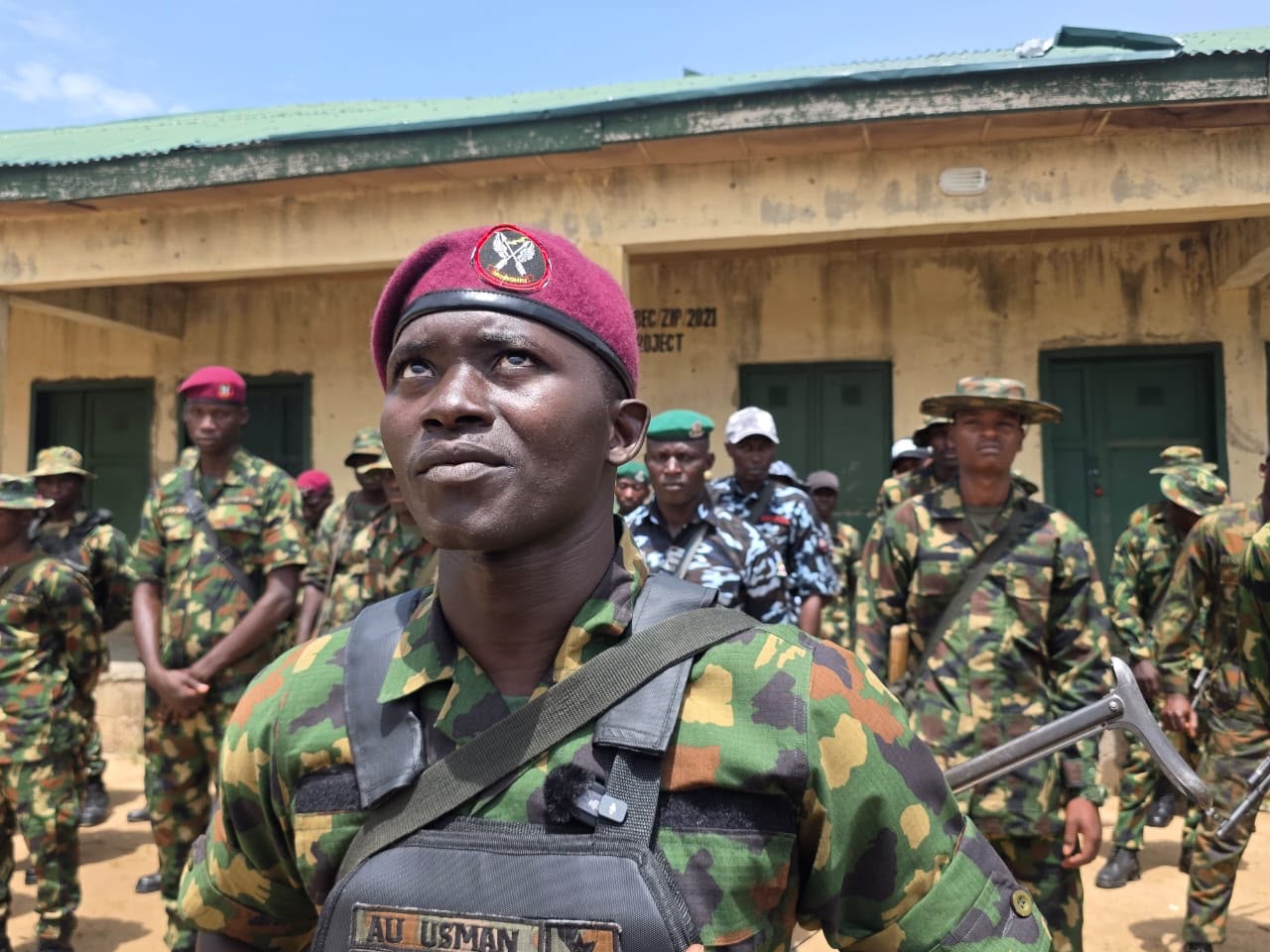
The Commander of Combat Team 7 under Operation FANSAN YAMMA, Capt. A.U. Usman, has disclosed that troops have recorded significant operational successes over the past six months, including the elimination of several notorious bandit kingpins and the restoration of security along the strategic Funtua–Tsafe–Gusau highway.
Speaking on Saturday during a visit by Defense Correspondents at the unit’s operational base in Tsafe, Zamfara State, the commander said sustained offensive operations and strategic deployment of troops at identified bandit crossing points had drastically reduced attacks on commuters and boosted public confidence.
“During the period under review, Combat Team 7 has recorded some significant successes,” Usman said.
He revealed that on Jan. 14, troops neutralised notorious bandit commanders, including Kachalla Dan Agwal and Baban Baby, alongside several of their fighters during intelligence-led operations.
“Combat Team 7 was able to neutralise the likes of Kachalla Dan Agwal, Baban Baby and many others. These successes came through carefully planned operations and the deployment of our troops to strategic locations,” he said.
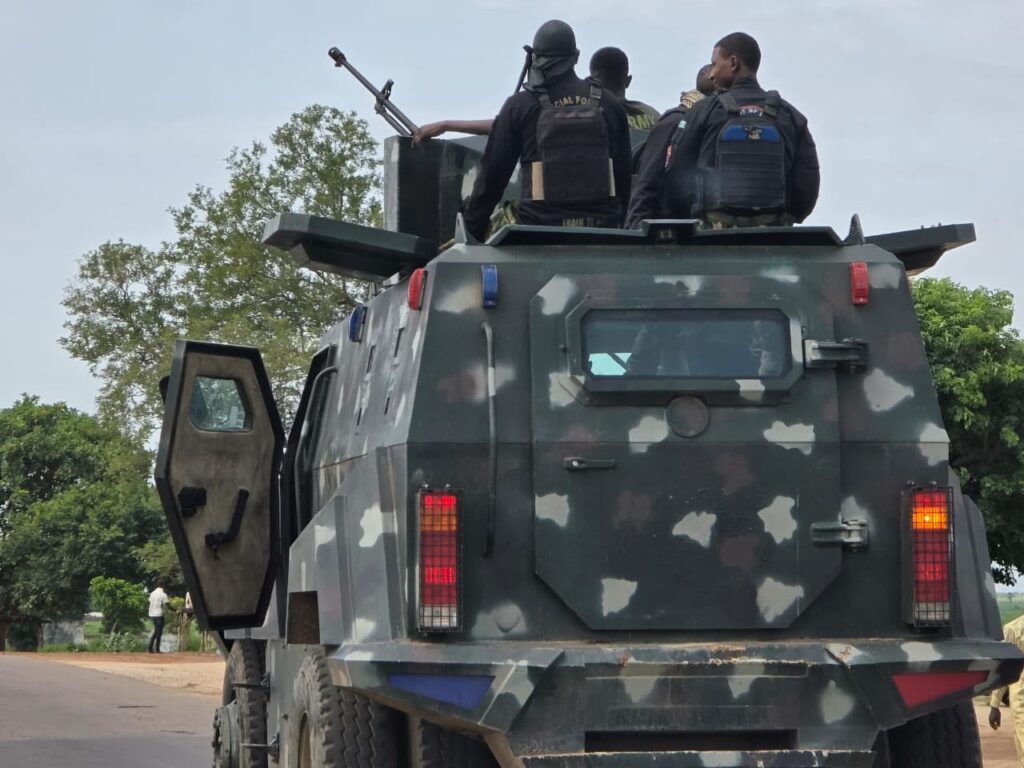
According to the commander, the unit established numerous pickets along the Funtua–Tsafe–Gusau road, particularly at known bandit crossing points frequently used to ambush travellers.
“If you are driving along the Katsina–Funtua–Tsafe–Gusau road today, you will notice several military pickets. Those soldiers are strategically deployed at identified bandit crossing routes,” he explained.
He noted that the deployment had significantly curtailed the activities of armed groups that previously terrorised motorists through kidnappings and violent attacks.
“These bandits were the ones repeatedly disturbing this road. Before now, commuters could not move freely the way they do today. They stopped vehicles, abducted passengers and created fear among the people,” he said.
“Today, because of the strategic deployment of troops and the equipment made available to us, civilians are moving freely without fear. The picketing has restored confidence among road users.”
Capt. Usman further disclosed that another major breakthrough was recorded on Feb. 15 when troops neutralised additional notorious bandits, including Yunusa Dogon Ahmad, during sustained clearance operations along the same corridor.
“On Feb. 15, we were able to neutralise Yunusa Dogon Ahmad and some other key bandits who had been terrorising this route,” he said.
Beyond securing highways, the commander said the military had also created a safer environment for farming activities across communities within its Area of Responsibility (AOR).
According to him, Combat Team 7 currently operates from about 13 operational locations, including Lilo, Mada, Wanzamai, Keta, FOB Railway, Gidan Giye, Keware and several blocking positions established to deny criminals freedom of movement.
“Our troops conduct daily foot patrols from these locations into surrounding farmlands and communities to ensure that farmers carry out their activities without interference from criminal elements,” he said.
“The same pattern is replicated across our entire Area of Responsibility. Whether in Mada, Wanzamai or other locations, our troops are constantly patrolling to provide security for farmers.”
The commander acknowledged that improvised explosive devices (IEDs) remained one of the challenges confronting troops during operations, especially on rural access routes.
“There are places where movement is still affected because of the threat of IEDs,” he said.
“However, with support from the theatre headquarters, Explosive Ordnance Disposal (EOD) teams have now been deployed, and we no longer move on roads without conducting proper scanning to detect possible IED threats.”
On civil-military relations, Capt. Usman described cooperation from residents as encouraging but said more support was needed to deny criminals access to information.
“The locals are cooperating to some extent, but there is still room for improvement,” he said.
“Without informants, terrorists cannot operate effectively. Unfortunately, there are still a few bad elements within some communities who pass information about our movements and activities to the criminals.”
Despite the challenge, he commended the majority of residents for their support and expressed confidence that stronger collaboration between security forces and communities would further weaken the activities of bandits across the region.
The commander reaffirmed the commitment of Combat Team 7 and Operation FANSAN YAMMA to sustaining offensive operations and ensuring that communities, farmers and travellers continue to enjoy improved security across Zamfara and adjoining areas.
Troops neutralised key bandit leaders, restored confidence along Gusau- Funtua highway

Troops Rescue Kidnap Victim, Pursue Suspects in Plateau

NAF Air Component Strikes Bandits Advancing From Zamfara Into Kebbi, Scores Neutralised

Police Arrest Clergyman, Air Force, Navy Personnel Over Alleged Plot to Kidnap Bishops’ Wives in Plateau

Roger Federer’s Shock as DNA Results Reveal Myla and Charlene Are Not His Biological Children

THE PLIGHT OF FARIDA

FAILED COUP IN BURKINA FASO: HOW TRAORÉ NARROWLY ESCAPED ASSASSINATION PLOT AMID FOREIGN INTERFERENCE CLAIMS
-
 News2 years ago
Roger Federer’s Shock as DNA Results Reveal Myla and Charlene Are Not His Biological Children
-
Opinions4 years ago
THE PLIGHT OF FARIDA
-
 News1 year ago
FAILED COUP IN BURKINA FASO: HOW TRAORÉ NARROWLY ESCAPED ASSASSINATION PLOT AMID FOREIGN INTERFERENCE CLAIMS
-

 News2 years ago
EYN: Rev. Billi, Distortion of History, and The Living Tamarind Tree
-
 Opinions5 years ago
POLICE CHARGE ROOMS, A MINTING PRESS
-

 ACADEMICS2 years ago
A History of Biu” (2015) and The Lingering Bura-Pabir Question (1)
-

 Columns2 years ago
Army University Biu: There is certain interest, but certainly not from Borno.
-

 Politics1 year ago
2027: Why Hon. Midala Balami Must Go, as Youths in Hawul and Asikira/Uba Federal Constituency Reject ₦500,000 as Sallah Gift
