
Politics
1999 constitution skewed in favour of the North – Eminent Nigerians

1999 constitution skewed in favour of the North – Eminent Nigerians
By: Our Reporter
EMINENT Nigerians, including former Chief of Staff, Commodore Ebitu Ukiwe (retd); former Governor of Plateau State, Jonah Jang; Second Republic Senator, Professor Banji Akintoye; President-General of Ohaneze Ndigbo, Chief Nnia Nwodo; former Vice-Chairman of Arik Air, Senator Anietie Okon; Commodore Idongegist Nkanga, (retd); of PANDEF, the leader of Middle Belt Forum, Dr. Bitrus Pogu; former Minister, Prof. Yusuf Turaki and 121 others, yesterday, alleged that the 1999 constitution was skewed in favour of the North.
They also petitioned the United Nations Security Council, African Union, European Union, United States and the British Government on the need to urgently convoke a Sovereign National Conference to discuss the constitutionality of the 1999 Constitution of Nigeria and the 1914 Amalgamation of the Southern and Northern Nigeria within 90 days to save the people from oppression, stagnation and squalor.
The leaders said this after a meeting in Lagos.
The leaders, numbering 127, who spoke under the aegis of the Nigerian Indigenous Nationalities Alliance for Self-Determination, described the 1999 constitution as a fraud; an impunity, hijack and a confiscation of the sovereignties, powers and assets of the South and Middle Belt People of the country by those who clandestinely designed it.
The statement reads: “We gather here this day as Accredited Delegates of the Constituent Component Nationalities of Nigeria, under the aegis of Nigerian Indigenous Nationalities Alliance for Self-Determination, being a Joint-Cooperation Framework for the Self-Determination Initiatives of the Southern and Middle-Belt of Nigeria on behalf of our Various Peoples and Interests, to Pronounce an end to our toleration of Nigeria’s Unitary Constitutional Order, Unilaterally Imposed and Forcefully Maintained by a Section of the Nigerian country, in negation of the federal basis upon which Nigeria became one political union at independence in 1960, and in brutal subjugation of our collective sovereignties currently being forcefully and fraudulently appropriated by the Nigerian State.
“We gather here today before the global community, to formally proclaim a sovereignty dispute in rejection of the further operation of the imposed, unity constitutional arrangements of Nigeria and in assertion of our inalienable right to self-determination.
“The History of the Colonial beginnings of Nigeria as a Commercial Venture of some Colonial Masters is too well-known to admit of any further repetitions here but suffice it to recall:
“That the manipulations that went into the Flawed Foundations laid in the 1914 Amalgamation of the Protectorates of Southern Nigeria with the Protectorate of Northern Nigeria, created a lopsided Union, locking the Diverse Peoples of Nigeria into one Political Union with two mortally opposed civilizations.
Also Read: Kashim Shettima: An epitomic genre from Borno
“That as Independence approached in 1960, the Diversities of the Various Peoples of the Nigerian Union Dictated the Adoption of the Federal Constitutional Model by the then three largely Autonomous Regions, (namely Eastern, Western and Northern Regions of Nigeria) as the Basis of entering Into Independence as one Political Union in 1960.
“That amidst the early strains of Post-Independence Nigeria arising mainly from the aforementioned Foundational and Pre-Independence manipulations by the Colonial Rulers of the Nigerian Union, the Military coups of 1966 Truncated the Federal Constitutional Basis of Nigeria and plunged the fledgling Union into a catastrophic 30-Month War with it’s Breakaway Eastern Region between 1967 and 1970, triggered by disputations around the terms of the Nigerian Union and leaving in its trail, human carnage in excess of 3million people and a fractured Union now resting on an Unworkable Unitary Constitutional Order Imposed in 1979, by the Fiat of the illicit “Federal Government” which emerged since the 1966 Collapse of the Federation of Nigeria, Forcefully Hijacking and Confiscating the Sovereignties of the Constituent Component Regions of Nigeria that Federated their Sovereignties in 1960.
“That the Prevailing 1999 Constitution of Nigeria which was a wholesale adoption of the 1979 edition via Decree No.24 of 1999, revalidated and reinforced the aforementioned Hijack and confiscation of the Sovereignties, Powers and Assets of the Four Erstwhile Federating Regions by the aforementioned Illicit Federal Government of Nigeria which by Decrees, fractured the Four Regions into 36 States, that are completely emasculated by a 68-Item Federal Exclusive Legislative List that Comprehensively strip the Federating States of All Key Economic Assets and Governmental Powers, thereby creating a totally dysfunctional, corruption-prone, over-centralized system that has failed in every respect, manifesting in Gross Insecurity, Decayed Infrastructure and Mass Impoverishment such that Nigeria, with its Vast Human and Material Resource Endowments, has now emerged as the poverty capital of the world as well as the Global Leading Example of a failed state.
“There is a countrywide consensus against the Unitary Constitutional Arrangements Imposed incrementally on Nigeria by a combination of Guile, Brute Force and Impunity between 1966 and 1999 now codified by the 1999 Constitution. This countrywide consensus had manifested in Several Unilateral Regional and Joint Multi-Regional Actions in Repudiation and Rejection of the Unitary 1999 Constitution of Nigeria:
“The first indication was when in year 2000, the 12 contiguous states of the far North, Simultaneously Imposed and began to implement Sharia in their 3 Domains against the express provision of the 1999 Constitution which in Section 10, forbids the adoption of any state religion. This translates to a unilateral secession from the Secular Union of Nigeria.
“Between 2005 and 2006, a Sovereign Conference of the Ethnic Nationalities of Nigeria, Convened by the Pro-National Conference Organizations (PRONACO), Deliberated exhaustively and produced A Draft Peoples’ Constitution 2006, which had the potential of restoring Nigeria to it’s damaged Federal Foundations. Though Ignored by successive federal governments in Nigeria, that draft became the New Federating consensus against the Prevailing Unitary Constitutional Order in Nigeria.
“It is pertinent to note that across all the Regions of Nigeria, various Socio-Cultural and Ethnic-Interests Vanguard Organizations have also been vehement in expressing the Constitutional Grievances of their own People, (some even violently), thus on the Yoruba side, we have the Afenifere, the Yoruba Elders Council (YCE), Agbekoya, the Yoruba Liberation Command, (YOLICOM), YWC and many more including the ILANA OMO OODUA which now aggregates Several Yoruba Self-Determination Initiatives across the World.
“In the Eastern part of Southern Nigeria, we have Ohanaeze, Movement for the Survival of the Ijaw Ethnic Nationality in the Niger Delta (MOSIEND); Ijaw National Congress, (INC); Ijaw Youth Council (IYC); PANDEF, Midwest Movement, the Niger Delta Peoples Volunteer Force, (NDPVF), MEND, MASSOB, IPOB, others. In the Middle-Belt, we have the Middle-Belt Forum, (MBF), MBC, SOKAPU, CONAECDA and many others.
“Several notable Statesmen in Nigeria including Generals Olusegun Obasanjo and Yakubu Gowon, both (former Heads of State) have lent their voices to the urgent imperative of the Fundamental Reworking of the Damaged Constitutional Basis of Nigeria, warning that any further delay may lead to the catastrophic collapse of the Distressed Nigerian Union.
“Nigeria’s Former Defence Minister, Lt. Gen. Theophilus Danjuma, (retd) had also urged the Indigenous Peoples of Nigeria facing the Ethnic Cleansing Onslaught of the Murderous invaders to defend themselves and their lands in the face of obvious collusion of the Federal Government of Nigeria and its Armed Forces with the Fulani invaders. In the aftermath of the October 2020 #EndSARS Protests many, including the Nigerian Christian Elders Forum (NCEF) now insist that Nigeria needs to be renegotiated.
“On specific constitutional grievances touching on the sovereignties of the constituent components of the federation of Nigeria, the leaders opined that:
“The claim in the Preamble to the 1999 Constitution that ‘We the People’ Firmly and Solemnly Resolved to live in One Political Union and that we Enacted and Gave Ourselves the 1999 Constitution, is self-evidently false as the Decree No 24 of 1999 by which the so-called 1999 Constitution was Promulgated, outlined step-by-step, the Process by which the author of the 1999 Constitution, the Armed Forces Provisional Ruling Council, came about the Document it labeled “the 1999 Constitution. This is a criminal usurpation of the sovereignties of the constituent components whose Exclusive Right it is to make for themselves the Constitution by which they will federate and be governed, as an incident of their sovereignty.
Even by the admission of the 1999 Constitution at Section 14(2)(a), “Sovereignty Belongs to the People, from whom, Government, through this Constitution Derive all its Powers and Authority.
“This is the fountain from which all other constitutional grievances flow and there is no other remedy to this particular grievance than an autochthonous process by which the constituent components will submit their peoples and their lands into a union, and also stipulate the terms of that union, to be ratified by referendums and plebiscites.”
1999 constitution skewed in favour of the North – Eminent Nigerians


Politics
2027: When Tinubu’s endorsement of Vice President Kashim Shettima’s unwavering support speaks volumes
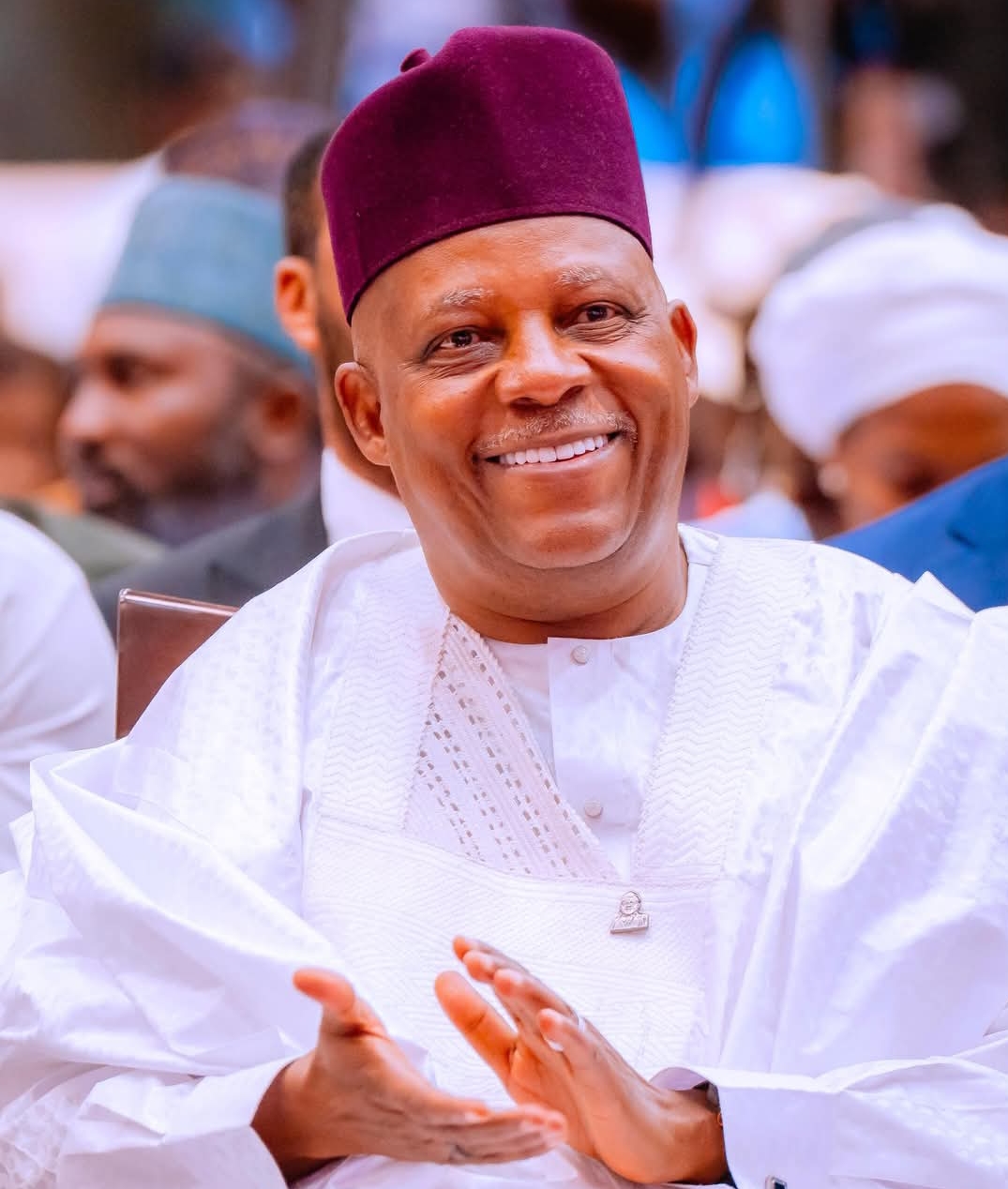
2027: When Tinubu’s endorsement of Vice President Kashim Shettima’s unwavering support speaks volumes
By: Dr. James Bwala
On Sunday, May 24, 2026, at the Bola Ahmed Tinubu International Conference Centre in Abuja, President Bola Ahmed Tinubu delivered a powerful acceptance speech upon his nomination as the All Progressives Congress (APC) flag bearer for the 2027 presidential election. His words were not only an affirmation of his leadership vision but also a robust endorsement of Vice President Kashim Shettima’s unwavering support and integral role within this administration. This public commendation serves as a cornerstone for dispelling mistrust and malicious rumors surrounding the office of the vice president, creating a persuasive narrative about unity, shared purpose, and inclusive governance for Nigeria’s future.
At the heart of President Tinubu’s speech was a resounding acknowledgment of Vice President Kashim Shettima as a “pillar of support” during an undoubtedly challenging period in Nigeria’s political and socio-economic history. The relevance of this commendation transcends mere formality; it underscores a fundamental truth about effective governance—the indispensable role of mutual trust and partnership between a president and their vice president. In an era where political alliances are frequently strained by internal discord and where opposition forces eagerly exploit any hint of division, Tinubu’s public appreciation is an unequivocal message: the administration is cohesive and resilient.
READ ALSO: https://newsng.ng/2027-vp-shettima-is-the-soul-of-the-tinubu-ticket/
The phrase, “The journey so far is challenging, but your support is encouraging; there is no doubt about that,” encapsulates the essence of collaborative leadership. These words reflect not only the trials faced by the government but also reveal the vice president’s steadfast commitment to the administration’s objectives. By highlighting Shettima’s role, Tinubu is affirming that progress requires collective effort, especially in contexts fraught with socioeconomic challenges, security concerns, and institutional reforms. This articulation fosters confidence among Nigerians, signaling that the leadership is united in purpose and determined to overcome adversity through solidarity.
The president’s direct address to Vice President Shettima—“Kashim Shettima, thank you very much. Together and with the help of God Almighty, we shall build a more secure, united, and prosperous Nigeria for generations to come”—is more than a personal note of gratitude. It is a strategic reaffirmation of shared responsibility and future ambition. This statement embodies a forward-looking vision, grounded in faith and partnership, which are essential for sustaining momentum towards national goals. By invoking the divine, Tinubu connects with the deeply spiritual sensibilities of many Nigerians, thereby lending moral weight to their joint mission.
READ ALSO: https://newsng.ng/2027-vp-shettima-is-the-soul-of-the-tinubu-ticket/
The implications of this endorsement extend significantly beyond the immediate political context. It dispels the pernicious rumors and speculation often exploited by political opponents or detractors who seek to destabilize the government by sowing seeds of distrust. The so-called “Shettima issue,” which has been circulated as an attempt to insinuate discord within the presidency, is effectively nullified by the president’s explicit praise and recognition. In doing so, Tinubu not only strengthens the internal cohesion of his administration but also sends a clear signal to the Nigerian populace and international observers that the government operates on principles of unity and transparency.
President Tinubu’s commitment to building “an even more inclusive government.” One that listens. The government that learns and leads with the best interest of Nigerians at heart” resonates deeply with democratic ideals. This pledge offers reassurance that the administration values the diverse voices and experiences of Nigeria’s multifaceted society. An inclusive government is a government that embraces the richness of its ethnic, religious, and cultural diversity, ensuring that policies and programs reflect the common good rather than sectional interests. It is a decisive stance against divisiveness and exclusion, which have historically plagued Nigerian politics.
READ ALSO: https://newsng.ng/2027-vp-shettima-is-the-soul-of-the-tinubu-ticket/
In advancing this vision, Tinubu leverages the symbolic and practical significance of Shettima’s role as vice president. Shettima’s inclusiveness, experience, and political acumen complement the president’s agenda, reinforcing the government’s capacity to implement policies aimed at national reconciliation and development. The administration’s unity at the highest level reassures stakeholders—both domestic and international—that Nigeria remains on a path of political stability and economic recovery.
Critics may argue that such public acknowledgments are politically motivated, designed to mask deeper issues within the government. However, it is vital to recognize that leadership communication in a democracy must be transparent and deliberate. Public affirmations of unity, especially amid turbulent political climates, serve an essential function in maintaining citizens’ trust and preventing the erosion of institutional credibility. This speech is a strategic instrument that stabilizes the political environment by fostering a collective identity and purpose.
READ ALSO: https://newsng.ng/2027-vp-shettima-is-the-soul-of-the-tinubu-ticket/
Building on this foundation, the emphasis on security, unity, and prosperity as core objectives highlights the administration’s responsiveness to the most pressing concerns of Nigerians. Security challenges, including insurgency, banditry, and communal clashes, have long undermined Nigeria’s potential. By articulating a shared commitment with Shettima to address these issues, Tinubu signals a coordinated approach that enhances the government’s legitimacy and effectiveness.
Similarly, the insistence on unity reflects an acute awareness of Nigeria’s complex social fabric and the need for harmony across ethnic and regional lines. Unity is not merely a political slogan but a prerequisite for sustainable development and peace. Through this lens, the administration’s rhetoric serves as a beacon of hope that transcends partisan divides, inviting all Nigerians to partake in nation-building.
READ ALSO: https://newsng.ng/2027-vp-shettima-is-the-soul-of-the-tinubu-ticket/
The aspiration for prosperity aligns with developmental priorities such as economic diversification, job creation, infrastructure development, and education reform. By linking these goals to the administration’s unified leadership, Tinubu inspires confidence that the government is positioned to deliver tangible results that will benefit current and future generations.
President Bola Ahmed Tinubu’s public appreciation of Vice President Kashim Shettima at his acceptance speech for the 2027 APC presidential candidacy exemplifies effective political leadership rooted in unity, inclusiveness, and shared vision. It confronts and dispels damaging rumors, reinforces a message of collective responsibility, and lays a foundation for an administration committed to listening, learning, and leading with the people’s best interests at heart.
READ ALSO: https://newsng.ng/2027-vp-shettima-is-the-soul-of-the-tinubu-ticket/
For Nigeria to navigate its myriad challenges and achieve lasting security, unity, and prosperity, such cohesive leadership is indispensable. The partnership between Tinubu and Shettima presents a compelling model for collaborative governance, inspiring a hopeful trajectory for the nation’s democratic future.
* James Bwala, PhD, writes from Abuja
2027: When Tinubu’s endorsement of Vice President Kashim Shettima’s unwavering support speaks volumes

APC Primary peaceful, as Tinubu clears vote in Adamawa South -Abbati
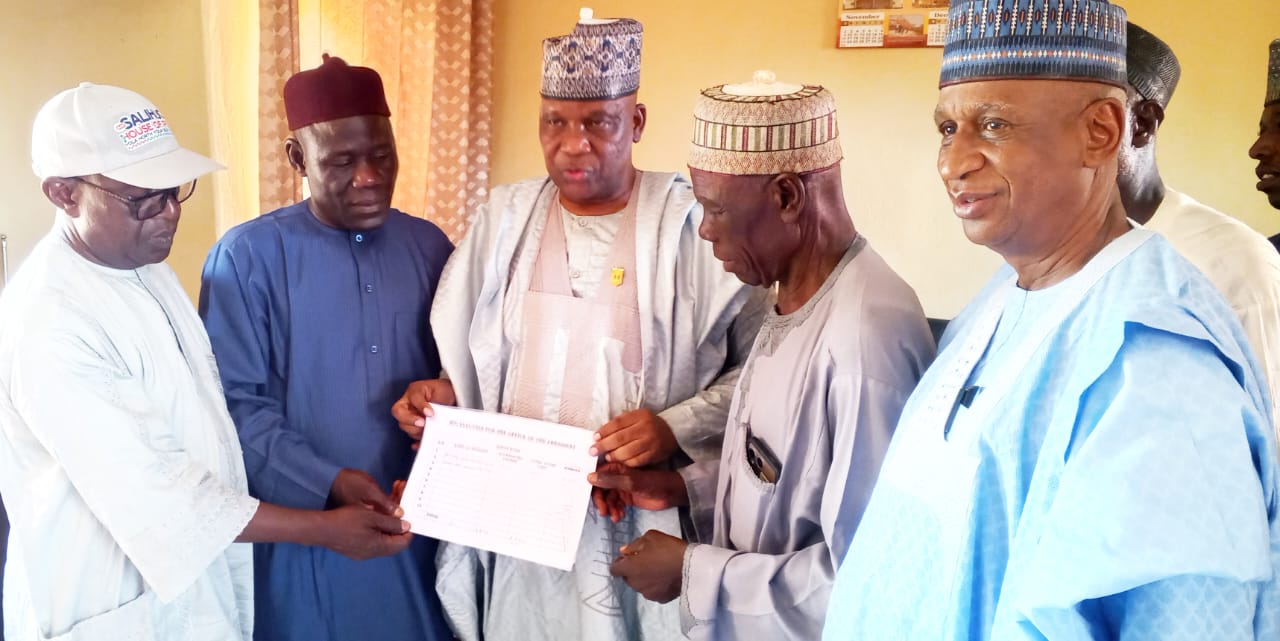
The All Progressives Congress (APC) Presidential Primary has been conducted peacefully in Shelleng Local Government Area, Adamawa State with massive support for President Bola Tinubu’s re-election in 2027.
Aliyu Abdulhameed Abbati, Coordinator/Collation Officer for the APC Presidential Primaries, disclosed this during the collation of results in Shelleng Local Government Area of Adamawa State.
Abbati who is the former Aspirant, APC Adamawa Central Senatorial District
expressed satisfaction with the exercise and called on the people in the area to understand that the re-election of President Tinubu will herald positive changes for the country.
According to him, Nigeria is yearning for change and APC is ready to transform the country and deliver more dividends of democracy at the grassroots level.
He added that Mr President has been doing his best and will continue to do so in his second term in office.
In his remarks, Mr Joshua Njim, the APC Chairman in Shelleng LGA, said the exercise was peaceful across the 10 political wards of the area.
According to him, President Tinubu is leading in Shelleng LGA.
He appreciated Mr Abbati and his team for effective supervision and understanding throughout the exercise.
In his address, Haruna Ibrahim, the Commissioner Ministry of Mineral Resource, Adamawa State appreciated contributions of President Tinubu for economic development in the country.
He said with the APC as the leading party in the country and the state more development would be recorded in the state especially at the grassroots.
According to him, Shelleng is an agrarian area that needed the contribution of the Federal government for food security and economic development.
APC Primary peaceful, as Tinubu clears vote in Adamawa South -Abbati
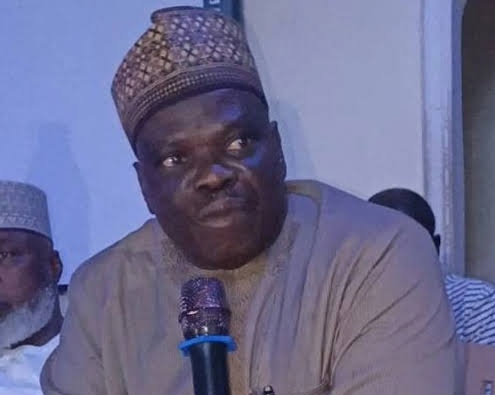
ADC Moves to Break APC Grip on Borno as Durkwa, Bulama Fugu Lead 2027 Political Battle
By:Michael Mike
In what appears to be the strongest opposition realignment ahead of the 2027 general elections in Borno State, the African Democratic Congress (ADC) has unveiled heavyweight senatorial, House of Representatives and State Assembly candidates in a direct challenge to the long-standing dominance of the ruling All Progressives Congress (APC).
The party’s emergence of former APC governorship aspirant Idris Mamman Durkwa for Borno South, alongside Bulama Fugu and Babagana Zanna, signals what political observers describe as an ambitious attempt to dismantle APC’s political stronghold in the state.
The ADC consensus primaries held in Maiduguri produced candidates expected to confront some of Borno’s most influential political figures, including Senator Ali Ndume, Senate Chief Whip Mohammed Tahir Monguno and Senator Kaka Shehu Lawan.
The opposition party said its strategy is built around presenting “credible alternatives” capable of capitalising on growing public frustration over insecurity, economic hardship and governance challenges across the state and the country.
ADC Organising Secretary, Mohammed Bolori, disclosed that about 25 State Assembly candidates and eight House of Representatives candidates were affirmed through consensus by party stakeholders, describing the move as part of broader efforts to strengthen the party’s grassroots structure before 2027.
The development is expected to intensify political rivalry in Borno, particularly in Borno South, where Senator Ndume recently secured fresh endorsements from APC stakeholders and Deputy Speaker Abdullahi Musa Askira.
Bolori, while criticising the APC-led administration over worsening hardship and insecurity, assured supporters that ADC candidates would prioritise security, economic recovery and social welfare if elected.
With governorship primaries and additional House of Representatives contests still ahead, political analysts believe the ADC is positioning itself for what could become one of the fiercest electoral contests in Borno’s recent political history.
ADC Moves to Break APC Grip on Borno as Durkwa, Bulama Fugu Lead 2027 Political Battle

Zulum Flags off Distribution of Renewed Hope Sallah Palliative

2027: When Tinubu’s endorsement of Vice President Kashim Shettima’s unwavering support speaks volumes

Troops Arrest Suspected Security Impersonator In Plateau

Roger Federer’s Shock as DNA Results Reveal Myla and Charlene Are Not His Biological Children

THE PLIGHT OF FARIDA

FAILED COUP IN BURKINA FASO: HOW TRAORÉ NARROWLY ESCAPED ASSASSINATION PLOT AMID FOREIGN INTERFERENCE CLAIMS
-
 News2 years ago
Roger Federer’s Shock as DNA Results Reveal Myla and Charlene Are Not His Biological Children
-
Opinions4 years ago
THE PLIGHT OF FARIDA
-
 News1 year ago
FAILED COUP IN BURKINA FASO: HOW TRAORÉ NARROWLY ESCAPED ASSASSINATION PLOT AMID FOREIGN INTERFERENCE CLAIMS
-

 News2 years ago
EYN: Rev. Billi, Distortion of History, and The Living Tamarind Tree
-
 Opinions4 years ago
POLICE CHARGE ROOMS, A MINTING PRESS
-

 ACADEMICS2 years ago
A History of Biu” (2015) and The Lingering Bura-Pabir Question (1)
-

 Columns2 years ago
Army University Biu: There is certain interest, but certainly not from Borno.
-

 Politics12 months ago
2027: Why Hon. Midala Balami Must Go, as Youths in Hawul and Asikira/Uba Federal Constituency Reject ₦500,000 as Sallah Gift
