
Uncategorized
2022: My New Year Message to Borno people

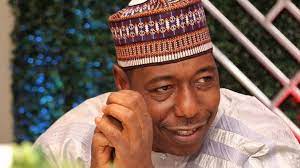
2022: My New Year Message to Borno people
By: Governor Babagana Umara Zulum
Our dear people of Borno, at this important occasion of marking the beginning of the New Year, it is important to share information with you as part of our accountability to you. Regular clear communication provides an opportunity to let everyone know the direction of leadership so that citizens, partners and friends of Borno State would have a good understanding of what we have done, what we are doing and the direction we plan to take in the important responsibility of rebuilding our economy, rebuilding lives and livelihoods as a whole.
We must be very clear that there can be no livelihoods without lives. We continue to work tirelessly on issues of security so that we can guaranty physical security that would allow citizens to pursue their legitimate livelihoods in safety. In 2021, we took a number of steps to improve and strengthen security by supporting our forces including the vigilantes with tools, equipment and resources to discharge their duties well. The results of our proactive measures are beginning to show as we recorded fewer attacks and the security forces did marvelously well in protecting us. We are not yet where we would like to be but we are certainly making progress in the right direction. Consequently, I am committed to ensuring more support for our security forces and the indefatigable local vigilantes that are helping us.
Part of our strategy for strengthening resilience is the bold step that we took in closing down the internally displaced persons’ camps in Borno State as a whole. Although we have explained in details the reasons behind the action, for the sake of clarity, I will summarize as follows:
1. We closed the IDP camps to clean up the places and give our people dignity as well as purpose. Living in IDP camp is not what we are used to, or what we like as a people. Therefore, we believe that a safe life of dignity is a right for all the citizens of Borno, and indeed Nigeria.
2. The IDP camps were becoming a slum where all kinds of vices were happening including prostitution, drugs and thuggery in some cases. No responsible leadership will allow people to live an undignified life under its watch.
3. The idea of IDP camp was, and remains an interim measure to provide safety especially during the peak of the insurgency. Consequently, the camps were not meant to continue forever. The question of closure of the camp was not a matter of IF but when. Efficient managers would agree that there is no better time than now to get things done. As part of the closure, we continue to learn lessons, adapt our strategy and make necessary changes as we go along. The worst option would be to do nothing. We are not prepared to do nothing. Rather we are ready to do whatever it takes to restore the dignity of our people.
4. Keeping the camp open endlessly is not sustainable. This is because it becomes difficult to plan effectively for a dignified economic and social development of the people. The IDP camps would also eventually become too expensive to run with a possibility of causing far more harm than good. Take for example there are many potential difficulties one would expect if we chose the option of converting the camps to permanent structures for the people. If we succeed in building permanent structures, we need to ensure people have access to land, as many of our people are farmers.
We followed the best practices from around the world in the process of closing the camps. We will continue to listen to all well-meaning citizens, partners and friends who have ideas and suggestions to improve on the efforts that we are putting into this process. It is important to emphasise that the closure of the camps is not a political decision. It is a pragmatic action. Our administration puts the Borno people first in every decision. Our people remain the centrepiece of our strategy. We are aware that there would be some temporary inconvenience to people as they relocate. That is why we provide different palliative measures to strengthen their initial installation and stability in the new location. In our plans we have made for short, medium and long term measures to support our people returning their original places of origin where we can guaranty safety. We know that the return strategy would like have some issues we need to address or things we need to change. We will not abandon our people as we continue to work for the betterment of all.
Ahead of this New Year, I had on December 30, 2021, presented the budget of Borno State to the State House of Assembly. The budget is readily available for your information and I invite you to read it to understand what we plan to do in this 2022. We have put significant emphasis on education. You will notice this in percentage terms as Education takes the biggest part of the budget figures. Let me reassure you that other sectors are also strongly under focus and we plan to do more in agriculture, health, security and infrastructure. We will continue to modernize Borno State from the biggest towns to the smallest communities.
Also Read: Bandits kill 5 including 82 year old Monarch in Zamfara
Talking about infrastructure development, in 2022, we will continue to open up our rural communities by working on selected roads, and making lives better in our local government areas. I am convinced that better life in rural communities will translate to improvement in security and well-being of our people. What is good for the state capital is good for the remotest community of Borno.
Let me take this opportunity to appreciate the overwhelming support that we have enjoyed from all the people of Borno State and, indeed the recognition from other well-meaning Nigerians all over. Unfortunately, I have read with dismay certain comments in which some people compare our efforts with what other leaders are doing in their respective states in Nigeria. I wish to make it clear that our determination to work tirelessly for the people of Borno State should not be seen as anything of a surprise. Borno State suffered the most from the insurgency with so much carnage and damage to lives and livelihoods. Our peculiar situation in Borno State basically means that if we are not focused, we would have a significant Gulf in development to catch up with. I therefore humbly appeal to all well-meaning Nigerians not to compare leadership without taking into consideration the different realities that we face in our respective States. I have no doubt at all that each state is working according to their respective plans and the urgency of their situation.
Finally, as we enter this New Year 2022, I pray the Almighty Allah to grant us the wisdom to lead well, to be even more accountable and give us lasting peace in Borno State. For the citizens, we solicit for your continued support and understanding. Every decision that I make is always in the best interest of the State of Borno. Some decisions will yield immediate results while others may take some time to mature. We can cite examples of the roads and other infrastructure that we have completed whereas the work on finding lasting solutions to our electricity challenge is still going on. You will recall that I commissioned the start of the Borno State independent power plant on Thursday 30th September, 2021 by 11.00am in the morning. I keep track of projects and I keep track of the timeline for delivery. The work is still going on and it is on schedule to be delivered according to the timeline we agreed. Improved electricity supplies will improve the economic activities of our dear state.
I take this opportunity to appreciate President Muhammadu Buhari, the Federal Government of Nigeria, international partners, the private sectors, our traditional leaders and friends of Borno State who have supported us strongly from the beginning. I thank very sincerely, the military, the police, our vigilantes and local hunters who have been making progress in the area of security. We must recognize the support of our entire team and the dedication with which they have been working. Thank you very much indeed. In 2022, I challenge you to do more for Borno State.
It is important to close this information session by assuring you that we will not be distracted by all kinds of speculations about the 2023 elections. There are those who work for elections and there are those who work for legacies. Our administration is committed to giving our best by keeping the promises we made for the current mandate. The serious business of working for the people of Borno State is enough occupation for us, as I believe that there is time and space for everything.
As you enjoy the holiday period, please be vigilant, be safe and keep all hygiene protocols to protect yourselves and your families.
Thank you and Happy New Year to you all.
Professor Babagana Umar Zulum
Governor of Borno State.
January 1, 2022.
2022: My New Year Message to Borno people


Uncategorized
Wildlife Traffickers Shift Operations to Port Harcourt, Enugu as EIA Uncovers Corruption.

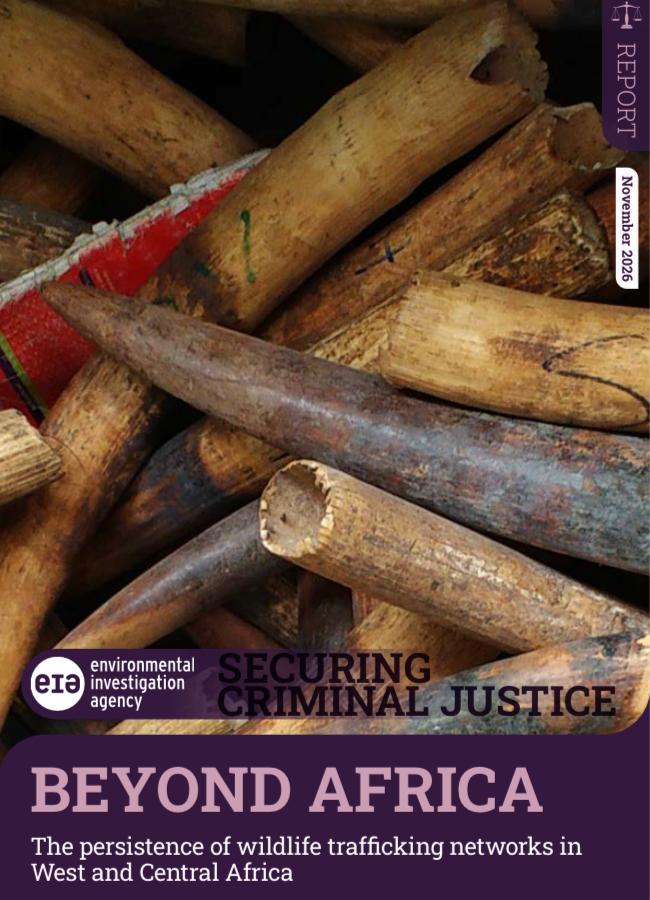
Wildlife Traffickers Shift Operations to Port Harcourt, Enugu as EIA Uncovers Corruption.
By: Michael Mike
The Environmental Investigation Agency (EIA), a London-based environmental watchdog, has raised the alarm over the persistence of organised wildlife trafficking in West and Central Africa, warning that criminal networks continue to exploit corruption and weaknesses in law enforcement despite increased arrests and seizures.
The agency said Nigeria had become a major consolidation and export hub for illegally sourced elephant ivory and pangolin scales destined primarily for Asian markets, with traffickers adapting their operations to evade enforcement.
In its latest report, Beyond Africa: The Persistence of Wildlife Trafficking Networks in West and Central Africa, released on Thursday, EIA said six years of undercover investigations had revealed that wildlife trafficking remained a serious and organised criminal enterprise sustained by corruption across the supply chain.
The findings build on the agency’s 2020 report, which identified West and Central Africa as an epicentre of ivory and pangolin scale trafficking to Asia.
EIA’s Securing Criminal Justice Programme Lead, Justin Gosling, said warnings contained in the earlier report had not been adequately addressed, allowing trafficking networks to evolve rather than being dismantled.
“It’s unfortunate for wildlife and the countries concerned that the warnings of our 2020 report have not been heeded,” Gosling said.
He said the criminal networks had demonstrated a consistent capacity to circumvent enforcement pressure rather than be deterred by it.
The report acknowledged improvements in wildlife law enforcement in Nigeria and the wider region since 2020, including increased detection of incidents, arrests and prosecutions.
It also highlighted Nigeria’s Endangered Species Conservation and Protection Bill, which has passed the National Assembly and is awaiting presidential assent, describing it as the most significant overhaul of the country’s wildlife protection framework in nearly four decades.
However, Gosling said increased enforcement activities had yet to translate into the dismantling of trafficking networks.
According to the report, traffickers operating in Nigeria have responded to enforcement pressure by shifting export operations from Lagos to locations such as Port Harcourt and Enugu, where they perceive enforcement presence to be weaker.
The criminals have also modified concealment techniques, used legitimate products to disguise contraband and shifted financial transactions towards bank transfers and underground banking systems amid the depreciation of the naira.
The report identified a significant gap between arrests and successful prosecutions, stating that fewer than 10 convictions were recorded among 58 wildlife crime incidents documented in Nigeria between January 2021 and February 2026.
Across West and Central Africa, the arrest-to-conviction rate stood at only 16 per cent, with enforcement efforts largely targeting low-level operatives caught in possession of illegal wildlife products.
It said corrupt officials, logistics coordinators and financial beneficiaries who sustain trafficking networks at higher levels frequently escaped prosecution.
EIA identified corruption as a structural feature of the illegal wildlife trade, alleging that bribery occurred at different stages of the supply chain, including road checkpoints, port scanning facilities and among senior officials.
The investigations reportedly uncovered cases in which a prolific trader maintained high-level contacts who arranged bribes across relevant agencies before shipments were moved.
The report also alleged that container scanners introduced at Onne Port in 2021 to improve detection were being circumvented through the bribery of officers operating the equipment.
Beyond wildlife trafficking, the agency warned that the criminal networks were increasingly connected to drug trafficking, money laundering and other financial crimes.
It said some networks were simultaneously involved in synthetic drug trafficking and illegal wildlife trade, with illicit proceeds channelled through real estate transactions and informal value transfer systems.
The agency called for a broader, multi-agency response capable of investigating financial flows and dismantling the criminal structures behind wildlife trafficking rather than concentrating mainly on seizures and arrests.
Gosling said Nigeria could not tackle the trade in isolation, noting that ivory and pangolin scales were sourced from several countries, including Cameroon, the Central African Republic, Chad, the Republic of the Congo, the Democratic Republic of the Congo and Gabon, before being consolidated in Nigeria for export.
He called for stronger regional cooperation through joint investigations, intelligence sharing and reciprocal enforcement measures.
Despite the challenges, Gosling said there were grounds for cautious optimism, pointing to the proposed wildlife protection legislation, changing financial practices that could create new intelligence opportunities and growing recognition of the links between wildlife trafficking and other organised crimes.
He, however, warned that sustained political commitment and international support were required to reverse the trend.
“The threatened species involved cannot wait indefinitely and determined traffickers are not standing still,” he said.
The EIA said its key findings included the resilience of trafficking networks, inadequate follow-up investigations, weak transnational cooperation, low conviction rates, entrenched corruption and the growing convergence of wildlife crime with drug trafficking and money laundering.
The organisation investigates and campaigns against environmental crimes, including illegal wildlife trade, deforestation, illegal logging and pollution, using undercover investigations and advocacy to promote stronger legislation and enforcement.
Wildlife Traffickers Shift Operations to Port Harcourt, Enugu as EIA Uncovers Corruption.
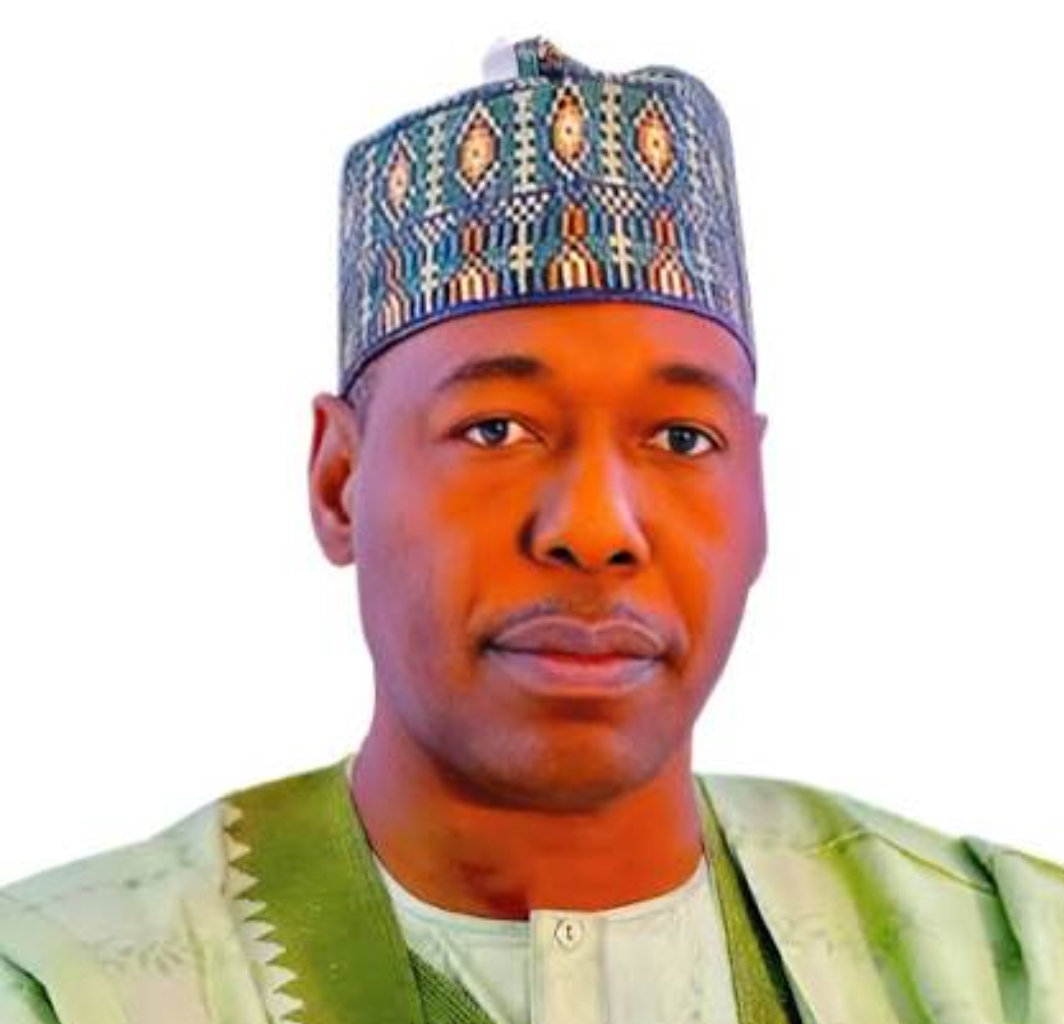
Borno Safe, Stable and Ready for Investment… Zulum
Bodunrin Kayode
In the midst of about 40 prospective Investors who attended the Kano roundtable held recently in Kano, Borno State Governor Professor Babagana Zulum has declared the state quite safe for investments.
He said the state was now stable, and ready for any long or short term investments even as he urged entrepreneurs to seize the abundant opportunities present in the agriculture, livestock, fisheries, housing, and infrastructure sub sectors abundant in the state.
The Governor gave the assurance during the second private sector engagement and investment roundtable held at Tahir Guests Place in Kano during the week.
Zulum represented by his Chief of Staff, Dr Babagana Mallumbe, during the roundtable, themed “Mobilising Private Capital for Durable Solutions and Sustainable Development”, attracted several potential investors from different sectors in Nigeria.
The program supported by the Deutsche Gesellschaft für Internationale Zusammenarbeit (GIZ), the European Union (EU), and the German Government, took place about three weeks after the “Lagos roundtable”, where Borno secured nine investment commitments accordingly.
Governor Zulum told private-sector entrepreneurs that the state was gradually shifting from the”humanitarian relief” syndrome to economic recovery, with private investment needed to create jobs and help families rebuild their livelihoods as the rehabilitation process continues.
The Governor maintained that Borno is safe, stable and open for businesses with its vantage position sitting at the nexus of the Lake Chad Basin, and serving as a natural trade corridor linking Nigeria to Cameroon, Chad and Niger Republic.
Zulum credited the armed forces and other security agencies, including the volunteer comrades in arms, with the vital security gains of the state adding that Borno’s location offered business accesses to an underserved regional market with strong demand for goods and services.
The Governor identified the state’s vast arable land, livestock potential and solid mineral deposits as opportunities awaiting investment stressing that government has created the enabling environment, but the private sector should create wealth through jobs and resultant lasting prosperity.
Zulum explained that his administration so far has been investing in skills and human capital under Borno’s 25-year development plan as a long term strategy.
He stressed that the state’s vocational training centres had produced more than 3,000 graduates, while training in the health sector was also receiving special attention.
The Governor assured prospective investors that his administration would honour its commitments and support transparent public-private partnerships (PPP), particularly in housing, agriculture and other productive sectors.
“We are not here to ask for charity. We are here to present bankable, high-yield and direct investment opportunities for you. Borno is ready. Borno is bankable. We invite you to partner with a government that honours its word,” he assured.
Zulum revealed that incentives available to investors included streamlined land acquisition, infrastructure support, industrial clusters and a supportive tax framework.
Borno Economic Gateway to Over 50 million residents of late Chad
Chief Adviser to the Governor on Sustainable Developmental Goals (SDG’s), Partnerships and Humanitarian Response, Dr Mairo Mandara hinted that Borno is a gateway into a regional economic system of more than 50 million people.
She maintained that Borno has moved from emergency to recovery status stressing that the task at hand now is to convert recovery into an economy which would work as a long term strategy for the people.
She hinted that participants would also receive briefings on the state’s proposed industrial park, inland dry port and bonded terminal, alongside details of the ease of doing business framework.
Borno Safe, Stable and Ready for Investment… Zulum
NDLEA Arrests Two Europe-Based Nigerians with 200 Cocaine Wraps at Abuja Airport
By: Michael Mike
The National Drug Law Enforcement Agency (NDLEA) has arrested two Europe-based Nigerian businessmen attempting to smuggle 3.46 kilogrammes of cocaine to Paris, France, after ingesting 200 wraps of the illicit drug, while also intercepting a woman with 266 rounds of live AK-47 ammunition along the Abuja-Kaduna Expressway.
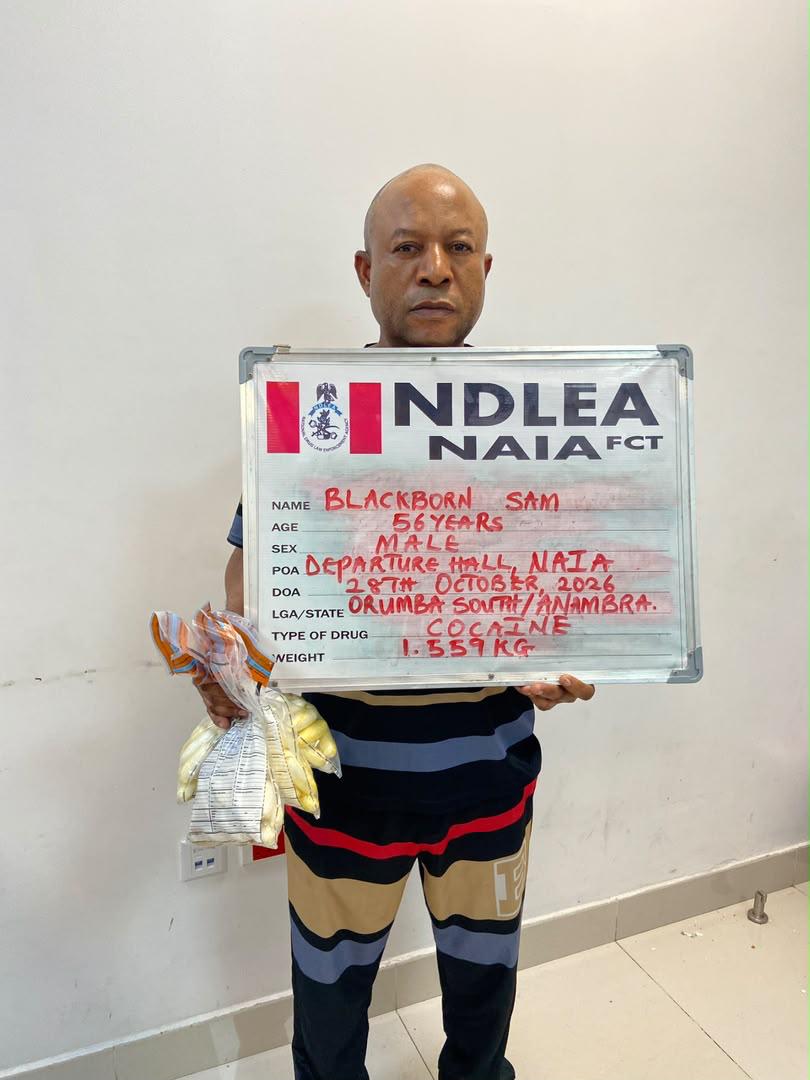
The two suspects, identified as Aliocus Odife and Sam Blackborn, were arrested last Wednesday, during the outward clearance of an Air France flight AF 832 from Abuja to Paris at the Nnamdi Azikiwe International Airport.
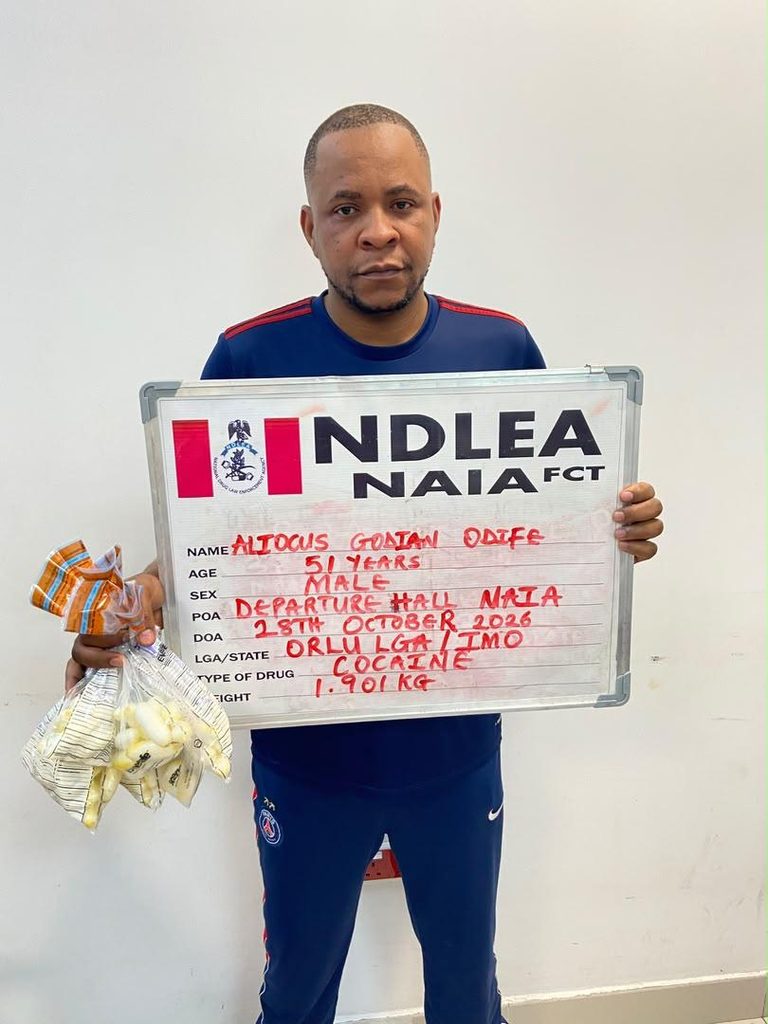
The NDLEA said the suspects, who had travelled to Nigeria for holidays, were subjected to body scans which confirmed that they had ingested foreign objects suspected to be cocaine.
Odife, who claimed to live in France and work in a factory, reportedly arrived in Nigeria on October 21 for a short holiday. He subsequently admitted to ingesting 110 wraps of cocaine weighing 1.901 kilogrammes, which he excreted under observation.
His co-traveller, Blackborn, also tested positive during a body scan and admitted to swallowing 90 wraps weighing 1.559 kilogrammes. He equally excreted all the wraps under observation.
The spokesman of the agency, Femi Babafemi in a statement on Sunday,said both consignors tested positive for cocaine, bringing the total recovered from the suspects to 200 wraps weighing 3.460 kilogrammes.
In a separate operation, NDLEA operatives on patrol along the Abuja-Kaduna Expressway arrested Aisha Isah at a tollgate with 266 rounds of live AK-47 ammunition.
The agency also arrested a 68-year-old man, Ifeanyi Egwolonwu, along the Zaria-Kano Expressway at Gwargwaje, Zaria, with 2,770 ampoules of pentazocine injection, 100 ampoules of diazepam injection, 11,000 tablets of diazepam and 4,500 tablets of Exol-5.
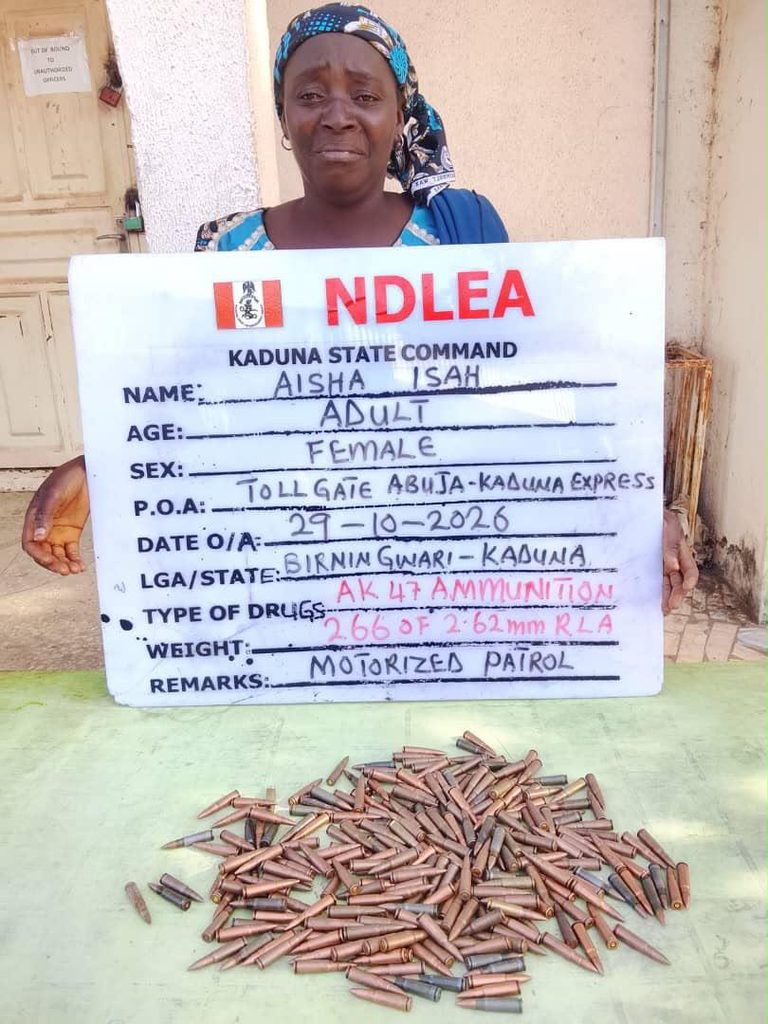
In Kaduna State, officers raiding Tashan Banke also arrested seven suspects, including Faisal Adamu, and recovered 178.85 kilogrammes of cannabis alongside quantities of diazepam, tramadol, Exol-5 and pregabalin.
Across other states, the agency recorded further seizures of illicit drugs in a series of operations targeting trafficking networks and drug distribution points.
In Lagos, operatives acting on intelligence intercepted a Volkswagen LT 28 bus along Kudirat Abiola Way, Ikeja on October 25, recovering 537 kilogrammes of skunk, a strong strain of cannabis.
Another team intercepted a brown J5 bus along the Gbagada-Oshodi Expressway the same day, seizing an additional 439 kilogrammes of the substance.
In Oyo State, two suspects, Oguntona Nasiru, 46, and Soji Balogun, 47, were arrested last Thursday, while loading 554 kilogrammes of skunk into a Volvo truck along Idere Road, Igboora.
The operation was a follow-up to an earlier raid targeting a notorious drug dealer identified as Omo Oba, who escaped arrest on October 25 when NDLEA operatives seized 309.5 kilogrammes of cannabis popularly known as Ghanaian Loud, allegedly linked to him.
In Kano State, operatives raided a location in the Tsamiya area of Gezawa last Monday, recovering 247,500 tablets of diazepam weighing 57.7 kilogrammes and 100,000 tablets of Exol-5 weighing 38.7 kilogrammes.
Two days later, officers stormed Dorayi area, where they arrested Ziya’ulhaq Abdullahi, 35, and Garba Muhammed, 52, with 19,250 pills of tramadol 225mg weighing 13.6 kilogrammes.
In Ondo State, four suspects, including Bassey Okon, 24; Abraham Edet, 20; and Oto Udo, 24, were arrested during a raid on cannabis farms in Ijare forest on October 25.
The operation led to the recovery of 16 bags of processed cannabis weighing 180 kilogrammes.
Similarly, NDLEA operatives, supported by soldiers, destroyed a 1.646-hectare cannabis plantation at Eko Camp, Ilushi, Esan South-East Local Government Area of Edo State, last Wednesday.
The plantation was estimated to have a yield of 4,115.53 kilogrammes of cannabis.
A 50-year-old woman, Christiana Uboi, was arrested at the camp with 301 kilogrammes of processed cannabis, while another 176 kilogrammes was recovered during the operation.
In Sokoto State, operatives of the agency’s Zone 7 Command arrested a 68-year-old man, Ibrahim Ayuba, on Saturday with 236.6 kilogrammes of skunk.
The agency said its commands conducted sensitisation activities during the week in schools, worship centres, workplaces and communities, including Obawole Grammar School II, Ojodu, Lagos; Nsukka High School, Enugu; Government Technical College, Dorayi Babba, Kano; and Ajagbe Comprehensive High School, Iperu, Ogun State.
Commenting on the arrests and seizures, NDLEA Chairman and Chief Executive Officer, Brig.-Gen. Buba Marwa (rtd), commended officers of the Abuja airport, Lagos, Kano, Kaduna, Sokoto, Ondo, Oyo and Edo commands for their operations.
Marwa described the arrest of the two cocaine couriers at the Abuja airport as a warning to Nigerians living abroad who might believe their foreign residence could provide cover for drug trafficking.
He said officers at the country’s entry and exit points remained alert, warning that there was no hiding place for anyone willing to risk their lives and liberty by ingesting illicit drugs for financial rewards.
The NDLEA chairman also directed officers across the country to sustain the pressure on drug cartels while intensifying drug demand reduction campaigns through its War Against Drug Abuse (WADA) sensitisation programme.
NDLEA Arrests Two Europe-Based Nigerians with 200 Cocaine Wraps at Abuja Airport

Korea Seeks Nigerian Manufacturing Shift, Urges Ratification of 20-Year Tax Treaty

Wildlife Traffickers Shift Operations to Port Harcourt, Enugu as EIA Uncovers Corruption.

ECOWAS, Germany Open Strategic Dialogue as Berlin Commits €49m to West Africa

Roger Federer’s Shock as DNA Results Reveal Myla and Charlene Are Not His Biological Children

THE PLIGHT OF FARIDA

FAILED COUP IN BURKINA FASO: HOW TRAORÉ NARROWLY ESCAPED ASSASSINATION PLOT AMID FOREIGN INTERFERENCE CLAIMS
-
 News3 years ago
Roger Federer’s Shock as DNA Results Reveal Myla and Charlene Are Not His Biological Children
-
Opinions5 years ago
THE PLIGHT OF FARIDA
-
 News2 years ago
FAILED COUP IN BURKINA FASO: HOW TRAORÉ NARROWLY ESCAPED ASSASSINATION PLOT AMID FOREIGN INTERFERENCE CLAIMS
-
 Opinions5 years ago
POLICE CHARGE ROOMS, A MINTING PRESS
-

 News3 years ago
EYN: Rev. Billi, Distortion of History, and The Living Tamarind Tree
-

 ACADEMICS3 years ago
A History of Biu” (2015) and The Lingering Bura-Pabir Question (1)
-

 Columns3 years ago
Army University Biu: There is certain interest, but certainly not from Borno.
-

 Politics1 year ago
2027: Why Hon. Midala Balami Must Go, as Youths in Hawul and Asikira/Uba Federal Constituency Reject ₦500,000 as Sallah Gift
