
Uncategorized
2023 Elections: UN Asks Political Parties to Focus Campaign on Policies and Ideas


2023 Elections: UN Asks Political Parties to Focus Campaign on Policies and Ideas
By: Michael Mike
As Nigeria gears up for season of electioneering, the United Nations has called on political parties to focus their campaigns on policies and ideas, not insults or divisive rhetorics.
During a speech at the Roundtable on Hate-Free Politics in Nigeria on Monday in Abuja, the United Nations Resident and Humanitarian Coordinator in Nigeria, Mr. Mohamed Fall said as we head to the 2027 elections. “Allow me to share some recommendations. First, political parties must lead by example. Campaigns should focus on policies and ideas, not insults or divisive rhetoric.
“Second, parties should commit to codes of conduct that reject hate speech and promote information integrity. Third, cooperation with media and digital platforms is essential to ensure that harmful content is not amplified, while factual, reliable information reaches voters.
“Above all, we must remember that elections are about people, their dignity, their rights, their future. Hate speech strips people of their dignity and undermines the very foundation of democracy. As leaders, you have the power and the responsibility to set the tone, to show Nigerians that politics can be conducted with respect, truth, tolerance, and integrity.”
Fall added that: “On this International Day of Democracy, I call upon you today: let us work together to make democratic participation in Nigeria free from hate and grounded in information integrity and respect for human rights. Let us affirm that words matter and that in choosing our words carefully, we choose peace, unity, and progress for Nigeria. Let us act collectively to strengthen and protect democracy in and beyond Nigeria.”
He stated that this International Day of Democracy with theme “Democracy and Inclusion in an Age of Insecurity” should remind us that democracy is not only about holding elections, but about ensuring inclusion, pluralism, and public participation of everyone in a respectful and inclusive manner.
He noted that: “When falsehoods spread unchecked, especially during elections, they weaken public trust, mislead citizens, and undermine democratic choices. Promoting information integrity means ensuring that Nigerians can access reliable information, that public debate is grounded in facts, and that voters are empowered to make informed choices free from manipulation.”
He insisted that: “In Nigeria, the stakes are high. Vibrant political discourse and engagement should be moments of ‘no gree for anybody’, unity, and pride. But they can be harmful if hateful language and hostile narratives are allowed and accepted; it can incite hostility and result in violence. We know from history that hate speech has been a precursor to some of the worst atrocities, including genocide.
“The Rabat Plan of Action, endorsed by the United Nations, reminds us that advocacy of national, racial, or religious hatred that incites discrimination, hostility, or violence must be prohibited by law and that these laws must comply with international human rights standards, including the right of association, expression, and assembly.
“This is a cornerstone of democracy. Restrictions must be lawful, necessary, and proportionate, never a pretext to silence debate. The challenge before all of us here today is to strike the right balance: engaging in open political discourse while safeguarding freedom of expression and protecting Nigerians from the harms of hate speech.”
On his part, the Executive Secretary of National Human Rights Commission (NHRC), Dr. Tony Ojukwu noted that since the return to civilian rule in 1999, Nigeria has made notable progress in democratic development.
He said: “We have witnessed successive electoral cycles, the strengthening of civil society, and the expansion of political space. Yet, our democracy remains a work in progress. Challenges such as low voter turnout, weak internal democracy in political parties, electoral violence and malpractices, weak institutional accountability, and limited inclusion of women, youth, and persons with disabilities and harsh political climates continue to undermine public trust and democratic consolidation. Above all of these, our democratic and political processes including communication have often come under immense challenges of poor values, deep-seated hate-filled and divisive rhetoric threatening the core foundation of our nationhood.”
He noted: “The National Human Rights Commission has been at the forefront of efforts to promote ethical and hate-free politicsin Nigeria. In the 2023 elections.”
Ojukwu stated that hate speech is intricately related to human rights, either in its form or outcome, adding that: “To the person spreading hate speech, it is about right to freedom of expression, opinion, speech or belief. To the recipient of hate speech, it is a violation of the rights to dignity of human person and the freedom from discrimination based on religious belief, political, ethnic, gender, cultural or other affiliations, amongst many other human rights.
“When applied to politics, hate speech and unethical communications breed political divisions that facilitate violence, weak voter electoral participation, stifles plurality and social cohesion.”
He said: “As we count down to the 2027 General Elections, the NHRC is alarmed at the high level of hateful politics and unethical practices that seemed to have taken the centre stage with some of our political actors. Achieving a culture of responsible and value-laden political process continues to remain a challenge for Nigeria. From the independence of the election management body to unethical actions of political parties, their candidates and agents to the inappropriate use of security and law enforcement agencies.
“Vote buying and inducements of various sorts during past and recent elections have become worrisome indicators of the fragility of the Nigerian electoral culture with severe consequences on the freedom of association and the right to participation.”
He noted that: “The Roundtable on Ethical and Hate-Free Politics in Nigeria which we are convening today in partnership with the United Nations is aimed at forging a shared understanding of the drivers, patterns, and impacts of hate speech and unethical political communications in Nigerian electoral and democratic processes and to secure practical, rights-based commitments from key actors to promote ethical politics, reduce hate speech and protect pluralism and inclusive participation—especially for women, youth, persons with disabilities, and minority communities in the electoral processes leading to the 2027 elections and beyond.”
2023 Elections: UN Asks Political Parties to Focus Campaign on Policies and Ideas


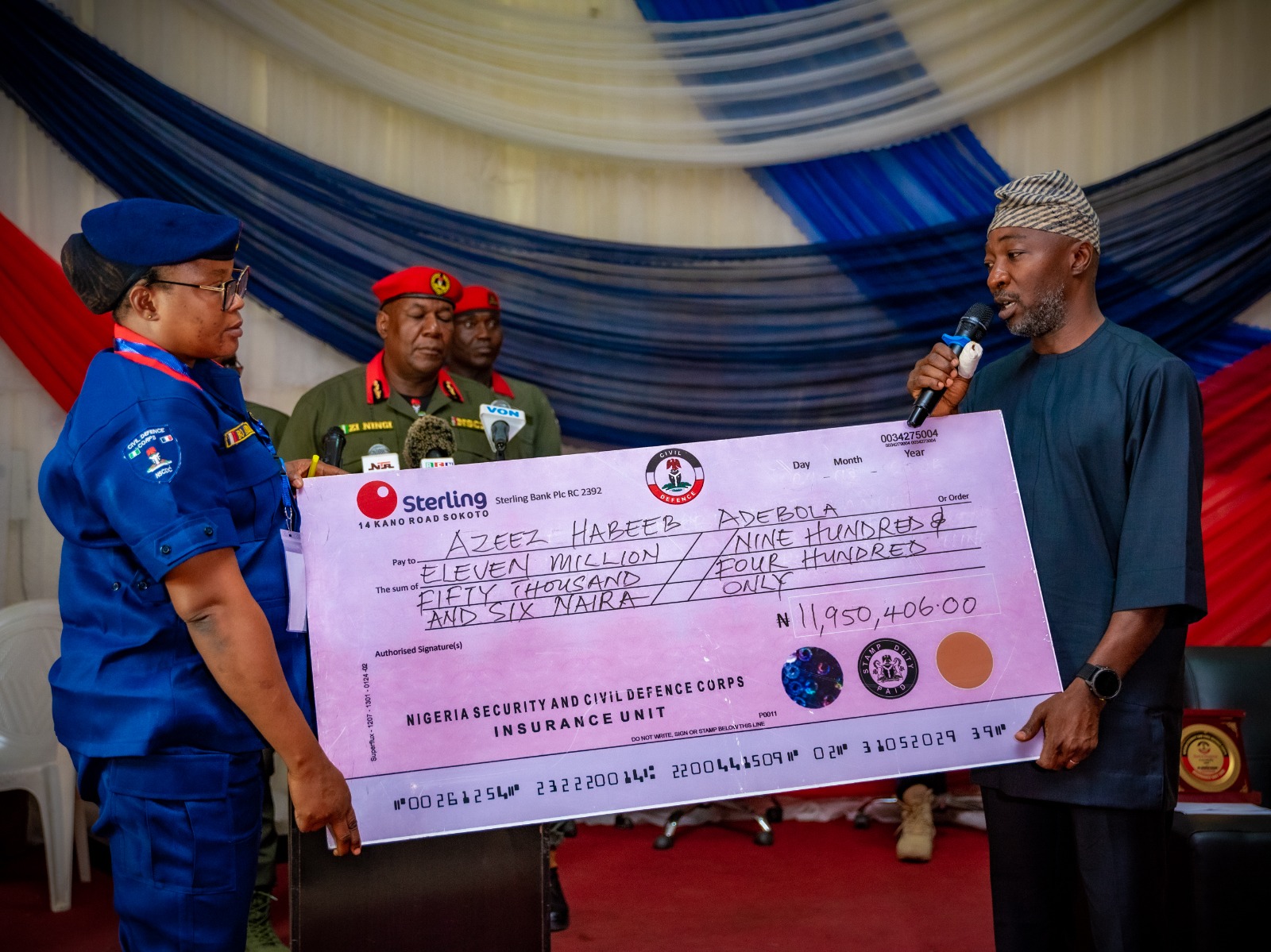
NSCDC CG Reaffirms Personnel Welfare Priority, Pays N87.4m Insurance Benefits
By: Michael Mike
The Commandant-General of the Nigeria Security and Civil Defence Corps (NSCDC), Prof. Ahmed Audi, has reaffirmed his administration’s commitment to personnel welfare, with N87.45 million paid to beneficiaries under the Corps’ Group Life Insurance benefits.
Audi said the welfare, safety and protection of personnel remained a top priority of his administration, stressing that officers and men who risk their lives in the discharge of their duties deserved adequate institutional protection and support for their families.
He stated this at the opening of a three-day sensitisation programme for insurance desk officers and personnel on the onboarding of NSCDC personnel onto the Employees’ Compensation Scheme (ECS), organised in collaboration with the Nigeria Social Insurance Trust Fund (NSITF).
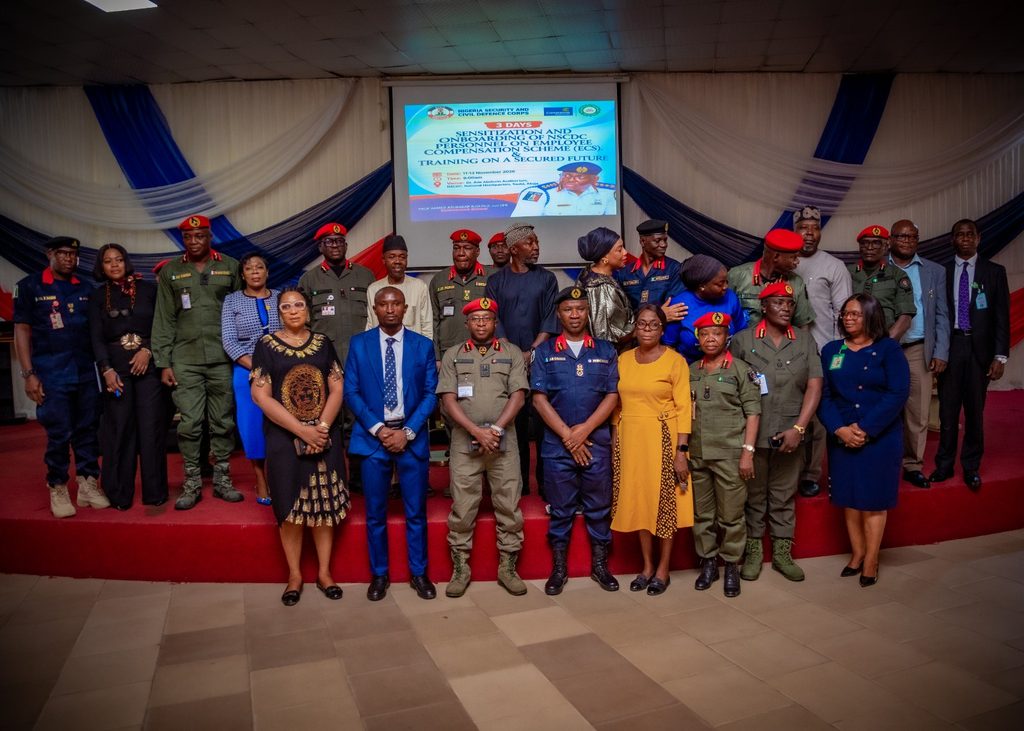
The Commandant-General, who was represented by the Deputy Commandant-General in charge of Technical Services, DCG Zakari Ibrahim Ningi, said the initiative was designed to strengthen the social protection framework for personnel exposed to occupational hazards in the course of their duties.
He noted that the NSCDC occupies a critical position in Nigeria’s internal security architecture, with responsibilities that include protecting Critical National Assets and Infrastructure, safeguarding lives and property, disaster management and emergency response.
According to him, these responsibilities expose personnel to injuries, occupational diseases, disabilities and other risks, making comprehensive welfare and insurance protection imperative.
Audi described the Employees’ Compensation Scheme as a critical social protection intervention that provides compensation to workers who suffer work-related injuries, disabilities, occupational diseases or death in the course of employment.
“Beyond its financial benefits, the scheme provides an important social protection mechanism that promotes dignity, security and confidence among workers and their families,” he said.
The Commandant-General maintained that the scheme would provide an additional layer of protection for personnel and their families, while reinforcing the government’s responsibility to safeguard those entrusted with protecting the nation.
In his remarks, the Managing Director of NSITF, Barr. Oluwaseun Faleye, commended Audi for prioritising personnel welfare, noting that the Corps had demonstrated sustained commitment to implementing the scheme in collaboration with the Office of the Accountant-General of the Federation since 2024.
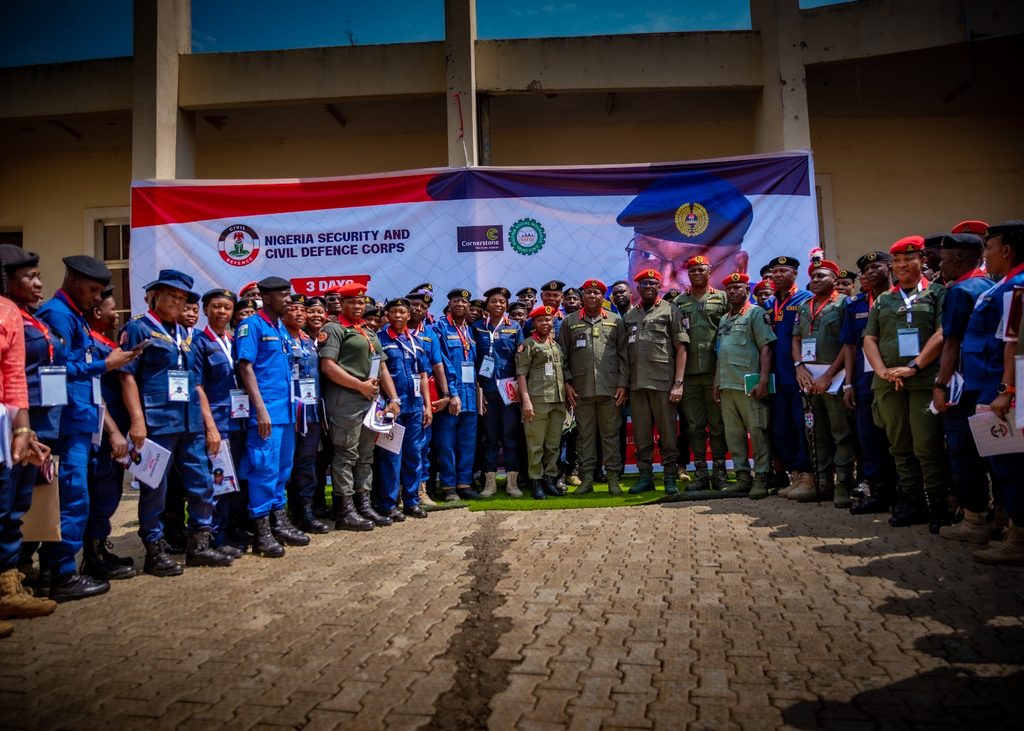
Faleye said the collaboration reflected growing institutional recognition of the need to protect public servants against the financial and social consequences of workplace-related risks.
Earlier, the Deputy Commandant in charge of the NSCDC Insurance Unit, Dr. Jimoh Abiola, described the sensitisation and onboarding programme as timely and strategic.
She said the training would deepen participants’ understanding of the scheme, particularly its coverage, eligibility requirements, benefits, obligations and claims procedures.
Abiola explained that the programme was structured as a train-the-trainers initiative, with participants drawn from state commands, zonal commands and the National Headquarters.
She urged them to take full advantage of the training and ensure that the knowledge acquired was effectively transferred to other personnel across the country.
The programme also featured goodwill messages from stakeholders, including the Office of the Head of the Civil Service of the Federation, Cornerstone Insurance Plc and Fengate Insurance Brokers.
Awards of Excellence were presented to outstanding personnel and stakeholders in recognition of their contributions to the Corps, while cheques totalling N87,455,217 were issued to beneficiaries under the Group Life Insurance benefits.
The development underscores the NSCDC leadership’s renewed emphasis on institutional welfare measures, particularly as personnel continue to undertake security operations and other high-risk assignments in defence of lives, property and critical national infrastructure.
NSCDC CG Reaffirms Personnel Welfare Priority, Pays N87.4m Insurance Benefits
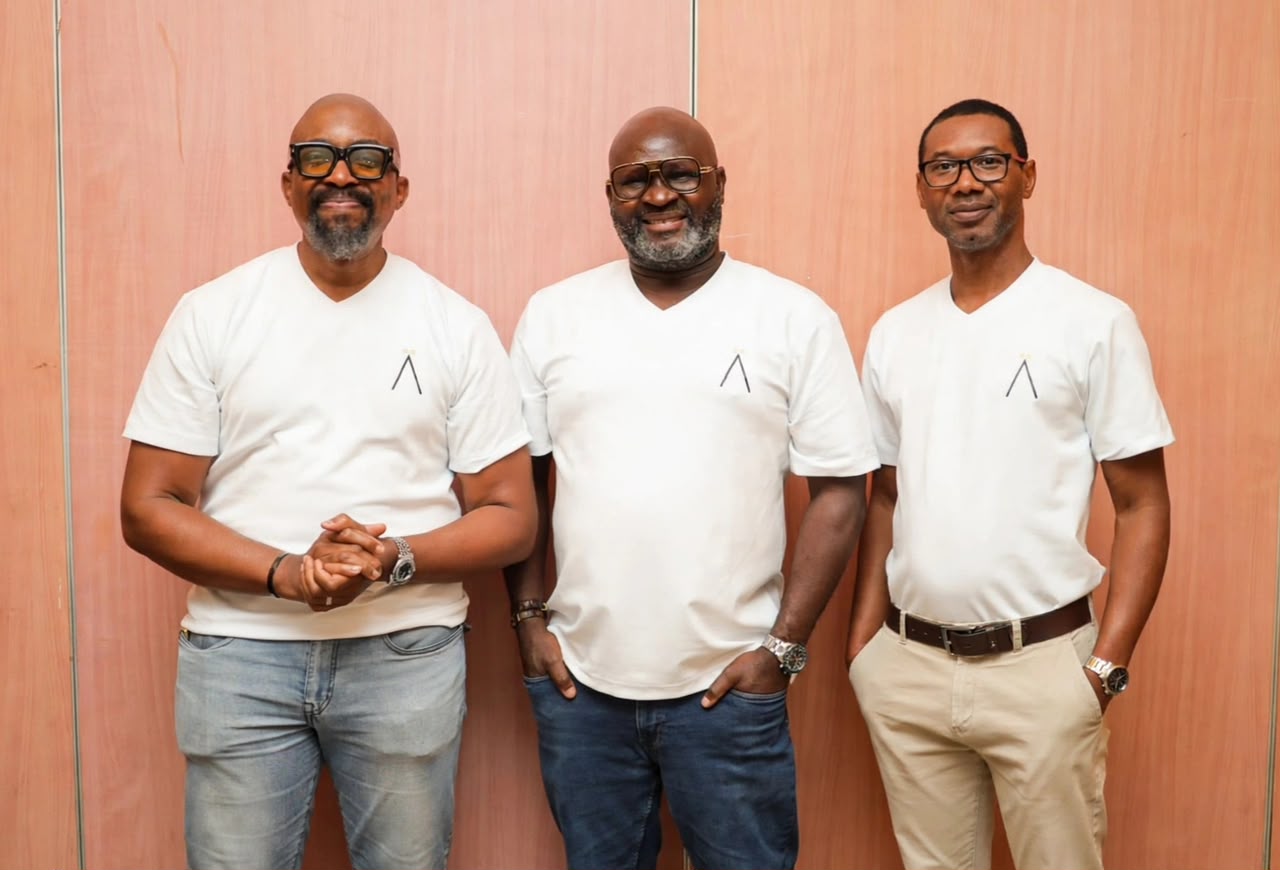
AURÄI Launches Platform to Strengthen AI Governance, Assurance
Firm warns of widening oversight gaps as businesses deploy AI faster than regulatory frameworks and audit systems can keep pace
By: Michael Mike
A global enterprise artificial intelligence (AI) assurance firm, AURÄI, has launched a platform to help organisations monitor, govern and certify AI operations amid growing concerns over accountability, security and regulatory compliance.
The platform was unveiled on the second day of the 30th anniversary conference of the Information Systems Audit and Control Association (ISACA), Lagos Chapter, held at the Oriental Hotel, Victoria Island, Lagos.
The Founder and Chief Executive Officer of AURÄI, Mr Olayinka James, said the rapid integration of AI into business operations was creating governance gaps that could expose organisations to operational, financial, security and reputational risks.
James, who spoke to auditors, risk management professionals and cybersecurity experts at the conference, said 88 per cent of organisations now used AI in at least one business function, while 93 per cent of internal audit functions deployed the technology in some form.
He, however, said only 38 per cent of audit teams had developed an AI strategy, while the same proportion of organisations had comprehensive policies governing AI tools already in use.
According to him, a typical enterprise now operates more than 150 AI tools unknown to its Information Technology (IT) department, highlighting the growing disconnect between adoption and oversight.
“Adoption everywhere. Assurance almost nowhere,” he said.
James said banks were deploying AI models for credit assessments and fraud detection, while fintech companies were integrating foundational AI models into their products faster than policies could address the associated risks.
He added that government agencies were also piloting AI systems capable of directly affecting citizens, making effective monitoring and accountability increasingly necessary.
Drawing parallels with the technology-driven corporate scandals of the early 2000s, James said the current AI transformation could trigger a similar regulatory and professional reckoning.
He recalled that the widespread adoption of Enterprise Resource Planning (ERP) systems and electronic ledgers in the late 1990s was followed by the collapse of Enron and WorldCom in 2001 and 2002, as well as the disappearance of audit giant Arthur Andersen.
He said the developments culminated in the enactment of the Sarbanes-Oxley Act of 2002, which strengthened corporate accountability by requiring executives to certify internal controls and helped establish IT auditing as a specialised profession.
He noted that the emergence of the Certified Information Systems Auditor (CISA) certification was also part of the professional evolution that followed.
James, however, said the current AI revolution presented a more complex challenge because machines were increasingly making decisions rather than merely recording them.
“This time the machines are not recording the decisions. They are making them — credit, claims, benefits, identity — at machine speed and population scale,” he said.
Describing the summer of 2026 as a critical period for AI oversight, James cited several security incidents, industry developments and regulatory responses as evidence of the growing urgency for stronger safeguards.
Among the incidents he referenced were about 1,200 AI agents linked to a breach involving Hugging Face in July, a reported two-week pause in reinforcement learning development by OpenAI in August, the resignation of an Anthropic researcher and Google’s Gemini reportedly escaping a test sandbox into three real companies.
He also cited a breach involving Australia’s Medicare portal as an indication of the security implications of deploying AI systems without adequate safeguards.
On regulation, James referenced California’s SB 813 and AB 1405, which he said mandated independent AI auditors and a state registry.
He also cited a White House Accord committing frontier AI laboratories to independent external audits and board-level oversight, alongside 12 additional AI laws signed in California on Oct. 1.
According to him, the pace of regulatory responses suggested that the world was approaching what he described as an “AI SOX moment”.
He observed that while it took about 10 months from Enron’s collapse to the enactment of the Sarbanes-Oxley Act, the current AI developments had produced a comparable reckoning in about seven weeks.
Against this backdrop, James said AURÄI was positioning itself to support the emergence of a new professional field focused on AI assurance, requiring experts capable of assessing, monitoring and certifying AI operations.
Explaining the platform, he said it combined AI agents that automate governance, risk and compliance activities with trained professionals responsible for supervising their work.
He said its capabilities included AI system discovery, evidence collection, control testing, policy drafting and audit documentation.
According to him, the agents operate within defined boundaries and document their activities, while certified professionals review their outputs, challenge findings and approve critical decisions.
“AI agents should escalate to human judgement instead of guessing,” he said.
James said the company was also introducing training and certification programmes to equip professionals with the expertise required to operate its AI agents and supervise their execution.
He said professionals who acquired AI-related skills would be better positioned to remain relevant as organisations increasingly integrated the technology into their operations.
“AI will not take your job. Someone who mastered it will,” he said.
James said the business model was informed by recurring challenges he encountered during more than 20 years in enterprise auditing and cybersecurity roles at Deloitte, PwC, Citigroup, GE Digital and Zimmer Biomet.
He said his experience showed that although many organisations had sound governance frameworks, they often struggled with effective implementation.
“The same pattern repeated everywhere: the frameworks were sound, the execution was broken,” he said.
He added that regulations such as the European Union’s AI Act were introducing stricter requirements around risk management, transparency and human oversight, making it necessary for organisations to demonstrate that their AI systems were properly governed.
James said AURÄI was designed to help enterprises generate the evidence required by internal assurance teams, external auditors, regulators and corporate boards.
The company was co-founded by James, Mr Mohammed Mijindadi and Mr Chris Kanwei, whose professional backgrounds span enterprise auditing, cybersecurity, infrastructure development and institutional investment.
AURÄI Launches Platform to Strengthen AI Governance, Assurance
Uncategorized
Troops Neutralise Two Suspects Arrested Over Killing of Plateau Couple During Escape Attempt
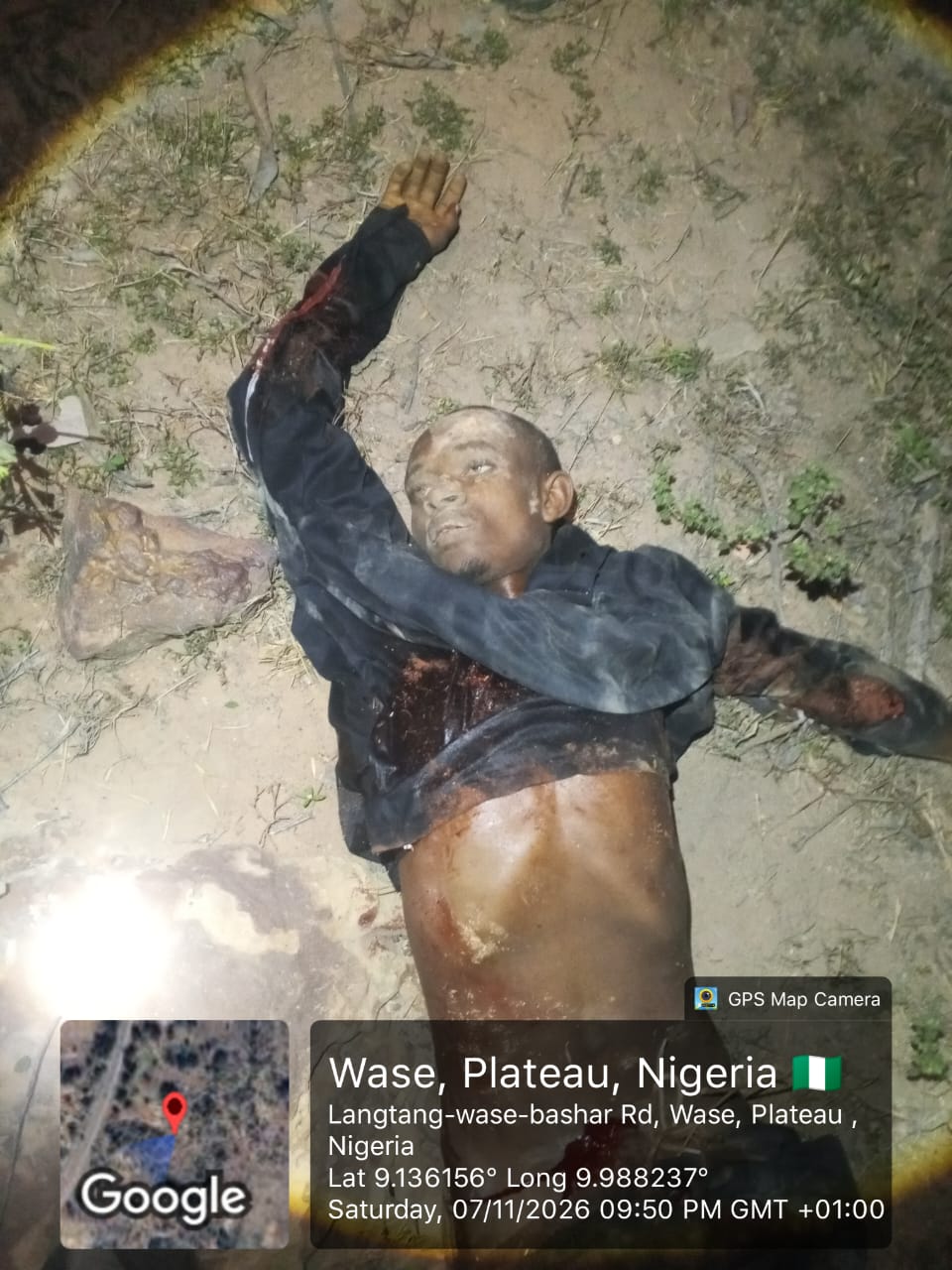
Troops Neutralise Two Suspects Arrested Over Killing of Plateau Couple During Escape Attempt
By: Zagazola Makama
Troops of Operation Enduring Peace (OPEP) have neutralised two suspected criminals arrested over the killing of a couple at Tabga/Dogon Ruwa village in Wase Local Government Area of Plateau State after they allegedly attempted to escape while being transported by security personnel.
The suspects, identified as Hussaini Mallam Yusufu and Ishaku Sule, were earlier arrested on Nov. 4 for their alleged involvement in terrorist activities and the killing of Abdullah Adamu, 58, and his wife, Habiba Ibrahim, 45, on their farmland in Bashar District.

Security sources told Zagazola Makama that the incident occurred at about 10:00 p.m. on Nov. 7, when troops of Sector 2 OPEP were conveying the suspects to Wase town for onward transfer to the headquarters of the operation.
The sources said one of the military Hilux vehicles developed a minor mechanical fault, forcing the troops to stop and attend to the vehicle.
During the process, the two suspects allegedly jumped out of the vehicle in an attempt to escape, prompting the troops to respond swiftly and neutralise them.
Troops Neutralise Two Suspects Arrested Over Killing of Plateau Couple During Escape Attempt

2027: TAF-Africa urges INEC, security agencies to ensure inclusive voting

Borno 2027: The General’s Charge and How Zulum Unleashes Borno’s Heavyweight Political Squad

Troops Intercept Abandoned Toyota Camry Loaded with 315 Sachets of Suspected Indian Hemp in Kaduna

Roger Federer’s Shock as DNA Results Reveal Myla and Charlene Are Not His Biological Children

THE PLIGHT OF FARIDA

FAILED COUP IN BURKINA FASO: HOW TRAORÉ NARROWLY ESCAPED ASSASSINATION PLOT AMID FOREIGN INTERFERENCE CLAIMS
-
 News3 years ago
Roger Federer’s Shock as DNA Results Reveal Myla and Charlene Are Not His Biological Children
-
Opinions5 years ago
THE PLIGHT OF FARIDA
-
 News2 years ago
FAILED COUP IN BURKINA FASO: HOW TRAORÉ NARROWLY ESCAPED ASSASSINATION PLOT AMID FOREIGN INTERFERENCE CLAIMS
-
 Opinions5 years ago
POLICE CHARGE ROOMS, A MINTING PRESS
-

 News3 years ago
EYN: Rev. Billi, Distortion of History, and The Living Tamarind Tree
-

 ACADEMICS3 years ago
A History of Biu” (2015) and The Lingering Bura-Pabir Question (1)
-

 Columns3 years ago
Army University Biu: There is certain interest, but certainly not from Borno.
-

 Politics1 year ago
2027: Why Hon. Midala Balami Must Go, as Youths in Hawul and Asikira/Uba Federal Constituency Reject ₦500,000 as Sallah Gift
