
News
2023: N/East stakeholders task journalists to shun junk journalism

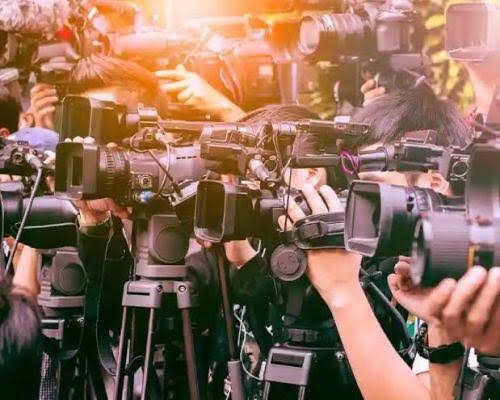
2023: N/East stakeholders task journalists to shun junk journalism
Stakeholders in the media industry in North-East have cautioned journalists against sensitional reportage to facilitate credible and peaceful 2023 general elections.
The stakeholders including media practitioners, politicians, unionists, and activists spoke while responding to a survey by the News Agency of Nigeria (NAN) on political thuggery in Bauchi, Damatruru, Dutse, Gombe and Yola.
They described media as critical towards ensuring violence-free, fair and credible elections in the country.
Mr Saidu Malala, Chairman, the Nigeria Union of Journalists (NUJ) in Gombe State, said media had a critical agenda-setting role towards promoting peace and harmony in the country.
He said the support of journalists through peace-oriented news would help create a peaceful political atmosphere that contributes to the integrity and credibility of elections.
“Journalists have a duty to report issues that will not fuel violence in the country, even though we have a responsibility to inform the public in a professional manner.
“There are reports that may trigger violence if not handled properly in line with professional ethics, we must be guided in this regard.
“We need peace not just for election but for our everyday activities, and as critical stakeholders, we owe the society reportage that will promote peace and unity,” he said.
While urging journalists to be objective, Malala advised them to be security conscious so as not to become victims of violence or thuggery during electioneering campaigns.
“You must assess the security situation of any event before you embark on any journey to cover events.
“Don’t put yourself in a position where you will be vulnerable in view of the increase in thuggery in Gombe State,” he said.
Also; Mr Rajab Muhammad, the Council Chairman in Yobe, tasked media organisations to shun airing programmes capable of disrupting peace ahead of the 2023 elections.
He noted that such inciting programmes were against the ethics of the profession, and stressed the need for media practitioners to be objective as enshrined in the NUJ constitution.
“Reporters and sub-editors should aim at objectivity while dealing with political stories. They should not allow their personal bias or ideas to creep into a story.
“They should not take sides but try to present divergent views to achieve balance in their reportage,” he said.
Muhammad also urged politicians to avoid desperation in politics, adding that do-or-die politics is inimical to the entrenchment of democratic governance.
In his contribution, Shettima Ja’afar, Director of, the National Orientation Agency (NOA) in Borno, attributed thuggery to desperation exhibited by some politicians.
He said it was good for the media to sanction airing incitiful and vulgar language by politicians during their campaigns.
This, he said, was necessary towards ensuring a hitch-free election, adding that, “the media as major stakeholder should not be promoting contents that will jeopardize the process.
“Reporting hate speech by the media will create tension and violence if not handled with caution”.
According to him, the Agency in collaboration with other stakeholders will creat a forum for collective action towards violent-free election.
The NOA official blamed spate of thuggery in the country to misuse of social media by some self-seeking elements.
“The conventional media are trying, and regulated to some extend unlike the social media. It is being used to spin news, spread falsehoods and hate speech capable of breeding violence”.
He enjoined the youth to shun misuse of social media and participate actively in the process to ensure peaceful election.
He further advised politicians and political parties to prioritise consultative engagement to promote internal democracy and encourage growth of democratic culture.
In the same vein; Mr Ishaka Dedan, the NUJ Chairman in Adamawa, said the Council had sensitised media executives and journalists on the dangers associated with sensational reportage.
He said the Council had adopted effective mechanism to ensure that media organisations and journalists run their services in line with professional ethics and guidelines governing their operations.
Similarly; Dr Abdullahi Mohammed, a lecturer, Department of Mass Communications, Adamawa State Polytechnic, stressed the need for the journalists to be apolitical, neutral and objective in their reportage.
“Media houses should base their content on credible sources and not to report something that might constitute threat to corpotrate existence of the nation.
“When it comes to announcement of election results, they shouldn’t preempt the electoral umpire,” he said.
Moreso; Mr Sabo Mohammmed, a Bauchi-based political analyst, identified fake news as a bane to effective journalism.
He said the role of the media in agenda setting calls for caution and application of professional in discharging its constitutional mandate.
“Journalists need to be meticulous in sifting stories that are true and those that are false, used in achieving certain ends,” he said.
For his part, David Ayodele, a veteran journalist, said the media plays significant role in ensuring fair, objective, balance and proper investigation of news materials.
“You have a responsibility to be credible, professional and you must be residual of standard by setting a professional code for others to follow, especially during electioneering campaigns,” he said.
This, he said, is necessary for the sustenance of the country’s nascent democracy and political stability, adding that the media must be used positively for societal good rather than destructive purposes.
While urging journalists to be fair and objective in reporting election processes, Ayodele also tasked them to show more decorum and professionalism in reporting security and humanitarian issues.


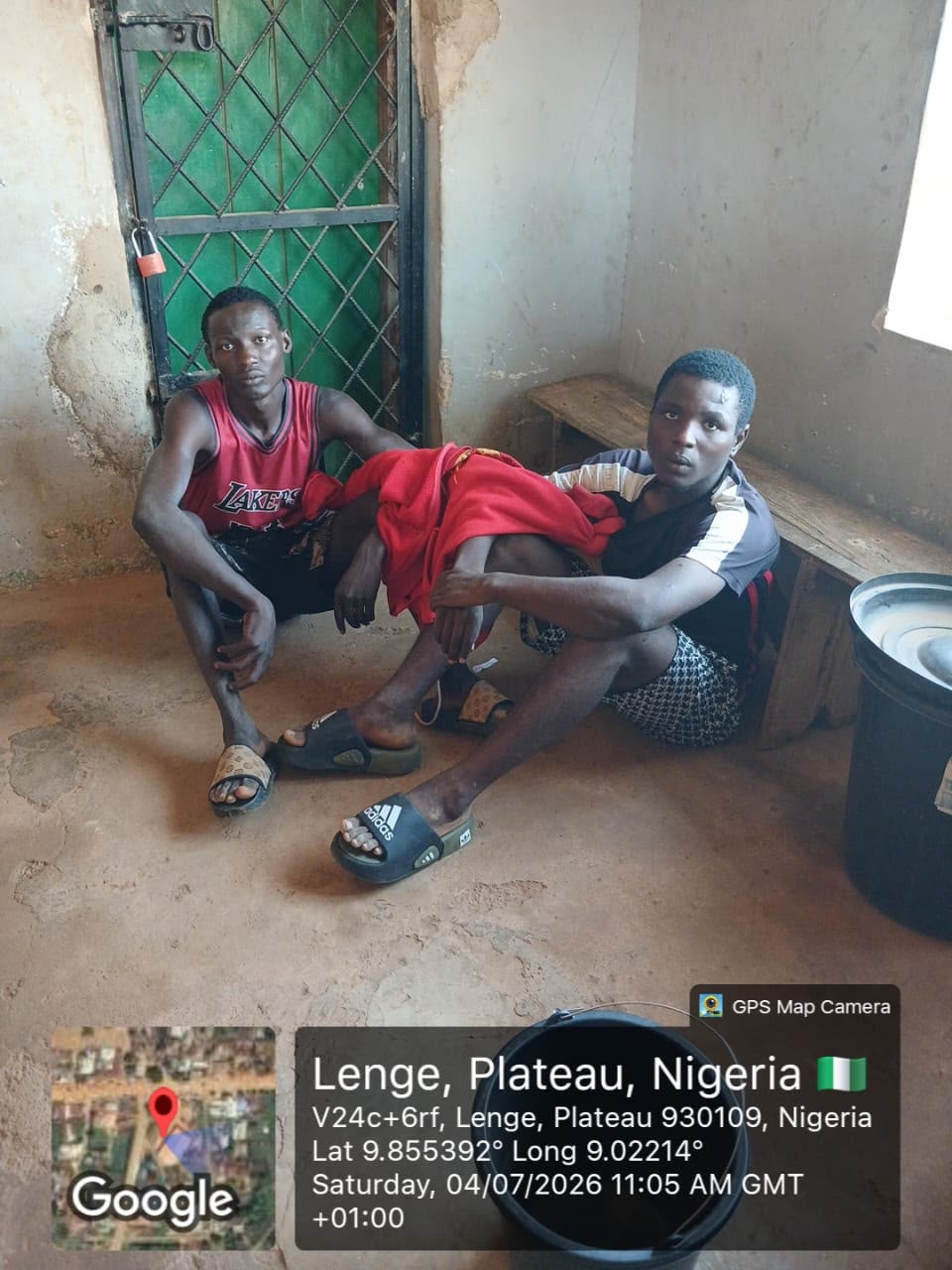
Two suspected criminals arrested during patrol in Plateau
By: Zagazola Makama
Troops of Sector 1 under Operation Enduring Peace have arrested two suspected criminals during a routine patrol in Jos East Local Government Area of Plateau.
Security sources disclosed that the suspects, identified as Azi Ezekiel, 21, and Ajiji Emmanuel, 19, were apprehended at about 10:30 a.m. on Saturday along the road leading to Forbur Village.
The sources said the suspects were intercepted by troops of Sector 1, Sub-Sector 12, while conducting a routine patrol in the area.
According to the sources, the two suspects have been handed over to the Keystone Police Station in Forbur for further investigation and possible prosecution.
The arrest forms part of ongoing security operations aimed at combating criminal activities and enhancing safety across Plateau State.
Two suspected criminals arrested during patrol in Plateau
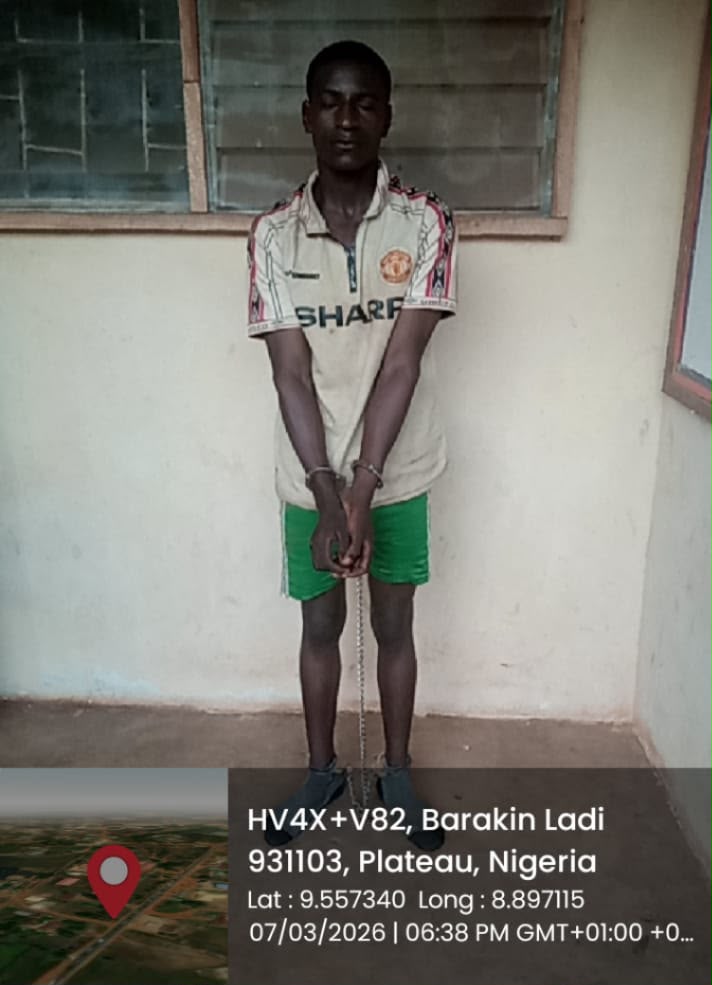
Troops arrest suspected kidnapper in Plateau community
By: Zagazola Makama
Troops of Sector 4 of Operation Enduring Peace have arrested a suspected kidnapper during a security operation in Barkin Ladi Local Government Area of Plateau.
Security sources said the suspect, identified as Mohamdu Surajo, 29, was arrested at about 6:45 p.m. on Friday at Sabon Layi Village following sustained security operations in the area.
The sources disclosed that the suspect is currently in military custody and is undergoing preliminary interrogation to aid ongoing investigations.
They added that the arrest is part of continued efforts by security forces to dismantle criminal networks and enhance security across Plateau State.
Troops arrest suspected kidnapper in Plateau community
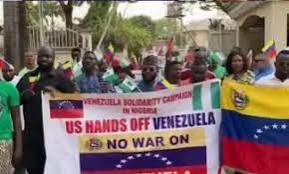
Venezuela Solidarity Group Urges U.S. to Lift Sanctions After Deadly Earthquakes
By: Michael Mike
The Venezuela Solidarity Campaign in Nigeria (VSCN) has called for the immediate and unconditional lifting of United States sanctions on Venezuela, arguing that the restrictions are hampering humanitarian relief and reconstruction efforts following devastating twin earthquakes that reportedly killed more than 2,000 people and displaced over 50,000 others.
In a statement issued on Sunday and signed by its coordinator, Comrade Dimeji Macaulay, the group expressed solidarity with the Venezuelan people and the Bolivarian Government, describing the earthquakes as a humanitarian tragedy that has left widespread destruction of homes, hospitals, schools, roads and other critical infrastructure.
The organisation extended condolences to families of the victims and praised what it described as the resilience of the Venezuelan people in confronting the disaster despite years of economic hardship.
According to the VSCN, the U.S. sanctions have weakened Venezuela’s capacity to respond effectively to the emergency by limiting access to financial resources and restricting the importation of medicines, equipment, technology and other essential materials.
The group maintained that maintaining the sanctions during a humanitarian crisis amounts to collective punishment against ordinary citizens and called for their permanent removal to facilitate relief operations and long-term reconstruction.
“There can be no moral or legal justification for maintaining an economic blockade against a country struggling to save lives and rebuild after a devastating natural disaster,” the statement said, adding that every day the sanctions remain in force prolongs the suffering of the Venezuelan people.
The campaign also urged the Federal Government of Nigeria to publicly support the removal of the sanctions, strengthen diplomatic relations with Venezuela and contribute to international humanitarian efforts for victims of the disaster.
It further appealed to the African Union to reject unilateral coercive measures, describing them as violations of international law, while calling on African countries to support Venezuela’s recovery.
The group equally called on the United Nations to intensify humanitarian assistance and ensure that sanctions do not obstruct emergency relief operations or reconstruction programmes.
Beyond governments and international organisations, the VSCN appealed to trade unions, youth organisations, civil society groups and progressive political movements across Africa and the wider international community to demonstrate solidarity with Venezuela by opposing what it described as economic warfare and supporting the country’s right to determine its future without external interference.
Reaffirming its commitment to the Venezuelan cause, the organisation said it would continue campaigning until the sanctions are lifted, insisting that Venezuela’s recovery should not be hindered by external political considerations
Venezuela Solidarity Group Urges U.S. to Lift Sanctions After Deadly Earthquakes

Two suspected criminals arrested during patrol in Plateau

Troops arrest suspected kidnapper in Plateau community

One killed, another injured in Fulani Bandits attack as troops arrest suspect in Plateau

Roger Federer’s Shock as DNA Results Reveal Myla and Charlene Are Not His Biological Children

THE PLIGHT OF FARIDA

FAILED COUP IN BURKINA FASO: HOW TRAORÉ NARROWLY ESCAPED ASSASSINATION PLOT AMID FOREIGN INTERFERENCE CLAIMS
-
 News2 years ago
Roger Federer’s Shock as DNA Results Reveal Myla and Charlene Are Not His Biological Children
-
Opinions4 years ago
THE PLIGHT OF FARIDA
-
 News1 year ago
FAILED COUP IN BURKINA FASO: HOW TRAORÉ NARROWLY ESCAPED ASSASSINATION PLOT AMID FOREIGN INTERFERENCE CLAIMS
-

 News2 years ago
EYN: Rev. Billi, Distortion of History, and The Living Tamarind Tree
-
 Opinions5 years ago
POLICE CHARGE ROOMS, A MINTING PRESS
-

 ACADEMICS2 years ago
A History of Biu” (2015) and The Lingering Bura-Pabir Question (1)
-

 Columns2 years ago
Army University Biu: There is certain interest, but certainly not from Borno.
-

 Politics1 year ago
2027: Why Hon. Midala Balami Must Go, as Youths in Hawul and Asikira/Uba Federal Constituency Reject ₦500,000 as Sallah Gift
