
News
2025 Budget: NEFGAD Writes President Tinubu, BPP over N6.9 Trillion Projects Without Needs Assessment, Plans Legal Action


2025 Budget: NEFGAD Writes President Tinubu, BPP over N6.9 Trillion Projects Without Needs Assessment, Plans Legal Action
By: Michael Mike
The Network for the Actualization of Social Growth and Viable Development (NEFGAD), a leading public procurement advocacy group in Nigeria has alleged the insertion of over 11,000 projects without credible needs assessment and fall outside the statutory mandates, valued at N6.9 trillion into the 2025 Appropriation Act by the National Assembly
The organisation in a letter to President Bola Tinubu and the Bureau of Public Procurement (BPP) expressed serious concern over the insertion of over 11,000 projects valued at N6.9 trillion into the 2025 Appropriation Act by the National Assembly, many of which lack a credible needs assessment and fall outside the statutory mandates of the implementing agencies/ procuring entities.
According to the letter, the revelation, originally highlighted by BudgIT, a civic tech organisation promoting transparency in public finance, exposes a worrying trend of budgetary insertions that bypass due process, violate existing procurement laws, and distort national development priorities.
In the letter signed by its country head of office, Mr Akingunola Omoniyi, NEFGAD referenced Section 18 (a–g) of the Public Procurement Act (PPA) 2007, which mandates all procuring entities to conduct needs assessments and cost evaluations as the most fundamental aspect of public procurement planning by any entity.
The letter read: “Implementing projects without such critical element contravenes the law and undermines principles of fiscal prudence, accountability, and strategic planning’’.
NEFGAD further argued that executing projects outside the establishment mandates of MDAs has equally become a recurring problem that fuels duplication, weakens institutional clarity, and leads to policy incoherence.
The organisation warned that any budgetary allocation or procurement line item not backed by legally required planning frameworks or outside an agency’s constitutional mandate is not only procedurally defective but also a potential drain-pipe for public funds.
The group also pointed out the inherent contradiction of the National Assembly undermining the very law it enacted by inserting constituency projects without following due process or involving the procurement planning committees of the relevant MDAs, as prescribed under Section 20 (1) of the Act.
In light of the above, NEFGAD called on President Tinubu and the Bureau of Public Procurement (BPP) to direct all MDAs to immediately desist from implementing any project that falls outside their statutory mandate, or that was inserted into the national budget without mandatory needs assessment.
NEFGAD reaffirmed its commitment to good governance and fiscal responsibility, and warned that it is prepared to initiate legal action to challenge the implementation of any project that contravenes the Public Procurement Act or the constitutional mandates of implementing agencies.
“Public funds must be spent based on real needs—not political convenience. We stand ready to partner with the Tinubu administration to ensure transparency and integrity in Nigeria’s budget implementation,” the statement insisted.
2025 Budget: NEFGAD Writes President Tinubu, BPP over N6.9 Trillion Projects Without Needs Assessment, Plans Legal Action


News
FG Moves to Stem Human Trafficking, Irregular Migration as Over 1,000 Nigerians Return from Crisis Routes
FG Moves to Stem Human Trafficking, Irregular Migration as Over 1,000 Nigerians Return from Crisis Routes
By: Michael Mike
The Federal Government on Tuesday unveiled a renewed strategy to curb irregular migration and dismantle human trafficking networks, warning that worsening economic hardship and the growing use of digital platforms by traffickers are exposing more Nigerians, particularly women and young people, to exploitation across Africa, the Middle East and Europe.
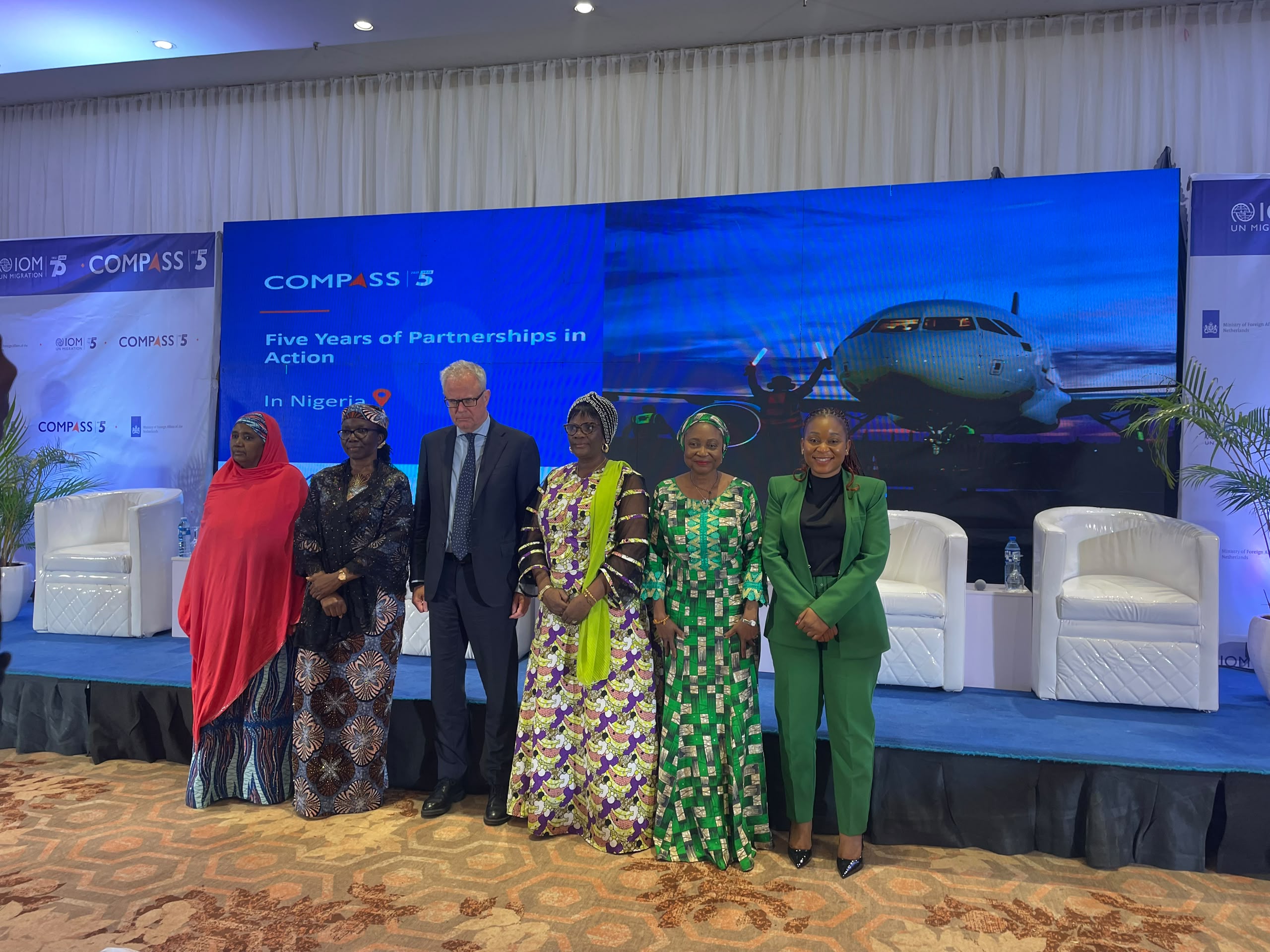
The renewed commitment came as the government and its international partners marked the fifth anniversary of the Comprehensive Protection, Reintegration and Assistance to Migrants and Communities (COMPASS) Programme, revealing that more than 1,000 stranded Nigerians have voluntarily returned from countries including Libya, Lebanon, Morocco, Mali, Egypt, India and the United Arab Emirates, while over 900 vulnerable returnees have received psychosocial care, healthcare and livelihood support to rebuild their lives.
Stakeholders warned that trafficking syndicates are becoming increasingly sophisticated, exploiting technology, poverty and unemployment to lure desperate Nigerians into dangerous migration routes where many end up trapped in forced labour, sexual exploitation and other forms of abuse.
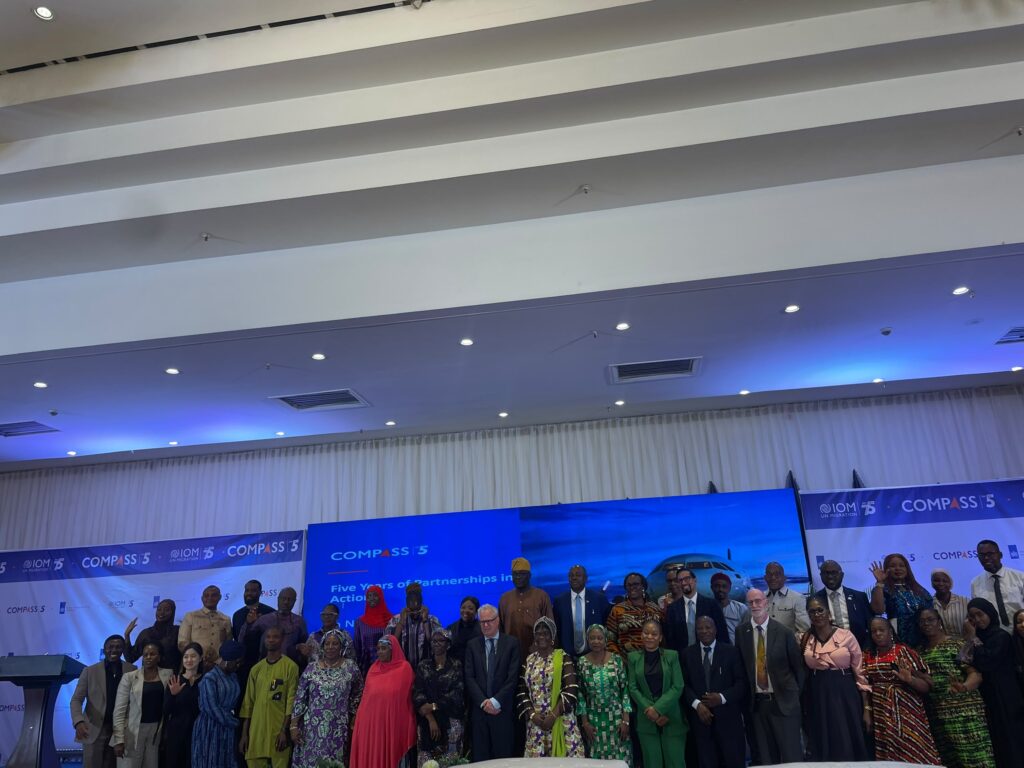
Speaking at the anniversary event, the Chief of Mission of the International Organisation for Migration (IOM) in Nigeria, Sharon Dimanche, said migration itself was not the problem but the absence of safe and legal pathways.
She said: “Migration is not the problem. The challenge is ensuring that migration is safe, orderly and regular, while protecting the dignity of every migrant.”
Dimanche said the COMPASS Programme had significantly strengthened Nigeria’s migration governance architecture by improving policies and institutional coordination while placing the protection of migrants at the centre of migration management.
Highlighting the programme’s impact, she recounted the story of “Joy”, a Nigerian woman trafficked abroad and subjected to severe exploitation before returning home traumatised.
According to her, through IOM’s psychosocial support and reintegration programme, Joy rebuilt her life, established a fashion business and now employs several young women.
“Joy is no longer defined by what happened to her. She is defined by what she has become,” Dimanche said, describing the story as evidence that effective reintegration can transform survivors into productive members of society.
The Minister of Humanitarian Affairs and Poverty Reduction, Dr. Bernard Doro. reaffirmed the Federal Government’s commitment to protecting returning migrants, refugees, internally displaced persons and vulnerable communities.
He said the government’s “One Humanitarian, One Poverty Reduction” framework under President Bola Ahmed Tinubu’s Renewed Hope Agenda was designed to integrate humanitarian assistance with long-term poverty reduction.
“Migration, when properly managed, presents opportunities for national development. We will continue to strengthen institutions, expand livelihood opportunities and ensure that returning migrants are empowered to rebuild their lives with dignity.”
The Minister of Women Affairs and Social Development, Imaan Sulaiman-Ibrahim, who was represented at the event, by the Director and Special Adviser Administration, Mrs. Erimfolami Ola, warned that women and children continue to bear the greatest burden of irregular migration and human trafficking.
According to her representative, the ministry has worked closely with partners under the COMPASS Programme to facilitate the voluntary return of over 1,000 stranded Nigerians while strengthening institutional responses to trafficking and forced displacement.
She stressed that interventions in Edo State had demonstrated that addressing poverty and unemployment significantly reduces the factors driving irregular migration.
Representing the Minister of Youth Development, Ayodele Olawande, represented by the the Head of Youth Migration and Climate Action Resilience, pecial Adviser (Administration), Adedoyin Oyekan, said creating sustainable opportunities for young Nigerians remains one of the most effective responses to irregular migration.
The ministry pledged to deepen collaboration with IOM and development partners in expanding entrepreneurship, skills acquisition, innovation and employment programmes aimed at discouraging dangerous migration.
Also speaking, the Ambassador of the Kingdom of the Netherlands to Nigeria, Bengt van Loosdrecht, announced plans for a football-based youth initiative that would equip young Nigerians with coaching and life skills while educating communities about the dangers of irregular migration.
He said the programme would empower participants to become community ambassadors for safe migration.
According to the ambassador, “Migration is fundamentally a human issue. Through COMPASS, we are investing not only in stronger institutions but also in protecting people, supporting survivors and preventing others from falling into the hands of traffickers.”
Van Loosdrecht explained that the Netherlands established the COMPASS Programme to consolidate migration support into a coordinated framework capable of providing survivor care, mental health services, institutional strengthening and protection for vulnerable migrants.
Also addressing the gathering, the Director-General of the National Agency for the Prohibition of Trafficking in Persons (NAPTIP), Binta Bello, described the COMPASS Programme as one of Nigeria’s most strategic partnerships in the fight against human trafficking.
She said the initiative had strengthened the agency’s capacity to investigate and prosecute trafficking cases through specialised training for investigators and prosecutors while improving support for victims.
Warning that trafficking networks continue to evolve, Bello said: “Traffickers are adapting to technology, exploiting economic hardship and taking advantage of the aspirations of vulnerable young Nigerians. We must therefore strengthen partnerships among government, international organisations, civil society and communities to stay ahead of these criminal networks.”
The renewed commitment comes amid persistent concerns over the thousands of Nigerians who, in recent years, have embarked on perilous journeys across the Sahara Desert and the Mediterranean Sea in search of better economic opportunities. Many have perished, while others have been rescued from detention camps, trafficking rings and exploitative labour conditions abroad.
Stakeholders at the event agreed that while stronger law enforcement remains essential, tackling poverty, unemployment and social vulnerability is critical to addressing the root causes of irregular migration and sustaining Nigeria’s fight against human trafficking.
FG Moves to Stem Human Trafficking, Irregular Migration as Over 1,000 Nigerians Return from Crisis Routes
MSF Ends Kano Diphtheria Emergency Mission After Vaccinating 835,000 Children
By: Michael Mike
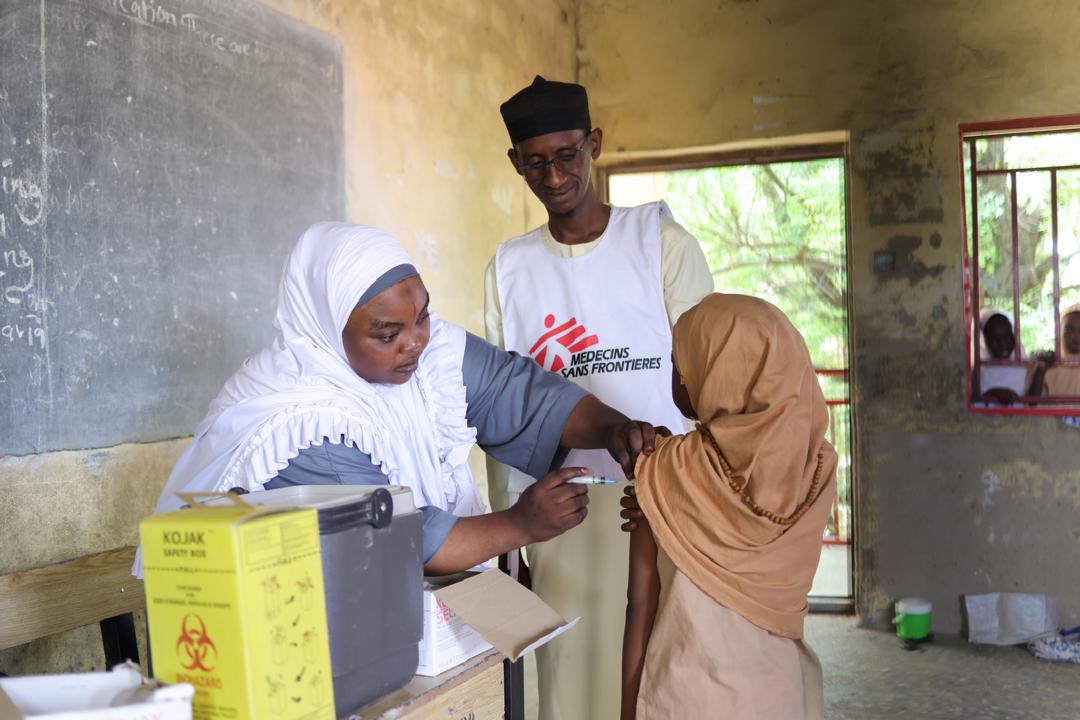
The humanitarian medical organisation, Médecins Sans Frontières (MSF)/Doctors Without Borders, has concluded its three-year emergency response to the devastating diphtheria outbreak in Kano State after supporting the vaccination of more than 835,000 children, describing immunisation as the key factor behind the sharp decline in infections.
The organisation, however, warned that the disease remains a major threat to children unless health authorities sustain routine immunisation, disease surveillance and rapid access to treatment.
MSF announced the end of its emergency intervention following the completion of a two-phase mass vaccination campaign carried out in partnership with the Kano State Ministry of Health.
The intervention followed one of Nigeria’s worst recorded diphtheria outbreaks, which claimed over 1,260 lives in Kano alone, most of them children.
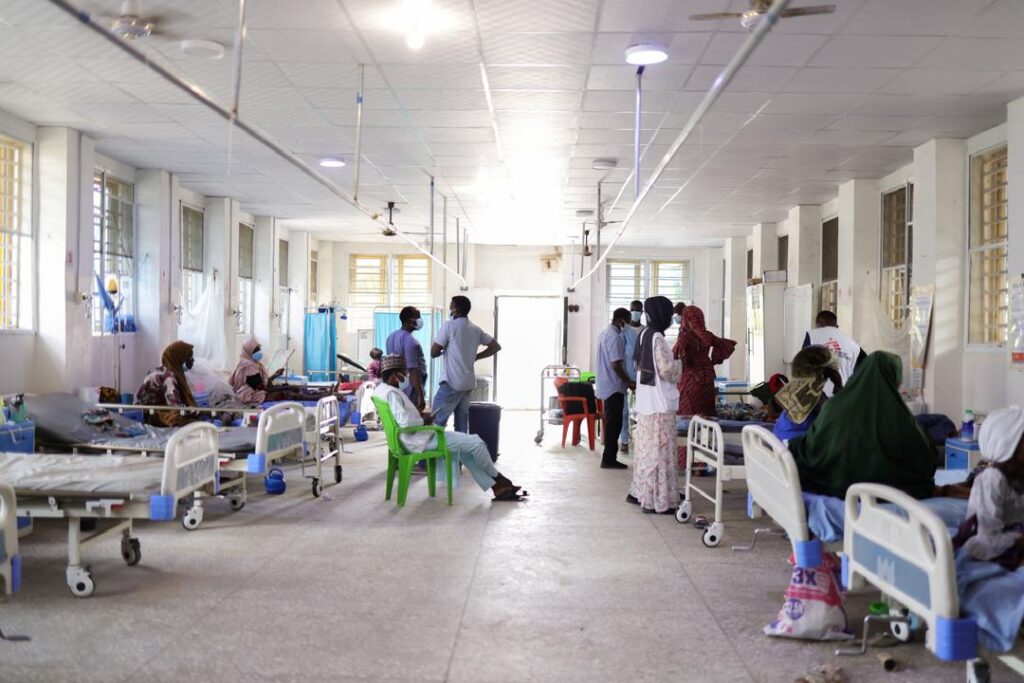
According to MSF, more than 14,707 children received treatment during the emergency through MSF-run and supported treatment centres, including both facility-based and home-based care programmes.
The organisation also strengthened referral systems, disease surveillance, data management and community mobilisation while supporting the state’s vaccination drive.
Across two vaccination rounds, 835,028 doses of diphtheria vaccines were administered to children. The second phase, conducted between June 20 and 24, 2026, reached 486,948 children across 20 wards after the first round vaccinated 348,080 children, which ended on April 27.
MSF Project Coordinator in Kano, Abdoul-Aziz Djibrilla, said the outbreak placed enormous pressure on families, healthcare workers and health facilities across the state.
“Kano experienced a critical diphtheria outbreak that placed enormous pressure on families, healthcare workers and health facilities,” Djibrilla said.
He noted that although infections had declined considerably in recent months, largely because of the vaccination campaigns, the disease had not been eliminated.
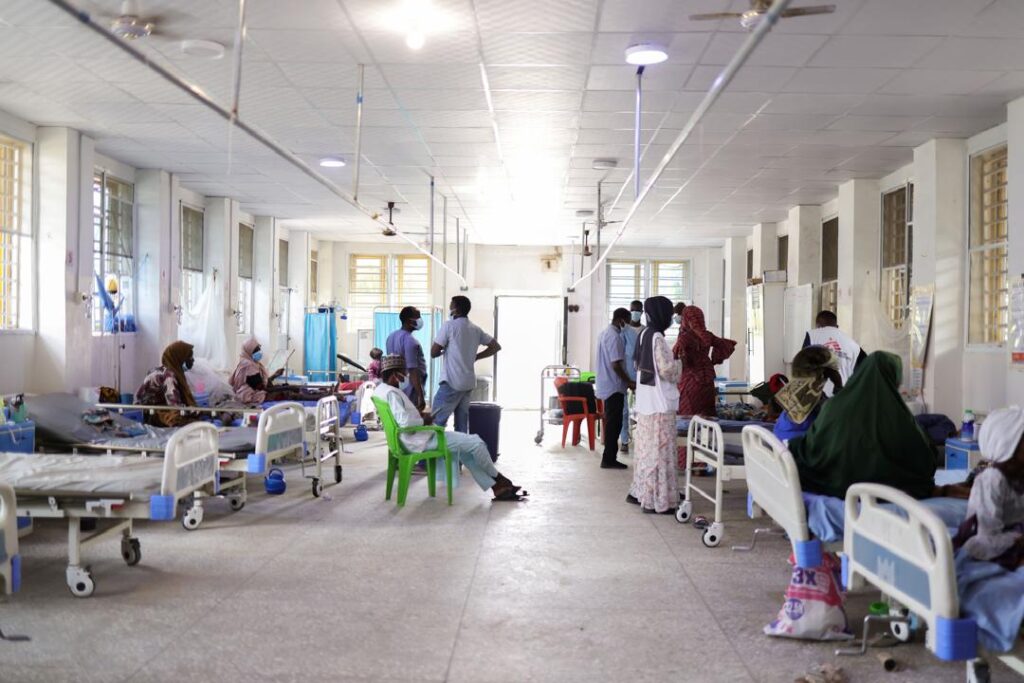
“Although the number of cases has declined in recent months, mainly due to mass vaccination campaigns, the disease remains a serious health threat to children in Kano, driven by low immunisation coverage, overcrowding, delayed care-seeking, and malnutrition,” he added.
Kano has remained the epicentre of Nigeria’s diphtheria outbreak. According to the Kano State Ministry of Health, the state recorded more than 31,900 suspected cases and over 1,260 deaths between March 2022 and March 22, 2026.
The figures account for a significant proportion of Nigeria’s 65,759 suspected cases and 2,229 deaths reported by the Nigeria Centre for Disease Control (NCDC) since the outbreak was officially declared in 2023.
At the height of the outbreak between late 2025 and early 2026, treatment centres were overwhelmed, with more than 100 children admitted daily across supported health facilities and home-based care programmes. Bed occupancy exceeded available capacity in several facilities as healthcare workers struggled to cope with the influx of patients requiring specialised treatment.
Diphtheria is a highly contagious but vaccine-preventable bacterial infection spread mainly through respiratory droplets or contact with infected wounds. The disease causes sore throat, fever, swollen lymph nodes and the formation of a thick grey membrane that can block the airway. In severe cases, toxins produced by the bacteria can damage the heart, kidneys and nervous system, while untreated infections can be fatal in about 30 per cent of cases, particularly among young children.
The outbreak has largely affected children aged between five and 14 years, many of whom had never been vaccinated or had received incomplete immunisation.
Despite the improvement recorded through the vaccination campaigns, MSF cautioned that immunity gaps persist, leaving thousands of children vulnerable to future outbreaks.
Djibrilla stressed that sustained government commitment would determine whether the gains recorded are maintained.
“Continued commitment from health authorities and partners to sustain high immunisation coverage, strengthen surveillance, and ensure timely access to quality treatment will be critical to preventing future outbreaks and protecting the lives of children in Kano,” he said.
MSF has operated continuously in Nigeria since 1996 and currently provides free medical care in 10 states, relying largely on private donations to maintain its humanitarian independence. The organisation said it would continue supporting healthcare interventions in Nigeria beyond the conclusion of the Kano diphtheria emergency response.MSF Ends endence. The organisation said it would continue supporting healthcare interventions in Nigeria beyond the conclusion of the Kano diphtheria emergency response.
MSF Ends Kano Diphtheria Emergency Mission After Vaccinating 835,000 Children
Boko Haram: The Politics, A Call for Historical Accuracy, and Responsible Discourse
By: Dr. James Bwala
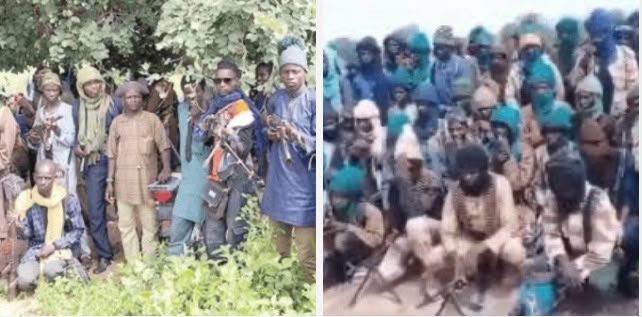
The insurgency that has plagued northeastern Nigeria for over a decade, popularly known as Boko Haram, has caused immense suffering and destabilization in the region. Despite the profound implications of this crisis, much of the public discourse surrounding its origins is riddled with inaccuracies, oversimplifications, and politically motivated narratives. As a consequence, many Nigerians—including those on the streets of Maiduguri or other affected areas—hold incomplete or erroneous understandings of the group’s history. This lack of historical facts not only clouds efforts to address the root causes of the conflict but also fuels divisive rhetoric and politicization of the tragedy. Nigerians and those who continued to discuss the conflict and its history found a need to know and draw from facts to line up their narratives. Discoursants like lawyer Femi Falana and politicians like Naja’atu need facts to buttress their claims and should not rely on hearsay or half-truths, perhaps from where they heard their stories, because it is not adding up.
For us, who reported this crisis on the front line and studied the historical lines from direct elements and foot soldiers, we know that the widespread misconception is the tendency to attribute Boko Haram’s insurgency exclusively to the late Malam Mohammed Yusuf, the group’s most notorious leader, who emerged publicly in the early 2000s. While Yusuf did play a role in shaping the movement known as the “Yusufiya sect,” claiming he single-handedly started Boko Haram grossly simplifies the complex evolution of this militant group in Borno State or Northeast Nigeria. Such reductionism is evident in popular narratives frequently encountered among ordinary citizens, who often repeat what they have heard without contextual depth. An accurate historical account reveals that the conditions fostering Boko Haram’s emergence existed long before Yusuf’s ascendancy, involving multiple actors and events that laid the groundwork for radicalization and violence from the simply known Islamiyya sect in Kannamma to the Yusufiya sect and Boko Haram, the name given to them after the Bauchi Prison break at the beginning of the one-year conflict in 2010.
Like I did mention earlier, complicating the discourse around the history or founder are politicized allegations by prominent individuals that seek to assign blame to specific personalities without credible evidence. For instance, Hajiya Naja’atu has in recent times launched rhetoric directed at Vice President Kashim Shettima, linking her claims to the arrest of Kabiru Sokoto at the Borno liaison office in Abuja (which she said is Shettima’s house). Similarly, respected lawyer Femi Falana has publicly accused a former governor of Borno State of initiating the Boko Haram insurgency, associating the claims with political thuggery during the administration of Modu Sheriff. While such claims may have come within certain political constituencies, they dangerously oversimplify a multifaceted crisis and divert attention from deeper structural factors. Most importantly, these rhetorics are often founded on partial or misinterpreted information rather than comprehensive, verifiable research into the insurgency’s roots.
Testimonies and records of journalists and observers who were active in Maiduguri and the wider northeastern region since the early 1990s have captured far more interesting narratives. These professionals witnessed firsthand the unfolding developments culminating in the Boko Haram crisis. Their accounts reveal the existence of leadership predating Mohammed Yusuf, notably an individual named Mohammed Ali, who led an early Islamist sect prior to the “Yusufiya” movement. Ali was reportedly killed amid violence after escaping arrest in Kannamma, located in present-day Yobe State, long before Yusuf became publicly acknowledged as Boko Haram’s leader. The circumstances surrounding Mohammed Ali’s demise evidence internal fractures and state interventions that contributed to the radicalization pathway exploited by later insurgents.
Geographically, the significance of certain locations underscores the continuity in Boko Haram’s operational terrain. Mohammed Ali was ambushed and killed between Talala and Ajigil, areas within Damboa Local Government in Borno State. These locations remain critical hubs for Boko Haram activities today, illustrating how the movement’s influence expanded along established routes starting decades ago. Access between Buni Yadi and Damboa, through Foi village, forms a corridor still exploited for logistical and militant operations. Understanding these geographic linkages offers valuable insight into Boko Haram’s sustained presence and the entrenchment of its networks in northeastern Nigeria.
The persistence of incorrect narratives can be partly attributed to inadequate primary research and reliance on hearsay or politically motivated sources. This deficiency highlights an urgent need for esteemed public figures, journalists, analysts, and commentators to engage in meticulous and objective investigation when discussing Boko Haram’s origins. Reckless or uninformed rhetoric risks exacerbating communal tensions, misguiding policy responses, and undermining public trust. For example, assigning blame to isolated individuals without substantial proof politicizes the insurgency, detracting from broader considerations such as socioeconomic marginalization, governmental neglect, corruption, and ideological manipulation—all key contributors to the conflict.
Moreover, responsible storytelling about Boko Haram’s history requires acknowledging the complexity of insurgencies as social phenomena. These are rarely the product of singular agents but rather evolve from layered interactions between various factors, including local grievances, religious ideologies, political exclusions, and external influences. Therefore, simplistic attributions fail to capture the organic, evolving nature of such movements. A comprehensive approach that integrates oral histories, archival materials, community testimonies, and official documents can provide a more accurate chronicle and inform more effective counterinsurgency strategies.
The discourse on Boko Haram’s history demands a progressive shift toward historical accuracy and intellectual honesty. The prevailing narrative that attributes the insurgency solely to late Malam Mohammed Yusuf or assigns culpability to particular public figures without substantive evidence does a disservice to truth and justice. Recognizing the role of earlier leaders like Mohammed Ali and appreciating the broader socio-political context enables Nigerians and the international community to better comprehend the insurgency’s complexities. It is incumbent upon respected voices—whether in politics, law, or the media—to prioritize thorough research and measured discourse. Doing so not only honors the memory of victims and affected communities but also facilitates the formulation of genuine solutions anchored in reality, empathy, and inclusiveness. Only through such a principled approach can Nigeria hope to heal the wounds inflicted by Boko Haram and work toward lasting peace and stability in its northeastern regions.
- James Bwala, PhD, writes from Maiduguri.
- Boko Haram: The Politics, A Call for Historical Accuracy, and Responsible Discourse

COAS Says New Nigeria Army Depot Amasiri Edda Will Produce New Generation of Combat-Ready Soldiers, Boost Force Expansion, National Unity

FG Moves to Stem Human Trafficking, Irregular Migration as Over 1,000 Nigerians Return from Crisis Routes

MSF Ends Kano Diphtheria Emergency Mission After Vaccinating 835,000 Children

Roger Federer’s Shock as DNA Results Reveal Myla and Charlene Are Not His Biological Children

THE PLIGHT OF FARIDA

FAILED COUP IN BURKINA FASO: HOW TRAORÉ NARROWLY ESCAPED ASSASSINATION PLOT AMID FOREIGN INTERFERENCE CLAIMS
-
 News2 years ago
Roger Federer’s Shock as DNA Results Reveal Myla and Charlene Are Not His Biological Children
-
Opinions4 years ago
THE PLIGHT OF FARIDA
-
 News1 year ago
FAILED COUP IN BURKINA FASO: HOW TRAORÉ NARROWLY ESCAPED ASSASSINATION PLOT AMID FOREIGN INTERFERENCE CLAIMS
-

 News2 years ago
EYN: Rev. Billi, Distortion of History, and The Living Tamarind Tree
-
 Opinions5 years ago
POLICE CHARGE ROOMS, A MINTING PRESS
-

 ACADEMICS2 years ago
A History of Biu” (2015) and The Lingering Bura-Pabir Question (1)
-

 Columns2 years ago
Army University Biu: There is certain interest, but certainly not from Borno.
-

 Politics1 year ago
2027: Why Hon. Midala Balami Must Go, as Youths in Hawul and Asikira/Uba Federal Constituency Reject ₦500,000 as Sallah Gift
