
Politics
2027: Opposition Politics Must Not Distort Nigeria’s Food Security Crisis

2027: Opposition Politics Must Not Distort Nigeria’s Food Security Crisis
By: Dr. James Bwala
The claim that Nigeria’s Federal Minister of Agriculture has released a report warning citizens against re-electing President Bola Tinubu in 2027 is misleading. It turns a serious food-security assessment into an opposition campaign message and attaches a political conclusion to a report that does not make such a conclusion. While Nigeria’s worsening food crisis demands urgent government action and accountability, it is wrong to manipulate statistics or attribute partisan statements to the Federal Ministry of Agriculture or international food-security institutions.
The facts must be separated from political interpretation. The October 2026 Cadre Harmonisé assessment reportedly projects that approximately 33.5 million Nigerians could face acute food insecurity between June and August 2027. This is an alarming figure. It represents a serious threat to the welfare, health, and stability of millions of Nigerians. However, nowhere in the reported assessment does it state that this outcome will occur if President Bola Tinubu wins the 2027 presidential election. That political condition was added by the authors of the viral message. It is not an established finding of the report.
This distinction is important because reports produced by professional food security institutions are designed to assess hunger, food availability, household vulnerability, and related risks. They are not election manifestos. The Cadre Harmonisé does not endorse one candidate, oppose another, or predict the result of a presidential election. Presenting it as a warning against re-electing President Tinubu is therefore an abuse of the report’s purpose and a distortion of its content.
READ ALSO: https://newsng.ng/2027-tinubu-shettima-uba-sani-and-the-apc-flag-off-campaign-in-kaduna/
The issue is not whether the Tinubu administration should be criticized. It should be held accountable for its management of the economy, food prices, agricultural productivity, fuel costs, insecurity, and social welfare. The issue is whether such criticism should be based on evidence. A democratic society requires strong scrutiny of government, but political accountability loses its value when it depends on fabricated quotations, invented conditions, or misleading comparisons.
One of the most important distortions in the circulating claim is the comparison between 26.8 million people projected to face acute food insecurity between October and December 2026 and 33.5 million projected between June and August 2027. At first glance, these figures may appear to demonstrate a sharp and direct deterioration under the Tinubu administration. However, the two numbers relate to different seasonal periods. Comparing them without explaining the seasonal context can mislead the public.
June to August is traditionally a difficult lean season in many parts of Nigeria. During this period, household food stocks from the previous harvest often decline, while the next major harvest may not yet have arrived. Food prices can rise, rural households may become more dependent on markets, and poor families can experience greater difficulty meeting their basic needs. By contrast, October to December generally overlaps with harvest and post-harvest periods in many areas, when food availability may improve. Therefore, an increase between these two periods does not automatically prove that the entire difference was caused by a new government policy or a presidential election outcome.
READ ALSO: https://newsng.ng/2027-tinubu-shettima-uba-sani-and-the-apc-flag-off-campaign-in-kaduna/
This does not mean that the projected 33.5 million figure should be dismissed. Seasonal patterns explain part of the difference, but they do not remove the need for urgent intervention. A projection of this scale indicates that millions of Nigerians may face inadequate access to food and may be unable to meet their minimum nutritional requirements. The government must treat the warning as an emergency planning signal. It should strengthen food production, improve market access, reduce post-harvest losses, protect vulnerable households, and address the insecurity that prevents farmers from cultivating their land.
It is also inaccurate to suggest that Nigeria’s food-insecurity crisis began with President Tinubu. Food insecurity has been a persistent national challenge for many years, caused by poverty, unemployment, conflict, climate shocks, weak infrastructure, inflation, poor storage systems, and limited access to agricultural finance and inputs. According to earlier assessments, the Food and Agriculture Organization projected that 30.6 million Nigerians could face acute food insecurity in 2025 and that 34.7 million could be at risk in 2026. These figures demonstrate that the problem predates the current administration.
Recognizing the history of the crisis, however, does not absolve the Tinubu government of responsibility. Every administration inherits national problems, but it is judged by how it responds to them. President Tinubu’s government must therefore explain what it is doing to reduce food inflation, support farmers, stabilize transport and energy costs, improve rural security, and protect consumers from the loss of purchasing power. Nigerians cannot eat explanations about inherited problems. They need effective policies that produce measurable improvements in their lives.
READ ALSO: https://newsng.ng/2027-tinubu-shettima-uba-sani-and-the-apc-flag-off-campaign-in-kaduna/
The removal of fuel subsidies, for example, has had broad consequences for food prices because transportation and agricultural production depend heavily on fuel. Farmers face higher costs for transporting inputs and produce. Traders spend more to move food from rural areas to urban markets. Consumers then pay more for basic staples. Although the government may argue that subsidy reform is necessary for long-term economic stability, it also has a responsibility to manage the immediate social consequences. Reform without adequate protection for poor households can deepen hunger and increase vulnerability.
Insecurity is another major factor. Farmers in several parts of the country have faced attacks, displacement, kidnapping, and restricted access to farmland. When agricultural communities cannot safely plant, harvest, or transport their produce, the effects extend beyond the affected villages. Production falls, supply chains weaken, and food prices rise. An effective food-security policy must therefore include protection for farming communities, early-warning systems, conflict prevention, and improved rural infrastructure. Food security cannot be separated from national security.
The government must also address agricultural productivity. Nigeria has significant agricultural potential, but many farmers still lack reliable access to quality seeds, fertilizer, irrigation, extension services, credit, storage, and modern equipment. Climate change adds further pressure through irregular rainfall, flooding, drought, and changing planting seasons. Government programs should be assessed according to their actual results rather than the size of their announcements. Nigerians need transparent information about how much support reaches farmers, which regions benefit, and whether production and household incomes are improving.
READ ALSO: https://newsng.ng/2027-tinubu-shettima-uba-sani-and-the-apc-flag-off-campaign-in-kaduna/
At the same time, political parties and opposition groups have a duty to communicate responsibly. Opposition is essential in a democracy. It is legitimate to question the government’s record, challenge official statistics, expose policy failures, and propose alternatives. However, opposition politics should not rely on misinformation. Turning a technical assessment into an electoral slogan may generate attention, but it damages public understanding and weakens confidence in institutions.
The consequences of this type of manipulation are serious. When citizens discover that a viral political claim has misrepresented an official report, they may become suspicious of all information, including accurate warnings about hunger. This creates a dangerous situation. Food-security assessments depend on public trust because governments, humanitarian agencies, and communities must use them to plan interventions. If such reports are repeatedly presented as partisan documents, their credibility can be damaged.
The public should therefore ask basic questions before accepting or sharing politically charged claims. What exactly does the original report say? Is the quotation verifiable? Are the compared periods the same? Does the report identify a cause, or does it merely present a projection? Has an institution actually made the political statement being attributed to it? These questions are especially important during election periods, when facts are often selected or rearranged to support campaign narratives.
READ ALSO: https://newsng.ng/2027-tinubu-shettima-uba-sani-and-the-apc-flag-off-campaign-in-kaduna/
The projected figure of 33.5 million Nigerians facing acute food insecurity between June and August 2027 should be treated as a warning, not as an election prophecy. It is a call for immediate planning and action. The Federal Government should work with state governments, farmers’ organizations, humanitarian agencies, researchers, and community leaders to prepare for the lean season. Intervention should include targeted social protection, food assistance for the most vulnerable, support for smallholder farmers, investment in irrigation and storage, and measures to improve market stability.
Civil society and the media also have an important role. Journalists should verify reports before publishing sensational political interpretations. Fact-checking organizations should identify manipulated statistics and provide the public with the relevant context. Political actors should be challenged when they present institutional findings inaccurately, regardless of their party affiliation. Fair standards must apply to both government supporters and opponents.
Ultimately, Nigerians deserve two things at the same time: honest criticism and accurate information. It is possible to acknowledge that food insecurity predates President Tinubu while also holding his administration responsible for its present response. It is possible to reject a misleading campaign claim without defending every government policy. It is possible to insist that the government must do more without inventing conclusions that do not appear in an official assessment.
READ ALSO: https://newsng.ng/2027-tinubu-shettima-uba-sani-and-the-apc-flag-off-campaign-in-kaduna/
The warning is serious. Millions of Nigerians may face acute food insecurity, and the projected increase requires urgent attention. Food inflation, insecurity, weak agricultural productivity, high fuel costs, and declining household purchasing power are real problems. The Tinubu administration must be judged by the effectiveness, transparency, and speed of its response. But that judgment must be based on evidence rather than fabricated quotations or political additions.
The Cadre Harmonisé is a food-security assessment, not an opposition campaign document. It does not endorse Atiku, oppose Tinubu, or predict the outcome of the 2027 election. Nigerians should criticize the president where the facts justify criticism and defend him where the facts justify defense. Above all, political debate must not be built on manufactured conclusions. Nigeria’s food crisis is too serious to be reduced to propaganda. The country needs truth, accountability, and practical action—not manipulated statistics presented as institutional warnings.
*James Bwala, PhD, writes from Abuja
2027: Opposition Politics Must Not Distort Nigeria’s Food Security Crisis



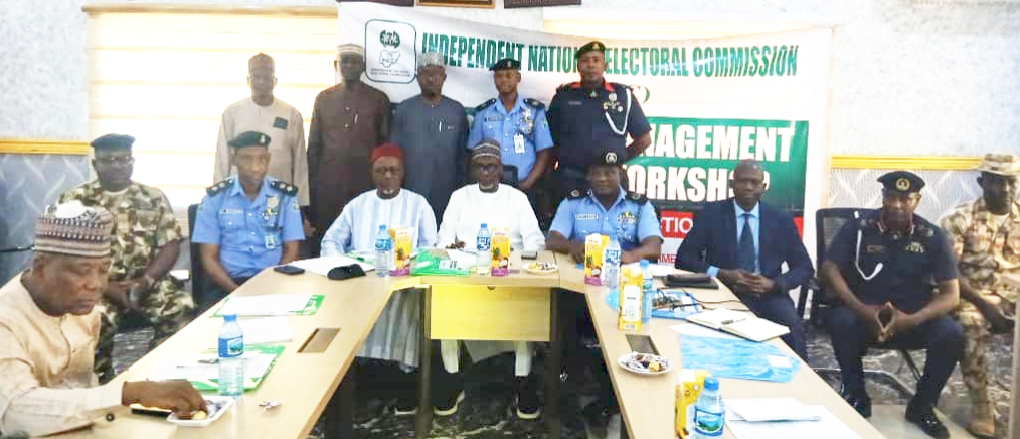
INEC engages Adamawa stakeholders on electoral risk management sensitisation
By Mohammed Ibrahim
The Independent National Electoral Commission (INEC) in Adamawa has engaged stakeholders on risk management sensitisation to improve preparedness towards ensuring a peaceful, credible and successful electoral process.
Speaking at the one day workshop in Yola, the state Residents Electoral Commissioner (REC), Muhammad Nura said, the workshop is important as the commission intensifies preparations for the 2027 General Election.
He said the engagement would provide an opportunity for participants to exchange experiences, clarify expectations, and strengthen the channels of communication and cooperation necessary for effective electoral planning.
“It also reinforces the need for all stakeholders to remain proactive, responsive, and committed to their various responsibilities.
“I encourage participants to approach the sessions with an open mind and a willingness to learn from one another”, he said.
According to him, the experiences and insights shared will enrich collective understanding and help ensure that the objectives of the workshop are achieved.
Mr Sa’ad Sadik, Head of Department, planning and monitoring INEC Adamawa
listed some of the objectives of the engagement to include; identify State-Specific Electoral Risks.
“Deepen participants’ understanding of the Electoral risk management framework, its application, and its importance in preparing for the 2027 General Election.
“Taking into account local circumstances and emerging threats that may affect the electoral process and promote stakeholder collaboration”, he said.
He also called on the stakeholders to strengthen information sharing in the effective management of electoral risks.
The Commissioner of Police (CP) Kabir Hassan represented ACP Ibrahim Kambra in charge of operations, appreciated the INEC for the engagement at the right time.
He assured of effective collaboration and deployment of sufficient security personnel to all identify risk areas for peaceful election.
Aminat Terry, Department of Planning and Monitoring INEC, Abuja said, the commission would commence data analysis at the security thread Local Government Areas towards ensuring peaceful electoral.
Some of the risks factors identified by challenges the Electoral Office (EOs) include insurgency, kidnapping, communal clashes, hard to reach areas, ballot snatching and huggery.
According to her, the commission will conduct data analysis in all the identified risks areas between Nov. 1st and 6th.
Terry said the commission had been upgraded to new technology to ease some of the challenges faced in the past.
The Commissioner of Police (CP) Kabir Hassan appreciates INEC for the engagement at the right time.
The CP who was represented by ACP Ibrahim Kambra in charge of operations,
assured of effective collaboration and deployment of sufficient security personnel to all identified risk areas for peaceful conduct of the elections.
INEC engages Adamawa stakeholders on electoral risk management sensitisation
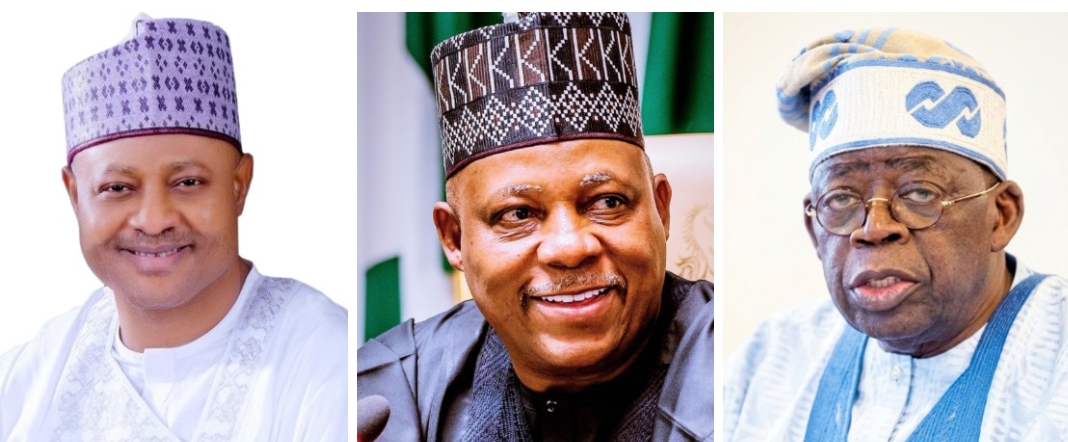
2027: Tinubu, Shettima, Uba Sani, and the APC flag-off campaign in Kaduna
By: Dr. James Bwala
The claim that President Bola Ahmed Tinubu has abandoned Northern Nigeria is not merely inaccurate; it is a politically manufactured narrative that collapses under the weight of evidence. It is a convenient slogan for those seeking to convert legitimate public concerns into partisan resentment, but it is not a fair representation of the administration’s record. The most authoritative rebuttal has come from within the region itself: Governor Uba Sani of Kaduna State, who, at the All Progressives Congress Presidential Campaign Council flag-off, offered a chronological and data-driven account of the interventions of the Tinubu-Shettima administration in Kaduna and across the North-West.
Governor Sani’s presentation deserves serious attention because it shifts the debate from emotion to evidence. Rather than relying on general claims or political rhetoric, he identified concrete programs, infrastructure projects, economic measures, and social interventions undertaken by the administration. His account demonstrated that the Federal Government’s engagement with Northern Nigeria has been substantial, strategic, and historically significant. Anyone still insisting that President Tinubu has abandoned the region must therefore confront the record instead of repeating a politically attractive falsehood.
Governance should be judged by policies and outcomes, not by social media complaints. Northern Nigeria, like every other part of the country, faces serious challenges: insecurity, poverty, unemployment, food inflation, weak infrastructure, and limited access to social services. These problems did not begin with the Tinubu administration, nor can they be eliminated overnight. However, the existence of difficulties does not prove abandonment. In fact, the appropriate question is whether the government has responded to those difficulties with meaningful interventions. Governor Sani’s exposition shows clearly that it has.
One of the most important elements of the Tinubu administration’s intervention is its attention to infrastructure. The Northwest has historically suffered from inadequate road networks, poor transport connectivity, and limited industrial infrastructure. These deficiencies have restricted trade, increased transportation costs, weakened agricultural value chains, and isolated communities. Under President Tinubu, however, major road and transport projects have received renewed attention. Federal road rehabilitation, the development of strategic transport corridors, and efforts to improve links between commercial centers have been incorporated into a broader economic agenda.
Kaduna occupies a central position in the Northwest, serving as a gateway between the northern states and the Federal Capital Territory. Investment in the state therefore has consequences that extend beyond its borders. Improved roads and transport networks facilitate the movement of farm produce, connect manufacturers to markets, and reduce the cost of doing business. They also deepen national integration by linking communities that have too often remained economically disconnected. These are not symbolic gestures. They are foundational investments in the productive capacity of the region.
The administration’s transportation agenda also reflects a recognition that the North requires more than isolated projects. It needs an integrated system capable of supporting agriculture, industry, trade, and human mobility. Rail development, road construction, and logistics improvements are especially important in a region where long distances separate production zones from major markets. By strengthening these connections, the government is laying the groundwork for a more competitive Northern economy.
Agriculture is another area in which the administration’s policies directly address the realities of the region. Northern Nigeria possesses enormous agricultural potential, but that potential has been undermined by insecurity, inadequate storage, poor access to credit, weak processing capacity, and limited irrigation. President Tinubu’s agricultural initiatives seek to address some of these challenges through support for farmers, efforts to improve food production, and measures designed to strengthen agricultural value chains.
The importance of this approach cannot be overstated. It is not enough to tell farmers to produce more if they lack access to inputs, financing, equipment, storage facilities, and markets. Nor can food security be achieved by treating agriculture as a subsistence activity detached from industry. The proper strategy is to build a system in which farmers produce, processors add value, and markets distribute goods efficiently. Governor Sani’s account of federal interventions in Kaduna and the North-West indicates that this integrated vision is increasingly informing government policy.
Kaduna’s position as an agricultural and commercial hub makes it a natural beneficiary of such initiatives. Investments that improve farming, irrigation, processing, and transportation can create jobs, raise household incomes, and reduce dependence on imported food. They can also provide young people with alternatives to criminality and extremist recruitment. In this sense, agricultural development is not only an economic policy; it is also a security strategy.
The claim of abandonment is further weakened by the administration’s social investment programs. The removal of the petrol subsidy and other economic reforms created immediate hardship for many Nigerians, particularly low-income households. It would be dishonest to deny that these policies imposed significant pressure. Yet it would be equally dishonest to ignore the compensatory measures introduced by the government to cushion their effects. The administration has implemented initiatives involving conditional cash transfers, support for small businesses, student loans, food distribution, and assistance to vulnerable households.
Northern Nigeria, with its large population of poor and vulnerable citizens, has been a major beneficiary of these programs. These interventions may not solve every problem, but they demonstrate governmental responsiveness rather than indifference. A government that distributes relief materials, expands social protection, and supports small-scale enterprises cannot reasonably be described as having abandoned the people it serves.
The administration’s response to economic hardship must also be understood in the context of the difficult reforms it inherited. Nigeria’s fiscal position, debt burden, and energy subsidy system had become increasingly unsustainable. Maintaining the old structure might have postponed discomfort, but it would have deepened the country’s long-term crisis. President Tinubu chose reform over delay. The challenge now is to ensure that the gains from reform are translated into better living standards through accountable implementation, job creation, and effective social protection.
This distinction is important. Criticizing the pace or effectiveness of government programs is legitimate. Demanding transparency, stronger targeting, and better delivery are necessary. But criticism should not be falsely dismissed as inaction. Governor Sani’s evidence shows that the administration is active across multiple sectors and that its interventions are especially relevant to the needs of the North.
Security, perhaps more than any other issue, shapes public perception of government performance in Northern Nigeria. Terrorism, banditry, kidnapping, and communal violence have inflicted immense suffering on families, farmers, schools, and businesses. The government’s security record therefore deserves rigorous scrutiny. At the same time, it is essential to recognize the efforts being made to strengthen the armed forces, improve intelligence coordination, and support security operations.
Northern governors and communities have repeatedly acknowledged the complexity of the security crisis. It is not caused by a single factor, nor can it be resolved through military action alone. Poverty, ungoverned spaces, illicit arms trafficking, weak justice systems, and youth unemployment all contribute to insecurity. The federal government’s responsibilities include equipping security agencies and coordinating national responses, while state and local authorities must also improve community-level intelligence, policing, and social development.
The Tinubu administration’s interventions in the North must therefore be evaluated within this broader framework. Security investments, infrastructure development, agricultural support, and social protection reinforce one another. A road that enables security access, a school that keeps children away from extremist influence, a farm-support program that restores livelihoods, and a social intervention that prevents destitution all contribute to stability. Development and security are not separate agendas; they are mutually dependent.
Governor Sani’s chronological presentation is particularly significant because it challenges the selective memory often deployed in political arguments. Critics sometimes isolate one unpopular policy or one period of hardship and present it as the totality of the administration’s record. Such an approach is intellectually weak. Responsible evaluation requires attention to the sequence of reforms, projects, and interventions over time. It requires examining what was inherited, what has been attempted, what has been completed, and what remains unfinished.
By setting out the government’s actions in chronological order, Governor Sani demonstrated that the engagement with Kaduna and the North-West did not consist of occasional political visits or empty promises. It involved sustained attention across infrastructure, agriculture, social welfare, transportation, and economic development. The cumulative effect of these measures is more important than any single announcement.
The governor’s testimony also carries political weight because he is not an outsider speaking about the North from a distance. He leads Kaduna State and understands the region’s needs, expectations, and frustrations. His assessment is based on direct experience with federal projects and programs. While his political affiliation naturally makes him supportive of the administration, dismissing his account solely on that basis would be an evasion. The relevant issue is whether the facts he cited can be verified. They can and should be.
Northern Nigerians are entitled to ask difficult questions of any government. They deserve better security, more jobs, lower food prices, functional schools, quality healthcare, and reliable infrastructure. Support for President Tinubu should not require silence about shortcomings. Indeed, constructive support should include honest demands for better performance. But those demands will lose credibility when they are built on demonstrably false claims.
The narrative of abandonment is particularly dangerous because it distorts public understanding and deepens regional resentment. It suggests that the federal government has deliberately ignored Northern Nigeria, despite the region’s central role in national politics, agriculture, security, and commerce. Such a narrative does not help citizens secure better governance. Instead, it encourages suspicion, erodes trust, and turns development into a competition of grievances.
What the North needs is not political victimhood but effective representation, informed advocacy, and measurable development. Governors, legislators, traditional leaders, civil society organizations, and citizens must continue to demand accountability. They must also distinguish between genuine gaps and fabricated accusations. Where projects are delayed, the government should be pressed to complete them. Where funds are mismanaged, those responsible should be held accountable. Where programs are poorly targeted, they should be redesigned. But the existence of unfinished work does not erase completed work, just as hardship does not prove abandonment.
- James Bwala, PhD, writes from Abuja.
2027: Tinubu, Shettima, Uba Sani, and the APC flag-off campaign in Kaduna

Delta Community Endorses Chukwuyenim for 2027 Assembly Election
By: Michael Mike
A community in Delta State has endorsed Labour Party aspirant, Mr Ossamulu Chukwuyenim, for the Ndokwa/Ukwuani Federal Constituency seat in the House of Representatives ahead of the 2027 general election.
The endorsement was announced on Thursday during a virtual ceremony led by a community leader, Mr Ossai Nzekwe, popularly known as Okpala Uju of Umom from Unuaghulu, who called for leadership anchored on humility, respect for elders and commitment to community development.
The ceremony, held at Okpia Umuagulu in Ndokwa East Constituency, attracted stakeholders from Isitu, Umuagulu, Obeze, Ashaka, Ibusu, Ngwekaba and Umuedem villages.

Nzekwe said the endorsement reflected the community’s confidence in Chukwuyenim’s capacity to provide responsible leadership and effective representation at the National Assembly.
“Our blessings upon Chukwuyenim reaffirm the importance of leadership rooted in humility, respect for our elders and a genuine commitment to the development of our community,” he said.
He described the endorsement as an expression of community support for the aspirant, adding that it was intended to promote effective representation in the 2027 elections.
Responding, Chukwuyenim thanked Nzekwe and other participants for their support, saying the endorsement reinforced his commitment to peace, unity and sustainable development across the constituency.
“Our vision is centred on a Ndokwa/Ukwuani where every community is habitable, inclusive and peaceful, with opportunities for our people to thrive,” he said.
He pledged to prioritise infrastructure, potable water, improved road networks, security, youth development and agricultural reforms if elected.
According to him, the proposed initiatives would strengthen social cohesion, improve living conditions and expand opportunities for residents across the constituency.
Chukwuyenim also pledged to uphold community values and pursue development programmes aimed at improving the welfare of his constituents.
The ceremony featured goodwill messages from traditional leaders and prayers for divine guidance, strength and success for the aspirant.
Delta Community Endorses Chukwuyenim for 2027 Assembly Election

2027: Opposition Politics Must Not Distort Nigeria’s Food Security Crisis

WYSN Demands Independent Probe into Attack on Sowore in Ekiti

Princess Simdiga Amna Dungus, Philip Ikodor Tie the Knot in Abuja

Roger Federer’s Shock as DNA Results Reveal Myla and Charlene Are Not His Biological Children

THE PLIGHT OF FARIDA

FAILED COUP IN BURKINA FASO: HOW TRAORÉ NARROWLY ESCAPED ASSASSINATION PLOT AMID FOREIGN INTERFERENCE CLAIMS
-
 News3 years ago
Roger Federer’s Shock as DNA Results Reveal Myla and Charlene Are Not His Biological Children
-
Opinions5 years ago
THE PLIGHT OF FARIDA
-
 News2 years ago
FAILED COUP IN BURKINA FASO: HOW TRAORÉ NARROWLY ESCAPED ASSASSINATION PLOT AMID FOREIGN INTERFERENCE CLAIMS
-
 Opinions5 years ago
POLICE CHARGE ROOMS, A MINTING PRESS
-

 News3 years ago
EYN: Rev. Billi, Distortion of History, and The Living Tamarind Tree
-

 ACADEMICS3 years ago
A History of Biu” (2015) and The Lingering Bura-Pabir Question (1)
-

 Columns3 years ago
Army University Biu: There is certain interest, but certainly not from Borno.
-

 Politics1 year ago
2027: Why Hon. Midala Balami Must Go, as Youths in Hawul and Asikira/Uba Federal Constituency Reject ₦500,000 as Sallah Gift
