
News
25m Nigerians To Benefit As President Tinubu Expands Women’s Economic Programme

25m Nigerians To Benefit As President Tinubu Expands Women’s Economic Programme
FG rolls out digital platform connecting women to finance, markets, skills
By: Our Reporter
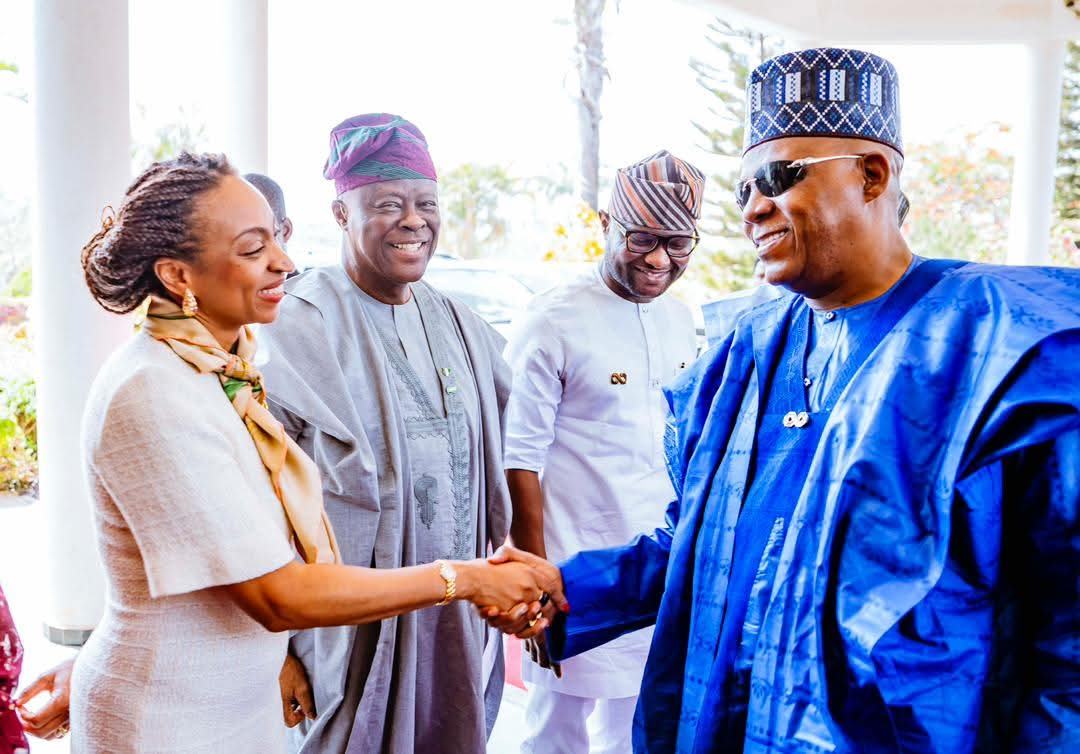
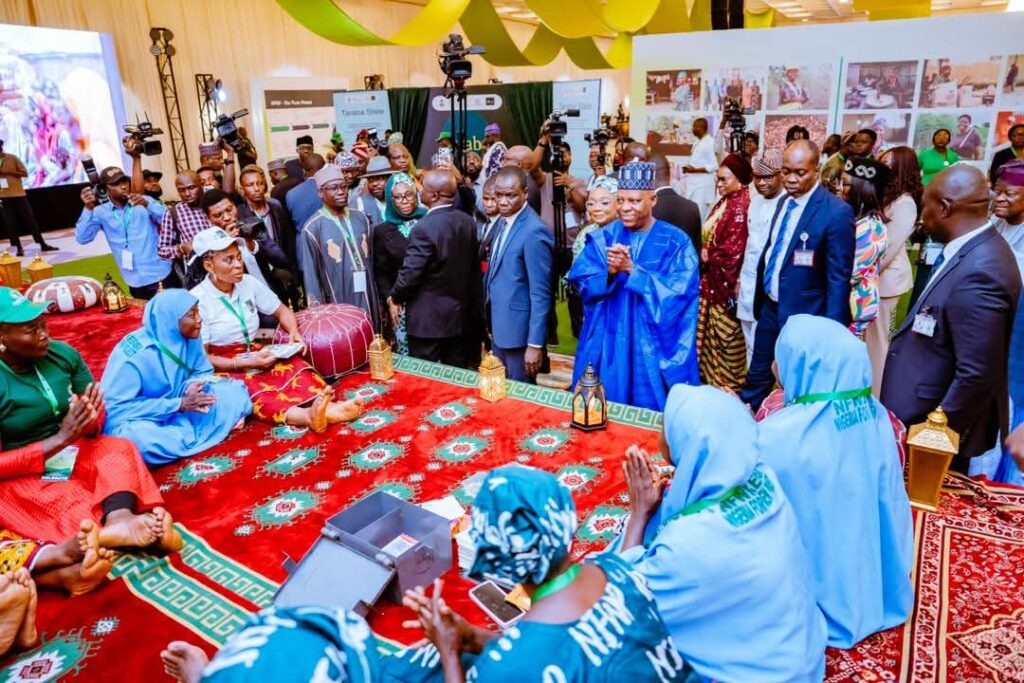
President Bola Ahmed Tinubu has expanded the Nigeria for Women Programme to reach 25 million beneficiaries nationwide, reaffirming his administration’s commitment to women’s economic inclusion and national development.
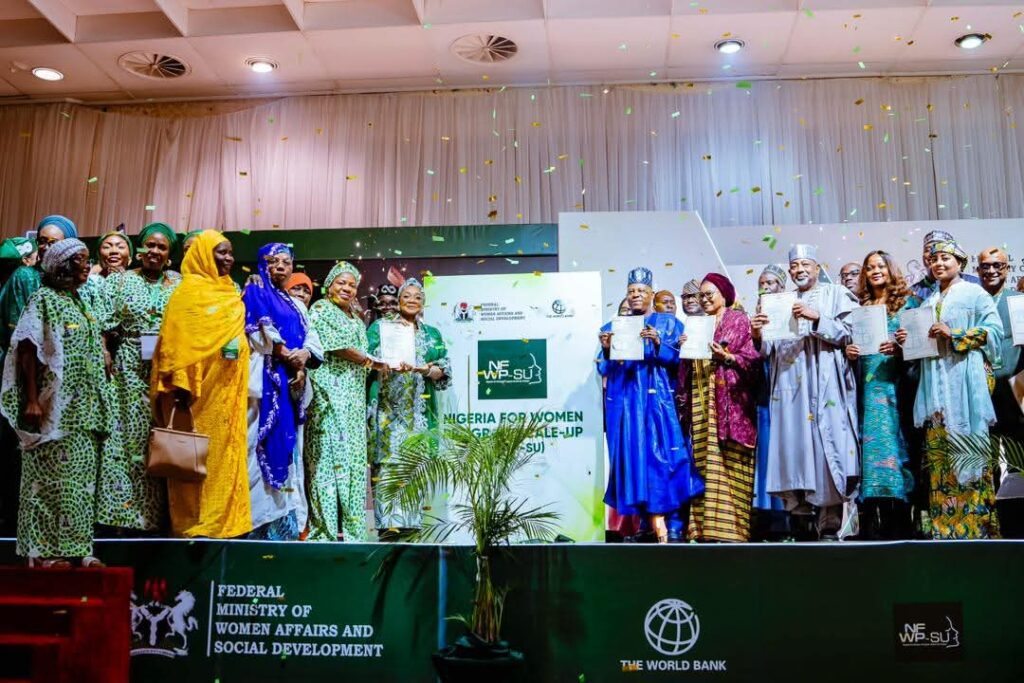
The programme’s pilot phase in six states had already reached over one million beneficiaries, with the scale-up introducing the Happy Woman App Platform, a secure digital interface that connects women to finance, skills, markets, essential services, and government support.
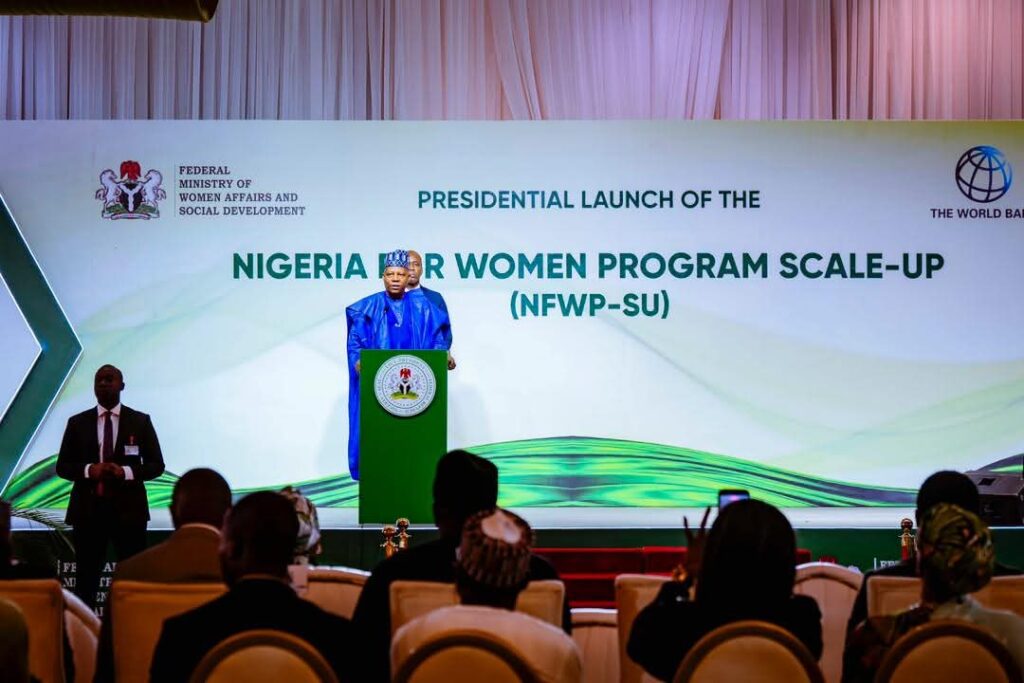
Speaking on Thursday at the Presidential Launch of the Programme Scale-Up at the Presidential Villa, Abuja, the President, who was represented by his deputy, Vice President Kashim Shettima, noted that Nigeria cannot achieve sustainable growth without placing women at the centre of national planning.
“A nation that relegates its women is a nation bound for implosion. We have long understood this truth. That is why this administration has not only placed women at the forefront of decision-making but has also entrusted them with leadership in causes that redeem our national promise. Today stands as proof of that commitment, and I am proud to be part of this journey,” he said.
President Tinubu observed that while women are the authors of Nigeria’s development story, they remain essential to family stability, community resilience and national productivity.
“We have set a bold but achievable national ambition: to reach 25 million Nigerian women through this programme,” he stated, calling on the World Bank to strengthen its financing, technical support and innovation partnerships for the national scale-up.
“Digital inclusion is no longer optional; it is foundational to effective service delivery and national competitiveness,” he added.
The President designated 2026 as the “Year of Social Development and Families in Nigeria,” directing coordinated action across all levels of government.
The declaration followed a Memorandum of Understanding signed during his January official visit to Turkey, aimed at strengthening family cohesion and social welfare systems.
President Tinubu commended the Federal Ministry of Women’s Affairs and Social Development for integrating technology into policy implementation and for reorganising social development into a more coherent system since the launch of the Renewed Hope Social Impact Intervention in Lafia last year, noting the transformation reflected what purposeful leadership can achieve.
The President also praised state governors and the Nigeria Governors’ Forum for aligning federal vision with state-level execution, stating that “national transformation succeeds when all levels of government move with shared purpose.”
Earlier in her welcome address, the Minister of Women Affairs and Social Development, Hajiya Imaan Sulaiman Ibrahim, said the launch underscored a significant shift under the leadership of President Tinubu, where women are no longer viewed as peripheral beneficiaries of development but as central drivers of Nigeria’s economic growth, social cohesion, and democratic stability.
She described the launch of the Nigerian for Women Project (NFWP) Scale-Up as one of the most far-reaching and ambitious expansions of social and economic empowerment in the nation’s history.
The Minister noted that phase one of the project successfully achieved its objectives of addressing harmful social norms and strengthening women’s socio-economic resilience.
Beyond these achievements, she emphasized that the project delivered compelling evidence of the transformative power of women’s empowerment.
She further announced the launch of Nigeria’s Third National Action Plan on United Nations Security Council Resolution 1325 on Women, Peace, and Security, positioning Nigeria among a select group of countries worldwide to attain this milestone.
Also, the World Bank Regional Representative for Africa, Mr. Robert Chase, explained that the project was designed by the bank’s Social Policy Department to place women at the center of development, emphasizing that investing in women remains the most impactful investment any nation can make.
On his part, Director of the Nigeria Country Office of the Bill and Melinda Gates Foundation, Mr. Uche Amaonwu, who noted that empowering women directly translates to healthier families and safer communities, said women’s empowerment significantly reduces disease and insecurity at the household level.
For his part, Minister of Agriculture and Food Security, Senator Abubakar Kyari, expressed his Ministry’s readiness to collaborate on initiatives aimed at empowering women across the country.
Representative of the Senate President, Senator Godswill Akpabio, Senator Ireti Kingibe, stated that the scale-up of the Nigerian for Women Project reflects the Federal Government’s commitment to addressing the needs of women.
She added that the National Assembly would continue to enact legislation to expand women’s access to governance and economic resources.
Delivering the goodwill message of the Nigeria Governors’ Forum, the Deputy Governor of Katsina State, Malam Faruk Jobe, reaffirmed the commitment of state governments to providing counterpart funding for the successful implementation of women-focused projects.
He disclosed that Katsina State, a participating state in the project, has earmarked ₦4 billion in its current budget to support the initiative.
25m Nigerians To Benefit As President Tinubu Expands Women’s Economic Programme



Fake report of unrest at unijos debunked, military assures campus security
By: Zagazola Makama
The Management of the University of Jos and the Nigerian military have dismissed as false and misleading a viral report alleging unrest, chaos, and destruction within the institution, describing it as a deliberate attempt to cause panic and misinformation.
The fake report, which circulated on social media alongside an image claimed to depict violence on campus, suggested that “student grievances had escalated into chaos” with alleged destruction and insecurity within the university environment.
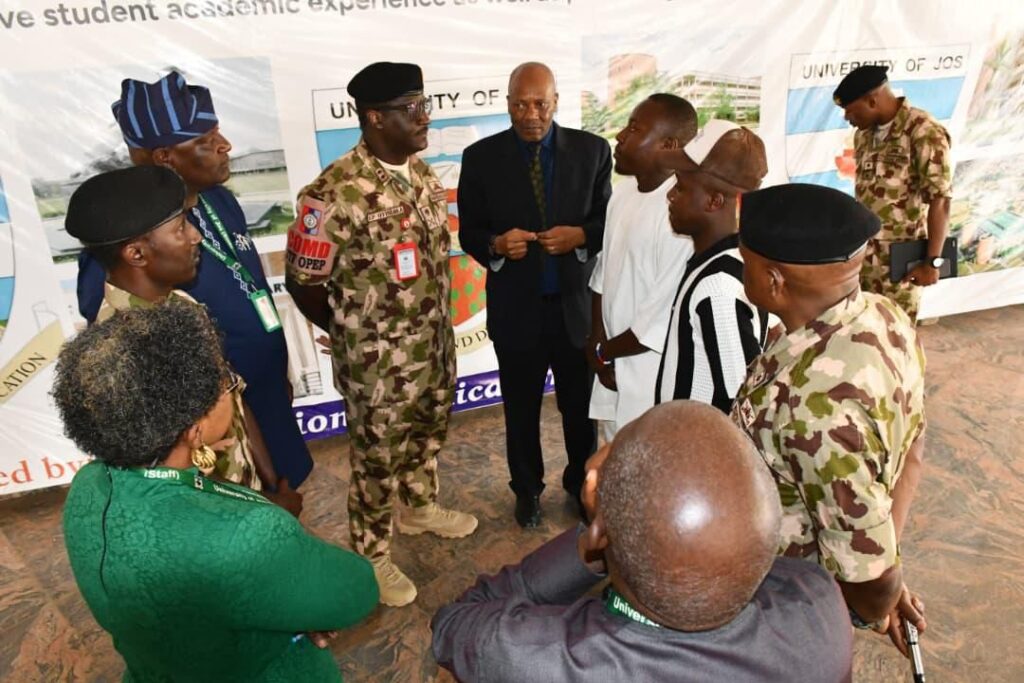
However, checks by Zagazola and confirmation from university authorities indicate that the situation at the University of Jos remains calm, peaceful, and under control, with normal activities ongoing.
It was further gathered that the image accompanying the false report was generated using Artificial Intelligence and does not reflect any real incident within or around the university.
A senior security source told Zagazola Makama that the General Officer Commanding 3 Division, Nigerian Army and Commander Joint Task Force Operation ENDURING PEACE, Major General E.F. Oyinlola, personally led troops to the University of Jos following the circulation of the fake report.

During the visit, the GOC met with the Vice Chancellor of the institution and assured management of the Nigerian Army’s commitment to safeguarding the university community, students, and staff against any form of threat or security breach.
The military described the viral publication as “fake news deliberately designed to cause confusion, panic, and distrust,” urging members of the public to disregard it in its entirety.
Authorities further cautioned against the circulation of unverified content, especially digitally manipulated images, warning that such misinformation could incite unnecessary fear and disrupt public peace.
The University of Jos management also reaffirmed that there was no unrest or security breach on campus, stressing that academic activities were proceeding without disruption.
Security agencies assured continued surveillance and protection of the institution as part of ongoing efforts under Operation ENDURING PEACE to maintain stability across Plateau State.
The public has been urged to rely only on verified information from official sources and avoid sharing content capable of undermining peace and order in the state.
Fake report of unrest at unijos debunked, military assures campus security
Athena Observatory Warns of Deepening Structural Risks in Nigeria’s Democracy
By: Michael Mike
A new policy report has raised fresh concerns about the stability of Nigeria’s democratic system, warning that growing political fragmentation and institutional strain could undermine the credibility of elections ahead of the 2027 general polls.
The report, released on Tuesday by the Athena Election Observatory (AEO), marks the debut of its Political Landscape Monitor—a policy series designed to track and analyse the country’s evolving electoral environment. Titled “Nigeria’s Democracy and the Imperative of Competitive Politics,” the inaugural note paints a sobering picture of a political system struggling to keep pace with its own internal dynamics.
According to the Observatory, a pattern is emerging across Nigeria’s major political parties in which leadership disputes, fragile alliances, and factional battles are becoming increasingly common. While these crises may appear isolated, the report argues they are symptoms of a deeper structural imbalance.
At the heart of the problem, it said, is a widening gap between political activity and institutional capacity. Political actors, driven by the urgency of coalition-building and power consolidation, are moving faster than the rules and structures meant to regulate them.
“This is not just about party disagreements,” the report noted. “It is about the weakening of the systems that are supposed to organise competition, manage conflict, and ultimately guarantee meaningful choice for voters.”
The analysis drew from recent developments within prominent parties such as the African Democratic Congress (ADC), the Peoples Democratic Party (PDP), and the Labour Party, where internal tensions and contested leadership claims have repeatedly spilled into the public domain.
Observers say the trend reflects a broader shift in how political disputes are resolved in Nigeria. Rather than being settled through internal party mechanisms, disagreements are increasingly pushed toward external institutions—particularly the courts and electoral regulators.
The report highlighted the pivotal role of the Independent National Electoral Commission (INEC) in this process. Its decisions on which party factions to recognise can effectively determine leadership outcomes, making it a central actor in intra-party struggles.
While acknowledging INEC’s constitutional mandate, the Observatory cautioned that inconsistent or opaque decision-making could erode public confidence. It called for clearer procedures and stricter adherence to impartiality to prevent the Commission from being perceived as a political arbiter.
Equally significant is the growing reliance on the judiciary to settle political disputes. The report warned that while the courts remain essential for upholding the rule of law, their increasing involvement in intra-party conflicts risks displacing internal governance systems.
Legal interventions, it argued, should serve as a last resort—not a default mechanism.
“When courts become the primary arena for resolving political disagreements, parties gradually lose the capacity to govern themselves,” the report states. “Over time, this weakens the entire democratic ecosystem.”
Beyond institutional concerns, the Observatory drew attention to the implications for ordinary voters. A fragmented political landscape, it said, reduces the clarity and credibility of electoral choices, leaving citizens with options that may lack cohesion or long-term viability.
In such conditions, elections risk becoming procedural exercises rather than meaningful expressions of democratic will.
The report ultimately framed the issue as a national, rather than partisan, challenge. Strengthening the institutional foundations of political competition, it argued, is critical not only for credible elections but also for political stability and governance.
As Nigeria edges closer to another election cycle, the findings serve as a stark reminder that the health of a democracy depends not just on the conduct of elections, but on the strength of the systems that shape them long before ballots are cast.
The Athena Election Observatory said it will continue to publish periodic assessments under its Political Landscape Monitor, offering data-driven insights into the trends shaping Nigeria’s political future.
Athena Observatory Warns of Deepening Structural Risks in Nigeria’s Democracy
Agriculture partnership: Gov Yahaya to get Sasakawa’s Special Award
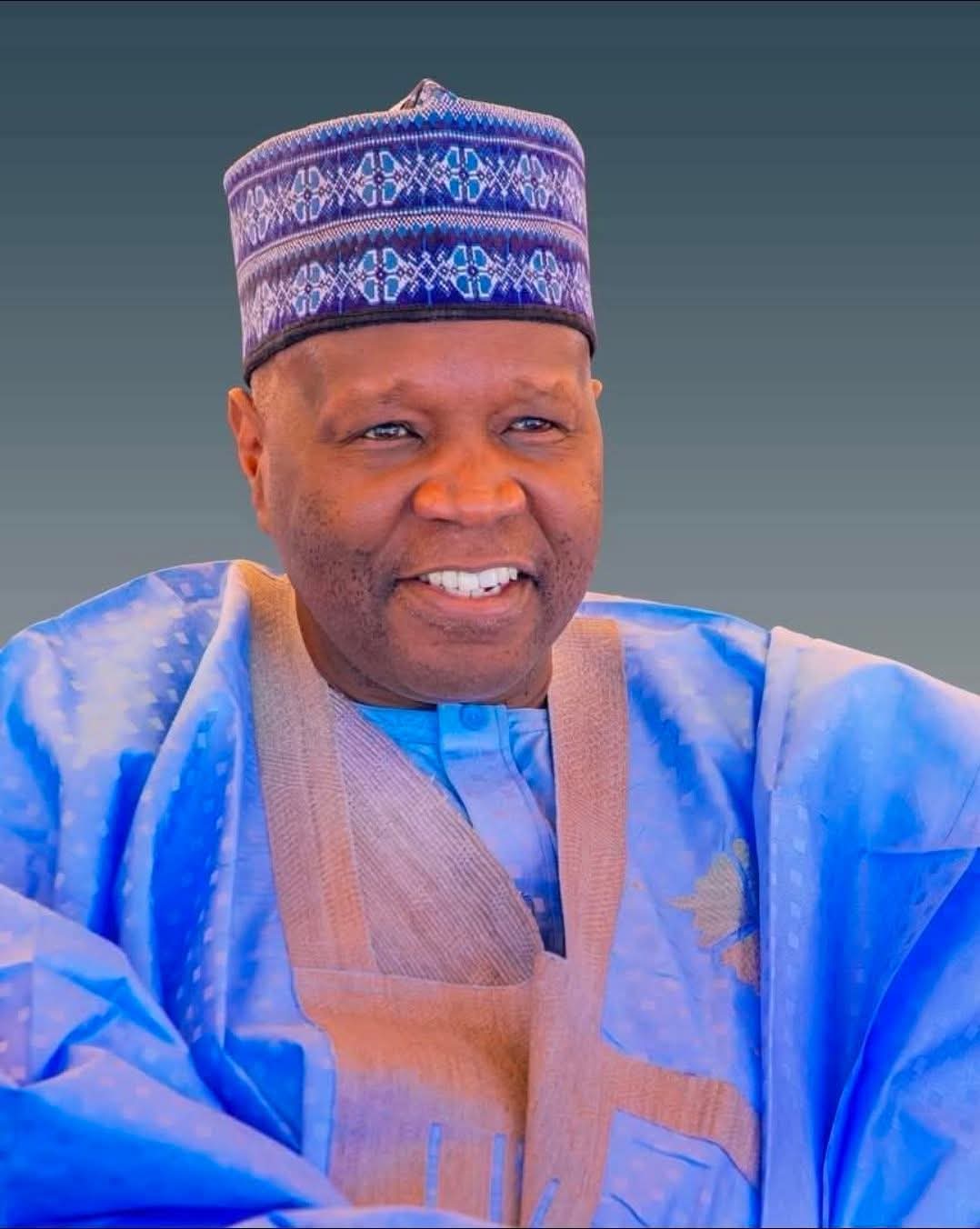
Governor Muhammadu Inuwa Yahaya of Gombe State will be honoured with a Special Recognition Award by the Sasakawa Africa Association (SAA) Nigeria, in acknowledgement of the state’s sustained partnership and strategic commitment to agricultural development.
The award will be presented at the 2026 SAA Nigeria Annual Stakeholders Workshop on Thursday, April 9, 2026, in Abuja, where top federal officials, development partners, diplomats, and state governments are expected to gather to discuss pathways for strengthening Nigeria’s food systems.
The workshop, holding at Rockview Royale Hotel, Wuse II, is themed “SAA @ 40: Deepening Impact and Expanding Reach at Scale.”
The recognition of Governor Inuwa Yahaya reflects the depth of Gombe State’s collaboration with SAA over the years, which has supported agricultural extension, smallholder productivity, and rural livelihoods.
Since its creation in 1996, Gombe State has maintained a working relationship with SAA, funded by The Nippon Foundation, to implement initiatives that improve food security, nutrition, climate resilience, and inclusive agricultural services, with particular attention to women, youth, and resource-poor farmers.
Speaking ahead of the workshop, Dr. Godwin Atser, Country Director of SAA Nigeria, said:
“This recognition celebrates a partnership backed by action. Governor Inuwa Yahaya’s leadership reflects the kind of subnational commitment essential for transforming agriculture in Nigeria.
Gombe State’s sustained support for farmer-focused interventions demonstrates what can be achieved when political will, institutional alignment, and practical investment converge.”
SAA Nigeria’s collaboration with Gombe State encompasses a wide range of interventions, including Farmer Learning Platforms (FLP), Community Savings and Investment in Agriculture (CSIA), Private Extension Service Provision (PESP), and Community-Based Seed Multiplication (CBSM), among others. Together, these initiatives strengthen the agricultural ecosystem from production to post harvest, improve access to technology, knowledge, and markets, and enhance the capacities of farmers and rural actors.
The partnership also encourages pluralistic extension systems, involving the private sector, farmer organizations, research institutions, and civil society in scaling agricultural services across the state. This multi-dimensional cooperation underscores why Gombe State’s collaboration is deserving of recognition.
As SAA marks 40 years of operations in Africa and 33 years in Nigeria, the organization notes that sustainable agricultural transformation requires long-term commitment, collaboration, and strategic investment, qualities exemplified by Gombe State and Governor Inuwa Yahaya.
The recognition will be part of a broader conversation at the 2026 Annual Stakeholders Workshop, which will review SAA’s 2021–2025 achievements, share lessons, and explore future partnerships to strengthen agriculture in Nigeria and across Africa.
About Sasakawa Africa Association (SAA)
Sasakawa Africa Association (SAA) was established in 1986 by Japanese philanthropist Ryoichi Sasakawa, Nobel Laureate Dr. Norman Borlaug, and former U.S. President Jimmy Carter.
Dedicated to improving the productivity, profitability, and resilience of smallholder farmers in sub-Saharan Africa, SAA operates through agricultural extension, capacity building, and systems strengthening. Active in Nigeria since 1993, SAA collaborates with governments, research institutions, universities, private sector actors, and development partners to advance farmer-centered agricultural transformation.
Agriculture partnership: Gov Yahaya to get Sasakawa’s Special Award

Troops arrest two suspected militia members in Kokona LGA In Nassarawa

Fake report of unrest at unijos debunked, military assures campus security

Athena Observatory Warns of Deepening Structural Risks in Nigeria’s Democracy

Roger Federer’s Shock as DNA Results Reveal Myla and Charlene Are Not His Biological Children

THE PLIGHT OF FARIDA

FAILED COUP IN BURKINA FASO: HOW TRAORÉ NARROWLY ESCAPED ASSASSINATION PLOT AMID FOREIGN INTERFERENCE CLAIMS
-
 News2 years ago
Roger Federer’s Shock as DNA Results Reveal Myla and Charlene Are Not His Biological Children
-
Opinions4 years ago
THE PLIGHT OF FARIDA
-
 News12 months ago
FAILED COUP IN BURKINA FASO: HOW TRAORÉ NARROWLY ESCAPED ASSASSINATION PLOT AMID FOREIGN INTERFERENCE CLAIMS
-

 News2 years ago
EYN: Rev. Billi, Distortion of History, and The Living Tamarind Tree
-
 Opinions4 years ago
POLICE CHARGE ROOMS, A MINTING PRESS
-

 ACADEMICS2 years ago
A History of Biu” (2015) and The Lingering Bura-Pabir Question (1)
-

 Columns2 years ago
Army University Biu: There is certain interest, but certainly not from Borno.
-

 Opinions2 years ago
Tinubu,Shettima: The epidemic of economic, insecurity in Nigeria
