
News
Athena Observatory Warns of Deepening Structural Risks in Nigeria’s Democracy

Athena Observatory Warns of Deepening Structural Risks in Nigeria’s Democracy
By: Michael Mike
A new policy report has raised fresh concerns about the stability of Nigeria’s democratic system, warning that growing political fragmentation and institutional strain could undermine the credibility of elections ahead of the 2027 general polls.
The report, released on Tuesday by the Athena Election Observatory (AEO), marks the debut of its Political Landscape Monitor—a policy series designed to track and analyse the country’s evolving electoral environment. Titled “Nigeria’s Democracy and the Imperative of Competitive Politics,” the inaugural note paints a sobering picture of a political system struggling to keep pace with its own internal dynamics.
According to the Observatory, a pattern is emerging across Nigeria’s major political parties in which leadership disputes, fragile alliances, and factional battles are becoming increasingly common. While these crises may appear isolated, the report argues they are symptoms of a deeper structural imbalance.
At the heart of the problem, it said, is a widening gap between political activity and institutional capacity. Political actors, driven by the urgency of coalition-building and power consolidation, are moving faster than the rules and structures meant to regulate them.
“This is not just about party disagreements,” the report noted. “It is about the weakening of the systems that are supposed to organise competition, manage conflict, and ultimately guarantee meaningful choice for voters.”
The analysis drew from recent developments within prominent parties such as the African Democratic Congress (ADC), the Peoples Democratic Party (PDP), and the Labour Party, where internal tensions and contested leadership claims have repeatedly spilled into the public domain.
Observers say the trend reflects a broader shift in how political disputes are resolved in Nigeria. Rather than being settled through internal party mechanisms, disagreements are increasingly pushed toward external institutions—particularly the courts and electoral regulators.
The report highlighted the pivotal role of the Independent National Electoral Commission (INEC) in this process. Its decisions on which party factions to recognise can effectively determine leadership outcomes, making it a central actor in intra-party struggles.
While acknowledging INEC’s constitutional mandate, the Observatory cautioned that inconsistent or opaque decision-making could erode public confidence. It called for clearer procedures and stricter adherence to impartiality to prevent the Commission from being perceived as a political arbiter.
Equally significant is the growing reliance on the judiciary to settle political disputes. The report warned that while the courts remain essential for upholding the rule of law, their increasing involvement in intra-party conflicts risks displacing internal governance systems.
Legal interventions, it argued, should serve as a last resort—not a default mechanism.
“When courts become the primary arena for resolving political disagreements, parties gradually lose the capacity to govern themselves,” the report states. “Over time, this weakens the entire democratic ecosystem.”
Beyond institutional concerns, the Observatory drew attention to the implications for ordinary voters. A fragmented political landscape, it said, reduces the clarity and credibility of electoral choices, leaving citizens with options that may lack cohesion or long-term viability.
In such conditions, elections risk becoming procedural exercises rather than meaningful expressions of democratic will.
The report ultimately framed the issue as a national, rather than partisan, challenge. Strengthening the institutional foundations of political competition, it argued, is critical not only for credible elections but also for political stability and governance.
As Nigeria edges closer to another election cycle, the findings serve as a stark reminder that the health of a democracy depends not just on the conduct of elections, but on the strength of the systems that shape them long before ballots are cast.
The Athena Election Observatory said it will continue to publish periodic assessments under its Political Landscape Monitor, offering data-driven insights into the trends shaping Nigeria’s political future.
Athena Observatory Warns of Deepening Structural Risks in Nigeria’s Democracy



Seven ISWAP Fighters’ Family Members, 12 Children Flee Yaganari Enclave, Surrender to Troops
By Zagazola Makama
Seven family members of suspected terrorists, accompanied by 12 children, have surrendered to troops of Operation HADIN KAI at Mafa in Borno State, following reported hunger and violent clashes among rival terrorist factions.
According to sources, the seven women surrendered at about 5 p.m. on Aug. 17 to troops of 112 Task Force Battalion deployed in Mafa.
The women were identified as Falamatai Modu, 30; Kelu Yaga, 25; Fada Yaga, 30; Gwaya Kadi, 25; Hauwa Mallam, 25; Maryam Yusuf, 25; and Fanna Kadi, 40.
They were accompanied by 12 children, aged between three months and 10 years.
Preliminary interrogation revealed that the women escaped from the Yaganari terrorist enclave due to hunger and concerns over their safety following violent clashes between rival terrorist factions.
The report said the escapees were profiled and documented by the troops and would be handed over to the 24 Task Force Brigade Military Intelligence Regiment for further action.
The development highlights the increasing pressure on terrorist enclaves in the North-East, where sustained military operations and internal factional clashes continue to disrupt the groups’ activities and survival networks.
The military authorities said the general security situation across the theatre remained calm but unpredictable, while troops’ morale and fighting efficiency remained satisfactory.
Seven ISWAP Fighters’ Family Members, 12 Children Flee Yaganari Enclave, Surrender to Troops
Again, Military Neutralise 8 ISWAP Fighters in Precision Airstrike in Timbuktu Triangle
By Zagazola Makama
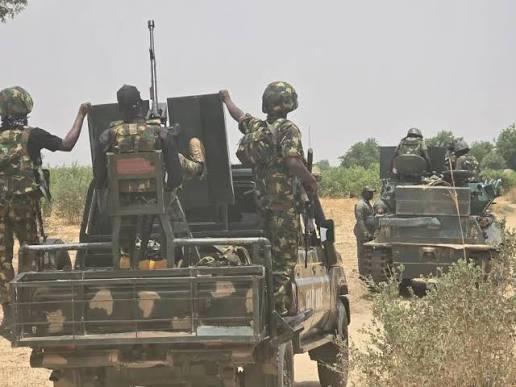
Troops of Operation HADIN KAI have neutralised eight suspected Islamic State West Africa Province (ISWAP) terrorists in a precision airstrike at Thethangala, within the Timbuktu Triangle of Borno State.
According to a Special Situation Report obtained by Zagazola Makama, the operation followed intelligence on terrorist activities in the area.
The report said a Guardian aircraft established overhead at Thethangala at about 9:56 p.m. on Aug. 18 and subsequently sighted eight terrorists who had converged and were lying in wait, apparently preparing to attack troops at their location.
Following the sighting, the aircraft conducted a precision strike on the identified terrorists.
“Battle Damage Assessment shows all the terrorists neutralised with no further movement observed after the strike,” the report stated.
The military said the general security situation remained calm but unpredictable, while the morale and fighting efficiency of troops remained satisfactory.
The latest air operation is part of sustained intelligence-led efforts by the Air Component of Operation HADIN KAI to disrupt terrorist concentrations and prevent planned attacks against troops operating in the North-East.
The Timbuktu Triangle remains one of the areas where terrorist groups have continued to seek opportunities to regroup and launch attacks against military positions.
Again, Military Neutralise 8 ISWAP Fighters in Precision Airstrike in Timbuktu Triangle
NTTF VP Mailantarki tasks stakeholders on grassroots development
The Vice President of the Nigeria Table Tennis Federation (NTTF), Honourable Khamisu Ahmed Mailantarki, has commended the sponsor of the Senior Advocate Cup, Muhammed Sani Ndanusa (SAN), urging more stakeholders to emulate his profound passion for grassroots talent development across Northern Nigeria and the nation at large.
Hon. Mailantarki gave the commendation in a press statement issued on Tuesday by his media aide, Mr Adamu Usman Ahmed.
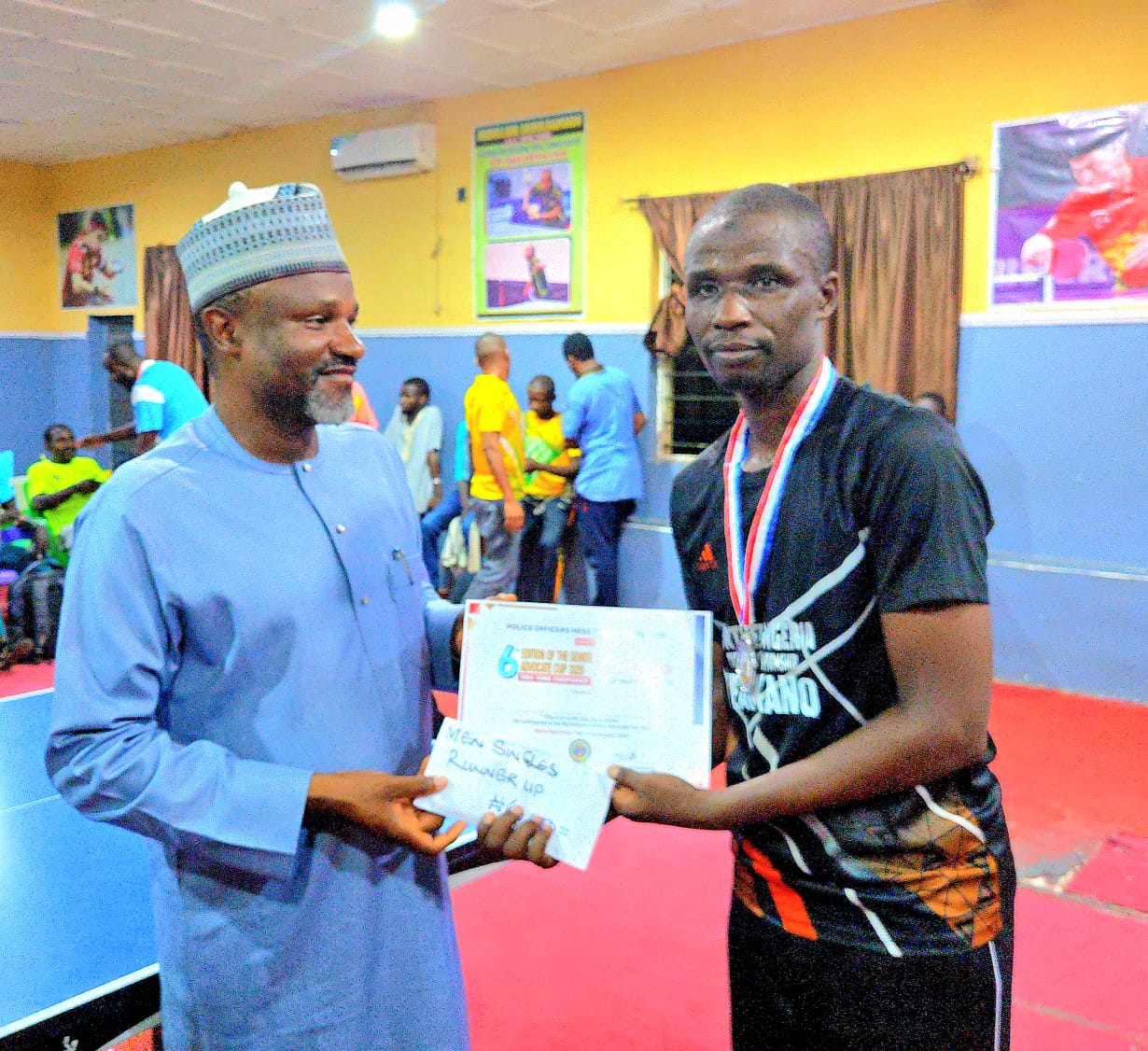
Mailantarki while speaking during the closing ceremony of the highly anticipated tournament congratulated the various winners across the different categories of Men Singles, Junior Single and the veterans.
The NTTF VP thrilled the audience at the Kaduna Police Officers’ Mess Indoor Sport hall with an exciting developmental announcement.
He revealed that the two finalists of the Junior Singles category have been selected for a special performance camping program at his prestigious Table Tennis Academy in Abuja. Based on their performance at the camp, they stand the chance of securing full sponsorship to an upcoming international youth championship.
The 6th edition of the championship witnessed spectacular displays of talents. In the elite category, Abayomi Martins from Borno State delivered a stellar performance to take home the overall winner’s prize, leaving Kamal Muktar of Kano State to settle for the runner-up medal.
In the fiercely contested Junior category, the host state’s Mustapha Muktar (Kaduna) triumphed over Taraba State’s Harrison Jacob to clinch the ultimate prize.
Looking to the future, Hon. Mailantarki assured fans and players that similar grassroots and elite developmental championships would be organized in other states to ensure the continuous discovery and nurturing of table tennis talents in the country.
NTTF VP Mailantarki tasks stakeholders on grassroots development

Seven ISWAP Fighters’ Family Members, 12 Children Flee Yaganari Enclave, Surrender to Troops

Again, Military Neutralise 8 ISWAP Fighters in Precision Airstrike in Timbuktu Triangle

Troops Foil Kidnap Attempt, Rescue Four Minors in Plateau

Roger Federer’s Shock as DNA Results Reveal Myla and Charlene Are Not His Biological Children

THE PLIGHT OF FARIDA

FAILED COUP IN BURKINA FASO: HOW TRAORÉ NARROWLY ESCAPED ASSASSINATION PLOT AMID FOREIGN INTERFERENCE CLAIMS
-
 News2 years ago
Roger Federer’s Shock as DNA Results Reveal Myla and Charlene Are Not His Biological Children
-
Opinions5 years ago
THE PLIGHT OF FARIDA
-
 News1 year ago
FAILED COUP IN BURKINA FASO: HOW TRAORÉ NARROWLY ESCAPED ASSASSINATION PLOT AMID FOREIGN INTERFERENCE CLAIMS
-

 News2 years ago
EYN: Rev. Billi, Distortion of History, and The Living Tamarind Tree
-
 Opinions5 years ago
POLICE CHARGE ROOMS, A MINTING PRESS
-

 ACADEMICS2 years ago
A History of Biu” (2015) and The Lingering Bura-Pabir Question (1)
-

 Columns2 years ago
Army University Biu: There is certain interest, but certainly not from Borno.
-

 Politics1 year ago
2027: Why Hon. Midala Balami Must Go, as Youths in Hawul and Asikira/Uba Federal Constituency Reject ₦500,000 as Sallah Gift
