
News
Athena Observatory Warns of Deepening Structural Risks in Nigeria’s Democracy

Athena Observatory Warns of Deepening Structural Risks in Nigeria’s Democracy
By: Michael Mike
A new policy report has raised fresh concerns about the stability of Nigeria’s democratic system, warning that growing political fragmentation and institutional strain could undermine the credibility of elections ahead of the 2027 general polls.
The report, released on Tuesday by the Athena Election Observatory (AEO), marks the debut of its Political Landscape Monitor—a policy series designed to track and analyse the country’s evolving electoral environment. Titled “Nigeria’s Democracy and the Imperative of Competitive Politics,” the inaugural note paints a sobering picture of a political system struggling to keep pace with its own internal dynamics.
According to the Observatory, a pattern is emerging across Nigeria’s major political parties in which leadership disputes, fragile alliances, and factional battles are becoming increasingly common. While these crises may appear isolated, the report argues they are symptoms of a deeper structural imbalance.
At the heart of the problem, it said, is a widening gap between political activity and institutional capacity. Political actors, driven by the urgency of coalition-building and power consolidation, are moving faster than the rules and structures meant to regulate them.
“This is not just about party disagreements,” the report noted. “It is about the weakening of the systems that are supposed to organise competition, manage conflict, and ultimately guarantee meaningful choice for voters.”
The analysis drew from recent developments within prominent parties such as the African Democratic Congress (ADC), the Peoples Democratic Party (PDP), and the Labour Party, where internal tensions and contested leadership claims have repeatedly spilled into the public domain.
Observers say the trend reflects a broader shift in how political disputes are resolved in Nigeria. Rather than being settled through internal party mechanisms, disagreements are increasingly pushed toward external institutions—particularly the courts and electoral regulators.
The report highlighted the pivotal role of the Independent National Electoral Commission (INEC) in this process. Its decisions on which party factions to recognise can effectively determine leadership outcomes, making it a central actor in intra-party struggles.
While acknowledging INEC’s constitutional mandate, the Observatory cautioned that inconsistent or opaque decision-making could erode public confidence. It called for clearer procedures and stricter adherence to impartiality to prevent the Commission from being perceived as a political arbiter.
Equally significant is the growing reliance on the judiciary to settle political disputes. The report warned that while the courts remain essential for upholding the rule of law, their increasing involvement in intra-party conflicts risks displacing internal governance systems.
Legal interventions, it argued, should serve as a last resort—not a default mechanism.
“When courts become the primary arena for resolving political disagreements, parties gradually lose the capacity to govern themselves,” the report states. “Over time, this weakens the entire democratic ecosystem.”
Beyond institutional concerns, the Observatory drew attention to the implications for ordinary voters. A fragmented political landscape, it said, reduces the clarity and credibility of electoral choices, leaving citizens with options that may lack cohesion or long-term viability.
In such conditions, elections risk becoming procedural exercises rather than meaningful expressions of democratic will.
The report ultimately framed the issue as a national, rather than partisan, challenge. Strengthening the institutional foundations of political competition, it argued, is critical not only for credible elections but also for political stability and governance.
As Nigeria edges closer to another election cycle, the findings serve as a stark reminder that the health of a democracy depends not just on the conduct of elections, but on the strength of the systems that shape them long before ballots are cast.
The Athena Election Observatory said it will continue to publish periodic assessments under its Political Landscape Monitor, offering data-driven insights into the trends shaping Nigeria’s political future.
Athena Observatory Warns of Deepening Structural Risks in Nigeria’s Democracy


NIMC Pushes Digital Identity Reforms to Boost Service Delivery, Security
By: Michael Mike
The National Identity Management Commission (NIMC) has reaffirmed its commitment to strengthening Nigeria’s Digital Public Infrastructure (DPI) through the deployment of secure digital identity systems aimed at improving governance, enhancing national security, and expanding access to public services.
Speaking at a digital conference in Abuja themed “Building Africa’s Digital Foundations Together,” the Director-General and Chief Executive Officer of NIMC, Abisoye Coker-Odusote, represented by the Head of Infrastructure Technology and Identity Databases, Mr. Sulaiman Falade, said the commission is driving reforms and institutional partnerships to build an inclusive and interoperable digital identity ecosystem.
According to her, the National Identification Number (NIN) has become central to Nigeria’s digital transformation agenda, serving as a key tool for identity verification, biometric authentication, and access to both government and private sector services.
She noted that following the Presidential Directive issued on April 5, 2024, Ministries, Departments and Agencies (MDAs) were mandated to integrate the NIN into digital services, particularly in areas involving data capture, identity verification, and authentication processes.
Coker-Odusote stated that NIMC has already established implementation structures to ensure compliance with the directive and to deepen the adoption of digital identity solutions across the country.
She further stressed that the Federal Government’s vision is to establish a unified, secure, and transparent digital identity framework capable of supporting efficient service delivery and accountability in governance.
The NIMC boss added that the commission is also advancing Nigeria’s broader digital governance goals through the deployment of the National Public Key Infrastructure (nPKI), a system designed to strengthen trust in digital transactions, safeguard citizens’ data, and promote secure online interactions.
She called on stakeholders in both the public and private sectors to continue supporting the implementation of Nigeria’s digital identity ecosystem, noting that the initiative is critical to national development and economic growth.
According to her, NIMC remains committed to leveraging technology and innovation to build a more connected, efficient, and resilient nation.
NIMC Pushes Digital Identity Reforms to Boost Service Delivery, Security
Tinubu Sweeps Zulum’s Ward with 100% Votes in APC Presidential Primary
By: Michael Mike
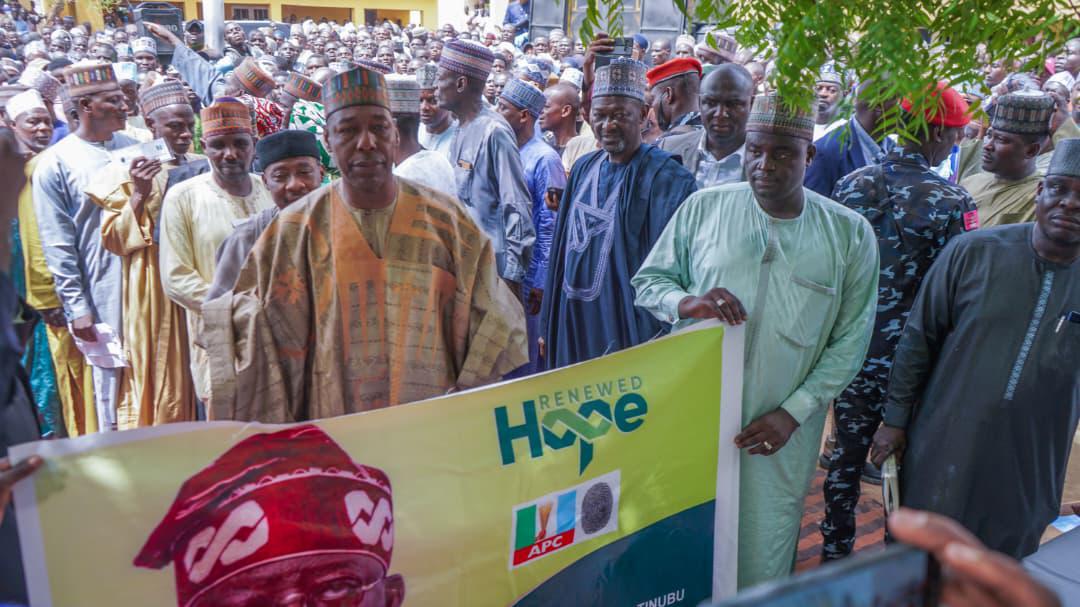
President Bola Ahmed Tinubu recorded a landslide victory in the All Progressives Congress (APC) presidential primary election in Mafa Ward of Borno State, securing all valid votes cast in the exercise held in the home ward of Governor Babagana Umara Zulum.
The direct primary election took place at Mafa Central Primary School under the supervision of the Chairperson of the Presidential Primary Election Committee, Hajiya Inna Alkali Imam.
According to the results announced at the ward level, Tinubu polled 2,175 votes, representing 100 per cent of the valid votes cast during the exercise. Out of the 2,277 registered APC members in the ward, 2,175 were accredited and participated in the voting process.
Tinubu’s challenger, Stanley Osifo, an APC chieftain and businessman from Edo State, failed to secure any vote in the ward.
Governor Zulum, who served as the Coordinator and Collation Officer for the presidential primary in the state, said he participated in the exercise as an indigene of Mafa Ward.
“I am from Mafa Ward, and that is why I am here to witness and participate in the exercise. We have two candidates, President Bola Ahmed Tinubu and Mr Stanley Osifo,” Zulum stated.
The governor also commended the peaceful conduct of the exercise and the turnout of party members.
“So far so good, we have conducted the presidential primary election for Mafa Ward, and I am very impressed with the turnout. We have a total of about 2,277 registered party members in Mafa Ward, out of which 2,175 were accredited for the voting, and all of them voted for President Bola Ahmed Tinubu, while the other candidate scored zero,” he said.
The APC presidential primary is ongoing in several states across the country, with the party expected to collate and announce final nationwide results at a later date.
Tinubu Sweeps Zulum’s Ward with 100% Votes in APC Presidential Primary
News
I Remember At Age Of 8,General Gowon Would Send Hand Written Letter To Yusuf Signed Uncle Joe-Sanusi
I Remember At Age Of 8,General Gowon Would Send Hand Written Letter To Yusuf Signed Uncle Joe-Sanusi
By: Our Reporter
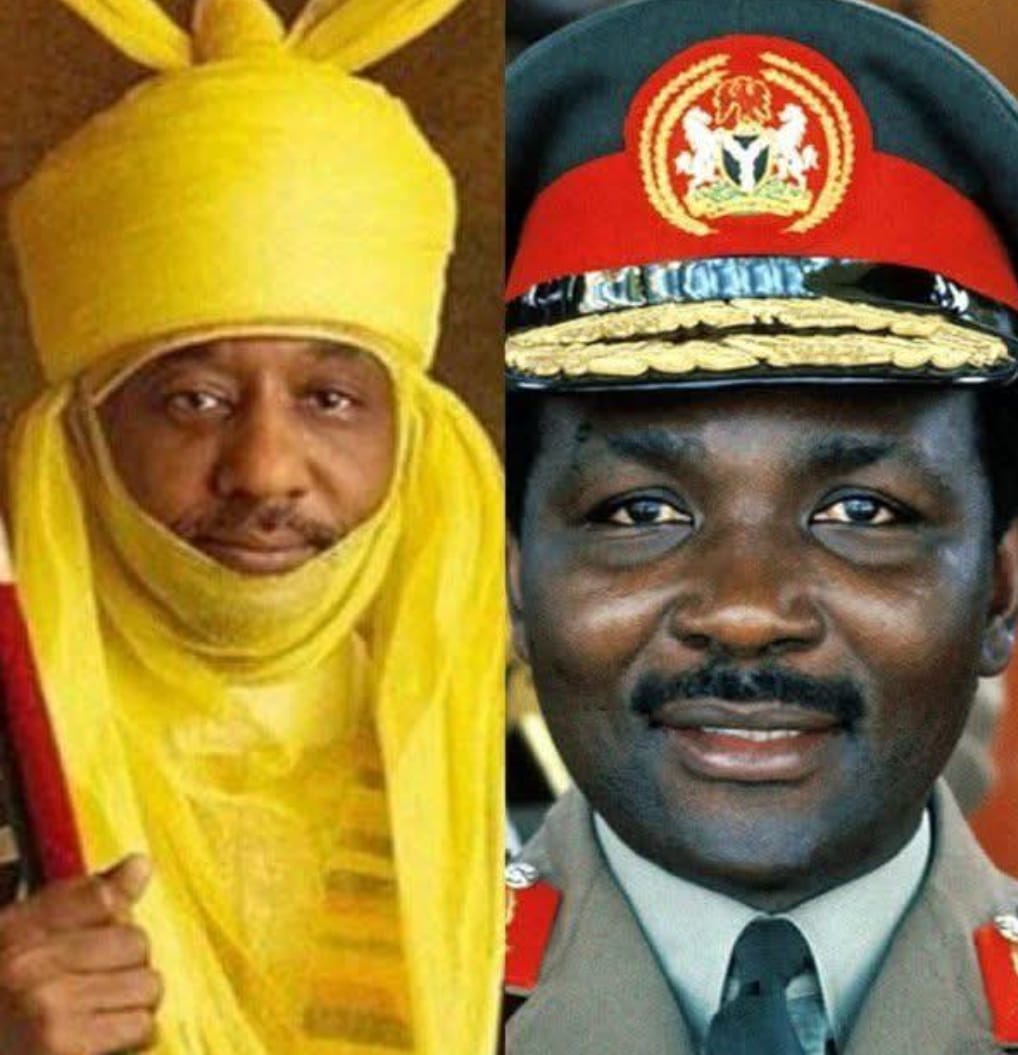
The 16th Emir of Kano, Muhammadu Sanusi II, has recounted a touching childhood memory about former Nigerian Head of State Yakubu Gowon, portraying him as a compassionate leader who extended personal support to the family of a military officer killed during the 1966 coup.
Speaking during an interview on Signature TV, Sanusi reflected on his early years at St Anne’s Secondary School in Kaduna, where he attended school alongside Yusuf Pam, the son of the late Colonel Joseph Pam, one of the victims of the January 1966 Nigerian coup.
The former governor of the Central Bank of Nigeria recalled that despite the demands of national leadership, Gowon took a personal interest in the wellbeing of Yusuf following the loss of his father. According to Sanusi, the former Head of State frequently sent handwritten letters to the young boy, signing them “Uncle Joe.”
“What I remember at the age of eight was that General Gowon, as Head of State, would send a handwritten letter to Yusuf signed ‘Uncle Joe.’ That is a window into the person you are dealing with,” Sanusi said.
The Emir noted that the gesture has remained vivid in his memory over the years because it revealed a caring and humane side of leadership during one of the most turbulent periods in Nigeria’s history. He suggested that Gowon’s actions reflected empathy and a sense of responsibility toward families affected by the political upheaval of the time.
Colonel Pam was among several prominent figures who lost their lives during the 1966 coup, a pivotal event that reshaped Nigeria’s political landscape and contributed to years of instability and conflict that followed.
I Remember At Age Of 8,General Gowon Would Send Hand Written Letter To Yusuf Signed Uncle Joe-Sanusi

NIMC Pushes Digital Identity Reforms to Boost Service Delivery, Security

Tinubu Sweeps Zulum’s Ward with 100% Votes in APC Presidential Primary

I Remember At Age Of 8,General Gowon Would Send Hand Written Letter To Yusuf Signed Uncle Joe-Sanusi

Roger Federer’s Shock as DNA Results Reveal Myla and Charlene Are Not His Biological Children

THE PLIGHT OF FARIDA

FAILED COUP IN BURKINA FASO: HOW TRAORÉ NARROWLY ESCAPED ASSASSINATION PLOT AMID FOREIGN INTERFERENCE CLAIMS
-
 News2 years ago
Roger Federer’s Shock as DNA Results Reveal Myla and Charlene Are Not His Biological Children
-
Opinions4 years ago
THE PLIGHT OF FARIDA
-
 News1 year ago
FAILED COUP IN BURKINA FASO: HOW TRAORÉ NARROWLY ESCAPED ASSASSINATION PLOT AMID FOREIGN INTERFERENCE CLAIMS
-

 News2 years ago
EYN: Rev. Billi, Distortion of History, and The Living Tamarind Tree
-
 Opinions4 years ago
POLICE CHARGE ROOMS, A MINTING PRESS
-

 ACADEMICS2 years ago
A History of Biu” (2015) and The Lingering Bura-Pabir Question (1)
-

 Columns2 years ago
Army University Biu: There is certain interest, but certainly not from Borno.
-

 Politics12 months ago
2027: Why Hon. Midala Balami Must Go, as Youths in Hawul and Asikira/Uba Federal Constituency Reject ₦500,000 as Sallah Gift
