News
30 HIGH-PROFILE CORRUPTION CASES EXPOSE JUSTICE SYSTEM FAILURES, STALLING ACCOUNTABILITY

30 HIGH-PROFILE CORRUPTION CASES EXPOSE JUSTICE SYSTEM FAILURES, STALLING ACCOUNTABILITY
…NBA, CCB, Law Reform Commission demand reforms as publication identifies delays, weak prosecution, opaque plea bargaining
By: Michael Mike
A review of 30 high-profile corruption cases pending before Nigerian courts has exposed deep-rooted institutional and procedural weaknesses undermining the country’s anti-corruption campaign, prompting the Nigerian Bar Association (NBA), Code of Conduct Bureau (CCB) and Nigerian Law Reform Commission to demand urgent reforms of the justice system.
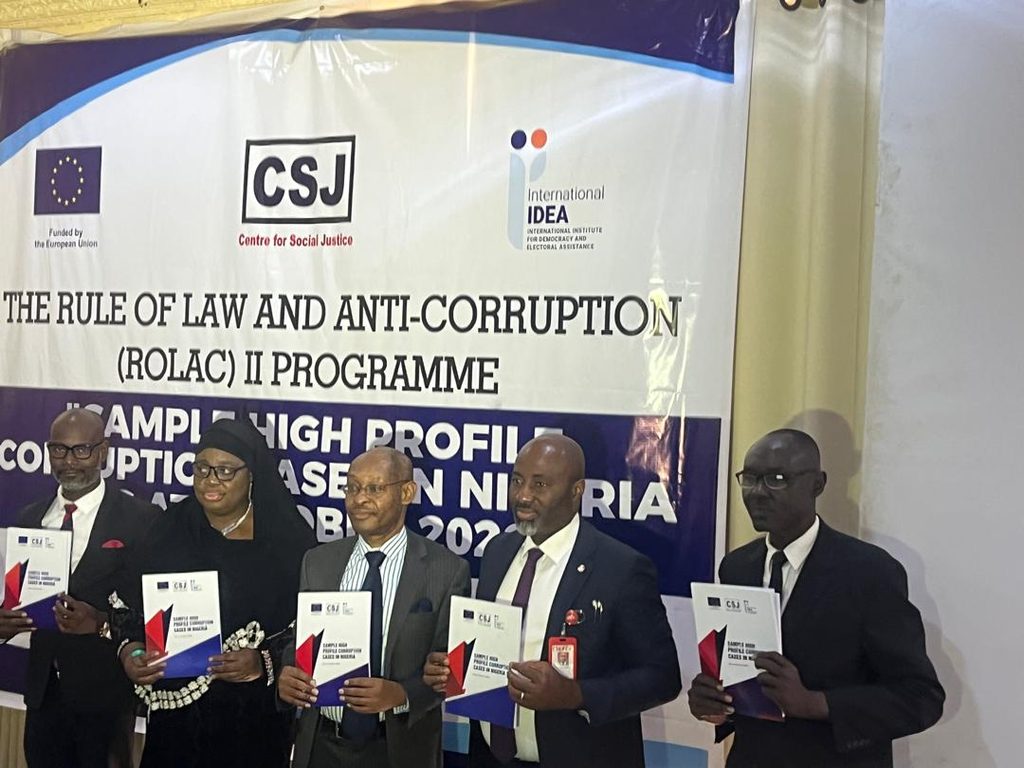
The review, contained in a publication titled “Sample High Profile Corruption Cases in Nigeria (As at October 2026),” produced by the Centre for Social Justice (CSJ), examines the progress of high-profile corruption trials across Nigerian courts and cases pending before the Code of Conduct Tribunal.

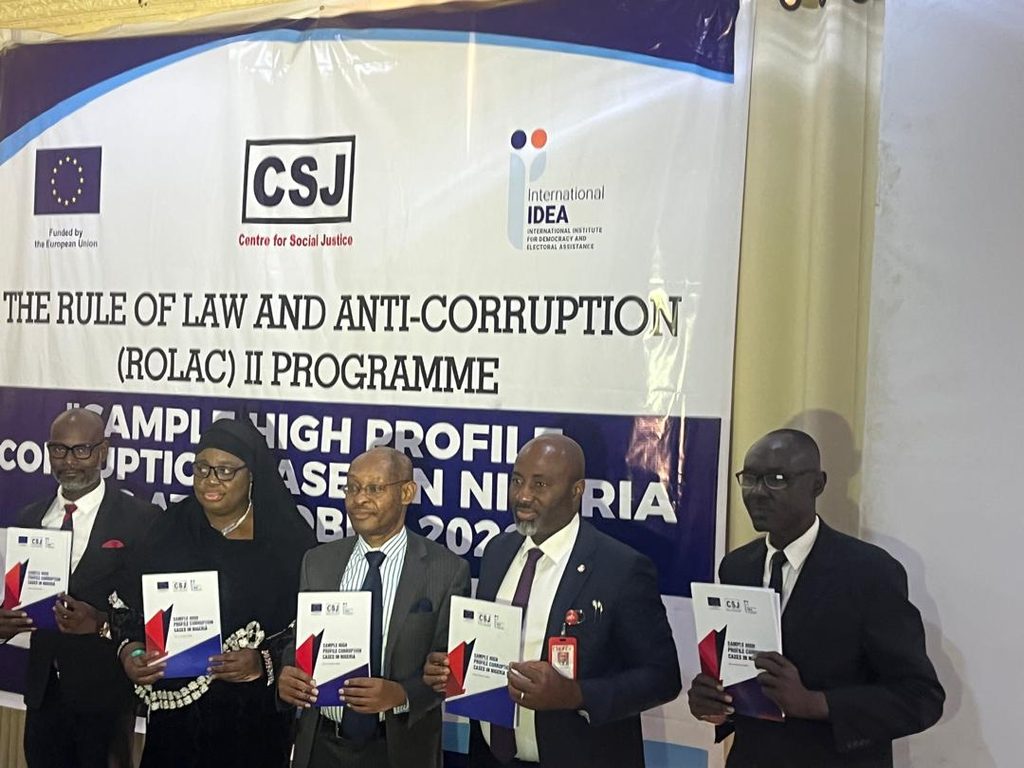
The publication identifies delays, interlocutory appeals, plea bargaining without transparency, asset recovery without accountability and cases collapsing because of poor investigation or prosecution as recurring problems requiring systemic intervention.
The findings have triggered calls for a shift in Nigeria’s anti-corruption strategy, with the three institutions insisting that the success of the campaign must be measured not merely by investigations, arrests and charges but by the ability of the justice system to deliver credible, timely and fair outcomes.
At the public presentation of the publication in Abuja on Thursday, the Chairman of the Nigerian Law Reform Commission, Prof. Dakas C.J. Dakas, SAN, described the exercise as an important instrument for exposing institutional weaknesses and providing an empirical basis for reviewing the country’s anti-corruption laws.
Dakas said the documentation of the cases was particularly important because corruption trials could be filed, adjourned, forgotten and eventually abandoned without the public having a clear record of their progress. ,
He identified documentation, public education, exposure of systemic gaps and accountability as four major contributions of the publication to Nigeria’s anti-corruption efforts.
According to him, documenting who was charged, the allegations involved, the courts handling the cases, what happened during proceedings and the status of each case would create a permanent public record from which institutions could learn.
He said the collective examination of the cases revealed that the challenges confronting corruption prosecutions were not isolated failures but systemic weaknesses requiring comprehensive reforms.
“These are not isolated failures. They are systemic failures, and systemic failures require systemic reform,” he said.
The Commission chairman also questioned the effectiveness of Nigeria’s extensive anti-corruption legislation, arguing that having several laws did not necessarily translate into effective enforcement.
“Having many laws is not the same as having an effective legal framework. Our challenge is not the absence of law. It is fragmentation, overlap, delay, weak enforcement, and a gap between the law on paper and the law in practice,” he said.
He listed the ICPC Act 2000, EFCC Act 2004, Criminal Code, Penal Code, Money Laundering (Prevention and Prohibition) Act 2022, Public Procurement Act 2007 and constitutional provisions on the Code of Conduct for Public Officers among the existing legal instruments addressing corruption.
Dakas, however, said the Commission would study the publication and incorporate lessons from its findings into its law reform programme, particularly in investigation, prosecution, asset recovery, sentencing, whistleblower protection and corruption prevention.
He pledged that identified gaps in substantive laws would be considered for legislative intervention, while procedural shortcomings would inform efforts to simplify and expedite legal processes.
The Nigerian Bar Association, through its Second Vice-President, Nuhu J. Egya, who represented its President, Mrs Oyinkansola Badejo-Okusanya, SAN, said prolonged corruption trials were weakening public confidence in the justice system and diminishing the deterrent effect of anti-corruption laws.
The association said the effectiveness of anti-corruption efforts should be assessed by the fairness, credibility and ultimate outcomes of judicial proceedings rather than the number of investigations commenced, arrests made or charges filed.
Citing Section 36(1) of the 1999 Constitution, as amended, the NBA insisted that the right to fair hearing within a reasonable time must remain central to the administration of justice.
It called for improved judicial and prosecutorial case management, adequate funding of justice-sector institutions, technology-driven case tracking and documentation, and stronger coordination among agencies responsible for investigating, prosecuting and adjudicating corruption cases.
The association also identified the Administration of Criminal Justice Act 2015 as an important framework for improving criminal justice delivery, but stressed that its effectiveness depended on proper implementation, institutional cooperation and adequate resources.
In a related intervention, the CCB identified delays in determining corruption-related cases as a major challenge, supporting reforms to strengthen the Code of Conduct Tribunal and improve the efficiency of corruption proceedings.
Mrs Sambo Sa’adat Omotayo, Director, Legal Service Department of the Bureau, who delivered a goodwill message on behalf of the CCB Chairman, said the publication provided useful material for institutional reflection and constructive engagement.
She said the Bureau was responsible for receiving and examining asset declarations by public officers, investigating breaches of the Code of Conduct and referring appropriate cases to the Tribunal.
Omotayo welcomed the proposed legislative memorandum for strengthening the Tribunal, expressing the Bureau’s readiness to examine its recommendations and engage stakeholders on measures to improve its effectiveness, independence and operational capacity.
She also called for stronger case management systems, improved investigative and legal capacities and greater deployment of technology in the administration of justice.
However, she cautioned that public monitoring of corruption cases must respect the presumption of innocence, the rights of parties and the sub judice rule.
“The pursuit of accountability and the protection of fundamental rights are not competing objectives. Rather, they are complementary pillars of the rule of law,” she said.
Beyond the immediate challenges of prosecution, Dakas said corruption was also a moral, cultural, institutional and leadership problem requiring a broader national response.
He advocated the introduction of anti-corruption education in primary and secondary schools, universities, professional training institutions and the public service.
“If we do not teach integrity early, we will spend a lifetime punishing its absence,” he said.
The three institutions called on government agencies, the judiciary, legislature, civil society, the legal profession, development partners and the media to take ownership of the reform process.
They urged the Centre for Social Justice to ensure that the publication’s findings and recommendations reached relevant government institutions and policymakers for consideration and implementation.
For the institutions, the significance of the review lies not simply in documenting pending corruption cases but in exposing the weaknesses that allow accountability to be delayed and sometimes undermined.
They maintained that the publication should serve as a catalyst for institutional reforms and a more transparent justice system in which corruption allegations are investigated properly, prosecuted effectively and determined without unnecessary delay.
Why this is a distinct angle: Unlike the previous story, which centred on the institutions’ demand for a justice-system overhaul, this version makes the 30-case review the principal news event. It also gives prominence to the specific failures identified in the publication, especially opaque plea bargaining, unaccountable asset recovery and prosecutions collapsing over investigative shortcomings.
30 HIGH-PROFILE CORRUPTION CASES EXPOSE JUSTICE SYSTEM FAILURES, STALLING ACCOUNTABILITY