
News
330KV DC TRANSMISSION LINE TRIPPING CAUSES POWER OUTAGE IN NORTH EAST, NORTH WEST, AND PARTS OF NIGERIA

330KV DC TRANSMISSION LINE TRIPPING CAUSES POWER OUTAGE IN NORTH EAST, NORTH WEST, AND PARTS OF NIGERIA
By: Ndidi Mbah
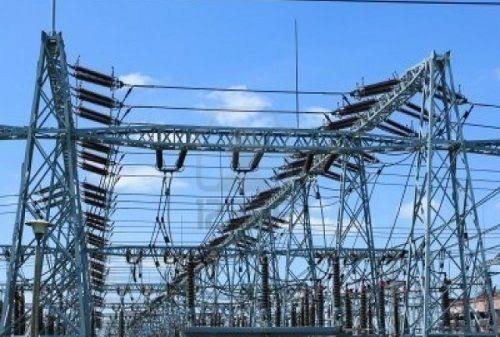
The Transmission Company of Nigeria (TCN) reports that its 330kV Ugwaji–Apir Double Circuit transmission lines1&2, tripped due to a fault, resulting in a forced power outage affecting the North East, North West and parts of North Central.
At approximately 4:53am, the Ugwuaji–Markurdi 330kV Line 2 tripped and 243 MW on that line was transferred to Line 1 on the same route. At 4:58am, Line 1 also tripped, resulting in a total loss of 468 MW. By around 5:15am and 5:17am Line 1 and Line 2 were tried, but they all tripped immediately on the same relay indication.
Following the tripping incidents yesterday, two teams of linesmen were dispatched. One from the Apir Transmission Sub-region and another from the Enugu transmission to expedite fault tracing along the 215 km route, which includes 245 transmission towers.
Throughout yesterday, the Apir team patrolled the line, navigating challenging terrains in search of the fault, reaching as far as the River Benue.
They were unable to locate the cause of the tripping and have continued in the fault tracing early this morning.
Meanwhile, the lines patrol team from Enugu Region of TCN were unable to commence lines patrol yesterday due to the ‘sit-at-home’ directive in the South East for October 21st and 22nd, 2024. This hindered not only the patrol team but also made it difficult to refuel patrol vehicles for the long distance line trace. Arrangements were, however, made for security operatives to guide the team, who have commenced fault tracing this morning.
Currently, TCN has restored supply to the 132kV transmission line from New Haven to Apir, but the 330kV lines remain out of service, impacting power supply in the Northern region of the country. Sadly, the TCN Shiroro-Mando transmission line is also down due to security reasons, causing power outage in the North.
TCN is making every effort to trace the cause of the outage to enable our engineers effect repairs and restore bulk power supply through both lines. We sincerely apologize to the government and electricity consumers in all the affected states and acknowledge that our patrol teams would have continued their search into the night yesterday, if not for the challenging terrain, which includes swamps and rivers, as well as insecure areas in the forest. We reconvened very early this morning with security operatives and have continued the fault tracing to locate and address the cause of the line tripping.
330KV DC TRANSMISSION LINE TRIPPING CAUSES POWER OUTAGE IN NORTH EAST, NORTH WEST, AND PARTS OF NIGERIA


Troops Arrest Suspected Military Impostor in Katsina
By Zagazola Makama
Troops of 17 Brigade have arrested a suspected military impostor during a fighting patrol in Malumfashi Local Government Area.
Security sources told Zagazola Makama that the suspect was apprehended at about 1:30 p.m. on July 4 by troops deployed at the Forward Operating Base (FOB) Malumfashi while conducting routine patrols within Malumfashi town.

According to the sources, the suspect was intercepted while wearing a woodland camouflage three-quarter short, raising suspicion among the troops.
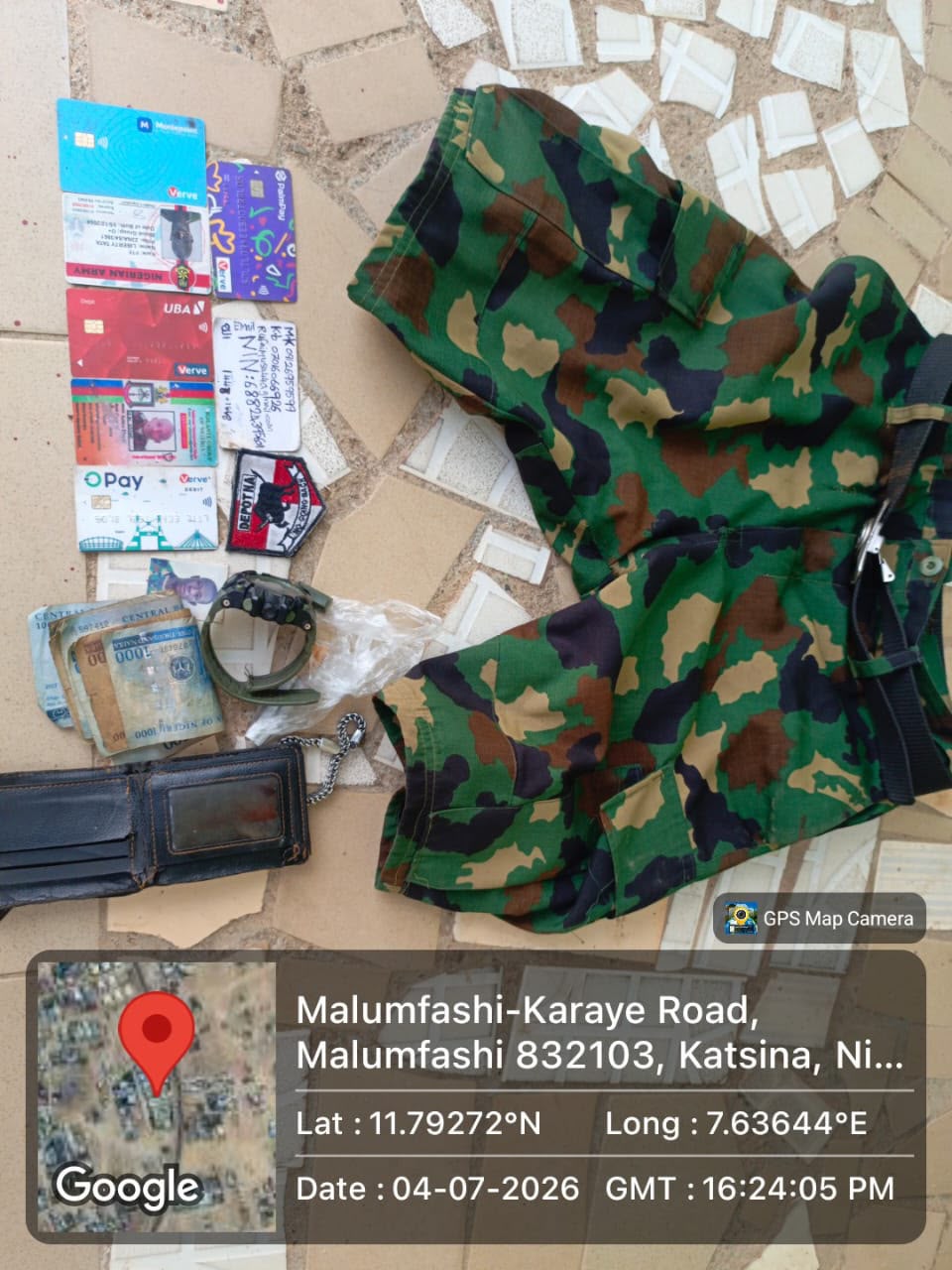
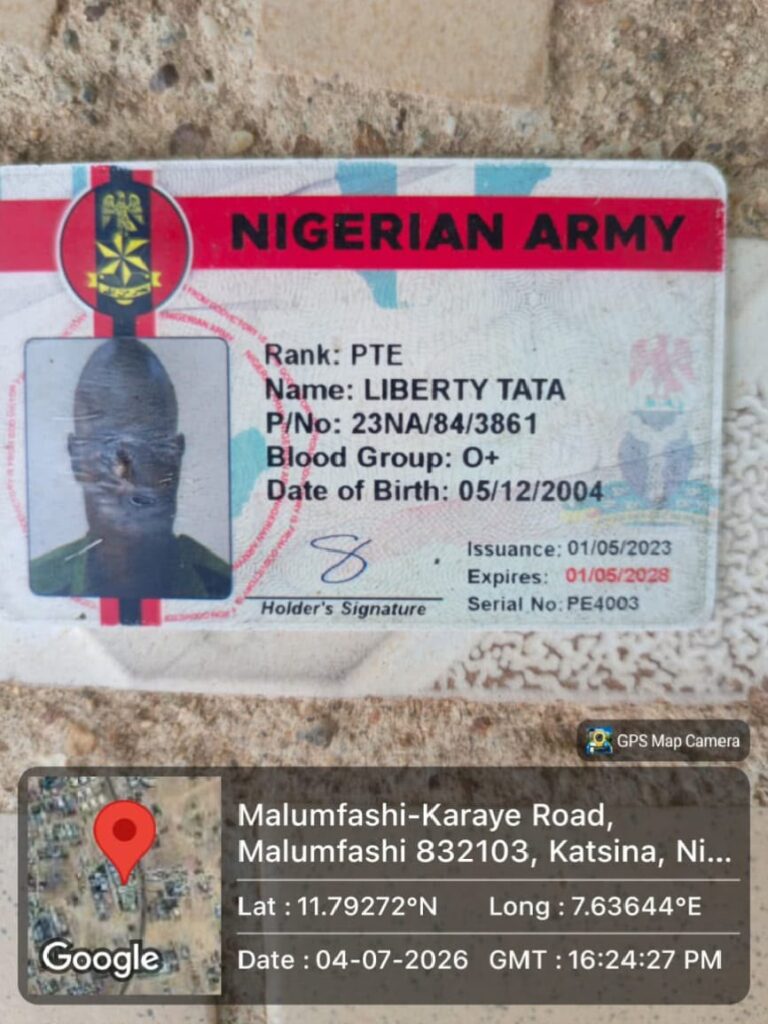
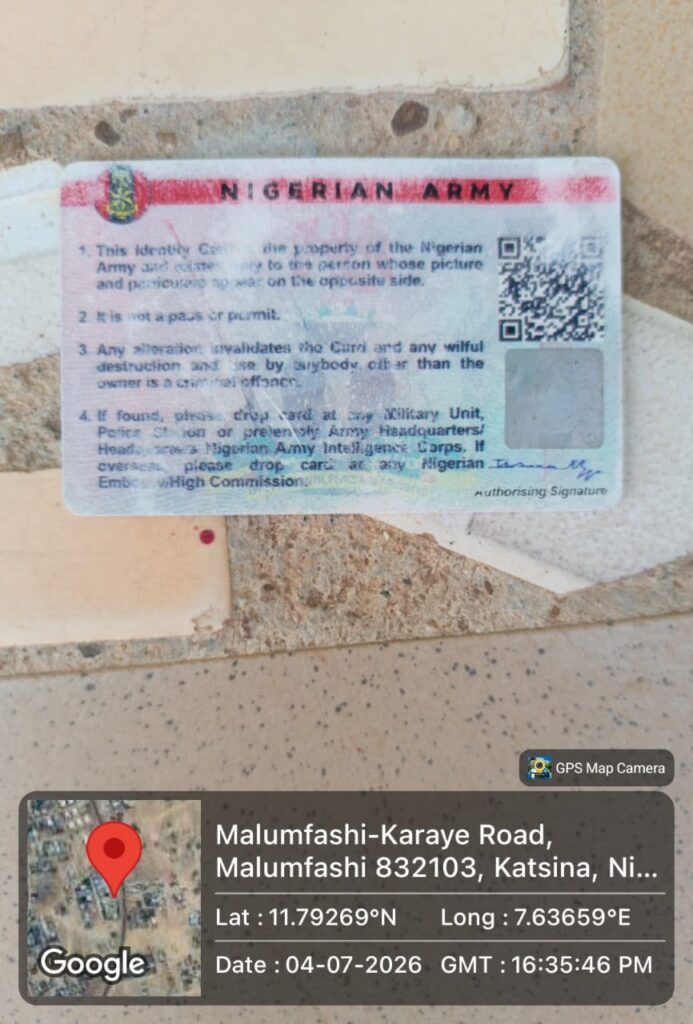
A search conducted on the suspect led to the recovery of a fake Nigerian Army identity card, four Automated Teller Machine (ATM) cards, one woodland camouflage three-quarter short, a wristwatch and the sum of ₦17,000.
The suspect and the recovered exhibits are currently in military custody pending further investigation.
Military sources said the arrest forms part of ongoing efforts to curb impersonation of security personnel and other criminal activities within the area.
Troops Arrest Suspected Military Impostor in Katsina
Troops Recover 50 Rustled Cattle, Repel Suspected Rustlers in Kaduna
By Zagazola Makama
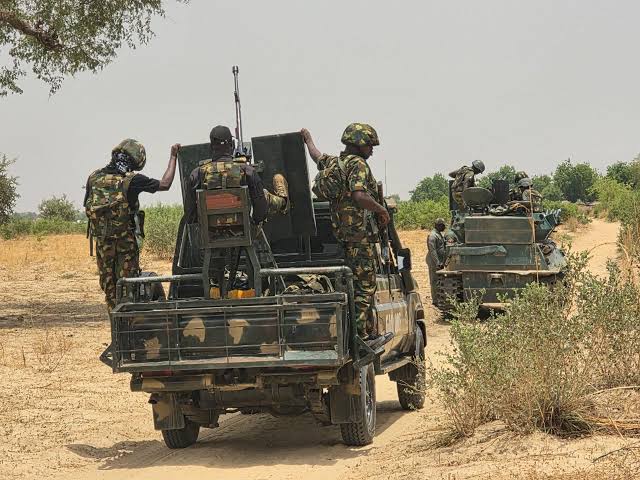
Troops deployed at the Forward Operating Base (FOB) Kankomi have recovered 50 rustled cattle after repelling suspected cattle rustlers during an ambush operation in Chikun Local Government Area.
Security sources told Zagazola Makama that the troops responded to a distress call at about 9:55 a.m. on July 4 over the activities of suspected rustlers at Ungwan Gontu community.
According to the sources, the troops swiftly laid an ambush and made contact with the fleeing suspects, forcing them to abandon the stolen livestock and escape into the surrounding area.
During the operation, the troops recovered 50 rustled cattle, which were subsequently identified and handed over to their rightful owner.
Military sources said efforts are ongoing to track down the fleeing suspects as security operations continue to combat cattle rustling and other criminal activities across Kaduna State.
Troops Recover 50 Rustled Cattle, Repel Suspected Rustlers in Kaduna
Troops Arrest Suspected Terrorist in Kogi, Suspect Confesses to Group Membership
By Zagazola Makama
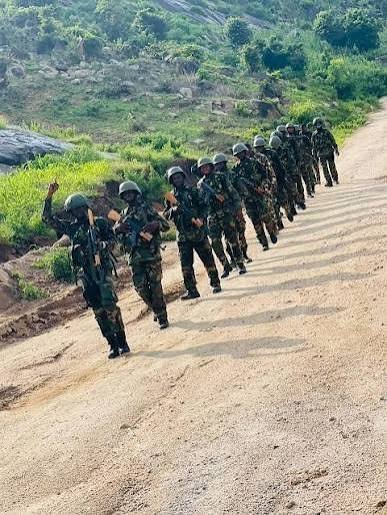
Troops of 12 Brigade, in collaboration with Office of the National Security Adviser (ONSA) Hybrid Forces, have arrested a suspected terrorist during an operation in Lokoja Local Government Area.
Security sources told Zagazola Makama that the troops responded at about 1:00 p.m. on July 4 to reports of a confrontation between local residents and a suspected terrorist at a Ruga settlement behind Obajana community.
According to the sources, the troops swiftly intervened and arrested one suspect at the scene.
During preliminary interrogation, the suspect reportedly confessed to being a member of a terrorist group led by an individual identified as Haruna, which allegedly operates within the Okene general area.
The suspect is currently in military custody and is undergoing further investigation to establish the extent of his involvement and identify other members of the group.
Military sources said the arrest forms part of ongoing security operations aimed at dismantling terrorist and criminal networks across Kogi State.
Troops Arrest Suspected Terrorist in Kogi, Suspect Confesses to Group Membership

Troops Arrest Suspected Military Impostor in Katsina

Troops Recover 50 Rustled Cattle, Repel Suspected Rustlers in Kaduna

Troops Arrest Suspected Terrorist in Kogi, Suspect Confesses to Group Membership

Roger Federer’s Shock as DNA Results Reveal Myla and Charlene Are Not His Biological Children

THE PLIGHT OF FARIDA

FAILED COUP IN BURKINA FASO: HOW TRAORÉ NARROWLY ESCAPED ASSASSINATION PLOT AMID FOREIGN INTERFERENCE CLAIMS
-
 News2 years ago
Roger Federer’s Shock as DNA Results Reveal Myla and Charlene Are Not His Biological Children
-
Opinions4 years ago
THE PLIGHT OF FARIDA
-
 News1 year ago
FAILED COUP IN BURKINA FASO: HOW TRAORÉ NARROWLY ESCAPED ASSASSINATION PLOT AMID FOREIGN INTERFERENCE CLAIMS
-

 News2 years ago
EYN: Rev. Billi, Distortion of History, and The Living Tamarind Tree
-
 Opinions5 years ago
POLICE CHARGE ROOMS, A MINTING PRESS
-

 ACADEMICS2 years ago
A History of Biu” (2015) and The Lingering Bura-Pabir Question (1)
-

 Columns2 years ago
Army University Biu: There is certain interest, but certainly not from Borno.
-

 Politics1 year ago
2027: Why Hon. Midala Balami Must Go, as Youths in Hawul and Asikira/Uba Federal Constituency Reject ₦500,000 as Sallah Gift
