
News
416,270 POLICE CONSTABLE APPLICANTS FOR SCREENING JANUARY 8


416,270 POLICE CONSTABLE APPLICANTS FOR SCREENING JANUARY 8
By: Our Reporter
The Police Recruitment Board has approved January 8th as the date for the commencement of screening for successful applicants for recruitment into the Constable cadre of the Nigeria Police Force.
The Board met today, Thursday December 21st at the Corporate Headquarters of the Police Service Commission in Jabi, Abuja and took several decisions in respect of the next stages of the recruitment exercise.
At the close of the Recruitment Portal early this Month, 416,270 Nigerian youths were found to have satisfied the initial requirements for the next stage of the exercise. These successful applicants are made up of 315,065 for General Duty and 101,205 for specialist cadre.
The successful
candidates are expected to receive their letters of invitation on or before the 23rd of December 2023.
This next stage of the exercise will include both physical and credentials screening to be conducted in the applicants state of origin. The Board has further directed that candidates invited for the screening exercise are expected to come with original copies of their certificates and other credentials including letters of attestation from their Local Government Chairmen and/or their traditional rulers.
Other stages of the recruitment process include computer based test (CBT)which will hold after the screening exercise and Medical examination.
Dates for these stages of the exercise would be announced in due course.
Meanwhile after the closure of the recruitment portal, Kaduna State with 31,117 successful applicants tops the list, followed by Adamawa with 29,848; Benue, 25,346; Borno 24,854; Katsina 24,239 and Bauchi 22,958. Other states with high successful applicants are Kano, 21,006; Niger, 17,959; Gombe17,493; Yobe, 17,207; Nasarawa, 16,284; Jigawa, 16,007; Taraba, 15,622, Plateau, 15,389 and Kebbi, 12,917.
Anambra State with 1,141 has the least successful applicants nationwide, followed by Ebonyi, 1,537; Lagos, 1,775 and Abia, 2,110.
The Board demands that candidates must conduct themselves in a manner required of Nigerian youths desirous of a career in the Nigeria Police Force, an Institution guided by strict laws and regulations and which holds discipline as a bedrock for its existence.
The Board also wishes to warn candidates to beware of fraudsters who will come with tempting promises of assisting them based on payment of certain sums of money.
The entire recruitment exercise is free and will be based on merit and performance at each stage of the exercise.
416,270 POLICE CONSTABLE APPLICANTS FOR SCREENING JANUARY 8



Troops recover five cattle rustle by Berom Militia in Plateau
By Zagazola Makama
Troops of Sector 5, Operation ENDURING PEACE, have recovered five cattle rustled by Berom Militia from a resident of Tenti Ratatat Village in Forop District, Bokkos Local Government Area of Plateau State.
The troops responded at about 0230 hours on Aug. 28 following a report that five cattle belonging to one Mallam Karimu had been stolen by suspected cattle rustlers.
According to sources, the troops immediately commenced search-and-rescue operations within the general area to track the perpetrators and recover the stolen livestock.
The operation led to the successful recovery of all five rustled cattle, which were subsequently handed over to the owner. Efforts are ongoing to apprehend the perpetrators, who reportedly fled before the arrival of the troops.
The recovery forms part of ongoing operations by Operation ENDURING PEACE to protect rural communities and livestock owners and prevent criminal elements from exploiting vulnerable farming and pastoralist settlements in Plateau State.
Troops have continued to intensify patrols and surveillance across the Bokkos axis to deny cattle rustlers and other criminal elements freedom of action.
Troops recover five cattle rustle by Berom Militia in Plateau
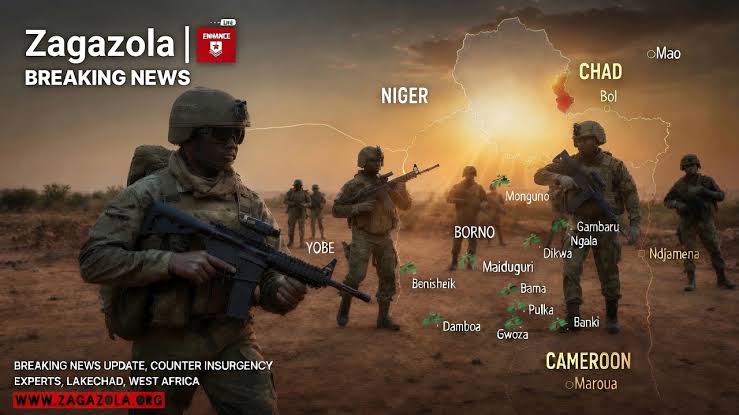
UPDATE: Heavy gunfire, explosions rock Niamey as reports of military mutiny emerge
By Zagazola Makama
Heavy gunfire and explosions rocked Niger’s capital, Niamey, from the early hours of Saturday, with intense clashes reportedly continuing around the Diori Hammani International Airport, the 101 Airbase and areas around the Presidential Palace.
The situation, according to security reports monitored by Zagazola, began at about 0230 hours local time and continued until around 0600 hours, although tension remained high in several parts of the capital thereafter.
Mortar fire and explosions were reportedly heard in the vicinity of the Presidential Palace, while electricity was cut in parts of the city. Security forces were also said to have blocked access routes leading to the Presidential Palace and the International Airport as they responded to the incident.
Reports indicated that reinforcements from Operation ALMAHAOU moved into Niamey from the direction of Ouallam, while other security formations were mobilised within the capital.
The most intense exchanges were reportedly concentrated around the 101 Airbase and the International Airport, both strategically important military and aviation facilities.
Conflicting accounts
The exact nature of the incident remained unclear as of Saturday, with conflicting accounts circulating on social media and among local sources. Some reports described the incident as a possible terrorist attack, while others suggested an internal military confrontation involving junior soldiers.
There were also unverified claims that the incident could represent an attempted counter-coup against the military authorities governing Niger under the National Council for the Safeguard of the Homeland (CNSP).
However, there was no independent confirmation that a coup or counter-coup had taken place.
Major international and regional news organisations had not, at the time of filing, independently corroborated claims of a military takeover or an organised attempt to overthrow the CNSP. Similarly, Nigerien authorities had yet to issue an official statement establishing the cause of the fighting, identifying those involved or providing casualty figures.
A prominent Hausa-language broadcaster in Niger, Mu Duba Mu Gani, however, reported that the incident was not a terrorist attack but an uprising involving young members of Niger’s Defence and Security Forces (FDS).
In a commentary circulated on social media, the broadcaster claimed that the young soldiers had rebelled against what they described as worsening insecurity, corruption, nepotism and poor treatment of Nigeriens under the CNSP administration.
According to the account, the soldiers were allegedly demanding changes in the way the country was being governed and had moved into parts of Niamey, resulting in heavy fighting.
The broadcaster further questioned whether the development could mark the beginning of the end of the CNSP’s rule, while acknowledging that it remained unclear whether the alleged mutineers had taken control of any strategic locations.
The claims, however, could not be independently verified by Zagazola News.
Strategic locations under security lockdown
The reported closure of routes around the Presidential Palace and Diori Hammani International Airport suggests that security forces were treating the incident as a major threat to strategic national installations.
The movement of reinforcements from Ouallam into Niamey also points to a significant mobilisation by the authorities to contain the situation. The reported fighting around the 101 Airbase is particularly significant because the area forms part of the capital’s broader military-security infrastructure and has previously featured in Niger’s counter-terrorism operations.
The airport area has also previously come under attack amid the worsening jihadist insurgency affecting Niger and the wider Sahel.
Niger facing mounting security pressure
The latest development comes as Niger continues to face significant security challenges from jihadist groups operating across the country’s western and southern regions.
The country has also experienced increasing political and diplomatic tensions since the military takeover of July 2023, which removed President Mohamed Bazoum from power.
The CNSP, led by Gen. Abdourahamane Tiani, has since consolidated its control over the country while withdrawing from several regional security and political arrangements and deepening cooperation with fellow Alliance of Sahel States members Mali and Burkina Faso.
The military authorities have repeatedly presented their administration as necessary to restore national sovereignty and defeat armed groups. However, persistent attacks and casualties among security personnel have continued to place pressure on the junta.
Situation remains fluid
Security assessments circulating following Saturday’s fighting have raised concerns about possible internal divisions within Niger’s security establishment. Nevertheless, claims of an imminent collapse of the CNSP or an approaching civil war remain speculative at this stage.
There is currently no verified evidence establishing that the reported clashes constitute a coordinated military coup, a counter-coup, or a broader armed uprising. Likewise, there has been no confirmed casualty figure or credible claim of responsibility for the explosions and gunfire.
The immediate priority for authorities is expected to be securing the Presidential Palace, airport, airbase and other strategic installations while determining the identity and objectives of those involved.
Any prolonged confrontation between rival elements of the security forces could have serious implications for Niger’s already fragile security environment and potentially affect neighbouring countries, particularly those sharing borders with Niger. For now, Niamey remains tense, with security forces deployed across key parts of the capital and access restrictions reported around strategic installations.
Zagazola News will continue to monitor the situation and provide updates as credible information emerges.
UPDATE: Heavy gunfire, explosions rock Niamey as reports of military mutiny emerge
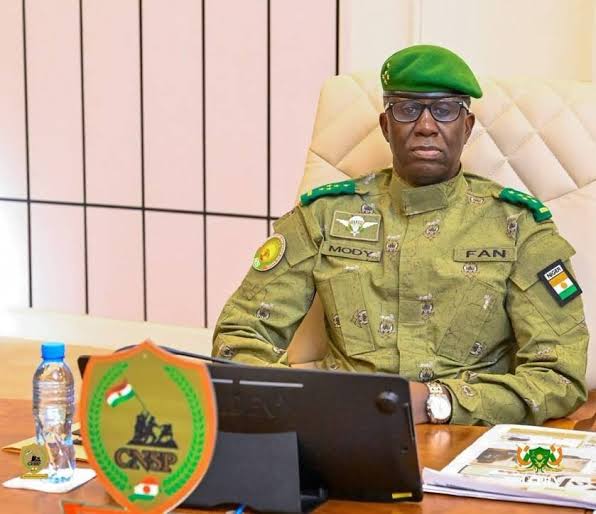
Niger: Mutiny tensions reportedly deepen within military in Niamey
By Zagazola Makama
Tensions have reportedly escalated within Niger’s military in the capital, Niamey, amid growing anger over heavy losses suffered by troops during recent operations.
According to security information obtained by Zagazola News, what initially began as a protest movement among some military personnel has reportedly evolved into a mutiny, leaving elements of the armed forces in a state of uncertainty.
The development is said to have created heightened tension around strategic locations in Niamey, including the airport area.
Sources said the Presidential Guard, reportedly acting on the orders of Niger’s military leader, Gen. Abdourahamane Tiani, is considering a response against military personnel in the airport area.
The reported standoff has raised concerns over the possibility of confrontation between members of the Nigerien armed forces.
The development comes amid continued security challenges facing Niger, particularly militant attacks and heavy casualties among government forces operating in parts of the country.
The situation in Niamey remains fluid, and details surrounding the reported mutiny, the number of personnel involved and the immediate cause of the confrontation could not be independently verified as of the time of filing this report.
Zagazola News will continue to monitor developments and provide updates as credible information emerges.
Niger: Mutiny tensions reportedly deepen within military in Niamey

Troops foil kidnapping attempt, rescue two victims in Plateau

Troops recover five cattle rustle by Berom Militia in Plateau

Troops investigate suspected Malicious poisoning of cattle in Plateau

Roger Federer’s Shock as DNA Results Reveal Myla and Charlene Are Not His Biological Children

THE PLIGHT OF FARIDA

FAILED COUP IN BURKINA FASO: HOW TRAORÉ NARROWLY ESCAPED ASSASSINATION PLOT AMID FOREIGN INTERFERENCE CLAIMS
-
 News2 years ago
Roger Federer’s Shock as DNA Results Reveal Myla and Charlene Are Not His Biological Children
-
Opinions5 years ago
THE PLIGHT OF FARIDA
-
 News1 year ago
FAILED COUP IN BURKINA FASO: HOW TRAORÉ NARROWLY ESCAPED ASSASSINATION PLOT AMID FOREIGN INTERFERENCE CLAIMS
-

 News2 years ago
EYN: Rev. Billi, Distortion of History, and The Living Tamarind Tree
-
 Opinions5 years ago
POLICE CHARGE ROOMS, A MINTING PRESS
-

 ACADEMICS3 years ago
A History of Biu” (2015) and The Lingering Bura-Pabir Question (1)
-

 Columns2 years ago
Army University Biu: There is certain interest, but certainly not from Borno.
-

 Politics1 year ago
2027: Why Hon. Midala Balami Must Go, as Youths in Hawul and Asikira/Uba Federal Constituency Reject ₦500,000 as Sallah Gift
