
National News
55 Years of Win-Win: Nigeria and China’s Growing Partnership

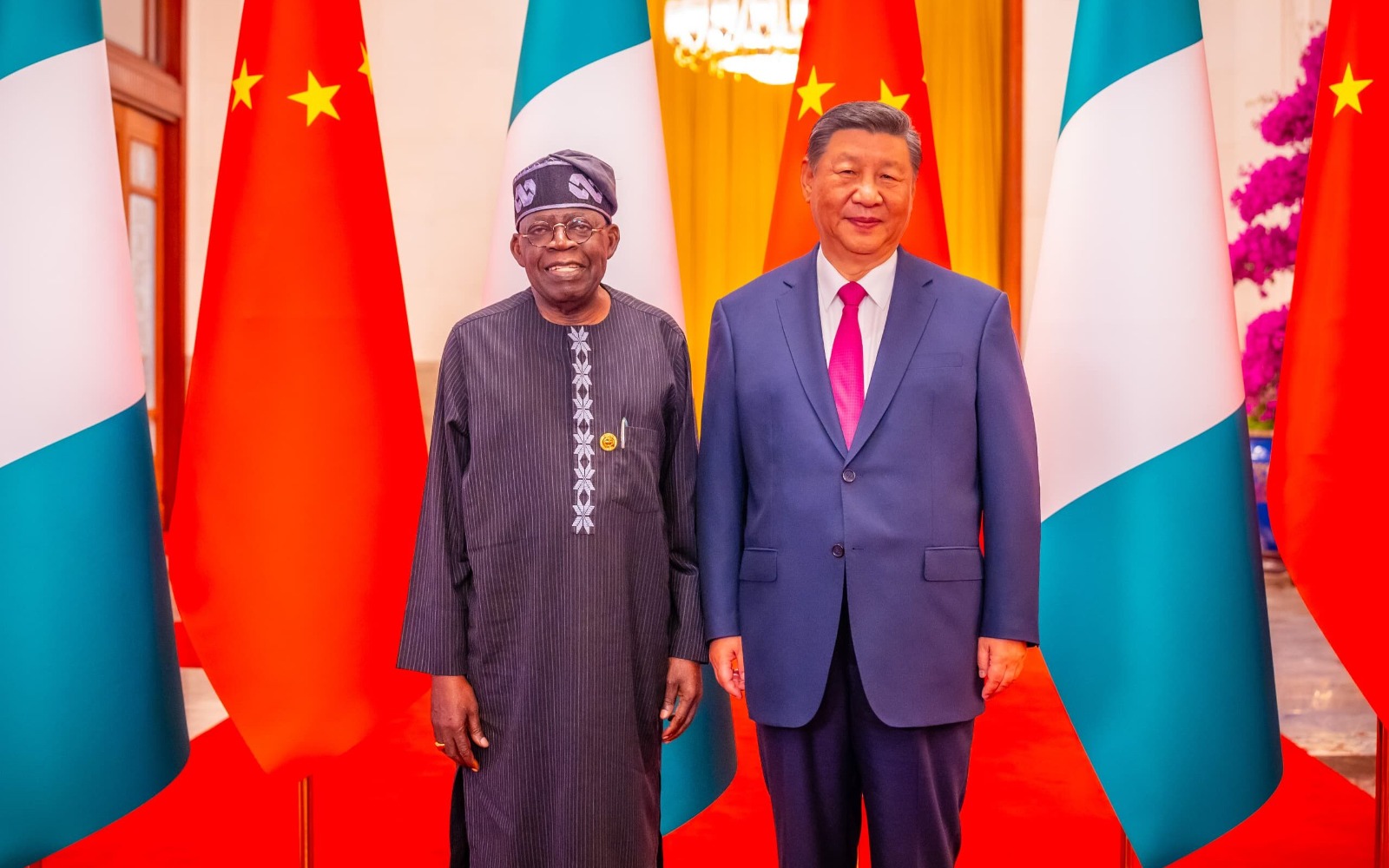
55 Years of Win-Win: Nigeria and China’s Growing Partnership
By Raphael Oni
February 10, 2026, marks a significant milestone in Nigeria-China relations, as the two countries celebrate 55 years of diplomatic ties. Over the years, their partnership has blossomed into a comprehensive strategic cooperation, with China emerging as one of Nigeria’s largest trading partners and investors.
“China and Nigeria are entering a new phase in their bilateral relationship — one that aims to move beyond the traditional, trade-heavy dynamic towards a mutually beneficial development model,” said President Xi Jinping.
The relationship between Nigeria and China is built on mutual respect, trust, and cooperation. The Forum on China-Africa Cooperation (FOCAC) has played a pivotal role in strengthening ties between China and Africa, including Nigeria. Established in 2000, FOCAC has provided a platform for China and African countries to discuss issues of mutual interest, promote economic cooperation, and enhance cultural exchanges.
“Over the years, China and Nigeria have built a strategic partnership anchored on mutual respect, shared aspirations and practical cooperation,” said Hon. Yakubu.
One of the key areas of cooperation between Nigeria and China is infrastructure development. China’s Belt and Road Initiative (BRI) has been instrumental in transforming Nigeria’s infrastructure landscape. The BRI has facilitated the construction of critical infrastructure projects, including the Abuja-Kaduna, Lagos-Ibadan, and Ibadan-Kano rail lines, as well as the expansion and modernization of Nigeria’s international airports.
“The synergy between Nigeria’s resource-rich economy and China’s technological prowess presents vast opportunities for cooperation in areas such as infrastructure development, trade, and security,” noted Ambassador Amedu Ode while speaking on the partnership between the two countries.
The Lekki Deep Seaport, a flagship BRI project, has become a game-changer for Nigeria’s economy, enhancing the country’s trade capacity and positioning it as a major logistics hub in West Africa. China’s investments in Nigeria’s infrastructure have not only improved transportation networks but also created jobs and stimulated economic growth.
The Ministry of Foreign Affairs has reaffirmed Nigeria’s commitment to strengthening bilateral relations with the People’s Republic of China following a courtesy visit by the Chargé d’Affaires of the Chinese Embassy, Zhou Hongyou, to the Spokesperson of the Ministry, Kimiebi Ebienfa, in his office recently. The Spokesperson in a chat with media said, “Nigeria have very cordial relations with the People’s Republic of China. It is a relationship based on mutual respect and cooperation in various areas that spans across economic, cultural, technological transfer etc to mention but few.” He noted that the relationship has direct impact on Nigeria economy, creating jobs, building capacity, technology transfer and many more.
Ebienfa said both sides reaffirmed at the meeting the shared commitment of Nigeria and China toward deepening diplomatic engagement, enhancing institutional cooperation and expanding people-to-people exchanges for mutual benefit. The discussions also focused on the importance of reciprocal visits, study tours and exposure programmes for diplomats to enhance mutual understanding, including short-term and specialized training programmes in governance, administration, strategic communication and public diplomacy. Reference was made to training initiatives coordinated by Chinese academic institutions, particularly Peking University, aimed at promoting experience-sharing among developing countries. “China is prepared to be a partner of Nigeria to stand up to challenges,” said Zhou Hongyou.
Nigeria and China have also strengthened their cooperation in the areas of trade, investment, and technology. China is Nigeria’s largest trading partner, with bilateral trade reaching $21.89 billion in 2024. Nigeria exports crude oil, liquefied natural gas, and other commodities to China, while China exports machinery, electronics, and textiles to Nigeria.
In 2018, Nigeria and China signed a $2.4 billion currency swap deal, which has helped to boost trade and investment between the two countries. China has also established a number of industrial parks and special economic zones in Nigeria, providing a platform for Chinese companies to invest and operate in the country.
“The relationship between Nigeria and China has yielded tangible benefits for both countries, from infrastructure to technology, trade, education and cultural exchanges,” said Joseph Tegbe, Director-General of Nigeria-China Strategic Partnership.
In addition to economic cooperation, Nigeria and China have also strengthened their cultural and educational ties. China has established Confucius Institutes in several Nigerian universities, promoting Chinese language and culture. Nigeria and China have also signed agreements on cooperation in education, science, and technology. “Nigeria has consistently upheld the One-China principle as the basis of its relations with the People’s Republic of China,” stated the Nigeria-China Strategic Partnership.
Nigeria and China have strengthened their bilateral ties, elevating their relationship to a Comprehensive Strategic Partnership in September 2024. This partnership aims to enhance cooperation in infrastructure, technology, education, and cultural exchanges.
Key Areas of Cooperation: China’s involvement in Nigeria spans multiple sectors, driving development across the country. While China maintains a policy of non-interference in Nigeria’s internal politics, its footprint is evident in various key areas. Let us examine the following:
Infrastructure Development: China has contributed significantly to Nigeria’s infrastructure growth, including the construction of roads, bridges, railways (e.g., Abuja-Kaduna and Lagos-Ibadan rail projects), and ports.
Economic Ties: Nigeria is China’s largest engineering contract recipient in Africa and its second-largest export market. Bilateral trade reached $21.89 billion in 2024, with China’s imports from Nigeria totaling $2.99 billion.
Energy and Power: China has invested in Nigeria’s energy sector, supporting projects like the Mambilla Hydroelectric Power Plant and providing solar energy solutions.
Belt and Road Initiative (BRI): Nigeria is a key partner in China’s BRI, with projects like the Lekki Deep Seaport enhancing Nigeria’s trade capacity and positioning it as a major logistics hub in West Africa.
Telecommunications: Chinese companies like Huawei and ZTE have played a major role in expanding Nigeria’s telecom infrastructure, including 4G networks and fibre-optic cables.
Manufacturing and Industrialization: China has established manufacturing hubs in Nigeria, focusing on industries like textiles, cement, and steel production.
Agriculture: China has supported Nigeria’s agricultural development through initiatives like the China-Nigeria Agricultural Technology Demonstration Centre.
Healthcare: China has contributed to Nigeria’s healthcare sector through medical infrastructure development, equipment supply, and training programs.
Education and Capacity Building: China offers scholarships and training programs for Nigerian professionals, promoting knowledge transfer and capacity development.
People-to-People Exchanges: The China-Nigeria Friendship Hospital in Abuja provides medical services to Nigerians, with 200,000 patient visits annually and training for over 1,000 medical professionals.
Strategic Partnership: The Comprehensive Strategic Partnership establishes cooperation in technology, education, and cultural exchanges, promoting mutual growth and global stability.
The diplomatic relations between Nigeria and China, established on February 10, 1971, have been marked by a series of high-level visits that underscore the deepening ties between the two nations. Over the years, these exchanges have fostered cooperation, mutual understanding, and robust partnerships.
“The Comprehensive Strategic Partnership between Nigeria and China is expected to drive economic growth, improve infrastructure, and enhance Nigeria’s global standing,” said Yu Dunhai, Chinese Ambassador to Nigeria.
The comprehensive strategic partnership between Nigeria and China has yielded significant benefits for both countries. Nigeria has gained access to much-needed infrastructure financing and technical expertise, while China has secured a reliable source of energy and a growing market for its goods and services. As Nigeria and China look to the future, there are opportunities for further cooperation in areas such as agriculture, healthcare, and renewable energy. The two countries can also work together to promote regional integration and stability in Africa.
The diplomatic relations between Nigeria and China, established on February 10, 1971, have been marked by a series of high-level visits that underscore the deepening ties between the two nations. Over the years, these exchanges have fostered cooperation, mutual understanding, and robust partnerships.
Chinese leaders have played a significant role in shaping the relationship. Vice Premier Geng Biao’s visit in October 1978 laid the groundwork for strengthened bilateral relations. This was followed by Vice Premier Huang Hua’s visit in November 1981, which further solidified ties. Vice Premier Tian Jiyun’s visit in November 1984 marked a significant milestone in economic cooperation. President Hu Jintao’s visits in 2004 and 2006 underscored China’s commitment to Nigeria’s development. Most recently, Wang Yi, Member of the Political Bureau of the CPC Central Committee and Foreign Minister, visited Nigeria in January 2025, highlighting the growing strategic partnership.
Nigerian leaders have also made significant contributions to the relationship. Head of State, Gen. Yakubu Gowon’s visit in September 1974 was a pioneering step in Nigeria-China relations. President Olusegun Obasanjo’s visits in April 1999 and August 2001 strengthened economic ties. President Goodluck Jonathan’s state visit in July 2013 marked a significant milestone in bilateral cooperation. President Muhammadu Buhari’s visit in April 2018 further deepened ties. Vice President Kashim Shettima’s participation in the Third Belt and Road Forum in October 2023 highlighted Nigeria’s engagement with China’s global initiatives. President Bola Tinubu’s visit in September 2024, attending the Beijing Summit of the Forum on China-Africa Cooperation, reinforced Nigeria’s commitment to the partnership.
These high-level visits have woven a tapestry of cooperation, driving progress in trade, investment, infrastructure, and cultural exchange. As Nigeria and China continue to navigate the complexities of a rapidly changing world, their partnership remains a beacon of mutual respect and shared aspirations. These visits have strengthened bilateral ties, with agreements signed on trade, investment, infrastructure development, and cultural exchange.
President Goodluck Jonathan’s 2013 visit led to agreements on a $1.1 billion loan for infrastructure projects, defense cooperation, economic and technical cooperation, and visa exemptions for diplomatic and official passport holders.
In January 2017, Wang Yi’s Visit to Nigeria, Nigeria signed the One China Principle, acknowledging Taiwan as part of China. Nigeria obtained a $40 billion investment pledge from China.
In April 2018, President Muhammadu Buhari‘s Visit to China and Signed agreements worth over $6 billion, including: $1 billion for the Ogun-Guangdong Free Trade Zone, $200 million for gas facilities, $478 million for a 300MW solar power project, $55 million for a granite mining plant, Agreed on a $2.4 billion currency swap deal.
In September 2024, Presidents Xi Jinping and Bola Tinubu announced the elevation of China-Nigeria relations to a comprehensive strategic partnership. Agreements signed during the visits includes; Belt and Road Initiative cooperation, Nuclear energy cooperation, Human resource development, Media exchange and cooperation. His Excellency Wang Yi’s Visit to Nigeria in January 2025 witnessed discussion on cooperation in clean energy, defense, and finance, Nigeria and China agreed to expand the $2 billion currency swap agreement. “China’s commitment to Africa, including Nigeria, is guided by the principle of sincerity, real results, amity and good faith” said Ms. Yan Yuqing, Consul General in Nigeria.
Following President Tinubu’s visit to Beijing in September 2024, Nigeria established a Comprehensive Strategic Partnership with China, with Joseph Tegbe serving as Director General. Tegbe’s extensive international experience has been a significant asset in strengthening China-Nigeria relations. He has led several strategic visits to China and hosted high-level Chinese delegations in Nigeria, contributing to the growth of the partnership between these fraternal nation.
One of the visit hosted by the Nigeria-China Strategic Partnership (NCSP) included a high-powered delegation from the Central Party School of the Communist Party of China (CPC) in Abuja, marking a significant milestone in bilateral institutional cooperation. The visit focused on governance, public service reform, investment, and strategic development planning.
The Chinese delegation, led by Vice President of the Central Party School, Professor Gong Weibin, during the dicussion with the Director General of NCSP reaffirmed Nigeria’s commitment to the One China Policy. Tegbe emphasized Nigeria’s desire to build a forward-looking development partnership founded on mutual respect, strategic coordination, and shared prosperity.
The Director-General of the Nigeria-China Strategic Partnership (NCSP), Mr. Joseph Tegbe in one of his high-level working visit to China, secured key partnerships aimed at driving Nigeria’s development. During his visit, Mr. Tegbe engaged with prominent Chinese companies, exploring opportunities for industrial cooperation and strategic development projects.
These strategic engagements are part of NCSP’s broader mission to build transformative partnerships that leverage China’s technological expertise while addressing Nigeria’s development priorities. The partnerships are expected to drive economic growth, improve infrastructure, and enhance the quality of life for Nigerians.
The NCSP DG’s visit to China demonstrates the organization’s commitment to fostering mutually beneficial relationships between Nigeria and China. The partnerships secured during the visit are expected to have a significant impact on Nigeria’s development, particularly in the areas of infrastructure, healthcare, and environmental sustainability.
These high-level visits have woven a tapestry of cooperation, driving progress in trade, investment, infrastructure, and cultural exchange. As Nigeria and China continue to navigate the complexities of a rapidly changing world, their partnership remains a beacon of mutual respect and shared aspirations.
In conclusion, the multifaceted engagements between Nigeria and China, spanning governmental collaborations and people-to-people connections, underscore a robust foundation for bilateral relations. As a student of international relations, it’s evident that the strategic partnership between these two nations is poised for significant growth, driven by mutual interests and shared developmental goals.
The synergy between Nigeria’s resource-rich economy and China’s technological prowess presents vast opportunities for cooperation in areas such as infrastructure development, trade, and security. Moreover, the cultural exchanges and people-to-people diplomacy initiatives have fostered a sense of camaraderie and shared destiny between the two nations.
As Nigeria and China continue to navigate the complexities of global geopolitics, their partnership is likely to play a pivotal role in shaping regional and international dynamics. With a strong foundation in place, a brighter shared future for China-Nigeria relations seems not only plausible but inevitable, promising benefits for both nations and the broader global community.
Raphael Oni, a renowned Nigerian journalist, diplomatic correspondent, and media consultant with over two decades of experience covering national and international news, focusing on diplomacy, politics, and global affairs. He’s been dubbed the “Dean of Diplomatic Reporters” due to his extensive expertise in diplomatic reporting.
NigeriaChinaPartnership
ChinaNigeriaRelations
Balancing the Narratives
ComprehensiveStrategicPartnership
BeltAndRoadInitiative
FOCAC
AfricaChinaCooperation
NigeriaChinaTies
GlobalSouthCooperation
End


National News
President Tinubu Storms Jos Today To Commiserate With Residents Of Angwa Rukuba Massacre
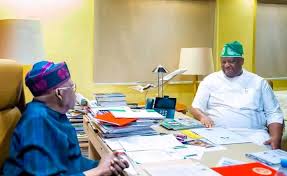
President Tinubu Storms Jos Today To Commiserate With Residents Of Angwa Rukuba Massacre
By: Bodunrin Kayode
President Bola Tinubu will today visit the Plateau state capital Jos to commiserate with residents who lost loved ones during the Palm Sunday shooting spree by criminals that took place at Angwa rukuba area of the city.
The President who was scheduled to visit Ogun state postponed his scheduled trip to Iperu, meant to flag off operations at the Gateway International Cargo Airport.
From the Plateau, the President is expected to travel to Lagos to observe Good Friday public holiday which ushers the beginning of the Easter public holiday which rounds up the lent period.
A state house release signed yesterday by the Presidential spokesman Bayo Onanuga noted that President Tinubu will travel to Ogun State for the commissioning of the Cargo Airport and the inauguration of two commercial aircrafts for the export and import of goods, aimed at boosting the state’s economic growth on Saturday April 4th.
“He will also inaugurate the new edifice of the Federal Operations Unit of the Nigerian Customs Service and its operational vehicles.
“He will return to Lagos to continue the Easter holiday, during which he is also expected to commission infrastructural projects undertaken by the administration of Governor Babajide Sanwo-Olu.
“These projects include: the iconic Ojota/Opebi Link Bridge; the Lagos State Geographic Information System Building; the Multi-Agency Complex named after the President, and a school Complex.
“Before returning to Abuja, President Tinubu will visit Bayelsa State on April 10 to commission some of Governor Duoye Diri’s completed projects.” Said the release.
Sadly several residents lost their lives during the black Palm Sunday shooting spree which is suspected to have been carried out by auto bike riding bandits following after their patterns in the hinterlands of the state.
These bandits who had tormented, killed and destroyed homes of residences of the Jos north axis of the state for several years after September 7th 2001
This damnation let loose on innocent residents is resurfacing after hundreds of killings had occurred in the Jos North council area of the state from September 7th 2001 till date.
And because of the myriad of challenges creeping into the federal security system sub regionals have geared up to manage their on police and Intel services which would assist greatly because they are masters of their territories.
The Federal government is fast tracking the process of state police to ensure that each sub nationals take charge of their environment to ensure that they support the center in the maintenance of internal security.
President Tinubu Storms Jos Today To Commiserate With Residents Of Angwa Rukuba Massacre

NiMet predicts 107 to 138 days of rainfall in Gombe
The Nigerian Meteorological Agency (NiMet) has said that in 2026, the length of the rainy season in Gombe State is expected to be between 107 and 138 days.
This is contained in the Agency’s 2026 Seasonal Climate Prediction (SCP) document, which Gayus Musa, the meteorological manager for Gombe State, made available to Our Correspondent in Gombe on Tuesday.
The total amount of rainfall across Gombe State in 2026 is predicted to be between 701 mm in the northern part of the state (Nafada) and 1089 mm in the South (Shongom).
The onset of the rainfall is expected to commence in the state on May 29 (Shongom) and cease by October 22 (Yamaltu/Deba).
Similarly, in the prediction, four local government areas of the state, namely: Nafada, Yamaltu/Deba, Dukku and Funakaye were likely to be impacted by a severe dry spell (21 days and above) between June and August.
Musa while speaking to Our Correspondent on the first rainfall experienced in some communities in Akko, Gombe and Yamaltu/Deba Local Government Areas of the state on Monday urged farmers to resist the temptation of early planting of crops.
He described the first rain as false onset, explaining that the rainfall was false because it would not support any germination as seeds planted with such rain would not survive.
“This (first rain) is a false onset because the precipitation cannot carry any germination and so any seed planted would not survive.
“So farmers should not engage themselves in planting but to prepare their farmlands while getting their seeds and other inputs ready,” he said.
Musa advised farmers in the state, to make use of the prediction in carrying out farming activities towards avoiding losses in view of the impact of climate change on agriculture.
He further urged relevant authorities in the state to take proactive measures towards tackling environmental issues associated with the rainy season.
NiMet predicts 107 to 138 days of rainfall in Gombe
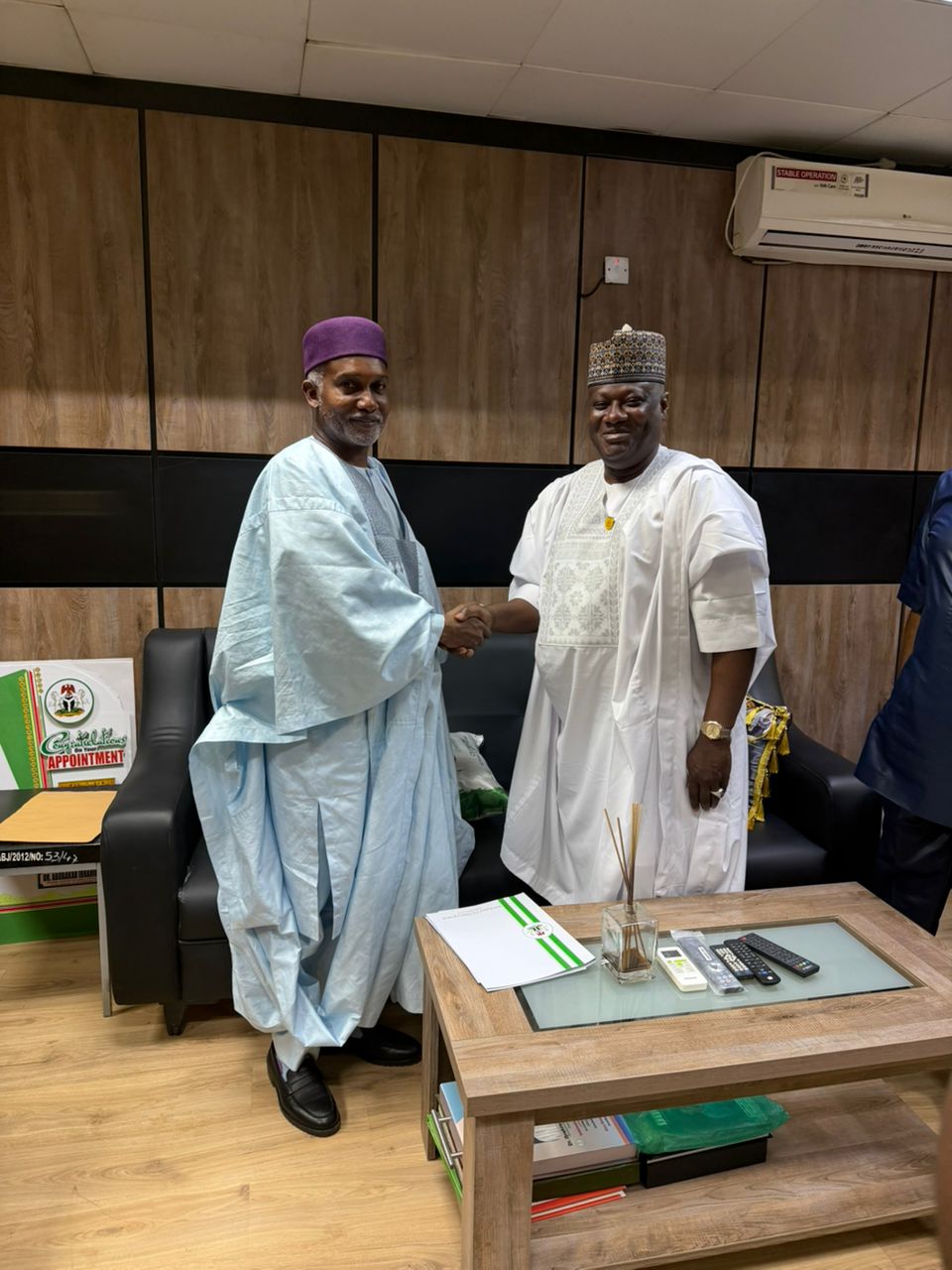
Tuggar Resigns from Tinubu’s Cabinet, Sets for Bauchi Governorship
By: Michael Mike
The rumoured interest of Minister of Foreign Affairs, Ambassador Yusuf Tuggar in becoming the governor of Bauchi State come 2027 may have been confirmed he resigned on Monday to prepared ground for actualization of his political ambition.
The resignation was ahead of the deadline set for political appointees seeking elective positions in the forthcoming general elections.
In a resignation letter submitted to the office of the Secretary to the Government of the Federation, Tuggar expressed profound gratitude to President Bola Ahmed Tinubu for the opportunity to serve the country and contribute to the implementation of the administration’s Four-D foreign policy strategy.
The former minister also appreciated the management and staff of the Ministry of Foreign Affairs and members of the diplomatic community for their cooperation and support throughout his tenure.
During his time in office, Tuggar was credited with advancing Nigeria’s foreign policy objectives through initiatives focused on people-centred diplomacy. These included humanitarian evacuations, facilitation of scholarships for Nigerians abroad, and sustained support for citizens in the diaspora.
His tenure also witnessed increased diaspora engagement, including efforts to develop a structured database of Nigerians living abroad aimed at strengthening their participation in national development.
In addition, Tuggar strengthened bilateral and multilateral relations through strategic engagements with traditional partners and regional alliances, particularly across the Global South. His leadership also promoted regional security cooperation and supported the formation of the Regional Partnership for Democracy initiative.
He also prioritised economic diplomacy, positioning Nigeria as an attractive destination for foreign investment, especially in the energy sector, while facilitating diplomatic interventions that secured the release of detained Nigerians in foreign countries and improved bilateral relations.
The resignation letter was received on behalf of the Secretary to the Government of the Federation by Dr. Abubakar Kana, Permanent Secretary, General Services Office, ahead of the March thirty-first deadline directed by President Tinubu in line with provisions of the Electoral Act.
Tuggar’s resignation was conveyed in a statement issued by his Special Assistant on Media and Communications Strategy, Alkasim Abdulkadir.
Tuggar Resigns from Tinubu’s Cabinet, Sets for Bauchi Governorship

Troops arrest two suspected militia members in Kokona LGA In Nassarawa

Fake report of unrest at unijos debunked, military assures campus security

Athena Observatory Warns of Deepening Structural Risks in Nigeria’s Democracy

Roger Federer’s Shock as DNA Results Reveal Myla and Charlene Are Not His Biological Children

THE PLIGHT OF FARIDA

FAILED COUP IN BURKINA FASO: HOW TRAORÉ NARROWLY ESCAPED ASSASSINATION PLOT AMID FOREIGN INTERFERENCE CLAIMS
-
 News2 years ago
Roger Federer’s Shock as DNA Results Reveal Myla and Charlene Are Not His Biological Children
-
Opinions4 years ago
THE PLIGHT OF FARIDA
-
 News12 months ago
FAILED COUP IN BURKINA FASO: HOW TRAORÉ NARROWLY ESCAPED ASSASSINATION PLOT AMID FOREIGN INTERFERENCE CLAIMS
-

 News2 years ago
EYN: Rev. Billi, Distortion of History, and The Living Tamarind Tree
-
 Opinions4 years ago
POLICE CHARGE ROOMS, A MINTING PRESS
-

 ACADEMICS2 years ago
A History of Biu” (2015) and The Lingering Bura-Pabir Question (1)
-

 Columns2 years ago
Army University Biu: There is certain interest, but certainly not from Borno.
-

 Opinions2 years ago
Tinubu,Shettima: The epidemic of economic, insecurity in Nigeria
