
News
5th WenA Conference: FG pledges reforms to boost women-owned businesses, inclusive growth

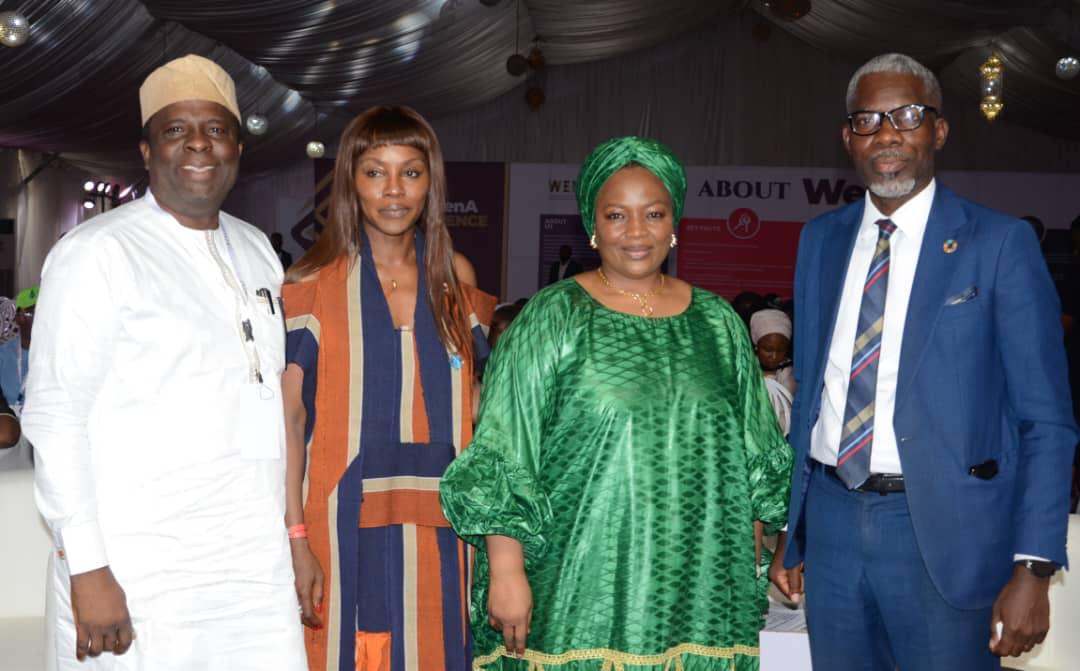
5th WenA Conference: FG pledges reforms to boost women-owned businesses, inclusive growth
By: Michael Mike
The Presidency has lauded the invaluable contributions of Nigerian women and Small and Medium Enterprises (SMEs) to national development, describing them as the lifeblood of the country’s economy.
Speaking at the 5th Women Enterprise Alliance (WenA) Conference held in Abuja, the Senior Special Assistant to the President on Entrepreneurship Development and Innovation in the Digital Economy, Ms. Chayla Shagaya, reaffirmed the Federal Government’s commitment to strengthening the ecosystem for women entrepreneurs through targeted reforms that reduce the cost of doing business, expand access to finance, and promote gender-responsive policies for inclusive economic growth.
Themed “Policy Reforms and Resilience Strategies for Small and Medium Enterprises in a New Economy,” the conference brought together key policymakers, development partners, financiers, and entrepreneurs from across Nigeria.
Shagaya noted that under President Bola Tinubu’s Renewed Hope Agenda, women-led SMEs remain “the quiet economists of every household” and a central pillar of Nigeria’s economic resilience.
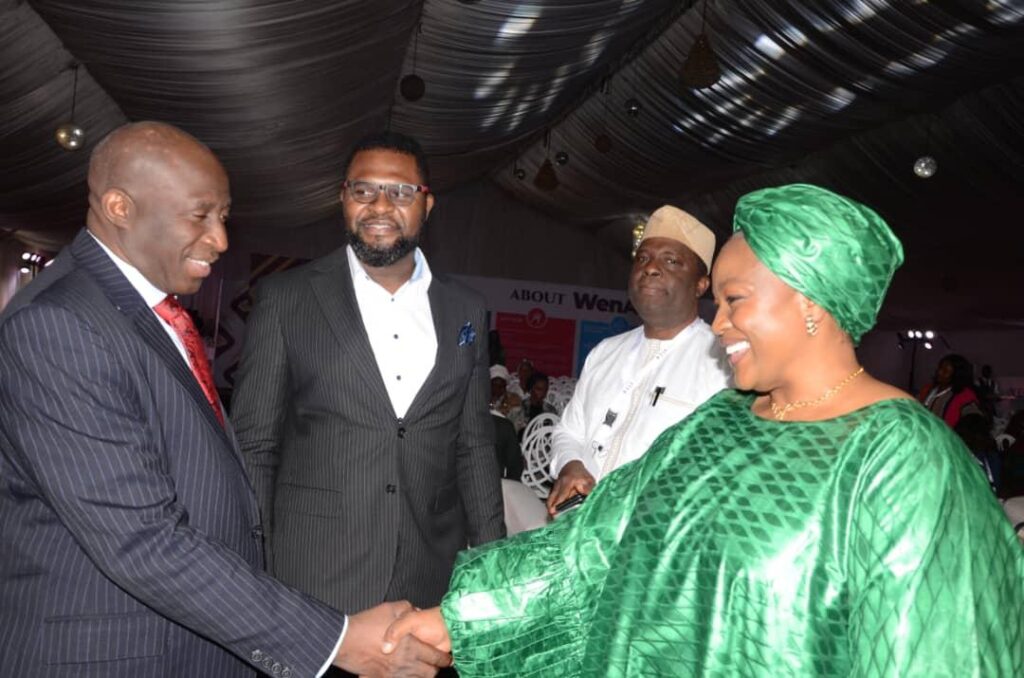
She said d: “Across Nigeria, women entrepreneurs are doing the hard work of keeping our economy alive — innovating, employing, and solving local problems with global relevance. About 70 per cent of public submissions on SME policy reforms came from women.”
She highlighted ongoing government reforms such as the Presidential Power Initiative, digital financing pathways, and tax harmonisation frameworks, all aimed at lowering operational costs for SMEs, most of which are women-led.
She further revealed partnerships between the Bank of Industry and other financial institutions aimed at improving access to affordable credit for female entrepreneurs, who often face challenges related to collateral.
“You no longer need to bring your grandmother’s land title to secure a loan,” she added humorously.
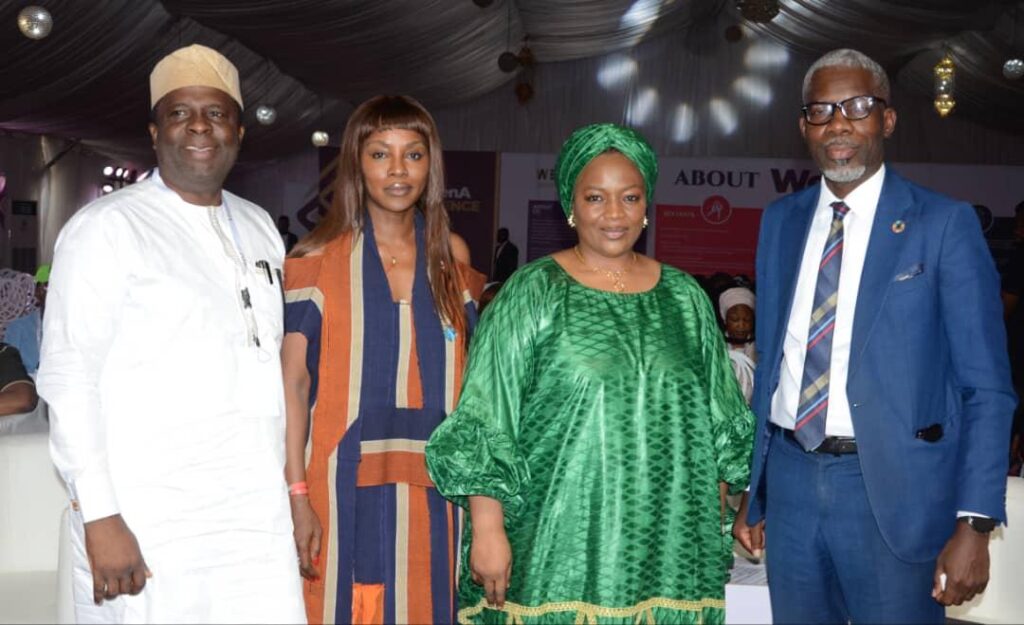
According to her, a digital feedback call recently hosted by her office received over 100,000 submissions, with more than 70 per cent coming from women business owners.
“This is no longer a time for policy on paper; it is time for policy that reaches people where they are — especially the women at the heart of our enterprise sector,” she affirmed.
In her address, the Founder of WenA, Aisha Babangida, described the conference as a platform to accelerate the translation of national and global policy commitments into measurable outcomes for women-led enterprises.
She underscored the need for continuous advocacy, lamenting that many women still lack access to information, capital, and markets, and are often constrained by rigid and complex regulatory frameworks.
She said: “When I founded WenA, I thought passion was enough. But it wasn’t. The paperwork, the tax codes, the licensing rules — these were heavy even for those of us with networks. Imagine what it’s like for a woman starting a micro-business in a rural town with little support.”
Babangida commended UN Women Nigeria for its Affirmative Action Procurement Reform Initiative in Kaduna State, which has introduced female representation on procurement boards, waived registration fees, and reserved a portion of public contracts for women-led enterprises.
“Inclusive procurement is not a concession to women; it is an economic strategy,” she emphasised.
She announced that WenA will soon launch a National Certification Programme to help women entrepreneurs qualify for public contracts through enhanced documentation, compliance, and capacity building.
She disclosed that: “Our goal is not to highlight problems but to unlock solutions. Today, we move from policy talk to practical tools — from exclusion to empowerment,” Babangida declared.
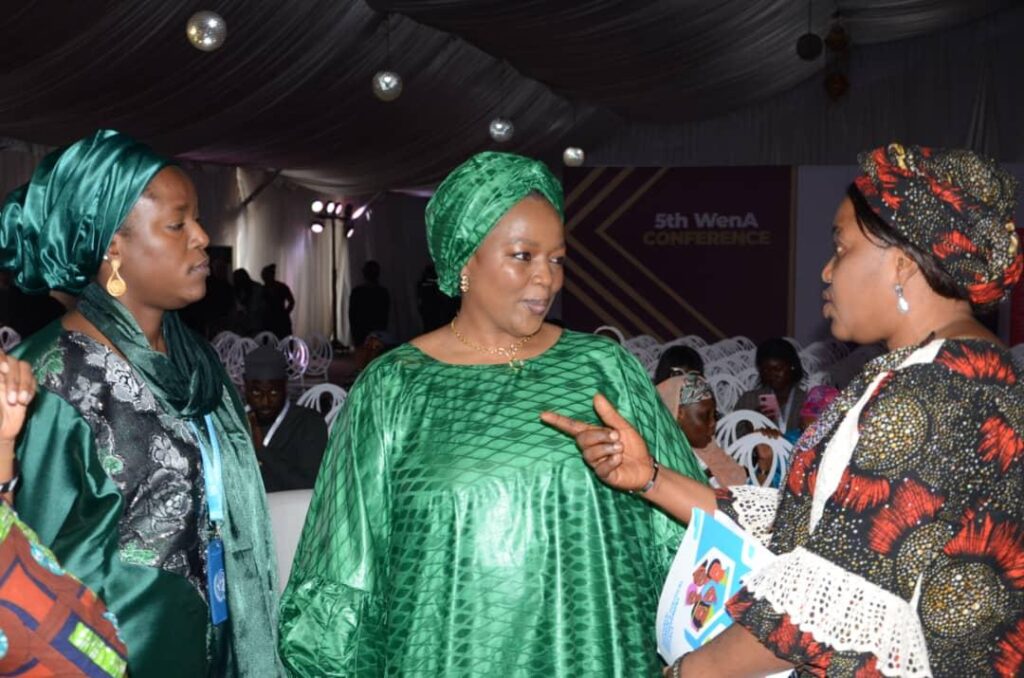
During the pre-conference policy workshop, Ms Aisha Bendo-Alkali of UN Women Nigeria highlighted the urgent need to address unpaid care work, a significant barrier limiting women’s participation in the economy.
Supported by the African Development Bank (AfDB) and Women Entrepreneurs Finance Initiative (We-Fi), the initiative promotes care-responsive policies and the integration of women’s economic empowerment into national planning.
“Reducing the burden of unpaid care is not just a gender equality goal — it is essential to unlocking national productivity,” she said, calling for the scale-up of inclusive procurement policies nationwide.
In his goodwill address, the Executive Chairman of the Federal Inland Revenue Service (FIRS), Dr Zach Adedeji, unveiled key fiscal reforms designed to ease tax burdens on small businesses, especially those run by women.
He announced that, effective January 2026, businesses earning not more than ₦100 million in annual turnover will be exempted from corporate income tax — a measure he described as “a deliberate strategy to incentivise growth, not penalise enterprise.”
“Taxation should support the formalisation and scaling of small businesses — not stifle them,” he stated.
Adedeji also revealed the introduction of a Unified Tax Identification Number (UTIN), integrated across the Corporate Affairs Commission (CAC), FIRS, and other agencies to simplify compliance for SMEs.
He added that the FIRS is transitioning to fully digital tax filing and correspondence systems, eliminating paper-based bureaucracy.
The 5th WenA Conference attracted participation from senior government officials, development agencies, private sector leaders, and entrepreneurs — all reaffirming the central role of women in driving inclusive growth, job creation, and national resilience.
In her closing remarks, Aisha Babangida emphasised that real reform must be measured by tangible impact, not policy statements.
She said: “A real reform is when a woman in Kaduna, Aba, or Makurdi feels the change in her daily hustle — when she can register her business in minutes, access capital without fear, and supply to the government without discrimination.”
The event, supported by FIRS, FCMB, and UN Women, concluded with a collective pledge to advance a gender-inclusive economic framework that leaves no woman behind.
“Empowering women entrepreneurs is not charity,” Ms Shagaya asserted. “It is a national strategy — and the path to building a resilient and inclusive Nigerian economy.”
5th WenA Conference: FG pledges reforms to boost women-owned businesses, inclusive growth


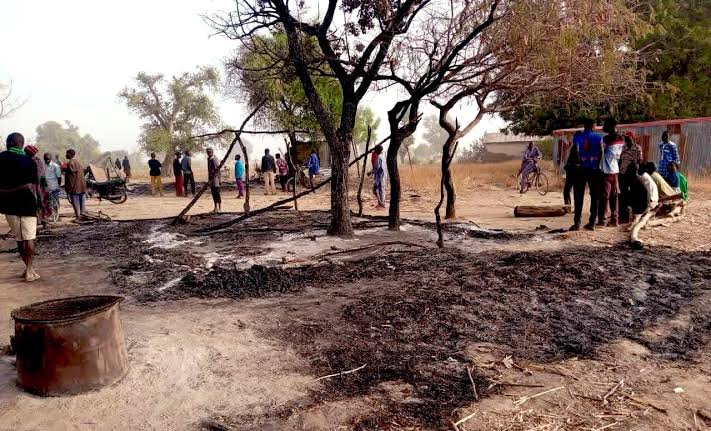
Gunmen kill village head, wife in Adamawa, son hospitalised
By: Zagazola Makama
Unknown gunmen have killed a village head and his wife in Tunga Waja community, Lamurde Local Government Area of Adamawa State.
Security sources said the incident occurred at about 8:50 p.m. on April 2, when the assailants attacked the residence of the village head and opened fire on him, his wife and their son.
The sources disclosed that the village head died on the spot, while his wife and son sustained gunshot wounds and were evacuated to a medical facility in Tingno for treatment.
According to the sources, the wife later died at the hospital, while the son is currently receiving treatment.
The motive behind the attack remains unclear, while efforts are ongoing to identify and apprehend the perpetrators.
The incident has heightened concerns among residents, as security agencies intensify efforts to restore calm and prevent further attacks in the area.
Gunmen kill village head, wife in Adamawa, son hospitalised

Three soldiers injured in road accident during pursuit of bandits in Kaduna
By: Zagazola Makama
Three soldiers have sustained injuries following a road traffic accident during an encounter with suspected armed bandits in Birnin Gwari Local Government Area of Kaduna State.
Security sources said the incident occurred at about 3:00 p.m. on April 2, when troops of 2 Battalion deployed at Forward Operating Base Dogon Dawa were returning from an administrative patrol.
The sources explained that the troops reportedly sighted a group of armed bandits attempting to block the road at Ngede Allah and engaged them, forcing the criminals to flee.
During the pursuit, however, three soldiers fell off a military gun truck and sustained varying degrees of injuries, including fractures to the hand and leg.
The injured personnel were immediately evacuated to the 44 Nigerian Army Reference Hospital in Kaduna, where they are currently receiving treatment and responding positively.
Security operations in the area have continued as troops maintain pressure on criminal elements within the axis.
Three soldiers injured in road accident during pursuit of bandits in Kaduna
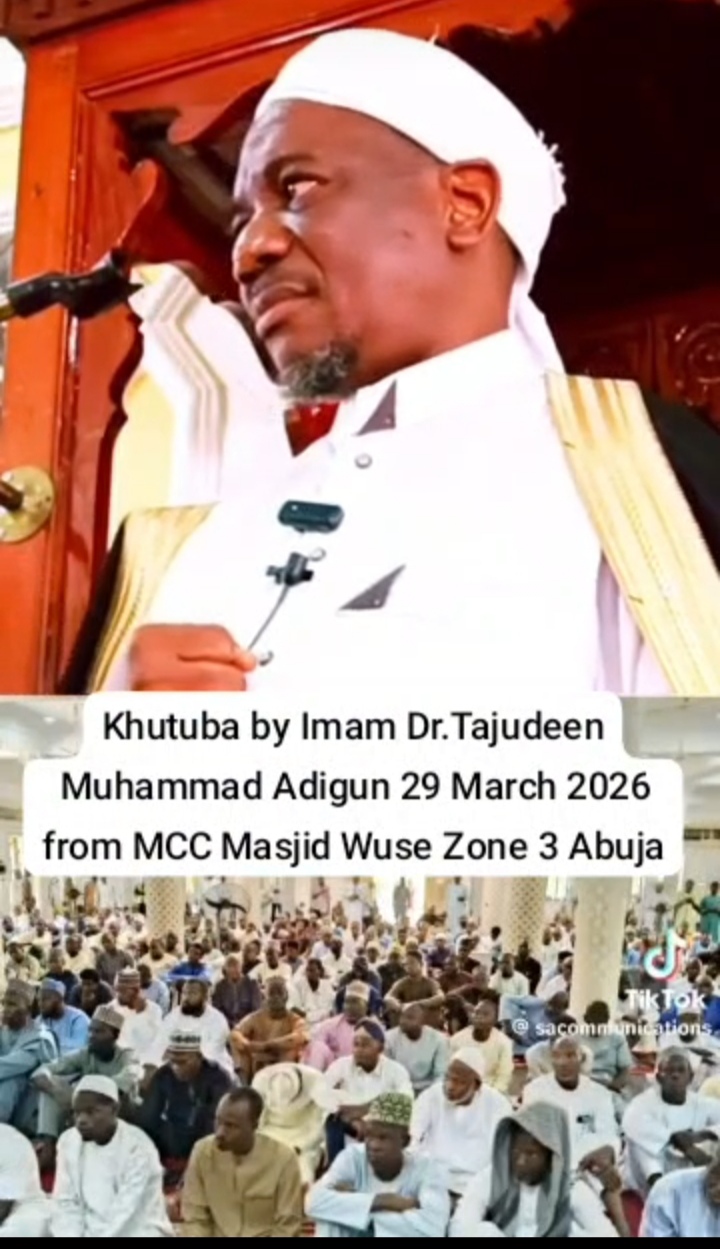
Cleric decries ‘false narrative’ against Muslims in Plateau, demands justice for all victims
By: Zagazola Makama
A Muslim cleric, Imam Tajuddeen Muhammad Adigun, has strongly condemned what he described as a persistent false narrative portraying Muslims as perpetrators of violence in Plateau, insisting that the religion does not condone killings and that its adherents have also been victims of repeated attacks.
Speaking during a Khutba at MCC Masjid in Wuse Zone 3, Abuja, the cleric said it was “very unfair and unfortunate” that Muslims were often blamed whenever violence occurred in the state.
“It is always being implied these days that whenever anything happens, the finger of accusation is pointed at Muslims. It is very unfair, it is unfortunate,” he said.
He alleged that such narratives were driven by bias and power imbalance, stressing that Muslims in Plateau lacked political control and could not be responsible for orchestrating violence at the scale often alleged.
“If Muslims want to be brutal in this country, it is not about where they take charge, it is about where they have the strength and control, where they have the guns, where they control commissions and policies.
“But in Plateau State, which strength do you have as a Muslim? The governor is a Christian, the deputy is a Christian, all commissioners, all advisers — that is where the power lies,” he said.
The cleric maintained that Muslims had instead been subjected to marginalisation, attacks and killings, without adequate justice for the victims.
“After marginalising them, after brutalising them, after killing innocent Muslims, then you turn around and raise accusations against them. It is unjust,” he said.
He cited the killing of a senior military officer, identified as retired Maj.-Gen. Alkali, as an example of unresolved violence, questioning the outcome of investigations.
“He was killed in Plateau. It became a national issue. They constituted a committee, a powerful committee, to investigate the issue. Because a General in any nation is a General. He had given his life to serve that nation. He shouldn’t be killed like that innocently, like a rat.
“But he was killed in Plateau. Investigation was carried out, even with intelligence. The investigation led to the discovery of a pond where the General was found, and dozens of vehicles from Gombe Line, Borno Express, and many other Muslim victims were killed and thrown into the pond in Plateau.
“But where are the results? Where are the judgments? The criminals behind these assassinations — were they caught? Were they punished? When are they going to be punished? When are they going to be punished? When are they going to be punished?” he said.
“And you open your mouth to tell an intelligent Muslim that Muslims are killing Christians in Plateau? That is not correct. When do we have power? When do we have control of the state that we will oppress anybody? We will never do that. The Qur’an has given us responsibility and we will never abuse it,” he added.
Emphasising Islamic teachings, the cleric stated that the religion forbids injustice and the killing of innocent people.
“A Muslim will never call for hiding a criminal Muslim. We will never do that. It is against the Qur’an. We are people that follow the Qur’an. When we have power, we will not oppress anybody,” he said.
The cleric stressed that Muslims across Plateau had suffered losses from violent attacks and deserved justice like any other group.
“So many innocent Muslims have been killed, but there is no expression, no justice. Why are the perpetrators not being prosecuted?” he asked.
“The blame should go to the government — both state and federal — to investigate and act. Anybody found guilty should be dealt with,” he said.
The cleric also referenced broader insecurity challenges in the country, including killings of Muslims by bandits in Sokoto, Katsina, Zamfara and other states, urging authorities to respond with fairness and urgency.
He concluded with prayers for peace, justice and unity in the country.
Cleric decries ‘false narrative’ against Muslims in Plateau, demands justice for all victims

Gunmen kill village head, wife in Adamawa, son hospitalised

Three soldiers injured in road accident during pursuit of bandits in Kaduna

Cleric decries ‘false narrative’ against Muslims in Plateau, demands justice for all victims

Roger Federer’s Shock as DNA Results Reveal Myla and Charlene Are Not His Biological Children

THE PLIGHT OF FARIDA

FAILED COUP IN BURKINA FASO: HOW TRAORÉ NARROWLY ESCAPED ASSASSINATION PLOT AMID FOREIGN INTERFERENCE CLAIMS
-
 News2 years ago
Roger Federer’s Shock as DNA Results Reveal Myla and Charlene Are Not His Biological Children
-
Opinions4 years ago
THE PLIGHT OF FARIDA
-
 News12 months ago
FAILED COUP IN BURKINA FASO: HOW TRAORÉ NARROWLY ESCAPED ASSASSINATION PLOT AMID FOREIGN INTERFERENCE CLAIMS
-

 News2 years ago
EYN: Rev. Billi, Distortion of History, and The Living Tamarind Tree
-
 Opinions4 years ago
POLICE CHARGE ROOMS, A MINTING PRESS
-

 ACADEMICS2 years ago
A History of Biu” (2015) and The Lingering Bura-Pabir Question (1)
-

 Columns2 years ago
Army University Biu: There is certain interest, but certainly not from Borno.
-

 Opinions2 years ago
Tinubu,Shettima: The epidemic of economic, insecurity in Nigeria
