
Crime
67-year-old in NDLEA Custody for Ingesting 100 Wraps of Cocaine at Abuja Airport

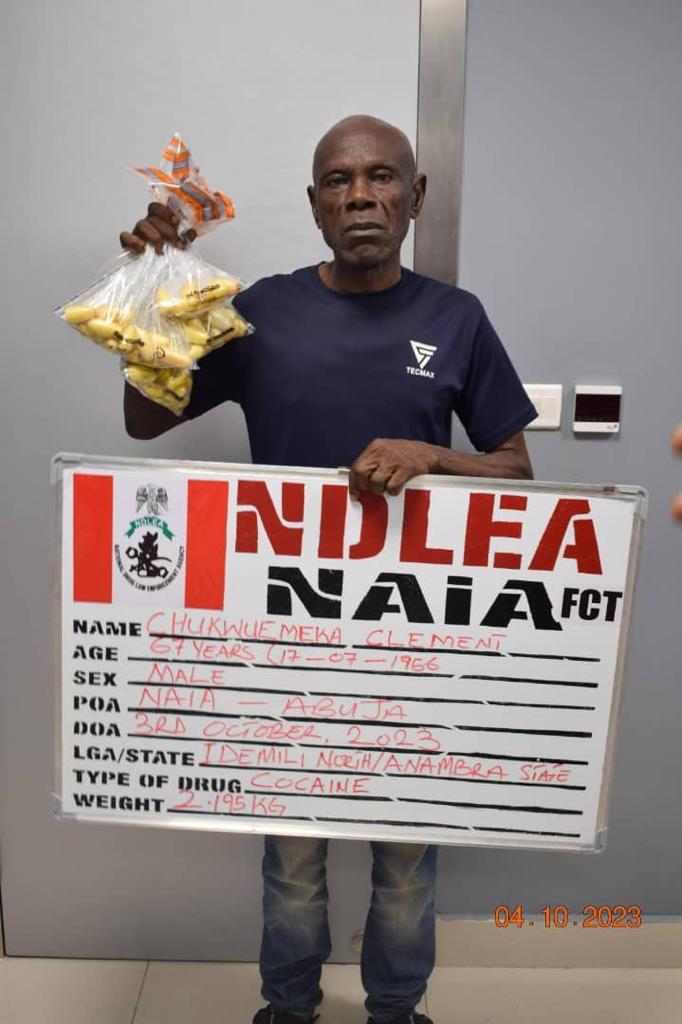
67-year-old in NDLEA Custody for Ingesting 100 Wraps of Cocaine at Abuja Airport
By: Michael Mike
Operatives of the National Drug Law Enforcement Agency (NDLEA) have arrested a 67-year-old alleged trafficker, Chukwuemeka Clement, at the Nnamdi Azikiwe International Airport, Abuja for ingesting 100 wraps of cocaine.
Chukwuemeka who was arrested last on Tuesday during the inward clearance of passengers on Ethiopian Airlines flight 951 from Addis Ababa, Ethiopia, claimed he ventured into the enterprise to raise enough money to marry a new wife and start life afresh after wasting 30 years of his life in Brazil, Ethiopia and Thailand.
He was arrested after body scan revealed multiple pellets in his stomach and subsequently when under observation excreted a total of 100 wraps of cocaine weighing 2.195 kilogrammes in four excretions.
According to the spokesman of the NDLEA, Femi Babafemi, Chukwuemeka In his statement, claimed to have spent 30 years in Brazil, Ethiopia and Thailand, and was once married, but lost his wife and without a child. He added that was why he decided to go into drug trafficking to raise enough money to marry a new wife and start life afresh.
Babafemi said on he same day, Tuesday, NDLEA operatives at the Malam Aminu Kano International Airport, Kano, intercepted a 45-year-old woman, Bilkisu Mohammed Bello while preparing to board a Saudia Airlines flight to Saudi Arabia.
She confessed during interrogation that pellets of cocaine given to her to swallow before her flight were kept in a house in Farawa area of Kano.
When she later led NDLEA officers to the house, 52 wraps of the illicit substance with a total weight of 767 grammes were recovered.
Babafemi also revealed that NDLEA operatives supported by officers and men of the Nigerian Army, Civil Defence Corps and Amotekun personnel last Tuesday stormed James village, in Ogunmakin, Obafemi Owode local government area of Ogun state where they located and destroyed 10.38 tonnes of cannabis sativa covering over 4.152 hectares.
He disclosed that while on their way back from the operation, the team also intercepted a truck marked FS548XN carrying a 40ft container loaded with logs of wood, noting that a search of the container led to the recovery of two bags of cannabis sativa weighing 20 kilogrammes while six suspects: Ahmed Yusuf, Olaniyi Babatunde, Adedeji Babatunde, Richard John, Osolale Olamilekan and Abdulazeez Saied, who were in the truck were arrested.
In the same vein, operatives on Sunday 1st October raided Obi camp in Owan West local government area of Edo state where 30 sacks of skunk weighing 300 kilogrammes and concealed in charcoal were evacuated from an old dilapidated mud house. Similarly, two cannabis farms measuring 1.179065 hectares at Igbanke forest in Orhiowon local government area of the state were identified and destroyed last Friday while four suspects: Tersoo Zaria, 28; Ifeanyi Osai, 53; Moses David, 19, and Daniel Gabriel, 20, were arrested.
In Gombe state, a suspect, Auwal Bindow was arrested last Friday along Bauchi – Gombe road with 50,000 capsules of tramadol, while in Oyo state, NDLEA operatives on patrol along the Lagos-Ibadan expressway nabbed Anuoluwapo Iyanu, 32, with 52 blocks of compressed pawpaw shaped cannabis sativa weighing 30 kilogrammes last Wednesday.
The statement further disclosed that the various commands of the agency across the country continued with the War Against Drug Abuse, WADA, advocacy campaign in the past week. Some of task undertaken include: WADA sensitisation lecture for students and teachers of Igbonnibi High School, Ila Orangun, Osun state; WADA sensitisation lecture at Royal Ambassador Secondary School, Makurdi, Benue state; WADA sensitization lecture at Ilora Baptist Grammar School, Ilora, Oyo state and LGA WADA sensitisation lecture for students of Beth-Root Model Secondary School, Onitsha, Anambra state.
Meanwhile, the Chairman/Chief Executive Officer of NDLEA, Brig. Gen. Buba Marwa (Retd) While commending the officers and men of the NAIA, MAKIA, Ogun, Oyo, Edo, and Gombe Commands of the agency for their outstanding feats in the past week, equally applauded their counterparts in all the commands across the country for intensifying their WADA advocacy lectures thus creating a fair balance between their drug supply reduction and drug demand reduction activities.
67-year-old in NDLEA Custody for Ingesting 100 Wraps of Cocaine at Abuja Airport


Crime
Troops Arrest Two Suspected Berom Militia Linked to NIPSS Attack as Security Sources Say Investigation Supports Earlier Leads
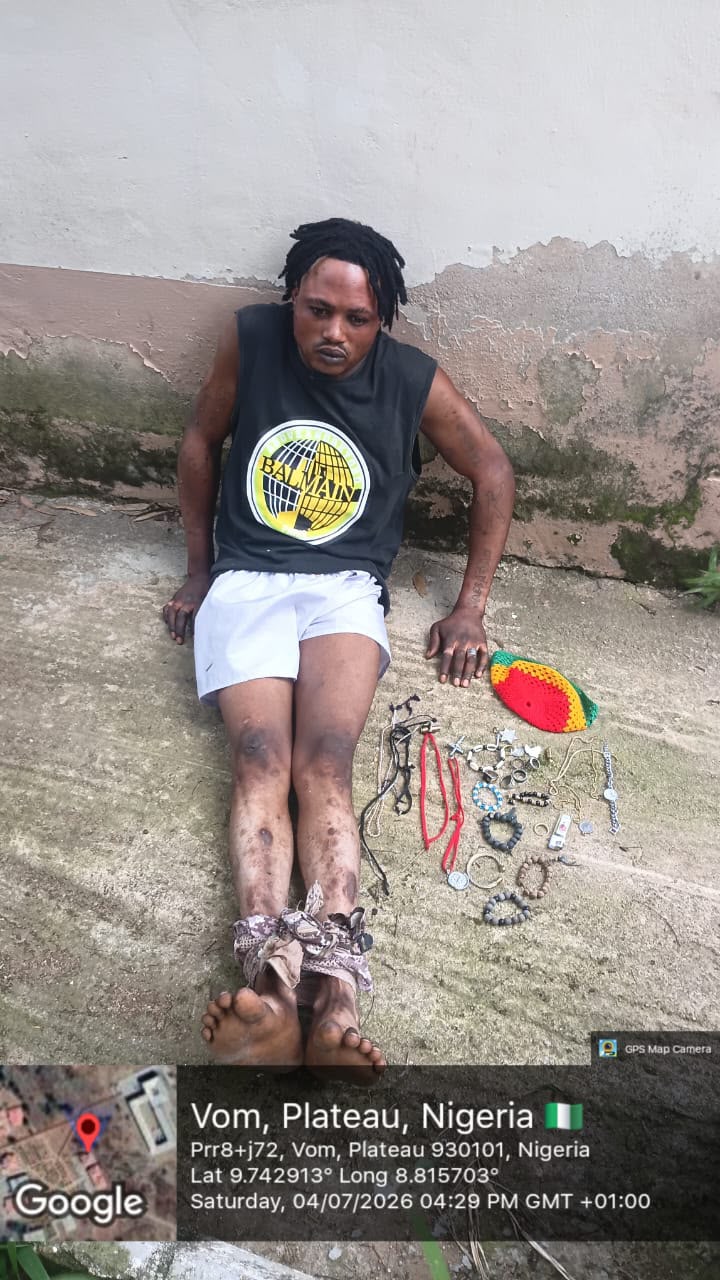
Troops Arrest Two Suspected Berom Militia Linked to NIPSS Attack as Security Sources Say Investigation Supports Earlier Leads
By Zagazola Makama
Troops of Operation Enduring Peace (OPEP) have arrested two suspected Berom militia allegedly linked to the recent attempted attack on the National Institute for Policy and Strategic Studies (NIPSS), Kuru, in Jos South Local Government Area of Plateau State, in another significant breakthrough in the ongoing investigation.
Sources told Zagazola Makama that the suspects were apprehended at about 3:30 p.m. on July 4 during an intelligence-led operation by troops of Sector 6 at Trade Centre in Jos South.
According to the sources, one of the suspects was identified as Mr. Aboi, while the identity of the second suspect has yet to be officially released as investigations continue.
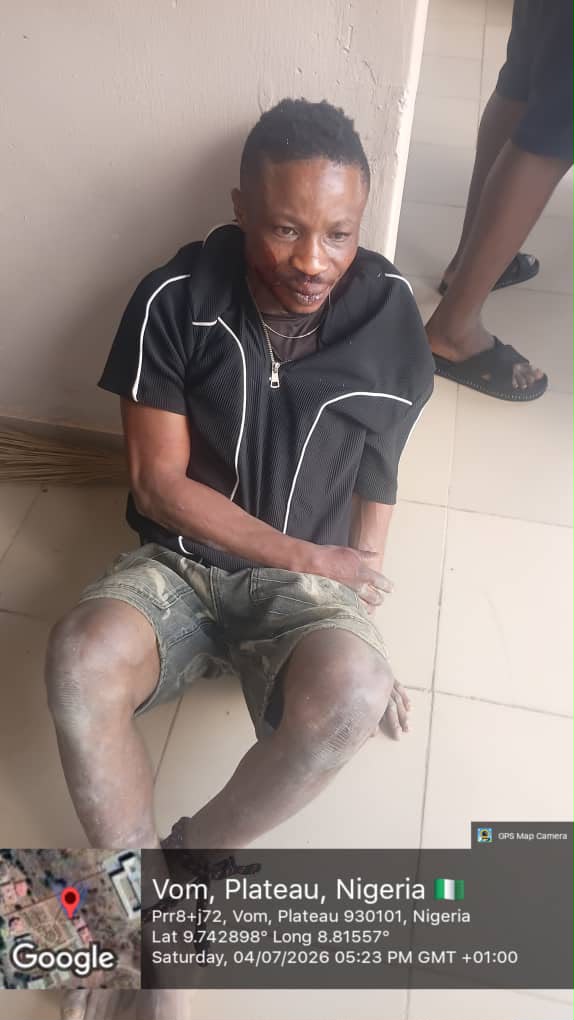
The sources said the two men were arrested in connection with the failed attack on the NIPSS facility and are currently undergoing interrogation to assist security agencies in identifying and apprehending other members of the alleged criminal militia network.
“The suspects are being exploited for further intelligence that could lead to the arrest of other members of the group involved in the attack,” one of the security sources said.
The latest arrests followed the July 2 attempted attack on the strategic national institution, during which troops engaged suspected Berom militia in a gun battle, killing one suspect while others escaped into nearby rocky terrain.
During that operation, troops recovered a service rifle bearing registration number CO-3175, which military authorities said had earlier been stolen from a soldier killed during an attack on troops at the Federal College of Land Resources Technology, Vom, on April 11.
The recovery of the weapon had already prompted security agencies to widen investigations into possible links between the recent attacks on security personnel operating within the Kuru-Vom axis.
Following the publication of Zagazola Makama’s report identifying the slain attacker as a suspected member of an armed Berom militia operating within the area, the Berom Youth Moulders-Association (BYM) issued a statement rejecting the report.
Barrister Dalyop Solomon Mwantiri, the association’s president, denied that the Berom ethnic community operated any militia group and challenged the report’s conclusions, arguing that the ethnicity of the deceased had not been independently established.
He claimed that the association had conducted inquiries and spoken to people within the community, but that no one claimed to know the identity of the attacker. He challenged Zagazola Media Network to back its claims with evidence and urged security agencies and journalists to rely only on verified information in reporting security incidents.
Subsequently, Zagazola Makama published additional reporting stating that the deceased attacker had been identified by local residents and multiple security and community sources as Peter, a Berom resident of the Trade Centre area. The report was supported by a 17-second WhatsApp video clip in which an individual identified the attacker as someone from his area.
Security sources told Zagazola Makama that the arrest of the latest suspects in the same Trade Centre axis, where Peter was reportedly traced, has strengthened investigators’ efforts to establish the composition of the group responsible for the attacks.
The sources, however, stressed that investigations remain ongoing and that the suspects would be afforded due process while intelligence exploitation continues.
Military authorities have yet to issue an official statement naming the suspects or announcing any formal charges.
Meanwhile, security has been reinforced around the NIPSS complex, with troops maintaining aggressive patrols, surveillance and domination operations aimed at preventing further attacks on the institution and adjoining communities.
The arrests are expected to assist investigators in unraveling the network behind the repeated attacks on security personnel and strategic facilities within the Kuru-Vom corridor.
Troops Arrest Two Suspected Berom Militia Linked to NIPSS Attack as Security Sources Say Investigation Supports Earlier Leads
One killed, another injured in Fulani Bandits attack as troops arrest suspect in Plateau
By: Zagazola Makama
Troops of Sector 6 of Operation Enduring Peace have arrested a suspect following an attack by Fulani Bandits on Rinyan Community in Riyom Local Government Area of Plateau that left one person dead and another injured.
Security sources said the troops responded at about 4:00 p.m. on Saturday after receiving reports of an attack by suspected armed Fulani militia on the community.
According to the sources, on arrival at the scene, the troops found one person dead, while another victim had sustained gunshot wounds.
The injured victim was evacuated to the General Hospital in Riyom for medical treatment.
The sources said the troops immediately pursued the fleeing assailants but did not establish contact with them.
However, one suspect was arrested during the operation and is currently in custody undergoing interrogation as investigations continue.
The military has maintained intensified operations across Plateau to curb attacks and apprehend those responsible for violent crimes in the state.
One killed, another injured in Fulani Bandits attack as troops arrest suspect in Plateau
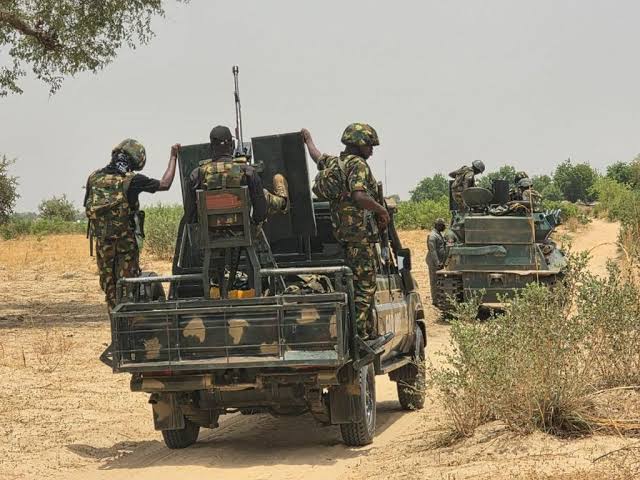
Troops Repel Terrorist Attack on Forward Operating Base in Zamfara
By: Zagazola Makama
Troops of Combat Team 5 (CT 5) have repelled a terrorist attack on their Forward Operating Base (FOB) in Moriki, Zurmi Local Government Area of Zamfara State.
Security sources told Zagazola Makama that the terrorists launched the attack at about 1:00 a.m. on Friday, assaulting the base from multiple directions.
The sources said the troops maintained their defensive positions and successfully repelled the attackers after an exchange of gunfire.
During the incident, three civilians sustained gunshot wounds and were immediately evacuated to a hospital for medical treatment.
The sources added that the situation has since been brought under control, while security has been reinforced in the area to prevent further attacks.
Troops Repel Terrorist Attack on Forward Operating Base in Zamfara

President Tinubu Flags Off the Construction of Dikwa–Gamboru Ngala, Bama–Banki International Road Projects

Mutiny: Presidential Guard Tightens Security Around Niger Presidency Amid Reports of Military Protest

Troops Arrest Two Suspected Berom Militia Linked to NIPSS Attack as Security Sources Say Investigation Supports Earlier Leads

Roger Federer’s Shock as DNA Results Reveal Myla and Charlene Are Not His Biological Children

THE PLIGHT OF FARIDA

FAILED COUP IN BURKINA FASO: HOW TRAORÉ NARROWLY ESCAPED ASSASSINATION PLOT AMID FOREIGN INTERFERENCE CLAIMS
-
 News2 years ago
Roger Federer’s Shock as DNA Results Reveal Myla and Charlene Are Not His Biological Children
-
Opinions4 years ago
THE PLIGHT OF FARIDA
-
 News1 year ago
FAILED COUP IN BURKINA FASO: HOW TRAORÉ NARROWLY ESCAPED ASSASSINATION PLOT AMID FOREIGN INTERFERENCE CLAIMS
-

 News2 years ago
EYN: Rev. Billi, Distortion of History, and The Living Tamarind Tree
-
 Opinions5 years ago
POLICE CHARGE ROOMS, A MINTING PRESS
-

 ACADEMICS2 years ago
A History of Biu” (2015) and The Lingering Bura-Pabir Question (1)
-

 Columns2 years ago
Army University Biu: There is certain interest, but certainly not from Borno.
-

 Politics1 year ago
2027: Why Hon. Midala Balami Must Go, as Youths in Hawul and Asikira/Uba Federal Constituency Reject ₦500,000 as Sallah Gift
