
Crime
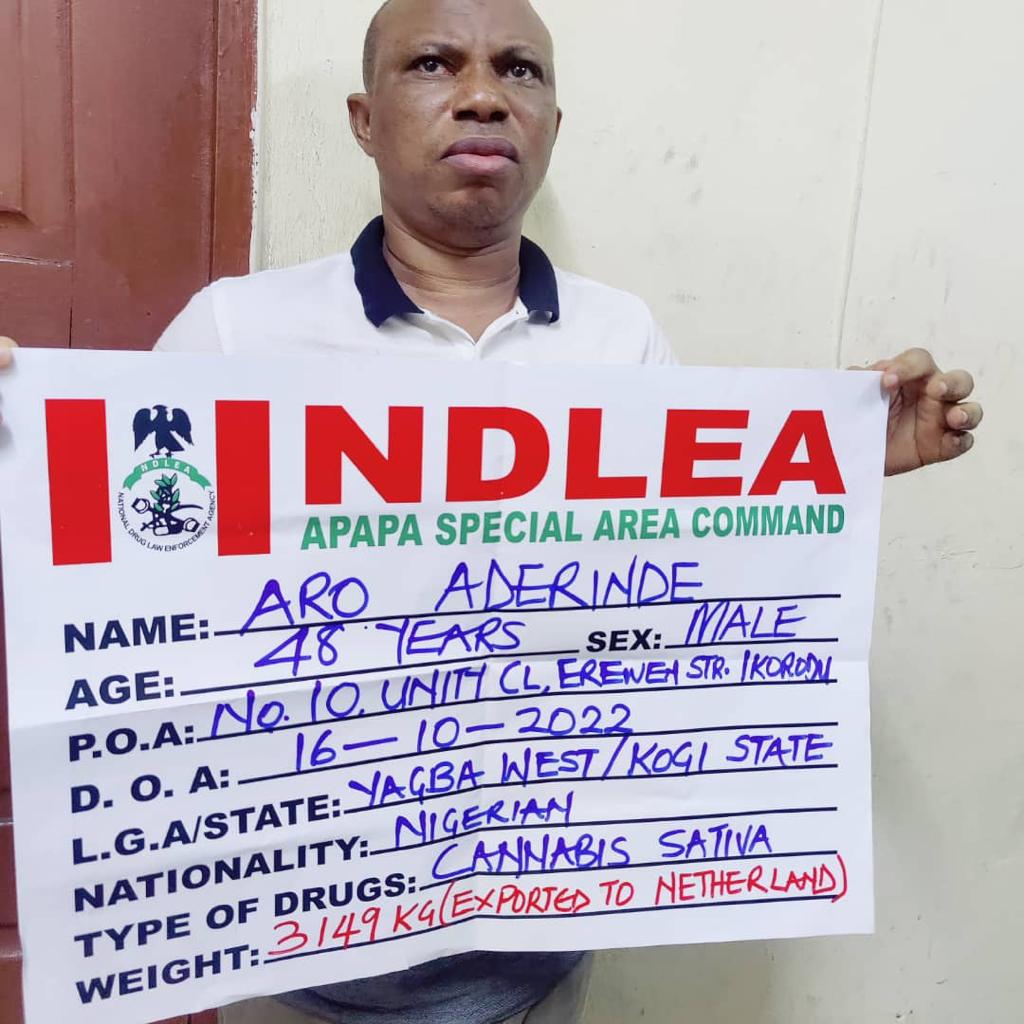
NDLEA arrests 4 wanted kingpins over 16 tons illicit drugs in Lagos, Abuja

NDLEA arrests 4 wanted kingpins over 16 tons illicit drugs in Lagos, Abuja
Four persons wanted in connection with over 16,000 kilogrammes (16 tons) of illicit drugs intercepted in Lagos, Abuja and Netherlands top the list of arrests by operatives of the National Drug Law Enforcement Agency (NDLEA) in parts of the country in the past week.
A statement on Sunday by the spokesman of NDLEA, Femi Babafemi said in Lagos, anti-narcotics officers who have been on the trail of 48-year-old Aro Aderinde for weeks arrested him on Sunday 16th October over his involvement in the export of 3,149 kilogrammes cannabis sativa concealed in coconut fibres via container number MSKU 1820587.
In the same vein, two women: Hauwawu Bashiru and Basirat Yahaya linked to the attempt to export 90 kilogrammes of methamphetamine through Pastor Anietie Effiong of Promise of Zion Church, Oron, Akwa Ibom state, were also arrested in Lagos and moved to Uyo to face charges along with the clergyman. Pastor Effiong was earlier arrested on Saturday 6th August, 2022.
Babafemi also revealed that a notorious drug dealer in the Mushin-Isolo axis of Lagos, Monday Michael, 45, was arrested last Monday while conveying 365.7 kilogrammes of cannabis in two Toyota Sienna space buses marked FST 189 FD and FST 273 GF.
He said another drug lord, Abdulkadir Mohammed, 47, wanted over the seizure of 5,640 kilogrammes cannabis at a warehouse in Chukuku area of Kuje, Abuja, was nabbed on Sunday 16th October, following the arrest of his wife, Saadatu Abdullahi, 35, who was found at the store when it was raided.
He said in Edo, at least 10 suspects were arrested in connection with the seizure of 4,870.2 kilogrammes cannabis in parts of the state, adding that last Wednesday operatives stormed Ohusu forest boundary, Ovia south west local government area where they recovered a total of 3,159.7 kilogrammes and arrested three suspects: Effiong Udo; Daniel Ebong and Asuquo Effiong.
Similarly, last Saturday, operatives intercepted a Toyota Sienna space bus conveying 49 bags of C/S weighing 638.5 kilogrammes along Uwenusi road in Uhunmonde local government area, while 36 kilogrammes of the same substance stored in the bush along Uromi/Ubiaja road were equally recovered.
In another operation, three suspects: John Paul, Liberty Rolland, and Aboki Stephen were arrested at Okpe in Akoko Edo with 55 kilogrammes of cannabis.
He said no less than 127 kilogrammes of cannabis sativa were seized and a suspect, Pius John arrested while 854 kilogrammes of the same substance were recovered when operatives raided Okpe forest where some cannabis farms were destroyed, even as three suspects: David Obada, Blessing Okechukwu and Odoh Sunday caught with the 854 kilogrammes cannabis sativa were arrested.
In Ondo state, operatives stormed the Aponmu forest in Idanre local government area where 52 bags of cannabis sativa that weighed 676 kilogrammes and the truck being used to load the consignment were recovered on Sunday 16th October, while the trio of Christopher Amuzoga, Chikogu Samuel and Ijeoma Okenna were arrested with 690 kilogrammes of cannabis at Ipele forest last Tuesday.
Also Read: https://dailypost.ng/2022/10/08/iswap-kills-8-boko-haram-members-seizes-large-quantities-of-ammunition/
In Kano, operatives arrested Isah Mohammed and Sandra Okafor at Dakata area on Friday 21st October after they were caught with 538 blocks of cannabis sativa weighing 391.2 kilogrammes; 259,000 tablets of tramadol; 100 bottles of codeine based syrup, and 150,000 tablets of pregabalin.
Babafemi said this followed the arrest of Abel John and Helen James with 328.7 kilogrammes cannabis sativa at Gonin gora area of Kaduna, while 5,000 tablets of tramadol and 25,000 tablets of Exol-5 were recovered along Abuja-Kaduna express road. Also, a suspect, Yahaya Musa, was arrested on Sunday 16th October at Tashar Yari, Kaduna, with over 30,000 tablets of tramadol, diazepam and exol-5.
In Bauchi, a suspect, Ogbonna Ikechukwu, was arrested at Gadar Maiwa, Ningi local government area, with 67,960 tablets of various types of psychotropic substances while in Akwa Ibom state, operatives raided the Marina market, Eket, where quantities of illicit substances along with
N1,193.060 cash and N849,000.00 fake currency were recovered from fleeing suspects.
Meanwhile, while commending the officers and men of Lagos, Ondo, Edo, FCT, Bauchi, Akwa Ibom, Kano, Kaduna, and Apapa Port Commands of the anti-narcotics Agency for the arrests and seizures, Chairman/Chief Executive of NDLEA, Brig. Gen. Buba Marwa (Retd), said the arrest of the fleeing drug kingpins is a warning signal to those still in the criminal illicit drug trade that the long arm of the law will soon catch up with them.
He however charged officers and men across all commands to intensify the heat on the drug cartels until they are dismantled.
NDLEA arrests 4 wanted kingpins over 16 tons illicit drugs in Lagos, Abuja



Farmer injured in alleged attack by herders in Bokkos
By Zagazola Makama
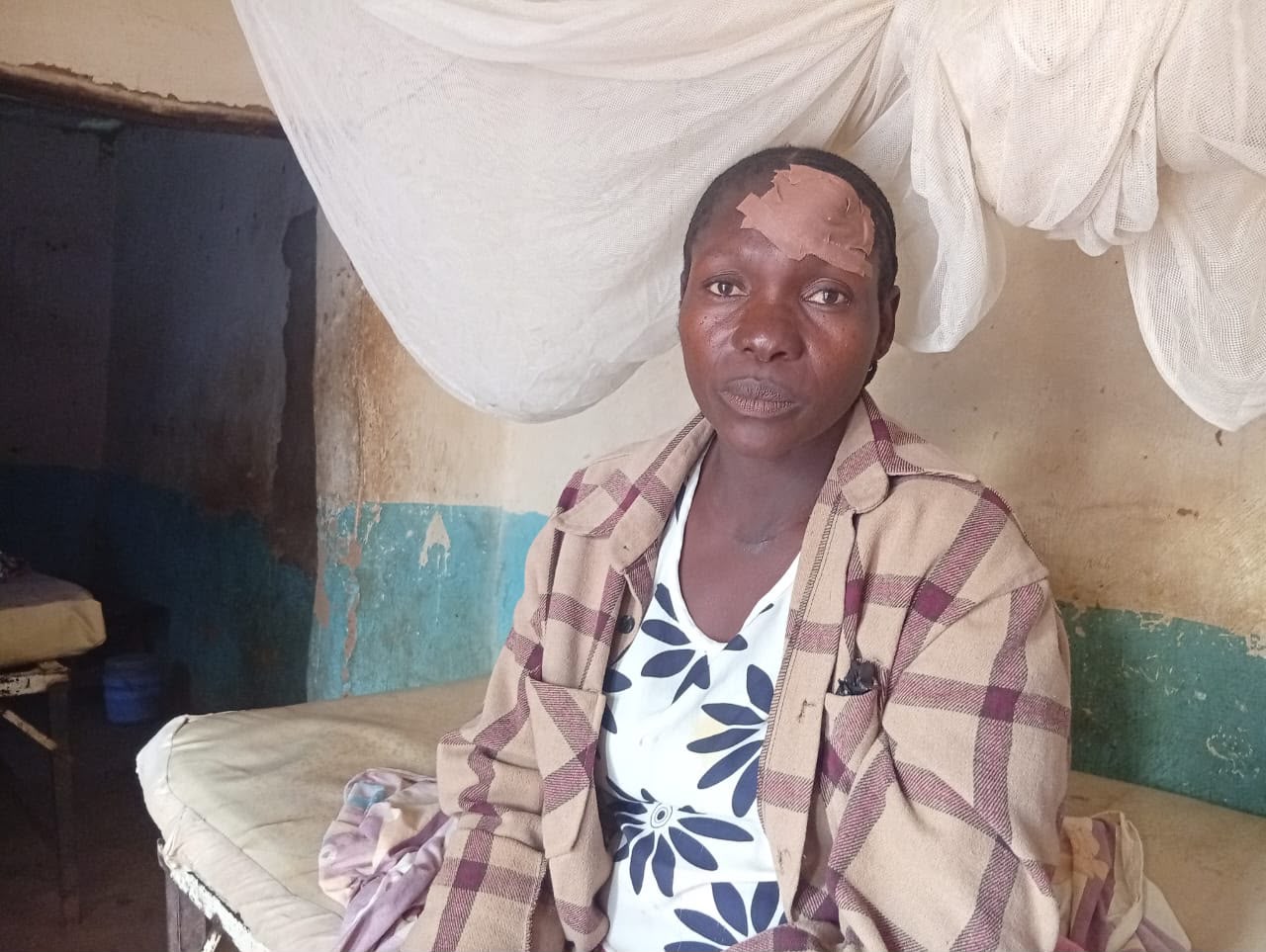
A female farmer was injured after she was allegedly attacked by suspected Fulani herders at Josho village in Daffo District of Bokkos Local Government Area of Plateau State.
The incident occurred at about 5:15 p.m. on Sept. 16, 2026, when troops of Sector 5, Operation ENDURING PEACE (OPEP), responded to a report of an attack on the farmer, identified as Mrs Sarah Luka.
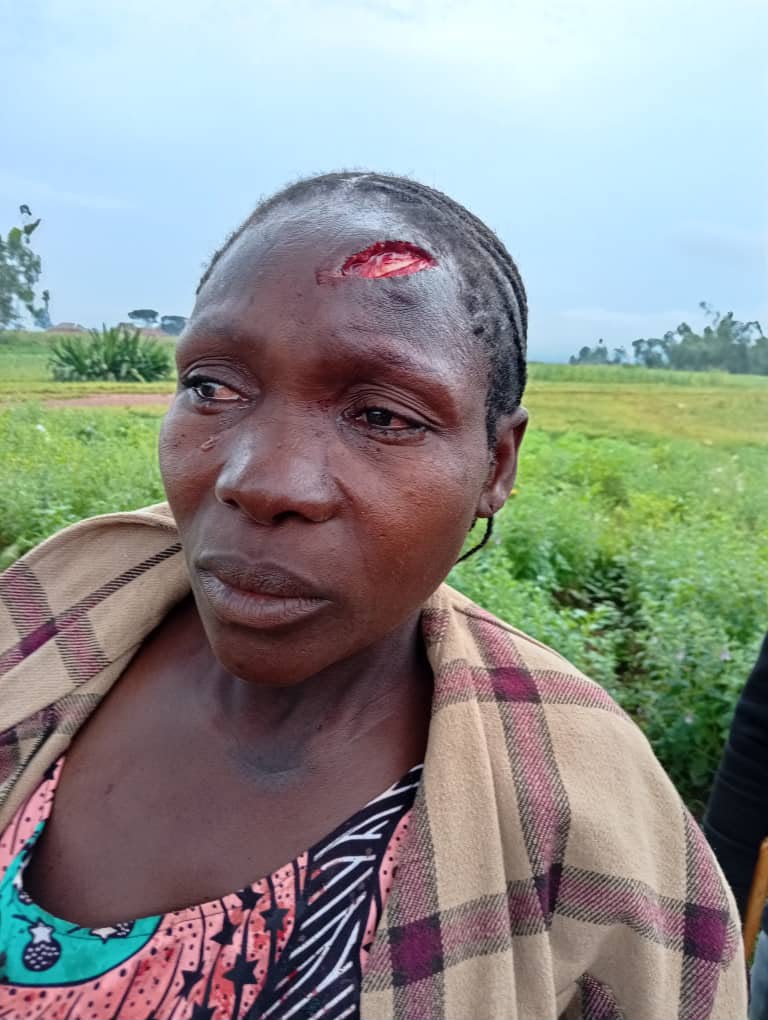
According to the report, the attack followed an alleged dispute after Luka resisted cattle grazing on her farmland.
Troops who arrived at the scene found the victim with injuries, while the suspected attackers had fled before their arrival.
Luka was evacuated to a hospital for medical attention.
Security personnel have commenced efforts to track and apprehend the fleeing suspects for further investigation and appropriate legal action.
Farmer injured in alleged attack by herders in Bokkos
South African Woman Bags 40 years for 5.75kg Heroin at Nigerian Airport
By: Michael Mike
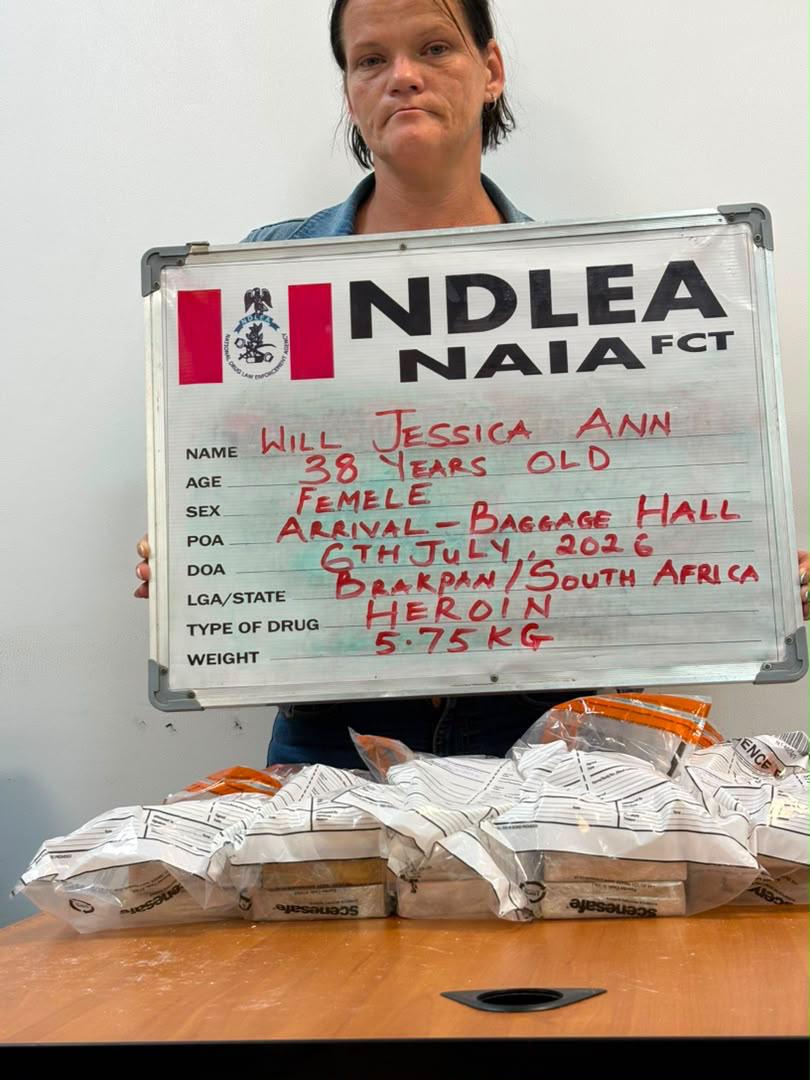
A Federal High Court in Abuja on Thursday sentenced a 38-year-old South African woman to 40 years imprisonment for importing 5.75 kilogrammes of heroin into Nigeria using her three-year-old son as cover.
Justice Obiora Egwuatu convicted Ms. Will Jessica Ann on two counts of importation and conspiracy to import heroin in charge No. FHC/ABJ/CR/422/2026, which she pleaded guilty to.
The court sentenced her to 15 years on count one and 25 years on count two. The sentences will run concurrently. She will effectively spend 25 years in jail.
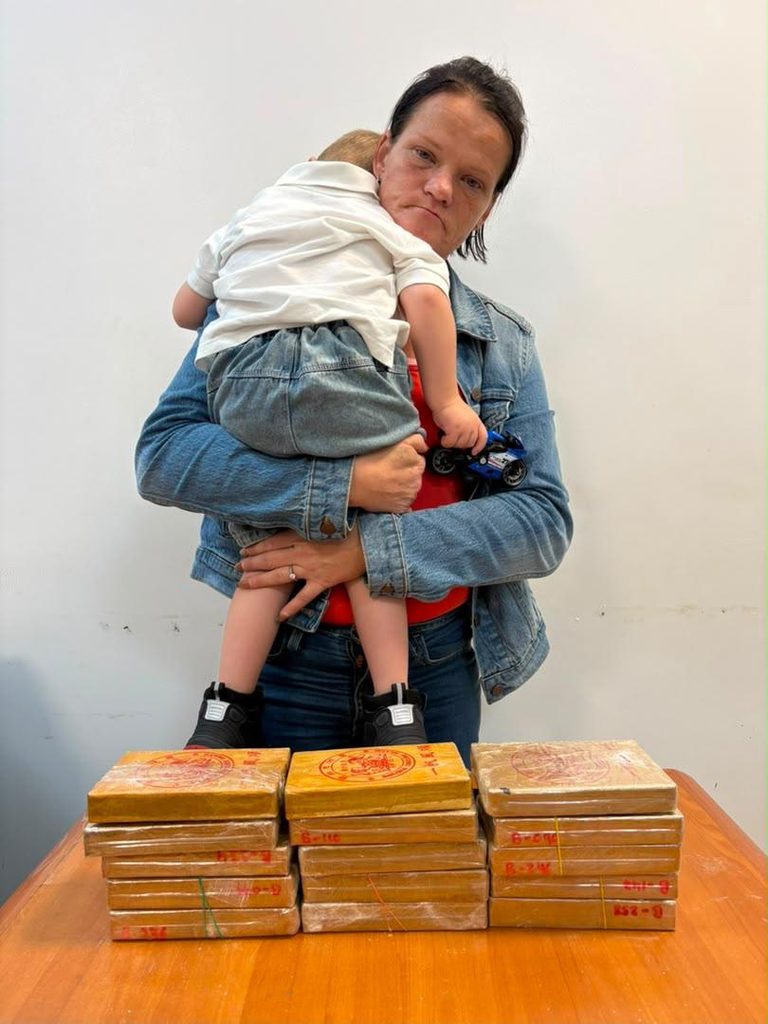
Ann was arrested on July 6, 2026, by operatives of the National Drug Law Enforcement Agency, NDLEA, during the inward clearance of passengers on Qatar Airways flight QR 1433 from Doha at the Nnamdi Azikiwe International Airport, Abuja.
NDLEA said she concealed 14 large blocks of heroin in two checked-in bags and travelled with her toddler to evade security screening.
According to the agency, she initially denied owning any checked luggage. Officers, however, linked two bags containing the drugs to her through baggage tags that tallied with claim tags attached to her passport.
She later admitted ownership, claiming she forgot she checked in the bags. She told investigators she flew in from Cambodia through Doha to Abuja.
Intelligence, NDLEA said, shows she is a member of a transnational drug trafficking organisation operating along the Cambodian-South African axis with her husband and partner, Jan Coenraad De Jager.
De Jager, who is based in Cambodia, was arrested in Johannesburg, South Africa, on July 27, 2026, while attempting to traffic 3.2 kilogrammes of illicit drugs to Hong Kong.
Reacting to the conviction, NDLEA Chairman, Brig. Gen. Buba Marwa (rtd), said the judgment demonstrates the judiciary’s resolve to support the agency’s war against drug trafficking.
Marwa said the conviction reinforces the agency’s position that Nigeria will not be a soft landing for international drug cartels.
He said the arrest of the convict’s partner three weeks after her arrest in Abuja underscores the strength of intelligence-sharing and collaboration between NDLEA and its foreign partners.
He said the agency will continue to strengthen airport interdiction and international collaboration to dismantle trafficking networks using Nigeria as a corridor.
Marwa warned that anyone, regardless of nationality, caught trafficking illicit drugs through Nigeria will face the full weight of the law.
South African Woman Bags 40 years for 5.75kg Heroin at Nigerian Airport

Kidnapped woman escapes abductors in Plateau, receives treatment for minor injuries
By: Zagazola Makama
A woman who was kidnapped by suspected armed robbers along the Kassa–Barkin Ladi highway in Barkin Ladi Local Government Area of Plateau State has reportedly escaped from her abductors and is receiving medical treatment.
The victim was abducted on Tuesday, Sept. 15, 2026, after suspected armed robbers blocked the highway with stones and intercepted vehicles along the route.
Security sources said the woman managed to escape from her abductors in the early hours of Wednesday, Sept. 16, and subsequently made her way to safety.
She is currently receiving treatment at a hospital in Heipang, where she is being attended to for minor injuries reportedly sustained during the incident.
The development followed an earlier response by troops of Sector 4, Operation ENDURING PEACE (OPEP), deployed at the Alpha Guard location, who cleared the highway after discovering an ash-coloured Sharon vehicle without a registration number at the scene.
Sources said a security team has been dispatched to independently verify the circumstances of the woman’s escape and establish the location from which she escaped, as well as gather further evidence.
Security forces are also expected to intensify efforts to identify and apprehend the suspected kidnappers operating along the Kassa–Barkin Ladi axis.
Kidnapped woman escapes abductors in Plateau, receives treatment for minor injuries

81st UNGA: Nigeria Will Be Guided By National Interest, Multilateralism, Tinubu’s Reform Agenda – VP Shettima

Abuja Turns into West Africa’s Deal Room as 60 Startups Chase $65,000 and $5m Jackpot

The growing role of local militias, criminal networks and possible external forces in the escalation of violence in Plateau State

Roger Federer’s Shock as DNA Results Reveal Myla and Charlene Are Not His Biological Children

THE PLIGHT OF FARIDA

FAILED COUP IN BURKINA FASO: HOW TRAORÉ NARROWLY ESCAPED ASSASSINATION PLOT AMID FOREIGN INTERFERENCE CLAIMS
-
 News3 years ago
Roger Federer’s Shock as DNA Results Reveal Myla and Charlene Are Not His Biological Children
-
Opinions5 years ago
THE PLIGHT OF FARIDA
-
 News1 year ago
FAILED COUP IN BURKINA FASO: HOW TRAORÉ NARROWLY ESCAPED ASSASSINATION PLOT AMID FOREIGN INTERFERENCE CLAIMS
-

 News3 years ago
EYN: Rev. Billi, Distortion of History, and The Living Tamarind Tree
-
 Opinions5 years ago
POLICE CHARGE ROOMS, A MINTING PRESS
-

 ACADEMICS3 years ago
A History of Biu” (2015) and The Lingering Bura-Pabir Question (1)
-

 Columns3 years ago
Army University Biu: There is certain interest, but certainly not from Borno.
-

 Politics1 year ago
2027: Why Hon. Midala Balami Must Go, as Youths in Hawul and Asikira/Uba Federal Constituency Reject ₦500,000 as Sallah Gift
