
Politics
Lest Nigerian Youths Be Deceived By Obasanjo’s Sanctimony And Revisionism

Lest Nigerian Youths Be Deceived By Obasanjo’s Sanctimony And Revisionism
By: Dele Alake
On the whole, the latest epistolary misadventure by Chief Olusegun Obasanjo is a gratuitous insult on the collective intelligence of Nigerians. In particular, his laborious attempt to prey on the innocence of much younger generation constitutes a grievous assault on public morality, seeking to force morsels of sheer falsehood down the throats of a demography perhaps too young to comprehend events which Obasanjo furiously tried to misrepresent.
It is noteworthy that it was the Obasanjo administration that abolished the teaching of history in Nigerian schools ostensibly to aid this kind of historical revisionism he routinely engages in; a decision now happily reversed by the President Muhammadu Buhari government.
Contestants for the presidential office in Nigeria routinely consult with and court Obasanjo , not because of his electoral value which is minuscule, but out of respect for his status as a former Head of State. It is, however, obvious that the man himself has no respect for that status, as he continuously embroils himself in partisan politics in a most pretentious and dishonest manner and refuses to rise to the demands of statesmanship.
In the statement entitled “My Appeal To All Nigerians Particularly Young Nigerians”, General Obasanjo rtd plumbed into new depth in hubris and hypocrisy never seen in all his career as political busybody after office who seems to see Nigeria as a movie where only he is the all-conquering hero while others are doomed villains. Some psychoanalysts are wont to diagnose this Obasanjo’s peculiar political affliction as post-power-withdrawal-syndrome (PPWS): false omniscience compounded by chronic inability to accept the reality of being out of political office.
Even in the US, whose variant of presidential system of government we practise, former Presidents maintain a decorous distance from government after office, opting wisely not to be a distraction to their successors. Not so the meddlesome Obasanjo.
That same mindset led him to stab MKO Abiola in the back in faraway Harare, Zimbabwe, by saying he was not “a messiah” even when most Nigerians had started viewing the winner of the June 12 polls of 1993 as the symbol of democracy after the annulment. It soon came to light that whereas a group of retired generals including Muhammadu Buhari and Theophilus Danjuma were resolute in their call for the de-annulment through the platform of a “committee of elders”, Obasanjo, the supposed “convener”, was said to have plotted the floating of an “interim government” to replace the now discredited Babangida regime.
While Obasanjo’s right to support any candidate of his choice in the forthcoming presidential polls must be recognized as guaranteed by the Nigerian constitution, how condescending of him to decree his preference on Nigerians based on a cocktail of bare-faced lies and crude revisionism. In fact, there’s a widespread allegation that the latest gambit by the political busybody of Ota is part of a larger nefarious scheme to incite disorder around the country with a view to clearing the grounds for the resurrection of his favourite contraption: interim national government (ING) !
Third term agenda
Contrary to his posturing as a democrat who came to office for the second time at a questionable age 62 and left at 70, Obasanjo’s feverish gamble for life presidency between 2005 and 2006 was actually thwarted by a pro-democracy coalition of progressives like Asiwaju Bola Tinubu and several others.
Bribes ranging from N50m to N100m (amounting to whopping N20bn of public funds) were allegedly handed over to federal lawmakers to approve a clause smuggled into the list of amendments proposed by a “confab” (hurriedly set up by Obasanjo), removing the cap on the two-term limit enshrined by the 1999 constitution. Despite the outrage expressed across the land, Obasanjo had soldiered on through his battalion of political foot soldiers. But on the day the contentious bill was to be decided, the lawmakers voted their conscience and stood firm on the side of Nigerians against Obasanjo’s imperial life presidency ambition.
Is it not therefore ironic that a man unwilling to vacate Aso Rock at 70 (in 2007) is now moralizing against anyone above age 70 aspiring for the same office today? It’s always been known that Obasanjo suffers deep insecurities manifesting in his “Mr. Too Know” antics. But never did anyone imagine that the chicken farmer would carry his accustomed charlatanism as far as arrogating medical expertise to himself as to now also be certifying who is fit or not for the rigor of office through nothing but the estimation of the eyes based on “my own personal experience”.
Obasanjo’s waste versus Buhari’s prudence
While it can be said that prevailing anaemic circumstances of the world economy in 2015 were not quite favorable to the Buhari administration upon takeoff, we make bold to say that, contrary to doomsday scenario painted by Obasanjo, President Muhammadu Buhari has been more prudent in the management of the little the country has earned. How ironic that Buhari that inherited a wrecked economy in 2015 from PDP under the influence of Obasanjo is now being blamed for the hardship suffered by Nigerians, hardship that truly resulted from systemic damage inflicted by PDP’s 16 years of sustained squandermania. Discerning Nigerians surely know better. They can see and feel the relief brought about by Buhari’s rail revolution, massive investment in infrastructure like the second Niger Bridge and numerous roads built or reconstructed across the country. However, despite that oil price averaged $100 per barrel for most of the Obasanjo years and two subsequent PDP administrations, Nigeria has very little or nothing to show for it, other than tales of bare-faced looting and waste for 16 years.
Under Obasanjo’s watch, a senate panel found that national assets — indeed our common patrimony built from independence in 1960 — worth $100bn were auctioned to cronies and fronts at a ridiculous $1.3bn through a dubious privatization programme. This constituted the root of the massive joblessness in the country.
Also, House of Reps committee found that Obasanjo wasted $16bn on the so-called power projects. Rather than electricity, Nigerians experienced worst darkness. According to his deputy then and incidentally the present PDP’s flag bearer, Atiku Abubakar, “In some cases, some contractors were paid 100 percent of the contract sum’’ …without performance !
So pervasive was sleaze under Obasanjo that Atiku, while testifying before another senate committee in 2007, revealed that his boss was fond of “sending handwritten notes to PTDF (Petroleum Trust Development Fund) to release money to buy vehicles for his girlfriends”.
In one last act of moral, political and financial atrocity in 2007, Obasanjo literally commandeered captains of industry and PDP governors to Ota to raise over N7bn for the building of his personal library (memorably dubbed “Presidential Laundromat” by Nobel laureate, Professor Wole Soyinka).
For a man who enrolled in PDP in 1998 with only N20,000 reportedly in his bank account after a stint in prison, Obasanjo left power in 2007 stupendously wealthy with vast farm estates in many states and private university.
False claim of mentorship
Typically, megalomaniac Obasanjo lied that the leading presidential candidates who had visited him addressed him as “mentor” and that, according to him, their respective quest for the No 1 job in the land was to continue where he stopped his “good work”. We presume that included Asiwaju Bola Tinubu. It is another shameless lie by a meddlesome interloper in an orgy of self-adulation.
To start with, many will easily recall that the same Obasanjo had issued a statement shortly after the APC candidate paid him a courtesy call months back categorically stating that the visit was “non-political” in response to “misconception in a section of the media”. So, how come this contradiction now? In any case, keen watchers of political events will attest that Tinubu’s accustomed progressive leaning is antithetical to Obasanjo’s imperial messianism. It is an ideological contestation dating back to 1999.
All through Obasanjo’s eight-year imperial presidency, Tinubu’s fidelity to progressive ideology led him to challenge Obasanjo’s excesses through the instrumentality of the courts and constitutionalism. Indeed, through constant diligent litigations, Lagos under Tinubu was able to win over 13 landmark cases against the federal government at the Supreme Court that not only enriched constitutionalism but also extended the frontiers of federalism in Nigeria.
Tinubu’s opposition also manifested in his refusal to be deceived by Obasanjo’s antics in 2003 in the latter’s desperation to capture the South-west and end his personal shame as a President without political home-base. It is on record that Tinubu emerged the only Yoruba governor who survived Obasanjo’s onslaught against the entire South West. Ever so treacherous, Obasanjo betrayed the other five AD governors by rigging them out of office, with Tinubu becoming “the last man standing”.
His petty hatred for Asiwaju and lack of vision led him into scuttling the first-of-its-kind Independent Power Project (IPP) initiated by Lagos State in 1999. It also explained Obasanjo’s illegal withholding of councils fund belonging to Lagos for over two years following the creation of 37 additional council areas. Even after the Supreme Court ruling directed the release, Obasanjo continued his unconstitutional perfidy of withholding the state’s local government revenue, to punish Lagos. The funds were not released until President Umar Yar’Adua assumed power in 2007.
Indeed, the redrawing of Nigeria’s electioneering calendar is a testament of Obasanjo’s rigging inclination. Today, off-season governorship contests are organised by INEC in states like Edo, Osun, Ekiti, and Kogi due to the theft of popular mandate under Obasanjo’s watch, having declared the 2007 polls a “do or die” for his party. In Edo, Osun and Ekiti in particular, it is a well-known fact that Tinubu spear-headed the struggle to retrieve the stolen mandates through the court. So, how could Obasanjo therefore list Tinubu among his “mentees” who wish to continue where he “stopped”?
He mischievously twisted Tinubu’s ‘Emilokan’ statement before the APC presidential primaries out of context in a futile bid to de-market the APC candidate. The very poor understanding of that phrase by a supposed Yoruba (?) man will only fuel doubts already expressed in some informed quarters about Obasanjo’s roots. Tinubu made his statement within the context of the internal dynamics of APC , and the fact that he later emerged as candidate by an overwhelming majority shows that his claims are infallible. Nobody worked as hard as Tinubu to win the support of delegates during the primaries and today he is second to none in aggressively seeking the support of voters across the country to achieve success in next month’s elections. Ironically, the only concrete reason Obasanjo offers for supporting Peter Obi is that it is “the turn” of the South-East! What a contradiction!!
READ ALSO: https://newsng.ng/reuters-mercenary-journalism-and-nigerian-military/
Capacity to identify and nurture leaders
It is laughable that Obasanjo has the temerity to deem himself qualified to lecture Nigerians on who to elect as a leader. Throughout his political trajectory in public life, he has unfailingly demonstrated gross incompetence in this regard. In 1979, his military regime was designed to produce the weakest leadership in a political terrain that had such proven leadership talents as Adamu Ciroma, Aminu Kano, Maitama Sule, Waziri Ibrahim, Nnamdi Azikwe or Obafemi Awolowo among others. In 2007, after his two-term tenure and the failure of his third term agenda, he influenced the emergence of two PDP successors who failed partly because of weak institutional foundation he had laid and partly because of their own limitations. Obasanjo in a fit of mindless hypocrisy claims that strength and vitality are requirements for the presidency but was the same man who knew of the late good man Umaru Yar a dua’s terminal condition and still used the coercive agencies of state to impose him on Nigeria ! The late president Yar adua himself publicly acknowledged that the 2007 election under Obasanjo was extremely flawed . This is in sharp contrast to Lagos State where the Tinubu administration designed a 25-year development Masterplan for the state and inspired a succession of competent leaders who not only sustained but also improved on the legacies of Tinubu’s administration, making Lagos the fastest growing in Nigeria and the 5th largest economy in Africa today.
In endorsing Obi, Obasanjo resorted to verbose and nebulous generalities without telling Nigerians in concrete terms what were his preferred candidate’s track record of performance as governor in Anambra state.
The shame of Anambra
Perhaps the most laughable of the megalomaniac stunts by Obasanjo was naming Peter Obi among his “mentees”. Older Nigerians and just anyone old enough to comprehend series of abominable occurrences on the political landscape around 2003 must have reacted to such claim with derisive laughter and guffaw. It is perhaps a reflection of Obasanjo’s penchant to prey on the poor memory of the average Nigerian that he now seeks to dress Obi, his one-time victim, as a “mentee”. Given the well-known facts of history, many are left wondering if it was not the same Obi that Obasanjo’s thuggish enforcer, Chris Uba, robbed of Anambra governorship in 2003. It took the refusal of Dr. Chris Ngige to surrender Anambra’s treasury to Obasanjo’s surrogates (Chris Uba and co) for Nigerians to know that the polls were rigged in favour of PDP in Anambra at the expense of APGA’s Peter Obi. While the dirty fight lasted between the electoral robbers in Anambra, the police were implicated in a botched attempt to kidnap the then sitting Anambra governor and force him to resign from office. When that failed, hapless people of Anambra woke up one morning soon afterward to witness a reign of terror unleashed on Awka, the state capital, with Government House and other government structures either razed or vandalized by armed thugs. Fingers were pointed at Chris Uba, the self-styled “godfather of all godfathers”. While the show of shame lasted, it came to light that the Uba was working for Obasanjo. When asked to clarify his relationship with Chris Ubah during a Presidential Chat transmitted live by NTA soon afterwards, Obasanjo shamelessly downplayed the infamy by describing him as an “enthusiastic party (PDP) supporter” in Anambra!
With this brazen attempt at revisionism by this political megalomaniac, discerning Nigerians are unlikely to miss the audacity of willful mendacity. This speaks to Obasanjo’s incorrigible penchant to always twist facts, manufacture lies to launder his dirty undergarment and project himself as Nigeria’s only messiah since independence.
But informed Nigerian voters surely can see through Obasanjo’s chicanery. That is why they will not heed his self-serving call. Rather, come February 25, they will go out in large numbers and vote Asiwaju Bola Tinubu as the only one among the present parade of candidates with the requisite capacity, competence and character to leap Nigeria from a country of potentials to one of greatness.
Obasanjo’s selfish plot to impose a puppet and regain his lost maniacal grip on power shall fail , again…just as his perfidious and pernicious third term agenda !
- Alake , former commissioner for Information and Strategy Lagos State, is the Adviser Media, Communications and Public Affairs of the APC Presidential Campaign Council.
Lest Nigerian Youths Be Deceived By Obasanjo’s Sanctimony And Revisionism



Borrowed Data, Phantom Mandates: Why Shettima Dismantled Obi’s Governance Fantasy
By Abubakar M. Kareto
Statecraft is fundamentally distinct from seminar presentation. The former demands the rigorous management of structural contradictions, institutional inertia, and demographic realities, while the latter thrives on rhetorical neatness, curated anecdotes, and borrowed spreadsheets.
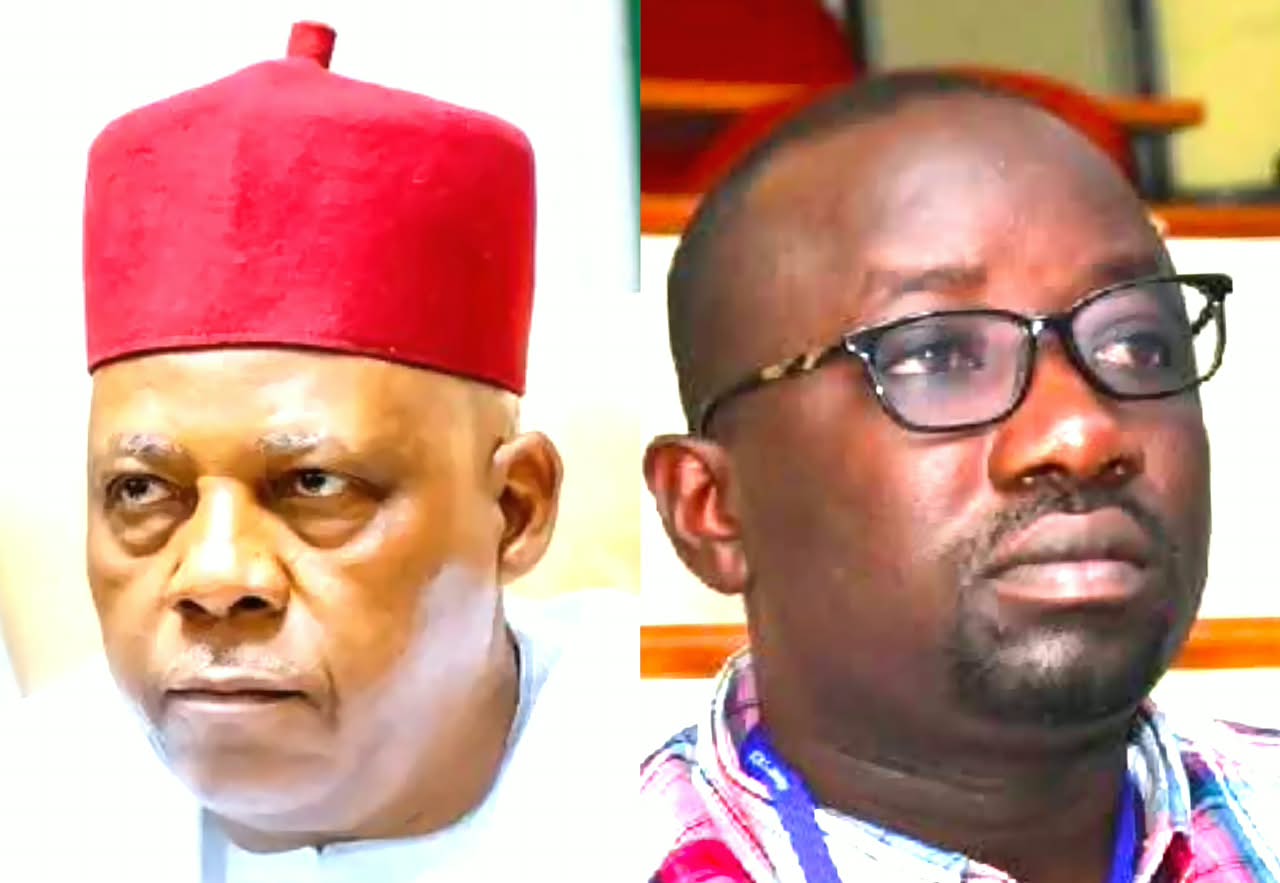
Vice-President Kashim Shettima’s recent assessment of Peter Obi as a purveyor of ungrounded economic prescriptions and unsubstantiated electoral claims strikes at the very heart of contemporary Nigerian political discourse. For too long, populist commentary has mistaken snappy cross-country comparisons for actionable governance frameworks. Shettima’s size 36 versus size 52 analogy is not merely sharp political fencing; it is a vital diagnostic of the intellectual superficiality that often masquerades as alternative leadership in Nigeria.
The fundamental flaw in Obi’s public commentary over recent years has been an unyielding devotion to false equivalence and context-blind arithmetic. In town halls, media appearances, and international forums, Obi has routinely contrasted Nigeria’s sprawling, federation-wide challenges with fragmented datasets lifted from nations operating under completely dissimilar conditions.
A prominent instance is his frequent assertion that Niger State’s landmass dwarfs the Netherlands, juxtaposed with the claim that Dutch agricultural exports exceed $100 billion. What this rhetorical sleight of hand deliberately ignores is basic trade mechanics: Dutch agricultural export supremacy is driven primarily by sophisticated agro-industrial processing, global logistics networks, and massive re-exports within the European single market, not raw agrarian subsistence.
This penchant for statistical elasticity is neither accidental nor isolated; it has become a trademark of Obi’s public discourse. While speaking on national television in 2022, he boldly declared that out of roughly 150 players in the American National Basketball Association, almost 100 were Nigerians, an assertion so detached from reality that official league rosters showed only a handful of players of Nigerian origin. During national debates, he famously claimed that Nigeria had only 2 million vehicles, equating to 10 per 1,000 citizens, a metric that crashed immediately against verified Federal Road Safety Corps and National Bureau of Statistics audits demonstrating that Nigeria’s vehicular fleet exceeded 11 million.
Even in his geopolitical commentary, he dramatically misstated that 40% of the gross domestic products of countries like China, Indonesia, and Malaysia derived from manufacturing, inflating official World Bank records by nearly double to force an ideological point. When numbers are treated as disposable props to dazzle audiences rather than empirical baselines for policy, statecraft descends into street theatre.
Bangladesh’s readymade garment boom, another perennial Obi talking point, operates under single-tier governance, concentrated coastal logistics, and European preferential tariffs that cannot be transplanted into a federal union of over 250 million people fractured by vast sub-national distances, distinct regional political economies, and an entrenched rentier legacy.
A policy accelerating light manufacturing along the Bay of Bengal cannot simply be copy-pasted into Aba or Kano without resolving interstate transit friction, power grid stability, and deep-seated fiscal federalism deficits. To suggest otherwise is to confuse the ambition of governance with the art of sloganeering.
Beyond the realm of policy formulation lies the equally vital issue of institutional respect and constitutional integrity. Shettima’s sharp rebuttal of Obi’s persistent claim to have won the 2023 presidential election touches on a dangerous trend of democratic delegitimisation. In 2023, the Labour Party mounted an extensive legal challenge that traveled through the Presidential Election Petition Court all the way to the Supreme Court of Nigeria. At every stage, the burden of proof required by law remained glaringly unmet.
Constitutional compliance, allegations of suppression, and altered returns across over 176,000 polling units require empirical forensics, unit-by-unit tallies, and primary documentary evidence.
Instead of delivering this evidentiary threshold, the petition relied on disputed viewing portal uploads and speculative deductions. When the apex court unanimously dismissed the challenge, it affirmed that judicial outcomes rest on verifiable data rather than digital sentiment.
Continuing to declare victory outside the courtroom without producing alternate, independently certified tallies across 36 states and the Federal Capital Territory crosses the boundary between legitimate opposition and populist revisionism.
Nigeria’s present journey requires unsparing pragmatism rather than escapist romanticism. The structural reforms underway, painful though their transitional costs may be, tackle the core fiscal distortions that crippled the nation for decades, notably the ruinous fuel subsidy regime and foreign exchange arbitrage that previously enriched a narrow cabal at the expense of national solvency.
Confronting these generational imbalances demands leaders who grasp the sheer weight of the Nigerian state machinery. Vice-President Shettima has rightly pointed out that Nigeria cannot be governed by borrowed cliches or nostalgic revisionism. Progress belongs to those who see the country as it truly is, confront its hard realities with structural resolve, and respect the democratic outcomes that anchor the republic.
Abubakar M. Kareto is a Public Affairs Analyst and Communications Strategist focusing on governance, policies, economy, and institutional reforms across Nigeria and Africa. He can be reached on X @amkareto and via email at amkareto@gmail.com.
Borrowed Data, Phantom Mandates: Why Shettima Dismantled Obi’s Governance Fantasy
2027: No Sacred Cows—Atiku’s Record Must Face Scrutiny
By: Dr James Bwala
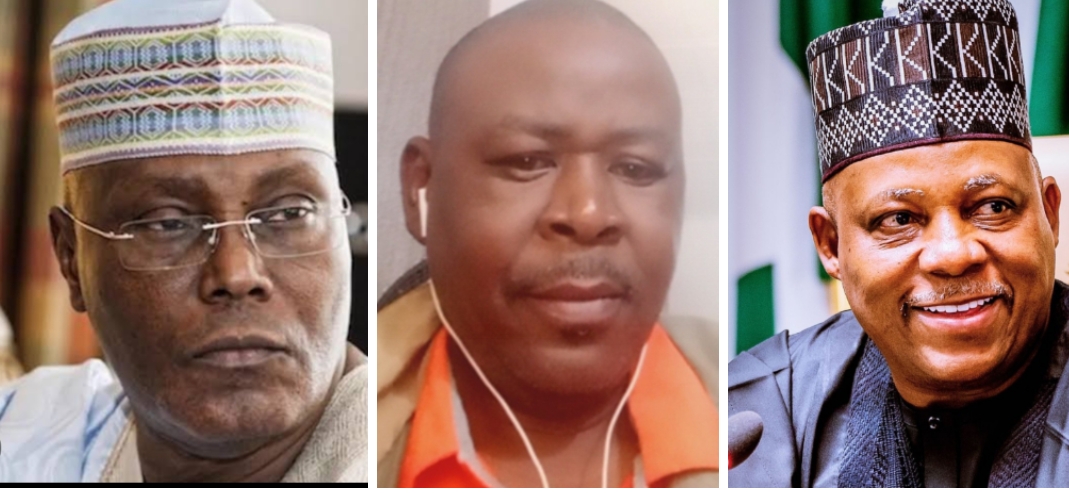
Former Vice President Atiku Abubakar’s supporters often defend his political career by pointing to his long experience in public service, his influence in Nigerian politics, and the important positions he has held. Recently, Naibi Abdul Aziz, one of Atiku’s apologists, argued that Atiku had already made a name for himself before I even understood the meaning of journalism. He further stated that Vice President Kashim Shettima was still a boy when Atiku was in government.
I agreed with him on one narrow point: I was not born on the same day as Atiku Abubakar, and neither did Vice President Shettima. For me, therefore, I cannot claim to have witnessed every event of Atiku’s early political careers personally. However, age, seniority, or political experience does not place any public figure beyond criticism. The fact that Atiku was politically active before many Nigerians entered public life does not mean that his record should be protected from scrutiny. On the contrary, the longer a person has exercised power, the greater the responsibility to examine the consequences of his decisions.
The political context of Nigeria today is not the same as it was twenty-six years ago. The country has changed, the economy has changed, and the effects of past policies have become clearer. Many Nigerians who were children or were not yet born during the early years of the Fourth Republic are now adults struggling with unemployment, poverty, inflation, insecurity, and the collapse of productive industries. They have every right to ask how earlier policy decisions contributed to the conditions they inherited.
It is therefore both legitimate and necessary to examine Atiku Abubakar’s role in Nigeria’s privatisation programme, particularly his tenure as chairman of the National Council on Privatisation between 1999 and 2007 during the administration of President Olusegun Obasanjo. This examination should not be reduced to personal attacks or partisan propaganda. It should be based on evidence, public records, economic outcomes, and the lived experiences of Nigerians whose jobs, businesses, and communities were affected by the process.
Atiku’s supporters frequently present privatisation as a necessary economic reform. They argue that many state-owned enterprises were inefficient, overstaffed, corruptly managed, and dependent on government funding. In principle, there was a reasonable basis for reform. Several public enterprises had become financially unsustainable, and the government lacked the resources or discipline to operate them effectively. However, acknowledging the problems within state-owned enterprises does not automatically prove that the method of privatisation was successful.
The central question is not whether reform was needed. It is whether the reform was properly designed, transparently implemented, and beneficial to the Nigerian people. It is also necessary to ask whether the government protected workers, preserved strategic industries, encouraged genuine investment, and ensured that public assets were sold at fair value. These questions remain unanswered in many cases.
Between 1999 and 2007, the federal government, through the National Council on Privatisation and the Bureau of Public Enterprises, divested or transferred ownership of numerous public enterprises. The assets involved included manufacturing companies, agricultural enterprises, energy-related facilities, transport businesses, hotels, telecommunications institutions, and other national investments. Critics contend that some of these assets were sold at undervalued prices, sometimes to political associates, business interests, or individuals with strong connections to those in power.
When public assets are sold below their real value, the loss is not merely financial. Those assets were built with taxpayers’ money over many years. They represented national investments intended to provide employment, industrial capacity, food security, and economic independence. If they are transferred cheaply to a small group of private beneficiaries and later abandoned, the public loses twice: first through the sale itself and again through the destruction of jobs and productive capacity.
The fate of several industrial and agricultural enterprises illustrates the concerns surrounding the privatisation process. The Delta Steel Company in Warri, the Ajaokuta steel-related infrastructure, and the Aluminium Smelter Company of Nigeria in Ikot Abasi are frequently cited in public discussions about Nigeria’s industrial decline. These facilities were established with the expectation that they would support national development, create skilled employment, and strengthen local production. Yet many of them experienced prolonged decline, operational difficulties, abandonment, or failure to achieve their intended potential.
The steel industry is particularly important because no modern economy can achieve genuine industrial independence without a strong domestic steel sector. Steel is essential for construction, machinery, transportation, defence, and manufacturing. Nigeria invested enormous public resources in developing steel-related infrastructure, but the country has not been able to obtain the expected benefits. The continued weakness of the steel sector has forced Nigeria to depend heavily on imported materials while millions of young people remain unemployed.
The same concerns apply to agricultural and agro-allied enterprises. Savannah Sugar Company in Adamawa, Sunti Sugar Company in Niger, the Federal Superphosphate Fertiliser Company in Kaduna, and the National Fertiliser Company of Nigeria, commonly known as NAFCON, are among the enterprises often mentioned in debates about the consequences of privatisation and poor industrial policy. These companies were connected to food production, fertiliser supply, rural employment, and national food security. Their decline affected not only employees but also farmers, transporters, suppliers, local traders, and entire communities under Atiku’s watch.
The consequences of industrial collapse extend far beyond the gates of a factory. When a major company closes, workers lose their income. Small businesses lose customers. Local governments lose tax revenue. Families withdraw children from schools. Medical care becomes more difficult to afford. Young people migrate in search of opportunities, while communities that once depended on industrial activity become economically stagnant. In this way, the collapse of public enterprises contributes directly to poverty and social instability, and these people want Atiku to come in as president to continue from where he left off.
Critics argue that rapid commercialisation, asset stripping, and inadequate post-privatisation monitoring contributed to de-industrialisation and massive job losses. In some cases, companies were acquired by investors who appeared more interested in controlling the assets than in maintaining production. Machinery and equipment were allowed to deteriorate, workers were dismissed, and industrial sites became inactive. Where privatisation was intended to create efficiency and investment, the outcome was often unemployment and economic decline. The Atiku apologists would not want to hear this, but it happened long before I knew journalism as Naibi would put it.
It is important to be fair: Atiku Abubakar did not single-handedly cause every failure in Nigeria’s economy. Privatisation involved multiple institutions, ministries, advisers, investors, banks, and political actors. But as Chair, he must take responsibility. Indeed, some enterprises were already deeply troubled before they were transferred. Other failures were caused by corruption, inconsistent policies, poor infrastructure, unreliable electricity, insecurity, foreign exchange shortages, and weak regulation as some of his men have said. Nevertheless, as chairman of the National Council on Privatisation, Atiku occupied a central position in the policy structure. That position gives him a legitimate responsibility for the direction, quality, and consequences of the programme.
Leadership is not only about claiming credit for reforms that appear successful. It also requires accepting responsibility when policies produce harmful results. If a public official supervises the sale of national assets, that official should be prepared to answer questions about the valuation process, the identity of beneficiaries, the terms of the agreements, the protection of workers, and the performance of the companies after privatisation. Political supporters should not respond to such questions by invoking age, past fame, or personal loyalty.
The argument that Atiku was already prominent before many Nigerians were born according to some of his apologists is not an answer to these concerns. It may establish his seniority, but it does not establish the correctness of his policies. Experience can be valuable, but experience without accountability may simply mean that mistakes have been repeated for a longer period. A politician’s long presence in public life should invite deeper examination, not automatic praise. We supported VP Kashim Shettima; we praised him, but we also pointed out missing numbers for him tomorrow as a leader, and he did appreciate such advice.
Criticism of Atiku should not be interpreted as disrespect for his achievements. He has played an important role in Nigeria’s political history, built a national profile, and contributed to public debates. However, public service is not a private achievement that ends with personal recognition. Its true value must be measured by its impact on ordinary citizens. If policies associated with a leader contributed to unemployment, industrial decline, or the loss of national assets, those consequences deserve serious discussion.
There is also a generational dimension to this debate. Many Nigerians now suffering from unemployment and economic hardship were not old enough to participate in the decisions taken between 1999 and 2007. Yet they are living with the results. They inherited a country where industries had declined, public infrastructure was weak, and economic opportunities were limited. It is unjust to tell this generation that it has no right to criticise the leaders whose decisions helped shape the environment in which it lives.
Journalists, researchers, and citizens must therefore be free to examine the past. A democratic society cannot develop if historical records are treated as sacred possessions of political parties. The role of journalism is not to flatter powerful people but to ask difficult questions, investigate public decisions, and give voice to those affected by government policies. Criticism should be factual, responsible, and evidence-based, but it should never be suppressed simply because the subject is older, more experienced, or politically influential.
I witnessed the consequences of Nigeria’s industrial and economic decline while moving through the North and Lagos–Ibadan axis in the south-west as a representative of Conscience International Magazine. The abandoned factories, inactive industrial estates, unemployed workers, and struggling communities were not abstract statistics. They were visible realities. They reflected a country that had invested in productive capacity but failed to protect and develop it. Nigerians who lived through that period have the right to remember what happened and to demand explanations.
Ultimately, the debate about Atiku Abubakar should not be reduced to whether one person is a supporter or an opponent. The real issue is whether Nigerian leaders should be accountable for the long-term effects of their policies. Atiku’s role in privatisation must be examined honestly, including both the arguments in favour of the programme and the damage attributed to its implementation. His supporters may defend his intentions, but intentions! Can that heal the wounds millions of Nigerians lived with and reflect it in their daily lives?
- James Bwala, PhD, writes from Abuja.
2027: No Sacred Cows—Atiku’s Record Must Face Scrutiny

Community Food Banks: A Necessary Step Toward Food Security in Nigeria
By: Dr. James Bwala
Food insecurity and malnutrition remain among the most urgent challenges facing Nigeria. Although the country possesses considerable agricultural potential, millions of Nigerians still struggle to obtain adequate and nutritious food. Vulnerable groups—including children, pregnant women, lactating mothers, persons with disabilities, widows, and low-income households—are particularly affected. Rising living costs, insecurity, unemployment, displacement, and disruptions in agricultural production have further intensified the crisis.
It is against this background that the First Lady of Nigeria, Senator Oluremi Tinubu, CON, called on state governors to establish functional community food banks in each of their three senatorial districts. The call, made during the presentation of food items to the wife of the Katsina State Governor, Hajiya Zulaihat Dikko Radda, is timely and important. Community food banks can serve as practical, locally accessible mechanisms for supporting vulnerable Nigerians, reducing malnutrition, and strengthening the country’s food security system. However, for the program to succeed, state governments must demonstrate genuine commitment, transparency, effective coordination, and sustainable funding.
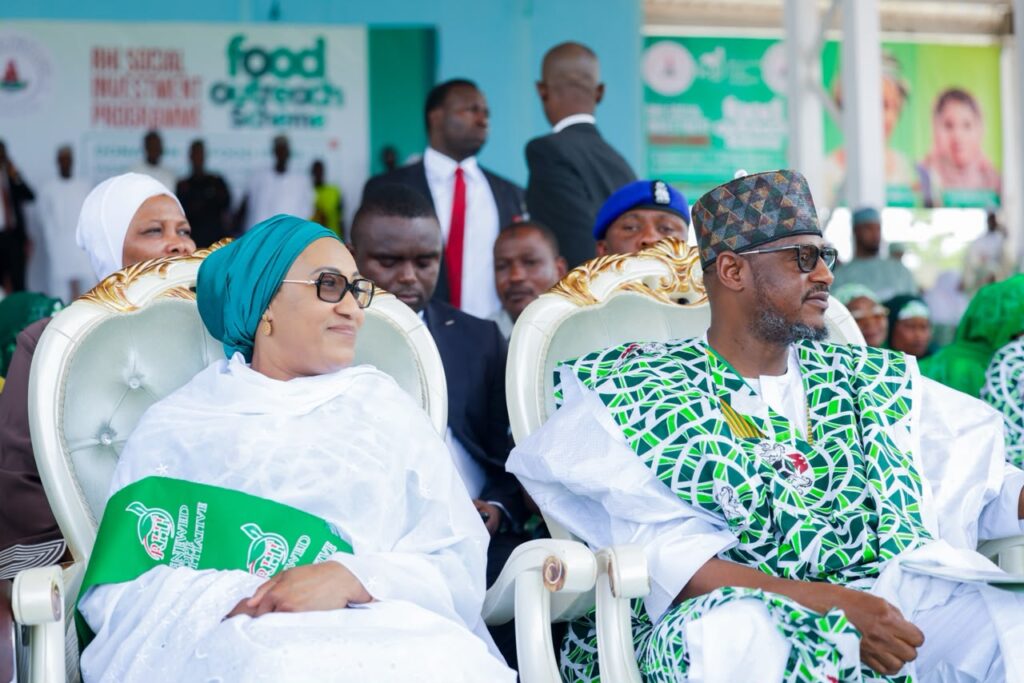
The food distribution in Katsina State was conducted under the Food Outreach Scheme of the Renewed Hope Initiative (RHI). Representing the First Lady, the wife of the Vice President, Hajiya Nana Shettima, announced that Katsina had become the 30th beneficiary of the scheme, following successful distributions to 29 states and the Federal Capital Territory. The achievement demonstrates the expanding reach of the initiative and its commitment to ensuring that federal interventions are not limited to a few regions or communities.
Launched in March 2024 under the Social Investment Programme of the Renewed Hope Initiative, the Food Outreach Scheme provides nutritional support to persons with disabilities, widows, and other vulnerable groups. Its purpose is not merely to distribute food items but also to ease household hardship and improve family well-being. In an economy where many families are forced to reduce the quantity and quality of food they consume, such interventions can prevent hunger from developing into severe malnutrition and other social problems.
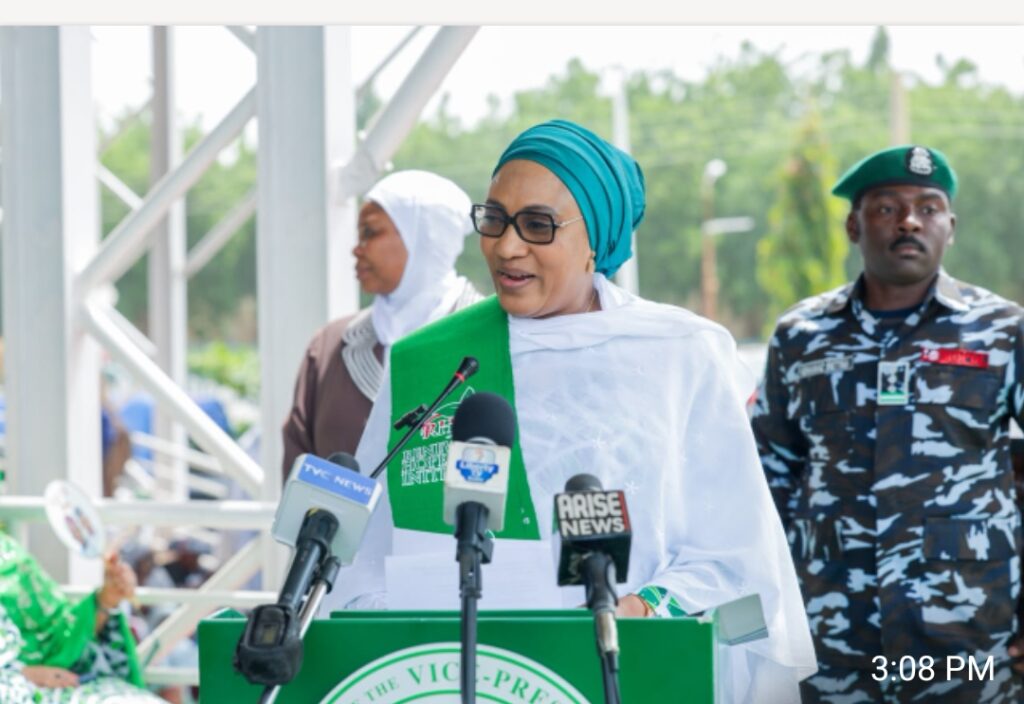
The First Lady explained that the intervention is sustained through the generosity of two partners who provide two truckloads of food items every month. This support allows the initiative to assist two states monthly. The partnership reflects the value of cooperation between government and private stakeholders in responding to humanitarian challenges. Nevertheless, charitable contributions alone cannot meet Nigeria’s long-term food needs. They should complement, rather than replace, strong public policies that promote agricultural productivity, social protection, employment, and affordable access to nutritious food.
The announcement of the completion of the nationwide rollout of the National Community Food Bank Program is also significant. The program is designed to combat child malnutrition and support pregnant women and lactating mothers, who require adequate nutrition for healthy pregnancies, safe childbirth, and proper child development. Children who suffer from malnutrition may experience stunted growth, weak immunity, poor learning outcomes, and reduced productivity later in life. Addressing malnutrition early is therefore not only a humanitarian responsibility but also an investment in Nigeria’s future human capital.
Community food banks can make nutritional support more accessible and responsive to local needs. National and zonal programs may provide essential assistance, but their reach can be limited by distance, administrative bottlenecks, insecurity, and inadequate knowledge of local conditions. A food bank located within a community can identify vulnerable households more effectively and respond to emergencies more quickly. It can also coordinate with traditional rulers, religious institutions, women’s groups, health workers, civil society organizations, and local authorities to ensure that assistance reaches those who genuinely need it.

The First Lady was right to stress that federal and zonal interventions alone would not be sufficient to address the scale of the challenge. Nigeria’s population is large, and vulnerability is distributed across urban, rural, and displaced communities. State governments are closer to their people and are therefore better positioned to understand local patterns of hunger and malnutrition. They can identify communities affected by flooding, insecurity, drought, displacement, or economic hardship and design food-bank operations accordingly.
For this reason, every state should establish functional food banks in its three senatorial districts, rather than creating facilities that exist only on paper. A functional food bank must have adequate storage, reliable transportation, trained personnel, transparent management, and a clear system for identifying beneficiaries. It should maintain proper records of food inflows and outflows, monitor the quality and expiry dates of supplies, and establish mechanisms for receiving complaints. Without these safeguards, food banks could become vulnerable to diversion, politicization, or unequal distribution.
Transparency must be at the heart of the program. Food assistance should be distributed according to need, not political affiliation, ethnic identity, religious background, or personal connections. State governments should publish basic information about the quantities of food received, the communities covered, and the number of beneficiaries reached. Independent monitors, civil society organizations, community leaders, and the media should be allowed to observe and report on the process. Such openness would build public trust and discourage corruption.
Beneficiary selection also requires careful attention. While widows and persons with disabilities are important target groups, the program should include households facing extreme poverty, internally displaced persons, elderly people living alone, orphaned children, and families affected by conflict or natural disasters. Pregnant women and lactating mothers should be linked not only to food support but also to antenatal care, nutrition education, immunization, and other health services. Similarly, children receiving food assistance should be connected to schools, primary healthcare centers, and child-protection programs where appropriate.
Food banks should also support local agriculture. State governments can purchase a significant portion of their supplies from local farmers, cooperatives, and small-scale food processors. This approach would create a reliable market for farmers while ensuring that food assistance contributes to local economic development. Staple foods such as grains, legumes, tubers, vegetable oil, and fortified products can be sourced locally when quality and supply requirements are met. Such a model would help connect emergency food assistance with agricultural production and rural livelihoods.
The intervention in Katsina State illustrates how federal and state-level efforts can work together. Governor Dikko Umaru Radda described the event as a day of hope and renewed commitment to the welfare of the people. He noted that the intervention demonstrated the federal government’s resolve to reach vulnerable Nigerians at all levels and complemented the state government’s efforts to improve citizens’ well-being. This cooperation is essential because food insecurity cannot be solved by one level of government acting alone.
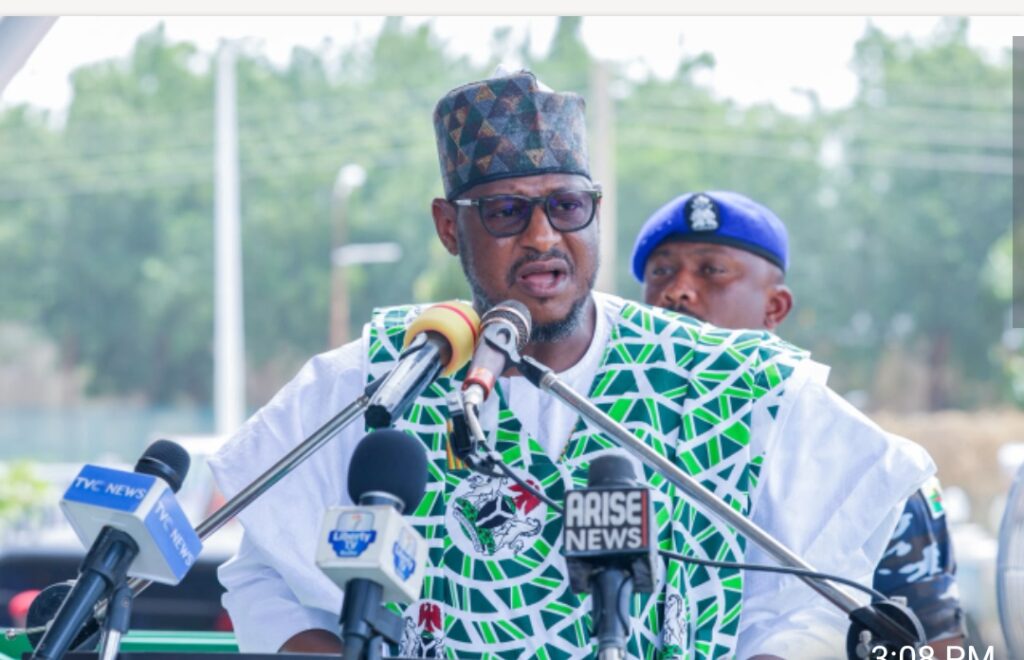
The governor also stated that his administration, in line with President Bola Ahmed Tinubu’s Renewed Hope Agenda, is investing in education, healthcare, and agriculture. These sectors are closely connected to food security. Education improves household earning capacity and increases awareness of healthy nutrition. Healthcare helps prevent and treat illnesses associated with malnutrition. Agriculture increases food availability and creates employment. When these areas are strengthened together, emergency support can gradually give way to greater household self-reliance.
Security is equally important. Food cannot be produced, transported, or distributed effectively in communities where farmers fear attacks, roads are unsafe, or markets are disrupted. Governor Radda’s statement that his administration is supporting security agencies with necessary equipment highlights the link between security and food security. Insecurity has forced many farmers away from their fields, destroyed livelihoods, displaced families, and increased dependence on humanitarian aid. Governments must therefore protect farming communities, secure transportation routes, and create conditions that allow agricultural activity to resume safely.
At the same time, political leaders should ensure that food interventions remain focused on public welfare. Food distribution programs must not be used merely as instruments of political mobilization. Although Governor Radda urged Katsina residents to support the ruling party for continuity in governance and development, the success of the food-bank program should be measured by its impact on hunger, nutrition, accountability, and household resilience—not by political loyalty. Public resources and humanitarian assistance belong to the people and must serve all eligible citizens.
The appreciation expressed by Hajiya Zulaihat Dikko Radda to Senator Oluremi Tinubu is understandable. The Renewed Hope Initiative has continued to support women, persons with disabilities, widows, and other vulnerable groups through various social programs. Such interventions offer relief to families facing difficult circumstances. However, they should be implemented as part of a broader national strategy rather than as isolated acts of generosity. Nigeria requires a coordinated system that combines food banks, social safety nets, school feeding, agricultural support, maternal healthcare, nutrition education, and employment opportunities.
The anticipated distribution to Osun, Ogun, and Akwa Ibom States indicates that the Food Outreach Scheme will continue to expand. As more states become beneficiaries, lessons from Katsina and previous distributions should be carefully documented. Program managers should evaluate whether food reached the intended beneficiaries, whether the quantities were sufficient, whether rural communities were adequately covered, and whether the intervention produced measurable improvements in household nutrition. Evidence-based evaluation will help the government improve the scheme and use resources more efficiently.
Ultimately, the success of the National Community Food Bank Program will depend on sustained political will. Governors must move beyond verbal support and allocate funds for the establishment and maintenance of food banks in their senatorial districts. They should develop clear operating guidelines, establish independent oversight, and work with communities to create reliable distribution networks. The federal government, for its part, should provide technical assistance, promote national standards, coordinate partners, and ensure that states are supported without encouraging duplication or waste.
Nigeria has the human and agricultural resources to overcome food insecurity, but these resources must be organized through effective institutions and responsible leadership. Community food banks will not solve every problem, but they can provide an important safety net for people facing hunger and malnutrition. More importantly, they can serve as platforms for connecting vulnerable families to healthcare, agricultural opportunities, education, and social protection.
* James Bwala, PhD, writes from Abuja.
Community Food Banks: A Necessary Step Toward Food Security in Nigeria

Troops Rescue Two Abductees Near Gwoza, Borno

ISWAP Fighter, Wife and Son Surrender to Troops in Borno

Hunters Arrest Two Traders in Benue, Release Hausa Man but Allegedly Kill Fulani Trader

Roger Federer’s Shock as DNA Results Reveal Myla and Charlene Are Not His Biological Children

THE PLIGHT OF FARIDA

FAILED COUP IN BURKINA FASO: HOW TRAORÉ NARROWLY ESCAPED ASSASSINATION PLOT AMID FOREIGN INTERFERENCE CLAIMS
-
 News3 years ago
Roger Federer’s Shock as DNA Results Reveal Myla and Charlene Are Not His Biological Children
-
Opinions5 years ago
THE PLIGHT OF FARIDA
-
 News1 year ago
FAILED COUP IN BURKINA FASO: HOW TRAORÉ NARROWLY ESCAPED ASSASSINATION PLOT AMID FOREIGN INTERFERENCE CLAIMS
-
 Opinions5 years ago
POLICE CHARGE ROOMS, A MINTING PRESS
-

 News3 years ago
EYN: Rev. Billi, Distortion of History, and The Living Tamarind Tree
-

 ACADEMICS3 years ago
A History of Biu” (2015) and The Lingering Bura-Pabir Question (1)
-

 Columns3 years ago
Army University Biu: There is certain interest, but certainly not from Borno.
-

 Politics1 year ago
2027: Why Hon. Midala Balami Must Go, as Youths in Hawul and Asikira/Uba Federal Constituency Reject ₦500,000 as Sallah Gift
